
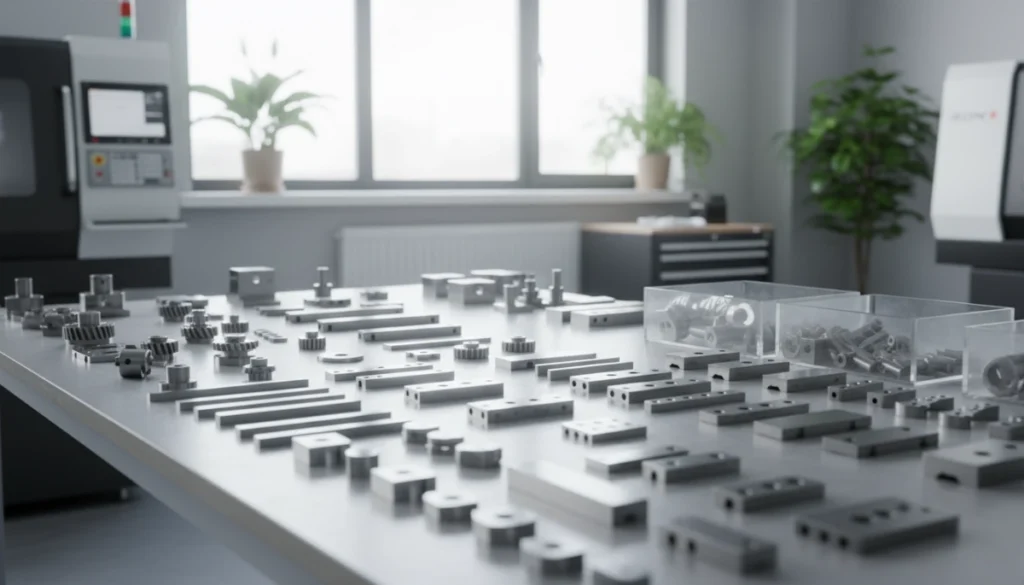
What is 416 Stainless Steel?
Are you tired of burning through cutting tools and battling slow cycle times on your stainless runs? If your project requires high strength but you need to drastically cut production costs, you should be looking at 416 stainless steel CNC machined parts.
At its core, 416 stainless steel is a martensitic steel alloy. However, what makes it a staple on our shop floor is its reputation as the original “free-machining” stainless steel.
The secret to its machinability lies in a very specific chemical tweak:
- Targeted Sulfur Addition: 416 contains exactly 0.15–0.35% sulfur.
- Manganese Sulfide Inclusions: This added sulfur reacts to create microscopic inclusions distributed evenly throughout the metal matrix.
- Chip Breaking Power: During the cutting process, these inclusions act as natural breaking points. Instead of forming long, stringy chips that wrap around and choke tooling, the metal chips snap off cleanly and clear out of the way.
The Bottom Line for Your Budget:
Because the chips break away effortlessly, this free-machining stainless steel allows us to push our CNC turning and milling centers to significantly faster cutting speeds. For you, this translates directly to reduced tool wear, shorter cycle times, and a massive drop in overall production costs without sacrificing the durability of the final component.
Key Properties of 416 Stainless Steel for Machining
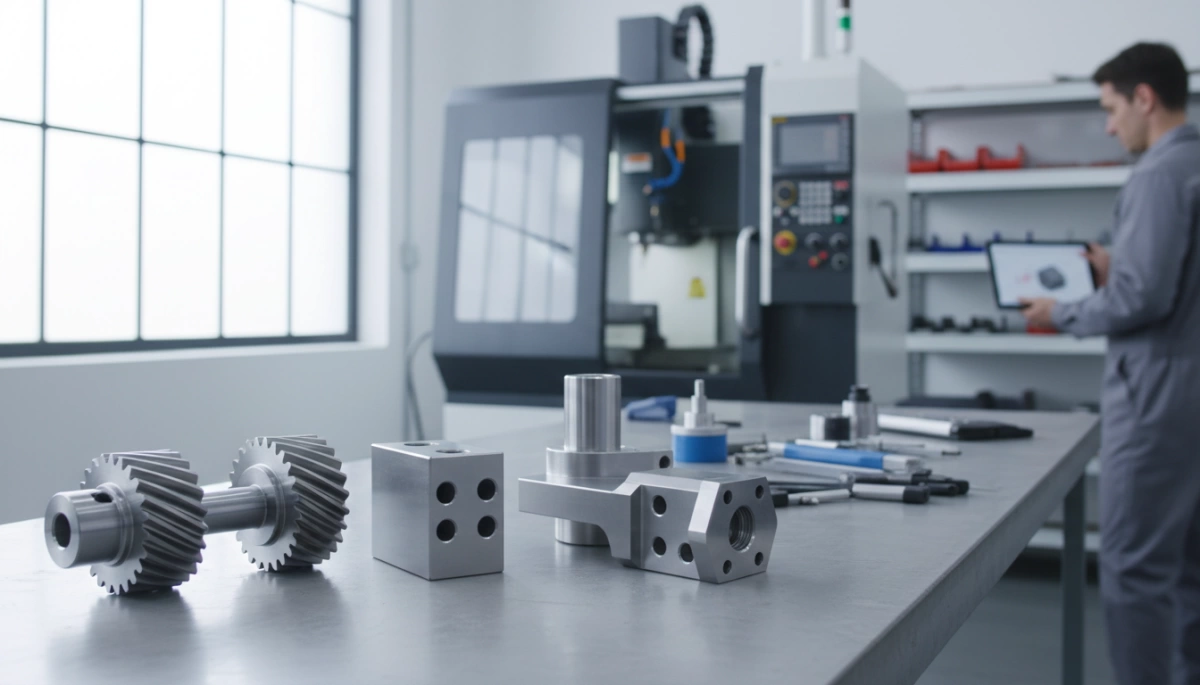
When we select materials for precision manufacturing, we look beyond just basic strength; we analyze how a metal behaves under the stress of cutting tools and how it performs in the final assembly. 416 stainless steel offers a unique balance of mechanical reliability and fabrication ease that makes it a staple in our shop.
Mechanical & Physical Profile
This martensitic alloy provides substantial structural integrity. In its annealed condition, you can expect a Tensile Strength of 655–855 MPa and a Yield Strength between 275–450 MPa. Hardness typically sits around 180–230 HB before any heat treatment. However, once hardened, these figures jump significantly, allowing the material to withstand higher loads and wear.
Dimensional Stability
One of the biggest headaches in CNC machining is thermal expansion ruining tight tolerances. 416 stainless steel has a moderate coefficient of thermal expansion, which translates to excellent dimensional stability during the machining process. Whether we are running complex precision investment casting services or high-speed CNC turning, this stability ensures that the final part matches the CAD drawing exactly, without warping from heat buildup.
Magnetic Properties
Unlike austenitic grades like 304 or 316, 416 stainless steel is ferromagnetic. It remains strongly magnetic in both annealed and hardened conditions. This property is crucial for specific applications, such as solenoid plungers, sensor components, and electric motor parts where magnetic permeability is a functional requirement, not just a side effect.
Heat Treatment: Hardening 416 Stainless Steel CNC Machined Parts
When we manufacture 416 stainless steel CNC machined parts, heat treatment is the crucial step that unlocks the metal’s full potential. Because 416 is a martensitic steel alloy, it responds exceptionally well to thermal hardening, allowing us to tailor the metal for demanding, heavy-duty applications.
Here is the standard two-step thermal process we use to maximize the performance of your components:
- Quenching (980–1050°C): We heat the machined parts to extreme temperatures and rapidly cool them. This fundamentally hardens the internal grain structure of the steel.
- Tempering (150–370°C): Quenching leaves the metal extremely hard but potentially brittle. We follow up by reheating the parts to lower temperatures to relieve internal stresses, balancing hardness with essential toughness.
By carefully controlling these thermal cycles, we dramatically elevate the wear resistance and overall mechanical strength of the material. This precise control transforms standard parts into high strength machined components that thrive in high-friction environments. Understanding how these thermal processes alter material properties is key to maximizing part lifespan, a topic we explore extensively in our alloy guide for high-performance alloys and precision casting. Ultimately, choosing properly heat treated 416 stainless ensures your precision parts will survive heavy wear and tear without premature failure.
416 vs. 316 and 304 Stainless Steel: Which Should You Choose?
When engineering 416 stainless steel cnc machined parts, knowing how this material stacks up against common grades like 304 and 316 is crucial for your project’s success. As a dedicated provider of custom precision machining services, we always help our clients weigh the trade-offs between speed, durability, and environment.
Here is a quick 416 vs 316 stainless steel comparison (and 304) to help you make the right call:
Key Performance Differences
- Machinability: 416 wins this category easily. It boasts an impressive 85% machinability rating compared to standard carbon steel. This allows for rapid CNC turning and milling, whereas 304 and 316 are famously gummy, tougher to cut, and chew through tooling much faster.
- Corrosion Resistance: 416 offers moderate corrosion resistance that performs perfectly in dry environments or around mild chemicals. However, a strict warning: do not use 416 for marine or high-chloride applications. If your parts face harsh, wet environments, the superior rust-proofing of 316 is mandatory.
- Cost Factor: 416 is a highly cost-effective CNC material. Because it machines so fast and significantly extends tool life, your overall production costs plummet. If extreme corrosion resistance isn’t the primary requirement for your design, 416 is the smarter financial choice.
Quick Comparison Matrix
| Feature | 416 Stainless Steel | 304 / 316 Stainless Steel |
|---|---|---|
| Machinability | Excellent (~85% rating) | Moderate to Difficult |
| Corrosion Resistance | Moderate (Dry/Mild environments) | Excellent (316 for marine use) |
| Production Cost | Highly Cost-Effective | Higher (Slower machining) |
| Best Application | Fasteners, shafts, gears | Food processing, marine hardware |
Choosing the right alloy ultimately comes down to balancing your environmental needs with your manufacturing budget. When speed and cost are your driving factors, 416 stands unmatched.
Common Applications for Custom 416 CNC Machined Parts
Because it is a highly machinable martensitic steel alloy, industries globally rely on us to manufacture their precision components. When tight tolerances and rapid production are required, 416 stainless steel CNC machined parts are the go-to solution for several demanding sectors.
Here is where our custom precision machining services truly shine:
- Power Transmission: We manufacture heavy-duty motor shafts, spindles, and gears that easily withstand high-stress rotational movement.
- Fluid Control: Our team frequently produces precise pump components and valve stems. When planning the production of these intricate parts, weighing options like investment casting vs CNC machining often points to CNC machining 416 for the tightest fluid control tolerances.
- Fasteners & Hardware: We supply high strength machined components, including precision screws, custom nuts, and heavy-duty fasteners.
- Defense & Sporting Goods: The non-galling stainless steel properties make this material perfect for firearm components, such as custom grip screws, ensuring smooth assembly and long-term field durability.
Design Tips for Machining 416 Stainless Steel
When engineering 416 stainless steel cnc machined parts, understanding the material’s limitations is just as important as knowing its strengths. While 416 is the champion of machinability, it has specific constraints regarding fabrication that every designer should note.
The Welding Limitation
We strongly advise designers to avoid welding standard 416 stainless steel whenever possible. The high sulfur content (0.15–0.35%), which allows for such rapid chip breaking during CNC turning, causes significant issues during welding processes.
- Hot Cracking: The sulfur creates weak points in the weld pool, leading to immediate structural failure.
- Porosity: Welds often fail to hold due to internal voids caused by the alloying elements.
- Remedy: If welding is absolutely unavoidable, it requires low-hydrogen electrodes and rigorous pre-heating and post-weld annealing to prevent the part from becoming brittle.
Material Variants
If your application requires slightly different properties, consider specifying the correct variant. For example, Grade 416Se replaces sulfur with selenium. This variant offers similar machinability but with better formed surfaces and slightly improved corrosion resistance. For more technical guides on selecting the right steel grade, you can explore our manufacturing insights blog. Always confirm availability with us first, as standard sulfur-based 416 is far more readily available and affordable for general production.
Why Partner with Vastmaterial for 416 Stainless Steel CNC Machined Parts?

As a direct source manufacturer of stainless steel CNC machining, we cut out the middleman entirely. Partnering with us means you get factory-direct pricing, faster production cycles, and complete transparency from the initial quote to final delivery.
Our Vastmaterial precision manufacturing facility is equipped to handle complex geometries and demanding production schedules. We offer comprehensive custom precision machining services, including:
- Advanced Milling: High-speed 3-axis, 4-axis, and 5-axis CNC machining.
- Precision Turning: Standard CNC turning and Swiss turning for intricate, small-diameter parts.
- Scalable Production: Efficient workflows for both rapid prototyping and high-volume runs of 416 stainless steel cnc machined parts.
Quality is built into every step of our process. We strictly adhere to ISO standards, ensuring every martensitic steel alloy part meets exact international tolerances. Whether you need high-volume machining or are referencing our steel casting foundry guide for precision components for other projects, our rigorous testing and inspection protocols guarantee durable components that perform flawlessly in the field.
FAQs About 416 Stainless Steel CNC Machined Parts
- Is 416 stainless steel rust-proof?
No. It offers moderate corrosion resistance suitable for dry, indoor, or mild environments. It will rust if exposed to marine or high-chloride conditions. - Can you weld 416 stainless steel?
We highly advise against it. The high sulfur content that makes this a premier free-machining stainless steel also leads to severe cracking and porosity during standard welding processes. - What is the difference between 416 and 416L?
The “L” designates a lower carbon content. Standard 416 is ideal for heat-treated, high strength machined components. In contrast, 416L sacrifices some maximum hardness to achieve an even higher machinability rating. - Why does 416 stainless steel reduce CNC machining costs?
The added sulfur creates inclusions that easily snap chips during CNC turning and milling 416. This allows for significantly faster cutting speeds and much less tool wear. The result is a highly cost-effective CNC material, making it a budget-friendly choice for producing reliable precision components used in large-scale equipment manufacturing.