

Choosing the wrong stainless steel grade doesn’t just hurt your budget—it can lead to catastrophic part failure in the field.
When comparing 416 vs 316 stainless steel, you’re essentially balancing two extremes: superior machinability and extreme corrosion resistance.
Are you looking for high-speed production and hardness, or long-term durability in a marine environment? I’ve analyzed the chemical compositions, mechanical properties, and manufacturing costs of both to ensure your next project is a success.
Let’s dive right in.
416 vs 316 Stainless Steel
Choosing between 416 and 316 stainless steel often boils down to a single trade-off: do you need to machine parts fast, or do you need them to survive a corrosive environment? I see many shops struggle with this because while they look similar on the shelf, their metallurgical DNA makes them behave like two completely different materials.
Martensitic vs Austenitic Stainless
The core difference starts with their crystal structures.
- 416 Stainless Steel is part of the martensitic family. This means it has a body-centered tetragonal structure that allows it to be hardened through heat treatment.
- 316 Stainless Steel is austenitic. It features a face-centered cubic structure, which makes it exceptionally tough and resistant to corrosion, though it cannot be hardened by heat.
416 Stainless Steel: The Free-Machining Grade
I consider 416 the “productivity king” of the stainless world. It is a free-machining martensitic grade that has sulfur added to its composition. This sulfur acts as an internal lubricant, breaking up chips and allowing for much higher cutting speeds.
- Magnetic: Strongly magnetic.
- Hardness: Can be quenched and tempered to high strength levels.
- Trade-off: The same sulfur that helps it machine so well also makes it much more prone to rusting than the 300-series alloys.
316 Stainless Steel: The Marine Grade
If your part is going near the ocean or into a chemical tank, you want 316 stainless steel properties. This is a molybdenum-bearing austenitic marine grade designed for the toughest conditions.
- Corrosion Resistance: The addition of 2% to 3% molybdenum protects the metal from pitting and crevice corrosion in chloride-rich environments.
- Magnetic: Generally non-magnetic in the annealed state.
- Machinability: It is significantly tougher and “gummier” than 416, which requires more specialized tooling and slower cycle times.
Chemical Composition: The DNA of 416 vs 316 Stainless Steel

The performance gap between 416 vs 316 stainless steel starts at the molecular level. While both are iron-based, the specific “recipe” of alloying elements dictates whether the metal is built for speed in the shop or survival in the ocean.
Key Elements Breakdown
The fundamental difference lies in the molybdenum and nickel content found in 316, versus the high sulfur and carbon levels in 416.
| Element | 416 Stainless Steel | 316 Stainless Steel |
|---|---|---|
| Chromium (Cr) | 12% – 14% | 16% – 18% |
| Nickel (Ni) | 0% | 10% – 14% |
| Molybdenum (Mo) | 0% | 2% – 3% |
| Sulfur (S) | 0.15% min (High) | 0.03% max (Low) |
| Carbon (C) | 0.15% max | 0.08% max |
Sulfur and Machinability in 416
We use sulfur in stainless steel machining to create what is known as a “free-machining” grade. In 416, sulfur forms manganese sulfide inclusions that act as internal lubricants. This allows for:
- Faster cutting speeds and higher feed rates.
- Brittle chips that break away easily, preventing tool clogging.
- Reduced tool wear, which is critical for high-volume CNC runs.
However, there is a trade-off. This sulfur reduces the material’s ability to resist corrosion, making it susceptible to rusting in wet environments.
The Role of Molybdenum in 316
On the flip side, molybdenum in stainless steel is the “secret sauce” for 316. This element significantly boosts the material’s pitting and crevice resistance, especially when exposed to chlorides or industrial chemicals. Our experience with chromium-cobalt-molybdenum hip joint machining services demonstrates how critical these specific alloying elements are for parts that must survive harsh, corrosive environments without failing.
- Nickel stabilizes the austenitic structure, making 316 non-magnetic and highly ductile.
- Chromium provides the basic “stainless” layer, but the Mo+Ni combination in 316 makes it a true marine-grade powerhouse compared to the basic protection offered by 416.
Strength and Hardness: 416 vs 316 Stainless Steel Properties
When comparing 416 vs 316 stainless steel, the primary differentiator is how they achieve their mechanical strength. 416 is a martensitic grade, meaning it is a heat treatable stainless steel. We can quench and temper it to reach high hardness levels, making it ideal for components that need to withstand wear and tear. On the other hand, 316 is an austenitic grade; it cannot be hardened by heat. To increase its strength, we rely on cold working, which naturally increases its yield strength but reduces its ductility.
Mechanical Performance Breakdown
In my experience, the choice often comes down to whether you need a “hard” metal or a “tough” one. The 316 stainless steel properties favor high elongation and impact toughness, while 416 properties focus on high-yield strength and surface hardness.
| Property | 416 Stainless (Hardened) | 316 Stainless (Annealed) |
|---|---|---|
| Tensile Strength | ~110,000 psi (760 MPa) | ~75,000 psi (515 MPa) |
| Yield Strength | ~85,000 psi (585 MPa) | ~30,000 psi (205 MPa) |
| Hardness (Rockwell) | C25 – C40+ | B80 – B95 |
| Elongation (in 2″) | 15% – 25% | 40% – 60% |
- 416 Martensitic Structure: Designed for high-stress applications where the material must resist deformation. Our internal tests show that post-heat treatment, 416 offers a significant boost in torque resistance.
- 316 Austenitic Structure: These alloys are much more “stretchy” or ductile. Our 300 series stainless steel grades properties guide highlights how these alloys maintain ductility even under extreme stress, preventing brittle fractures in structural builds.
- Hardness Values: 416 can be dialed in to specific hardness ranges (typically HRC 35-42) to meet technical specs, whereas 316 stays relatively soft, making it less suitable for high-friction gear or shaft applications.
Machinability and CNC Performance of 416 vs 316

When I evaluate stainless steel for CNC machining, the difference between 416 and 316 usually comes down to “speed vs. endurance.” 416 is the undisputed king of the shop floor when high-speed production is the goal. Because it is a free machining stainless steel, it allows for much faster cycle times and better tool longevity compared to the more stubborn 316.
Machinability Ratings and Tool Wear
The sulfur added to the 416 stainless steel properties acts as an internal lubricant, breaking up chips before they can bird-nest around your spindle. Conversely, 316 is “gummy” and has a nasty habit of work-hardening the moment your feed rate isn’t perfect.
- 416 Machinability: Rated at approximately 85% of the AISI B1112 standard.
- 316 Machinability: Rated significantly lower, at roughly 45%.
- Tooling Impact: 416 allows for higher surface feet per minute (SFM), while 316 requires carbide tooling and aggressive cooling to prevent premature tool failure.
Manufacturing Strategies and Cost Implications
In a high-volume production run, the 416 vs 316 cost difference isn’t just about the raw material price—it’s about machine hours. Using 416 can slash production time by nearly half. While 316 is difficult to process, it isn’t quite as demanding as our high-temperature nickel alloy springs machining service, but it still requires rigid setups and constant pressure to avoid glazing the surface.
| Performance Metric | 416 Stainless Steel | 316 Stainless Steel |
|---|---|---|
| Cycle Time | Fast | Slow |
| Chip Control | Excellent (Short Chips) | Poor (Stringy Chips) |
| Surface Finish | High Shine / Smooth | Variable / Gummy |
| Tool Wear | Minimal | Moderate to High |
For parts requiring intricate details or tight tolerances in bulk, 416 is my go-to. If the project demands the 316 stainless steel properties for corrosion resistance, I budget for more frequent tool changes and slower feeds to ensure the part remains within spec.
416 vs 316 Corrosion Resistance in Harsh Environments
When I look at 416 vs 316 corrosion resistance, the gap is massive. These two metals are on opposite ends of the durability spectrum. If your parts are going to face salt, acids, or constant moisture, you need to know exactly how they’ll hold up before you start production.
Pitting and Crevice Resistance (PREN Values)
The easiest way to measure this is the Pitting Resistance Equivalent Number (PREN). It’s a simple math formula based on the alloy’s chemistry.
- 316 Stainless Steel: Typically scores between 23 and 26.
- 416 Stainless Steel: Usually sits much lower, around 12 to 14.
Why 316 Excels in Chloride-Rich Conditions
The “secret sauce” in marine grade stainless steel (316) is the addition of molybdenum in stainless steel. This element creates a protective film that resists chloride-induced pitting—the kind of nasty, localized holes that eat through metal in coastal or chemical environments.
The Weakness of 416 Stainless
While we love 416 for its speed in the shop, the sulfur in stainless steel machining comes with a price. Those sulfur inclusions that make 416 “free-machining” also act as starting points for rust. In a salt spray test, 416 will show “red rust” quickly, whereas 316 stays clean.
| Environment | 416 Performance | 316 Performance |
|---|---|---|
| Marine/Saltwater | Poor (Rusts quickly) | Excellent |
| Food Processing | Not recommended | Industry Standard |
| Chemical Exposure | Low resistance | High resistance |
| Fresh Water | Fair (If kept dry) | Excellent |
For those of you comparing different metals for heavy-duty use, understanding a cast iron vs steel comparison can help clarify why we prioritize specific alloys like 316 for long-term environmental survival. 316 isn’t just a suggestion for chemical or medical settings—it’s a requirement to prevent structural failure.
Physical and Magnetic Properties: 416 vs 316 Stainless Steel
The physical makeup of these two metals dictates how they behave under heat and whether they’ll stick to a magnet. In our experience, the most immediate “shop floor” difference is their magnetic signature.
Magnetic Behavior and Quality Control
One of the easiest ways to distinguish these grades is with a simple magnet test. 416 stainless steel is magnetic because of its martensitic structure. On the other hand, 316 stainless steel is non-magnetic in its annealed state due to its high nickel content and austenitic structure. When performing testing and quality control on incoming stock, a magnet is often the first tool we use to ensure no grades were mixed up.
Thermal and Density Comparison
Beyond magnetism, the way these metals handle heat and weight differs slightly but significantly for precision design:
- Thermal Conductivity: 416 has much higher thermal conductivity than 316. This makes 416 better at dissipating heat, which is a big plus in high-speed machining and for components like shafts that generate friction.
- Thermal Expansion: 316 expands more when heated compared to 416. If you are designing tight-tolerance assemblies that operate at varying temperatures, you have to account for 316’s higher rate of expansion to avoid seizing.
- Density: Both sit near 0.28-0.29 lb/in³, so weight isn’t usually the deciding factor here.
of Physical Traits
Understanding if you need a non-magnetic stainless steel is usually the first fork in the road for engineers. While 416 offers better thermal performance, 316 is the standard for stability in sensitive electronic environments where magnetic interference is a dealbreaker. For those evaluating magnetic grades for high-strength needs, understanding how 17-4 stainless steel magnetic properties compare to 416 can also be a helpful benchmark for your project.
Weldability and Heat Treatment: 416 vs 316 Stainless Steel
When I compare 416 vs 316 stainless steel for fabrication, the way these metals respond to heat is a major deciding factor. I view 416 as the primary heat treatable stainless steel in this matchup. Because of its martensitic structure, I can quench and temper 416 to reach high hardness and tensile strength levels that 316 simply cannot achieve. 316 is an austenitic grade, meaning it does not harden with heat—it only gets stronger through cold working.
Fabrication Performance Breakdown
- Weldability: 316 is the clear winner here. It welds beautifully with standard filler metals and is much less prone to cracking. 416, on the other hand, is “hot short” due to its high sulfur content. This makes it very difficult to weld without the metal cracking as it cools.
- Hardening Potential: I use 416 when I need a part that can take a beating. You can dial in the exact hardness you need through specific tempering cycles. Once the desired hardness is set, applying a professional surface treatment helps maintain the part’s integrity and finish.
- Thermal Stability: While 316 stays stable across a wide range of temperatures, 416 becomes brittle if it isn’t annealed properly after any high-heat process.
| Property | 416 Stainless Steel | 316 Stainless Steel |
|---|---|---|
| Response to Heat Treat | Hardens via Quenching | Non-hardenable |
| Weld Rating | Poor (High Crack Risk) | Excellent |
| Common State | Hardened & Tempered | Annealed |
In my experience, if the project involves heavy welding or assembly, 316 is the only way to go. But if I am machining high-strength shafts or gears that need to be incredibly tough, 416’s ability to be heat-treated makes it the superior choice for the job.
416 vs 316 Stainless Steel Common Industry Applications
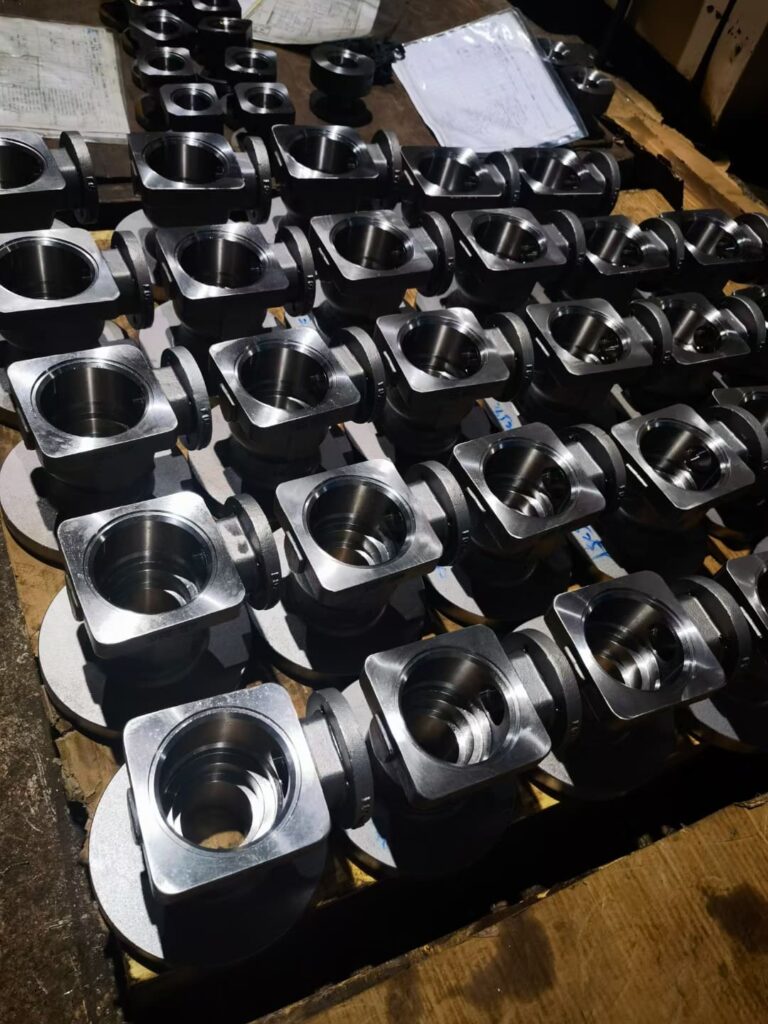
Choosing between these two grades usually comes down to whether you prioritize fast manufacturing or survival in harsh environments. While both are staples in American machine shops, they rarely trade places in the field because their strengths are so specialized.
Typical Uses for 416 Stainless Steel
Because of its free-machining nature and ability to be heat-treated, 416 is the workhorse for high-volume precision parts. If you are running long cycles on Swiss lathes, this is likely your go-to material. For projects requiring high-speed production, our CNC turning guide highlights why 416 is preferred for automated runs.
- Firearms: Highly popular for bolt actions and handgun slides where hardness and machining precision are mandatory.
- Power Transmission: Used extensively for gears, pinions, and shafts that require significant metal removal.
- Fasteners: Ideal for high-strength bolts and nuts that don’t face heavy chemical exposure.
- Valve Components: Common in valve stems and trim where the part needs to resist wear and galling.
Typical Uses for 316 Stainless Steel
Known as the “Marine Grade,” 316 is the standard for marine engineering applications where saltwater exposure is a constant threat. Its molybdenum content ensures it won’t pit or rust when things get messy.
- Marine Hardware: Deck fittings, rigging, and underwater sensors.
- Medical Instruments: Surgical tools and orthopedic implants that require sterilization and biocompatibility.
- Chemical Processing: Used for pressure vessels, tanks, and piping that handle corrosive fluids.
- Food and Beverage: Standard for commercial kitchen equipment and pharmaceutical processing where hygiene is non-negotiable.
Overlap and Material Substitution
Substitution is rarely a 1:1 swap. You might consider switching from 316 stainless steel properties to 416 only if the part is moved to a dry, indoor environment and you need to cut production costs significantly. Conversely, if a 416 part is failing due to rust in a coastal area, upgrading to 316 is the only permanent fix.
Key takeaway for US designers: If it moves, turns, or needs to be hard, look at 416. If it gets wet, stays outside, or touches chemicals, stick with 316.
| Feature | 416 Stainless Steel | 316 Stainless Steel |
|---|---|---|
| Primary Advantage | Superior Machinability | Extreme Corrosion Resistance |
| Magnetic? | Yes | No |
| Best For | High-volume CNC parts | Marine/Medical environments |
| Hardness | High (via Heat Treat) | Low to Medium (Cold Work only) |
Decision: Choosing 416 vs 316 Stainless Steel
Choosing between 416 vs 316 stainless steel comes down to one priority: Are you designing for high-speed production or long-term survival in harsh environments? In my experience, picking the wrong grade here either leads to a budget meltdown during machining or premature part failure in the field.
When to Choose 416 Stainless Steel
I recommend 416 when you need to produce thousands of parts where precision and hardness are the main goals. It is the go-to for CNC machining because the added sulfur allows for much higher cutting speeds and better surface finishes without destroying your tools.
- High Production Volume: Perfect for gears, shafts, and fasteners.
- Mechanical Hardness: Choose this if your part requires heat treatment to achieve high strength.
- Budget Sensitivity: 416 is generally more affordable and significantly cheaper to process.
When to Choose 316 Stainless Steel
Stick with 316 if your project will be exposed to salt, moisture, or aggressive chemicals. It is the “gold standard” for durability.
- Extreme Corrosion Resistance: Essential for marine hardware and chemical vessels.
- Reliable Weldability: If your design requires heavy welding, 316 is much more stable and less prone to cracking.
- Non-Magnetic Needs: Use this for sensitive electronics or medical instruments where magnetism is a dealbreaker.
416 vs 316 Decision Matrix
| Feature | 416 Stainless Steel | 316 Stainless Steel |
|---|---|---|
| Primary Strength | Machinability & Hardness | Corrosion Resistance |
| Magnetic? | Yes | No |
| Weldability | Poor (Risk of cracking) | Excellent |
| Heat Treatable? | Yes (Hardens via heat) | No (Cold work only) |
| Best Environment | Dry/Indoor/Oily | Marine/Chemical/Food |
Long-Term Cost-Benefit Analysis
The 416 vs 316 cost difference is about more than just the raw material price. While 316 costs more per pound, using 416 in a chloride-rich environment will lead to rust and replacement costs within months. Conversely, over-speccing to 316 for a simple indoor motor shaft is a waste of capital.
For projects requiring specialized components, like custom alloy steel flanges, it is vital to match the grade to the specific environment to ensure the assembly lasts as long as the main structure. If the part stays dry and needs to be tough, go 416. If it gets wet or faces chemicals, 316 is the only way to go.