
Overview
Aerospace Investment Casting for Complex, Critical Components
When aerospace teams come to us, they usually need the same things: tight tolerances, complex geometries, high-performance alloys, and reliable lead times. Our aerospace investment casting services are built exactly around those needs.
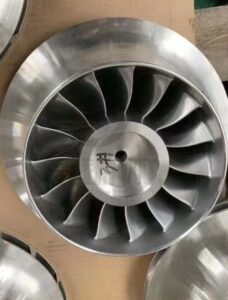
Using lost-wax precision investment casting, we produce near-net-shape aerospace components with thin walls, internal passages, and complex profiles that are difficult or impossible to machine economically. This makes our process ideal for turbine blade casting, vanes, impellers, brackets, and other flight-critical castings.
By choosing our aerospace investment casting company, you gain:
- High accuracy and repeatability – tight dimensional control for aerospace precision castings
- Excellent surface finish – reduced machining, better aerodynamic and flow performance
- Weight reduction – optimized thin-wall investment casting and topology-friendly designs
- Lower total cost – less material waste, less machining, faster production of complex parts
We position our aerospace casting foundry as a practical, high-value alternative to fully machined or fabricated components, delivering precision investment casting that meets aerospace performance, certification, and cost targets.
Why Aerospace Investment Casting?
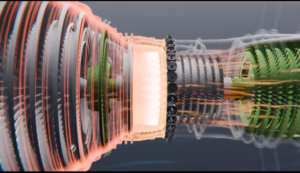
Aerospace OEMs rely on aerospace investment casting because it delivers precision, performance, and cost control in one process.
Precision where it matters
For turbine blades, vanes, and impellers, we use precision investment casting to hit tight tolerances and thin walls that are almost impossible to machine economically. Lost-wax casting gives:
- Near-net-shape airfoils and complex internal passages
- Consistent profiles from part to part
- Minimal secondary machining and rework
This is exactly why investment casting is a go‑to for turbine blade casting and other flight‑critical rotating parts.
Material flexibility for high-performance alloys
Aerospace programs need alloys that can handle high stress, fatigue, and long service life. With our aerospace investment casting services, we work with:
- Nickel-based superalloys for turbine and engine hot-section parts
- Cobalt alloys for wear and heat resistance
- Titanium and stainless steels for structural and bracket casting
We also support high-temperature alloy casting and custom alloy optimization for specific engine and airframe requirements.
Built for extreme environments
Our aerospace precision castings are engineered for:
- High-temperature turbine and exhaust zones
- Corrosive and oxidative environments
- High-cycle fatigue and vibration
Paired with options like vacuum investment casting, we help OEMs get more life and reliability out of every aerospace superalloy part.
Real cost savings vs. machining and fabrication
Compared with hogging parts from billet or complex weldments, aerospace investment casting cuts total cost by:
- Reducing material waste through near-net-shape casting
- Eliminating multiple welds and assemblies
- Shortening machining time and tooling costs
For programs that also use aluminum parts, we often pair our castings with high-precision aluminum investment castings and even high-performance aluminum casting alloys to hit weight, cost, and performance targets in one supply chain.
Aerospace Casting Materials
When it comes to aerospace investment casting, the alloy you choose is just as important as the design. We focus on materials that handle high temperature, high stress, and demanding FAA and DoD requirements while still being cost-effective for U.S. OEMs and Tier suppliers.
Nickel-Based Superalloy Investment Casting
Nickel superalloy casting is the backbone of hot-section aerospace parts—turbine blades, vanes, nozzles, and engine components that run at extreme temperatures.
We use nickel-based alloys designed for:
- High creep and fatigue resistance under continuous load
- Excellent high-temperature strength for turbine blade casting and jet engine hardware
- Great oxidation and corrosion resistance in harsh exhaust environments
For more background on alloy options, we built a detailed overview of alloy casting processes and common aerospace alloys you can reference during material selection.
Cobalt-Based Alloy Castings for Aerospace
Cobalt alloy aerospace casting shines where wear, heat, and corrosion all hit at once—seal rings, vanes, combustor hardware, and hot gas path components. We use cobalt-based investment casting when you need:
- Exceptional wear resistance for moving interfaces
- Stable performance at very high temperatures
- Long life in corrosive or erosive flows
Our cobalt alloy casting capabilities cover multiple aerospace-grade compositions, tuned for both engine and structural applications.
Titanium Aerospace Investment Casting Solutions
Titanium investment casting is ideal when you need high strength with major weight savings. We use titanium alloys for:
- Aerospace structural castings and brackets
- Landing gear and hydraulic system cast parts
- Near-net-shape components where machining billet titanium would be too expensive
Benefits:
- High strength-to-weight ratio
- Natural corrosion resistance
- Significant weight reduction vs. steel for U.S. commercial and defense platforms
Stainless Steel and Aluminum Aerospace Cast Parts
Not every part needs a superalloy. For many aerospace precision castings, stainless steel and aluminum are the most economical and practical choice:
- Stainless steel aerospace castings
- Great for brackets, housings, and hardware
- Strong, tough, and corrosion resistant
- Aluminum aerospace cast parts
- Ideal for lightweight covers, housings, and non‑flight‑critical structures
- Excellent machinability and cost efficiency
Both materials work well for thin-wall investment casting and complex shapes where weight and cost matter.
Custom Aerospace Alloy Development and Optimization
If your program needs something beyond standard specs, we support custom aerospace alloy development and optimization:
- Tailored chemistries for high-temperature alloy casting
- Balancing strength, fatigue life, and castability
- Material testing, certification, and full traceability for flight-critical castings
Whether you’re an aerospace engine casting supplier or an OEM engineering team, we help you lock in the right material strategy early so your investment cast parts hit performance, cost, and qualification targets the first time.
Typical Aerospace Investment Cast Components
Turbine blade and vane investment casting
We use aerospace investment casting to produce turbine blades, vanes, and impellers with thin walls, internal cooling passages, and tight tolerances. Our nickel superalloy turbine blade castings and directional solidification casting options help boost engine efficiency, fuel burn, and part life in both commercial and military jets.
Aerospace structural castings and brackets
Lightweight aerospace structural castings and brackets are where investment casting shines. We deliver near-net-shape aerospace components that replace multi-piece weldments and heavy machined blocks, cutting weight and part count while keeping the strength and reliability flight-critical hardware demands.
Engine component casting for nozzles and fuel systems
From nozzles, pump housings, and fuel system bodies to complex aerospace engine casting manifolds, our precision investment casting process hits the passage geometry and surface finish these systems need. This helps reduce downstream machining and improves flow performance in jet engines and auxiliary power units.
Landing gear and hydraulic cast parts
We supply landing gear cast components and hydraulic system cast parts that handle high loads and harsh duty cycles. Investment casting lets us integrate features, bosses, and ports into one piece, cutting welds and leak paths and improving reliability for commercial and defense platforms.
Sensors, actuators, and aerospace fastener castings
For smaller hardware, we produce sensors housings, actuator bodies, and aerospace fastener castings with tight dimensional control and clean, repeatable surfaces. When customers need similar precision in other alloys, we use the same lost-wax casting approach as in our investment casting foundry for complex parts to keep quality, cost, and lead time in balance.
Aerospace Investment Casting Process
Our aerospace investment casting process is built around tight control, repeatability, and full certification so you get reliable, flight‑ready parts every time.
Wax pattern design and creation
We start with high-precision wax patterns designed specifically for aerospace parts:
- CAD/CAM and simulation to validate geometry and gating
- Injection tooling or 3D-printed wax for complex or prototype parts
- Dimensional checks to ensure the wax pattern matches final print tolerances
This is where near-net-shape aerospace components are born, keeping machining to a minimum.
Ceramic shell building and dewaxing
Next, we build a robust ceramic shell around the wax:
- Controlled slurry and stucco applications for thin-wall investment casting
- Optimized shell thickness for turbine blade casting and structural parts
- Autoclave dewaxing to remove wax cleanly and protect shell integrity
Our shell systems are tuned for high-temperature alloy casting and excellent surface finish. For more detail on shell and mold work, see our overview of the precision casting process.
Metal pouring, solidification, and cooling
We tightly control metal flow and cooling to avoid defects:
- Exact melt temperatures and pour rates for nickel superalloy casting, cobalt alloy aerospace casting, titanium investment casting, and stainless steel
- Solidification modeling to reduce porosity and shrinkage
- Controlled cooling curves to hit the required microstructure and mechanical properties
This level of control is what supports true aerospace precision castings and flight-critical castings.
Finishing, machining, and surface treatment
After shakeout and cut-off, we finish every aerospace precision casting to print:
- CNC machining of critical features and tight tolerance surfaces
- Heat treatment and hot isostatic pressing (HIP) where specified
- Surface treatments and coatings for corrosion resistant aerospace castings
We keep most finishing in-house to lock down quality and lead time.
Vacuum investment casting for critical aerospace parts
For jet engine hot-section parts and other critical components, we use vacuum investment casting:
- Low gas content and minimal oxidation for aerospace superalloy parts
- Ideal for investment casting for jet engines and high-temperature alloy casting
- Supports ultra-clean, high-performance nickel- and cobalt-based alloys
This is standard for parts where fatigue life and creep resistance are non‑negotiable.
Directional solidification casting for turbine components
For turbine blades and vanes, we offer directional solidification casting:
- Columnar or single-crystal structures for extreme temperature service
- Improved creep resistance and longer life in hot gas paths
- Compatible with advanced nickel superalloy casting systems
This is the go-to for high-end turbine blade casting in commercial and military engines.
Rapid prototyping and fast-turn aerospace casting
When you need parts fast, we combine rapid prototyping with aerospace investment casting:
- 3D-printed patterns for quick design iterations
- Short-run tooling options to bridge from prototype to production
- Compressed lead times for development programs and qualification builds
This gives aerospace OEMs and Tier 1s a way to validate designs quickly while staying on the same investment casting path they’ll use for production.
Quality control for aerospace investment castings
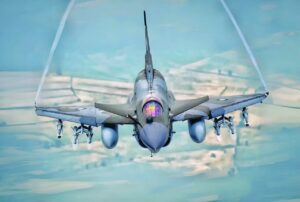
When it comes to aerospace investment casting, quality control is everything. We build our entire process around repeatability, full traceability, and zero-defect performance for flight-critical castings.
AS9100 aerospace investment casting compliance
We operate to strict AS9100 aerospace investment casting standards so OEMs and Tier 1s know exactly what they’re getting. AS9100 gives us a structured system for:
- Controlled process documentation and change management
- Risk-based thinking for every aerospace casting program
- Full lot traceability from raw material to finished part
Our AS9100 system ties directly into our broader aerospace casting capabilities, so quality isn’t an add-on—it’s built into the way we run the foundry.
NADCAP processes for aerospace foundries
For special processes, we follow NADCAP-approved practices that aerospace primes expect from a serious casting partner. That includes:
- Heat treatment for nickel-based and cobalt-based superalloys
- Non-destructive testing processes under controlled procedures
- Welding and brazing when required by aerospace specs
This lets U.S. customers plug us into their supply chain with minimal qualification risk.
Non-destructive testing: X-ray and penetrant inspection
Every critical aerospace precision casting goes through non-destructive testing (NDT) to confirm internal and external soundness:
- X-ray inspection of aerospace castings to detect internal porosity, shrink, or inclusions
- Fluorescent penetrant inspection (FPI) to find surface cracks or leaks on thin-wall investment castings
We use industry-standard acceptance criteria tailored to each engine component, bracket, or structural casting.
Traceability and material certification
Aerospace buyers expect full paperwork and traceability. We maintain:
- Heat and lot tracking for all aerospace casting alloys
- Mill certs and test reports linked to every casting serial or batch
- Digital records for quick certification retrieval during audits
Our material system ties back into our alloy expertise and casting alloy database, making approvals faster for new programs.
Zero-defect strategy for flight-critical castings
For flight-critical aerospace investment castings, “good enough” isn’t an option. Our zero-defect strategy includes:
- Upfront DFM and gating/feeding simulation to prevent defects
- Tight process windows and real-time pouring/shell monitoring
- 100% inspection on critical features and NDT for designated parts
The result: consistent, certifiable aerospace precision castings that help U.S. customers reduce scrap, warranty risk, and unplanned downtime in service.
Casting capabilities and production range
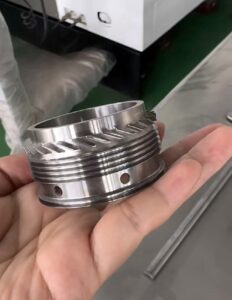
Aerospace casting size and weight range
As an aerospace investment casting company, I keep our size and weight range flexible. We handle everything from tiny aerospace precision castings under a few ounces to structural castings over 100 lbs, with thin-wall investment casting where weight matters most. Whether it’s a compact bracket or a larger engine housing, we design the tooling and process window around your exact envelope and mass targets.
Tight tolerance aerospace precision castings
For flight-critical aerospace investment casting services, tight tolerances aren’t “nice to have” – they’re mandatory. We routinely hold tight dimensional tolerances on turbine blade casting, bracket casting, and engine component casting, minimizing secondary rework. Near-net-shape aerospace components help you cut machining time, shorten assembly, and keep parts consistent lot to lot.
Prototype to high-volume aerospace production
I’ve built our aerospace casting foundry to support you from first article to full-rate production.
- Rapid prototypes for design validation and testing
- Low–mid volumes for spares and specialty programs
- High-volume runs for OEM and Tier 1 platforms
We lock in stable processes and tooling so your ramp-up is smooth and predictable.
In-house CNC machining and finishing services
To keep quality and lead time under control, we offer in-house CNC machining, drilling, tapping, and finishing for aerospace precision castings. If you need tight-machined titanium or aluminum features similar to our precision CNC machining bronze services for custom industrial parts, we apply the same discipline to aerospace alloys. That means one integrated supplier for casting, machining, and final inspection, with full traceability from pour to packed part.
Aerospace sectors we serve
Commercial aviation cast components
We support commercial jet and regional aircraft programs with aerospace investment casting services for:
- Engine and APU hardware
- Structural brackets and mounts
- Cabin, cargo, and nacelle hardware
Our near-net-shape aerospace precision castings help airlines and OEMs cut weight, improve fuel efficiency, and lower total lifecycle cost.
Military and defense aerospace castings
For defense customers, we deliver rugged flight-critical castings that hold up in the toughest environments. Typical parts include:
- Turbine blade casting and vane components
- Aerospace structural castings and brackets for airframes
- Landing gear cast components and hydraulic system cast parts
We follow strict defense and export requirements while protecting your IP and program timelines.
Spacecraft and satellite casting applications
We supply precision investment casting for spacecraft, launch vehicles, and satellite platforms where reliability is non‑negotiable. Applications include:
- Lightweight titanium investment casting for structures
- High‑temperature alloy parts for propulsion and turbo‑pumps
- Corrosion resistant aerospace castings for space environments
For high‑heat engine and propulsion components, we often work with nickel superalloy casting solutions similar to the Inconel high‑temperature alloys used in aerospace and space systems. You can see typical performance in our Inconel alloys guide with properties and applications.
Why choose Vastmaterial as your aerospace casting partner
Choosing the right aerospace investment casting company matters. At Vastmaterial, we focus on giving U.S. aerospace OEMs and Tier 1s a casting partner they can actually rely on, not just another supplier.
Aerospace investment casting experience and expertise
We’ve built our aerospace investment casting services around complex, high-spec parts where failure is not an option. Our team understands:
- Tight-tolerance aerospace precision castings
- Thin-wall investment casting for weight-sensitive designs
- High-temperature and corrosion-resistant alloys for engines and structures
This isn’t general foundry work; our process is tuned for flight-critical aerospace casting projects.
Proven results with OEMs and Tier 1 suppliers
We work directly with aerospace OEMs and Tier 1 suppliers to deliver:
- Near-net-shape aerospace components that cut machining time
- Consistent repeatability across long production runs
- Documented cost reductions vs. fully machined or fabricated parts
Our track record includes turbine blade casting, aerospace bracket casting, and engine component casting for demanding platforms.
Design-for-casting engineering support
We get involved early with design-for-casting (DFC) support to help you:
- Optimize part geometry for investment casting
- Consolidate weldments and multi-piece assemblies into single castings
- Improve manufacturability while protecting performance and safety
If you’re working with stainless or alloy steels, our experience with high-performance alloys and aerospace-grade alloy steel castings helps speed up development and qualification.
Lead times, logistics, and global supply reliability
We structure our aerospace investment casting services around U.S. buyer expectations:
- Flexible production from rapid prototypes to stable volume
- Reliable lead times backed by controlled planning and tooling management
- Global supply support with strict material traceability and documentation
Our goal is simple: be the aerospace casting foundry you don’t have to chase—parts show up on time, to print, with the paperwork your quality team needs.
Aerospace Casting Case Studies
Turbine Component Casting Project Examples
On recent turbine blade and vane programs, we replaced multi-piece weldments and heavy machined parts with single-piece aerospace investment castings. By using nickel superalloy casting with vacuum investment casting and directional solidification, we achieved:
- Thin-wall investment casting down to ~0.020 in for airfoils
- Built-in cooling passages and fir-tree roots in one shot
- Near-net-shape profiles that only needed light finish machining
For one jet engine customer, moving a turbine vane from billet machining to precision investment casting cut raw material scrap by more than 40% and shortened lead time on replacement parts by several weeks. Our experience with high-temperature alloy casting is backed by in-house development of advanced high-temperature alloys that are optimized for creep and oxidation resistance in turbine hot sections.
Performance and Cost Improvements from Investment Casting
When we convert a turbine or engine component to lost-wax casting for aerospace, we focus on both performance and total cost:
- Performance gains
- Better airflow from smoother surface finish and tighter profile control
- Higher temperature capability with advanced aerospace superalloy parts
- Lower weight from integrated designs and optimized wall thickness
- Cost advantages
- Less machining time thanks to near-net-shape aerospace components
- Fewer joints and welds, which cuts assembly labor and reduces risk
- More efficient material use versus hogging parts from solid bar or forgings
On a recent U.S. military engine bracket project, switching to aerospace precision castings delivered a 25% weight reduction and double-digit cost savings per part, while still meeting strict flight-critical requirements. For titanium programs, we pair our titanium investment casting capability with dedicated titanium alloy expertise to push both strength-to-weight and corrosion resistance for demanding aerospace customers.
Aerospace Investment Casting FAQ
What is aerospace investment casting?
Aerospace investment casting (lost‑wax casting) is a precision process we use to produce complex, near‑net‑shape aerospace components with tight tolerances and smooth surfaces. We inject wax into a die to form a pattern, build a ceramic shell around it, melt out the wax, then pour molten alloy into the cavity. This gives us flight‑critical aerospace precision castings with minimal machining, ideal for turbine blades, structural brackets, and engine hardware.
Which alloys are used in aerospace casting?
For aerospace investment casting, we work with a wide range of high‑performance alloys to match temperature, strength, and corrosion requirements:
- Nickel‑based superalloys for turbine blade casting, vanes, nozzles, and hot‑section engine parts
- Cobalt‑based alloys for wear‑ and heat‑resistant components
- Titanium investment casting for lightweight, high‑strength structural and bracket castings
- Stainless steels and aluminum alloys for housings, actuators, and non‑hot‑section components
We also support custom alloy optimization for specific aerospace applications and can integrate compatible copper‑based or brass components alongside cast parts, similar to our engineered copper alloy solutions.
How does investment casting compare to forging and machining?
Investment casting vs forging and machining:
- Geometry: Handles complex, thin‑wall, internal passages that forging and traditional machining struggle with
- Material usage: Near‑net‑shape casting cuts material waste and reduces machining time
- Cost: Lower total cost for complex shapes and medium‑to‑high volumes versus hog‑out from billet
- Performance: Delivers consistent properties and surface finish suitable for aerospace superalloy parts and flight‑critical castings
For highly complex aerospace components, precision investment casting usually beats full machining on cost, lead time, and design freedom.
What certifications does an aerospace foundry need?
Any serious aerospace investment casting company supporting OEMs and Tier 1s in the U.S. should have:
- AS9100 certification for aerospace quality management
- NADCAP approvals for key special processes (heat treat, NDT, welding, coatings, and often vacuum investment casting)
- Robust non‑destructive testing capabilities (X‑ray inspection, fluorescent penetrant, sometimes CT)
- Full traceability and material certification for every heat, batch, and casting, especially for flight‑critical aerospace precision castings
We build our systems around a zero‑defect mindset so our customers can trust every near‑net‑shape aerospace component that leaves our foundry.