
Overview
410 SS Material Overview
What is 410 Stainless Steel (AISI 410 / UNS S41000)?
When you see 410 SS material or SS 410, you’re looking at a hardenable, straight-chromium martensitic stainless steel. It’s designated as AISI 410 / UNS S41000 and also known globally as 1.4006 stainless steel. This grade is designed to deliver a strong balance of hardness, strength, and moderate corrosion resistance at a very competitive cost.
Martensitic Stainless Steel Characteristics
410 stainless steel is a martensitic stainless grade, which means:
- It is heat-treatable (can be hardened and tempered).
- It is magnetic in most conditions.
- It offers higher strength and wear resistance than many austenitic grades like 304.
- It has lower corrosion resistance than 304/316 but better than plain carbon steel.
Because of this martensitic structure, 410 SS material is ideal when you need hardness, edge retention, and mechanical strength, not just corrosion resistance.
Key Benefits of 410 SS Material
If you’re deciding between SS 410 material and other stainless grades, these are the real-world benefits you get:
- Heat treatable to a wide range of hardness levels
- Good wear and abrasion resistance for moving and contact parts
- Adequate corrosion resistance in mild atmospheres, fresh water, and steam
- Magnetic – useful for detection, handling, or design requirements
- Often lower cost than high-alloy stainless grades, with better performance than carbon steel in wet conditions
For many buyers, 410 SS property is the “sweet spot” between strength, hardness, and price.
Typical Industries and Users of 410 SS
You’ll see 410 stainless steel widely used across US industrial, OEM, and maintenance applications where strength and hardness matter:
- Valves, pumps, and fittings – stems, seats, trim, fasteners
- Cutlery and kitchen tools – blades, knives, utensils needing a hard edge
- Oil, gas, and energy – pump shafts, turbine parts, downhole tools
- Power generation – steam-side components, turbine blades, hardware
- General engineering – shafts, bushings, wear parts, fasteners, tooling
If you work with 410 SS material, SS 410, or even compare it to 420 SS material and 420 SS steel, you’re typically aiming for higher hardness and wear resistance with acceptable corrosion performance and a clear cost advantage.
410 SS Chemical Composition
Elemental Makeup of 410 Stainless Steel (AISI 410 / UNS S41000)
410 SS material is a straight-chromium martensitic stainless steel. Its typical chemical composition is:
- Carbon (C): 0.08–0.15%
- Chromium (Cr): 11.5–13.5%
- Manganese (Mn): ≤ 1.0%
- Silicon (Si): ≤ 1.0%
- Phosphorus (P): ≤ 0.040%
- Sulfur (S): ≤ 0.030%
- Iron (Fe): Balance
This balanced composition is why 410 stainless steel is a go-to grade when you need a mix of hardness, wear resistance, and basic corrosion resistance at a reasonable cost.
If you’re comparing multiple stainless grades for a project, it’s helpful to look at a broader stainless steel product range like our stainless steel materials lineup so the chemistry and performance differences are clear at a glance.
Chromium and Carbon Range in 410 SS
In SS 410 material, chromium and carbon are the real drivers of performance:
- Chromium (11.5–13.5%)
- Forms a passive film for corrosion resistance
- Stabilizes martensitic structure after hardening
- Carbon (0.08–0.15%)
- Directly boosts hardness and strength when heat treated
- Higher carbon makes 410 SS more hardenable than ferritic grades, but slightly less corrosion resistant than lower-carbon stainless
For U.S. manufacturers, this makes 410 SS a strong fit when you need parts that can be heat treated hard but still handle water, steam, and mild environments.
Effect of Composition on Hardness and Corrosion Resistance
Because of its chromium + carbon balance, 410 stainless steel behaves like this:
- Hardness & Strength
- Higher carbon = higher achievable Rockwell hardness after quench and temper
- The martensitic structure gives strong wear resistance for shafts, fasteners, and mechanical parts
- Corrosion Resistance
- Chromium content gives better corrosion resistance than plain carbon steels
- But with its carbon level, 410 SS has lower corrosion resistance than 304 SS or other austenitic stainless grades, especially in chlorides and aggressive chemicals
In short: more carbon = more hardness, slightly less corrosion resistance, so you pick 410 SS when mechanical performance matters more than top-tier corrosion resistance.
410 SS vs 420 SS Chemical Differences
Both 410 SS material and 420 SS material are martensitic stainless grades, but 420 steps up the carbon:
- 410 SS (AISI 410 / UNS S41000 / 1.4006)
- C: ~0.08–0.15%
- Cr: ~11.5–13.5%
- 420 SS (AISI 420)
- C: ~0.15–0.40% (depending on subgrade)
- Cr: ~12–14%
What this means in practice:
- 420 SS steel can reach higher hardness (ideal for knives, cutting tools, surgical instruments)
- SS 410 offers easier machining, better toughness, and typically lower cost
- Corrosion performance between 410 and 420 is similar in many mild environments, but 420’s higher carbon can make it slightly more sensitive to pitting if not heat treated and finished correctly
For U.S. users deciding between ss 410 material and 420 SS steel, the rule of thumb is:
- Choose 410 SS when you want balanced hardness, good toughness, and machinability
- Choose 420 SS when you need maximum edge hardness or wear resistance, and you’re okay with more careful heat treatment and finishing.
410 SS Mechanical Properties

410 SS in Annealed Condition
In the annealed condition, 410 stainless steel (410 SS material / SS 410) is softer and easier to machine or form. Typical properties (room temperature, reference values):
- Tensile strength: ~480–620 MPa (70–90 ksi)
- Yield strength (0.2%): ~275–415 MPa (40–60 ksi)
- Elongation: ~20–25%
- Hardness: about Rockwell B 88–96 (roughly HRc 15–22 equivalent)
This condition works well when you need good machinability first, then plan to heat treat 410 SS after machining for final hardness.
Hardened and Tempered 410 SS Properties
Once quenched and tempered, AISI 410 stainless shifts into a high-strength, wear‑resistant state:
- Tensile strength: ~860–1,380 MPa (125–200 ksi), depending on tempering temperature
- Yield strength: ~655–1,100 MPa (95–160 ksi)
- Elongation: ~10–18% (drops as hardness goes up)
- Impact toughness: moderate; you trade toughness for hardness at higher tempers
For designers and buyers used to alloy steels, 410 behaves somewhat like a stainless 4140: strong, hard, and heat treatable, but not as tough as austenitic grades.
410 SS Hardness Range & Rockwell Values
410 stainless steel hardness is one of its biggest selling points:
- Annealed 410 SS hardness: ≈ HRB 88–96
- Hardened and tempered 410 SS hardness: typically HRC 28–45
- With optimized heat treatment, HRC 48–52 is achievable for some sections
That flexibility lets you spec SS 410 material from relatively soft (for forming) to very hard (for wear parts) just by adjusting the heat treatment.
Strength, Toughness & Wear Resistance
For U.S. users in oil & gas, pumps, valves, and general machining, 410 stainless is a practical balance of strength, hardness, and cost:
- Strength: High strength in the quenched and tempered condition makes 410 SS a solid choice for shafts, fasteners, and high‑load components.
- Toughness: Tough enough for many structural and rotating parts, but not as impact‑tough as 304; avoid severe impact or deep cryogenic service at very high hardness.
- Wear resistance:
- Much better wear resistance than 304 or 316 at similar hardness
- Ideal for seats, bushings, valve trim, cutlery, and pump parts that see sliding or abrasive contact
If you’re weighing alloy steel vs stainless steel for strength and wear, 410 SS is a strong option when you need both mechanical performance and basic corrosion resistance, as discussed in this overview of alloy steel vs stainless steel behavior in service.
410 SS Physical Properties
410 SS material (AISI 410 / UNS S41000) has a solid balance of strength, stability, and thermal performance, which is why a lot of U.S. OEMs and machine shops rely on it for reliable, repeatable results.
Density and Melting Point of 410 SS
- Density: about 7.7–7.8 g/cm³ (0.278–0.282 lb/in³)
- Melting range: roughly 1450–1510°C (2640–2750°F)
This gives 410 stainless steel a similar weight to carbon steel, making it easy to factor into existing designs and conversions.
Thermal Conductivity and Specific Heat
410 stainless steel doesn’t transfer heat as fast as carbon steel, but it’s better than most austenitic grades:
- Thermal conductivity: about 24–28 W/m·K at room temperature
- Specific heat: around 460–500 J/kg·K
That balance makes 410 SS material suitable for parts that see heat cycling but still need stable dimensions and good wear resistance.
Modulus of Elasticity and Stiffness
- Elastic modulus (E): about 200 GPa (29 x 10⁶ psi)
- Shear modulus (G): roughly 77 GPa (11 x 10⁶ psi)
In simple terms, ss 410 material property is very stiff and resists deflection under load, which is why it’s commonly used for shafts, pins, and structural components that can’t afford to flex.
Thermal Expansion at Elevated Temperature
The coefficient of thermal expansion for 410 SS is moderate:
- Around 10–11 µm/m·°C between 20–100°C (68–212°F)
- Expansion increases gradually as temperature rises
This predictable expansion is important when you’re designing close-tolerance parts or mating 410 SS with other alloys. For higher-temperature, more specialized alloys, I also supply engineered high-temperature alloy solutions and custom parts, including nickel- and cobalt-based alloys for extreme service, similar to what you’d see in dedicated high-temperature alloy products.
410 SS Heat Treatment
Annealing 410 stainless steel (SS 410 material)
For 410 SS material, annealing is how we reset the structure and improve machinability:
- Typical anneal range: ~1,500–1,650°F (815–900°C)
- Cooling: Controlled furnace cool or air cool (slow cooling reduces hardness)
- Goal: Soften the martensitic stainless steel, relieve stress, and prep for machining or further heat treat
A proper anneal gives SS 410 material better toughness and easier cutting while keeping acceptable strength.
Hardening and quenching 410 SS
410 stainless steel is a heat treatable stainless steel, so we can push hardness and strength much higher:
- Austenitize: ~1,800–1,950°F (980–1,065°C), soak based on section thickness
- Quench: Oil or air quench (oil for maximum hardness, air for reduced distortion)
- Condition: After quench, 410 SS is very hard but also brittle and must be tempered
For cast components, we typically combine hardening with controlled cooling similar to the stainless steel casting process to balance hardness and crack resistance.
Tempering temperatures and hardness of 410 stainless
Tempering lets us dial in the final 410 stainless hardness and toughness:
- Low temper (~300–600°F / 150–315°C):
- Higher Rockwell C hardness (HRC)
- Lower toughness, more brittle
- Medium temper (~600–900°F / 315–480°C):
- Balanced hardness and toughness
- Common for 410 SS material in shafts, fasteners, and wear parts
- High temper (~900–1,150°F / 480–620°C):
- Lower hardness, higher toughness
- Better for impact-loaded parts
In practice, hardened and tempered SS 410 can reach around HRC 35–45, depending on exact temperatures and hold times.
How heat treatment changes strength and toughness
Heat treatment is what makes 410 SS stand out versus austenitic grades:
- Annealed SS 410 material:
- Lower strength, higher ductility
- Easier machining and forming
- Hardened and tempered 410 SS:
- Much higher tensile and yield strength
- Strong wear resistance with controllable toughness
- Over-tempering or wrong cycle:
- Can drop hardness below spec
- Can reduce fatigue life and wear resistance
If you’re planning investment cast 410 stainless parts, pairing the right heat treatment with a quality stainless investment casting process helps lock in repeatable strength and hardness across production runs:
stainless investment casting process, benefits, grades, and costs.
410 SS Corrosion Resistance
Corrosion resistance in mild atmospheres and fresh water
410 SS material offers reliable corrosion resistance in dry indoor environments, rural atmospheres, and fresh water when the surface is properly finished and maintained. In most U.S. industrial and commercial settings—like pump shafts, valves, and light-duty mechanical parts—410 stainless steel holds up well against rust as long as it’s not constantly exposed to chlorides or standing water. A smooth, ground or polished surface greatly reduces the risk of pitting and staining.
Performance in steam and mildly corrosive environments
410 stainless steel performs well in hot water and steam, which is why it’s widely used in steam turbine parts, valve components, and power generation hardware. In mildly corrosive environments—like weak organic acids, some detergent solutions, and lightly contaminated process water—410 SS can provide a good balance of corrosion resistance and hardness, especially when correctly heat treated and kept clean.
Limitations in marine and aggressive chemical environments
410 SS is not a marine-grade stainless. In coastal air, salt spray, or direct seawater contact, it will rust and pit faster than austenitic grades like 304 or 316. It also struggles in chloride-rich, acidic, or strong chemical environments, where stress corrosion cracking and rapid attack can occur. For harsh offshore or marine engineering applications, you’re usually better off with more corrosion-resistant alloys and appropriate surface treatment services such as coating or plating to extend service life (see our specialized surface treatment capabilities).
Surface finish and heat treatment impact on corrosion resistance
Both surface finish and heat treatment have a big impact on 410 stainless corrosion resistance:
- Smoother finish (ground, polished) → fewer crevices, better rust resistance
- Rough, scaled, or heat-tinted surfaces → higher risk of pitting and staining
- Proper tempering after hardening → more stable passive film, better service performance
- Over-tempering or poor heat treatment → reduced corrosion resistance and premature failure
If you need both wear resistance and reasonable corrosion resistance, we usually recommend a controlled hardening and tempering cycle combined with a clean, finished surface to get the best out of 410 SS.
410 SS Welding and Fabrication
Weldability of 410 Stainless Steel (410 SS Material)
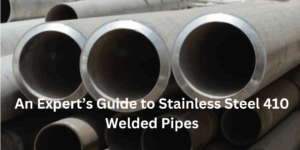
410 stainless steel (SS 410) is weldable, but it’s not as forgiving as 304. It’s a hardenable martensitic stainless, so you need to control heat input and cooling to avoid cracking.
- Use low-hydrogen welding processes and fillers compatible with 410 or 309/310 for dissimilar joints.
- Avoid high heat input and multiple heavy passes without control.
- For precision weldments on 410 stainless sheet and plate, we often pair it with tight process control and fixturing similar to what we use in high-accuracy laser-cut metal sheet work.
Preheat and Post-Weld Heat Treatment for SS 410
For SS 410 material, preheat and PWHT (post-weld heat treatment) are critical if you want reliable welds and controlled hardness:
- Preheat:
- Typical range: 400–600°F (200–315°C)
- Hold evenly to reduce thermal shock and hydrogen cracking.
- Interpass temperature:
- Keep in similar range as preheat. Don’t let the part cool to room temp between passes.
- Post-weld heat treatment:
- Temper or subcritical stress relieve after welding to reduce hardness and restore toughness.
- Typical temper range: 1100–1350°F (595–730°C) depending on required hardness and strength.
For highly stressed 410 stainless bar stock, shafts, or flanges, we usually recommend customers combine controlled welding with full quench-and-temper cycles where design and code allow.
Machinability and Cutting of 410 Stainless
410 SS material machines better than most austenitic stainless steels, especially in the hardened and tempered condition, but it will still work-harden if abused.
Key points for machining and cutting:
- Use sharp carbide tooling with rigid setups.
- Moderate cutting speeds, higher feed, and generous coolant keep heat and work-hardening down.
- In annealed SS 410 material, you’ll get easier drilling and turning but more burr formation.
- For profile cutting of 410 stainless sheet and plate, laser or plasma cutting is efficient; just plan for a heat-affected zone (HAZ) that may require grinding or heat treatment.
Hot Working and Cold Forming Guidelines for 410 SS
Because 410 stainless is martensitic, it doesn’t bend like 304. You need to plan your forming process around its higher strength and lower ductility:
Hot working 410 stainless steel:
- Heat to about 1750–2150°F (950–1175°C) for forging or heavy forming.
- Don’t work it below about 1500°F (815°C) to avoid cracking.
- Always follow with an anneal and temper if you need consistent mechanical properties.
Cold forming SS 410:
- Limit to simple bends and light forming, especially on thicker 410 stainless plate.
- Use larger bend radii and slower forming speeds.
- If you do heavy cold work on 410 SS material, plan for a subsequent anneal to restore ductility and reduce residual stress.
If you’re building high-stress parts like custom flanges in 410 or similar alloy steels, we can support you with forged and machined flange solutions similar to our custom alloy steel flanges offering, tailored to your load and welding requirements.
410 SS Material Applications
Valves, Pumps, and Fasteners
410 SS material is a go-to choice in the U.S. for valves, pump components, and fasteners that see wear, pressure, and moderate corrosion. We use 410 stainless steel (AISI 410 / UNS S41000) where parts need:
- Good strength and hardness after heat treatment
- Reliable galling and wear resistance
- Decent corrosion resistance in water, oil, steam, and mild chemicals
You’ll see 410 stainless bar stock and forged parts used in valve seats, stems, pump shafts, impellers, bolts, and studs across industrial, water treatment, and general manufacturing setups. For more complex cast or machined parts in demanding services, many U.S. customers pair 410 SS with specialized processes similar to those used in precision alloy castings for industrial components found in sectors like power and heavy industry, as described in this technical guide to alloys and processes.
410 SS for Cutlery and Kitchen Tools
410 stainless steel is widely used for cutlery, kitchen tools, and utility blades where:
- Edge holding is important, but not extreme
- Ease of grinding, polishing, and stamping matters
- Basic food-contact corrosion resistance is enough
You’ll commonly find SS 410 material in table knives, kitchen utensils, scissors, and commercial kitchen hardware where a balance of hardness, durability, and cost beats higher-chromium, higher-cost grades.
Petroleum and Power Generation Equipment
In U.S. petroleum, refining, and power markets, 410 SS material shows up in:
- Turbine parts and steam-side components
- Pump shafts, wear rings, and casings
- Downhole tools, mandrels, and completion parts in oil & gas
When properly heat treated, ss 410 material handles high-stress, moderate-temperature, and mildly corrosive service very well. For more severe energy-sector environments such as nuclear-related applications, customers typically step up to corrosion- and heat-optimized alloys similar to those outlined in this overview of materials for nuclear power and energy systems: nuclear power industry materials and components.
Shafts, Bushings, and High-Stress Parts
410 SS is highly respected for shafts, bushings, and other high-stress mechanical parts because it can be:
- Quenched and tempered to a wide hardness range
- Machined to tight tolerances then heat treated for final properties
- Finished with ground or polished surfaces for wear control
Typical 410 stainless applications include:
- Motor and pump shafts
- Bushings, sleeves, and wear rings
- Gear parts, pins, and high-strength fastener bodies
If you’re choosing between 410 SS material, 420 SS material, or austenitic grades like 304, 410 is usually the best fit when you want strong, hard, magnetic stainless with better price-to-performance for mechanical service, and you’re not in a highly aggressive or fully marine environment.
410 SS vs Other Stainless Steel Grades
410 vs 420 Stainless Steel: Hardness and Carbon
When you compare 410 SS material to 420 SS material, the big difference is carbon and hardness:
- 410 SS (AISI 410 / UNS S41000)
- Carbon: about 0.08–0.15%
- Typical hardness (quenched & tempered): HRC 35–45
- Better balance of strength + toughness + machinability
- 420 SS steel
- Carbon: about 0.2–0.4% (higher than 410)
- Typical hardness (hardened): can reach HRC 50+
- Higher hardness and wear resistance, but less tough and more crack‑prone if mishandled
Use 410 SS when you need moderate hardness, good toughness, and easier machining. Move to 420 SS when maximum edge retention or abrasion resistance matters more than toughness (for example, premium cutlery, surgical tools, or highly wear‑prone parts).
410 vs 304 Stainless: Corrosion and Cost
410 SS vs 304 stainless steel is a trade‑off between corrosion resistance and strength:
- 410 SS (martensitic)
- Better strength and hardness when heat treated
- Lower corrosion resistance than 304, especially in chloride or acidic environments
- Typically lower cost per lb than 304 in many bar and forging products
- Good choice where parts are loaded, rotating, or wear‑prone
- 304 stainless (austenitic)
- Excellent general corrosion resistance, especially in food, chemical, and marine environments
- Non‑magnetic in annealed state
- Softer than hardened 410; not heat‑treatable for high hardness
- Usually the default for food equipment, tanks, and general fabrication
If your part is basically a “structural” or “pressure‑holding” part in a wet or chemical environment, 304 is safer. If it’s a shaft, bushing, fastener, or wear part where strength and hardness matter more than maximum corrosion resistance, 410 SS material is the better fit.
When to Choose 410 SS Over Austenitic Grades
I recommend ss 410 material over austenitic grades like 304 or 316 when:
- You need heat-treatable stainless steel with higher strength and hardness
- The environment is mild (fresh water, light industrial atmosphere, steam) rather than highly corrosive or marine
- Parts see impact, torque, or sliding contact (shafts, pump parts, bushings, wear rings, valve components)
- You want a magnetic stainless for sensors, alignment, or handling reasons
In many U.S. shops, I see 410 used for precision shafts and medium‑duty hardware where carbon steel would corrode too fast and 304 would wear out too quickly. For lower‑strength hardware, a low carbon steel bolt solution with machining service can also be cost‑effective in non‑corrosive environments, and is worth comparing alongside 410 SS: custom low carbon steel bolts and machining.
Trade‑Offs: Strength, Corrosion, and Price
Choosing between 410 SS, 420 SS, and 304 SS usually comes down to four questions:
- Strength & hardness
- 410 and 420 (martensitic) win over 304 once heat treated.
- 420 > 410 for maximum hardness; 410 SS is the more balanced option.
- Corrosion resistance
- 304 > 410 > 420 in most general and chloride environments.
- If corrosion is critical, austenitic (304/316) is safer.
- Toughness & reliability
- 410 SS has better toughness than 420 at similar hardness.
- 304 is very tough but cannot be hardened like 410.
- Price & total cost
- 410 often offers the best value when you need both hardness and basic corrosion resistance.
- 304 may cost more per pound but can save money in maintenance and replacement in corrosive environments.
If you want a simple rule:
- Pick 410 SS material when you need hard, magnetic, wear‑resistant stainless in moderate environments.
- Pick 304 when you need better corrosion resistance and can live with lower hardness.
- Pick 420 when hardness and wear beat everything else and you can manage the lower toughness.
410 SS Product Forms and Standards
Common 410 SS Material Forms
For most U.S. OEMs and machine shops, we stock 410 SS material in the core forms that actually move:
- 410 stainless bar stock – rounds, hex, and flats for shafts, fasteners, and machined parts
- 410 stainless sheet and plate – laser, plasma, and waterjet-ready, ideal for wear parts and structural panels
- 410 stainless coil – for stampings, washers, and formed parts
- 410 stainless forgings – custom flanges, rings, and near-net shapes for high-stress components
If you need to mix stainless with non-ferrous options in the same build, we also supply precision aluminum alloy stock and titanium alloy materials for lightweight or high-strength companion parts.
ASTM and UNS Standards for 410 Stainless Steel
We keep our 410 SS material aligned with the main U.S. and global specs buyers ask for:
- ASTM A240 410 – plate, sheet, and strip
- ASTM A276 410 – stainless steel bar and shapes
- UNS S41000 / 1.4006 – international grade designation for Type 410 stainless steel
MTRs (mill test reports) are tied to heat numbers, so you can trace chemistry and mechanicals for every lot of AISI 410 stainless you bring in.
Tolerances, Sizes, and Supply Options
Typical ss 410 material tolerances follow ASTM and standard mill practices:
- Bar – cold finished for tighter size and straightness; hot rolled for heavier diameters
- Sheet/plate – standard thickness and flatness tolerances, with cut-to-size options
- Coil – slit widths and custom thickness ranges for stamping and roll forming
We can support small job shop orders, contract production runs, and ongoing blanket releases, depending on how you schedule and stock your 410 SS material.
Mill Finishes and Surface Conditions
Surface condition has a big impact on corrosion performance and finishing:
- Hot rolled, pickled – economical for structural and machined parts
- Cold rolled, 2B finish – smooth, consistent surface for general fabrication
- Ground/peeled bar – tight tolerance bar for precision machining
- Polished finishes – for exposed components, food-contact tools, and higher cosmetic requirements
Tell us up front if you’re chasing cosmetic finish, machining performance, or weld-ready surface, and we’ll match the ss 410 material property and finish to your process.
Choosing 410 SS Material for Your Project
If you’re deciding whether 410 stainless steel (410 SS material / SS 410) is the right move, you need to match the grade to the real-world conditions of your part — not just the spec sheet.
How to Decide if 410 Stainless Fits Your Application
410 SS material is a strong fit when you need:
- Moderate corrosion resistance (fresh water, mild atmospheres, light chemicals)
- High hardness and wear resistance after heat treatment
- Good strength at room and moderately elevated temperatures
- A cost-effective stainless option versus higher alloy or austenitic grades
It’s usually a smart choice for valves, pumps, shafts, fasteners, and wear parts where strength and hardness matter more than top-tier corrosion resistance.
Key Questions to Ask: Load, Temperature, Environment
Before locking in SS 410 material, get clear on:
- Load & stress
- What’s the maximum static load?
- Any impact, shock, or cyclic loading (fatigue)?
- Required yield strength / tensile strength?
- Temperature
- Normal operating temperature?
- Any thermal cycling or short-term spikes?
- Need to maintain hardness at elevated temperature?
- Environment
- Fresh water, steam, or mild chemicals?
- Chlorides (saltwater, road salt, coastal air)?
- Any exposure to acids, industrial chemicals, or cleaning agents?
If you’re in aggressive chloride or chemical service, 410 stainless steel may not be enough; you may need a higher-alloy or austenitic grade instead.
When to Prioritize Hardness vs Corrosion Resistance
With SS 410 material, you’re often trading hardness for corrosion resistance:
- Prioritize hardness and wear:
- Cutlery, knives, tooling components
- Pump shafts, bushings, valve internals
- Choose higher carbon 410 or 420 SS material, hardened and tempered
- Prioritize corrosion resistance:
- Food equipment in frequent washdown
- Coastal or marine-adjacent installations
- Consider 304/316 instead of Type 410 stainless steel when corrosion becomes critical
If you’re torn between 410 vs 420 stainless steel, 420 generally gives higher hardness (more carbon) but slightly lower toughness and more care needed in service.
Working With Suppliers for Custom 410 SS Solutions
You’ll get the best results from 410 stainless when you involve your supplier early and share real application details. When you talk with us or any alloy casting shop, bring:
- Required hardness range (HRC), strength, and safety factors
- Service temperature and environment details
- Machining, welding, and finishing requirements
- Required standards (ASTM A240 410, ASTM A276 410, UNS S41000, 1.4006, etc.)
If you need near-net-shape or complex geometries in 410 SS or similar alloys, pairing the grade with the right process — for example, a specialized alloy casting foundry or lost-wax casting foundry — can cut machining time, shorten lead times, and lower your overall part cost.
Bottom line: choose 410 SS material when you want heat-treatable strength, solid wear resistance, and “good enough” corrosion protection at a competitive price, and validate the choice with real load, temperature, and environment data.
410 SS Technical Data and Documentation

When you’re choosing 410 SS material for a real-world job, the datasheet and supporting documents matter as much as the price. Here’s what I always tell customers to lock in before they cut a PO.
What to look for in a 410 SS datasheet
Make sure the 410 stainless steel (AISI 410 / UNS S41000 / 1.4006) datasheet clearly lists:
| Item to Check | What You Want to See |
|---|---|
| Grade & Standards | 410 SS, UNS S41000, ASTM A240 / ASTM A276 |
| Condition | Annealed, hardened, or quenched & tempered |
| Chemical Composition | C, Cr, Mn, Si, P, S, Ni, etc. with min/max ranges |
| Mechanical Properties | Yield, tensile, elongation, impact, hardness (HRC / HRB) |
| Heat Treatment Notes | Recommended annealing, hardening, tempering windows |
| Corrosion & Service Guidelines | Recommended environments and limitations |
If you’re buying parts or machined components instead of raw 410 stainless bar or plate, ask for their internal testing and quality control procedures so you know how they verify specs.
Typical test reports and certifications
For 410 SS material, I recommend asking for:
- MTR / Mill Test Report (EN 10204 3.1)
- Heat number
- Chemical analysis
- Mechanical test results
- Hardness test reports (Rockwell) for each heat/lot
- Ultrasonic or surface inspection (if critical shafts, bushings, or high-stress parts)
- ISO / quality system certificates from the mill or machine shop
This is especially important when 410 SS is used in valves, pumps, fasteners, or high-pressure components.
How to interpret mechanical and chemical specs
When you read a 410 SS data sheet, focus on:
- Chemical specs
- Carbon (C): drives hardness and wear resistance
- Chromium (Cr): drives corrosion resistance
- Sulfur (S): helps machinability but can hurt toughness
- Mechanical specs (match them to your application)
- Yield strength: minimum load before permanent deformation
- Tensile strength: ultimate strength before fracture
- Hardness: HRC/HRB range vs. required wear life
- Impact toughness: especially if you have shock or low-temp service
Tip: Always compare the specified values to your design requirements and safety factors, not just “typical” values from a generic 410 SS material property chart.
Storing and sharing 410 SS technical documents
Keep your 410 SS data organized so you can reuse it on the next project:
- Store PDF MTRs, datasheets, and certs by:
- Grade (410 SS, 420 SS, etc.)
- Product form (bar, sheet, plate, coil, forging)
- Heat number and supplier
- Use a shared folder or PLM/ERP system so engineering, purchasing, and quality can all access the same 410 stainless data sheet.
- Attach key 410 SS mechanical and chemical specs directly to:
- Drawings
- Purchase orders
- Inspection plans
Done right, your 410 SS technical data becomes a repeatable “recipe,” not a one-off guess every time you buy ss 410 material or compare it to 420 SS material.
410 SS FAQ and Common Concerns
Is 410 stainless steel magnetic?
Yes. 410 SS material is a martensitic stainless steel, so it’s fully magnetic in both annealed and hardened conditions. If you need a magnetic stainless for sensors, couplings, or brake components (and are also considering alloys like copper-nickel for brake systems), 410 SS is a strong, cost-effective option compared to non-magnetic austenitic grades.
Is 410 SS food safe and hygienic enough?
In the right condition, yes. SS 410 material is widely used in cutlery, kitchen tools, and utensils. For food-contact parts, I recommend:
- Proper heat treatment and polishing to reduce surface roughness
- Avoiding long-term exposure to strong acids, salt brines, or chlorides
- Regular cleaning to prevent staining or pitting
For heavy-duty knives where hardness matters, customers sometimes compare 410 SS with higher-carbon grades and even titanium or specialty knife alloys, similar to the performance-focused alloys used in our own high-precision knife machining services.
Can 410 SS be heat treated after machining?
Yes, 410 stainless steel is designed to be heat treatable:
- You can rough machine in the annealed state
- Then harden and temper to final 410 stainless hardness
- Finish grind or light machine after hardening if tight tolerances are needed
Just plan for distortion and dimensional change during quench and temper, especially on long, thin parts.
Service life expectations and maintenance tips
Service life for SS 410 and 420 SS material depends heavily on load, temperature, and environment. To get long, reliable life from 410 SS material:
- Keep surfaces clean and dry when possible
- Avoid stagnant salt water and harsh chemicals
- Use a smooth, polished finish on exposed surfaces
- Re-oil or re-grease moving parts like shafts, bushings, and fasteners
- Inspect periodically for wear, discoloration, or early pitting
With the right heat treatment, finish, and basic maintenance, SS 410 property allows it to deliver a strong balance of strength, hardness, and reasonable corrosion resistance at a very competitive cost for the U.S. market.