
Overview
4340 Steel Casting Product Overview
High-Strength Alloy Steel Castings for Critical Service
I supply 4340 steel castings when you need compact parts to carry very high loads, survive impact, and handle demanding duty cycles. As a nickel-chromium-molybdenum (Ni-Cr-Mo) alloy steel, AISI 4340 alloy steel castings offer a strong combination of:
- High tensile and yield strength
- Excellent toughness and impact resistance
- Good fatigue performance for cyclic and rotating loads
- Heat treatability for a wide range of strength levels
Compared with standard carbon steel castings, 4340 cast steel delivers much higher strength-to-weight ratios and far better toughness, especially in thicker sections and high-stress zones.
Where 4340 Steel Castings Are Used
My 4340 investment casting and 4340 sand casting solutions are typically specified for:
- Aerospace 4340 cast parts – structural fittings, linkages, gear components
- Defense grade alloy castings – heavy duty gear castings, shafts, weapon system parts
- Oil and gas alloy steel castings – high-pressure valves, drilling tools, pump and tool bodies
- Heavy equipment and industrial machinery – axles, hubs, transmission and drivetrain parts
In these sectors, designers use quenched and tempered 4340 castings where failure is not acceptable and parts must withstand shock, bending, and long-term fatigue loading.
4340 vs Standard Carbon Steel Castings
When you compare 4340 steel casting to common carbon steel castings (like 1020 or 1045):
- Strength – 4340 can be heat treated to much higher strength levels while maintaining ductility.
- Toughness – Ni-Cr-Mo chemistry provides superior impact and notch toughness, especially at lower temperatures.
- Fatigue life – fatigue resistant steel castings such as 4340 significantly outperform standard carbon grades in rotating and cyclic applications.
- Heat treat flexibility – 4340 is a fully heat treatable steel casting, allowing precise tuning of hardness and mechanical properties.
If you are seeing fatigue cracks, impact failures, or oversize sections with carbon steel castings, moving to 4340 steel casting is often the most efficient way to increase reliability without adding weight or envelope size.
Key Benefits of 4340 Steel Casting
High strength and toughness in critical applications
4340 steel casting delivers a rare combo of high tensile strength and toughness, making it a solid choice for parts that simply can’t fail—like load-bearing structures, heavy shafts, and safety-critical components. With proper heat treatment, quenched and tempered 4340 castings can reach very high strength levels while still absorbing shock and resisting cracking in real-world service.
Fatigue resistance for rotating and cyclic load parts
If your part sees rotating, bending, or cyclic loads—gears, axles, crankshafts, drill components—AISI 4340 alloy steel castings hold up far better than standard carbon steel. The Ni-Cr-Mo steel chemistry and heat-treatable structure give excellent fatigue resistance, helping you extend service life and reduce unplanned downtime in demanding U.S. industrial environments.
Wear and impact resistance for heavy-duty components
For heavy duty gear castings, 4340, impact arms, hammer components, and drive parts, this alloy offers strong wear resistance plus impact toughness. It stands up well in oil and gas alloy steel castings, mining, defense, and heavy equipment where abrasion, shock loads, and harsh conditions are the norm.
Good machinability after normalizing or soft heat treatment
Even though 4340 is a high-strength alloy steel casting, it machines well when we supply it in a normalized or softened condition. That means:
- Easier drilling, turning, and milling
- Better tool life and surface finish
- Lower machining costs before final heat treated 4340 steel castings are brought up to full strength
We use similar process controls as we do on our stainless steel casting process lines to keep structures uniform and machinability consistent across heats.
Design freedom for complex shapes
With both 4340 investment casting and 4340 sand casting, you get strong design flexibility:
- Investment casting (precision 4340 alloy castings):
- Complex geometry
- Thin walls
- Tight tolerances and cleaner surfaces
- Sand casting (large 4340 castings):
- Bigger, heavier sections
- More flexibility on design changes
- Cost-effective for medium to large parts
This lets us design custom 4340 steel castings around your part’s performance needs instead of forcing you to machine everything from bar or forgings.
4340 Steel Casting Material Specifications
When we produce 4340 steel castings, we stick to tight, traceable specs so your parts match the performance of premium forged and bar stock alloys.
AISI 4340 and Equivalent Grades
We routinely pour and certify to:
- AISI / SAE 4340
- UNS G43400
- EN 34CrNiMo6
- EN 1.6582
These Ni-Cr-Mo alloy steel casting grades give you high strength, toughness, and fatigue resistance in a wide range of heat-treated conditions.
Typical 4340 Cast Steel Chemistry
Typical chemical composition range for our AISI 4340 alloy steel castings (wt%):
- Carbon (C): 0.35 – 0.43
- Manganese (Mn): 0.60 – 0.90
- Silicon (Si): 0.15 – 0.40
- Chromium (Cr): 0.70 – 0.95
- Nickel (Ni): 1.65 – 2.00
- Molybdenum (Mo): 0.20 – 0.30
- Phosphorus (P): ≤ 0.025
- Sulfur (S): ≤ 0.025
We fine-tune chemistry for high-strength alloy steel castings to balance hardenability, toughness, and machinability, especially on thicker sections.
Key Standards for 4340 Steel Castings
We can pour and certify 4340 sand castings and 4340 investment castings to:
- ASTM A915 Grade SC4340 – cast Ni-Cr-Mo alloy steel
- AMS 6414 / AMS 6415 – aerospace-grade 4340 chemistry and quality requirements
- MIL-S-22141 – legacy military spec for defense-grade alloy castings
For projects needing tight process control, we integrate these standards into our melt practice, molding, and heat treat setups. When you need more detail on casting processes, our team often pairs 4340 with our lost wax investment casting capability for aerospace and precision work.
Casting vs Wrought 4340 Chemistry
Cast 4340 is not always identical to wrought 4340 bar or forgings:
- Casting grades may have slightly higher Si and Mn to improve fluidity and feeding.
- Tighter control of P and S is critical to maintain toughness in heavy sections.
- We adjust Ni, Cr, and Mo to match hardenability over the actual casting wall thickness, not just a small bar.
We design the casting chemistry around your section size and required heat-treated properties, so your heat-treated 4340 steel castings hit the same performance window you’d expect from premium wrought 4340—at a more efficient casting cost.
Mechanical properties of 4340 steel castings
4340 steel casting is all about high strength and reliability, but the final performance depends heavily on heat treatment and section size. When I design and supply AISI 4340 alloy steel castings, I’m always looking at the full property profile, not just tensile strength on a cert.
As-cast 4340 cast steel properties
In the as-cast condition, 4340 is strong but not optimized for critical service:
- Typical tensile strength: ~80–110 ksi (550–760 MPa)
- Yield strength: ~50–75 ksi (345–515 MPa)
- Elongation: ~10–18%
- Hardness: ~180–240 HB
As-cast 4340 castings are usually used only for prototypes or low-stress parts. For anything safety-critical, we move to normalized or quenched and tempered 4340 castings.
Normalized 4340 steel casting properties
Normalized 4340 cast steel gives a good balance of strength, ductility, and machinability:
- Tensile strength: ~110–140 ksi (760–965 MPa)
- Yield strength: ~80–110 ksi (550–760 MPa)
- Elongation: ~15–20%
- Hardness: ~200–260 HB
This condition works well when you need machinable alloy steel castings with solid base strength before final finishing or further heat treat.
Quenched and tempered 4340 castings
For high-stress, fatigue-loaded parts, I usually recommend quenched and tempered 4340:
- Medium strength (HRC 28–35):
- Tensile: ~140–170 ksi (965–1170 MPa)
- Yield: ~120–150 ksi (830–1030 MPa)
- High strength (HRC 38–45):
- Tensile: ~180–220 ksi (1240–1520 MPa)
- Yield: ~160–190 ksi (1100–1310 MPa)
Heat treated 4340 steel castings in these ranges are ideal for heavy duty gear castings, shafts, and other fatigue resistant steel castings where failure is not an option. If you want a broader look at how alloy design ties into performance, my full casting alloy guide goes into more detail.
Impact toughness and Charpy performance
One of the main reasons engineers pick Ni-Cr-Mo steel castings like 4340 is impact toughness:
- Properly quenched and tempered 4340 can deliver high Charpy V-notch values, even at lower temperatures.
- At moderate strength levels (around HRC 30–35), you can get very good toughness for aerospace 4340 cast parts, defense-grade alloy castings, and oil and gas alloy steel castings.
The higher you push the hardness, the more you trade off Charpy impact energy, so we dial that in based on your spec (ASTM, AMS, MIL, or OEM standard).
Section size and cooling rate effects
4340 is hardenability-sensitive, so geometry matters:
- Thick sections: slower cooling, lower hardness and strength in the core, more property gradients through the cross-section.
- Thin sections: faster cooling, higher hardness and more uniform properties.
- Complex shapes: varying wall thickness can cause mixed microstructures if heat treatment isn’t tightly controlled.
When we design UNS G43400 cast components, we factor in section size, gating, and heat treatment setup to hit your required 4340 cast steel mechanical properties consistently, not just on test coupons.
4340 Investment Casting vs Sand Casting
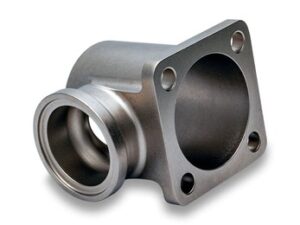
What is 4340 Investment Casting?
For 4340 steel casting, investment casting is my go-to when you need precision and clean geometry.
4340 investment casting (lost wax) is ideal when:
- You need tight tolerances and repeatability
- The part is complex with pockets, undercuts, or thin ribs
- You want to reduce machining time and scrap
We typically use investment casting for aerospace 4340 cast parts, defense components, and precision powertrain parts. If you want more detail on our precision process, check our precision casting services.
Benefits of 4340 Investment Castings
Key advantages of precision 4340 alloy castings:
- Excellent surface finish: ~125–250 µin Ra
- Thin walls: typically 0.08–0.12 in (2–3 mm), sometimes thinner with the right design
- Tight tolerances:
- ±0.003–0.005 in/in (±0.08–0.13 mm per 25 mm) common
- Great for machinable alloy steel castings where you want minimal stock
- High repeatability for medium to high volume runs
- Reduces secondary operations, especially on Ni-Cr-Mo steel castings with complex details
What is 4340 Sand Casting?
4340 sand casting is better when size and cost efficiency matter more than super tight tolerances.
Best fit for:
- Large heavy-duty gear castings 4340, housings, and structural parts
- Oil and gas alloy steel castings like valve bodies and pump housings
- Lower to medium volumes where tooling needs to stay flexible
For a broader view of our sand capabilities and alloys, see our main casting foundry overview.
Benefits of 4340 Sand Castings
Strength of 4340 sand casting:
- Larger sizes and heavy sections are no problem
- More cost effective tooling vs investment casting for big parts
- Design flexibility: easy to adjust gating, risers, and cores
- Good option for high strength alloy steel castings that will be fully machined
Typical Size, Tolerance, and Wall Limits
| Process | Typical Weight Range | Typical Tolerances* | Min Wall Thickness* |
|---|---|---|---|
| 4340 Investment Casting | ~0.1 lb – 150 lb (0.05–70 kg) | ±0.003–0.005 in/in (min ~±0.004 in) | ~0.08–0.12 in (2–3 mm) |
| 4340 Sand Casting | ~5 lb – 5,000+ lb (2–2,300 kg) | ±0.03–0.06 in/in, depending on size | ~0.20–0.30 in (5–8 mm) |
*Actual numbers depend on geometry, mold type, and project requirements.
How I Help You Choose: 4340 Investment vs Sand Casting
Use this as a quick guide for UNS G43400 cast components:
- Go investment casting when:
- You need tight tolerances and nice surface finish
- Part is under ~150 lb and fairly complex
- You want to minimize machining stock and cycle time
- Go sand casting when:
- Part is large or very massive
- Cost per pound is critical
- Tolerances are moderate and you already plan to machine most surfaces
If you share your 3D model, annual volume, and target tolerances, I can tell you fast whether 4340 investment casting or 4340 sand casting will hit your performance and cost targets better.
Heat Treatment Options for 4340 Steel Castings
For 4340 steel castings, heat treat is where we lock in the strength, toughness, and machinability you actually need in service. We set up each heat treatment route based on part size, load conditions, and your spec (ASTM, AMS, MIL, or internal standard).
Normalizing and Stress Relieving 4340 Cast Parts
For many high-strength alloy steel castings, we start with a normalize or stress-relief cycle:
- Normalizing (typically 1600–1700°F, air cool) refines the grain, evens out properties across the casting, and prepares the structure for further heat treating.
- Stress relieving (usually 1050–1250°F) removes residual casting and machining stresses to reduce distortion and cracking risk in service.
This is a common base treatment for large 4340 sand castings and structural Ni-Cr-Mo steel castings before final machining.
Annealing for Machinability and Stability
When machinability and dimensional stability matter more than maximum strength, we recommend full anneal or subcritical anneal:
- Produces a softer, more uniform structure for easy cutting.
- Reduces internal stresses so parts stay stable during and after machining.
Annealed 4340 cast steel usually falls in the Brinell 170–220 HB range, which is ideal for rough and finish machining on complex UNS G43400 cast components.
Quenching and Tempering 4340 Castings
To get the classic high-strength performance from 4340 investment casting or 4340 sand casting, we use quench and temper (Q&T):
- Austenitize (around 1525–1600°F), then oil or polymer quench for high hardness and strength.
- Temper at a chosen temperature to balance strength, toughness, and fatigue resistance.
Common Q&T strength levels for heat treated 4340 steel castings:
- ~Rockwell C 28–32: good toughness for large sections and heavy-duty gear castings.
- ~Rockwell C 32–38: general high-strength service (axles, shafts, oil and gas alloy steel castings).
- ~Rockwell C 38–44: high-strength, higher fatigue resistance for aerospace 4340 cast parts and defense grade alloy castings (where section size allows).
Typical Hardness Ranges for 4340 Heat Treat
Typical hardness bands we target on quenched and tempered 4340 cast steel:
- Normalized + tempered: ~190–260 HB
- Medium-strength Q&T: ~28–35 HRC
- High-strength Q&T: ~35–44 HRC (depending on section thickness and spec)
We always factor in section size, cooling rate, and hardenability to keep 4340 cast steel mechanical properties consistent from surface to core.
Custom Heat Treatment to Industry Standards
We routinely build custom heat treat recipes for:
- AMS 6414 / AMS 6415 style requirements on Ni-Cr-Mo steel castings
- ASTM A915 SC4340 and other high strength alloy steel castings specs
- Customer-specific aerospace, defense, and oilfield standards
Heat treatment is integrated with our machining and finishing workflow, and we can combine it with in-house surface treatment and coating options like shot blasting, plating, and painting to give you ready-to-install 4340 cast steel parts. For details on finishing options that pair well with quenched and tempered 4340, see our surface treatment services.
Common Applications of 4340 Steel Castings
4340 steel casting is my go-to when a part has to take serious load, impact, and fatigue without failing. In the U.S. market, it’s especially popular anywhere uptime, safety, and long service life are critical.
Aerospace 4340 Cast Parts
For aerospace, AISI 4340 alloy steel castings are used where strength-to-weight ratio matters:
- Landing gear elements and support brackets
- Structural fittings and hinge components
- High-load connection parts and actuating components
Quenched and tempered 4340 castings give the high strength and fatigue resistance aerospace engineers want, while still being machinable to tight tolerances.
Defense and Military 4340 Castings
Defense-grade Ni-Cr-Mo steel castings are widely used thanks to 4340’s toughness and impact resistance:
- Heavy duty gear castings and gear blanks
- Shafts, couplings, and drive components
- Weapon system parts, mounts, and support hardware
For defense work, we often pair 4340 castings with strict inspection and certifications similar to AMS 6414 4340 cast steel and related specs.
Automotive and Heavy Equipment 4340 Cast Components
For high-load drivetrain and powertrain parts, 4340 sand casting and investment casting make a lot of sense:
- Axles and differential components
- Crankshafts and power transmission parts
- Hubs, yokes, and high-stress brackets
Compared to standard carbon steel, heat treated 4340 steel castings deliver longer fatigue life and better resistance to shock loads in trucks, off-road equipment, and construction machinery.
Oil and Gas 4340 Cast Steel Applications
In oil and gas, oil and gas alloy steel castings in 4340 are used where pressure, torque, and impact are extreme:
- High-pressure valves and bodies
- Pump housings and impellers
- Drilling tools, subs, and tool joints
Here, quenched and tempered 4340 gives a strong blend of tensile strength, toughness, and wear resistance for harsh field conditions.
General Industrial Machinery 4340 Cast Parts
Across industrial equipment, machinable alloy steel castings in 4340 work well for:
- Press and mill components
- Heavy-duty couplings and flanges
- High-stress levers, arms, and housings
If you also need mating parts or pipe connections, we can pair these with our custom alloy steel flanges to keep your system consistent in strength and performance: custom alloy steel flanges.
When to Pick 4340 Casting vs 4140 or Other Alloy Steels
I usually recommend 4340 steel casting over 4140 or lower-alloy grades when:
- You need higher strength and toughness in the same section size
- The part sees severe fatigue or impact (gears, shafts, landing gear, downhole tools)
- You want extra safety margin in critical service (defense, aerospace, oil & gas)
4140 or 4130 castings can be a better fit when:
- Loads are moderate and cost is the priority
- You don’t need the top-end strength of quenched and tempered 4340 castings
- Corrosion protection or coatings will be used anyway, and ultimate strength isn’t the main driver
When in doubt, we look at your load cases, safety factors, and cost targets, then choose between 4340 steel casting and alternatives like 4140 or other high-strength low-alloy steel castings to match your real-world needs.
Quality assurance for 4340 steel casting
For our 4340 steel casting production, quality control is non‑negotiable. We treat every heat and every casting like it’s going into a critical aerospace or oilfield assembly.
Non-destructive testing for 4340 castings (UT, MT, RT, PT)
We apply NDT based on your spec and risk level of the part:
- UT (Ultrasonic Testing) – For internal defects and soundness on heavy sections and safety‑critical 4340 castings.
- MT (Magnetic Particle Testing) – For surface and near-surface crack detection on gears, shafts, and heavy-duty 4340 components.
- RT (Radiographic Testing) – For internal porosity, shrinkage, and inclusions, especially in complex 4340 investment castings.
- PT (Liquid Penetrant Testing) – For fine surface cracks on machined and finished surfaces.
We back this up with documented procedures and calibrated equipment, supported by our in-house testing and quality control systems.
Dimensional inspection and casting tolerance control
To keep 4340 investment casting and 4340 sand casting within spec, we use:
- 3D CMM and gauges for tight-tolerance, high-strength alloy steel castings
- Casting process control to hold stable tolerances and wall thickness
- PPAP/FAI-style reports when required by aerospace, defense, or automotive customers
You get full dimensional reports so there are no surprises at machining or assembly.
Mechanical testing and certification
For quenched and tempered 4340 castings and other heat treated 4340 steel castings, we offer:
- Tensile, yield, elongation, and reduction of area testing
- Hardness checks across the casting section
- Impact testing (Charpy V-notch) when required for low-temperature or high‑stress service
- Mill test reports (MTRs) listing 4340 cast steel mechanical properties, heat treat condition, and relevant specs (ASTM, AMS, MIL, etc.)
Every lot ships with full mechanical certification so your QA team has what it needs on day one.
Material traceability and heat number control
All AISI 4340 alloy steel castings carry:
- Heat numbers tied back to melt chemistry and process records
- Full traceability from raw material through melting, molding, heat treatment, and final inspection
- Archived records to support audits and long-term programs
This is critical for aerospace 4340 cast parts, defense grade alloy castings, and oil and gas alloy steel castings.
ISO-compliant and industry quality systems
We run ISO-compliant quality management with:
- Documented procedures and regular audits
- Control plans for Ni-Cr-Mo steel castings and other high-strength low-alloy steel castings
- Capability to align with customer-specific systems (AS, IATF-style requirements, or defense/military QA flows)
Bottom line: if you need precision 4340 alloy castings with predictable performance and full documentation, our QA system is built to support your program in the U.S. market.
Custom 4340 Steel Casting Services
I run custom 4340 steel casting as a true end‑to‑end service, from design support to finished, ready‑to-install parts.
Design and 4340 Material Selection Support
I help your team lock in the right 4340 casting design and alloy spec up front so you don’t fight problems later.
- DFM for 4340 investment casting and 4340 sand casting
- Wall thickness, gating, riser, and draft advice for high-strength alloy steel castings
- 4340 vs 4140 and other Ni-Cr-Mo steel casting recommendations based on load, fatigue, and cost
If you also need machined hardware with your castings, I can align specs with our low‑carbon and alloy steel machining services for consistent performance.
Rapid Prototyping and Samples
I move fast on prototypes so you can validate 4340 cast parts early:
- 3D-printed patterns and soft tooling for quick 4340 investment casting runs
- Short‑run 4340 sand castings for functional testing
- Full dimensional and mechanical reports with each sample lot
In‑House Machining and Tight Tolerances
You don’t have to coordinate multiple vendors. I cast and machine in one workflow:
- CNC turning and milling for tight‑tolerance 4340 cast components
- Critical surfaces, bores, and threads held to tight GD&T requirements
- Heat treated 4340 steel castings machined to final spec, ready for assembly
Surface Treatments and Coatings for 4340
To protect 4340 and clean up appearance, I offer:
- Shot blasting, grit blasting, and descaling
- Zinc/nickel plating, phosphate, and painting systems
- Surface prep matched to your coating spec and operating environment
Scalable Production Capacity
Whether you’re validating a new design or feeding a mature program, I scale with you:
- Low‑volume, engineering builds and spares
- Mid‑volume production for industrial and defense programs
- High‑volume 4340 investment castings with repeatable quality and stable pricing
Every 4340 steel casting project gets a single point of contact so engineers, buyers, and program managers in the U.S. can move from RFQ to production with clear communication and predictable lead times.
Why Choose Our 4340 Steel Casting Foundry
When you need reliable 4340 steel casting for high‑stress, high‑value parts, we run the process like a true manufacturing partner, not just a job shop.
Deep Experience With High-Strength Ni-Cr-Mo Cast Steels
We focus on AISI 4340 alloy steel castings and other Ni-Cr-Mo steel castings every day, so we know how to hit tight mechanical property windows and tough specs (ASTM, AMS, MIL).
- Proven history with aerospace, defense, oil & gas, and heavy equipment projects
- Familiar with qualification runs, PPAP, and full documentation for demanding U.S. customers
Advanced Melting, Molding & Process Control
We use tight process control from melt to finished casting to keep your 4340 investment casting and 4340 sand casting consistent lot after lot.
- Controlled chemistry for UNS G43400 / 34CrNiMo6 / EN 1.6582
- Process control on pour temperature, molding, risering, and heat treatment
- Integrated support for other critical alloys like duplex stainless steel when projects require mixed materials (duplex stainless solutions)
Competitive Pricing & Optimized Yield
We engineer each 4340 steel casting for maximum yield and minimum waste so you get better pricing without cutting corners.
- Optimized gating and riser design to reduce scrap
- Cost-effective tooling strategies for both low and high volume
- Focus on total part cost, including machining and finishing
Reliable Lead Times & Logistics Support
We understand U.S. production schedules and downtime costs, so we build our system around dependable delivery.
- Clear lead-time windows for both 4340 investment castings and larger sand castings
- Flexible shipping options, stocking strategies, and global delivery
- Support for blanket orders and scheduled releases
Hands-On Support for Your Team
We work directly with engineers, buyers, and project managers to make 4340 steel casting straightforward.
- Design-for-casting feedback to reduce machining and weight
- Quick response on RFQs, design changes, and quality questions
- Dedicated project owners who stay with your job from quote to production
If you’re looking for a custom 4340 steel casting supplier that understands high-strength alloy castings and U.S. manufacturing expectations, we’ve built our foundry around exactly that need.
4340 Steel Casting FAQ
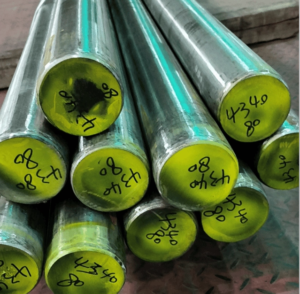
What’s the minimum order quantity for 4340 cast components?
For most 4340 steel casting projects, I can support:
- Prototype / trials: as low as 5–10 pcs (investment casting)
- Regular production: typically 50–100 pcs minimum, depending on size and complexity
For large sand cast 4340 parts, MOQs are usually set by mold and setup cost, not a fixed number, so I’ll quote case-by-case.
What are typical lead times for 4340 investment and sand castings?
Lead time depends on tooling, complexity, and required testing, but as a guideline:
- Investment casting 4340: about 4–6 weeks after tooling approval
- Sand casting 4340: about 5–8 weeks, especially for larger or heavy-wall parts
- Add 1–2 weeks if you need full machining, NDT, and certifications
Rush programs are possible if we lock specs and approval quickly.
How corrosion resistant is 4340 cast steel, and when do I need coatings?
4340 cast steel is a high-strength Ni-Cr-Mo alloy, not a stainless steel. It offers:
- Decent corrosion resistance in dry, indoor, lubricated service
- Poor resistance in marine, salt-spray, or chemical environments
In most U.S. industrial and oil & gas projects, I recommend:
- Zinc or nickel plating, phosphate, or paint for outdoor use
- Hard chrome or similar for wear + corrosion on shafts, pins, and gears
If you want built‑in corrosion resistance instead of coatings, we usually move to stainless or other alloy options like 8620 steel depending on the application.
4340 casting vs forged 4340 – what’s the difference?
Performance:
- Forged 4340:
- Better directional properties and slightly higher fatigue strength
- Preferred for ultra-critical aerospace or defense loads
- 4340 steel casting:
- Excellent mechanical properties when quenched and tempered
- Ideal for complex shapes that would be expensive or impossible to forge
Cost:
- Castings win when you need complex geometry, internal passages, or near-net shapes, cutting machining time and material waste.
- Forgings are cost effective for simple, highly loaded shapes like straight shafts or basic rings.
What tolerances can you hold with 4340 steel casting processes?
Typical achievable tolerances are:
- 4340 investment castings:
- Linear: about ±0.003–0.005 in/in (min. ±0.003–0.005 in on small features)
- Very good for precision 4340 alloy castings and finished-machined surfaces
- 4340 sand castings:
- Linear: about ±0.03–0.06 in/in, depending on size
- Best for larger, heavy-duty parts where you’ll machine critical surfaces
For tight-tolerance 4340 steel castings, I usually combine near-net casting with finish machining to hit your final print.
Related alloy steel casting options
4140 and 4130 steel castings vs 4340 steel casting
When you don’t need the full strength of 4340 steel casting, 4140 and 4130 castings can cut cost without killing performance.
4340 steel casting (AISI 4340 / UNS G43400)
- Highest strength and toughness in this family
- Better fatigue resistance for heavy duty gear castings, shafts, and aerospace/defense parts
- Ideal for quenched and tempered 4340 castings where reliability is mission critical
4140 steel castings
- Lower nickel, more cost‑effective than 4340
- Good balance of strength, toughness, and machinability
- Solid choice for general high strength alloy steel castings like brackets, housings, and medium‑duty gears
4130 steel castings
- Leaner alloy, easier to weld, good for fabricated assemblies
- Lower hardenability than 4340, but still strong after heat treat
- Works well for fixtures, moderate‑load components, and cost‑sensitive parts
In short:
- Pick 4340 when you need max strength, deep hardenability, and fatigue resistance.
- Pick 4140 for strong, versatile, cost‑efficient parts.
- Pick 4130 when weldability and price matter more than top‑end strength.
Other Ni-Cr-Mo and low alloy steel casting grades
We also pour other Ni-Cr-Mo steel castings and high-strength low-alloy options when 4340 is overkill or not the best fit:
- 4320 / 8620: Great for carburized gear teeth and wear surfaces
- 4350 / 4145: Higher strength and hardenability for oilfield and drilling tools
- Low-alloy Cr-Mo grades: Good for elevated-temperature service or pressure-containing parts
For projects that mix materials, we can combine alloy steel castings with non-ferrous options like bronze alloy castings for bearing or corrosion-critical components, similar to how we support bronze alloy production in parallel with steel programs.
How to select the right alloy steel casting for your application
When I help customers pick between 4340 steel casting and other alloys, I look at:
- Required strength level
- Ultra-high strength / fatigue critical → 4340
- Medium/high strength → 4140 or similar
- Toughness & impact loading
- Shock, impact, or safety-critical → lean toward 4340 or higher Ni-Cr-Mo grades
- Section size & wall thickness
- Thick sections that need through-hardening → 4340 or high hardenability Ni-Cr-Mo
- Weldability & fabrication
- More welding → 4130 or lower alloy steels
- Machinability & stability
- Complex machining → normalized or annealed machinable alloy steel castings
- Cost targets
- Tight budgets with moderate loads → 4130/4140 instead of 4340
If you share your load case, part size, and target hardness/strength, I’ll recommend the most cost‑effective alloy steel casting grade that still meets your performance and safety targets.