Overview
What Exactly is A356 Aluminum Alloy?
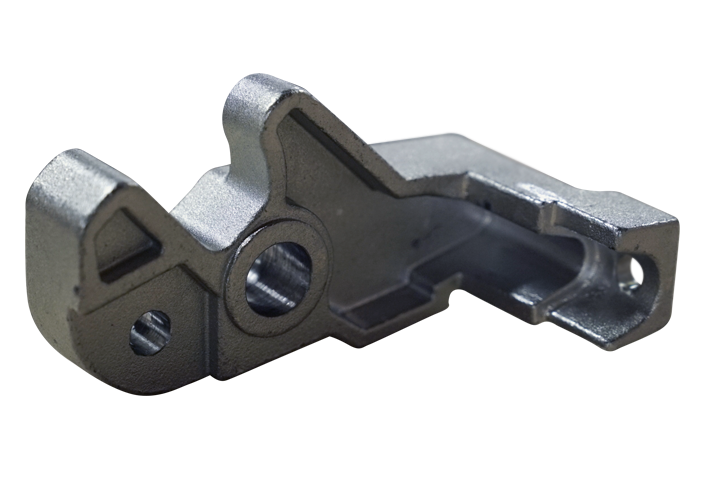
When we talk about premium materials for high-integrity components, A356 aluminum alloy is the industry standard. Technically designated as AlSi7Mg, this is a hypoeutectic alloy containing approximately 7% silicon and 0.3% magnesium. It is designed specifically to bridge the gap between manufacturing complex geometries and maintaining high structural integrity.
Unlike generic casting grades, A356 aluminum is chemically controlled to minimize impurities—specifically iron (Fe). This high purity is what gives the material its superior elongation and fatigue strength compared to the standard 356 alloy. We rely on this material when producing parts that must withstand significant stress without fracturing.
Key Characteristics of A356 Cast Aluminum
For engineers and buyers in the US market, the choice to use aluminum A356 usually comes down to three distinct performance advantages:
- Excellent Castability: The silicon content provides high fluidity, allowing the molten metal to fill intricate molds and complex, thin-walled designs without shrinkage or hot tearing.
- High Strength-to-Weight Ratio: Once heat-treated (typically T6), it delivers mechanical properties comparable to heavier metals but at a fraction of the weight—essential for aerospace and automotive efficiency.
- Corrosion Resistance: The alloy naturally forms a protective oxide layer, making a356 cast aluminum highly resistant to environmental degradation and suitable for outdoor or marine applications.
A356 Chemical Composition Standards
To get the superior mechanical properties we expect from A356 aluminum alloy, we have to adhere to a strict chemical recipe. This isn’t just about mixing metals; it’s about precision. Technically classified as an AlSi7Mg alloy, the chemistry relies heavily on the interaction between Silicon and Magnesium to allow for heat treatment (specifically T6).
When we source or pour A356, we are looking for a very specific balance. The Silicon provides the excellent fluidity needed for complex molds, while the Magnesium is the hardening agent that kicks in during the aging process.
Below is the standard A356 chemical composition breakdown by weight percentage:
| Element | Min % | Max % | Function |
|---|---|---|---|
| Silicon (Si) | 6.5 | 7.5 | Improves fluidity & castability |
| Magnesium (Mg) | 0.25 | 0.45 | Provides strength & hardness (Heat Treatable) |
| Iron (Fe) | – | 0.20 | Kept low to increase ductility |
| Titanium (Ti) | – | 0.20 | Grain refiner |
| Zinc (Zn) | – | 0.10 | Impurity control |
| Manganese (Mn) | – | 0.10 | Impurity control |
| Aluminum (Al) | Remainder | Remainder | Base metal |
The Iron (Fe) Factor: Why Purity Matters
The main difference between standard 356 and the “A” prefix in A356 aluminum is the purity level, specifically regarding Iron (Fe). In lower-grade castings, iron is a common impurity that creates brittle, needle-like structures within the metal’s grain.
By keeping Iron levels strict ($le 0.20%$), we ensure:
- Higher Ductility: The part can bend further before breaking.
- Better Fatigue Resistance: Crucial for cyclic loading applications like wheels or suspension parts.
- Superior Corrosion Resistance: Fewer impurities mean fewer sites for corrosion to start.
Selecting the right chemistry is critical. If you are comparing different materials, you can check our guide on high-performance aluminum casting alloy grades to see how A356 stacks up against other options in our foundry.
Physical and Thermal Properties Data
Understanding the physical limits of aluminum a356 is just as important as knowing its strength. In my experience supplying components for the US aerospace and automotive sectors, engineers choose this alloy specifically because it behaves predictably under thermal stress. It offers a stellar balance of low weight and high thermal efficiency, making it ideal for parts like heat sinks or engine components that need to shed heat fast.
When we review the A356 T6 aluminum alloy specifications, we see that its density is significantly lower than steel or copper, which is critical for lightweighting initiatives. Below is the essential data we use for design calculations.
Key Physical & Thermal Specifications
| Property | Metric Value | Imperial Value | Notes |
|---|---|---|---|
| Density | 2.67 g/cm³ | 0.097 lb/in³ | Lightweight, ideal for rotating parts. |
| Melting Range | 557°C – 613°C | 1035°F – 1135°F | Solidus to Liquidus range. |
| Thermal Conductivity (T6) | 151 W/m·K | 87 BTU/ft·h·°F | Excellent heat dissipation capabilities. |
| Coeff. of Thermal Expansion | 21.4 µm/m·°C | 11.9 µin/in·°F | Measured at 20–100°C (68–212°F). |
| Electrical Conductivity | 39% IACS | 39% IACS | Good conductivity for an alloy. |
Why These Numbers Matter
- Thermal Management: The high thermal conductivity allows A356 aluminum to transfer heat away from critical areas effectively. This is why we see it used often in high-pressure pump housings and EV battery cooling plates.
- Dimensional Stability: The Coefficient of Thermal Expansion (CTE) indicates how much the part will grow as it heats up. A356 has a moderate CTE, meaning it maintains tight tolerances even when the temperature spikes.
- Electrical Applications: While not as conductive as pure aluminum, the 39% IACS rating is sufficient for many electrical enclosures and grounding components where structural strength is also required.
Would you like me to analyze how these thermal properties compare specifically to 6061-T6 for a high-heat application?
A356 T6 Mechanical Properties & Strength

When we talk about performance, the A356 T6 properties are where this alloy really shines. It is not just about casting a shape; it is about ensuring that shape can handle real-world stress. For most structural applications, the T6 temper (solution heat treated and artificially aged) is the industry standard because it maximizes the alloy’s potential.
Tensile and Yield Strength
The strength of this material depends heavily on how we cast it. Generally, permanent mold castings yield higher mechanical values than sand castings due to faster cooling rates, which refine the grain structure.
- Tensile Strength: For permanent mold castings, the tensile strength of aluminum A356-T6 typically hits around 34 ksi (234 MPa). This measures the maximum stress the part can withstand before breaking.
- Yield Strength: Just as crucial is the yield strength, which usually sits near 24 ksi (165 MPa). This defines the limit where the metal starts to permanently deform, making it a critical spec for safety-critical components like automotive suspension parts.
- Elongation: You can expect an elongation of around 3.5% in 2 inches. This gives the material enough ductility to flex slightly under load without snapping immediately.
Brinell Hardness and Casting Methods
Hardness indicates how well the surface resists indentation and wear. The A356 mechanical specs vary slightly depending on whether we use sand casting, permanent mold, or investment casting.
| Property | Sand Cast (T6) | Permanent Mold (T6) |
|---|---|---|
| Ultimate Tensile Strength | 33 ksi (228 MPa) | 34 ksi (234 MPa) |
| Yield Strength | 24 ksi (165 MPa) | 24 ksi (165 MPa) |
| Elongation | 3.5% | 3.5% |
| Brinell Hardness (500kg load) | 70 HB | 75-90 HB |
In our experience, permanent mold A356-T6 generally offers a typical Brinell hardness of 75-90 HB. Sand castings, which cool more slowly, often result in slightly lower hardness values, typically around 70 HB. Understanding these trade-offs helps us select the right process for your specific load-bearing needs.
Would you like me to detail the specific heat treatment steps required to achieve these T6 properties in the next section?
Mastering A356 Heat Treatment: The T6 Temper
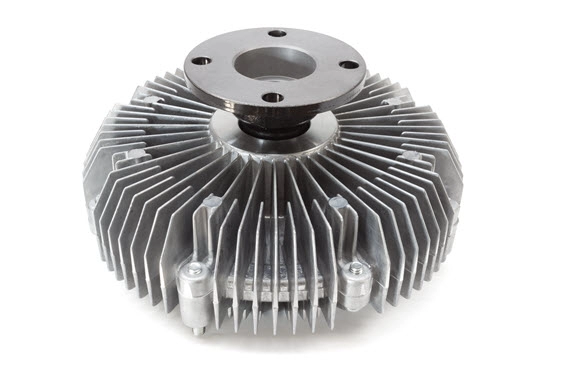
To truly unlock the potential of this alloy, you can’t just cast it and walk away. The secret sauce behind the high performance of A356 aluminum alloy is the T6 heat treatment process. This isn’t just about baking the metal; it is a precise metallurgical transformation that turns a standard casting into a structural powerhouse. When we talk about A356 T6 properties, we are looking at significant jumps in strength and hardness compared to the “as-cast” state.
The Step-by-Step T6 Process
Achieving the T6 temper involves a strict three-stage cycle. If you miss the mark on temperature or timing here, the mechanical specs will fall apart.
- Solution Heat Treatment: We heat the casting to a temperature just below its melting point (typically around 1000°F or 540°C). This allows the alloying elements, specifically Magnesium and Silicon, to dissolve evenly into the aluminum matrix.
- Quenching: This is the shock phase. We rapidly cool the parts, usually in water. Quenching “freezes” the microstructure, trapping the magnesium and silicon in that solid solution before they can separate out.
- Artificial Aging (Precipitation Hardening): ly, we reheat the parts to a lower temperature (around 300-320°F) for several hours. This controlled precipitation hardening forces the formation of fine Mg2Si precipitates, which act like microscopic reinforcing bars within the metal.
How T6 Transforms Mechanical Performance vs. T4 or F
Why go through the trouble? Because the difference in tensile strength aluminum offers is massive.
- F Temper (As-Fabricated): This is the raw casting. It is soft, has variable properties, and is rarely used for critical load-bearing parts.
- T4 Temper: This involves solution treatment and natural aging (sitting at room temperature). It offers high ductility and toughness but lacks the peak yield strength of T6.
- T6 Temper: This is the industry standard for A356 investment casting and sand casting. By artificially aging the alloy, we trade a little ductility for a massive increase in yield strength and hardness.
Once the casting achieves this optimal temper, it is ready for final machining or specialized surface treatments to further enhance environmental durability. For applications demanding rigidity and resistance to permanent deformation, the T6 temper is non-negotiable.
of Property Shifts
| Property | F (As Cast) | T6 (Heat Treated) |
|---|---|---|
| Ultimate Tensile Strength | ~19-24 ksi | 34-40+ ksi |
| Yield Strength | ~10-14 ksi | 24-30+ ksi |
| Elongation | 3-6% | 3-5% |
| Hardness (Brinell) | ~55-65 HB | 75-90 HB |
Would you like me to explain the specific machining parameters and cutter speeds recommended for A356-T6 to avoid tool wear?
Casting Characteristics & Manufacturability

When we work with A356 aluminum alloy, we aren’t just looking at strength; we are looking at how well it behaves in the mold. The high silicon content gives this alloy exceptional fluidity. This means it feeds remarkably well, allowing us to fill complex, thin-walled geometries without running into the massive shrinkage porosity issues common with other high-strength alloys.
Its versatility across different molding processes is a huge selling point for manufacturers in the US market:
- Sand Casting: ideal for prototyping and large, low-volume structural parts where tooling costs need to be kept low.
- Permanent Mold: The go-to for high-volume production runs requiring a denser grain structure and faster cycle times.
- Investment Casting: For the highest precision, we often utilize aluminum investment casting services to achieve intricate details with minimal machining allowance.
Once the part is cast and heat-treated to T6, the work isn’t done. Fortunately, A356 offers excellent machinability. It produces manageable chips and a high-quality surface finish, unlike softer alloys that tend to “gum up” cutting tools. Furthermore, it is highly weldable (typically using 4043 filler), making it easy to repair or join into larger assemblies using standard TIG or MIG processes.
A356 vs. 356 Aluminum vs. 6061-T6

Choosing the right material often comes down to understanding slight chemical differences and manufacturing limitations. While they might look similar on a spec sheet, the real-world performance of A356 aluminum alloy differs significantly from standard 356 or wrought 6061.
A356 vs. 356: The Purity Factor
The main difference here is right in the name. The “A” in A356 aluminum alloy indicates higher purity. While both are part of the Al-Si-Mg family, A356 has much stricter limits on impurities, specifically iron (Fe).
- 356 Aluminum: Allows higher iron content, which can make the material slightly more brittle. It is generally used for non-critical commercial castings where cost is the main driver.
- A356 Aluminum: By keeping iron levels low (typically ≤0.20%), we achieve significantly better ductility (elongation) and higher fatigue strength.
If your part needs to withstand cyclic loading—like an automotive suspension arm—the A356 vs 356 aluminum choice is clear: A356 provides that extra safety margin against fracture. For a deeper dive into how these compositions impact manufacturing, check out our guide to alloy processes and uses.
A356 vs. 6061: Cast vs. Wrought
Comparing A356 T6 properties to 6061-T6 is like comparing apples to oranges because the manufacturing processes are completely different.
- 6061-T6 (Wrought): This is your standard “billet” aluminum. It is extruded, rolled, or forged. It has excellent mechanical properties but is limited to simple shapes (bars, plates, tubes) unless you spend a fortune machining it down.
- A356-T6 (Cast): This alloy is designed specifically to be melted and poured. It allows us to create complex, near-net shapes with internal voids and thin walls that are impossible or too costly to machine from a solid 6061 block.
| Feature | A356-T6 (Casting) | 6061-T6 (Wrought) |
|---|---|---|
| Process | Sand, Permanent Mold, Investment Casting | Extrusion, Forging, Machining |
| Geometry | Complex, organic shapes | Simple profiles, blocks, sheets |
| Cost | Lower for complex/high-volume parts | Higher for complex parts (machining waste) |
| Strength | Moderate to High | High |
If you need a custom shape with minimal waste, reliable A356 investment casting is usually the smarter route. However, if you are building a simple frame from off-the-shelf tubing, 6061 is the standard. We can help you determine if a high-performance aluminum casting replaces your machined assembly to save costs.
Key Industrial Applications for A356 Aluminum Alloy
Because A356 aluminum alloy balances strength, ductility, and weight so effectively, we see it deployed across industries where reliability is non-negotiable. It is not just a general-purpose metal; it is the backbone of high-stress engineering in the US market.
Aerospace & Defense
In aerospace, every ounce matters, but structural integrity matters more. We supply aerospace aluminum castings using A356 because it delivers an incredible strength-to-weight ratio. It is widely used for:
- Structural airframe brackets and nodes
- Complex gearbox housings
- Critical components for gas turbine engines
Automotive and EV Components
The American automotive sector relies heavily on this material. If you look at high-performance alloy wheels, you are likely looking at A356-T6. Its ability to withstand impact loading makes it safer than standard commercial alloys. Currently, we are seeing a massive shift toward using A356 for custom aluminum parts in Electric Vehicles (EVs), specifically for:
- Battery housings (excellent heat dissipation)
- Suspension control arms
- Knuckles and crossmembers
General Machinery & Equipment
For industrial machinery, corrosion resistance and pressure tightness are the main priorities. We use A356 to cast intricate heavy-duty parts that need to survive harsh environments, including:
- High-pressure pump housings
- High-speed impellers and blowers
- Robotic arm components
Vastmaterial A356 Precision Casting Services
At Vastmaterial, we understand that sourcing high-performance metal components shouldn’t involve juggling five different vendors. That is why we offer a comprehensive, one-stop solution for your aluminum A356 needs. From melting raw A356 ingots to delivering finished, machined, and surface-treated components, we manage the entire production lifecycle under one roof.
We specialize in producing custom aluminum parts that meet the rigorous demands of the US market. Whether your project requires the intricate detail of A356 investment casting for complex geometries or the cost-effective scalability of sand casting for larger structural housings, we have the foundry infrastructure to execute it. Unlike shops that only handle the rough pour, we integrate precision aluminum casting with advanced CNC machining to hold tight tolerances right out of the gate.
Our Capabilities and Quality Assurance
We don’t just ship parts; we verify performance. Since A356 is often used in safety-critical applications like aerospace and automotive suspension, we back our manufacturing with stringent quality control.
- Versatile Production: We offer expert A356 investment casting, sand casting, and permanent mold options tailored to your volume and design complexity.
- Turnkey Machining: Our in-house CNC shop takes your raw castings to final dimensions, ensuring perfect fitment without the logistical nightmare of third-party machine shops.
- Rigorous Testing: We utilize X-ray testing (radiography) to detect internal porosity and dye penetrant inspection to catch surface defects.
- Certified Documentation: Every shipment includes comprehensive material certifications confirming chemical composition and mechanical properties.
If you are looking for reliable precision casting services that prioritize metallurgical integrity and dimensional accuracy, we are ready to partner with you.