
Overview
Key Specifications and Standards
When I source or specify 15-5 PH stainless steel, compliance isn’t optional—it’s the foundation of safety and performance. This martensitic precipitation-hardening alloy, also known as XM-12, is defined by strict chemical and mechanical benchmarks to ensure it performs in high-stress environments. My inventory remains strictly aligned with the following North American and international standards.
Compliance and Designations
| Standard | Description |
|---|---|
| UNS S15500 | The primary unified numbering system designation for this alloy. |
| AMS 5659 | The critical aerospace spec for bars, forgings, rings, and tubing (typically requires VAR or ESR melting). |
| ASTM A564 | Standard specification for hot-rolled and cold-finished age-hardening stainless steel. |
| ASME SA564 | Requirements for boiler and pressure vessel applications. |
| 1.4545 | The common European (EN) equivalent for international project cross-referencing. |
Global Equivalents and Cross-References
- Common Name: 15-5 PH Stainless Steel
- Type: Martensitic Precipitation Hardening
- Melting Standards: Often produced via Vacuum Arc Remelting (VAR) or Electroslag Remelting (ESR) to meet the cleanliness requirements of AMS 5659.
- Industry Standard: Widely recognized as the “transverse toughness” upgrade over the standard 17-4 PH.
I focus on maintaining full traceability for UNS S15500. Whether the job requires 15-5 PH bar or plate, ensuring the material hits AMS 5659 and ASTM A564 metrics is my top priority for every United States aerospace and industrial contract.
Chemical Composition of 15-5 PH Stainless Steel
We maintain a strict chemical profile for our 15-5 steel to ensure it outperforms standard alloys in critical environments. By refining the chemistry of the XM-12 alloy (UNS S15500), we provide a 15-5 PH material that offers better uniformity and cleanliness than its predecessors. This level of precision in alloying is as vital as the standards we follow for our specialized machining services.
Elemental Breakdown of UNS S15500
The performance of 15-5 PH stainless steel (also known internationally as 1.4545 stainless) comes from a calculated balance of Chromium, Nickel, and Copper.
| Element | Percentage (Typical) |
|---|---|
| Chromium (Cr) | 14.00% – 15.50% |
| Nickel (Ni) | 3.50% – 5.50% |
| Copper (Cu) | 2.50% – 4.50% |
| Niobium (Nb) | 0.15% – 0.45% |
| Iron (Fe) | Balance |
The Role of Niobium in Precipitation Hardening
The “PH” in precipitation hardening stainless is made possible by the strategic addition of Copper and Niobium.
- Copper (Cu): During the aging process, copper forms fine precipitates within the martensitic matrix, which is the primary driver behind the alloy’s high yield strength.
- Niobium (Nb): We use Niobium as a stabilizing agent. It binds with carbon to prevent grain growth during high-temperature treatments. This ensures that AMS 5659 compliant stock remains tough and uniform across the entire cross-section, which is a major advantage for heavy structural parts.
Whether you are utilizing this alloy for traditional aerospace forgings or modern 15-5 ph laser cladding, the chemical integrity remains the foundation of its reliability in the field.
Mechanical Properties Across Aging Conditions
We fine-tune the performance of 15-5 PH stainless steel through specific heat treatment cycles, allowing us to hit the exact balance of strength and ductility your project requires. By adjusting the aging temperature, we can move the UNS S15500 material from its highest strength state to a more toughened, ductile condition.
While its performance is far superior to standard grades, comparing its yield strength to other structural metals shows why it is a go-to for critical aerospace components.
15-5 PH Property Comparison: H900 vs. H1150
| Aging Condition | Tensile Strength (ksi) | Yield Strength (0.2% Offset, ksi) | Rockwell Hardness (HRC) | Elongation (%) |
|---|---|---|---|---|
| H900 | 190 – 200 | 170 – 185 | 40 – 45 | 10 – 14 |
| H1025 | 155 – 170 | 145 – 160 | 35 – 42 | 12 – 15 |
| H1150 | 135 – 145 | 105 – 125 | 28 – 37 | 16 – 20 |
Key Strength and Toughness Insights
- H900 Condition Steel: This provides the maximum possible tensile and yield strength. It is the standard choice when load-bearing capacity is the absolute priority, though it has the lowest impact toughness of the aged conditions.
- H1150 Condition: We utilize this setting when the application demands better fracture toughness and resistance to stress corrosion cracking. It offers the highest ductility and is much easier to machine than the harder tempers.
- Impact Toughness: Unlike many other martensitic steels, 15-5 PH maintains excellent transverse toughness. This means the material is less likely to fail under multi-directional stress, a critical factor in landing gear and high-pressure valves.
- Hardness Levels: The 1.4545 stainless chemistry ensures consistent Rockwell C hardness across the entire cross-section of the part, especially when using premium VAR (Vacuum Arc Remelted) stock.
15-5 PH Physical Characteristics and Constants
We know that precision in aerospace and high-pressure systems starts with the fundamentals. The physical properties of 15-5 PH stainless steel dictate how the metal behaves under real-world stress, ensuring that every UNS S15500 component we provide meets the rigorous demands of your application.
Key Physical Constants of 15-5 Material
| Property | Value (Imperial) | Value (Metric) |
|---|---|---|
| Density | 0.282 lb/in³ | 7.80 g/cm³ |
| Modulus of Elasticity | 28.5 x 10⁶ psi | 196 GPa |
| Electrical Resistivity | 30.3 microhm-in | 77 microhm-cm |
| Specific Heat | 0.11 Btu/lb/°F | 460 J/kg·K |
Thermal Expansion and Conductivity
For projects requiring a high-precision fit, we ensure our premium stainless steel products are evaluated for consistent thermal expansion coefficients.
- Coefficient of Thermal Expansion (70-200°F): 6.0 μin/in/°F.
- Thermal Conductivity (at 300°F): 124 BTU-in/hr-ft²-°F.
- Magnetic Permeability: Strongly ferromagnetic in all conditions.
These specifications ensure that AMS 5659 compliant parts maintain their dimensional integrity even as temperatures fluctuate. By choosing this high strength stainless steel, you are working with a predictable material that handles electrical resistivity and thermal loads without unexpected deformation. This stability is exactly why the 15-5 material remains a staple in American heavy industry and flight-critical hardware.
Heat Treatment Guide for 15-5 PH Stainless Steel

To unlock the full potential of 15-5 steel, you must follow a precise heat treatment regimen. This martensitic PH steel achieves its signature strength through a two-stage process: solution annealing and age hardening. I prioritize these exact thermal cycles to ensure every UNS S15500 component meets the highest structural standards.
Solution Annealing and Cooling
The initial step, known as Condition A, prepares the alloy for hardening. We heat the material to 1900°F ± 25°F (1038°C) for a duration determined by the section thickness, typically 30 to 60 minutes.
- Cooling Procedure: You must air cool or oil quench the parts to below 90°F (32°C).
- Transformation: This rapid cooling is critical; it ensures the austenite fully transforms into a martensitic structure before the age hardening process begins.
- Application Note: When utilizing our stainless steel casting process, a uniform solution anneal is mandatory to refine the grain structure and ensure consistent results during final aging.
Step-by-Step Precipitation Age Hardening
As a precipitation hardening stainless, this alloy gains its mechanical properties through the controlled “aging” of copper precipitates. Depending on your needs for strength versus toughness, you can select from several standard conditions.
| Condition | Aging Temperature (°F) | Hold Time (Hours) | Typical Hardness (HRC) |
|---|---|---|---|
| H900 | 900°F (482°C) | 1 Hour | 40-47 |
| H1025 | 1025°F (552°C) | 4 Hours | 35-42 |
| H1150 | 1150°F (621°C) | 4 Hours | 28-37 |
For projects requiring the highest possible tensile strength, H900 condition steel is the gold standard. However, if your application involves high-pressure environments where impact resistance is key, I recommend the H1150 treatment. This higher-temperature soak provides a more ductile, stable material that resists stress corrosion cracking more effectively. Regardless of the target condition, always ensure the furnace atmosphere is controlled to prevent excessive scaling.
15-5 PH vs 17-4 PH Comparison
When choosing between 15-5 PH vs 17-4 PH, the decision usually comes down to structural integrity. While both are martensitic PH steels, we find that 15-5 PH (also known as XM-12) is the go-to when you need a “cleaner” metal. Unlike 17-4, 15-5 PH stainless steel is specifically designed to have little to no delta ferrite. This absence of ferrite is why 15-5 offers much higher transverse toughness, meaning it stays strong and resists cracking even when stressed against the grain.
Key Performance Differences
| Feature | 15-5 PH Stainless Steel | 17-4 PH Stainless Steel |
|---|---|---|
| Microstructure | Ferrite-free | Contains Delta Ferrite |
| Transverse Toughness | Superior (Uniform in all directions) | Lower (Directional weakness) |
| Forgeability | Excellent | Standard |
| Processing | Typically VAR or ESR melted | Often air-melted |
As a leading steel casting company, we’ve seen how 15-5’s refined structure makes a massive difference in high-stress environments. Because it is often produced using Vacuum Arc Remelting (VAR), the material is exceptionally clean.
Why We Recommend 15-5 Steel
- Improved Forgeability: The lack of delta ferrite makes it much easier to work with during the forging process compared to 17-4.
- Directional Strength: You get consistent mechanical properties whether you are measuring longitudinally or transversely.
- Reduced Cracking: The uniform grain structure minimizes the risk of internal delamination under high pressure.
If your project involves complex shapes or needs to withstand multi-directional loads, 15-5 steel provides a level of reliability that standard 17-4 simply cannot match.
Key Benefits of 15-5 PH for Industrial Projects
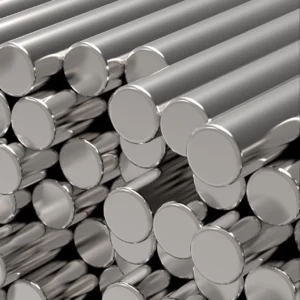
We rely on 15-5 PH stainless steel for projects where performance and safety are non-negotiable. This high strength stainless steel offers a unique blend of mechanical toughness and environmental resistance that standard grades just can’t match.
Why Professionals Choose This Alloy
- Superior Strength-to-Weight Ratio: It allows us to design lighter parts that handle extreme loads, a critical factor for the aerospace industry.
- Excellent Corrosion Resistance: This corrosion resistant PH stainless holds up significantly better in chemical processing and marine environments than standard 400-series steels.
- Transverse Toughness: One of the biggest wins for this alloy is its uniformity. It is much tougher in all directions compared to 17-4 PH, reducing the risk of internal cracks in heavy forgings.
| Benefit | Industrial Impact |
|---|---|
| Fatigue Life | Exceptional resistance to repeated stress, perfect for high-cycle machinery. |
| Reliability | Consistent properties across the entire cross-section of the material. |
| Versatility | Performs at peak levels in both cryogenic temperatures and high-heat environments. |
For our clients in the oil, gas, and chemical sectors, using an aerospace stainless alloy like 15-5 PH means fewer equipment failures. It’s the smart choice for high-pressure valves and shafts that must withstand both mechanical stress and aggressive chemical exposure without degrading.
15-5 Steel Manufacturing and Machining Tips
I’ve found that working with 15-5 PH stainless steel (UNS S15500) requires a specific approach to maintain its structural integrity. Because this is a martensitic PH steel, its behavior during welding and cutting differs significantly from standard 300-series stainless.
Best Practices for Welding 15-5 PH
When joining 15-5 steel, I recommend using the Gas Tungsten Arc (GTAW) or Shielded Metal Arc (SMAW) processes. For the best results:
- Filler Materials: Use 15-5 PH or 17-4 PH filler metal to ensure the weld zone matches the base metal’s strength and corrosion resistance.
- Preheating: Generally, no preheating is required for sections under 4 inches.
- Post-Weld Heat Treatment (PWHT): To achieve maximum toughness, you must re-solution treat and age the part after welding.
- 15-5 PH Laser Cladding: This is an excellent option for surface repairs or adding wear-resistant layers without causing excessive heat-affected zones.
Machining Speeds and Feeds
Machining 15-5 PH bar or plate is most efficient when the material is in the solution-treated (Condition A) or over-aged state. In its fully hardened H900 condition, the material is extremely tough on tools.
| Operation | Tooling Type | Speed (SFM) | Feed (IPT/IPR) |
|---|---|---|---|
| Turning | Carbide | 200 – 400 | .005 – .015 |
| Milling | Carbide End Mill | 150 – 300 | .001 – .004 |
| Drilling | Cobalt / Carbide | 50 – 80 | .002 – .005 |
| Tapping | HSS / Vanadium | 10 – 25 | N/A |
I always suggest using heavy sulfurized oil or synthetic coolants to manage the heat generated during the cut. To achieve the high-precision results required for aerospace components, we often rely on high-precision CNC machining and finishing techniques that account for the material’s work-hardening tendencies. Keeping tools sharp and maintaining a constant feed rate is the only way to prevent the tool from rubbing and glazing the surface of the 15-5 PH stainless steel.
Top Industrial Applications for 15-5 PH Stainless Steel
I’ve seen 15-5 PH stainless steel become the standard for industries where mechanical failure is simply not an option. Its ability to maintain high strength while offering superior transverse toughness makes it an essential 15-5 material for high-stakes engineering.
Aerospace Structural Components
In the American aerospace market, we rely on this aerospace stainless alloy for critical flight safety parts. Its predictable heat treatment response and high-load capacity are vital for:
- Landing gear assemblies and structural supports.
- Actuator components and flight control surfaces.
- Engine mounts and high-stress fasteners.
Oil, Gas, and High-Pressure Systems
For offshore and petrochemical projects, the corrosion resistant PH stainless properties of 15-5 are a lifesaver. It stands up to aggressive chemical environments and extreme pressure. Common uses include:
- High-pressure valves and manifold systems.
- Pump shafts and turbine parts for energy production.
- Precision components for equipment manufacturing in chemical plants.
Whether it’s under the sea or 30,000 feet in the air, 15-5 PH provides the reliability and durability required for the most demanding industrial projects.
15-5 PH Stock Sizes and Custom Processing
We maintain a ready-to-ship inventory of 15-5 PH stainless steel to ensure your production line never stalls. From high-integrity UNS S15500 rounds to heavy-duty plates, our material is sourced and processed to meet the most rigorous AMS 5659 and 1.4545 stainless requirements. We offer premium VAR (Vacuum Arc Remelted) and ESR (Electroslag Remelted) stock, providing the superior XM-12 cleanliness essential for critical aerospace components.
Available Inventory Formats
- 15-5 PH Bar: Stocked in various diameters and shapes, ready for immediate custom sawing to your exact specs.
- 15-5 PH Plate: High-quality flat stock available in multiple thicknesses, perfect for structural aerospace parts.
- 15-5 PH Forgings: We provide near-net-shape forgings to minimize material waste and optimize grain flow for maximum part strength.
Our custom processing capabilities are designed to handle complex project demands. Whether you need specialized heat treating or precision cutting, we bring the same level of expertise found in our ductile cast iron foundry for precision custom castings to every steel order we fulfill. We focus on providing clean, uniform material that reduces your machining time and improves final part reliability.
15-5 Steel FAQ: Expert Insights
What is the difference between 15-5 and 17-4 steel?
The primary advantage of 15-5 PH stainless steel over 17-4 is its transverse toughness. Because 15-5 (UNS S15500) is “ferrite-free,” it offers much more uniform mechanical properties in all directions. This makes it the preferred choice for thick sections or complex parts where 17-4 might risk internal cracking.
Can 15-5 PH be welded?
Yes, 15-5 steel is highly weldable using standard methods like TIG or MIG. It does not require the heavy pre-heating often associated with other martensitic steels. For the best structural integrity, we recommend a post-weld heat treatment to ensure the weld zone matches the strength of the base metal. While we specialize in these high-strength PH grades, we also supply duplex stainless steel for projects needing different corrosion resistance profiles.
Which heat treatment is best for maximum strength?
To achieve the highest possible tensile and yield strength, the H900 condition is the best choice. This process involves aging the material at 900°F, resulting in maximum hardness. If your project requires more ductility or impact resistance, we can provide the material in over-aged conditions like H1025 or H1150.
What are the common aerospace specs for 15-5?
In the United States, the most critical specification for 15-5 PH bar and forgings is AMS 5659. This standard ensures the alloy has been produced using premium melting practices (like VAR or ESR) to meet the strict cleanliness requirements of flight-critical components. Other common standards include:
- ASTM A564
- ASME SA564
- MIL-S-81506