
You likely know that aluminium heat treating is the secret to unlocking the full potential of your metal components.
But achieving the perfect balance between strength and ductility isn’t just about cranking up the furnace temperature.
As a manufacturing specialist, I’ve seen how the right temper designation—whether it’s T4, T6, or T7—can make or break a project’s success.
In this guide, you’re going to learn the technical nuances of solution heat treatment, artificial aging, and exactly how to optimize your heat treatable aluminium alloys for peak performance.
Let’s get to work.
Which Aluminium Alloys Are Heat Treatable?
Not all aluminum is created equal. A common misconception we encounter in manufacturing is the idea that you can simply heat treat any aluminum part to make it stronger. That is a quick way to waste time and materials. To get the mechanical properties required for high-stress applications like aerospace or automotive components, you have to start with the right chemistry.
We generally categorize these materials into two main groups: wrought alloys and cast alloys. While wrought series have their place, our expertise at Vastmaterial leans heavily into precision casting where specific alloy compositions determine whether a part will respond to thermal processing.
Heat-Treatable vs. Non-Heat-Treatable Series
Understanding the difference comes down to the alloying elements. Some elements allow the metal to undergo precipitation hardening, while others rely solely on work-hardening (cold working) to gain strength.
The Heat-Treatable Wrought Series:
- 2xxx Series (Copper): Known for high strength and fatigue resistance, often used in aerospace.
- 6xxx Series (Magnesium & Silicon): Highly versatile with good formability and corrosion resistance.
- 7xxx Series (Zinc): The strongest of the wrought alloys, used in high-performance structural parts.
The Non-Heat-Treatable Series:
- 1xxx (Pure Aluminum), 3xxx (Manganese), and 5xxx (Magnesium): These series do not respond to heat treatment for strengthening. Their strength is increased strictly through strain hardening during the rolling or forming process.
The Power of Cast Alloys: A356 and T6 Properties
In the world of precision metal casting, we focus on alloys that offer the best balance of castability and response to heat treatment. The standout performer here is A356.
When we cast A356 aluminum alloy, we aren’t just looking for shape; we are looking for the ability to alter its microstructure. Because A356 contains Magnesium and Silicon, it responds exceptionally well to T6 heat treatment (solution heat treatment followed by artificial aging).
Why we prioritize A356 and A357 for heat treating:
- Microstructure Transformation: The heat treatment dissolves alloying elements into a solid solution, creating a uniform grain structure.
- Enhanced Strength: The A356 T6 properties provide a significant jump in yield strength and hardness compared to the as-cast state.
- Thermal Stability: These alloys maintain their mechanical integrity even in high-stress environments, such as gas turbines or automotive engine components.
By controlling the chemistry and the cooling rates, we ensure that the aluminium heat treating process locks in the durability needed for critical industrial applications.
The Main Types of Aluminium Heat Treatment
When we engineer high-performance components, casting is just the beginning. To unlock the full potential of the metal, we apply specific thermal processes designed to manipulate the microstructure for strength, ductility, or stability. Here is how we break down the primary aluminium heat treating methods used in our facility.
- Homogenization: This is often the first step for high-quality castings. We heat the metal to eliminate chemical segregation that occurs during solidification. This ensures the casting has a uniform structure, relieving internal stress before any further processing begins.
- Annealing (O-temper): If a project requires maximum ductility for forming, we use annealing. This process “resets” the metal to its softest state (O-temper), allowing for significant shaping without the risk of cracking.
- Solution Heat Treatment: This is the critical first phase in strengthening alloys. We heat the material to a precise temperature just below its melting point to dissolve alloying elements into a solid solution. This step lays the groundwork for achieving rigorous A356 T6 aluminum alloy specifications, preparing the metal for the quenching that follows.
- Precipitation Hardening (Artificial Aging): After quenching, the metal is strong but not yet at its peak. We reheat the parts to a lower, controlled temperature to accelerate the precipitation of alloying elements. This “locks in” the hardness and tensile strength required for heavy-duty applications.
- Stabilization and Stress-Relieving: Precision parts often undergo heavy machining, which can introduce residual stress. We apply stabilization treatments to relax these internal tensions, ensuring the component maintains its dimensional accuracy and tight tolerances throughout its service life.
Understanding Aluminium Temper Designations
When specifying materials for precision parts, the letter following the alloy grade is just as critical as the chemical composition itself. These aluminum temper designations tell us exactly how the metal has been processed to achieve specific mechanical properties. In our foundry, we strictly adhere to these standards to ensure every casting performs predictably under stress.
Decoding Standard Temper Codes
The Aluminum Association uses a standard system to define the treatment condition. Here is the quick breakdown of the primary codes we encounter:
- F (As Fabricated): The material is in its raw state from the shaping process (casting or forming) with no special control over thermal conditions.
- O (Annealed): This is the softest temper. We heat the part to recrystallize the structure, maximizing ductility for forming operations.
- H (Strain Hardened): Applied to wrought products where strength is increased through cold working. This is rarely used in our casting operations.
- W (Solution Heat Treated): An unstable temper applicable only to alloys that naturally age spontaneously at room temperature after solution heat treatment.
- T (Thermally Treated): The most common designation for high-performance castings. This indicates the alloy has been heat-treated to produce stable tempers with increased strength.
Detailed Breakdown of the T-Series
For cast aluminum alloys like A356, the T-series is where we unlock the material’s full potential.
- T4 (Solution Treated and Naturally Aged): The part is solution heat treated and then allowed to age at room temperature to a substantially stable condition. This offers excellent ductility but lower yield strength compared to T6.
- T5 (Cooled and Artificially Aged): Parts are cooled from an elevated temperature shaping process (like extrusion) and then artificially aged.
- T6 (Solution Treated and Artificially Aged): This is the gold standard for strength. We solution heat treat the casting, quench it, and then artificially age it in a furnace. This process precipitates alloying elements to maximize hardness and tensile strength.
- T7 (Solution Treated and Over-Aged): We continue the artificial aging process past the point of peak strength. This “over-aging” stabilizes the dimensions and improves resistance to stress corrosion cracking, though it sacrifices some tensile strength.
Mechanical Properties Comparison: F vs. T4 vs. T6
The impact of heat treatment on performance is drastic. For an alloy like A356, moving from an “As Cast” (F) state to a fully treated T6 state significantly boosts the yield strength of aluminium, making it suitable for critical aerospace and automotive applications.
Typical Property Shifts in A356 Alloy:
| Property | F (As Cast) | T4 (Naturally Aged) | T6 (Solution + Artificially Aged) |
|---|---|---|---|
| Tensile Strength (UTS) | Low | Medium | High |
| Yield Strength | Low | Medium | Very High |
| Elongation (Ductility) | Low | High | Medium |
| Machinability | Poor (Gummy) | Fair | Excellent |
| Application Focus | Non-critical parts | Impact resistance | Structural components |
Note: T6 offers the best balance of machinability and mechanical strength, which is why it is our primary specification for high-precision CNC machined castings.
The T6 Heat Treatment Process Step-by-Step
Achieving the T6 temper—the gold standard for high-strength aluminum heat treating—isn’t just about throwing parts in an oven. It is a precise, three-stage metallurgical cycle that transforms the microstructure of alloys like A356. At Haoyu Material, we strictly control every variable, from temperature ramp-up rates to quench delays, ensuring that the mechanical properties we promise are exactly what you get.
Solution Heat Treatment
The first critical phase is solution heat treatment. We heat the aluminum castings to a specific range, typically between 480°C and 540°C (896°F–1004°F), depending on the specific alloy composition. The goal here is to dissolve the alloying elements—primarily magnesium and silicon in A356—uniformly into the aluminum matrix.
We hold the parts at this temperature for a set “soak time,” which allows the solid solution to become homogenous. This step is vital because it prepares the metal for strengthening. Before we even load the furnace, ensuring the integrity of the base metal is key; you can read more about our foundational methods in our guide to alloy casting processes.
The Quenching Phase
Once the alloying elements are dissolved, we have to lock them in place. This is done through quenching aluminum parts, where we rapidly cool the castings from the solution temperature to room temperature.
- Mediums: We typically use water, polymer solutions (glycol), or forced air.
- The Challenge: Quenching creates a supersaturated solid solution, freezing the microstructure. However, cooling too fast can cause distortion or residual stress, while cooling too slow results in poor mechanical properties.
- Control: We use precision fixtures and controlled polymer concentrations to mitigate warping, ensuring the part maintains its dimensional accuracy.
Artificial Aging (Precipitation Hardening)
After quenching, the material is relatively soft and unstable. To achieve maximum hardness and strength, we perform artificial aging aluminum treatment. We reheat the parts to a lower temperature range, usually 150°C to 190°C (300°F–375°F), and hold them there for several hours.
During this phase, the dissolved magnesium and silicon precipitate out of the solution in a controlled manner, forming fine particles that reinforce the metal matrix. This precipitation hardening aluminum process is what gives the T6 temper its superior yield strength.
Critical Process Controls
Consistency is the difference between a high-performance component and a scrap part. We monitor two main factors rigorously:
- Furnace Uniformity: Our equipment maintains tight temperature tolerances (±5°C) to ensure every part in the batch receives the exact same treatment.
- Quench Delay: The time between opening the furnace door and submerging the part is critical. We keep this transfer time to an absolute minimum to prevent the alloying elements from precipitating prematurely, which would ruin the T6 properties.
Benefits of Heat Treating Aluminium Components
At our facility, we don’t just cast metal; we engineer performance. Aluminium heat treating is the critical bridge between a raw casting and a high-performance component ready for the aerospace or automotive industry. By carefully controlling thermal cycles, we transform relatively soft alloys into materials that rival the structural capabilities of steel, without the weight penalty.
Dramatic Strength Improvements
The most immediate impact of processes like T6 tempering is on mechanical strength. For alloys like A356, heat treatment can double the yield strength compared to the as-cast state. This ensures that the material can withstand significant loads without permanent deformation. Understanding specific aluminum tensile properties is essential for engineers designing safety-critical parts, as heat treatment directly dictates the final load-bearing capacity.
Key Performance Advantages
Beyond simple hardness, heat treating unlocks several engineering benefits:
- Enhanced Fatigue Resistance: Treated components resist failure under cyclic loading (vibration and repeated stress), which is non-negotiable for suspension arms and engine mounts.
- Improved Machinability: Soft, untreated aluminum often “gums up” cutting tools. Heat-treated alloys chip cleanly, allowing us to manufacture custom precision parts with tighter tolerances and superior surface finishes.
- Dimensional Stability: Stress-relieving cycles remove internal tensions created during casting. This ensures the part won’t warp or twist during machining or while in service.
Heat-Treated Aluminum vs. Steel
We often replace steel components with heat-treated aluminum to reduce mass. Here is how they compare in application:
| Feature | Heat-Treated Aluminum (e.g., A356-T6) | Carbon Steel | Advantage |
|---|---|---|---|
| Weight | ~2.7 g/cm³ | ~7.8 g/cm³ | Aluminum (3x Lighter) |
| Corrosion | Naturally forms protective oxide | Prone to rust | Aluminum |
| Strength-to-Weight | High | Medium | Aluminum |
| Machining Speed | Fast | Slow | Aluminum |
By leveraging aluminum heat treat processes, we deliver components that maintain the lightweight agility required for modern EVs and aircraft while providing the rugged durability traditionally associated with heavier metals.
Common Challenges in Aluminium Heat Treating
Heat treating is a precise science, and even small deviations can ruin a batch of precision parts. The most frequent issue we encounter is aluminum distortion control. When parts are dropped into the quench tank, the rapid cooling freezes the microstructure to establish T6 properties, but this thermal shock can cause warping. This is particularly risky for complex A356 castings with varying wall thicknesses, where uneven cooling rates create internal tension.
Risks of Improper Aging
Getting the timing exactly right during the artificial aging phase is crucial for performance:
- Under-aging: If the cycle is too short or the temperature is too low, the precipitation hardening process remains incomplete. The part won’t reach its specified yield strength or hardness.
- Over-aging: Leaving parts in the oven too long causes the precipitates to grow too large (coarsen). This actually reduces the strength of the alloy, defeating the purpose of the treatment.
Preventing Cracks and Residual Stress
High-performance parts often face issues with residual stress, especially in thick sections that hold heat longer than thinner areas. If not managed, this stress leads to cracking during quenching aluminum parts or movement during subsequent CNC machining. We mitigate this through stress relieving aluminum techniques and precise control of the quench media temperature.
Best Practices for Process Control
To ensure consistent quality, we rely on strict engineering controls rather than guesswork.
- Fixture Design: We use custom racking and fixtures that support the component during thermal expansion and contraction to minimize warping.
- Controlled Quenching: Adjusting the agitation and temperature of the quench water or polymer to balance cooling speed with stability.
- Smart Material Choice: Success often starts with the right casting alloy selection, ensuring the material composition is optimized for the intended heat treatment cycle.
By integrating these controls directly into our manufacturing workflow, we ensure that every heat-treated component meets the rigorous demands of aerospace and automotive applications.
Applications of Heat-Treated Aluminium
Heat treating transforms standard cast aluminum into high-performance components capable of withstanding extreme environments. As a professional precision casting service provider, we see firsthand how processes like T6 tempering unlock the full potential of alloys for critical industries.
- Aerospace: In this sector, the strength-to-weight ratio is everything. We apply rigorous aluminium heat treating to structural brackets, wing components, and landing gear to ensure they meet flight safety standards without adding unnecessary mass.
- Automotive and EV: Modern vehicles, especially electric ones, demand lightweight durability. We utilize A356 T6 properties to manufacture robust battery housings, suspension arms, and motor mounts that resist fatigue under constant road vibration.
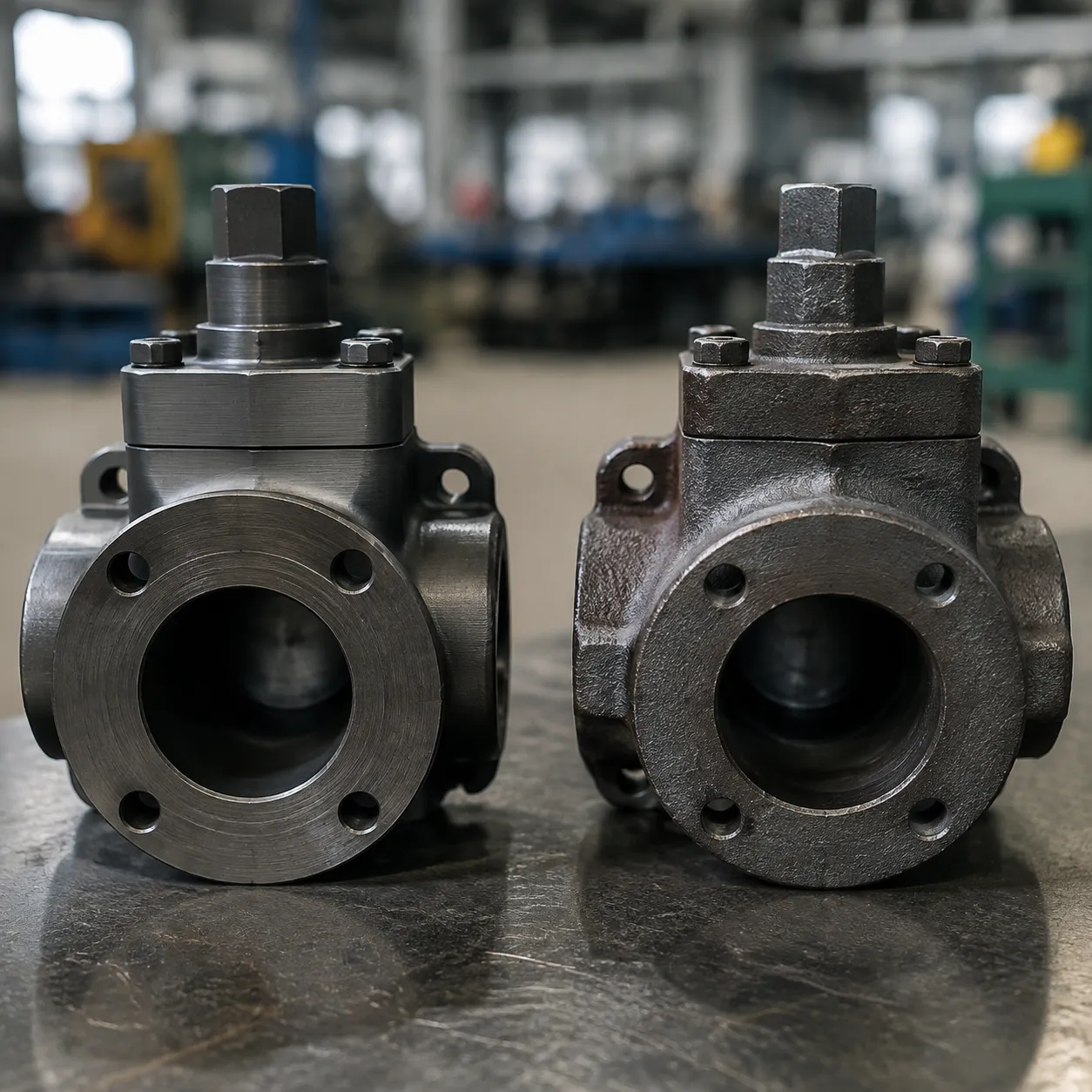
- Industrial Machinery: Reliability is key for heavy-duty equipment. Our heat treatable aluminum alloys are essential for creating high-pressure pump housings and custom OEM valve bodies that maintain dimensional stability under thermal stress.
- Defense and Marine: Components in these fields face harsh corrosive environments. Proper heat treatment enhances the corrosion resistance of parts like marine hardware and defense structural elements, ensuring longevity even in saltwater conditions.
Why Choose Professional Heat Treatment Services
Getting aluminium heat treating right isn’t just about cranking up a furnace; it’s about precise control and verified results. When you are building components for aerospace or high-stress automotive applications, relying on a standard job shop often leads to inconsistent mechanical properties. You need a partner who understands the metallurgy from the inside out.
The Necessity of Certifications
In this industry, paperwork is as important as the metal itself. For critical sectors, working with a provider holding NADCAP aluminum heat treating accreditation, AS9100, and ISO 9001 certifications is non-negotiable. These standards ensure that every cycle of aluminum heat treat is documented, traceable, and repeatable. If a part fails in the field, you need to know exactly what happened during the thermal cycle.
In-House vs. Outsourced Logistics
Splitting your supply chain adds risk. When you cast at one facility, ship to a heat treater, and then ship again for machining, you lose control over lead times and accountability.
- Traceability: Integrated services prevent “finger-pointing” between vendors.
- Speed: We eliminate shipping time between processes.
- Quality: We catch material issues immediately before value is added.
The Vastmaterial Advantage
At Vastmaterial, we streamline the entire production line. We offer integrated casting, Aluminum T6 temper processing, and precision CNC machining under one roof. This allows us to strictly control the alloy composition—specifically keeping iron content low to maximize ductility—before the metal ever hits the heat treat oven.
Comparison: Standard Shop vs. Integrated Professional Service
| Feature | Standard Job Shop | Integrated Professional Service |
|---|---|---|
| Process Control | Fragmented (multiple vendors) | Unified (Single source responsibility) |
| Lead Time | High (shipping between steps) | Low (continuous flow) |
| Alloy Purity | Unknown (relies on supplier) | Controlled (Low iron casting) |
| Traceability | Difficult to track | Full lot traceability |
By controlling the process from the melt to the final aluminum heat treat, we ensure your parts meet the exact specifications required for safety and performance.
Selecting the Right Heat Treatment for Your Project
Choosing the correct aluminium heat treating process is never a one-size-fits-all decision. It requires a strategic balance between the mechanical properties you need—such as tensile strength and hardness—and the ductility required to prevent brittle failure. For instance, while a T6 temper provides maximum strength for alloys like A356, it might sacrifice some elongation compared to a T4 state. We always advise looking at the specific operating environment of the component. Parts exposed to extreme heat or corrosive elements in marine or aerospace applications require a temper that ensures thermal stability and corrosion resistance alongside structural integrity.
Guidelines for Temper Selection
To ensure your components perform reliably in the field, we evaluate several critical factors during the product engineering phase:
- Load Requirements: For high-stress structural components, A356 T6 properties (solution heat treated and artificially aged) are usually the best choice due to their superior yield strength.
- Dimensional Tolerances: If a part has complex geometries prone to warping, we might adjust the quenching method or suggest a stress-relieving cycle to maintain precision.
- Machinability: If the part requires extensive CNC machining after casting, certain tempers provide cleaner cuts and better surface finishes.
- Operating Temperature: We consider whether the alloy will lose strength over time when exposed to high service temperatures.
The Value of Early Metallurgical Consultation
Engaging with our metallurgical experts early in the design phase is crucial for preventing costly failures. We don’t just manufacture to print; we analyze the material science behind your project. By integrating R&D insights with our casting capabilities, we can predict how a specific aluminum temper designation will react to real-world stresses.
For example, in a recent automotive project, switching a suspension component from a standard as-cast state to a precision-controlled A356 T6 cycle significantly extended the part’s fatigue life. This adjustment allowed the customer to reduce the overall weight of the part without compromising safety, proving that the right heat treatment is just as important as the alloy selection itself.
Frequently Asked Questions About Aluminum Heat Treating
What is the specific difference between T4 and T6 temper?
The main difference lies in how the aging process is handled after the initial solution heat treatment. T4 temper involves solution heat treating followed by natural aging at room temperature. This results in a stable temper with good ductility, making it easier to form or straighten if necessary.
In contrast, Aluminum T6 temper takes it a step further. After solution treating and quenching, the parts undergo artificial aging in a furnace at elevated temperatures. This “precipitates” the alloying elements more effectively, locking in maximum hardness and yield strength. For high-stress applications, T6 is generally the gold standard.
Which aluminum alloys benefit the most from heat treatment?
Not all aluminum creates the same results. The heat-treatable wrought series include the 2xxx (Copper), 6xxx (Magnesium-Silicon), and 7xxx (Zinc) families. When it comes to castings, we see the most dramatic performance gains in alloys like A356 and A357. These are specifically formulated to respond well to precipitation hardening. If you are unsure about material selection, reviewing a guide on selecting the right aluminum grade for casting is a smart first step to ensure your alloy aligns with your mechanical requirements.
How does quenching affect the final dimensions of aluminum parts?
Quenching aluminum parts is a violent thermal shock. Dropping a part from over 1,000°F directly into water or polymer creates immediate internal stress. This can lead to distortion or warping, especially in parts with varying wall thicknesses. To manage this, we use precision fixtures and controlled quench rates to minimize movement. While some dimensional shift is inevitable, a proper stress relieving aluminum process or straightening operation can bring the part back within tolerance before final machining.
Can all cast aluminum alloys be heat treated to T6 standards?
No, and this is a common misconception. High-pressure die castings, for example, often contain trapped gas porosity. If you subject them to the high temperatures of solution heat treatment, that gas expands and causes surface blistering. The T6 process is best suited for high-integrity processes like investment casting or sand casting. For a deeper look at material capabilities, seeing how A356 compares to other alloys helps clarify why certain casting methods are preferred for heat-treated components.
What certifications are essential for an aluminum heat treating provider?
Reliability is non-negotiable. At a minimum, a provider should hold ISO 9001 certification to ensure quality management systems are in place. For industries like aerospace or defense, NADCAP aluminum heat treating accreditation is often mandatory. This ensures that the pyrometry (furnace temperature control) and process documentation meet the most rigorous global standards for safety and performance.