
Finding a reliable Aluminum Investment Casting Company shouldn’t feel like a gamble.
You already know that for complex, lightweight components, investment casting is the superior choice. But how do you distinguish a high-end manufacturing partner from a basic foundry?
As a specialist at vastmaterial, I’ve seen firsthand how the right technical approach transforms a drawing into a flaw-free reality.
In this post, you’re going to learn exactly what to look for—from alloy expertise (like A356) to precision machining capabilities.
If you are looking to secure a supply chain that delivers on time and to spec, this guide is for you.
Let’s get started.
Why Choose Aluminum for Investment Casting Projects?
Engineers and procurement managers often face a critical trade-off: reducing component weight while maintaining structural integrity. As a specialized Aluminum Investment Casting Company, we utilize the lost wax casting process to solve this specific engineering challenge. Aluminum offers an exceptional weight-to-strength ratio, making it the material of choice for industries requiring lightweight performance, such as automotive and aerospace, without sacrificing durability.
Achieving Complex Geometries and Thin Walls
The primary advantage of investment casting over other manufacturing methods is the ability to produce thin-wall aluminum casting designs with intricate internal details. Unlike machining, which is limited by tool access, our Silica Sol process allows for:
- Near-Net-Shape Manufacturing: Drastically reducing material waste and machining time.
- Complex Internal Cavities: Creating undercuts and channels in a single piece that would otherwise require assembly.
- Minimal Wall Thickness: Achieving lightweight structures that sand casting cannot support.
Superior Surface Finish: Silica Sol vs. Sand Casting
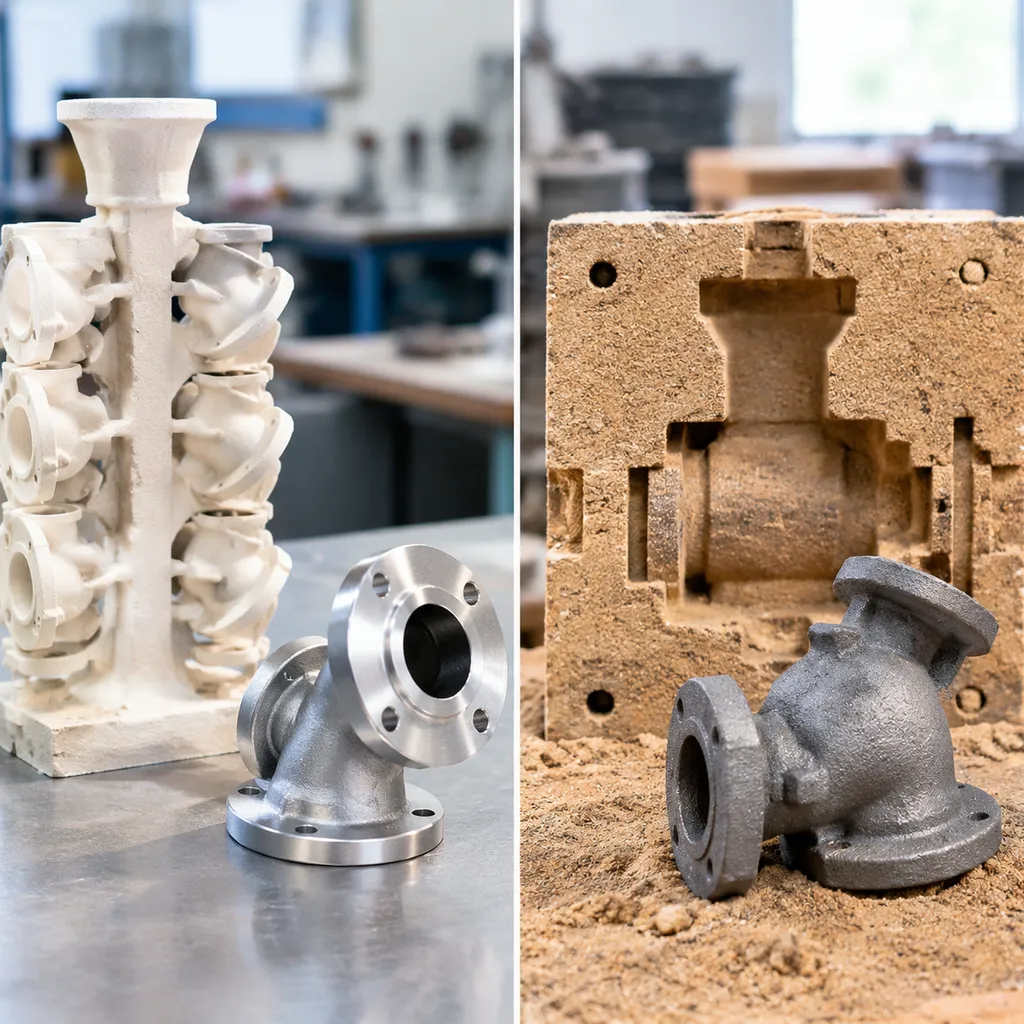
Surface quality is often a deciding factor for precision parts. While sand casting is faster for large, rough components, it leaves a coarse finish that requires heavy post-processing. Our investment casting process delivers a superior surface right out of the mold.
Surface Finish Comparison:
| Feature | Sand Casting | Investment Casting (Silica Sol) |
|---|---|---|
| Surface Roughness | Rough (> Ra 12.5 μm) | Smooth (Ra 3.2–6.3 μm) |
| Dimensional Accuracy | Low (CT10-CT12) | High (ISO 8062 CT4-CT7) |
| Post-Processing | Heavy machining required | Minimal polishing or machining |
By choosing the right casting method, you ensure your components meet strict aesthetic and functional standards with significantly less secondary finishing.
Critical Capabilities to Look for in a Manufacturer
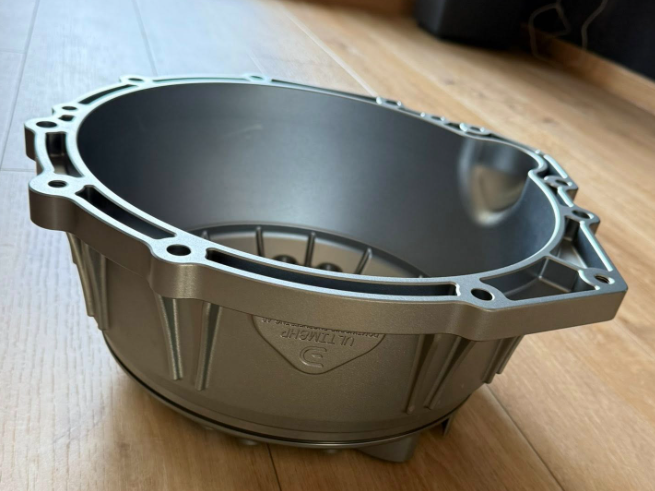
Finding the right aluminum investment casting company involves more than just locating a foundry that can pour metal. It requires a partner with deep technical expertise to ensure your components meet rigorous industrial standards. We focus on delivering a complete manufacturing ecosystem, ensuring that every part we produce is ready for assembly.
Expertise in Specific Aluminum Alloys
Material selection is the foundation of performance. We have extensive experience working with a wide range of aluminum grades to match your specific mechanical requirements. Our foundry routinely handles:
- A356 & A357: Ideal for pressure-tight applications requiring high strength and corrosion resistance.
- 6061 Equivalents: We formulate specific chemistries to match the properties of wrought alloys for cast components.
- ADC12: utilized for parts requiring good castability and dimensional stability.
Engineering and Design for Manufacturability (DFM)
A successful project starts before the mold is ever made. We provide comprehensive Design for Manufacturability (DFM) support to optimize your 3D CAD files for the lost wax casting process. Our engineering team analyzes wall thickness, gate placement, and geometry to prevent defects like porosity or shrinkage. By refining the design early, we help you reduce material waste and lower overall production costs while maintaining the integrity of complex geometries.
Turnkey Solutions: CNC Machining and Finishing
Casting is often just the first step in the production chain. To streamline your supply chain, we offer a true one-stop solution that takes parts from raw cast to finished product. Our facility is equipped to handle secondary operations, ensuring tight tolerances that casting alone cannot achieve.
- Precision Machining: We integrate machining services such as CNC turning, milling, and drilling to achieve exact specifications on critical mating surfaces.
- Surface Finishing: We provide a variety of treatments including anodizing, powder coating, sandblasting, and polishing to enhance durability and aesthetics.
- Heat Treatment: We perform T5 and T6 heat treatments to improve the mechanical properties of the aluminum.
By consolidating these processes, our precision investment casting services reduce lead times and eliminate the logistical headache of managing multiple vendors.
Quality Assurance Standards in Aluminum Foundries
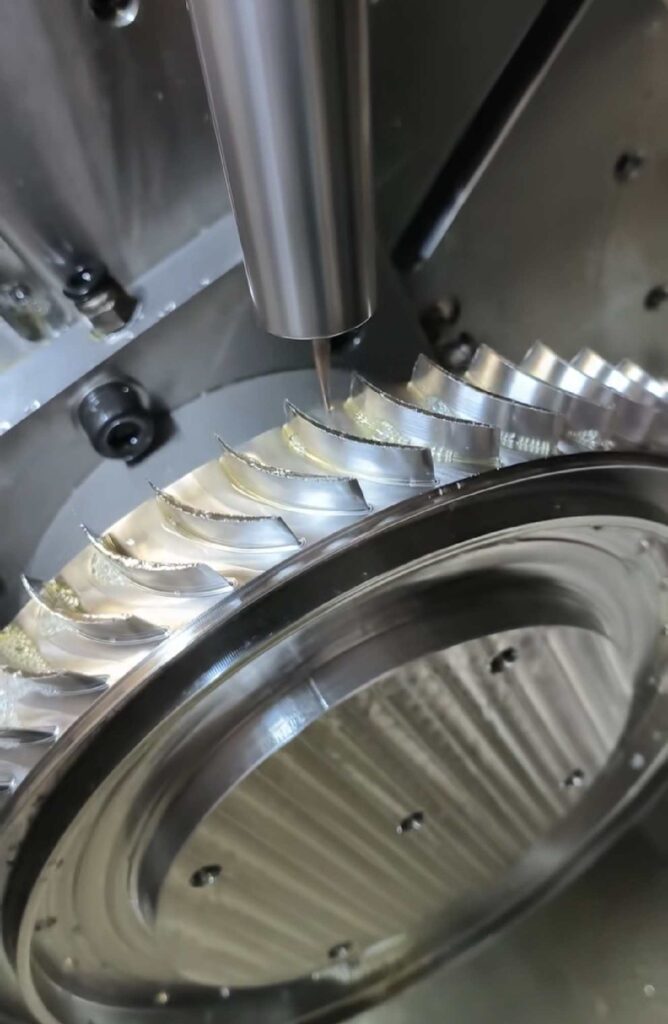
As a professional Aluminum Investment Casting Company, we know that consistent quality is the only thing that matters in high-stakes industries like automotive and aerospace. Our manufacturing facility operates under strict ISO 9001:2015 and IATF 16949:2016 certifications. This framework isn’t just paperwork; it guarantees that every step of our process—from wax injection to final inspection—is documented, repeatable, and traceable.
To ensure every component meets your exact specifications, we employ a rigorous testing regimen:
- Dimensional Accuracy: We utilize advanced Coordinate Measuring Machines (CMM) for tight tolerance verification, ensuring that complex geometries align perfectly with your original CAD designs.
- Porosity Control: Internal defects can compromise structural integrity. Our team uses X-Ray and radiographic non-destructive testing (NDT) to detect any internal shrinkage or porosity without damaging the part.
- Material Verification: Before pouring, we use optical emission spectrometers to analyze the chemical composition of the molten aluminum. This confirms that alloys like A356 or 6061 meet the required material standards before the metal ever enters the mold.
By combining these protocols within our precision casting foundry, we deliver parts that are ready for immediate assembly.
The Manufacturing Process: From Wax to Finished Part
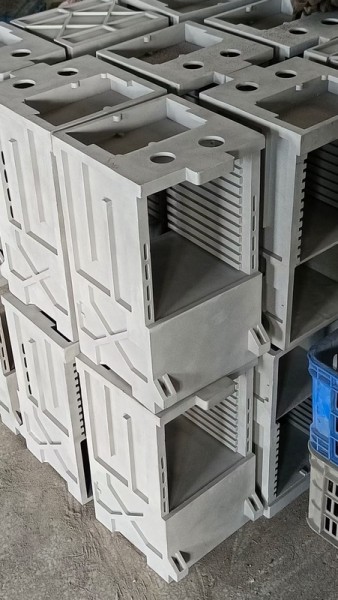
At Haoyu Material, we manage the entire lifecycle of your component, transforming raw concepts into high-precision reality using the Silica Sol lost wax casting process. This method is preferred for aluminum components requiring intricate details and tight tolerances that sand casting simply cannot match. You can view our detailed manufacturing process breakdown to see how we maintain consistency across every batch.
Mold Design and Ceramic Shell Building
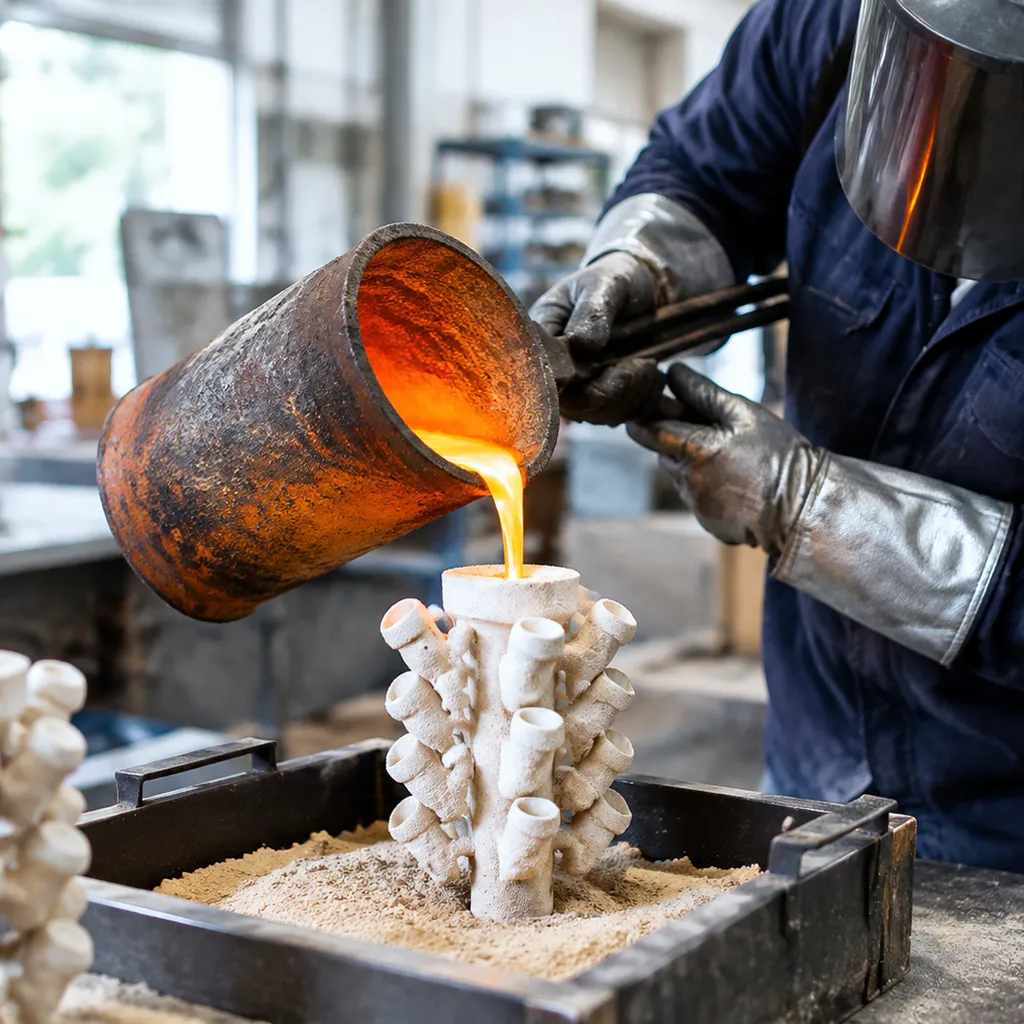
The journey begins with engineering a precise metal die. We inject wax into this die to create a near-perfect replica of the final part. These wax patterns are attached to a central sprue and repeatedly dipped in a high-grade ceramic slurry. This builds a hard shell around the wax, which is critical for maintaining dimensional stability during the pour.
Pouring and Solidification Control
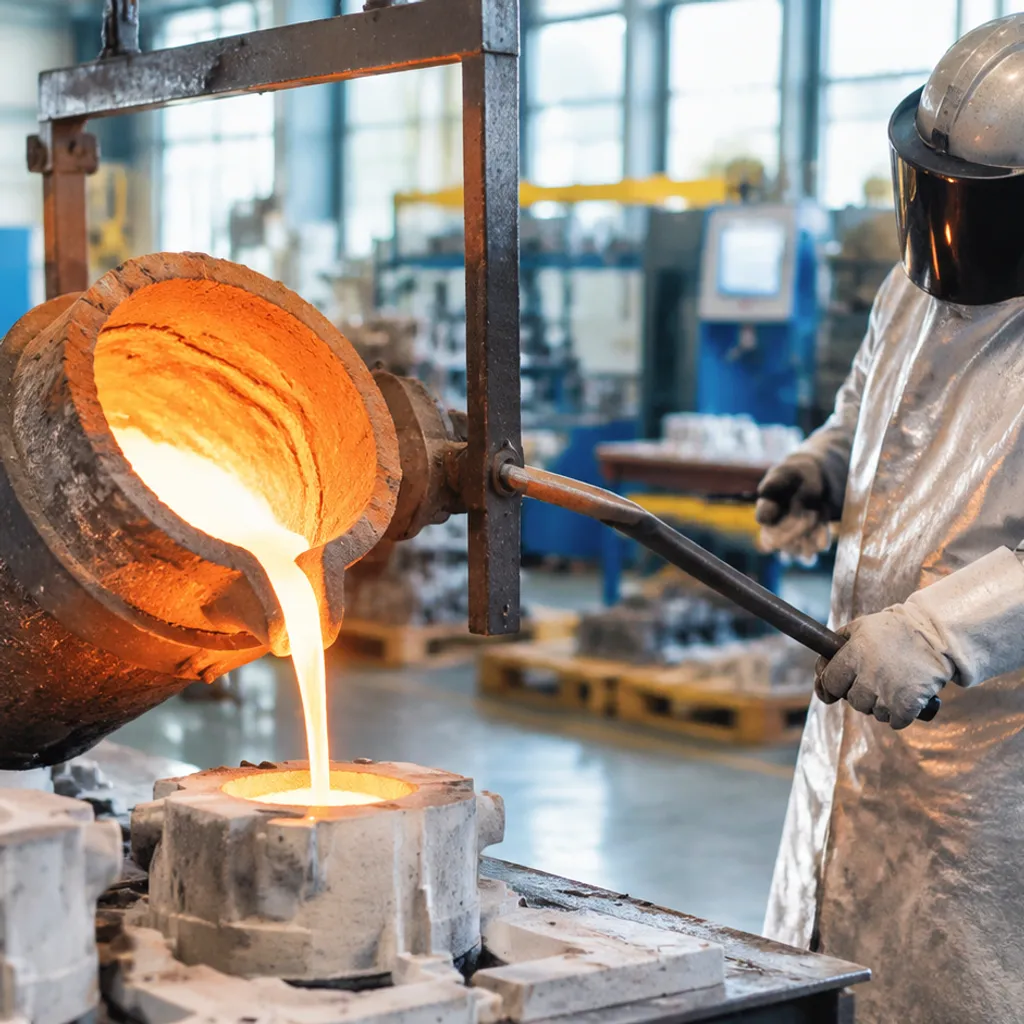
Once the ceramic shell is cured, the wax is melted out (dewaxing), leaving a hollow cavity. We pour molten aluminum into these pre-heated shells under strictly controlled conditions. Our team focuses heavily on solidification control to minimize shrinkage and ensure effective porosity control, resulting in a dense, defect-free structure.
Post-Processing and T6 Heat Treatment
After the metal cools and the shell is removed, the part undergoes secondary operations. For aluminum alloys like A356 or 6061, heat treatment is essential to achieve the required mechanical strength. We typically apply T5 or T6 cycles to harden the material. Understanding aluminum heat treating processes is vital for ensuring your parts meet the necessary hardness and durability standards for industrial use. Finally, we perform CNC machining and surface finishing to deliver a ready-to-use component.
Key Industry Applications for Precision Parts
Our facility adapts to the rigorous demands of diverse sectors, leveraging the versatility of the lost wax process to deliver components that meet strict performance criteria. As a dedicated aluminum casting manufacturer for custom precision parts, we tailor our production lines to handle the specific geometries and alloy requirements of each industry.
Automotive: Lightweight Performance
In the automotive sector, reducing vehicle weight without sacrificing safety is paramount. We utilize net-shape manufacturing to produce lightweight aluminum components that contribute to better fuel efficiency and handling. Our capabilities include:
- Transmission Components: High-integrity parts designed to withstand thermal stress.
- Lightweight Brackets: Structural supports that replace heavier steel alternatives.
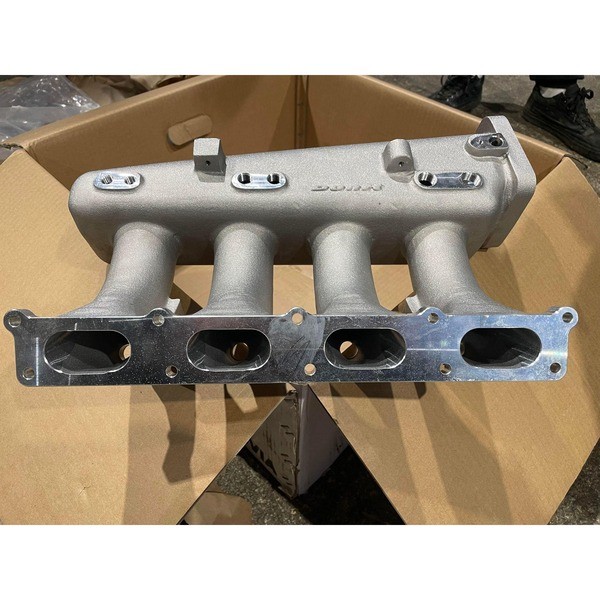
- Engine Parts: Complex intakes and manifolds requiring smooth internal passages.
Aerospace and Defense: Mission-Critical Reliability
Aerospace grade castings demand the highest strength-to-weight ratios and absolute material purity. We manufacture housings and structural fittings where failure is not an option. By strictly controlling porosity and adhering to tight tolerances, we ensure every part withstands the extreme conditions typical of flight and defense applications.
Medical: Surgical Precision
The medical industry relies on us for components that require minimal secondary machining and exceptional surface finishes. We produce precision metal casting services for:
- Surgical Instruments: Complex, ergonomic handles and tools.
- Equipment Housings: Durable, corrosion-resistant covers for diagnostic machines.
- Implantable Components: High-precision parts cast from biocompatible grade alloys.
Getting a Quote: Checklist for Buyers
To get an accurate cost estimate and lead time from an aluminum investment casting company, providing complete technical data upfront is essential. We rely on specific details to calculate tooling costs, material usage, and machining requirements accurately. A vague request can lead to delays, so we recommend having the following items ready before submitting your Request for Quote (RFQ).
Preparing 3D CAD Files and 2D Drawings
The foundation of any quote is the design file. We need 3D CAD files (preferably in STEP or IGES format) to calculate the volume, weight, and surface area of the part. This allows us to assess net-shape manufacturing feasibility and identify potential casting issues. However, 3D models aren’t enough on their own. You must also provide 2D drawings (PDF) to specify critical tolerances, threads, and surface finish requirements (Ra) that aren’t explicit in the 3D model.
Specifying Tolerances and Material Grades
Clearly defining your material requirements ensures the final part meets your mechanical performance needs.
- Material Selection: Specify the exact alloy, such as A356 aluminum alloy, ADC12, or 6061 equivalents. If you are unsure, check our guide on aluminum grades for casting to match the alloy to your application.
- Tolerances: Indicate which dimensions are critical. We typically work to ISO 8062 standards (CT4-CT7), but tighter tolerances may require secondary CNC machining.
- Finishing: State if you need heat treatment (like T6) or surface treatments such as anodizing or powder coating.
Defining Annual Volume Requirements
Your estimated annual usage heavily influences our tooling strategy. For low-volume runs or prototypes, we use simple mold designs to keep upfront costs low. For high-volume production, we invest in multi-cavity molds that reduce the unit price per part. Providing this data allows our engineering team to offer Design for Manufacturability (DFM) feedback that optimizes the balance between tooling investment and piece price.
Frequently Asked Questions (FAQs)
What is the typical lead time for aluminum investment casting?
Our timeline depends on the complexity of the part and current production volume. generally, the process is split into two phases:
- Tooling and Sample: Creating the aluminum mold and producing initial samples typically takes 3 to 5 weeks.
- Mass Production: Once samples are approved, standard production runs usually require 4 to 6 weeks.
We always aim to meet your schedule, so let us know if you have urgent deadlines during the RFQ stage.
How does investment casting compare to die casting for aluminum?
The main difference lies in tooling costs and volume. Die casting is ideal for extremely high volumes (10,000+ parts) but requires very expensive tooling. In contrast, investment casting offers much lower tooling costs, making it perfect for low-to-medium volumes and complex geometries that die casting cannot achieve. For a deeper dive into selecting the right method, check out our guide on cast aluminum processes and selection.
What are the standard tolerances for aluminum investment castings?
We strictly adhere to ISO 8062 standards.
- As-Cast: We typically achieve CT4 to CT7 tolerance levels directly from the mold.
- Machined: For critical dimensions requiring tighter fits, our in-house CNC machining capabilities allow us to hold tolerances within ±0.005 mm.
Can you handle low-volume prototype runs?
Yes. Unlike high-pressure die casting, the investment casting process is flexible enough to accommodate low-volume runs and prototypes. This allows you to validate your design and material choice—whether it is A356 or another alloy—without committing to the massive tooling investments required by other manufacturing methods.