Overview
Precision wax casting aluminum services by Vastmaterial for complex A356 parts tight tolerances T6 heat treatment and CNC machining.
Precision Wax Casting Aluminum Services
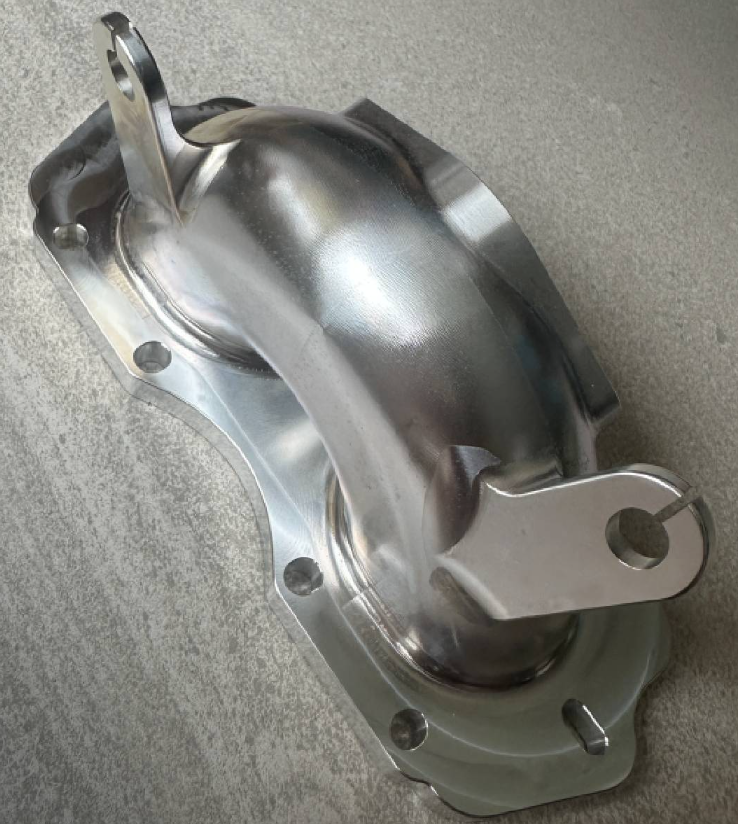
At Haoyu, we specialize in wax casting aluminum to deliver lightweight, high-strength components that meet the rigorous demands of modern industry. Also known as aluminum investment casting, this process is the gold standard for manufacturing complex geometries that traditional machining or sand casting simply cannot achieve. By utilizing the advanced Silica Sol process, we transform intricate 3D designs into precision metal parts with exceptional surface finishes.
Product Overview: The Lost Wax Advantage
Our lost wax casting process is designed for engineers who need more than just a metal shape—they need performance. We inject molten wax into precision tooling to create a replica of the final part, coat it in a ceramic shell, and then melt the wax away to form a perfect mold.
When we pour molten aluminum into these ceramic shells, the result is a component that retains the mechanical properties of the alloy while achieving near net shape manufacturing. This method is particularly effective for reducing part weight without sacrificing structural integrity, making it ideal for aerospace, automotive, and industrial machinery applications.
Core Value Proposition
Why do OEMs choose our wax casting aluminum services over die casting or machining? It comes down to balancing design flexibility with production costs.
- Unmatched Design Freedom: We can cast undercuts, thin walls, and internal passageways as a single unit, eliminating the need for welding or assembly.
- Low Tooling Costs: Compared to high-pressure die casting, our aluminum tooling costs are significantly lower, making us the perfect partner for low-to-medium volume production runs (100–10,000 units).
- High Dimensional Accuracy: We adhere to strict tolerances (typically ISO 8062 CT4-CT6), ensuring that your parts fit perfectly right out of the mold, significantly reducing secondary machining requirements.
Advantages of Wax Casting Aluminum
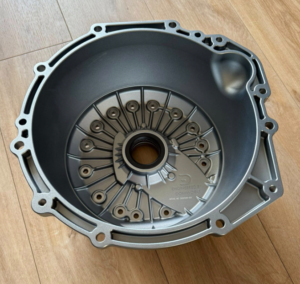
When we talk about producing high-performance metal parts, wax casting aluminum stands out for its ability to balance intricate design with cost-effective production. We utilize the lost wax casting process to deliver components that machining or sand casting simply cannot replicate, offering a true near net shape manufacturing solution.
Unmatched Design Freedom
The primary reason our clients choose this method is the ability to create complex geometries. We can cast parts with deep undercuts, internal passageways, and thin-wall aluminum parts down to 1.5mm. This eliminates the need for multi-part assemblies, allowing engineers to design single, lightweight, and robust components.
Superior Surface Quality
Unlike the rough texture typical of sand casting, our process—specifically using silica sol shelling—delivers a significantly smoother finish.
- Surface Roughness: Achieves Ra 3.2 – 6.3 straight out of the mold.
- Aesthetics: Reduces the need for heavy post-polishing.
- Detail: Captures fine lettering and logos accurately.
Cost-Efficiency for Mid-Volume Runs
For projects requiring 100 to 10,000 units, investment casting is the sweet spot. It avoids the massive tooling investments required for die casting while offering better consistency than sand casting. As an expert alloy casting foundry, we help you navigate these trade-offs to maximize value.
| Feature | Wax Casting (Investment) | Sand Casting | Die Casting |
|---|---|---|---|
| Complexity | High (Undercuts allowed) | Low to Medium | Medium (Draft required) |
| Surface Finish | Excellent (Ra 3.2-6.3) | Rough (Ra 12.5+) | Good (Ra 1.6-3.2) |
| Tooling Cost | Moderate | Low | Very High |
| Min. Wall Thickness | ~1.5mm | ~3.0mm | ~1.0mm |
By handling specific aluminum alloys that are difficult to machine, we provide a versatile manufacturing route that saves both time and material costs.
Technical Specifications & Capabilities
We engineer parts that push the limits of wax casting aluminum, delivering near net shape components ready for immediate assembly. Our facility is equipped to handle everything from miniature precision electronics to robust automotive housings, ensuring every pour meets rigorous industrial standards.
Supported Alloys & Materials
Material selection is critical for performance. We specialize in A356 aluminum alloy casting for pressure-tight applications, alongside A380 and ADC12 for general use. For projects requiring exceptional strength-to-weight ratios, we also work with the high-strength 7075 series. You can explore more about our specific material properties in our cast aluminum foundry guide.
Dimensional Precision & Limits
Our process achieves tight tolerances adhering to ISO 8062 CT4-CT6 standards. This precision allows us to produce thin-wall aluminum parts that reduce overall assembly weight without sacrificing structural integrity.
| Feature | Specification |
|---|---|
| Weight Range | 0.01 kg – 50 kg per part |
| Max Dimensions | Up to 800mm x 800mm |
| Min Wall Thickness | 1.5mm – 2.0mm (Geometry dependent) |
| Standard Tolerance | ISO 8062 CT4–CT6 |
The Vastmaterial Production Process
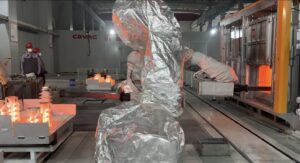
At Haoyu Material, our workflow for wax casting aluminum is engineered for consistency and tight tolerances. We strictly control every stage of the lost wax casting process to ensure the final component matches your design intent perfectly, from the initial mold to the final pour.
Step 1: Wax Pattern Injection
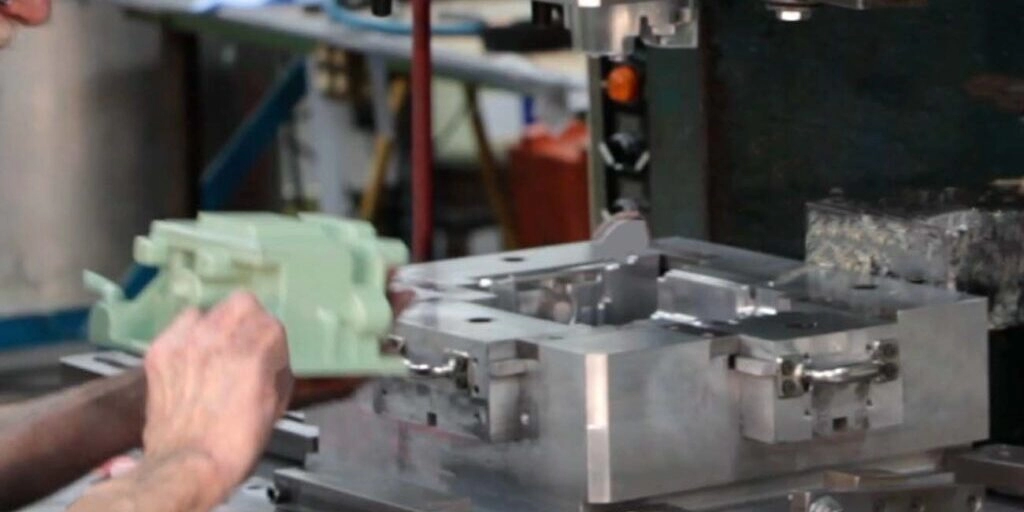
We begin by injecting molten wax into precise aluminum tooling. This creates a high-fidelity, near-net-shape replica of your final part. The dimensional accuracy of this wax pattern is critical, as it directly dictates the precision of the final aluminum component.
Step 2: Tree Assembly & Shell Building
Technicians mount the wax patterns onto a central sprue to form a “tree.” We then dip this assembly into a high-grade ceramic slurry. We utilize the Silica Sol process for our shell building, which provides a significantly smoother surface finish and better detail reproduction compared to standard water glass methods. This attention to detail is a core part of our comprehensive manufacturing process overview for high-precision parts.
Step 3: Dewaxing & Sintering
Once the ceramic shell dries, we heat the assembly to melt the wax out, leaving a hollow cavity. The shell is then sintered at high temperatures to harden the ceramic mold, ensuring it can withstand the thermal shock and pressure of the molten metal.
Step 4: Gravity/Vacuum Pouring
We pour molten aluminum alloy into the pre-heated ceramic shell. For complex geometries or thin-wall aluminum parts, we often utilize vacuum assistance or gravity pouring techniques. This ensures complete fill of intricate sections and minimizes internal porosity.
Step 5: Knockout & Cut-off
After the metal solidifies and cools, we mechanically vibrate or break off the ceramic shell. The individual parts are then cut from the central sprue tree, leaving us with raw castings ready for T6 heat treatment or secondary machining.
Post-Processing & Finishing Services
Raw aluminum castings rarely leave our facility without secondary operations. To ensure your parts meet specific mechanical properties and aesthetic standards, we provide a full suite of post-processing services. This integrated approach streamlines your supply chain, delivering finished components that are ready for immediate assembly.
Heat Treatment Capabilities
For applications requiring superior mechanical performance, we perform standardized heat treatments. Our T6 heat treatment process—solution heat treating followed by artificial aging—is essential for alloys like A356. This significantly improves yield strength and hardness, ensuring the casting can withstand rigorous operational loads. You can explore more about how we optimize these materials in our guide to alloy processes and uses.
CNC Machining & Surface Finishes
While wax casting aluminum achieves excellent detail, critical mating surfaces often require machining. We bridge the gap between “as-cast” and “precision-finished” with the following capabilities:
- Precision Machining: We handle CNC machining castings in-house, performing boring, drilling, and facing operations to tight tolerances of ±0.01mm.
- Surface Protection: We offer sandblasting for a uniform matte texture. For enhanced corrosion resistance and wear protection, we provide an anodized aluminum finish (Clear, Black, or Hardcoat) and durable powder coating options.
Industry Applications for Aluminum Investment Casting
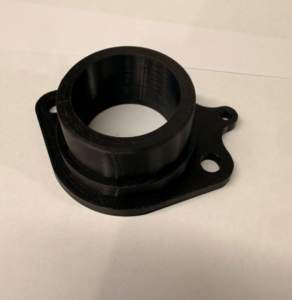
We deliver wax casting aluminum solutions to industries that demand a perfect balance of lightweight performance and geometric complexity. Our facility supports sectors where standard sand casting simply cannot meet the required tolerances or surface finish specifications. By utilizing the lost wax casting process, we provide near-net-shape components that reduce machining time and material waste.
Aerospace & Defense
In aerospace, reducing payload weight is critical. We manufacture aerospace grade casting components like electronic housings, brackets, and interior fittings. These parts offer exceptional high strength-to-weight ratios, ensuring durability under extreme stress while keeping the aircraft light. The precision of our process allows for thin-wall designs that standard methods cannot achieve.
Automotive Performance
Our automotive clients utilize aluminum investment casting for complex engine and suspension parts. We produce:
- Intake Manifolds: Optimizing airflow with smooth internal passageways.
- Valve Covers: Lightweight designs that seal perfectly.
- Suspension Components: Reducing unsprung weight for better handling.
Medical Devices & Robotics
Precision is non-negotiable in the medical field. We cast intricate precision equipment frames and robotic arm components used in surgical systems. These parts often require specialized surface treatment services to ensure they meet hygiene and durability standards in clinical environments.
Electronics & Thermal Management
For high-power electronics, effective heat dissipation is essential. We design and cast complex heat sinks and protective enclosures. The flexibility of our casting method allows us to create thin, closely spaced cooling fins that maximize surface area, leveraging aluminum’s excellent thermal conductivity to protect sensitive components.
Quality Assurance for Wax Casting Aluminum
Quality isn’t just a checkbox; it is the foundation of our manufacturing process. When producing complex components via wax casting aluminum, strict process control is non-negotiable to ensure structural integrity and performance. Our precision aluminum casting facility operates under rigorous quality management systems, aligning with ISO 9001:2015 and IATF 16949 compliant standards to guarantee consistency across every production run.
To deliver defect-free parts, we employ a comprehensive suite of testing protocols:
- Chemical Analysis: We utilize optical emission spectrometers to verify the exact chemical composition of the molten aluminum before pouring, ensuring the alloy matches specifications like A356 or 7075 perfectly.
- Non-Destructive Testing (NDT): We detect internal porosity and surface defects without damaging the component using X-Ray/Radiographic testing and Dye Penetrant Inspection.
- Dimensional Verification: Precision is critical. We use advanced CMM (Coordinate Measuring Machine) technology to verify that every part meets tight dimensional tolerances (ISO 8062) and specific geometric requirements.
- Mechanical Testing: We validate tensile strength, yield strength, and elongation to ensure the material properties meet the required engineering standards.
Frequently Asked Questions (FAQ)
Wax Casting vs. Die Casting: Tooling and Complexity
The choice between these two methods usually comes down to production volume and part geometry. Wax casting aluminum excels when you need complex internal passageways, thin walls, or undercuts that are impossible to achieve with rigid steel molds.
From a cost perspective, investment casting wins on upfront investment. Our tooling for wax injection is typically machined from aluminum rather than hardened tool steel, making it significantly cheaper—often costing 80% less than a die-casting mold. While our aluminum die casting services are superior for high-speed production of 50,000+ units, wax casting is the go-to solution for prototypes and low-to-medium volume runs (100 to 5,000 parts).
Can You Cast 6061 Aluminum?
This is the most common question we receive from US engineers. Technically, 6061 is a wrought alloy designed for extrusion and machining; it has poor fluidity and is prone to hot cracking if used in a foundry setting.
Instead, we utilize A356 aluminum alloy casting grades. When heat-treated (T6), A356 provides mechanical properties—yield strength and elongation—that are comparable to 6061, but with the necessary castability to ensure a defect-free part. For a detailed breakdown of the chemical and physical differences, review our comparison of A356 vs. 6061 properties.
Typical Lead Times for New Molds
We understand that speed to market is critical. Because the wax injection dies do not require the extreme hardness of high-pressure die casting molds, we can produce them much faster.
| Process | Tooling Material | Typical Lead Time |
|---|---|---|
| Wax Casting (Investment) | Aluminum Alloy | 2 – 3 Weeks |
| Die Casting | Hardened Tool Steel (H13) | 6 – 8 Weeks |
Using rapid tooling for casting allows us to get first articles (T1 samples) in your hands quickly for validation, significantly shortening your product development cycle.