Expert metal casting factory guide for B2B buyers covering processes alloys CNC machining QC and how to choose a reliable partner.
Core Casting Technologies: Matching Process to Product
Are you struggling to balance cost, precision, and production volume for your custom metal parts manufacturing? Choosing the wrong production method can inflate budgets and delay timelines. As a premier metal casting factory, we eliminate this guesswork. We don’t push a single technique; instead, we analyze your engineering requirements to match the exact casting process to your product.
Precision Investment Casting Services
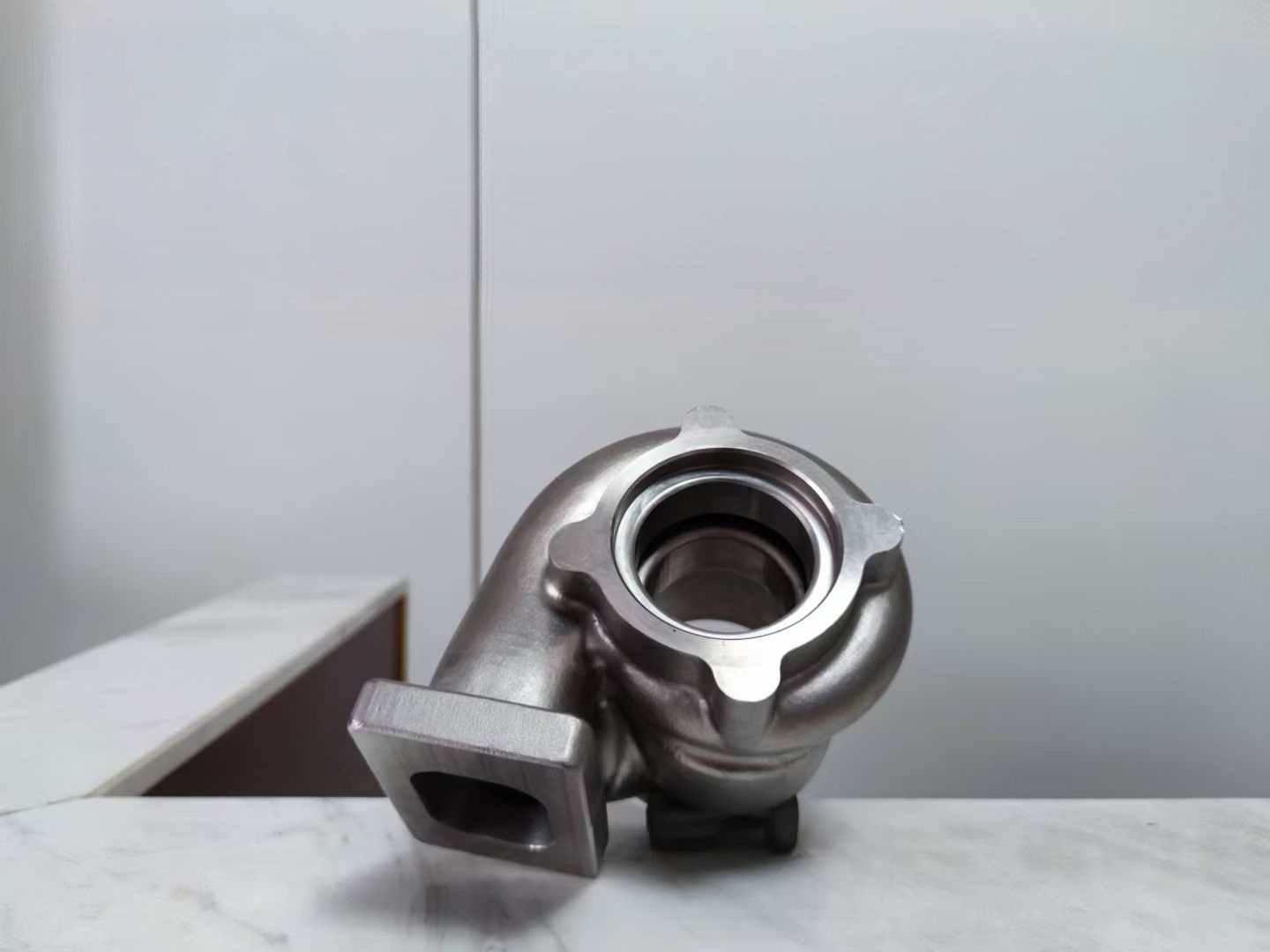
When your design demands tight tolerances, exceptional surface finishes, and intricate details, our lost wax casting process steps in.
- Best For: Complex geometries, internal cavities, and thin-walled components.
- The Advantage: Delivers near-net shapes, drastically reducing the need for expensive secondary machining.
- Common Applications: Aerospace grade metal casting, medical devices, and high-performance automotive parts.
Sand Casting Foundry Suppliers
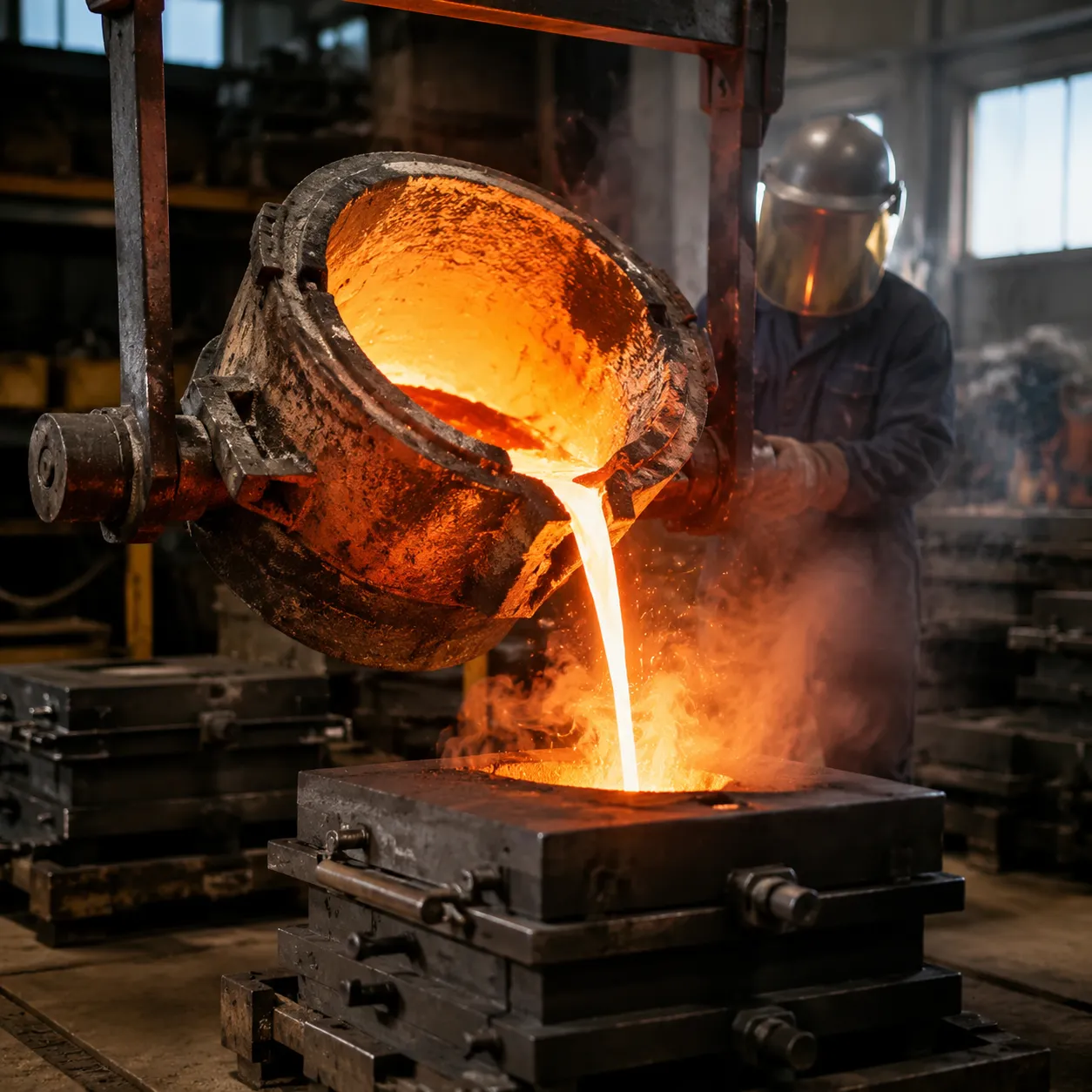
Do you need massive, heavy components without breaking the bank on upfront tooling? Sand casting remains a highly effective, economical cornerstone of our industrial foundry capabilities.
- Best For: Large, heavy components and low-to-medium volume production runs.
- The Advantage: Exceptionally low tooling costs and rapid initial setup times.
- Flexibility: Readily accommodates virtually any ferrous or non-ferrous alloy.
Die Casting Production Line
For massive scale and rapid turnaround, a dedicated die casting production line guarantees repeatable accuracy at a rapid pace.
- Best For: High-volume consistency and rapid manufacturing cycles.
- The Advantage: Yields excellent dimensional stability and smooth surface finishes right out of the mold.
- Ideal Materials: Non-ferrous alloys, particularly aluminum, zinc, and magnesium.
Unbiased OEM Metal Casting Manufacturer
We don’t force a square peg into a round hole. As a versatile metal casting service, we leverage a hybrid advantage. By maintaining unbiased production methods under one roof, we guarantee your project scales efficiently from prototype to mass production.
Casting Technologies Comparison
| Feature | Investment Casting | Sand Casting | Die Casting |
|---|---|---|---|
| Target Volume | Medium to High | Low to Medium | Very High |
| Precision Level | Very High | Moderate | High |
| Tooling Investment | Moderate | Low | High |
| Part Complexity | Extremely Complex | Moderate | Complex |
Material Science: The Heart of a Quality Factory
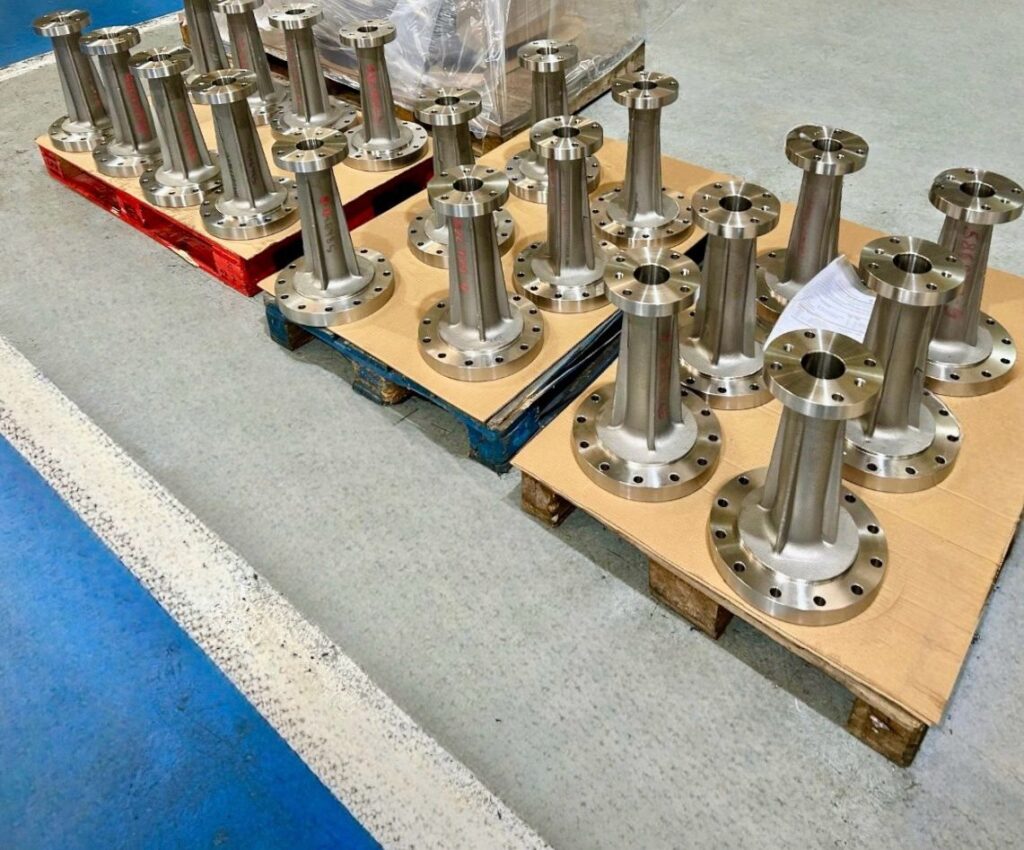
At our metal casting factory, we know that even the most precise mold is useless if the metal chemistry is off. Material science is the heartbeat of our operation. We don’t just melt metal; we engineer performance. Whether you need the rugged durability of iron or the lightweight precision of aluminum, getting the recipe right is critical for part longevity and safety in US industrial applications.
Ferrous Alloys: Stainless, Carbon, and Duplex Steels
Steel remains the backbone of heavy industry. As a dedicated stainless steel casting factory, we handle a wide range of iron-based alloys designed for high strength and wear resistance.
- Carbon Steel: The cost-effective choice for structural components and automotive parts.
- Stainless Steel: Essential for corrosion resistance in medical and food processing environments.
- Duplex Steels: We use these for marine and oil & gas projects where parts face high stress and corrosive saltwater.
Non-Ferrous Options: Aluminum, Copper, and Titanium
When weight reduction and conductivity matter more than raw brute strength, we switch to non-ferrous options. Ferrous and non-ferrous alloys require different melting points and handling procedures. We cast aluminum for aerospace and automotive clients who need to shave off pounds without sacrificing integrity. Copper alloys are utilized for electrical components, while titanium offers the ultimate strength-to-weight ratio for premium engineering needs.
Specialty High-Temp Alloys for Extreme Environments
Standard metals fail under extreme thermal stress. For components used in jet engines, gas turbines, or industrial furnaces, we utilize high-temperature alloy casting. These superalloys maintain their mechanical properties even near their melting points. Our deep knowledge of superalloy material classifications allows us to produce parts that withstand the harshest operating conditions imaginable.
The R&D Factor: Collaborating for Custom Alloy Recipes
Off-the-shelf ASTM standards don’t always solve unique engineering problems. We don’t just follow instructions; we partner with you for custom metal parts manufacturing. Our R&D team helps modify standard alloy recipes—adding trace elements to boost heat resistance or ductility—ensuring the final cast meets your exact performance metrics.
| Material Category | Key Alloys | Best Application |
|---|---|---|
| Ferrous | Carbon Steel, 304/316 Stainless, Duplex | Structural, heavy machinery, corrosion resistance |
| Non-Ferrous | Aluminum A356, Bronze, Titanium | Aerospace, electrical, lightweight automotive |
| Superalloys | Inconel, Hastelloy, Cobalt-based | Turbines, chemical processing, extreme heat |
Beyond Casting: The Value of Integrated Services

A raw casting is rarely ready for the assembly line immediately after cooling. In the modern manufacturing landscape, the real value of a metal casting factory isn’t just in pouring molten metal—it’s in the ability to deliver a finished, ready-to-use component. We believe in a “done-in-one” philosophy, streamlining your supply chain by handling post-processing in-house. This integrated approach reduces lead times, cuts down on shipping costs between vendors, and ensures single-point accountability for quality.
Precision CNC Machining Integration
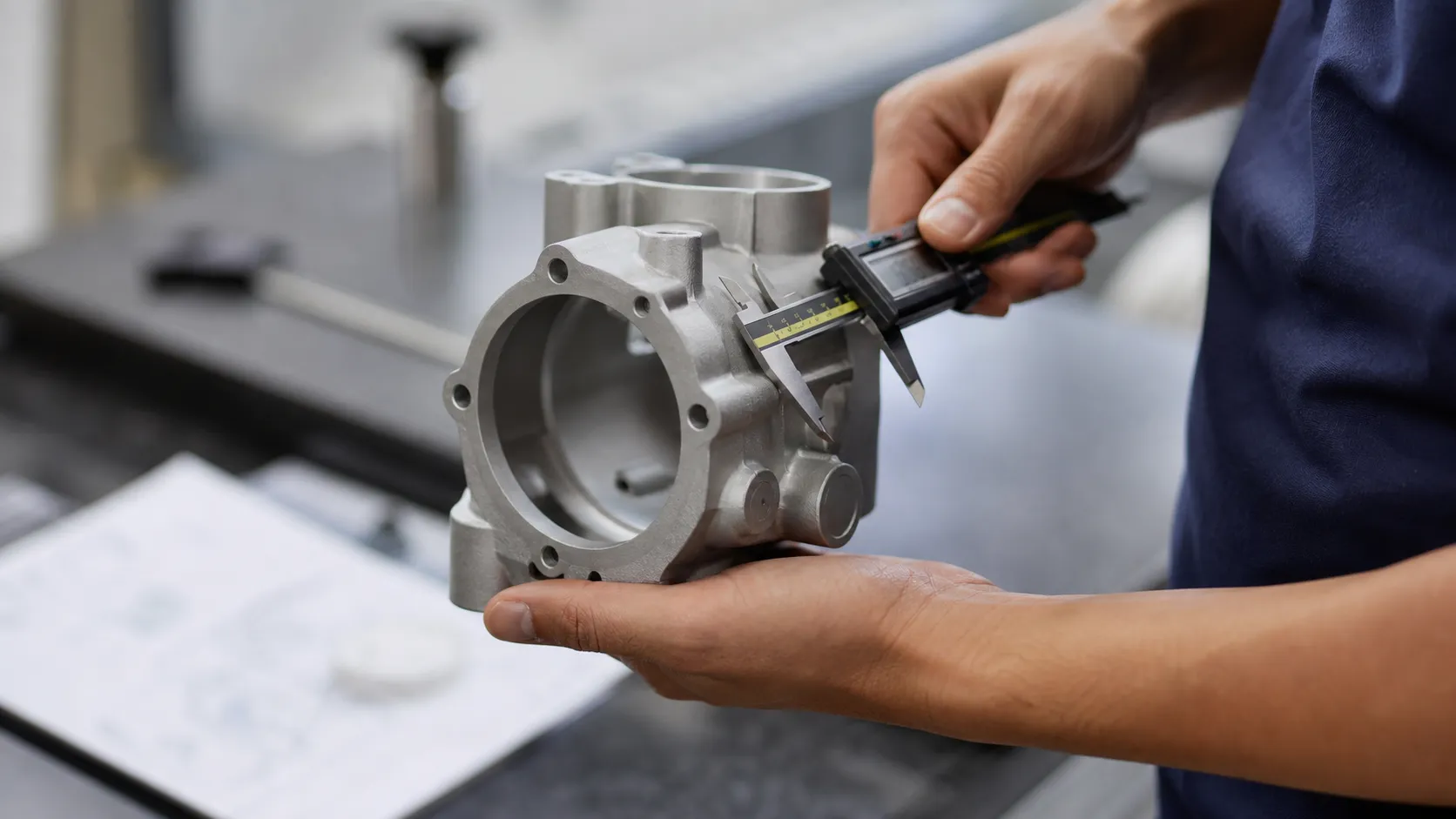
While casting provides the near-net shape, CNC machining integration is often required to achieve tight tolerances and perfectly flat sealing surfaces that casting alone cannot guarantee. We don’t just cast; we finish the job.
By combining these processes, we optimize the casting design to minimize the amount of material that needs to be removed, saving you money on waste and machine time. Whether it’s drilling precise bolt holes or facing a flange, understanding the nuances of CNC turning and milling allows us to transition parts seamlessly from the foundry floor to the machine shop without the usual communication gaps.
Surface Treatment: Plating, Coating, and Polishing
Durability and aesthetics are the final touches that define a premium product. Our metal surface treatment solutions are designed to enhance corrosion resistance and improve the visual appeal of your parts. We offer a comprehensive range of finishes to meet specific industry standards:
- Plating: Zinc, chrome, or nickel plating for superior corrosion protection.
- Powder Coating & Painting: Durable, colored finishes for heavy machinery and consumer goods.
- Polishing & Bead Blasting: achieving specific surface roughness (Ra) values for sanitary or decorative applications.
- Anodizing: Specifically for aluminum parts to increase surface hardness.
Rapid Prototyping for Design Verification
Before investing in expensive hard tooling, you need to know your design works. We utilize rapid prototyping for metal parts to bridge the gap between concept and mass production. Using technologies like 3D printed sand molds or PMMA patterns for investment casting, we can produce functional metal prototypes in a fraction of the time required for traditional steel tooling.
This allows engineers to test fit, form, and function in the actual production alloy. Catching design flaws at this stage prevents costly tooling modifications later, ensuring that when we do flip the switch for full-scale production, everything runs without a hitch.
How to Vet a Metal Casting Factory (Buyer’s Checklist)
Finding a partner is easy; finding the right metal casting factory is where the real work happens. When you are entrusting your designs to a manufacturer, you can’t afford to guess about their capabilities. We recommend a strict vetting process to ensure your supply chain remains robust and your parts arrive exactly as specified.
Quality Control: Spectrometers and Defect Testing
This is the non-negotiable standard. A factory’s claim of “high quality” means nothing without data to back it up. You need to verify that quality control in casting includes rigorous material verification. Does the facility use optical emission spectrometers to certify the chemical composition of every batch? If they can’t prove the alloy mix, walk away.
Beyond chemistry, physical defect testing is crucial. Look for industrial foundry capabilities that include:
- X-Ray & Radiographic Testing: To spot internal porosity or cracks.
- Dye Penetrant Inspection: For surface discontinuities.
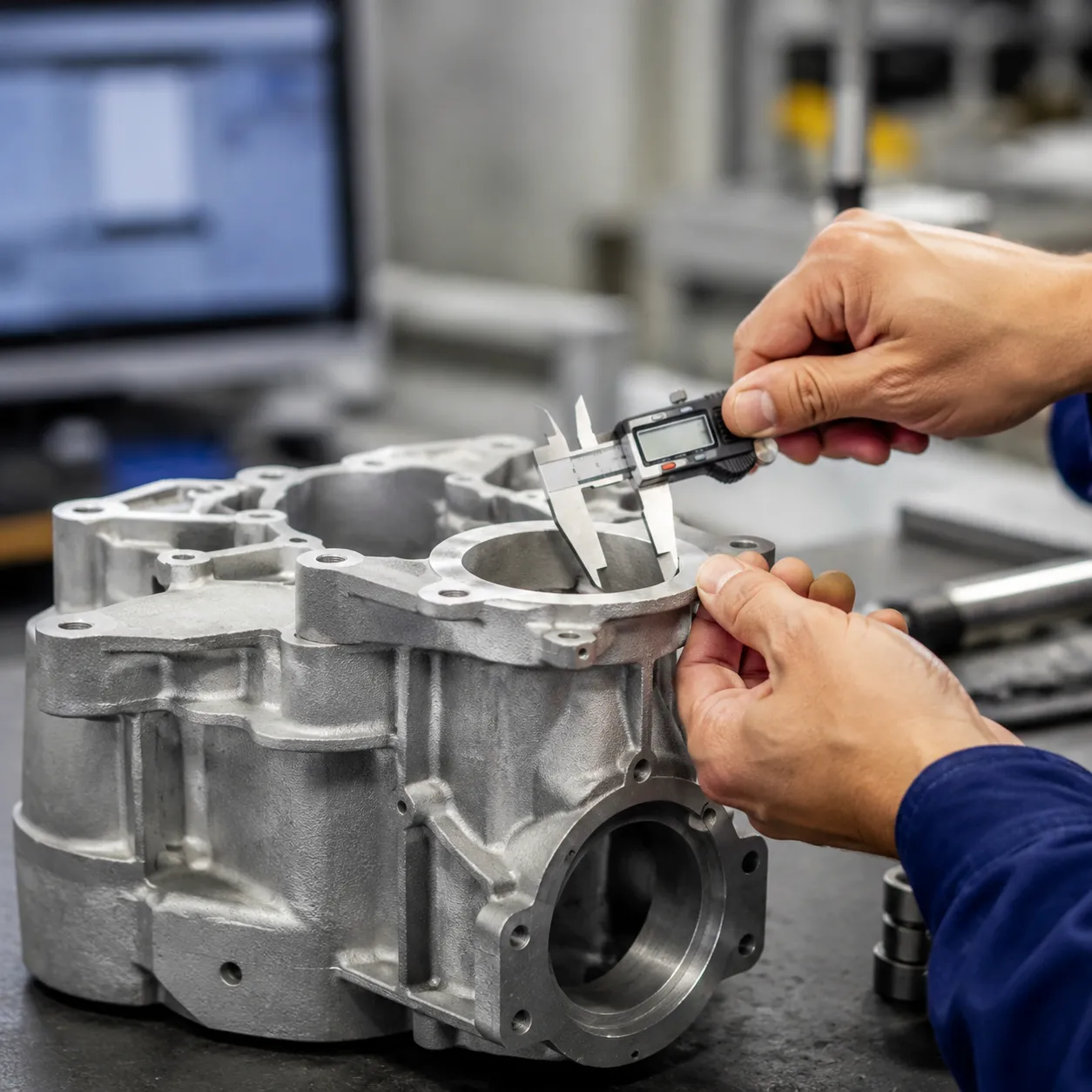
- Coordinate Measuring Machines (CMM): To ensure dimensional accuracy down to the micron.
Understanding material properties is key here; you can cross-reference testing standards with our guide for high-performance alloys and precision casting to see what benchmarks a top-tier facility should hit.
Scalability: From Prototype to Mass Production
A common trap for buyers is selecting a shop that is great at making one part but fails at making ten thousand. Your chosen OEM metal casting manufacturer must be flexible. They should be eager to handle rapid prototyping for metal parts to validate the design, but they must also have the infrastructure to scale up immediately without a drop in consistency. Ask specifically about their daily pouring capacity and lead times for high-volume orders.
Responsiveness and Global Communication Standards
In the modern manufacturing landscape, silence is a dealbreaker. You need a partner who operates on your timeline, not just theirs. Whether you are sourcing locally or globally, responsiveness is the best indicator of future reliability. A professional factory provides transparent updates, detailed engineering feedback during the quoting phase, and clear documentation in English. If it takes a week to get a reply to a simple email during the vetting phase, imagine the delays when production hits a snag.
Frequently Asked Questions About Metal Casting Factories
Navigating the world of industrial manufacturing can be complex. As a metal casting factory, we often field questions from buyers looking to optimize their supply chain. Here are the most common inquiries we receive regarding our metal casting service.
What is the difference between investment casting and die casting?
The main difference lies in volume and complexity. Precision investment casting services (often called the lost wax casting process) are ideal for complex geometries with thin walls and high detail, usually for low-to-mid volume runs. Conversely, a die casting production line forces molten metal into reusable steel molds under high pressure. This is the go-to method for high-volume production where speed and consistency are the priorities.
How does a factory ensure tolerance accuracy?
Accuracy isn’t an accident; it’s engineered. To ensure every part meets OEM metal casting manufacturer standards, we rely on rigorous quality control in casting. This involves:
- Coordinate Measuring Machines (CMM): Verifying dimensional geometry down to the micron.
- Spectrometers: Confirming the chemical composition matches the required alloy grade.
- Non-Destructive Testing: Using X-ray or ultrasound to spot internal voids without damaging the part.
Can a casting factory handle custom alloy development?
Absolutely. Standard alloys don’t always cut it for specialized applications. We collaborate with clients on custom metal parts manufacturing to develop proprietary blends. Whether you need specific heat resistance or corrosion protection, we can adjust the metallurgy. This is crucial for industries needing aerospace-grade high-performance alloy components where material failure is not an option.
Why should I look for a factory with integrated CNC capabilities?
Casting gets you 95% of the way there, but CNC machining integration takes you across the finish line. While casting provides the near-net shape, machining delivers critical tolerances for mating surfaces and threaded holes. Choosing a factory that handles both under one roof reduces lead times, eliminates the logistical headache of moving parts between vendors, and ensures single-point accountability for the final product quality.