Precision Aluminum Metal Casting Services for Complex Geometries
From rapid prototyping to mass production, Vastmaterial acts as your trusted partner for high-performance aluminum parts. Our aluminum metal casting services are designed to handle intricate designs that standard machining simply cannot achieve, offering a seamless path from concept to final component.
We specialize in delivering lightweight, durable solutions tailored to your specific project needs. Whether you require a single prototype or thousands of units, our scalable manufacturing processes ensure consistency and quality every step of the way.
Key Trust Signals
- ISO 9001 Certified: Committed to rigorous quality management standards.
- Instant Quoting: Streamlined pricing to get your project moving faster.
- Global Shipping: Reliable logistics to deliver parts wherever you are.
- 50+ Material Options: A wide range of alloys to match your exact performance requirements.
Ready to start? Request a Quote or Upload CAD Files today.
Why Choose Vastmaterial for Aluminum Casting?
At Vastmaterial, we handle the entire lifecycle of your metal casting aluminum project. From the initial design concept to the finished part, we provide a streamlined manufacturing experience that eliminates the headache of managing multiple vendors.
Lightweight Strength
We leverage advanced aluminum alloys to achieve exceptional strength-to-weight ratios. By selecting the right material, such as comparing A356 vs 6061, we ensure your components meet rigorous performance standards without adding unnecessary bulk. This is critical for industries like automotive and aerospace where every ounce counts.
Complex Geometries
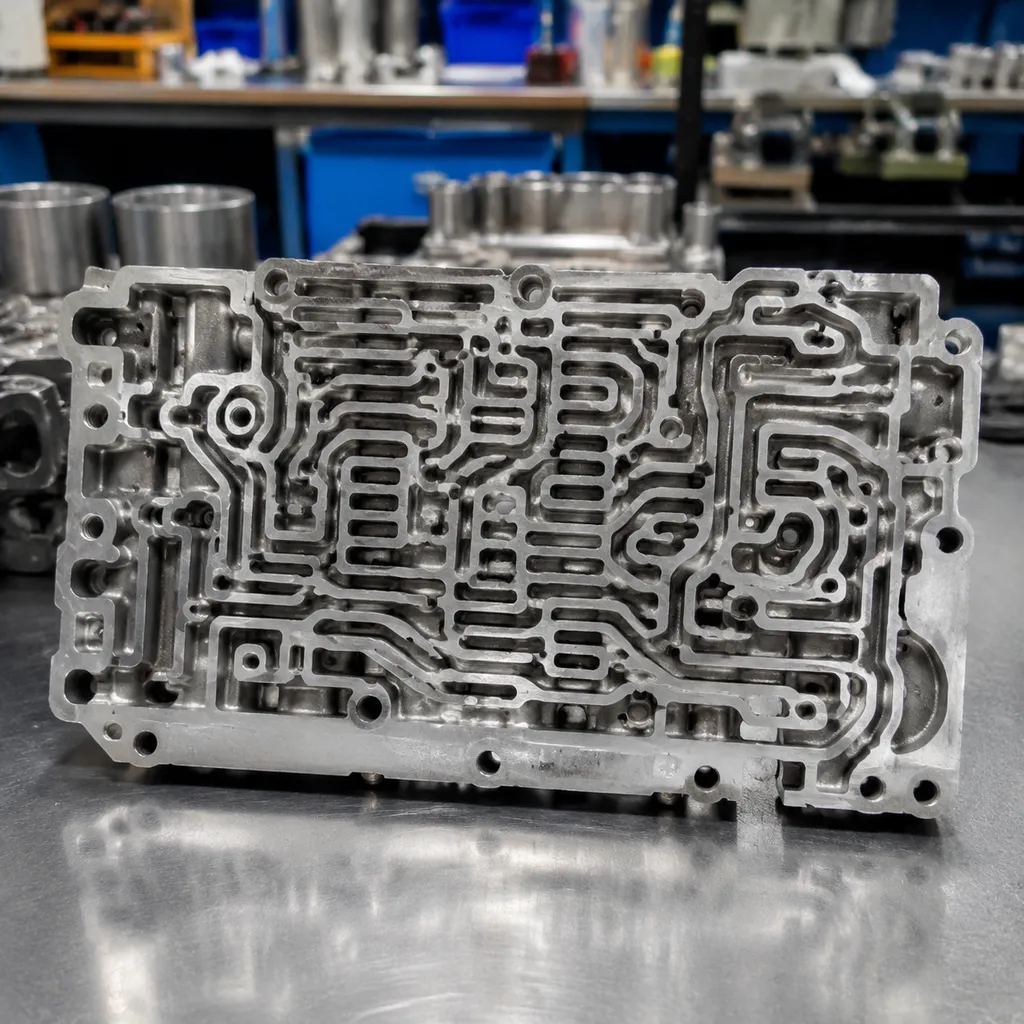
Our casting processes allow for design freedom that traditional machining simply cannot match. We specialize in creating thin walls for lightweight enclosures, intricate internal structures for fluid dynamics, and near-net shapes that minimize material waste and secondary machining time.
Scalability
We grow with your project. Our capabilities allow for a seamless transition across production volumes, utilizing sand casting for rapid prototyping and shifting to high-pressure die casting (HPDC) for speed and cost-efficiency at scale.
Our Core Aluminum Casting Processes
High-Pressure Die Casting (HPDC)
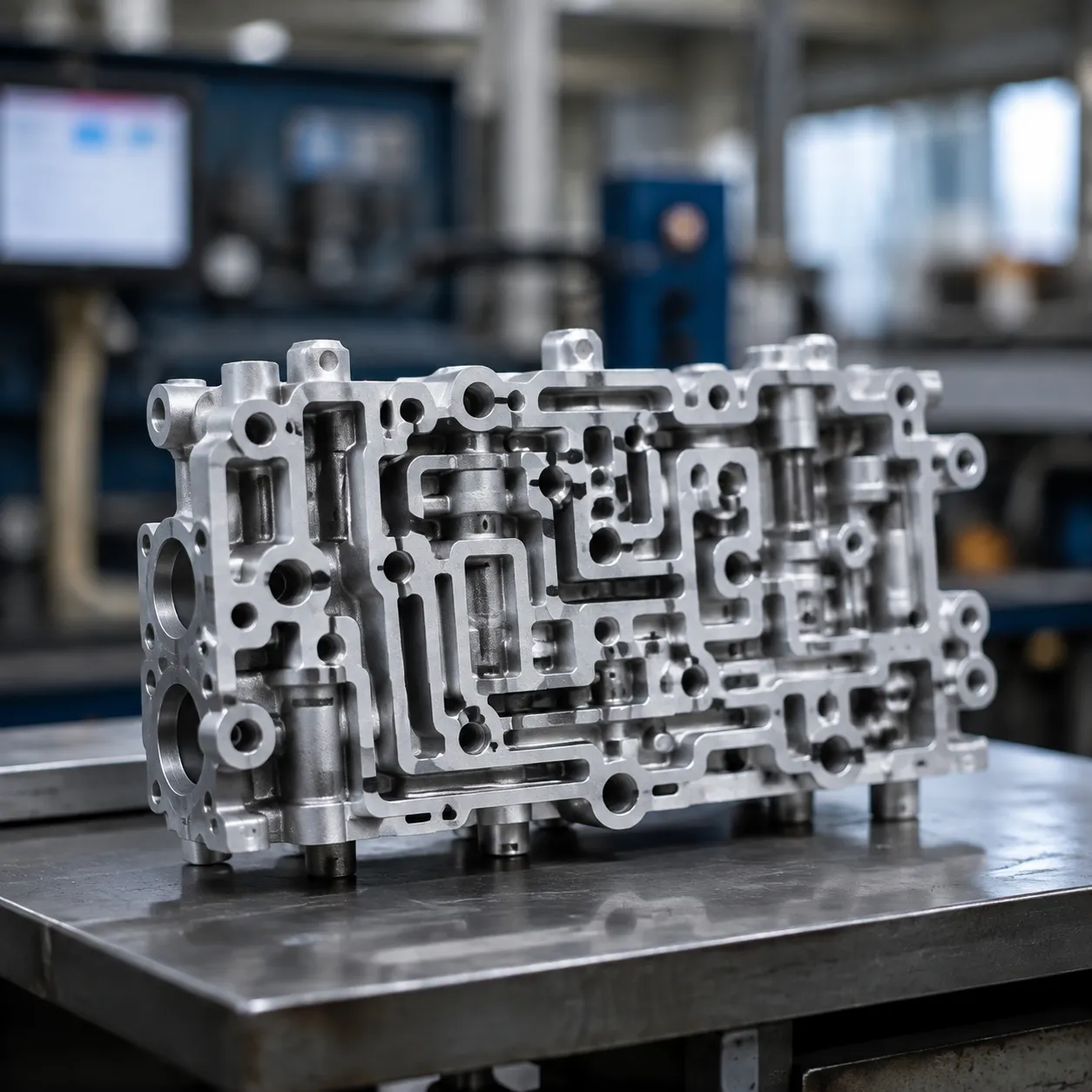
When you need speed and precision at scale, High-Pressure Die Casting (HPDC) is the go-to solution. This process involves injecting molten metal into a steel mold at high velocity and pressure, allowing us to create parts with incredibly thin walls and tight tolerances.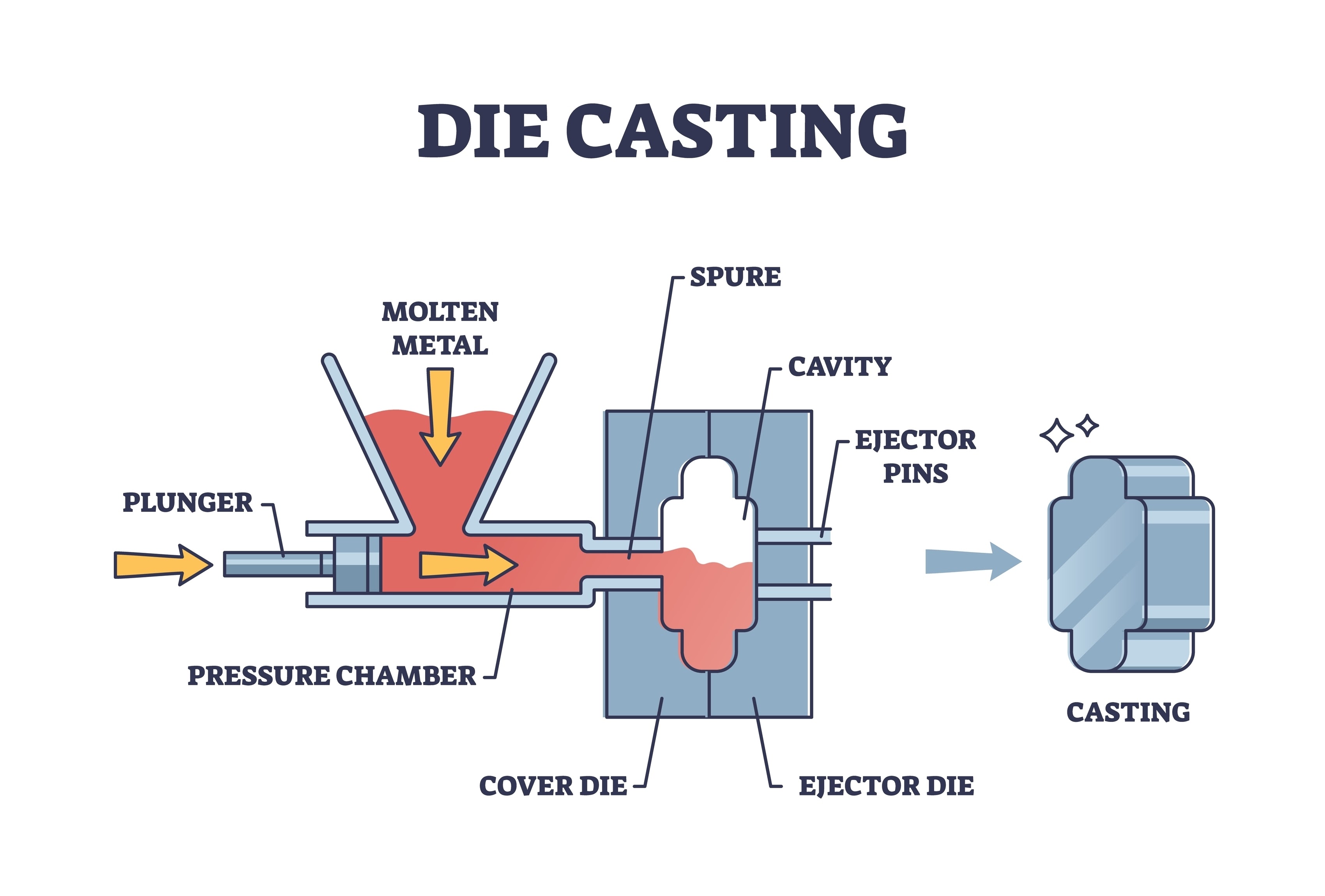
- Best For: High-volume production runs (thousands to millions of parts), achieving tight dimensional tolerances, and designs requiring thin walls.
- Typical Applications: Automotive transmission housings, consumer electronics frames, and thermal management heat sinks.
Sand Casting Aluminum Parts
When you need to produce large components or handle lower volume runs without breaking the bank on tooling, sand casting is highly effective. At our casting foundry, we utilize this traditional process to create massive, complex structures.
- Low Volumes: Economical for small batches where expensive steel dies are not justified.
- Large Parts: Capable of casting huge components like engine blocks and heavy machinery bases.
- Prototyping: Fast turnaround times allow for quick design verification.
Investment Casting (Lost Wax)
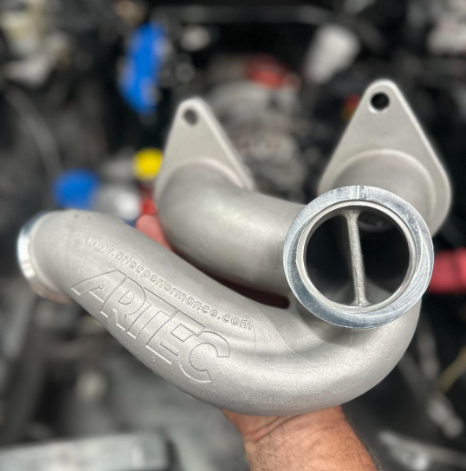
When your project demands intricate details and a superior surface finish, investment casting—often called lost wax casting—is the optimal solution. It excels at creating complex geometries with internal passages that would be cost-prohibitive to machine from a solid block.
By creating a precise wax pattern coated in a ceramic shell, we can achieve near-net-shape parts right out of the mold, often eliminating the need for extensive secondary machining.
Permanent Mold Casting (Gravity Die Casting)
When you need a balance between the high production speed of pressure die casting and the lower tooling costs of sand casting, permanent mold casting is the sweet spot. Molten aluminum is poured into a reusable metal mold under the force of gravity. Because the metal mold chills the aluminum rapidly, the resulting parts have a finer grain structure, leading to significantly better mechanical properties and high pressure tightness.
Available Aluminum Alloys & Properties
Choosing the right material is half the battle. We offer a wide range of alloys to match your specific mechanical and environmental requirements.
| Alloy Name | Key Characteristics | Typical Applications | Tensile Strength (Approx.) |
| A380 | Excellent fluidity, good pressure tightness, and resistance to hot cracking. | Gearboxes, engine brackets, electronic housings. | 47 ksi (324 MPa) |
| A356 | Superior corrosion resistance, high strength, and excellent ductility. Heat treatable (T6). | Aerospace components, marine parts, automotive wheels. | 38 ksi (262 MPa) |
| A360 | Better corrosion resistance and strength at elevated temperatures compared to A380. | Irrigation system parts, outboard motor housings, instrument cases. | 44 ksi (303 MPa) |
| AlSi10Mg | High strength and hardness with good dynamic load capacity. | High-load structural parts, automotive engine components. | 43 ksi (296 MPa) |
Secondary Operations & Surface Finishing
While casting creates the fundamental shape, secondary operations define the final performance. We provide a complete finishing solution to ensure your components are assembly-ready.
Precision CNC Machining
Even the most accurate casting processes may require tighter tolerances for mating surfaces or threaded holes. We integrate CNC machining services directly into our production line for precision boring, drilling, and tapping, reducing lead times.
Surface Treatments & Heat Treatment
Raw cast aluminum is functional, but surface finishing is crucial for corrosion resistance and aesthetics:
- Anodizing (Type II & III): Increases corrosion resistance and surface hardness.
- Powder Coating: Provides a durable, attractive finish available in various colors.
- Bead Blasting: Creates a uniform matte texture, hiding minor surface imperfections.
- Chromate Conversion Coating: Offers excellent conductivity and corrosion protection.
- T5 & T6 Heat Treatment: Significantly enhances the strength and hardness of the metal for demanding structural applications.
Industries We Serve
Our precision metal casting solutions are tailored to meet the rigorous demands of sectors where reliability is non-negotiable:
- Automotive: Engine components, transmission cases, and EV battery housings.
- Aerospace: Lightweight structural components and brackets that reduce overall aircraft weight.
- Medical: Durable housings for diagnostic equipment and ergonomic surgical tool handles.
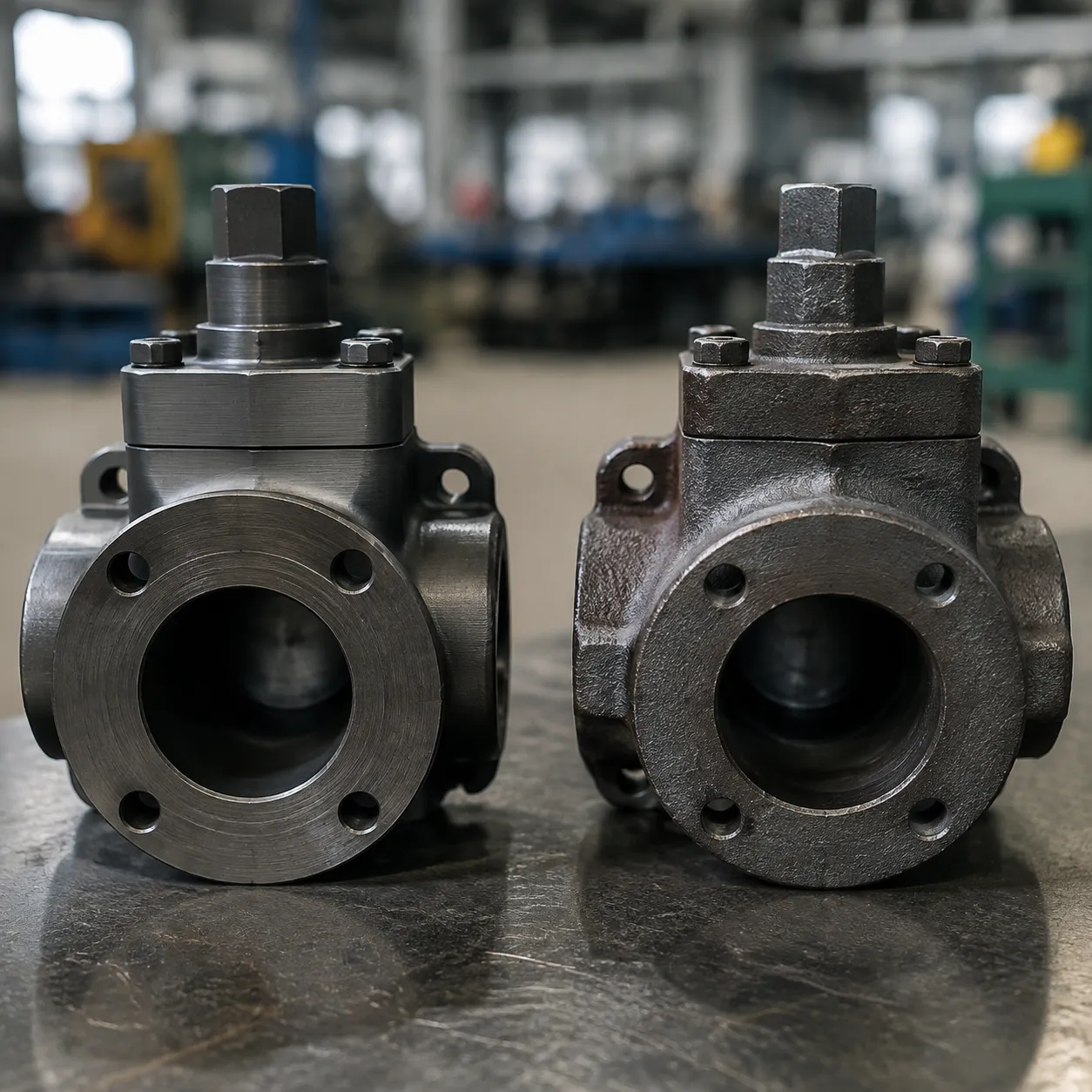
- Industrial: Robust pump bodies, valves, and pneumatic tools for high-pressure environments.
Rigorous Quality Control Standards
Quality is the foundation of our metal casting aluminum process. We implement a multi-layered inspection protocol for every batch:
- Coordinate Measuring Machines (CMM): Verifies dimensional accuracy down to the micron.
- X-Ray and Fluoroscopic Testing: Detects internal porosity or inclusions to ensure structural integrity.
- Spectrometer Testing: Verifies the precise chemical composition of every alloy melt.
- Certifications: Strict adherence to ISO 9001 and AS9100 standards.
Frequently Asked Questions (FAQ)
What is the minimum wall thickness for aluminum die casting?
For high-pressure die casting (HPDC), we can typically achieve wall thicknesses as thin as 0.5 mm to 1.5 mm depending on the part’s size and the alloy. For sand casting or gravity die casting, the minimums are generally higher (around 3mm to 5mm).
How does cast aluminum compare to CNC machined aluminum?
Metal casting is the go-to for high-volume production (1,000+ parts) or complex geometries with internal cavities, offering a lower cost per unit once tooling is paid for. CNC machining is best for low volumes or prototypes without the upfront cost of a mold. Many clients use a hybrid approach: casting the near-net shape and CNC machining critical tolerances.
What is the typical lead time for tooling vs. production parts?
Tooling typically takes 2 to 4 weeks to design and manufacture. Once the tool is validated, production runs are fast. We can often ship initial samples (T1) within days of tooling completion.
Can Vastmaterial assist with DFM (Design for Manufacturing) optimization?
Absolutely. Our engineering team provides a comprehensive DFM review before manufacturing begins. We analyze draft angles, wall thickness uniformity, and gate placement to prevent porosity and ensure the part is perfectly moldable, saving you money in the long run.