Understanding the Basics: Cast Iron and Low Carbon Steel
When evaluating industrial manufacturing materials, understanding the difference between cast iron and low carbon steel is critical for engineering success. Both materials offer distinct structural profiles tailored for heavy industry applications.
What is Cast Iron?
Cast iron is a ferrous alloy defined by its high carbon content, typically ranging between 2% and 4%. It contains trace amounts of silicon and features a microstructure consisting of graphite flakes (in grey iron) or nodules (in ductile iron). It is known for being highly brittle but offers exceptional wear resistance and excellent vibration absorption.
What is Low Carbon Steel (Mild Steel)?
Low carbon steel, often utilized in cast steel applications, contains a significantly lower carbon content of 0.1% to 0.5%. It is frequently alloyed with manganese, chromium, and nickel. This composition yields a homogeneous microstructure, resulting in a material that delivers superior tensile strength, remarkable ductility, and exceptional toughness under dynamic stress.
Key Differences Between Cast Iron and Low Carbon Steel
Carbon Content and Microstructure
The core distinction lies in the carbon content.
- Cast Iron: 2-4% carbon. Its graphite-heavy microstructure makes it rigid and highly stable.
- Low Carbon Steel: 0.1-0.5% carbon. Its homogeneous microstructure provides flexibility and structural integrity, crucial when comparing low carbon steel vs grey cast iron.
Melting Point and Castability
Cast iron features a lower melting point and a simpler, highly efficient casting process. Low carbon steel requires higher temperatures and more advanced processing, but the resulting mechanical performance justifies the complex castability.
Strength, Hardness, and Impact Resistance
- Strength & Toughness: Low carbon steel provides vastly superior tensile strength and high impact resistance.
- Hardness & Wear: Cast iron dominates in friction-heavy environments due to its innate hardness and the lubricating properties of its graphite content.
Cost Comparison and Material Availability
Cast iron is cheaper to produce due to lower raw material costs and simpler manufacturing processes. Conversely, low carbon steel is more expensive, but this upfront cost is offset by its extended lifespan and unyielding durability in high-stress environments.
Machinability, Weldability, and Maintenance
Machinability: Which is Easier to Work With?
- Cast Iron: Easier and faster to machine, lowering tooling wear.
- Low Carbon Steel: Harder to machine, but yields a significantly superior, smoother surface finish upon completion.
Welding Cast Iron vs Low Carbon Steel
When evaluating low carbon steel vs gret cast iron for fabrication, weldability is a deciding factor.
- Low carbon steel is highly weldable and seamlessly integrates into complex assemblies.
- Cast iron is notoriously difficult to weld, highly prone to cracking, and requires strict pre-heating protocols due to its poor heat responsiveness.
Corrosion Resistance and Rust Prevention
Both materials require proper surface treatments, coatings, or machining finishes to mitigate environmental degradation and prevent rust in heavy-duty industrial applications.
Common Applications and Industry Uses
Typical Industrial Uses for Cast Iron
Because of its vibration dampening and wear resistance, cast iron is strictly preferred for stable, friction-heavy components:
- Engine blocks and cylinder heads
- Heavy machine bases
- Industrial pipes and tooling
Typical Industrial Uses for Low Carbon Steel
Low carbon steel excels where structural integrity and impact resistance are paramount:
- Construction and earth-moving equipment
- Mining tools and machinery
- Railway components and transit infrastructure
- High-stress pressure vessels
How to Choose the Right Material for Your Project
Selecting the ideal metal requires balancing mechanical demands with budget constraints. We are a company that provides low-carbon steel casting services, alongside comprehensive multi-material manufacturing, ensuring you get the exact performance specifications your heavy-duty applications require.
Advantages and Disadvantages of Cast Iron
- Advantages: Cost-effective, superior vibration absorption, easy to machine, high wear resistance.
- Disadvantages: Highly brittle, poor weldability, lower tensile strength.
Advantages and Disadvantages of Low Carbon Steel
- Advantages: Outstanding tensile strength, high impact resistance, easily weldable, excellent ductility.
- Disadvantages: Higher production cost, harder to machine compared to iron.
| Feature | Cast Iron | Low Carbon Steel |
|---|---|---|
| Carbon Content | 2% - 4% | 0.1% - 0.5% |
| Machinability | High | Moderate (Better Finish) |
| Weldability | Poor (Prone to cracking) | Excellent |
| Impact Resistance | Low (Brittle) | High (Tough & Ductile) |
| Production Cost | Low | High |
Frequently Asked Questions
Which Material is More Durable?
Low carbon steel is far more durable under dynamic stress, heavy impacts, and tension. Cast iron is highly durable only in static, friction-based scenarios where its hardness prevents surface wear.
How Can You Identify the Difference Visually?
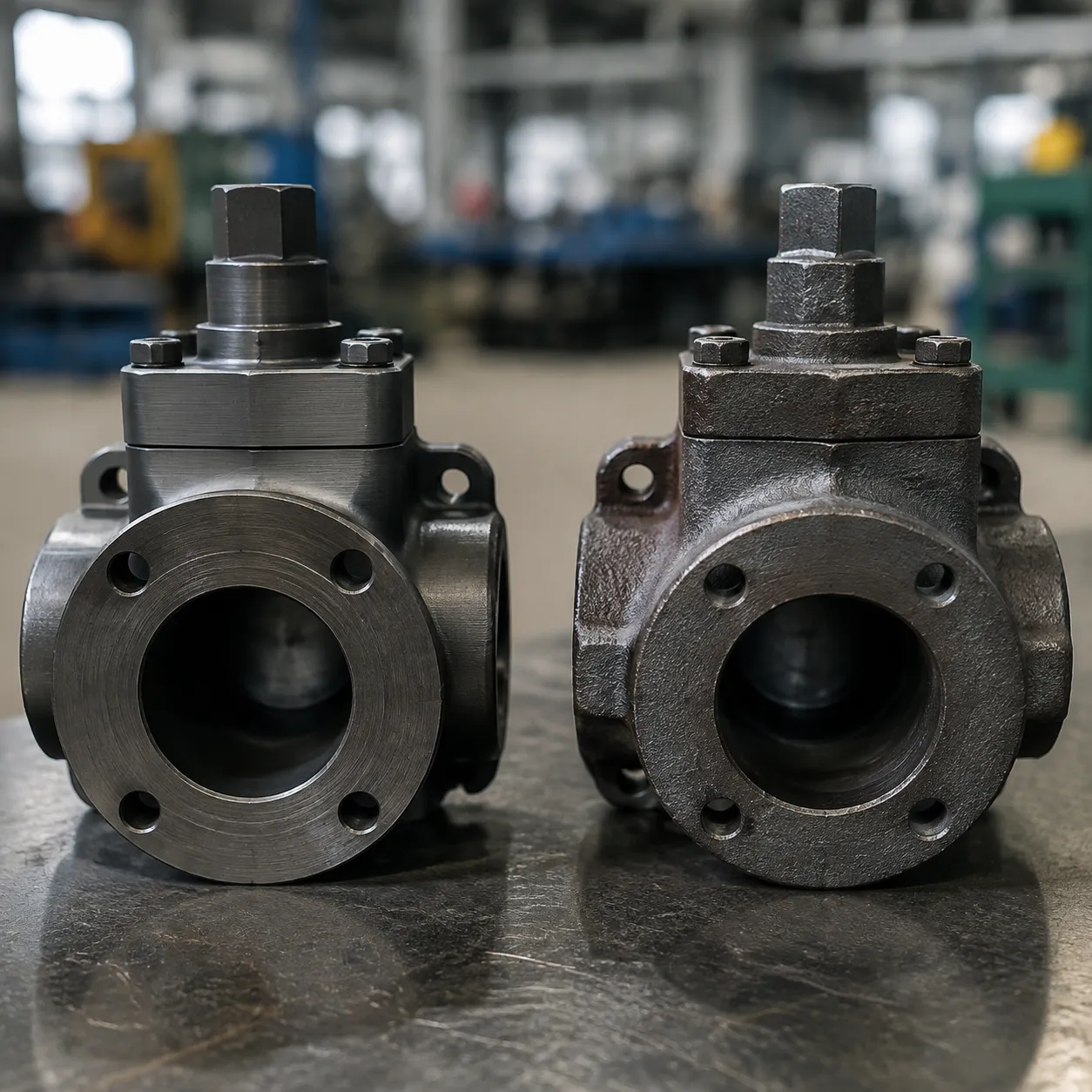
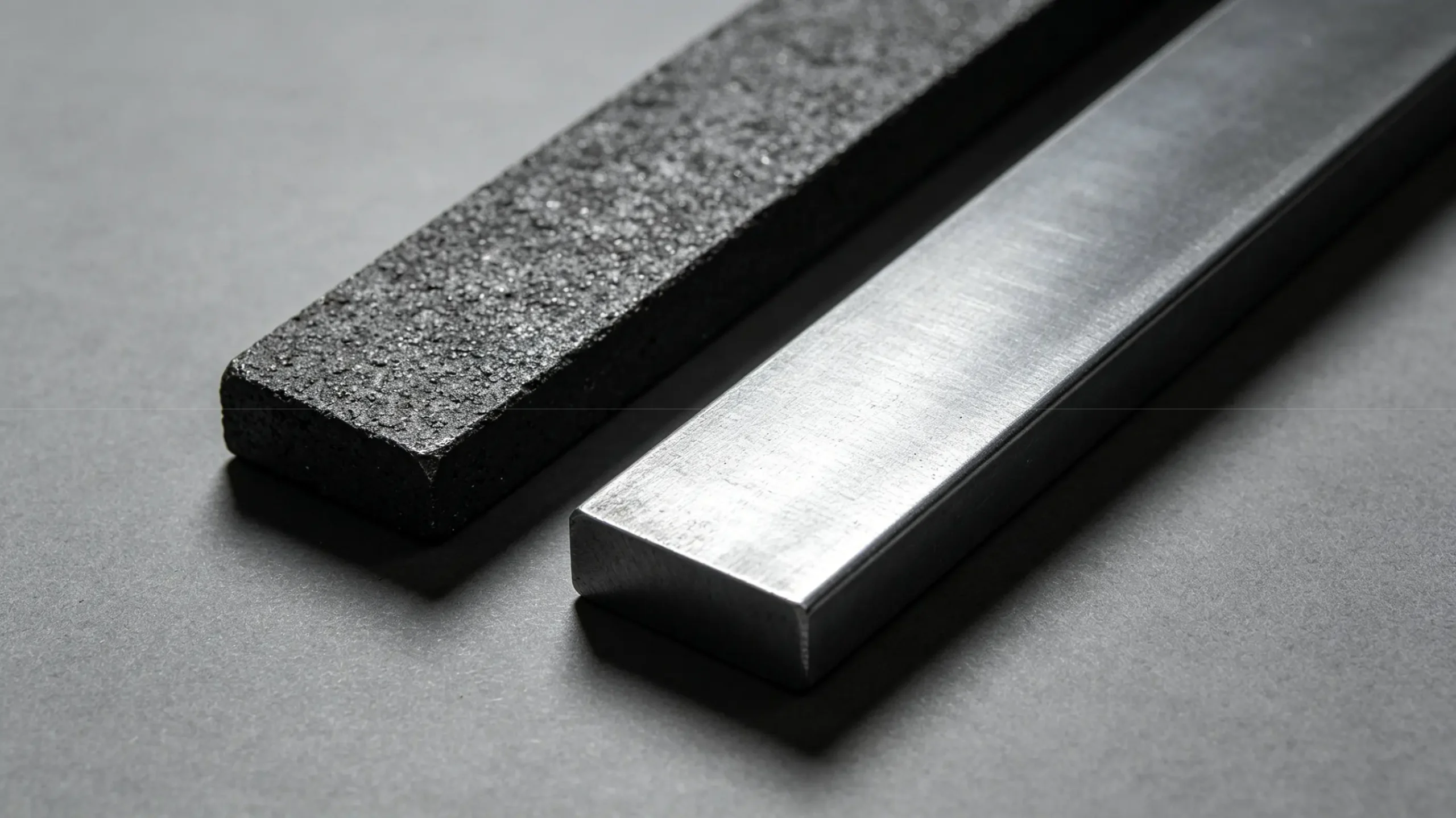
While raw castings can look similar, machined low carbon steel exhibits a markedly smoother, brighter, and more refined surface finish compared to the typically porous or matte finish of machined cast iron. Difference in relative weight and density in specific alloy grades can also serve as an identifier in heavy industrial parts.