
Compare A356 aluminum vs 6061. Discover key differences in strength, casting, and T6 properties to choose the right alloy for your project.
Alloy Basics and Classifications: A356 vs 6061
Stuck deciding between a custom mold or a CNC job? That’s usually where the A356 vs 6061 comparison starts. These are the two heavyweights of the aluminum world, but they play different sports. While they share similar alloying elements, their fundamental processing routes—liquid vs. solid—dictate their final properties and applications.
Here is the breakdown of how these materials differ at the most basic level:
- Cast Aluminum Alloy A356: This is an Al-Si-Mg casting alloy (Aluminum-Silicon-Magnesium). It is specifically engineered for the liquid state. The high silicon content gives it incredible fluidity, allowing it to fill complex molds with high pressure tightness. If you are pouring metal, this is likely your choice.
- Wrought Aluminum 6061: This is an Al-Mg-Si wrought alloy (Aluminum-Magnesium-Silicon). “Wrought” means it is formed in the solid state—extruded, rolled, or forged into bars, plates, and sheets. It is designed for balanced strength, workability, and corrosion resistance.
Decoding the Names and Tempers
You will often see these alloys followed by a “T6” designation, like A356 T6 or 6061 T6. In the aluminum world, the alloy name tells you the chemistry, but the temper tells you the strength.
- The “A” in A356: This prefix indicates a modification to the original 356 alloy, specifically tighter controls on impurities like iron to improve ductility.
- The “T6” Heat Treatment: For both alloys, T6 is the industry standard for performance. It involves solution heat treating and artificial aging. This process maximizes the precipitation hardening of the Magnesium and Silicon, turning a relatively soft metal into a rigid structural material.
Quick Classification
| Feature | A356 Aluminum | 6061 Aluminum |
|---|---|---|
| Classification | Cast Alloy (Molded from liquid) | Wrought Alloy (Worked from solid) |
| Primary Elements | Aluminum, Silicon (7%), Magnesium | Aluminum, Magnesium, Silicon |
| Key Characteristic | Excellent Castability & Fluidity | Structural Strength & Formability |
| Common Temper | T6 (Heat Treated) | T6 (Heat Treated) |
Would you like me to generate the detailed chemical composition comparison table for the next section?
Chemical Composition Comparison: A356 vs 6061
When we get down to the molecular level, the difference between A356 and 6061 becomes obvious. While both are technically Aluminum-Magnesium-Silicon alloys, the ratios of these elements dictate their processing route.
A356 is formulated specifically for casting, meaning its chemistry is balanced for liquid flow and solidification. In contrast, 6061 is a wrought alloy, designed to remain solid while being physically deformed (extruded, rolled, or forged).
Here is the breakdown of the critical elements:
| Element | A356 (Casting Alloy) | 6061 (Wrought Alloy) |
|---|---|---|
| Silicon (Si) | 6.5% – 7.5% | 0.40% – 0.80% |
| Magnesium (Mg) | 0.25% – 0.45% | 0.80% – 1.20% |
| Copper (Cu) | ≤ 0.20% | 0.15% – 0.40% |
| Iron (Fe) | ≤ 0.20% (Max) | ≤ 0.70% |
| Chromium (Cr) | — | 0.04% – 0.35% |
| Aluminum (Al) | Balance | Balance |
The Impact of High Silicon in A356
The standout difference here is the silicon content. A356 contains roughly 10 times the silicon of 6061.
- Fluidity: This high silicon level (around 7%) gives A356 excellent fluidity. It allows the molten metal to flow into thin-walled molds and complex geometries without premature freezing.
- Shrinkage: Silicon expands upon solidification, which helps offset the natural shrinkage of cooling aluminum. This results in tighter, leak-proof castings.
If you tried to cast 6061, it would likely crack (hot tearing) because it lacks this silicon network. Conversely, if you tried to extrude A356, the hard silicon particles would make the material brittle and crack under the pressure of the die.
Magnesium and Copper: The Hardening Agents
Both alloys rely on precipitation hardening to achieve their “T6” temper strengths, but they achieve it differently:
- Magnesium Role: Both alloys use Magnesium to form Magnesium Silicide ($Mg_2Si$). This is the primary strengthening precipitate that forms during heat treatment. 6061 typically has higher magnesium content to compensate for the lower silicon, ensuring enough strength is developed during working.
- Copper’s Contribution: You will notice 6061 usually contains a small amount of copper, whereas A356 keeps it very low. Copper boosts the strength and machinability of wrought aluminum 6061, but it slightly reduces corrosion resistance compared to the copper-free Al-Si-Mg casting alloy A356.
Why Iron Levels Matter
We also keep a close eye on Iron (Fe). In A356, Iron is strictly limited (usually under 0.20%). Excess iron creates brittle needles (beta-phase iron) in the microstructure that can drastically reduce ductility and fatigue life. In 6061, the tolerance for iron is higher because the mechanical working (rolling/forging) breaks up these brittle phases, making them less harmful.
Would you like me to detail the specific mechanical property differences (Yield vs Tensile) for the next section?
Mechanical Properties Side-by-Side

When we compare A356 vs 6061, we aren’t just looking at chemical recipes; we are comparing the capabilities of a premium cast alloy (A356) against a versatile wrought alloy (6061). While both aluminum grades rely on Magnesium and Silicon for strength, the manufacturing method—casting versus extruding/rolling—creates distinct mechanical personalities.
Below is a direct breakdown of A356 T6 properties compared to 6061 T6 mechanical strength. Note that “T6” refers to the solution heat-treated and artificially aged condition, which is the industry standard for maximizing hardness and strength in these alloys.
Property Comparison Table (T6 Temper)
| Mechanical Property | A356-T6 (Cast) | 6061-T6 (Wrought) |
|---|---|---|
| Ultimate Tensile Strength (UTS) | 260 – 290 MPa (38 – 42 ksi) | 310 MPa (45 ksi) |
| Yield Strength | 185 – 230 MPa (27 – 33 ksi) | 276 MPa (40 ksi) |
| Elongation at Break | 3% – 6% | 12% – 17% |
| Hardness (Brinell) | 75 – 90 HB | 95 HB |
| Fatigue Strength | ~70 – 80 MPa | ~96 MPa |
| Modulus of Elasticity | 72.4 GPa | 68.9 GPa |
Note: Values can vary based on the casting method (sand vs. permanent mold) for A356 and the form (plate vs. bar) for 6061.
The Impact of T6 Heat Treatment
Both alloys rely heavily on T6 heat treatment to achieve these numbers. Without T6, these alloys are relatively soft and gummy.
- For A356: The heat treatment transforms the silicon particles within the matrix, spheroidizing them to improve ductility and strength simultaneously. If you want to dive deeper into the specifics, check out our guide on A356 T6 aluminum alloy specifications.
- For 6061: The T6 cycle precipitates magnesium silicide (Mg2Si) crystals throughout the structure, significantly boosting the tensile strength of the aluminum compared to its annealed (O) state.
Strengths and Trade-offs: Ductility vs. Integrity
The most critical difference in the table above isn’t the strength—it’s the elongation.
6061 T6 is the winner when it comes to ductility. With an elongation of up to 17%, it can deform significantly under stress before it snaps. This makes it safer for structural applications where warning signs (bending) are preferred over sudden failure.
A356 T6, while slightly lower in ultimate strength, offers superior cast integrity. It is designed to minimize shrinkage and cracking during solidification. While it has lower elongation (3-6%), it provides high stiffness and is capable of forming complex geometries that 6061 simply cannot achieve without expensive machining. If your part requires intricate internal passageways or complex organic shapes, the casting capabilities of A356 usually outweigh the higher theoretical strength of wrought 6061.
Physical and Thermal Properties: A356 vs 6061
When engineering components for heat dissipation or weight-sensitive applications, understanding the physical nuances between A356 aluminum vs 6061 is critical. While both share the lightweight characteristics of aluminum, their distinct microstructures—one cast, one wrought—result in different thermal and physical behaviors.
Here is a quick breakdown of the key physical data:
| Property | A356-T6 (Cast) | 6061-T6 (Wrought) | Impact |
|---|---|---|---|
| Density | ~2.68 g/cm³ | ~2.70 g/cm³ | Negligible difference for most structural parts. |
| Thermal Conductivity | 151 W/m-K | 167 W/m-K | 6061 dissipates heat slightly faster. |
| Coefficient of Thermal Expansion (CTE) | 21.4 µm/m-°C | 23.6 µm/m-°C | A356 is slightly more dimensionally stable under heat. |
| Melting Range | 557°C – 613°C | 582°C – 652°C | Defines the manufacturing method. |
Melting Range and Processing Implications
The melting behavior is the biggest differentiator here. A356 is formulated with silicon to lower its melting point and narrow the freezing range. This specific chemistry provides the fluidity needed to fill complex molds without tearing, which is a core concept covered in our casting alloy guide regarding types and selection.
Conversely, 6061 has a higher melting temperature. If you try to cast 6061, it tends to suffer from hot cracking and high shrinkage. It is designed to remain solid enough to be pushed through a die (extrusion) or hammered into shape (forging), rather than poured.
6061 Corrosion Resistance vs A356
For projects exposed to the elements, 6061 corrosion resistance is generally superior. It forms a tight, protective oxide layer almost immediately, making it a standard choice for marine fittings and exposed structural frames.
A356 also offers good corrosion resistance—significantly better than copper-rich casting alloys like 319—but it is slightly more prone to surface pitting in salt environments due to surface porosity inherent in castings. To match the longevity of 6061 in harsh conditions, A356 parts usually require anodizing or a conversion coating.
Would you like me to detail the specific manufacturing processes and suitability for these alloys next?
Manufacturing Processes and Suitability
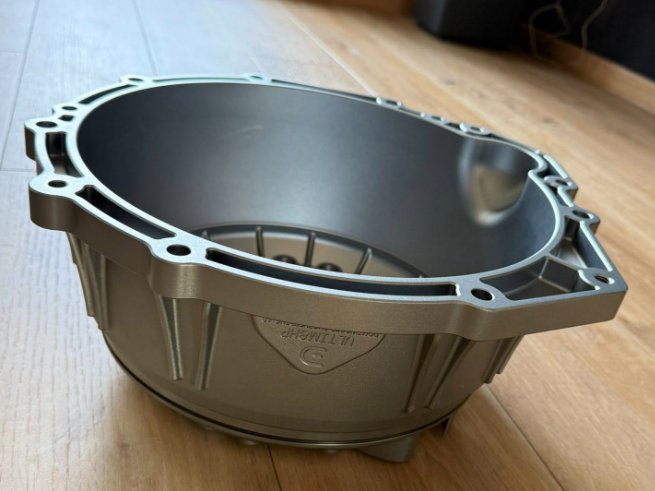
When we get down to the shop floor, the difference between cast aluminum alloy A356 and wrought aluminum 6061 dictates exactly how we shape the final part. It isn’t just about material properties; it is about how the metal behaves under heat and physical force.
A356: The King of Casting
I rely on A356 primarily for near-net-shape casting. Because of its high silicon content, it has incredible fluidity when molten. It fills intricate molds without tearing or shrinking excessively. This makes it the ideal choice for investment casting, sand casting, and permanent mold casting where you need complex internal geometries that would be impossible to machine from a solid block.
If you are looking to scale up production of complex housings or structural brackets, utilizing professional aluminum die casting services with A356 ensures you get that intricate detail right out of the mold.
6061: The Standard for Wrought Processing
In contrast, wrought aluminum 6061 is produced through mechanical working—extrusion, rolling, or forging. We typically buy this material in billets, bars, or sheets. It excels in:
- CNC Machining: It produces manageable chips and holds tight tolerances.
- Extrusion: Perfect for creating long, uniform cross-sections like structural framing.
- Forging: Great for parts requiring directional grain strength.
Porosity vs. Uniform Microstructure
The biggest trade-off in the aluminum casting vs machining debate is internal integrity.
- A356 (Cast): Since it solidifies from a liquid state inside a mold, A356 is susceptible to porosity (tiny gas pockets or shrinkage voids). While we can mitigate this with precise gate design or Hot Isostatic Pressing (HIP), it is an inherent risk in the casting process.
- 6061 (Wrought): This alloy has a dense, uniform microstructure. Because it has been mechanically worked under high pressure, it is free from porosity. This homogeneity is why we often prefer 6061 for high-stress aerospace applications where a hidden void could be catastrophic.
Surface Finish and Post-Processing
Out of the gate, 6061 usually offers a smoother surface finish, especially after machining. A356 parts often have a rougher “as-cast” texture that requires additional cleanup, blasting, or polishing to achieve a cosmetic surface. However, understanding the nuances in our machining and casting guide can help you determine if the lower cycle time of casting outweighs the surface prep costs.
Weldability, Machinability, and Finishing Capabilities
When you are deciding between A356 aluminum vs 6061, how the material behaves under the torch or inside the CNC machine is just as critical as its raw strength. Since we handle these materials daily, I can tell you that the difference in manufacturing costs and final aesthetics often comes down to these three factors.
Welding Performance and Crack Sensitivity
Both alloys are weldable, but they serve different roles in the shop.
- 6061 Aluminum: This is the standard for structural welding. Whether using TIG or MIG, 6061 weldability is excellent, though it requires a skilled hand to prevent hot cracking. The catch? Welding destroys the T6 temper in the Heat Affected Zone (HAZ), reducing strength by up to 40-50%. You almost always need post-weld heat treatment to restore its mechanical properties.
- A356 Aluminum: We primarily weld A356 to repair casting defects or attach minor fittings. It has good weldability thanks to its magnesium content, but it is more prone to porosity issues than wrought alloys.
Machinability and Tool Wear
Here is where the battle of aluminum casting vs machining really heats up.
6061-T6 is a machinist’s dream. It produces clean, breakable chips and allows for high cutting speeds with a superior surface finish. It is the baseline against which we measure other aluminum alloys.
A356-T6, on the other hand, is abrasive. Because it contains about 7% silicon, it wears out cutting tools significantly faster than 6061. The silicon particles act like sandpaper on the cutter. When we provide machining services for aluminum alloy rims, which are frequently made from A356, we have to use polycrystalline diamond (PCD) or carbide tooling to maintain tolerances and keep costs down.
Surface Finishing: Anodizing and Coatings
If your part needs to look good, pay close attention here.
- Anodizing 6061: This alloy takes anodizing incredibly well. Whether you want a clear hard coat or vibrant colors (red, blue, gold), 6061 provides a uniform, metallic finish that looks professional.
- Anodizing A356: Due to the high silicon content, A356 turns a dull, dark gray or splotchy black when anodized. It offers protection, but it isn’t pretty.
- Powder Coating: For A356, we usually recommend powder coating or painting. The cast surface texture holds paint well, hiding the aesthetic downsides of the casting process.
of Processing Characteristics
| Feature | 6061-T6 (Wrought) | A356-T6 (Cast) |
|---|---|---|
| Weldability | Excellent (Structural) | Good (Repair/Non-structural) |
| Machinability | Excellent (Clean chips) | Fair (Abrasive on tools) |
| Anodizing Appearance | Excellent (Clear/Colored) | Poor (Dark/Gray) |
| Preferred Finish | Anodize or Polished | Powder Coat or Paint |
Next Step: Are you unsure if the abrasive nature of A356 will kill your tooling budget? I can review your part geometry and suggest whether a cast A356 or machined 6061 approach is more cost-effective for your volume.
Cost and Production Considerations: A356 vs 6061
When I look at the bottom line for a project, the choice between A356 aluminum vs 6061 almost always comes down to production volume and lead time requirements. It’s not just about the price per pound of the metal; it’s about the total cost to get the part out the door.
Material Costs and Availability
6061 aluminum is the bread and butter of the machine shop world. It is incredibly widely available in standard forms—billets, plates, bars, and sheets. Because it’s a commodity wrought alloy, the raw material cost is generally moderate, and sourcing it is instant.
A356, being a casting alloy, is purchased as ingots. While the raw aluminum ingot price is competitive, you aren’t just buying stock; you are buying the casting process.
- 6061: Readily available off the shelf; you pay for the block and pay for the scrap you machine away.
- A356: Generally purchased by the foundry; efficient material usage (near-net-shape) but relies on foundry supply chains.
Tooling and Production Volume Economics
This is where the battle of aluminum casting vs machining is decided.
- Low Volume (Prototypes – 1,000 units): 6061 wins.
CNC machining 6061 requires virtually no hard tooling—just fixtures and programming. If I need ten parts next week, I’m machining them from 6061. There is no mold cost to amortize. - High Volume (1,000+ units): A356 wins.
Casting A356 requires significant upfront investment in tooling (permanent molds or sand casting patterns). However, once that tool is paid for, the per-unit price drops drastically compared to machining. You aren’t paying for hours of spindle time to whittle away a solid block; you are pouring liquid metal directly into the shape you want.
Lead Times and Scalability
If speed to market for the first part is the priority, 6061 is the clear choice. We can take a CAD file to a finished part in days.
However, for scalability, A356 is superior. Once the casting process is dialed in, ramping up production is much faster and cheaper than adding more CNC machines to a floor.
| Feature | 6061 (Machining) | A356 (Casting) |
|---|---|---|
| Upfront Tooling Cost | Low / None | High (Molds/Dies) |
| Per-Unit Cost | High (Machine time) | Low (Material focused) |
| Material Waste | High (Chips/Swarf) | Low (Recyclable runners) |
| Lead Time (First Article) | Fast (Days) | Slow (Weeks/Months) |
| Best For | Prototyping & Low Vol. | Mass Production |
Typical Applications for A356 and 6061

When we look at where these materials end up, the difference usually comes down to geometry and production volume. The manufacturing process dictates the application just as much as the mechanical properties do.
A356: The Choice for Complex Geometries
Because A356 is a casting alloy with excellent fluidity, we use it for parts that would be impossible or too expensive to machine from a solid block. It is the industry standard for pressure-tight, complex shapes.
You will most commonly find A356 in:
- Automotive: This is the big one. Alloy wheels, cylinder heads, engine blocks, and suspension control arms rely on A356 for its strength-to-weight ratio.
- Aerospace: We use high-grade variants (like A356.0) for complex aerospace structural components and gearbox housings where casting integrity is non-negotiable.
- Industrial: High-speed blower housings, pump bodies, and intricate brackets.
6061: The Structural Workhorse
6061 is the “jack of all trades” for structural applications. Since it is a wrought alloy available in plate, sheet, and extrusion, it is ideal for building frames and supports.
Common applications include:
- Structural Frames: Truck bodies, bicycle frames, and architectural structures.
- Marine: Due to its good corrosion resistance, 6061 is frequently used for marine engineering hardware, boat hulls, and gangways.
- Consumer Goods: Camera lenses, tactical flashlights, and fishing reels often start as 6061 billets.
- Machined Parts: Any custom bracket, valve body, or fixture produced on a CNC machine is likely 6061-T6.
Overlap and Substitution Scenarios
There is a specific sweet spot where these two compete.
- Prototyping vs. Production: Engineers often machine a prototype out of 6061 block to test fit and function. Once the design is finalized and volumes hit the thousands, the part is converted to an A356 casting to reduce unit costs.
- Structural Complexity: If a structural node becomes too complex to weld together from 6061 tubes, we might switch to a single-piece A356 casting to eliminate weld points and potential failure zones.
Would you like me to create a decision matrix to help you choose between A356 and 6061 for your specific project?
When to Choose A356 vs 6061

Choosing between A356 aluminum vs 6061 often comes down to one fundamental question: do you need a complex shape right out of the mold, or are you building a structural frame from standard stock?
I’ve found that the decision usually hinges on the geometry of the part and the production volume. If I need intricate internal cavities or near-net-shape components, casting is the only viable path. However, if the design relies on extrusions or plates, 6061 is the industry standard.
Decision Matrix: Casting vs Machining
Use this quick matrix to guide your aluminum alloy selection:
| Factor | A356 (Cast Alloy) | 6061 (Wrought Alloy) |
|---|---|---|
| Part Complexity | High (Internal channels, 3D contours) | Low to Medium (Linear, planar) |
| Production Volume | High (Efficient for 1,000+ units) | Low to Medium (Ideal for prototyping) |
| Material Strength | Good (Excellent stiffness) | Superior (Higher yield strength) |
| Processing Method | Sand, Permanent Mold, or Investment Casting | CNC Machining, Extrusion, Welding |
Pros and Cons
A356 Aluminum (The Casting Specialist)
- Pros: Excellent fluidity makes it perfect for thin walls and leak-tight applications. It offers a great balance of castability and strength.
- Cons: Lower ductility compared to wrought alloys; slightly rougher surface finish prior to machining.
6061 Aluminum (The Structural Standard)
- Pros: High corrosion resistance, excellent weldability, and superior toughness. It machines cleanly with a smooth finish.
- Cons: Machining complex shapes from a solid billet is wasteful and costly for high volumes.
Real-World Case Examples
In my experience, I see A356 shine in automotive applications like alloy wheels and transmission casings. The ability to utilize aluminum grades for casting allows manufacturers to produce lightweight, pressure-tight parts that would be impossible to machine economically.
Conversely, 6061 is my go-to for aerospace spars and bicycle frames. When we need a reliable structural backbone that can handle cyclic loading and requires extensive welding, the wrought properties of 6061 are unbeatable.
FAQ: Common Questions on A356 vs 6061
When deciding between cast aluminum alloy A356 and wrought aluminum 6061, I often get hit with the same few questions. It usually comes down to whether you need the geometric freedom of a casting or the reliable structural integrity of a wrought extrusion. Here is the breakdown of the most frequent inquiries.
Can A356 replace 6061 in structural parts?
Generally, no—not directly. You cannot simply swap a 6061 T6 machined part for an A356 casting with the exact same dimensions and expect the same performance.
- Grain Structure: Wrought aluminum 6061 has a uniform grain structure due to the rolling or extrusion process, making it more predictable under load.
- Defects: Castings (even high-quality A356) can have minor porosity or inclusions.
- The Fix: If you want to switch to A356 to save money on machining complex shapes, you usually need to redesign the part with thicker walls and larger fillets to compensate for lower ductility and fatigue strength.
Is A356 T6 stronger than 6061 T6?
In a straight fight, 6061 T6 mechanical strength usually comes out on top, particularly regarding Yield Strength.
| Property | A356-T6 (Typical) | 6061-T6 (Typical) |
|---|---|---|
| Yield Strength | ~25,000 psi (172 MPa) | ~40,000 psi (276 MPa) |
| Ultimate Tensile Strength | ~33,000 psi (228 MPa) | ~45,000 psi (310 MPa) |
| Elongation | 3-6% | 12-17% |
While A356 T6 properties are impressive for a casting—offering great pressure tightness—6061 provides a higher safety margin for structural applications.
Which alloy offers better fatigue resistance?
6061 wins here. Because 6061 is wrought, the physical working of the metal aligns the grain structure, providing superior resistance to cyclic loading. A356 is susceptible to fatigue failure at lower stress cycles if there is any microporosity in the casting. For critical high-vibration parts, we always recommend sticking with wrought aluminum alloy grades unless you are using premium-grade, defect-free casting methods (like squeeze casting).
How does heat treatment differ between them?
Both alloys utilize the T6 heat treatment, but the process parameters differ to suit their chemistry.
- Solution Heat Treat: Heating the metal to dissolve soluble elements (Mg and Si). A356 requires longer soak times to modify the silicon particles.
- Quench: Rapid cooling to freeze the structure.
- Artificial Aging: Reheating to a lower temperature to precipitate hardening phases ($Mg_2Si$).
The goal is the same—precipitation hardening—but A356 relies heavily on the modification of silicon flakes into rounded particles to achieve its ductility, whereas 6061 relies on grain refinement from mechanical working.
What are alternatives if neither fits?
If the A356 vs 6061 comparison leaves you without a solution, consider these:
- Need more strength? Look at 7075-T6 (aerospace grade, extremely strong but harder to weld).
- Need better corrosion resistance? Try 5052 (marine grade, non-heat treatable).
- Need cheaper high-volume castings? Switch to A380 die casting (less strong than A356, but faster to produce).
Would you like me to help you source specific technical data sheets for these alloys?