You might think skipping the prototype phase saves time…
But in precision manufacturing, that “shortcut” is often the most expensive mistake you can make.
The truth is, the advantage of rapid prototyping goes far beyond just holding a visual model in your hand.
It is a strategic tool for risk mitigation, validating complex geometries, and ensuring your investment casting or CNC machining runs perfectly the first time.
Whether you are developing aerospace components or industrial machinery, this guide cuts through the noise.
You’re going to learn exactly how functional prototyping accelerates your time-to-market, slashes development costs, and secures your ROI before you cut a single piece of hard tooling.
Let’s dive in.
Accelerating Time-to-Market: Speed as a Competitive Edge
In the modern industrial landscape, speed is often the deciding factor between market dominance and obsolescence. The most significant advantage of rapid prototyping is the drastic reduction in the product development cycle. At Vastmaterial, we eliminate the bottleneck of waiting weeks for traditional hard tooling. By utilizing our integrated precision CNC machining and agile casting workflows, we transform digital concepts into physical realities in a matter of days.
This agility allows engineering teams to iterate aggressively. Instead of being locked into a potentially flawed design, you can move from Version 1 to Version 3 rapidly, testing fit and function immediately.
- Drastic Lead Time Reduction: Bypass the long setup times associated with conventional manufacturing and hard tooling.
- Rapid Iteration: Refine geometries and tolerances quickly without significant financial penalty.
- First-Mover Advantage: Launch your product while competitors are still stuck in the blueprint phase.
We empower you to achieve time-to-market acceleration, ensuring your innovations reach the industry floor first.
Cost Reduction and Risk Mitigation
The most tangible advantage of rapid prototyping is the financial safety net it creates for your project. We operate on the “Fail Fast” philosophy: finding a flaw early is cheap; finding it after production starts is a disaster. By identifying design errors during the initial phases, we drastically lower the cost of failure.
Avoiding Unnecessary Expenses
Risk mitigation in manufacturing is about protecting your capital. We never recommend committing to expensive hard tooling until the design is fully verified.
- Tooling Savings: You avoid the sunk cost of cutting hard steel tools for unverified designs. This is crucial before committing to complex methods like the stainless investment casting process, where re-tooling can destroy a budget.
- Waste Reduction: Scrap rates drop significantly. When working with expensive alloys like Cobalt, Nickel, or premium stainless steel products, testing with a prototype first ensures we aren’t throwing valuable material in the bin.
This approach ensures that your investment goes toward production-ready parts, not toward fixing avoidable mistakes.
Functional Testing and Material Validation
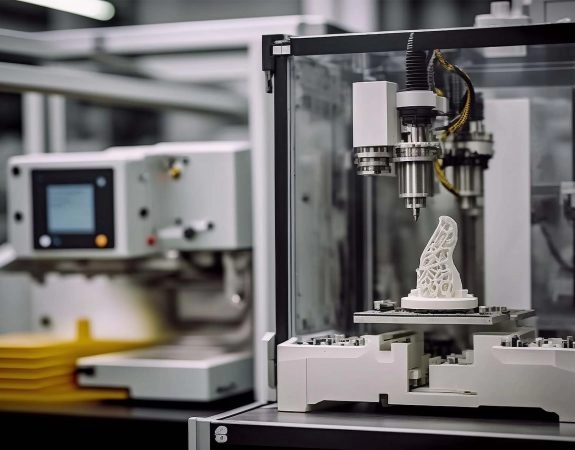
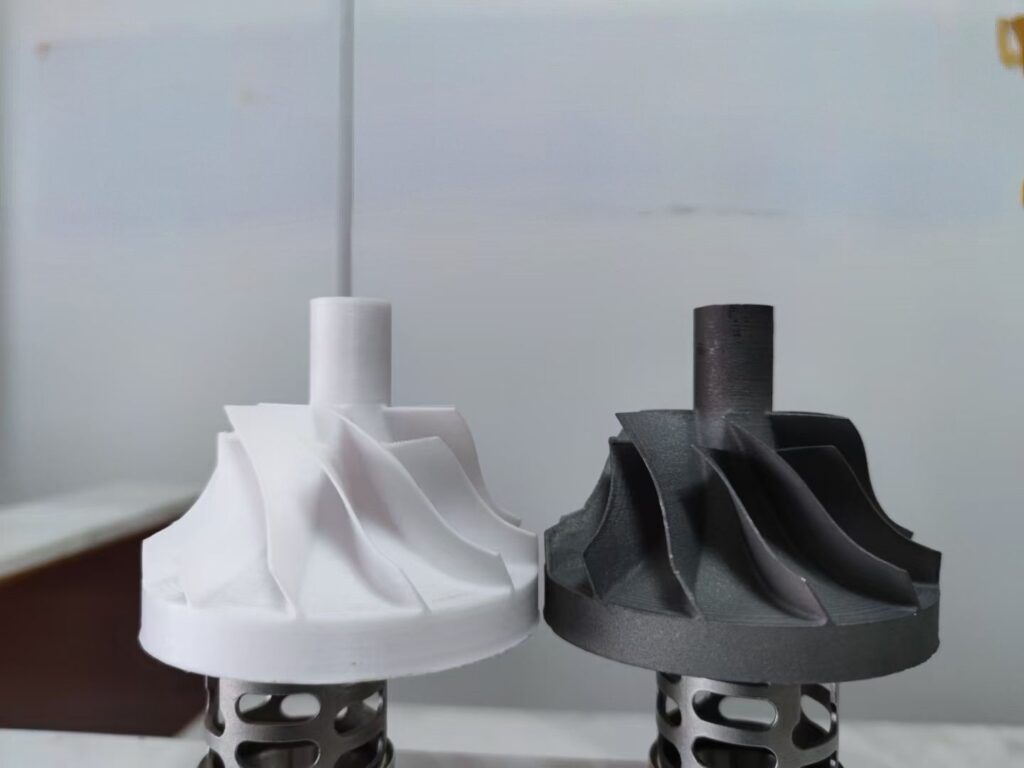
A major advantage of rapid prototyping with us is the ability to move beyond simple visual aids. While a “looks-like” model is fine for a boardroom presentation, it often fails when you need to verify mechanical performance under stress. We focus on delivering “works-like” functional prototyping that replicates the exact physics and performance characteristics of your final production run.
The real value lies in material fidelity. Unlike additive manufacturing methods that often rely on plastic simulants, we produce prototypes using the actual end-use alloys. Whether your project requires the high-temperature stability of Titanium and Stainless Steel (such as 15-5 PH) or the specific conductivity found in our custom brass and copper alloy components, we ensure the prototype behaves exactly like the finished part.
This approach allows for rigorous engineering validation and material property testing before you commit to expensive hard tooling. Our process includes:
- Real-World Stress Testing: Verifying tensile strength, thermal resistance, and wear properties in the actual operating environment.
- Internal Integrity Checks: We perform Non-Destructive Testing (NDT) to detect porosity or internal flaws, ensuring the part meets strict industrial standards.
- Process Verification: Validating that the chosen method—whether it is precision CNC machining or the techniques detailed in our cast aluminum foundry guide—is viable for mass production.
By validating the design with the correct material early, we eliminate guesswork and ensure your components are ready for the field immediately.
Enhancing Design for Manufacturability (DFM)
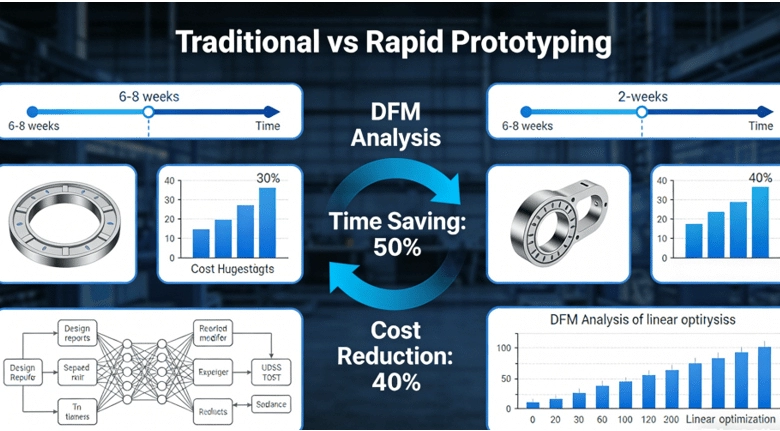
One significant advantage of rapid prototyping is its ability to bridge the gap between a digital concept and a physical reality that can actually be built at scale. We don’t just produce a part to look at it; we analyze how it interacts with our manufacturing process to ensure efficiency down the line. This phase allows our engineering team to identify potential manufacturing bottlenecks—such as inconsistent wall thickness, deep undercuts, or impossible draft angles—that would otherwise cause defects or delays during mass production.
By establishing a tight feedback loop, we optimize designs to reduce material waste and cycle times, ultimately lowering costs. Before we commit to expensive tooling or large-scale casting runs, we verify that every dimension meets strict ISO standards. This proactive approach ensures that the transition from a single unit to thousands is seamless and reliable.
Key DFM benefits include:
- Geometry Validation: Detecting features that are difficult to cast or machine, allowing for design adjustments that simplify production.
- Tolerance Verification: Ensuring the prototype meets the tight tolerances required for industrial applications before scaling up.
- Cost Optimization: Refining the design to minimize machining time and scrap rates in high-value alloys.
Stakeholder Communication and Investment Security

One often-overlooked advantage of rapid prototyping is its power to bridge the gap between technical engineering and business decision-making. Nothing secures buy-in faster than placing a physical, functional product on the conference table. While 3D CAD files and blueprints are essential for manufacturing, they can be abstract and difficult for non-technical stakeholders to fully grasp.
We help you transform digital concepts into tangible assets, providing the proof of concept (PoC) needed to unlock funding or management approval.
Clearer Communication, Lower Risk
Misinterpreting complex 2D drawings is a common source of friction in product development. By producing a physical prototype, we eliminate ambiguity and ensure everyone—from the engineering team to the board of directors—is aligned on the final vision.
- Tangible Proof: Investors and management gain confidence when they can hold and inspect a high-fidelity part, validating the investment before mass production begins.
- Visualizing Complexity: Relying solely on digital models for precision investment casting services for complex metal parts can hide potential assembly issues. A prototype reveals these immediately.
- Ergonomic Validation: We allow you to physically test the fit, weight, and handling of a product, ensuring the design meets user experience standards.
This level of engineering validation significantly aids in risk mitigation, ensuring that capital is only committed to designs that have been physically verified for form and function.
Low-Volume Production and Customization
Bridge Manufacturing and Market Testing
A major advantage of rapid prototyping is the ability to facilitate bridge manufacturing. This process allows us to produce small batches of fully functional parts, enabling you to test the market and generate revenue while waiting for permanent, high-volume tooling to be finalized. By leveraging our integrated scheduling and production systems, we help you validate consumer demand with real products, ensuring you don’t commit to large-scale manufacturing runs until the market is proven.
Bespoke Parts Without High Setup Costs
Traditional manufacturing often requires high setup costs that make single-unit or limited-run production financially impractical. Our approach eliminates these barriers. We combine precision casting and CNC machining to create bespoke, one-off parts without the prohibitive overhead associated with cutting hard steel tools. Whether you require specialized industrial components like custom alloy steel flanges or unique prototypes for specific applications, we offer the flexibility to deliver high-quality custom solutions efficiently.
- Cost Efficiency: Avoid minimum order quantities (MOQs) typical of mass production.
- Flexibility: Easily modify designs between batches based on immediate feedback.
- Speed: Deliver custom parts in days, not months.
Why Partner with Vastmaterial for Rapid Prototyping
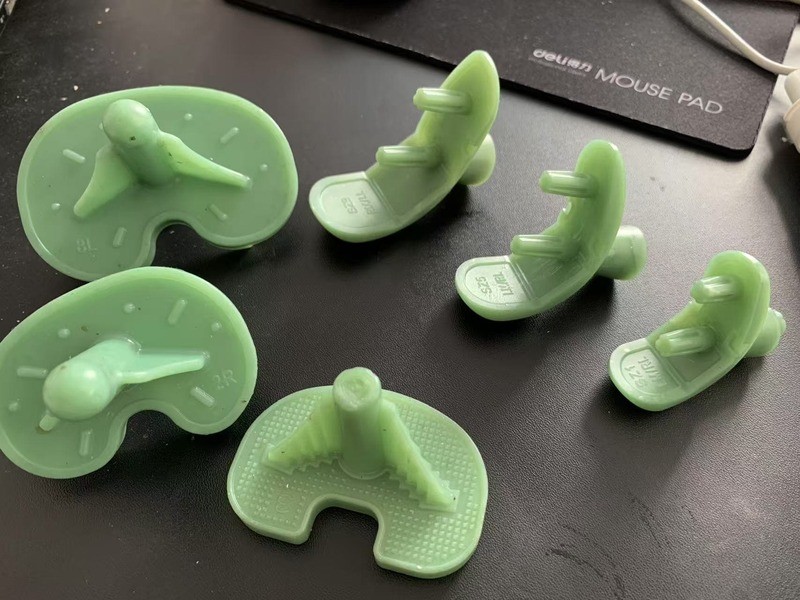
At Vastmaterial, we streamline the product development cycle by integrating every stage of production under one roof. Unlike service bureaus that outsource critical steps, we maintain strict control over the entire process—from the initial alloy development to the final surface treatment. This integration ensures that the advantage of rapid prototyping isn’t lost to logistical delays or quality inconsistencies.
We specialize in working with the actual materials intended for your final product. Whether your project requires the corrosion resistance of Stainless Steel (347, 440C, 15-5 PH) or the conductivity of Copper and Brass, we deliver functional prototypes that perform under real-world stress. Our expertise extends to complex alloy cast steel factory capabilities, allowing us to validate mechanical properties early in the design phase.
Integrated Manufacturing Capabilities
| Capability | Description | Benefit |
|---|---|---|
| Precision Casting | Sand, pressure, die, and investment casting. | Versatility for complex geometries and various volumes. |
| CNC Machining | High-precision milling and turning. | Achieves tight tolerances and superior surface finishes. |
| Material Variety | Stainless steel and alloy steel, Cobalt, Nickel, Titanium. | Test with the exact material specs needed for the final part. |
| Scalability | Seamless transition from prototype to mass production. | Eliminates the need to requalify new suppliers for full runs. |
Our approach secures your investment by ensuring that the prototype you test is truly representative of the final manufactured component. We help you move from concept to delivery with speed, precision, and confidence.
Frequently Asked Questions (FAQs)
What is the main advantage of rapid prototyping over traditional methods?
The single biggest advantage of rapid prototyping is speed. It drastically shortens the product development cycle, allowing us to move from a CAD file to a physical object in days rather than weeks or months. Unlike traditional manufacturing that requires time-consuming tooling setup, rapid methods let you iterate designs immediately. This acceleration gives you a massive competitive edge, helping you launch products while others are still in the planning phase.
Can rapid prototyping be used for functional metal parts?
Absolutely. Modern prototyping isn’t limited to fragile plastic models; it is essential for creating functional prototyping units that mimic final production performance. We produce precision metal components capable of withstanding real-world stress, heat, and chemical exposure. Selecting the right material is critical during this phase—understanding the nuances of alloy steel vs stainless steel helps ensure your prototype meets the necessary mechanical properties for rigorous testing.
How does prototyping reduce the overall cost of manufacturing?
It significantly lowers the cost of failure. By identifying design flaws early, we prevent the financial disaster of cutting hard tooling for a defective part. “Failing fast” in the prototype stage is cheap; failing during full-scale production is expensive. This process validates geometry and fit, ensuring that when we do move to mass production, your investment is secure and the design is solid.