

What Is Beryllium Copper?
When engineers and buyers reach out to a beryllium copper manufacturer, they’re usually trying to solve a tough problem:
They need copper-level conductivity, but with steel-like strength, reliability, and safety. That’s exactly where beryllium copper (BeCu) fits.
Beryllium Copper Alloy Basics and Composition
Beryllium copper is a high-strength copper alloy that typically contains:
- Copper (Cu): Balance (about 97–99%)
- Beryllium (Be): About 0.2–2.0%
- Small additions (sometimes) of cobalt, nickel, or other elements to fine-tune properties
That small amount of beryllium completely transforms the copper, giving you an alloy that can be:
- As strong as hardened steel
- Still electrically and thermally conductive
- Non-sparking and non-magnetic in many grades
You’ll often see grades described as:
- High-strength BeCu (e.g., C17200 / Alloy 25 / CuBe2)
- High-conductivity BeCu (e.g., C17510 / Alloy 3, C17500)
How Beryllium and Copper Work Together
In plain terms, beryllium is the “strength enabler” inside the copper matrix.
- In the soft (solution-annealed) condition, the copper is workable and easy to form.
- During heat treatment, beryllium atoms cluster and form very fine particles inside the copper.
- These particles block dislocation motion (the way metals deform under stress), which is what gives high strength and hardness.
The result: a high performance copper alloy that can be stamped, formed, or machined first, then hardened later to reach final properties.
Precipitation Hardening and Why It Matters
Precipitation hardening (also called age hardening) is the key process that makes beryllium copper so valuable:
- Solution Anneal – Alloy is heated so beryllium fully dissolves in copper
- Quench – Rapid cooling “locks in” a supersaturated solid solution
- Age Harden – Reheat at a controlled temperature so tiny beryllide precipitates form
This controlled cycle lets a beryllium copper manufacturer tune properties such as:
- Tensile strength (well over 150 ksi for common high-strength grades)
- Hardness (often Rockwell C 35–45+ for C17200)
- Fatigue life and stress relaxation resistance in demanding environments
It’s the reason BeCu is trusted for springs, connectors, and critical mechanical components where failure isn’t an option.
How Beryllium Copper Compares to Other Copper Alloys
When you compare beryllium copper to more common copper alloys, the trade-offs are clear:
| Alloy Type | Strength | Conductivity | Special Features |
|---|---|---|---|
| Pure Copper (C11000) | Low | Very high | Soft, great for basic electrical use |
| Brass / Bronze | Moderate | Moderate–low | Good machinability, general purpose |
| Phosphor Bronze | Moderate | Moderate | Good spring properties, not steel-strong |
| Beryllium Copper | Very high (steel-like) | Moderate–high | Non-sparking, non-magnetic, fatigue resistant |
Key advantages of beryllium copper:
- Much higher strength than standard copper, brass, or bronze
- Better fatigue performance for springs and contacts
- Non-sparking behavior for hazardous locations
- Stable properties across wide temperature ranges
If you need a high strength copper alloy that can survive mechanical abuse, maintain electrical performance, and meet safety requirements, beryllium copper is usually the first material I recommend as a manufacturer and solutions partner.
Key Properties of Beryllium Copper Alloys
As a beryllium copper manufacturer, I focus on alloys that deliver a mix of strength, conductivity, and safety you can’t get from standard copper grades.
High Strength and Hardness for Tough Jobs
Beryllium copper (CuBe) is one of the highest-strength copper alloys on the market.
- CuBe2 / C17200 beryllium copper can reach tensile strengths over 200 ksi after heat treatment.
- You get hardness close to tool steel, but with copper’s conductivity.
That combination is why engineers choose it for springs, connectors, and tooling that can’t afford to fail.
Fatigue Resistance and Long-Term Durability
For parts that flex or cycle constantly—springs, contacts, clips—fatigue life matters more than just static strength.
- Beryllium copper holds its properties over millions of cycles.
- It resists stress relaxation, so contact force stays stable over time.
This is a big reason it’s trusted in aerospace, defense, and high-reliability electronics.
Electrical and Thermal Conductivity by Grade
You don’t have to trade all conductivity for strength.
- High-strength grades (C17200): moderate electrical conductivity (typically 20–30% IACS).
- High-conductivity grades (C17510 Alloy 3, C17500): higher conductivity (up to ~45–60% IACS) with good strength.
This lets us tune the alloy selection to your application—high current, tight tolerances, or both. For a broader view of copper alloy options, you can also look at our wider range of high-performance copper alloys.
Non-Sparking and Non-Magnetic Safety Benefits
Beryllium copper is a non-sparking copper alloy and essentially non-magnetic.
- Safe for tools and components in oil and gas, refineries, chemical plants, and explosive atmospheres.
- Ideal around sensitive instruments, MRI rooms, and magnetic sensors.
You get safety, reliability, and long service life in one material.
Corrosion and Wear Resistance
CuBe holds up well in harsh, real-world conditions:
- Strong resistance to corrosion, especially in atmospheric and industrial environments.
- Good wear resistance, making it suitable for bearings, bushings, and sliding components.
This reduces maintenance and downtime for demanding U.S. industrial and energy markets.
Performance in Extreme Temperatures
Beryllium copper maintains strength and stability across a wide temperature range.
- It keeps good mechanical properties at elevated temperatures where standard copper alloys soften.
- It also performs reliably at low temperatures without becoming brittle.
For engineers who need a high strength copper alloy that can handle heat, cold, vibration, and safety requirements, beryllium copper delivers a rare all-in-one package.
Beryllium Copper Grades and Specifications
When you’re sourcing from a beryllium copper manufacturer, knowing the main grades and specs saves time, money, and back‑and‑forth emails. Here’s the short, useful version.
Common Beryllium Copper Grades (Quick Overview)
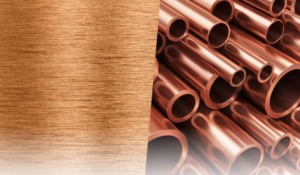
Most U.S. buyers will run into these core grades:
| Grade | UNS | Type | Key Strength | Key Conductivity |
|---|---|---|---|---|
| Alloy 25 | C17200 | High-strength BeCu | Very high | Medium |
| Alloy 3 | C17510 | High-conductivity BeCu | Medium-high | High |
| — | C17300 | Free-machining BeCu | High | Medium |
| Alloy 10 | C17500 | High-conductivity BeCu | Medium | High |
All of these sit in the “high strength copper alloy” family and are often grouped with bronzes like the ones in our broader copper alloy and bronze materials.
C17200 (Alloy 25) – High-Strength Workhorse
C17200 beryllium copper (CuBe2) is the go‑to grade when you need strength close to tool steel but still want copper-like behavior.
Typical properties (after full aging, U.S. standard ranges):
- UTS: ~170–200 ksi
- Hardness: ~36–44 HRC (about 380–460 HV)
- Conductivity: ~20–25% IACS
- Features:
- Very high strength and fatigue resistance
- Non-sparking, non-magnetic
- Good wear and corrosion resistance
Common use cases:
- High-cycle springs and contacts
- Aerospace beryllium copper components
- Injection mold inserts, core pins, and wear plates
- Resistance welding electrodes
C17510 (Alloy 3) – High Conductivity Beryllium Copper
C17510 alloy 3 sits between pure copper and C17200: not as strong as C172, but much better electrical and thermal performance.
Typical properties:
- UTS: ~90–140 ksi (depends on temper)
- Conductivity: ~45–60% IACS
- Features:
- Good strength + high conductivity
- Solid choice for power/electronics hardware
- Stable in elevated temperatures
Common use cases:
- Power connectors and busbar parts
- Resistance welding electrodes and holders
- High-current electronics connectors
- Automotive and EV power hardware
C17300 – Free-Machining Beryllium Copper
C17300 is basically a “machinist-friendly” version of C17200, with a bit of lead added for better chip breaking.
Key features:
- Strength and hardness close to C17200
- Much better machinability (lathe, screw machines, CNC)
- Good surface finish and tight tolerance capability
Typical uses:
- Precision screw machine parts
- Complex electrical connectors
- Oil and gas tools where both machinability and strength matter
C17500 and Other High-Conductivity Variants
C17500 is another high-conductivity beryllium copper alloy similar to C17510, used where conductivity is critical but you still want decent strength.
You’ll see these used in:
- Electrical contact materials and current-carrying parts
- Oil and gas non-magnetic alloy components
- EMI shielding beryllium copper applications
Some manufacturers also offer low-beryllium or modified high-conductivity BeCu for specific aerospace or telecom requirements.
Tempers, Hardness, and Mechanical Data (What Matters)
Beryllium copper grades are sold in different tempers, which combine cold work + precipitation hardening. Typical temper codes:
- A = Solution annealed (soft)
- H = Cold worked (e.g., 1/2H, H, EH)
- HT = Cold worked + aged (fully hard)
Example – C17200 strip tempers:
| Temper | Tensile Strength (ksi) | Hardness (HV) | Use Case |
|---|---|---|---|
| A | 75–100 | 150–200 | Deep drawing, forming |
| 1/2H | 120–150 | 250–300 | Stamped parts needing bend |
| HT | 170–190 | 380–460 | Springs, contacts, blades |
Actual numbers vary by thickness and manufacturer, so always check the mill cert.
How to Read Beryllium Copper Specs and Standards
When you’re buying from a beryllium copper manufacturer, the print or PO should clearly call out:
- Alloy/UNS: e.g., C17200, C17510
- Form: strip, coil, rod, bar, plate, wire
- Temper: e.g., AT, HT, 1/2H, H
- Dimensions: thickness, width, length, and tolerances
- Mechanical targets: min tensile, yield, elongation, hardness
- Conductivity requirement: % IACS or MS/m
- Standards: ASTM B194 / B196 / B197, AMS, or customer spec
- Certs needed: e.g., ISO 9001 beryllium copper supplier, AS9100 certified copper manufacturer
If your print only says “beryllium copper,” that’s a red flag. For critical aerospace, medical, defense, or oil & gas work, we always lock in exact grade + temper + standard before cutting anything.
Forms and Product Types from a Beryllium Copper Manufacturer
As a specialized beryllium copper manufacturer, I focus on delivering the exact form you need, not just “what’s in stock.” Here’s how we typically support US engineers, tool shops, and OEMs:
Beryllium Copper Strip, Sheet, and Coil for Stamping
We supply beryllium copper strip, sheet, and coil for high-speed stamping and progressive dies, ideal for:
- Precision springs and electrical contacts
- Connectors, sockets, and EMI shielding parts
- Tight-tolerance, high-volume production
You get controlled thickness, edge conditions, and tempers so your stamping tools run fast and consistent with minimal setup issues.
Beryllium Copper Rod and Bar for Machining
Our beryllium copper rod and bar stock is geared for CNC shops that need a high strength copper alloy with stable machinability. Typical uses include:
- Precision inserts, bushings, and wear parts
- Small turned components and threaded parts
- High-strength, non-sparking hardware
If you’re already machining nonferrous alloys like brass or bronze, our approach to high-precision metal machining services transfers over smoothly.
Beryllium Copper Plate and Blocks for Tooling and Molds
We offer beryllium copper plate and blocks for tooling, injection molds, and cores where you need:
- Fast heat removal
- High wear resistance
- Stable dimensions under load
These are popular with mold makers who want better cycle times and fewer hot spots in demanding mold cavities.
Beryllium Copper Wire and Cable Components
Beryllium copper wire and small cross-section products are used for:
- Spring wire and precision contacts
- Signal and power connectors
- Custom cable components needing high fatigue life
We control diameter, tensile strength, and temper tightly to keep forming and winding stable.
Custom Shapes, Profiles, and Near-Net Forms
When standard shapes don’t fit, we support:
- Custom profiles and special cross-sections
- Near-net forms to reduce your machining time
- Small-batch and prototype runs for new programs
This is especially useful if you’re developing new aerospace or electronics connectors and want to cut material waste and machining hours.
Tolerances, Surface Finishes, and Packaging Options
As a beryllium copper alloy supplier, I’m strict on the details that affect your downstream process:
- Tolerances: Tight control on thickness, width, straightness, and roundness
- Surface finishes: Mill finish, polished, ground, or pre-machining finishes depending on application
- Packaging: Coil wrapping, boxed plate, bar bundles, and moisture-protected export packing for US and global shipments
You tell us the form, tolerances, and finish you need—our job as your beryllium copper manufacturer is to make sure the material drops into your process with minimal rework.
Major Applications of Beryllium Copper Alloys
As a specialized beryllium copper manufacturer, I see the same pattern across U.S. customers: you reach for BeCu when failure is not an option. Here’s where beryllium copper alloys really earn their keep.
Aerospace Beryllium Copper Components
In aerospace, C17200 beryllium copper and high-conductivity grades are used where high strength, stability, and reliability matter:
- Springs, clips, and contacts in flight-critical systems
- Bearings and bushings that handle high loads and vibration
- High-fatigue components near engines and landing gear
You get steel-like strength with copper-like conductivity, which is hard to match with other alloys.
Bearings, Bushings, and Landing Gear Parts
For bearings, bushings, and landing gear parts, BeCu delivers:
- High load capacity with low wear
- Good galling resistance against steel shafts
- Stable performance under shock and vibration
This is why it’s trusted in heavy equipment and aerospace gear assemblies, similar to how other critical metals are used in demanding equipment manufacturing environments.
Electronics and Telecom Connectors
Beryllium copper is one of the best spring copper materials for:
- High-cycle connectors, sockets, and terminals
- RF and 5G contacts that need low signal loss
- Miniaturized connectors where space is tight but reliability can’t slip
You get high conductivity + high fatigue strength, ideal for U.S. telecom, datacenter, and EV harness markets.
Switches, Relays, and EMI Shielding
For switches, relays, and EMI shielding, BeCu offers:
- Stable contact force over millions of cycles
- Good arc resistance and low contact bounce
- Formable, thin-gauge beryllium copper strip and coil for precision shielding
It’s a go-to material for critical control panels, relays, and sensitive electronics.
Oil & Gas Non-Sparking and Non-Magnetic Tools
In oil and gas, safety comes first. Beryllium copper tools are used in:
- Refineries, chemical plants, and offshore rigs
- Non-sparking hammers, wrenches, chisels, and screwdrivers
- Areas with explosive gases, dust, or vapors
BeCu is both non-sparking and non-magnetic, making it a proven hazardous area safety choice alongside other specialized alloys often used in oil and gas applications.
Downhole and High-Pressure Equipment
For downhole tools and high-pressure components, BeCu provides:
- Strength and fatigue resistance under extreme pressure and temperature
- Non-magnetic behavior for MWD/LWD tools
- Long-term reliability in corrosive drilling fluids
Typical parts include collars, housings, sleeves, and wear parts in drilling assemblies.
Automotive and Industrial Tooling & Molds
As a beryllium copper plate manufacturer, we supply BeCu for:
- Injection mold inserts and cores with fast cooling
- High-wear mold sections for plastic parts and die casting
- Industrial tooling where heat must move out quickly
You get shorter cycle times, better dimensional control, and reduced warpage in plastic parts.
Resistance Welding Electrodes and Tips
High-strength, high-conductivity beryllium copper is widely used for:
- Resistance welding electrodes and tips
- Projection welding tooling and holders
- Contact wheels and welding fixtures
BeCu stands up to heat and mechanical wear while still conducting current efficiently.
Defense and Hazardous Area Safety Components
In defense and safety-focused markets, beryllium copper alloy is used for:
- Non-sparking and non-magnetic military tools
- Fuzes, connectors, and electrical contacts in harsh environments
- Components in radar, sonar, and secure communications systems
When you need a high strength copper alloy that’s safe, reliable, and stable in demanding conditions, a specialized beryllium copper manufacturer is the partner you want in your corner.
Beryllium Copper Manufacturing Process
As a beryllium copper manufacturer, I focus on tight process control from melt to final temper, because that’s what decides your part performance and consistency.
Raw Material Sourcing & Alloy Melting
For any high strength copper alloy, it all starts with clean raw materials. We source:
- High-purity copper cathode
- Controlled beryllium master alloys
- Trace alloying elements (like cobalt or nickel for certain grades)
We melt under controlled atmospheres to keep oxygen and impurities low. This is key for conductivity, fatigue life, and trouble‑free machining later.
Casting, Hot Working & Cold Working
Once the beryllium copper alloy is melted and refined, we cast into billets, slabs, or ingots designed for the final product form:
- Hot working: Forging, hot rolling, or extrusion to break up the cast structure and improve toughness.
- Cold working: Precision rolling, drawing, or straightening to hit tight tolerances and raise strength ahead of heat treatment.
This is where we dial in the base mechanical properties for strip, rod, bar, and plate.
Precipitation Hardening & Heat Treatment
Beryllium copper’s real power comes from precipitation hardening:
- Solution annealing to dissolve beryllides and reset the structure
- Controlled quench to lock in the solution-treated state
- Aging at specific temperatures and times to form fine beryllide precipitates
By adjusting temperature and time, we can shift between high-strength tempers and higher-conductivity tempers to match your design targets.
Process Control for Strength & Conductivity
For U.S. aerospace, electronics, and oil & gas customers, we run strict process controls:
- Tight furnace temperature and soak-time monitoring
- In‑process hardness and conductivity checks
- Lot-by-lot chemistry verification
This lets us hit specific windows like “minimum 180 ksi tensile with 45% IACS” or similar spec-driven requirements over and over.
Production Flow: Strip, Rod & Plate
A typical flow for different products from a beryllium copper manufacturer looks like this:
- Strip & coil: Cast → hot roll → cold roll → edge condition → slit → age harden → final slit & pack
- Rod & bar: Cast billet → hot extrude → cold draw/peel → straighten → age harden → cut to length
- Plate & block: Cast slab → hot roll or forge → machine/finish → age harden
We package to protect surface finish and straightness so your stamping or machining runs clean.
Consistency & Repeatability
To keep every heat and coil repeatable, we rely on:
- Standardized work instructions and automated controls
- SPC on critical dimensions, hardness, and conductivity
- Full traceability from melt to finished piece
If your project also needs high-temperature or specialty alloys alongside beryllium copper, we can coordinate production with our high temperature alloy lines to keep your supply chain simple and consistent.
Quality Control and Certifications for a Beryllium Copper Manufacturer
As a beryllium copper manufacturer serving U.S. OEMs and job shops, I take quality control and certifications seriously. With BeCu, you don’t get a second chance if something fails in the field.
Key Certifications (ISO 9001, AS9100, and More)
When you’re sourcing beryllium copper alloy, always check the quality system first:
- ISO 9001 beryllium copper supplier – proves we have documented, audited processes for everything from quoting to shipping.
- AS9100 certified copper manufacturer – critical for aerospace beryllium copper components, defense, and high‑reliability electronics.
- Compliance with customer-specific standards (Boeing, Lockheed, automotive Tier 1s) where required.
We back this up with controlled processes similar to what we use in our broader metal manufacturing process workflows.
Material Traceability and Heat Number Tracking
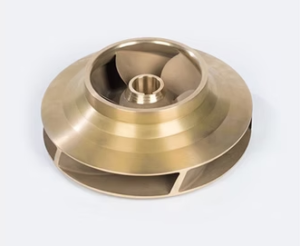
For every beryllium copper strip, rod, bar, or plate we ship, we keep full traceability:
- Heat number tracking from melt to finished product.
- Mill test reports (MTRs) with chemistry, mechanical properties, and temper.
- Lot-level records that tie every coil, bar, or cut piece back to its original melt.
This is non‑negotiable for aerospace, oil & gas, and critical electronics connectors material.
Mechanical and Chemical Testing
We verify each beryllium copper grade and temper with in‑house and third‑party tests:
- Chemical analysis (OES/ICP) to confirm Be, Co, Ni, and Cu within spec.
- Tensile, yield, elongation, hardness tests to lock in the right high strength copper alloy performance.
- Conductivity checks for C17200 beryllium copper, C17510 alloy 3, and other high‑conductivity grades.
Our dedicated testing and quality control systems keep data consistent and audit-ready.
Dimensional and Surface Quality Checks
On the dimensional side, we focus on what U.S. customers actually care about:
- Tight thickness, width, and flatness control for beryllium copper strip and coil.
- OD, straightness, and roundness checks on beryllium copper rod and bar.
- Surface inspections for scratches, pits, and edge burrs, especially for stamping and high‑precision connectors.
We use calibrated gauges, CMMs, and optical inspection for repeatable results.
Compliance With Safety and Environmental Regulations
Beryllium copper machining and processing come with strict rules, and we align with:
- OSHA beryllium compliance for workplace exposure.
- REACH compliant copper alloys and RoHS considerations for global supply.
- Internal procedures for safe handling, labeling, and documentation.
Any serious beryllium copper manufacturer needs this full package—certifications, traceability, testing, inspection, and regulatory compliance—if you want reliable, non-sparking copper alloy performance in real-world U.S. applications.
Safety and Handling of Beryllium Copper
As a beryllium copper manufacturer, I take safety seriously. BeCu is safe in solid form, but you must control dust and fumes when cutting, grinding, or welding.
Health risks related to beryllium exposure
Beryllium becomes a risk when it’s airborne as dust, mist, or fume. Main concerns:
- Sensitization and Chronic Beryllium Disease (CBD) from long-term inhalation
- Lung irritation and potential cancer risk at high, uncontrolled exposures
- Very low exposure limits under OSHA beryllium standards, so you can’t treat it like regular copper
In solid bar, plate, strip, or coil form, BeCu is not a problem if you don’t generate uncontrolled dust.
Safe handling and storage in the shop
For standard handling of beryllium copper alloy parts and stock:
- Keep strip, rod, and plate in labeled, closed racks or bins
- Avoid impact or rough handling that could chip edges and create fine particles
- Use wet wiping or HEPA vacuum for cleanup, never dry sweeping or compressed air
- Store BeCu away from general scrap streams so it can be recycled correctly
Machining and grinding best practices
Most U.S. machine shops can handle beryllium copper safely with the right controls:
- Use wet machining whenever possible (flood coolant to knock down dust)
- For grinding, use coolant plus local exhaust right at the wheel
- Use sharp tools, proper feeds and speeds to avoid burning the material
- Collect chips and fines in sealed containers; treat as regulated waste per local rules
If you’re already set up to machine high-performance alloys or do precision metal work (like in many metal casting and alloy manufacturing setups), you’re most of the way there.
Ventilation, dust collection, and PPE
To stay OSHA-compliant with beryllium copper:
- Local exhaust ventilation (LEV) at the point of cutting, grinding, or sanding
- HEPA filtration on dust collection systems
- No recirculation of dusty air back into the shop without proper filtration
- PPE for operators:
- NIOSH-approved respirator where needed
- Safety glasses or face shield
- Gloves and protective clothing in dusty areas, removed before leaving the work zone
Train employees on handling procedures and keep exposure records. That’s a big factor when choosing a responsible beryllium copper manufacturer.
Welding, brazing, and fabrication guidelines
Welding and brazing BeCu needs extra control because of fumes:
- Use high-efficiency fume extraction at the arc or torch
- Prefer brazing and resistance welding where practical; they usually give more controlled fume than open-arc welding
- Never weld or torch-cut BeCu without ventilation and proper respirators
- Follow filler metal supplier guidance for preheat and post-weld practices
If you don’t have beryllium experience, consider sending critical welding or heat-treat work to a specialized beryllium copper supplier with the right controls in place.
OSHA, REACH, and regulatory considerations
For U.S. shops and OEMs:
- Follow OSHA beryllium standards for exposure limits, medical surveillance, and housekeeping
- Keep SDS on file for each beryllium copper grade (C17200, C17510, C17300, etc.)
- Make sure your BeCu source is REACH-compliant if you export to the EU
- Document your process controls and training; customers, especially aerospace and defense, will ask
Working with an ISO 9001 beryllium copper supplier that understands OSHA and global regulations makes it much easier to bring BeCu into your process without safety or compliance surprises.
How to Choose a Beryllium Copper Manufacturer
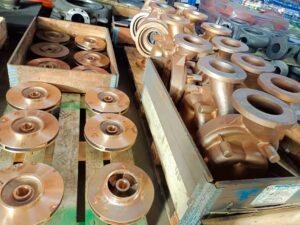
Picking the right beryllium copper manufacturer in the U.S. isn’t just about price. It’s about stable quality, real engineering support, and reliable delivery when your line can’t stop.
What Engineers and Buyers Should Look For
When you’re sourcing C17200, C17510, or other BeCu grades, I’d focus on:
- Tight control of chemistry and tempers
- Proven experience with your industry (aerospace, electronics, oil & gas, automotive, tooling)
- Consistent, documented mechanical and electrical properties
- Clear communication on lead times, MOQs, and tolerances
Experience and Specialization in BeCu Alloys
You want a supplier that lives and breathes beryllium copper:
- Long history with high-strength copper alloys and precipitation hardening
- Familiar with non-sparking, non-magnetic copper alloys for hazardous areas
- References in demanding sectors like aerospace, defense, and marine and offshore engineering (similar to our work supporting marine engineering materials and components)
Range of BeCu Products and Stock
A good beryllium copper manufacturer should offer:
- Beryllium copper strip and coil
- Rod, bar, and plate
- Common grades: C17200 (CuBe2), C17510, C17300, and high-conductivity variants
- Standard sizes on the shelf + fast mill runs for specials
| You Need | What a Strong Supplier Offers |
|---|---|
| Fast turnaround on common sizes | Stocked strip, rod, bar, plate in key BeCu grades |
| Design flexibility | Multiple tempers, thicknesses, and width options |
| Lower total cost | Optimized nesting, cutting, and material usage |
Customization, Small Runs, and Prototypes
For U.S. OEMs and job shops, flexibility matters:
- Short-run coils, bars, and plates for pilots and PPAP builds
- Help with custom tempers, edge conditions, and cut-to-length
- Ability to supply near-net shapes to cut your machining time and scrap
Lead Times, MOQs, and Logistics
Ask very clear questions up front:
- Typical lead time for stocked vs. mill items
- Minimum order quantities by size and grade
- Kanban, JIT, or safety stock options for repeat programs
- Export and North American logistics experience if you’re multi-site
Technical Support and Engineering Collaboration
The right beryllium copper manufacturer acts like part of your team:
- Application engineering for C17200 vs C17510 selection
- Support on heat treatment, forming, and machining of BeCu
- Help converting from other copper alloys to a higher strength copper alloy where it makes sense
- Quick response on failure analysis and design tweaks
Red Flags When Sourcing BeCu Manufacturers
Walk away fast if you see:
- No material certifications, poor traceability, or vague test data
- Inability to explain precipitation hardening or tempers in plain language
- Aggressive pricing with no clarity on origin, specs, or compliance
- Weak EHS stance on beryllium copper safety guidelines and OSHA/REACH compliance
- Slow, inconsistent communication on quotes or technical questions
When you find a beryllium copper manufacturer that checks all these boxes, you cut risk, improve part performance, and keep your production schedule under control.
Why Work With a Specialized Beryllium Copper Manufacturer
When you’re sourcing beryllium copper in the U.S., who you buy from matters as much as the grade you choose. Working with a specialized beryllium copper manufacturer instead of a general distributor gives you more control, better performance, and fewer surprises.
Direct Manufacturer vs. Distributor
Direct beryllium copper manufacturer advantages:
| Point | Direct Manufacturer | Distributor |
|---|---|---|
| Technical support | Metallurgists, process engineers on staff | Limited or generic |
| Consistency | Same melt practice, same heat treatment | Mixed sources, variable lots |
| Customization | Custom tempers, cuts, and forms | Mostly standard stock only |
| Lead time | Can plan capacity and runs around your needs | Depends on upstream mills |
| Traceability | Full heat/lot history, test data | Often partial or mixed documentation |
When you’re specifying C17200 beryllium copper, C17510 Alloy 3, or more niche grades, having direct access to the mill lets you tweak properties instead of just “taking what’s on the shelf.”
Process Know‑How & Application Advice
A specialized beryllium copper alloy manufacturer isn’t just pouring metal – they’re tuning it for real-world use:
- Recommend the right grade/temper for:
- High strength copper alloy springs and contacts
- Non-sparking copper alloy tools for oil & gas
- Beryllium copper injection mold material for plastics
- Adjust precipitation hardening cycles to hit your exact strength and conductivity window.
- Help with beryllium copper machining feeds, speeds, and tools so you get longer tool life and better finishes.
You’re not guessing – you’re designing with data.
Consistent Quality Across Supply Chains
If you’re building parts in multiple U.S. plants (and often overseas), consistency is everything:
- Same beryllium copper strip and coil properties from lot to lot.
- Tight control of:
- Chemistry (CuBe content, trace elements)
- Grain size and hardness
- Flatness, straightness, and surface finish
- Unified documentation and test reports for all locations.
That consistency helps you avoid line shutdowns, rejected parts, and warranty headaches.
Cost, Efficiency & Long-Term Value
A focused beryllium copper plate manufacturer or spring copper manufacturer usually lowers your real cost over time:
- Lower scrap through better forming behavior and tighter tolerances.
- Less rework because the heat treatment and temper are right the first time.
- Better inventory planning with blanket orders, stocking programs, and scheduled releases.
- Engineering collaboration so you don’t over-spec (paying for C17200 where high-conductivity BeCu or even bronze would do). If you also work with bronze or other alloys, our experience in precision CNC machining bronze parts helps optimize your full material mix.
Over a multi-year program, this adds up to real savings and smoother supply.
How VastMaterial Supports Complex BeCu Requirements
At VastMaterial, we operate as a specialized beryllium copper manufacturer for U.S. OEMs, contract manufacturers, and tooling shops:
- Wide BeCu range
- C17200 (CuBe2), C17510, C17500, C17300 free-machining
- Strip, coil, rod, bar, plate, and near-net shapes
- Application-focused help
- Connector and relay designers
- Oil & gas and defense buyers needing non-magnetic, non-sparking alloys
- Mold shops using beryllium copper for injection molds and inserts
- Process control
- Precision precipitation hardening to dial in specific strength/conductivity
- Tight dimensional and surface control for stamping and CNC operations
- Scalable partnership
- Prototype to low-volume to full production
- Support for long-term contracts and multi-plant supply
If you need reliable, high-performance beryllium copper alloy with real technical backup—not just metal off a shelf—partnering directly with a specialized manufacturer like VastMaterial is the safest and most cost-effective path.
Future Trends in Beryllium Copper and Alternatives
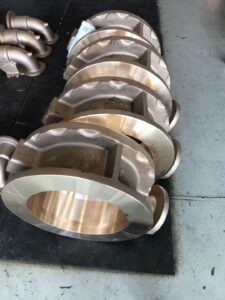
Low-beryllium and beryllium-free copper alloy developments
Across the U.S. market, engineers are looking hard at low-beryllium and beryllium-free copper alloys to cut health risks and simplify OSHA and REACH compliance. We’re seeing more demand for:
- Low-Be high strength copper alloys that keep 70–90% of traditional CuBe2 strength with lower Be content.
- Beryllium-free high-performance copper alloys (Cu-Ni-Si, Cu-Cr-Zr, etc.) for parts where ultra-high strength is not mandatory but safety and easier handling matter.
As a beryllium copper manufacturer, we treat these as complementary options, not replacements. On critical high-load, high-cycle parts, BeCu is still hard to beat.
Growing role of beryllium copper in EVs and 5G
In the U.S., EV and 5G build-outs are driving new applications for high strength copper alloys:
- EV platforms: BeCu contacts, busbar interfaces, and battery connector springs where you need high conductivity plus fatigue resistance under constant vibration.
- 5G and high-frequency telecom: electronics connectors material must hold tight tolerances and stable contact pressure over millions of cycles. BeCu is a go-to for small, dense, high-speed connectors.
We’re working closely with EV and telecom customers to optimize C17200 beryllium copper and high-conductivity beryllium copper grades for these designs.
BeCu in renewable energy and power electronics
Renewables and power electronics need materials that can carry high current, withstand heat, and survive long service life:
- Inverters, converters, and power modules: BeCu is used in springs, contacts, and connector components where both strength and conductivity matter.
- Wind and solar systems: Non-sparking, reliable contact materials are critical in switchgear and protection devices.
This overlaps heavily with what we already do for aerospace beryllium copper components and high-reliability industrial markets.
Recycling, sustainability, and circular material flows
We’re putting more focus on beryllium copper recycling and sustainability to support U.S. and global ESG targets:
- Closed-loop recycling of BeCu scrap and offcuts to cut raw material use.
- Controlled collection and processing of Be-containing waste to prevent airborne exposure and protect workers.
- Better melt and casting practices (similar to what we use in our alloy casting foundry process) to raise yield and cut energy per pound of metal shipped.
For OEMs under pressure to report carbon and material footprints, this circular approach is now a major purchasing factor.
Safety and efficiency improvements at manufacturers
Modern beryllium copper manufacturers in the U.S. are investing heavily in both safety and throughput:
- Advanced dust collection, enclosure, and ventilation to stay ahead of OSHA beryllium compliance and protect operators during machining and finishing.
- Automation and CNC machining to lower handling, stabilize quality, and reduce scrap. (A lot of this aligns with our own CNC strategies similar to those in our CNC turning process guide: CNC turning guide – process, materials, and selection).
- Inline testing and data tracking so each heat of beryllium copper alloy hits precise strength and conductivity targets without rework.
As demand grows from EVs, 5G, renewables, and oil and gas, only manufacturers who get safety and efficiency right will be able to keep stable lead times and pricing for U.S. customers.
FAQs About Beryllium Copper Manufacturers
1. What’s the real difference between C17200 and C17510?
Both are high‑strength copper beryllium, but they’re optimized for different priorities:
| Feature | C17200 (Alloy 25 / CuBe2) | C17510 (Alloy 3) |
|---|---|---|
| Main focus | Maximum strength | Higher conductivity + good strength |
| Typical tensile strength | Very high (up to ~200 ksi after aging) | Medium‑high (lower than C17200) |
| Electrical conductivity (IACS) | Lower | Higher (better for power/current) |
| Typical uses | Springs, connectors, tooling, molds | Power contacts, relay parts, weld parts |
If you’re designing for max mechanical strength and fatigue life, C17200 beryllium copper is usually the first pick. If you need strength plus better conductivity (power connectors, current-carrying parts), C17510 typically wins.
2. Is beryllium copper safe to use and machine?
In solid form, beryllium copper alloy is safe for end users. The risk is mainly during machining or grinding when fine dust and fumes can form.
To machine BeCu safely, I strictly follow:
- Wet machining or high-efficiency dust collection
- Local exhaust ventilation at the tool point
- No dry grinding without proper capture
- Proper PPE: respirator (where needed), safety glasses, gloves
A serious manufacturer will be fully aligned with OSHA beryllium standards and REACH restrictions and will be able to explain their controls in detail. You can see how we handle similar alloy safety and technical questions in our own materials FAQ section.
3. What forms and sizes do beryllium copper manufacturers usually supply?
Most U.S. buyers see these standard forms from a beryllium copper manufacturer:
- Strip & Coil – 0.002″–0.080″ thick, for stamping springs, connectors
- Sheet & Plate – from thin sheet up to heavy plate for tooling and mold cores
- Rod & Bar – round, square, hex; great for machining precision parts
- Wire – fine to heavy gauges for springs and electrical components
Exact size ranges vary by mill, but any serious supplier should offer cutting and basic processing to hit your print.
4. How does heat treatment change BeCu properties and tempers?
Beryllium copper is a precipitation hardening copper alloy, so heat treatment is everything:
- Solution-treated (annealed)
- Softer, easier to form or machine
- Lower strength, higher ductility
- Age-hardened (precipitation hardened)
- Much higher strength and hardness
- Spring tempers (e.g., TH04, TH08) for C17200
- Slight drop in ductility, but big jump in fatigue resistance
In short: you form or machine it soft, then age it to final strength. When you send us a print, we’ll usually confirm the temper + property targets, not just the grade.
5. Can I get custom beryllium copper parts and designs?
Yes. A good beryllium copper manufacturer should support:
- Custom thickness, width, and coil sizes
- Near-net shapes for molds, tooling, or contacts
- CNC machined parts from rod, bar, or plate
- Stamped and formed parts from strip and coil
- Small prototype runs before committing to volume
I always push customers to share 3D models, load cases, and operating environment. That lets us pick the right grade (C17200 vs C17510, etc.), temper, and manufacturing route so you’re not over‑spending on the alloy or under‑designing a critical part. For more on our approach and capabilities, you can check our about us page describing our material expertise.