

Are you debating whether to machine a complex component or switch to casted stainless steel?
It’s a critical decision that impacts your project’s budget and timeline. You need the superior corrosion resistance of stainless, but traditional machining is often too costly for intricate geometries.
As a manufacturing specialist at Vastmaterial, I’ve seen how the right casting method can reduce production costs by over 30% without sacrificing structural integrity. But you have to choose the right process.
In this guide, you’re going to learn the essential differences between investment casting and sand casting, how to select the correct ASTM grades (like CF8 vs. 304), and how to secure reliable sourcing.
Let’s get to work.
Why Choose Casted Stainless Steel?
At Vastmaterial, we understand that selecting the right manufacturing process is just as critical as choosing the right alloy. Casted stainless steel remains the superior choice for engineers requiring a balance of design freedom, structural integrity, and cost-efficiency. Unlike welded fabrications or machined-from-solid components, casting allows us to produce monolithic parts that eliminate weak points associated with joints and welds.
Achieving Complex Geometries and Internal Channels
One of the primary advantages of our foundry process is the ability to create intricate shapes that are impossible or prohibitively expensive to machine. We utilize precision casting techniques to produce components with:
- Internal cavities and cooling channels.
- Complex undercuts and thin-walled sections.
- Streamlined flow paths essential for pump bodies and valve components.
Material Efficiency and Near-Net-Shape Manufacturing
Stainless steel is a high-value material, making waste reduction a priority. We employ near-net-shape manufacturing to cast components that closely match the final dimensions specified in your drawings. This approach significantly reduces the amount of raw material required and minimizes secondary machining operations. By removing less material, we lower the overall production cost while maintaining the integrity of the alloy.
Isotropy and Uniform Mechanical Properties
Wrought or rolled steel often exhibits anisotropic properties, meaning its strength varies depending on the direction of the grain flow. In contrast, casted stainless steel provides isotropy, delivering uniform mechanical properties in all directions. This structural consistency is vital for components subjected to multi-directional stress and thermal cycling in industrial environments.
Size Versatility from Precision Parts to Heavy Machinery
Our manufacturing capabilities allow us to scale production based on the specific needs of the application. We adapt our casting methods to suit the size and tolerance requirements of the component:
| Casting Method | Component Size | Typical Application |
|---|---|---|
| Investment Casting (Lost Wax) | Small to Medium (Grams to ~100kg) | High-precision valve stems, impellers, brackets. |
| Sand Casting | Medium to Large (Up to several tons) | Heavy-duty pump casings, kiln rings, furnace parts. |
Whether you require high-precision small parts or massive structural components, our foundry delivers consistent quality across all size ranges.
Understanding the Casting Processes
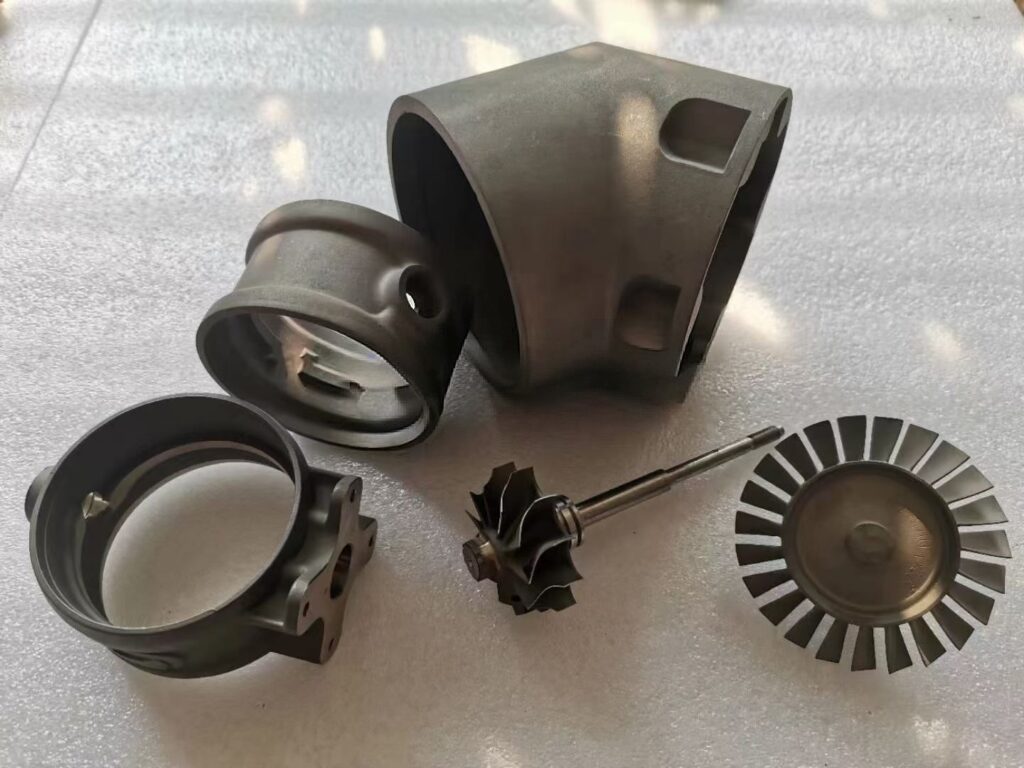
Selecting the right manufacturing method is critical for balancing cost, speed, and quality. At our foundry, we match the specific geometry and volume requirements of your project to the most efficient casting technique. Whether you need intricate detail or massive structural strength, we utilize distinct processes to deliver high-performance casted stainless steel components.
Investment Casting (Lost Wax) for High Precision
When your design demands tight dimensional tolerances and a superior surface finish, the investment casting process is our primary choice. Also known as lost wax casting, this method is ideal for complex geometries with internal channels or thin walls that would be impossible to machine from a solid block.
- Near-Net-Shape: We produce parts that are close to their final form, significantly reducing the need for secondary machining.
- Versatility: Perfect for intricate valve parts, impellers, and detailed hardware.
- Finish: Delivers a smooth surface straight out of the mold.
For companies looking to source these precision components, understanding the capabilities of a top stainless steel casting manufacturer is essential to ensuring your specs are met.
Sand Casting for Large Heavy Components
For larger industrial applications where weight and durability are the main concerns, sand casting is the industry standard. This process allows us to pour massive amounts of molten stainless steel to create heavy-duty parts like pump bodies, kiln components, and large structural fittings. While the surface finish is rougher compared to precision casting, it offers a cost-effective solution for low-to-medium volume production of heavy machinery parts.
Shell Molding for High Production Rates
Shell molding serves as a middle ground between sand casting and investment casting. It uses a resin-covered sand to form the mold, offering better dimensional accuracy and a smoother surface finish than traditional sand casting. This method is excellent for high-volume production runs where consistency and speed are paramount, allowing us to maintain reliable throughput for your supply chain.
Key Stainless Steel Casting Grades (ASTM A351 Standards)
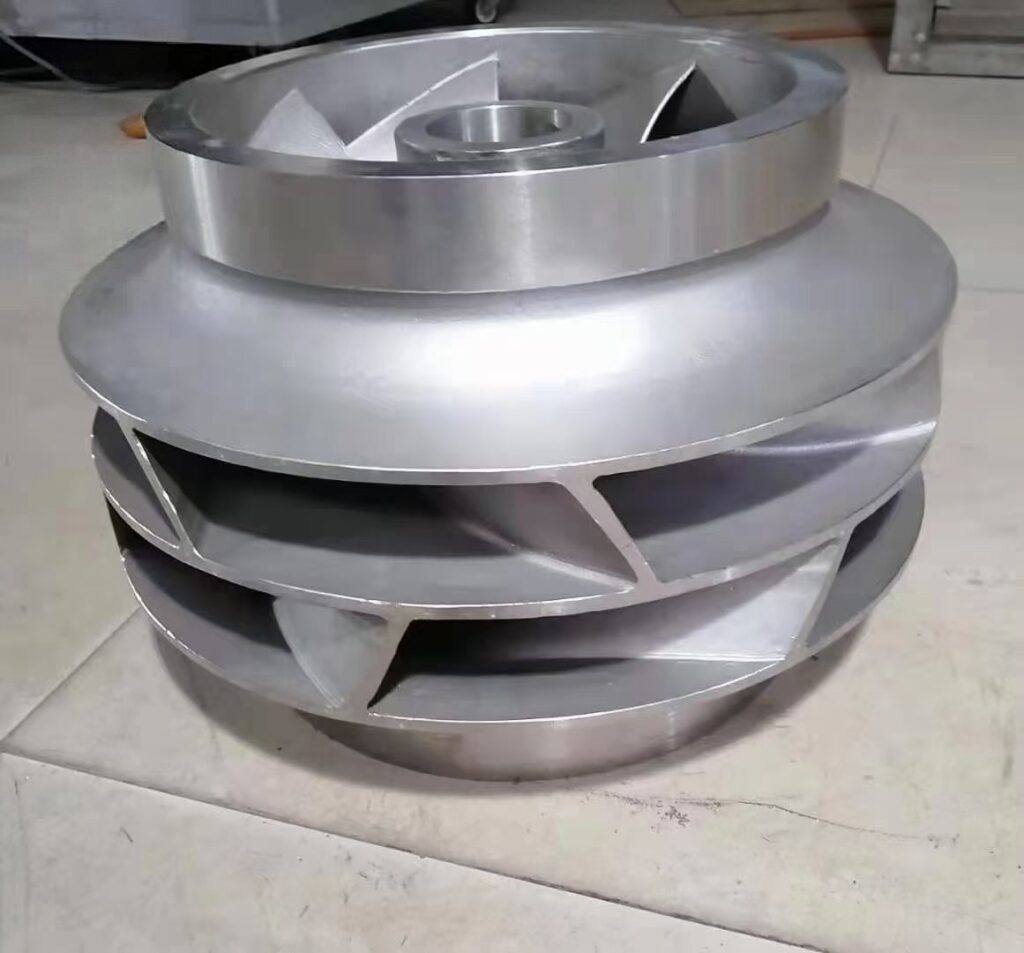
When sourcing casted stainless steel, understanding the ASTM A351 standard is critical. This specification covers austenitic and duplex castings used in pressure-containing parts. While many buyers are familiar with wrought grades like 304 or 316, the casting industry uses specific designations that slightly alter the chemical composition to improve fluidity and castability.
Here is a breakdown of the most common alloys we pour in the foundry:
CF8 vs. 304: General Corrosion Resistance
CF8 is the casting equivalent of wrought 304 stainless steel. It is the go-to alloy for general applications requiring good corrosion resistance and oxidation resistance up to 1500°F (816°C). We typically use CF8 for pump casings, valve bodies, and architectural fittings where exposure to harsh chlorides is minimal. It provides excellent ductility and impact strength, making it a versatile choice for standard industrial parts.
CF8M vs. 316: Superior Pitting Resistance
For environments containing chlorides, seawater, or harsh chemicals, CF8M is the preferred choice. Equivalent to wrought 316, this grade contains 2-3% molybdenum. This addition significantly enhances resistance to pitting and crevice corrosion. In the debate of CF8 vs CF8M, the latter is always the superior option for marine hardware and chemical processing equipment, though it comes at a slightly higher material cost.
CF3 and CF3M: Low Carbon Variants for Welding
When components require extensive welding during assembly, we recommend CF3 (equivalent to 304L) or CF3M (equivalent to 316L). The “L” stands for low carbon. Reducing the carbon content prevents carbide precipitation at the grain boundaries during the welding process, which protects the part from intergranular corrosion. These grades maintain the same mechanical performance as their standard counterparts but offer better long-term durability in welded assemblies.
Duplex Grades (CD4MCu) for High-Stress Environments
For applications demanding higher strength than standard austenitic grades, duplex stainless steel casting is the solution. Grades like CD4MCu offer a microstructure consisting of both austenite and ferrite. This dual-phase structure provides double the yield strength of CF8M and exceptional resistance to stress corrosion cracking and erosion. We frequently cast duplex alloys for abrasive slurry pumps and high-pressure offshore components where standard stainless would fail.
Common Defects and Prevention Methods
Even with advanced techniques, producing casted stainless steel requires strict process control to avoid common pitfalls like porosity, shrinkage, and surface irregularities. We tackle these challenges head-on during the engineering phase to ensure every component meets the required dimensional tolerances and mechanical standards.
Controlling Porosity and Shrinkage Through Gating Design
Porosity and shrinkage cavities are the most frequent issues in metal casting, often caused by trapped gas or improper solidification rates. We mitigate this through precise gating design—the system of channels that guides molten metal into the mold.
- Simulation Software: We analyze flow and solidification patterns before pouring to predict hot spots.
- Riser Placement: Strategic placement of risers feeds molten metal into the casting as it cools, preventing shrinkage voids.
- Temperature Control: Maintaining exact pouring temperatures reduces gas solubility, essential for porosity control in grades like 316L and 304.
Solving Surface Finish Issues with Post-Casting Treatments
While investment casting naturally yields a smooth finish, some industrial applications demand an even lower surface finish Ra. Roughness or minor inclusions can be addressed through secondary operations. To achieve the specific texture or corrosion resistance required for your application, we apply specialized surface treatment services such as shot blasting, pickling, and passivation. These steps not only improve aesthetics but also remove surface contaminants that could lead to rust.
Quality Assurance and Non-Destructive Testing (NDT)
Visual inspection isn’t enough for critical industrial parts. We rely on comprehensive Non-destructive testing (NDT) to verify internal integrity without damaging the component. Our rigorous testing and quality control protocols ensure every batch complies with ISO 9001:2015 standards.
- Chemical Analysis: Optical spectrum analyzers confirm the alloy composition matches ASTM specifications.
- Physical Testing: We conduct tensile strength and hardness testing to verify mechanical properties.
- Internal Inspection: Methods like ultrasonic or radiographic testing detect subsurface defects that could compromise performance in the field.
Industries Relying on Casted Stainless Steel
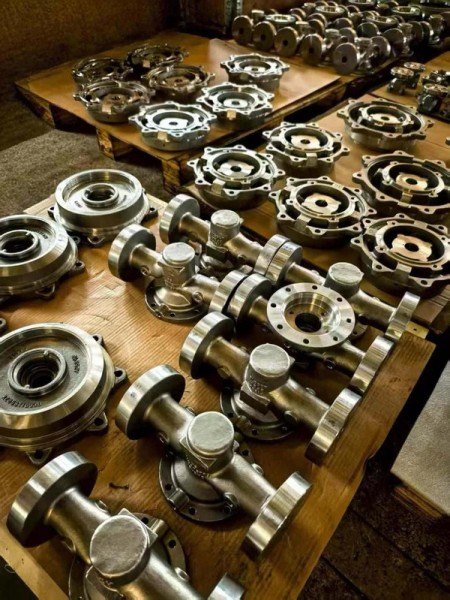
Casted stainless steel is the backbone of sectors where material failure isn’t an option. We supply components that handle extreme pressure, corrosive chemicals, and high temperatures daily. Our foundry adapts the alloy composition and casting method to meet the specific regulatory and performance standards of each industry.
Marine and Offshore Applications
Saltwater environments demand the highest level of corrosion resistance. We typically utilize CF8M (316) and Duplex stainless steel grades for marine hardware like pump bodies, impellers, and valve components. These materials actively resist pitting and crevice corrosion, ensuring longevity even in harsh offshore drilling rigs and shipbuilding applications.
Food and Beverage Sanitary Fittings
In food processing, hygiene is priority number one. Our investment casting process delivers smooth surface finishes that prevent bacterial growth. We manufacture sanitary fittings, mixing paddles, and valve bodies using food-grade 304 and 316 stainless steel. These parts withstand frequent washdowns and harsh cleaning chemicals without degrading.
Automotive and Aerospace Heat Resistance
Engines and exhaust systems operate under intense thermal stress. We provide heat-resistant castings using high-performance alloys like 310S and specialized 400-series steels. These components maintain structural integrity at high temperatures, making them essential for turbocharger housings and exhaust manifolds. For larger, more robust engine parts, our large steel casting solutions offer the durability required for heavy-duty machinery.
Construction and Structural Components
Modern architecture relies on casted stainless steel for both aesthetics and load-bearing strength. From glass spider fittings to heavy-duty brackets, we ensure every piece meets strict dimensional tolerances. By leveraging the stainless steel casting process, we create complex architectural shapes that combine visual appeal with the mechanical properties needed for safety in commercial buildings.
Sourcing from Vastmaterial: What to Look for in a Foundry
Finding a reliable partner for casted stainless steel goes beyond just comparing price sheets; it requires verifying that the foundry can deliver consistent quality and engineering support. At Vastmaterial, we have aligned our manufacturing protocols with the rigorous demands of the US market to ensure every component meets your exact specifications.
Essential Certifications (ISO 9001, PED, ASTM)
Quality assurance starts with verified standards. We operate under a strict ISO 9001:2015 certified quality management system, ensuring that our processes are repeatable and traceable. Whether your project requires adherence to ASTM A351 standards for pressure-containing parts or specific PED requirements, we validate material composition and mechanical properties in our in-house laboratory using optical spectrum analyzers and metallographic testing.
In-House Secondary Operations and CNC Machining
A raw casting is rarely the final step. To reduce logistical complexity and risk, we provide comprehensive CNC machining services directly within our facility. This integration allows us to bridge the gap between rough casting and final assembly, ensuring tight dimensional tolerances are met without the finger-pointing that happens when using multiple vendors. You can read more about our approach to finishing in our guide to precision CNC and tight tolerances, which explains how we manage critical dimensions.
Reliable Lead Times and Inventory Management
Unpredictable supply chains can stall your entire production line. By controlling the entire workflow—from the initial investment casting process and heat treatment to final machining—we eliminate common bottlenecks. We provide realistic lead times and offer inventory management solutions to ensure your stainless steel foundry experience is seamless and predictable.
Frequently Asked Questions About Casted Stainless Steel
What is the difference between cast and wrought stainless steel?
The main difference lies in how the metal is formed. Wrought stainless steel is shaped through mechanical forces like rolling or forging while solid, which aligns the grain structure but limits design complexity. Casted stainless steel involves pouring molten metal into a mold, allowing us to create intricate geometries and internal channels that would be impossible to machine from a solid block.
While wrought parts often have directional strength, castings offer isotropic properties, meaning they have uniform strength in all directions. This makes casting the preferred method for complex components like valve bodies and pump impellers where multi-directional stress is a factor.
Which casting method is best for high-volume production?
For high-volume runs requiring consistent repeatability, shell molding and automated investment casting (lost wax) are the top choices.
- Investment Casting: Ideal for small-to-medium parts requiring tight tolerances and smooth surface finishes. It minimizes machining time, which saves costs over large production runs.
- Sand Casting: Better suited for larger, heavier components where surface finish is less critical, or for lower volume runs due to lower tooling costs.
How do we ensure dimensional accuracy?
At our facility, precision starts with the mold. We utilize advanced investment casting techniques for components demanding tight tolerances, ensuring near-net-shape results that reduce the need for secondary machining.
To guarantee every part meets specifications, we employ a rigorous quality control process:
- Spectrometer Analysis: Verifies the chemical composition of the melt before pouring.
- Dimensional Inspection: Uses calipers and CMM (Coordinate Measuring Machines) to check critical dimensions against client drawings.
- ISO 9001:2015 Compliance: Our entire workflow adheres to strict international standards to maintain consistency across batches.
Can casted stainless steel be welded?
Yes, most casted stainless steel grades are weldable, but the ease of welding depends on the specific alloy. We often recommend low carbon steel variants, such as CF3 (304L) and CF3M (316L), for applications requiring extensive welding. These grades minimize carbide precipitation, preventing intergranular corrosion in the weld zone.
For high-stress environments, duplex stainless steel castings also offer good weldability, provided that proper post-weld heat treatment is applied to restore the balance of the microstructure. Always consult with us regarding the specific grade to ensure the welding procedure matches the material’s capabilities.