
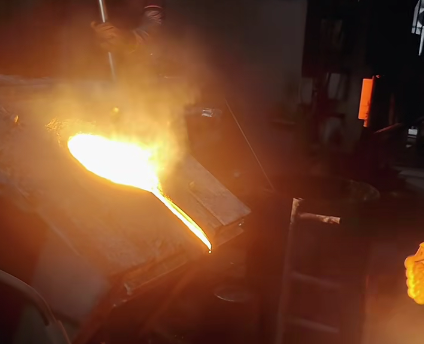
Industrial Casting Processes Explained
When buyers say “casting industrial,” they usually mean one thing: choosing the right process for cost, quality, and lead time. Below is how I look at the main industrial casting routes when I’m matching a new design to production in the U.S. market.
Overview: When to Use Each Industrial Casting Process
At a high level, think in terms of volume, complexity, alloy, and tolerance:
- One-off to low volume, large parts, flexible design → Sand casting
- Medium volume, good surface, non-ferrous alloys → Gravity die casting
- Medium to high volume, structural aluminum → Low-pressure die casting
- High volume, thin walls, tight repeatability → High-pressure die casting (HPDC)
- Tight tolerances, fine details, complex geometry → Investment casting
- Rotationally symmetric tubes and rings → Centrifugal casting
- Long, constant cross-section steel products → Continuous casting
Selecting the right industrial metal casting route early can easily save 20–40% in total program cost.
Sand Casting Process: Large, Complex, Cost-Effective
I use the sand casting process when a part is:
- Large or heavy (from a few pounds up to several tons)
- Complex in shape, but with moderate tolerances
- Required in low to medium annual volumes
Typical use cases:
- Ductile and gray iron heavy machinery castings, pump housings, gearboxes
- Steel casting parts for construction, mining, and agriculture equipment
Key advantages:
- Lowest tooling cost and fastest change flexibility
- Almost any casting design can be trialed and improved quickly
- Ideal starting point for new custom metal castings before volume stabilizes
Gravity Die Casting: Medium-Volume Aluminum and Brass
I move to gravity die casting (permanent mold casting) when you need:
- Better surface finish and dimensional control than sand casting
- Medium volumes where permanent tooling becomes economical
- Non-ferrous alloys like aluminum and brass for industrial components
Best for:
- Medium-volume automobile casting and industrial brackets
- Housings, manifolds, and covers that need consistent wall thickness
Benefits:
- Longer-lasting tooling than sand patterns
- Less porosity than high-pressure die casting in many designs
- Good balance of piece price vs tooling investment
Low-Pressure Die Casting: Structural Aluminum Components
For structural aluminum casting industrial parts, I often recommend low-pressure die casting:
- Molten aluminum is pushed upward under low pressure into a permanent mold
- Fills more gently than HPDC, so we get better integrity and fewer gas defects
Ideal for:
- Suspension components, wheels, and structural housings
- Medium to high-volume automotive casting parts and EV components where strength matters
Advantages:
- Improved mechanical properties vs HPDC in many designs
- Good dimensional accuracy and surface finish
- Well-suited to heat treatment (T5, T6) for higher strength
High-Pressure Die Casting (HPDC): Thin-Wall, High-Volume Aluminum
I use high-pressure die casting (HPDC) when a customer needs:
- Very high annual volumes (tens of thousands to millions)
- Thin-wall aluminum die casting with complex features and inserts
- Highly repeatable, tight-tolerance casting production
Common applications:
- Automotive and EV housings, brackets, covers, battery trays
- Consumer and industrial enclosures with tight packaging constraints
Key points:
- Highest tooling cost, lowest piece price at scale
- Excellent for aluminum die casting of ADC12, A380, and similar alloys
- Demands strong die casting foundry process control to manage porosity and dimensional stability
Investment Casting (Lost-Wax): Precision and Fine Details
When a precision casting manufacturer is needed for very tight requirements, I go to investment casting (lost-wax casting):
- Wax patterns are assembled into trees, coated, and then cast to create highly accurate parts
- Handles extremely complex geometries without heavy machining
Best for:
- Steel casting parts with tight tolerances and complex internal passages
- Small to medium-sized valves, fittings, aerospace, and defense components
- OEM casting supplier projects where machining costs need to be minimized
Advantages:
- Excellent surface finish (typically Ra 3.2–6.3 µm)
- Tight tolerances with minimal draft
- Wide alloy range: carbon steel, alloy steel, stainless, some non-ferrous
Centrifugal Casting: Tubes, Sleeves, and Pipes
For cylindrical products, I look at centrifugal casting:
- Molten metal is poured into a rotating mold, using centrifugal force to form the part
- Produces very dense, sound structures with minimal inclusions
Ideal for:
- Centrifugal casting pipe, sleeves, bushings, and rings
- High-pressure fluid handling and wear parts
Why it works well:
- Excellent grain structure and mechanical properties
- Very consistent wall thickness for tubes and liners
- Suitable for ductile iron, gray iron, and various steels
Continuous Casting: Billets, Slabs, and Long Products
When I think about continuous casting, I think upstream supply rather than finished parts:
- Molten steel is solidified into billets, blooms, and slabs in a continuous process
- These semi-finished forms become bars, plates, and structural shapes after rolling
Use cases:
- Long, constant cross-section steel casting parts in heavy industry
- Raw material for forging, machining, and further industrial casting operations
Benefits:
- Very efficient, high-volume production
- Stable, repeatable quality for downstream manufacturing
- Fundamental to reliable supply chains for casting automobile and machinery markets
In practice, I rarely look at these processes in isolation. For every new project, I compare at least two or three industrial casting routes against your volume, tolerance, alloy, and budget targets before locking in a recommendation.
Industrial Casting Materials and Alloys
For any casting industrial project in the U.S., I start with one decision first: the alloy. The right material drives strength, wear life, machinability, and total cost for your industrial casting.
- Iron castings (ductile, gray, ADI, high-chrome)
For heavy machinery castings, pumps, and valves, ductile iron casting gives you strength and impact resistance, while gray iron casting offers great vibration damping at lower cost. When you need serious wear resistance in industrial metal casting (liners, crusher parts), I move to ADI or high-chrome iron. - Steel casting parts
Carbon and alloy steel casting parts are my go-to for high-strength, pressure-containing, or safety-critical components—like hooks, gears, and structural brackets—where welding or forging alone won’t cut it. - Aluminum, zinc, and copper-base alloys
A356 and ADC12 aluminum die casting alloys are ideal for automotive casting parts, EV motor housings, and lightweight housings. Zinc, brass, and bronze industrial casting work best where you need tight tolerances, excellent surface finish, and corrosion resistance in precision components. For a deeper breakdown, I rely on our casting alloy guide for types, properties, and selection. - Magnesium and advanced alloys
Magnesium industrial casting is my choice when weight reduction is critical in casting automobile parts and handheld equipment. For cutting-edge applications, I’m already looking at high-entropy alloys and metal matrix composites to push strength-to-weight and temperature performance in advanced industrial casting and future casting design and production.
Industrial Casting Applications by Industry

Industrial casting is where real engineering meets real-world use. I focus on matching the right casting industrial process to each industry so you get reliable, repeatable parts that hold up in the field.
Automotive & EV Casting Industrial Parts
For casting automobile and EV platforms, the priorities are weight, strength, and cost:
- Engine blocks, housings, brackets, battery trays
- Aluminum die casting and low-pressure die casting for high-volume EV housings and structural parts
- Steel casting parts and ductile iron casting where crash strength and fatigue life matter most
For tight-tolerance aluminum parts, I often use precision aluminum investment castings to cut machining and improve consistency.
Heavy Machinery Castings
In construction, mining, and material handling, uptime is everything:
- Heavy machinery castings: frames, arms, gear housings, counterweights
- Ductile iron and carbon steel for impact and fatigue resistance
- ADI and high-chrome iron where extreme wear is the main failure mode
Agriculture Machinery Castings
Agricultural equipment needs rugged, affordable parts that survive dirt, shock, and long hours:
- Gearboxes, hubs, housings, structural castings
- Gray iron casting for cost-effective, vibration-damping components
- Ductile iron casting when you need higher strength with similar cost levels
Energy & Power Generation Castings
Energy applications demand long life and strong quality control:
- Wind, gas, hydro, and nuclear castings: housings, brackets, impellers, turbine components
- Steel and stainless steel casting parts for temperature, pressure, and corrosion resistance
- Clear documentation with full material test reports is standard for this sector.
Rail & Marine Industrial Casting
Rail and marine parts see constant load, vibration, and harsh environments:
- Rail bogies, couplers, brake components
- Marine propellers, pumps, valves, and housings
- Steel, bronze, and high-strength ductile iron to handle shock, saltwater, and fatigue
Pumps, Valves & Fluid Control Castings
For chemical, oil & gas, and water industries, sealing and corrosion resistance are critical:
- Valve bodies, pump casings, impellers, manifolds
- Stainless steel, duplex, and bronze for aggressive media
- I run full-service projects for OEMs needing custom valve castings and CNC-machined finishes, similar to our dedicated valve castings manufacturing capability.
Aerospace & Defense Casting Industrial Needs
When tolerances are tight and traceability is non‑negotiable:
- Aerospace brackets, housings, turbine components, weapon system parts
- Investment casting (lost-wax) through experienced investment casting companies
- Focus on AS9100-level quality, precision machining, and full traceability from melt to final inspection
Across all these sectors, my approach is simple: choose the casting production route that fits the load case, environment, and annual volume—then lock in stable quality and cost for the long term.
Industrial Casting Quality Standards and Certifications
When you’re buying casting industrial parts in the U.S. market, quality systems matter just as much as price. I treat certifications and documentation as non‑negotiable, especially for automotive, energy, and heavy equipment customers.
Core Quality Systems You Should Always Verify
Before I approve any industrial casting supplier, I confirm they have:
- ISO 9001 – Proves they run a structured quality management system, with procedures, audits, and continuous improvement for every casting production run.
- IATF 16949 – Essential for automotive casting parts and serious OEM casting supplier projects. It forces tight control on variation, traceability, and defect prevention across the whole supply chain.
For aerospace, defense, or pressure equipment, I only trust foundries that also hold:
- AS9100 – Builds on ISO 9001 but adds stricter controls for aerospace-grade industrial metal casting, documentation, and risk management.
- PED 2014/68/EU – Critical when castings go into pressure vessels, valves, or pumps that must meet European pressure equipment rules.
PPAP, FAI, and Control Plans for Serial Casting Production
Once we move beyond prototypes, I lock in production using automotive-grade methods:
- PPAP (Production Part Approval Process) to prove the die casting foundry or gray iron foundry can repeat production consistently at volume.
- FAI (First Article Inspection) to verify that initial industrial casting samples fully match the 2D and 3D design before we cut loose on full scale.
- Control plans that clearly define how every critical dimension, alloy spec, and process parameter is monitored and recorded in serial production of custom metal castings.
Material Certificates, Chemical and Mechanical Verification
For demanding applications—like heavy machinery castings, pumps, or safety-critical steel casting parts—I always require full material transparency:
- Material Test Reports (MTRs) for each heat, linked to your order and part numbers.
- Chemical analysis (spectrometer or lab) to verify the grade of ductile iron casting, gray iron, or aluminum die casting alloy (A356, ADC12, etc.).
- Mechanical property tests (tensile, yield, hardness, impact) matched to your spec and relevant ASTM/EN standards.
This is how I avoid surprises in field performance and warranty claims.
Dimensional Control, 3D Scanning, and NDT
For tight-tolerance casting industrial components—especially for equipment manufacturing customers—I combine classic metrology with modern tools:
- CMM and 3D scanning to check complex casting design features, true position, and flatness on cast and machined surfaces.
- Non-destructive testing (NDT) like X‑ray, ultrasonic, dye penetrant, or magnetic particle testing for critical zones in aluminum die casting, steel, and high-chrome iron.
- Gauge R&R and calibration control so measuring systems are repeatable and trustworthy.
Traceability and Process Control at a Precision Casting Manufacturer
A real precision casting manufacturer doesn’t just “check quality at the end.” I build traceability and process control into every order by:
- Assigning unique heat and batch numbers to every melt, mold line, and casting industrial lot.
- Recording furnace data, melt treatment, and pouring parameters for each batch of industrial metal casting.
- Linking inspection results, MTRs, and NDT reports to specific pallets, containers, and shipping lots.
- Maintaining digital records and barcodes/QR codes so we can trace any casting automobile component or heavy equipment part from field failure all the way back to the melt.
That’s how I protect your program from hidden risk and make sure your industrial casting supply chain can stand up to audits, customer PPAPs, and long-term OEM requirements.
Choosing an Industrial Casting Process

Picking the right casting industrial process is where you lock in 80% of your cost, quality, and lead time. Here’s how I look at it when we quote and plan casting production in the U.S. market.
Match Process to Part and Volume
I always start with how many parts you need per year and what the part has to do:
- Sand casting – Best for low to medium volume, large or bulky parts, flexible design changes.
- Gravity die casting / permanent mold – Medium volume, better repeatability than sand, good for aluminum/brass.
- Low-pressure and high-pressure die casting (HPDC) – Medium to very high volume, thin walls, tight cycle times.
- Investment casting – Lower to medium volume, complex geometry, high precision without massive machining.
- Centrifugal and continuous casting – Tubes, sleeves, bars, and long products.
If you’re still comparing casting against other methods, my broader manufacturing process guide walks through how casting stacks up versus machining, forging, and other options.
Key Selection Factors
Before we commit to a route, I always pin down:
- Annual volume – 50 pcs/year vs 50,000 pcs/year changes everything.
- Part complexity – Undercuts, internal passages, branding, cooling channels.
- Material – Steel, ductile iron, aluminum, zinc, brass, bronze, magnesium.
- Tolerances – Basic fit vs tight location and profile callouts.
- Strength / safety level – Structural, fatigue, impact, pressure.
Surface Finish, Tolerance, and Wall Limits
Very short cheat sheet for common industrial casting processes:
- Sand casting process
- Surface: rougher, usually machined critical faces.
- Tolerance: looser, more variation part-to-part.
- Wall thickness: thicker walls, not ideal for ultra-lightweight design.
- High-pressure die casting (HPDC)
- Surface: smooth, good cosmetic potential with minimal cleanup.
- Tolerance: tight, great for casting automobile housings and brackets.
- Wall thickness: thin-wall possible, ideal for high-volume aluminum die casting.
- Investment casting (lost-wax)
- Surface: very good, near-net shape.
- Tolerance: tight, good for precision casting manufacturer projects.
- Wall thickness: reasonably thin, complex shapes.
Cost and Lead Time: Sand vs Die vs Investment
Think in terms of tooling vs piece price:
- Sand casting
- Tooling: low cost, fast to modify.
- Piece price: higher per part if volume is big.
- Lead time: relatively short for new patterns.
- Die casting (gravity / HPDC / low-pressure)
- Tooling: high upfront cost for dies.
- Piece price: low at medium–high volumes.
- Lead time: longer to design/build dies, then very fast cycles.
- Investment casting
- Tooling: moderate.
- Piece price: higher than HPDC but saves machining on fine features.
- Lead time: moderate; process chain is longer.
Steel vs Aluminum vs Ductile Iron Casting
Here’s how I usually guide U.S. buyers:
- Steel casting parts
- Use when you need high strength, impact resistance, or high-temperature performance.
- Common in construction, mining, and critical safety components.
- Aluminum die casting
- Use for lightweight, high-volume casting automobile and EV parts: battery trays, housings, brackets.
- Great where corrosion resistance and thermal conductivity matter.
- Ductile iron casting
- Sweet spot for strength + damping + cost.
- Great for heavy machinery castings, gearboxes, housings, pump bodies.
Simple Decision Matrix (Use This in Your RFQ)
I like to boil it down to a quick decision grid:
- Low volume + large + simple + loose tolerance → Sand casting
- Medium volume + medium size + better consistency → Gravity die casting
- High volume + thin-wall + aluminum or zinc → HPDC
- Complex geometry + tight tolerance + critical fit → Investment casting
- Tubular / ring shapes → Centrifugal casting
Use that matrix as a first filter, then we refine together based on details.
Design for Manufacturability (DFM) With Your OEM Casting Supplier
If you loop us in early for DFM, we can:
- Adjust draft angles, fillets, and wall transitions to avoid porosity and shrink.
- Optimize gating and risers so the industrial metal casting fills cleanly.
- Cut machining time by adding cast features instead of milled ones.
- Avoid tooling changes and rework that kill your launch schedule.
The most successful U.S. programs we run start with a short DFM review on your 2D/3D, not after the first bad samples show up.
Industrial Casting Costs in 2025–2026
In 2025–2026, industrial casting cost is driven less by “hourly rate” and more by how clean your casting design and sourcing plan are. When I quote casting industrial parts for U.S. customers, I always break it down into a few core levers.
What Really Drives Industrial Metal Casting Cost
- Tooling vs. piece price: Sand casting process needs low-cost patterns but higher piece price; a high-pressure die casting foundry or precision casting manufacturer needs expensive dies but delivers very low cost per part at volume.
- Annual volume: Under ~300 pcs/year, sand or steel casting parts in no-bake molds win; over thousands/month, aluminum die casting or automation-heavy production wins.
- Part complexity: Thin walls, tight tolerances, and complex cores add setup time, process steps, and scrap risk.
Tooling, Patterns, and Dies vs. Piece Price
- Low tooling, high piece price: Sand casting and basic gray iron foundry work. Great for repair parts and low-volume heavy machinery castings.
- High tooling, low piece price: HPDC, low-pressure die casting, and many investment casting companies. Ideal for automotive casting parts, EV housings, and repeat OEM programs.
- Always look at 5-year total cost, not just the first-tooling quote.
Regional Cost Benchmarks (China, India, Europe, USA, Mexico)
- China: Still very competitive for high-volume custom metal castings, but tariffs, freight, and communication delays can erode savings.
- India: Strong in ductile iron casting and steel casting parts, especially for pumps and valves, with improving quality systems.
- Europe: Higher labor, but top-notch process control and certifications for aerospace and pressure equipment.
- USA & Mexico: Higher direct price, but lower risk, faster response, easier site visits, and better IP protection for casting automobile programs.
Alloy, Weight, and Machining Content
- Alloy choice: High-chrome iron, stainless, and nickel alloys cost more per pound and usually need tighter process control.
- Part weight: Every extra pound multiplies melt cost, shipping, and sometimes machining time; weight-optimized casting design pays off.
- Machining content: The more tight bores, faces, and threads you need, the more total cost rivals that of fully machined bar or plate. In some cases, pairing castings with a smart laser cutting metal sheet guide can reduce machining and fabrication cost.
Hidden Costs Most Buyers Miss
- Rework and scrap: Poor gating, weak process control, or the wrong die casting foundry add hidden cost per good piece.
- Logistics and tariffs: Ocean freight, surcharges, and customs delays matter a lot on heavy castings.
- Communication and time zones: Slow feedback loops delay PPAP, change approvals, and launch schedules.
Why Long-Term Foundry Partnerships Pay Off
- A stable industrial casting foundry learns your drawings, tolerances, and inspection habits and quietly cuts scrap and rework.
- You get priority capacity, faster engineering feedback, better DFM, and more reliable lead times on casting production.
- Over a few programs, this usually offsets a slightly higher “per-part” quote and lowers total landed cost.
Getting Competitive Quotes Without Killing Quality
- Send clean 2D drawings + 3D models, annual volume, target price, and expected machining up front.
- Ask the OEM casting supplier to quote two process routes (for example, sand casting vs. aluminum die casting) when it’s not obvious.
- Request clear breakdowns for tooling, sample cost, piece price at 3–4 volume levels, and included quality documentation (MTRs, NDT, PPAP level).
Sustainable Industrial Casting Trends

How industrial casting is adapting to ESG
In the U.S., most serious industrial casting buyers now treat ESG as a hard requirement, not a “nice to have.” When I quote casting industrial programs, I’m expected to show:
- Documented CO₂ and energy per pound of casting
- Recycled content in the melt
- Proof of emissions control and waste handling
- Traceability from raw material to finished casting
If your OEM customers are automotive, EV, energy, or fluid control, this directly affects whether you win or lose RFQs.
Recycled scrap and circular economy in foundries
Modern industrial metal casting is built around closed-loop material use:
- High scrap utilization: Foundries melt internal scrap, gates, and risers back into the furnace, reducing raw metal demand and cost.
- Customer returns: Some programs use buy-back or return loops for off-spec or end-of-life castings.
- Certified alloys: Buyers often ask for minimum recycled content while still meeting tight chemistry windows for carbon steel, ductile iron, aluminum die casting alloys, or copper-based alloys like those we use for industrial copper alloy castings.
This closed-loop approach helps you hit both cost and sustainability targets.
Energy efficiency and electric furnaces
Casting industrial plants are shifting hard toward electric melting where grid stability allows:
- Medium-frequency induction furnaces replace older cupolas and inefficient gas systems.
- Demand management and off-peak melting help control power costs in the U.S. and Mexico.
- Better insulation and heat recovery lower kWh per ton of molten metal.
For U.S. OEMs under pressure to cut Scope 3 emissions, this is now a key differentiator when picking an industrial casting supplier.
Sand reclamation, slag, and emissions control
Foundries that want long-term Tier 1 and Tier 2 work invest heavily in clean operations:
- Sand reclamation systems: Regenerate 80–95% of sand for the sand casting process, cutting landfill waste and trucking.
- Slag handling and metal recovery: Recover residual metal from slag and treat it as a resource, not just waste.
- Air emissions control: Bag houses, filters, and scrubbers reduce dust, VOCs, and fumes to meet U.S. EPA and local regulations.
If you’re sourcing gray iron casting or ductile iron casting in volume, these controls directly affect plant reliability and your brand risk.
3D-printed sand molds and tooling
3D-printed sand molds are changing how we launch new casting production in the U.S.:
- No hard tooling for early runs: Validate casting design, cooling, and machining stock before cutting expensive patterns or dies.
- Lower scrap and rework: Complex internal passages and fine features can be tested quickly without overbuilding metal.
- Faster iterations: Perfect critical casting design features for pumps, valves, EV housings, or heavy machinery castings before locking in your long-term tooling.
This approach is especially useful for low-volume or high-mix custom metal castings.
Industry 4.0, digital twins, and IoT
Modern industrial casting facilities are becoming data-driven:
- IoT sensors track furnace temperature, sand moisture, molding pressure, and cooling time in real time.
- Digital twins simulate mold filling and solidification before production, reducing porosity and distortion issues.
- Predictive maintenance increases uptime on molding lines, machining centers, and furnaces.
For you as a buyer, this means more stable quality, fewer surprises, and stronger process capability data during PPAP or FAI.
How sustainability and traceability affect supplier selection
Global OEMs now score casting industrial suppliers on sustainability the same way they rate cost and quality:
- Full traceability from heat number to final machined casting
- Digital MTRs, chemical analysis, and mechanical reports tied to each lot
- Recycled content documentation and energy data for ESG reporting
- Clear audits of sand, slag, and emissions management
If your end customers are automotive, EV, energy, or equipment builders selling into regulated markets, picking a precision casting manufacturer with strong ESG and traceability isn’t optional—it’s your insurance policy for future RFQs and compliance.
Selecting an Industrial Casting Supplier
What to look for in a reliable industrial casting partner
When I pick an industrial casting supplier in the U.S., I focus on three things: technical depth, repeatable quality, and communication. You want a foundry that can walk your engineers through casting design, hit your timelines, and stand behind every heat and shipment with hard data, not promises.
In-house capabilities matter
A strong casting industrial partner should handle most of the work in-house, so you’re not managing a fragile supply chain. At minimum, I look for:
- Pattern design & simulation – Solid casting design support, plus flow/solidification simulation to prevent porosity and misruns.
- Core making & molding – Stable sand casting process or die casting setups tuned for your alloys.
- CNC machining – Tight-tolerance machining under the same roof cuts lead time and variation.
- Surface treatment and finishing – Ability to handle coatings, polishing, or passivation in-house or with tight partners. For example, we integrate casting with downstream finishing through our own surface treatment services to keep specs under control.
The more they control internally, the less risk and finger-pointing you deal with.
Capacity, equipment, and scalability
For custom metal castings, your supplier needs to match your current volume and future ramp:
- Melt capacity & mold lines that fit your part size and annual volume.
- Equipment range: sand lines, HPDC cells, LPDC, or investment casting where needed.
- Scalability: Can they go from pilot runs to tens of thousands of parts a year without moving you to a different plant?
Ask for real examples of casting production ramps they’ve supported for U.S. OEMs.
Sector experience: automotive, heavy machinery, valves
I always check whether the foundry has direct experience in my industry:
- Automotive casting parts & EV housings – IATF mindset, tight tolerances, and stable aluminum die casting.
- Heavy machinery castings – Ductile iron casting and steel casting parts for high loads and impact.
- Pumps, valves, and fluid control – Gray iron foundry and stainless capability, pressure-retaining castings, NDT experience.
If they already supply to your sector, they’ll know the hidden requirements that never make it onto the print.
Quality systems, certifications, and evidence
For industrial casting in the U.S. market, I don’t compromise on quality systems:
- ISO 9001 minimum, IATF 16949 casting for automotive, AS9100 if you’re in aerospace.
- PPAP, FAI, control plans for serial production.
- Material certs with full chemical and mechanical reports.
- Audit history: Ask to see past PPAP packages, control plans, and customer audit closeouts.
If they can’t show structured documentation, they’re not ready for serious OEM casting supplier work.
Total service vs single-process foundry
A single-process gray iron foundry or die casting foundry can work for basic jobs, but for most U.S. OEM projects I prefer a total service model:
- One team responsible from casting design through machining and finishing
- Fewer handoffs, fewer surprises, lower total landed cost
- Easier to manage engineering changes and quality issues
You want a partner who owns the outcome, not just pours metal.
Building a long-term OEM casting relationship
The U.S. market rewards long-term, stable partnerships, not one-off buys. I look for:
- Openness to joint DFM reviews and early involvement.
- Clear APQP-style launch process with milestones and gates.
- Commitment to continuous improvement on cost, quality, and lead time.
- Transparent communication when there’s a problem, not silence.
When you find a precision casting manufacturer that delivers consistent results and treats your program like their own, lock them in and grow together.
Industrial Casting FAQ
Quick answers for casting industrial projects
Q: Sand casting vs investment casting – what’s the real difference?
- Sand casting: best for large, heavy, lower-cost industrial metal casting, moderate tolerance, rougher surface.
- Investment casting: best for small–medium precision casting parts, tight tolerances, fine details, smoother surface, higher tooling cost.
Q: What are typical size and weight limits by process?
| Process | Typical Max Size/Weight (Guideline) | Notes |
|---|---|---|
| Sand casting process | Very large, 10,000+ lb possible | Ideal for heavy machinery castings and housings |
| Gravity / low-pressure die | Medium size, up to ~200–300 lb | Good for aluminum casting automobile components |
| High-pressure die casting | Small–medium, usually <70 lb | Thin-wall aluminum die casting, high-volume parts |
| Investment casting | Small–medium, usually <100 lb | Precision casting manufacturer route |
(Exact limits depend on foundry equipment and casting design.)
Q: How long does new tooling and sample approval usually take?
- Simple sand casting tooling: about 3–4 weeks.
- Permanent die / HPDC tooling: about 5–8 weeks.
- Sample submission and approval (FAI/PPAP): usually 1–3 weeks after trial, depending on feedback.
Q: What are my options for low-volume prototypes and pilot runs?
- 3D‑printed sand molds for casting industrial prototypes.
- Soft tooling or simplified dies for short runs.
- Machined-from-solid “surrogate” parts to validate casting design before full tooling.
Q: How do I send 2D drawings and 3D models for a casting quote?
- Send 2D PDF + editable 3D (STEP/IGES/Parasolid) by email or secure portal.
- Clearly mark critical-to-function dimensions, surface finish, and machining datums.
- Include target material (for example, an alloy from our alloy steel casting materials) and annual volume.
Q: What information should I prepare to get accurate pricing and lead times?
- 2D/3D files, material grade, and required mechanical properties.
- Annual and release volumes, target weight range, and required processes (machining, coating).
- Applicable standards (ASTM, ISO, IATF 16949 casting, etc.) and any test or certification requirements.
With this information up front, I can quote faster and give realistic casting production lead times for your custom metal castings.