

What Is Cobalt Alloy Casting?
Quick definition of cobalt alloy casting
Cobalt alloy casting is the process of melting and pouring cobalt-based alloys into molds to produce precision, near-net-shape parts that can survive extreme wear, heat, and corrosion. In practice, that usually means investment casting (lost-wax casting) of cobalt chrome and Stellite-type alloys into complex, high-value components.
Why industries rely on cobalt-based castings
Engineers choose cobalt-based alloys when standard steels or even many nickel alloys fail. Cobalt alloy castings are used because they offer:
- Outstanding wear and galling resistance in sliding, abrasive, or erosive conditions
- High-temperature strength and stability where parts see continuous heat, thermal cycling, or hot gases
- Excellent corrosion and oxidation resistance in chemicals, steam, and aggressive media
- Long service life and fewer unplanned shutdowns, which directly reduces lifecycle cost
If the environment is hot, dirty, corrosive, or impossible to shut down often, cobalt alloy casting is usually on the shortlist.
How cobalt alloy casting fits into modern manufacturing
Cobalt alloy casting fits smoothly into today’s manufacturing workflows as a way to get:
- Near-net-shape parts that are difficult or uneconomical to machine from bar, plate, or forgings
- Consistent repeatability for serial production of complicated geometries
- Design freedom for internal passages, thin sections, and complex contours
- Integration with CNC machining, coating, and heat treatment for final dimensions and performance
Most buyers treat cobalt alloy castings as critical components dropped into larger assemblies: turbines, valves, pumps, implants, and heavy wear systems.
Who actually uses cobalt alloy casting?
In the US market, cobalt alloy casting is specified and purchased by:
- Design and materials engineers who must hit performance targets in extreme environments
- Procurement and sourcing teams balancing cost, lead time, and lifecycle risk
- OEMs and Tier 1 suppliers in aerospace, energy, oil & gas, medical, mining, and process industries
- Maintenance and reliability teams looking for longer-lasting replacement parts and upgrades
At vastmaterial, we work directly with these groups to translate real operating conditions into the right cobalt-based alloy and casting process so the part performs as required the first time.
Cobalt-Based Alloys Basics
What Are Cobalt-Based Alloys?
Cobalt-based alloys are wear-resistant and heat-resistant alloys built around cobalt as the main element, with chromium, tungsten, nickel, molybdenum, and carbon added for performance. Compared to standard carbon or stainless steels, cobalt alloys:
- Hold hardness and strength at much higher temperatures
- Resist galling, metal-to-metal wear, and abrasive media
- Stand up better in hot gas, steam, and many corrosive environments
That’s why I use cobalt alloy casting whenever the part is going into “no-fail” conditions—hot, fast, and dirty service where regular steels just don’t last.
Key Alloying Elements in Cobalt Alloys
Most cobalt-based alloys are built around a cobalt-chromium matrix, fine-tuned with:
- Cobalt (Co): Base metal, gives hot hardness and strength
- Chromium (Cr): Corrosion and oxidation resistance
- Tungsten (W) / Molybdenum (Mo): Solid-solution and carbide strengthening, wear resistance
- Carbon (C): Forms hard carbides for cutting and sliding wear
- Nickel (Ni): Helps toughness and castability in some grades
If you’re working in medical or implant space, cobalt-chromium-molybdenum systems like those used in ASTM F75 are common, similar to what’s offered in dedicated chromium-cobalt-molybdenum alloy products.
Cobalt Chrome vs Nickel Alloys vs Stainless Steel
Here’s the quick reality for U.S. engineers and buyers:
- Cobalt chrome casting (Stellite-type alloys):
- Best for extreme wear, hot hardness, galling resistance
- Common in valve trim, seats, cutting tools, hot gas path parts
- Nickel-based alloys (Inconel-type):
- Best for high-temperature strength, creep resistance, and corrosion
- Used heavily in gas turbines, aerospace hot sections
- Stainless steel:
- Good “general-purpose” corrosion resistance and cost
- Not comparable to cobalt alloys for high-temperature wear or galling
In short: if the main enemy is wear at high temperature, cobalt chrome alloys usually win. If it’s sustained high-temperature load and structural strength, nickel alloys often lead. For standard corrosion and cost control, stainless is usually enough.
Common Cobalt Alloy Grades You’ll See
You’ll run into these cobalt alloy casting grades a lot in the U.S. market:
- Stellite 6:
- Go-to wear-resistant alloy, strong against sliding wear and mild impact
- Used for valve seats, cutting edges, pump wear rings
- Stellite 21:
- Better toughness and corrosion resistance, moderate hardness
- Good for valve parts in corrosive service and moderate wear
- Cobalt 3 / Cobalt 31 (similar Stellite-type grades):
- Tailored hardness and carbide levels for specific wear mechanisms
- ASTM F75 (Co-Cr-Mo):
- Medical-grade cobalt chrome for cast orthopedic implants and prosthetics
- High strength, wear resistance, and excellent biocompatibility
For machined medical components like hips and knees, I often combine ASTM F75 castings with follow-up machining similar to a dedicated cobalt-chromium-molybdenum machining service for hip joints.
How Cobalt Alloys Evolved by Industry
Cobalt-based alloys didn’t start as a niche; they were engineered to solve real failures:
- Aerospace:
- Developed for turbine vanes, nozzles, and hot-section parts exposed to hot gases and particle erosion
- Medical:
- Cobalt-chrome-molybdenum alloys refined for biocompatibility, fatigue resistance, and long-term wear in joint replacements
- Heavy industry / energy:
- Stellite-type alloys adopted in valves, pumps, and cutting tools where downtime is expensive and conditions are severe
Today, when a U.S. OEM or maintenance team specifies cobalt alloy casting, it’s usually because they’ve already seen other materials fail in the field and need a higher tier of performance.
Core Properties of Cobalt Alloy Castings
Cobalt alloy casting is all about running reliably where other metals fail. When you’re dealing with heat, wear, and corrosive media at the same time, cobalt-based alloys give you a safety margin that standard steels and many nickel grades simply can’t match.
Wear and Galling Resistance
Cobalt-based alloys (like Stellite 6 and Stellite 21) form a tough, hard cobalt-chromium matrix with carbides dispersed through the structure. That gives you:
- Outstanding sliding wear resistance against metal-to-metal contact
- Low galling tendency on valve trim, seats, stems, pump parts, and guide surfaces
- Stable hardness even when the part runs hot or dry
That’s why you see cobalt alloy wear parts in valves, cutting tools, and high-cycle components where downtime is expensive.
Corrosion and Oxidation Resistance
Cobalt chrome casting grades build a strong, adherent chromium oxide film that protects the surface:
- Corrosion resistance in many acids, chlorides, and sour service environments
- Oxidation resistance in hot gases and steam well above where standard cast steels scale and flake
- Good performance in mixed wear + corrosion conditions (erosion-corrosion, slurry, etc.)
In oil & gas and petrochemical service, cobalt alloy valve components and pump parts often outlast stainless steel in the same duty.
High-Temperature Strength and Creep Resistance
Cobalt superalloys are designed to keep their strength when the temperature climbs:
- High-temperature strength maintained into the 1,600–1,900°F (870–1,040°C) range depending on grade
- Creep resistance under sustained load, key for turbine hot-section parts and high-temperature springs
- Less loss of mechanical properties over long service intervals
When temperatures push beyond what typical steels and many nickel alloys can handle, cobalt-based alloys are often the next step.
Hardness Retention and Thermal Fatigue
Where you see repeated heat-up/cool-down cycles, cobalt alloys shine:
- Hardness retention at elevated temperatures limits deformation and wear
- Thermal fatigue resistance helps prevent cracking from rapid temperature swings
- Good resistance to thermal shock in intermittent or cyclic high-heat applications
This is why cobalt alloy turbine blades and hot gas path parts are common choices alongside specialized high-temperature nickel alloy components.
Friction, Impact, and Cyclic Loads
Cobalt alloy castings balance hardness with toughness:
- Moderate to low coefficient of friction in metal-to-metal contact compared to many hardened steels
- Strong performance under impact and cyclic loading, resisting chipping and spalling
- Reliable behavior in mixed-mode loading: wear + impact + vibration
If you’re speccing components like valve seats, nozzles, or mining wear parts that see shock and vibration on top of abrasion, cobalt-based alloys give you a more forgiving operating window with less risk of sudden failure.
Cobalt Alloy Casting Process Overview
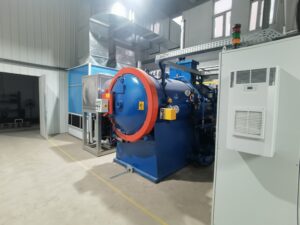
Why Investment Casting Leads for Cobalt Alloys
For cobalt alloy casting, investment casting (lost-wax) is usually the best choice. It handles:
- Very high melting temperatures of cobalt-based alloys
- Tight tolerances and fine details for complex parts
- Near-net-shape geometry, which matters because cobalt alloys are tough and expensive to machine
If you’re used to precision castings in stainless or nickel alloys, the same logic applies here—just with stricter process control and higher heat. For a broader look at alloy casting options, I often point buyers to resources like this casting alloy guide covering processes and alloys.
How Investment Casting Works for Cobalt Alloys (Step-by-Step)
The investment casting cobalt process is similar to standard lost-wax casting, but with tighter controls around heat, chemistry, and shell strength:
- Pattern Making & Wax Injection
- A steel mold (tooling) is built to your part geometry.
- Wax is injected into this mold to form identical wax patterns.
- These wax patterns include gating and feeders designed for cobalt’s higher shrink and fluidity needs.
- Assembly & Ceramic Shell Building
- Wax patterns are assembled onto a central wax “tree.”
- The tree is dipped in a ceramic slurry and coated with refractory sand.
- This dip-and-dry is repeated multiple times to build a strong ceramic shell that can handle cobalt’s pouring temperature.
- Burnout (Dewaxing)
- The wax is melted and drained out of the shell in an autoclave or furnace.
- The shell is then fired to full strength, ready for molten cobalt alloy.
- Melting & Pouring Cobalt Alloys
- Cobalt-based alloys are melted in an induction or vacuum/controlled-atmosphere furnace.
- Pour temperatures are typically 2,650–2,850°F (1,450–1,565°C) depending on the specific cobalt chrome or Stellite grade.
- Tight control of chemistry, temperature, and slag is critical to avoid gas, inclusions, and segregation.
- Cooling, Knockout & Basic Finishing
- Castings are cooled in air or controlled conditions (depending on alloy and section size).
- The ceramic shell is broken off mechanically or via blasting.
- Gates and risers are cut, and the parts are shot-blasted, ground, and prepped for machining or heat treatment.
Alternative Cobalt Alloy Casting Processes
Besides investment casting cobalt alloys, we also use other processes when the design or volume calls for it:
- Centrifugal Cobalt Casting
- Ideal for rings, sleeves, valve seats, and bushings.
- Centrifugal force drives metal into the mold, giving very dense, low-porosity cobalt alloy parts.
- Sand Casting Cobalt Alloys
- Better for larger, simpler shapes where ultra-tight tolerances aren’t necessary.
- Lower tooling cost than investment casting, but rougher surface and more machining.
- Often chosen for heavy industrial wear parts and larger pump or valve components.
You can compare these to other alloy routes using references like this broader casting alloy overview for properties and processes.
Key Challenges in Cobalt Alloy Casting
Cobalt alloy casting delivers top-tier wear and heat resistance, but it’s not a casual process. The main challenges we manage around are:
- High Melting Point
- Requires robust furnaces, high-temp refractories, and engineered ceramic shells.
- Any weak point in the shell or tooling will show up fast with cobalt.
- Shrinkage and Solidification Control
- Cobalt alloys can have significant solidification shrinkage, so gating, risering, and directional solidification design are critical.
- Poor feeding design leads to shrink porosity and rejects.
- Cost and Machinability
- Cobalt-based alloys and Stellite castings are premium materials with higher alloy content and melt costs.
- They’re also hard to machine, so we rely on near-net-shape precision cobalt castings to keep secondary operations under control.
Handled correctly, the cobalt alloy casting process lets you put extremely durable, heat-resistant parts into service with fewer failures and less downtime—exactly what most U.S. OEMs and maintenance teams are paying for when they choose cobalt over standard steels.
Why Choose Cobalt Alloy Casting?

Cobalt alloy casting is what you use when failure is not an option. If your parts see brutal wear, heat, and corrosion, cobalt-based alloys usually pay for themselves fast.
Performance in Extreme Wear & Heat
Cobalt alloy castings hold up where standard steels and many nickel alloys tap out.
**Key benefits:
Cobalt Alloy Casting Applications
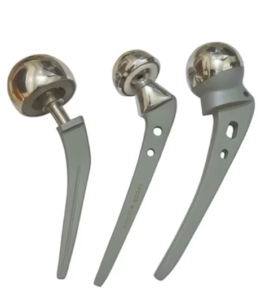
Cobalt alloy casting is what you use when failure is not an option. The combination of wear resistance, heat resistance, and corrosion resistance makes cobalt-based alloys a go-to choice across demanding U.S. industries.
Aerospace Cobalt Alloy Castings
In aerospace, cobalt superalloys run in the hottest zones where nickel and stainless can struggle long term:
- Turbine blades and vanes in gas turbines
- Combustor and hot-section hardware
- Small precision cobalt alloy turbine blades for auxiliary power units
These cobalt alloy castings hold strength and hardness at high temperature, resist hot-gas corrosion, and reduce unplanned downtime.
Medical Cobalt Alloy Castings
For medical, cobalt chrome casting (especially ASTM F75) is a proven, long-term implant material:
- Cobalt chrome orthopedic implants (hips, knees, shoulders)
- Dental and cranial prosthetic components
- Custom medical implant castings where biocompatibility and fatigue strength matter
ASTM F75 cobalt-based alloys offer excellent wear resistance against UHMWPE and strong corrosion resistance inside the body.
Oil & Gas Cobalt Castings
In oil and gas, cobalt alloy casting is used to survive abrasive sand, corrosive fluids, and pressure cycles:
- Cobalt alloy valve components and trim parts
- Cobalt alloy pump parts, impellers, sleeves, and choke components
- Nozzles, seats, and wear rings in high-pressure systems
These wear-resistant alloys cut maintenance costs in shale, offshore, and refinery support equipment.
Petrochemical & Refinery Components
Refinery and petrochemical plants rely on cobalt-based alloys to handle erosive and corrosive process streams:
- Cobalt alloy parts in slurry services and high-velocity flow
- Cobalt chrome castings in corrosive acids, chlorides, and sulfur-bearing environments
- Seats, guides, and internals where galling and erosion are constant threats
Compared to standard cast steels, cobalt-based alloys hold up better under a mix of heat, chemistry, and mechanical wear.
Power Generation Cobalt Castings
In power generation, cobalt alloy casting supports long run times under thermal cycling:
- Gas turbine nozzles, blades, and shrouds
- Steam turbine valve components and hot-section hardware
- Cobalt alloy components for high-speed, high-load wind turbine braking or wear interfaces
These high-temperature castings provide oxidation resistance, creep resistance, and stable hardness at temperature.
Industrial Wear Parts and Tooling
Across U.S. heavy industry, Stellite casting and similar cobalt alloys are used anywhere parts get chewed up:
- Cutting tools, shear blades, and hot forming dies
- Mining tools, drill bits, and earth-moving wear tips
- Food processing wear parts where abrasion and corrosion both matter
If you’re also working with stainless parts, it’s helpful to compare how they’re cast and finished using a similar process to stainless steel casting to understand where cobalt alloys justify the upgrade.
Real-World Harsh-Environment Examples
You’ll see cobalt alloy castings perform in:
- Downhole tools cycling between high pressure, abrasion, and corrosive brines
- Turbine hot sections running thousands of hours between overhauls
- Refinery valves that survive decades in erosive slurry services
When standard steels and many nickel alloys start to wear out or lose hardness, cobalt-based alloys keep working, which is exactly why we prioritize them for customers who care about uptime over initial material cost.
Choosing the Right Cobalt Alloy and Casting Process
Picking the right cobalt alloy casting setup is all about matching the grade and process to your real operating conditions, not just a datasheet.
Match Alloy Grade to Temperature and Load
As a rule of thumb:
- Up to ~800°F (425°C): Wear-focused grades like Stellite 6 / Cobalt 6 handle sliding and moderate impact very well.
- 800–1,600°F (425–870°C): Go to cobalt superalloys and high‑Cr/Co grades for hot gas, turbine, and valve trim service.
- Heavy shock / impact: Slightly tougher alloys (e.g., Stellite 21 / Cobalt 21) with lower hardness but better toughness are safer than ultra‑hard grades.
If you’re already working with Inconel or other high‑temperature alloys, you’ll recognize the same logic—balance hardness vs toughness vs temperature, similar to how you’d spec parts from a high-temperature alloy supplier.
Select for the Right Wear Mechanism
Different wear modes need different cobalt-based alloys:
- Abrasive wear (sand, slurry, hard particles): High‑carbon, high‑carbide alloys (e.g., Stellite 6).
- Adhesive/galling (metal-on-metal, valves, seats): Cobalt chrome casting grades with good galling resistance (e.g., Stellite 21, ASTM F75‑type).
- Erosive wear (high‑velocity fluids, slurry nozzles): Balance hardness and toughness; often mid‑hard cobalt alloys so parts don’t chip.
Choose for Corrosion Type
You don’t pick cobalt alloy casting only for hardness; corrosion matters:
- Chlorides / seawater / salt spray: Co‑Cr‑Mo alloys perform far better than standard cast steels; consider nickel support if chloride load is extreme.
- Acids / chemical process: Look for higher chromium and molybdenum levels in the cobalt-based alloy for pitting and crevice resistance.
- High‑temperature oxidation / hot gas: Cobalt chrome alloys with strong oxide films are preferred for turbine blades, hot vanes, and exhaust parts.
Budget and Cost Trade-Offs
Cobalt alloy casting will cost more than stainless or basic cast steel, but it often wins on lifecycle:
- When cobalt is worth it:
- Frequent rebuilds or downtime are expensive.
- Temperatures or wear kill stainless/nickel alloys too quickly.
- When to stay with alternatives:
- Mild wear, mild corrosion, and low temperature.
- Non-critical components where failure is low-cost.
I push customers to look at cost per operating hour, not just cost per pound.
Investment vs Centrifugal vs Sand Casting
Pick the casting process to fit geometry, volume, and performance:
- Investment casting cobalt (lost-wax):
- Best for precision cobalt castings, complex shapes, thin walls, tight tolerances.
- Go‑to for turbine blades, medical ASTM F75, small valve and pump parts.
- Centrifugal casting:
- Ideal for rings, bushings, valve seats, and cylindrical wear parts.
- Excellent soundness and wear performance in cobalt alloy valve components.
- Sand casting:
- Better for larger, simpler shapes where surface finish and tight tolerance aren’t critical.
- Good for big wear blocks or housings in heat-resistant cobalt alloys.
Design for Castability
Good design makes cobalt alloy casting more reliable and cheaper:
- Wall thickness: Avoid sharp jumps; keep sections as uniform as possible.
- Fillets & radii: Use generous fillets to reduce hot spots and cracking risk.
- Gating & risers: Leave room for feed pads/riser contacts where we can cut and finish without touching critical surfaces.
If you’re not sure, send the 3D model early—we’ll flag problem areas and tweak for castability.
Tolerances, Surface Finish & Machining
Know what to expect so you don’t over-spec:
- Typical investment casting tolerances (cobalt):
- ±0.003–0.005 in/in (±0.08–0.13 mm per 25 mm), depending on size and geometry.
- Surface finish:
- Investment: ~125–250 µin Ra as-cast, better with light finishing.
- Sand: Rougher, often needs more machining.
- Machining cobalt-based alloys:
- Hard and work‑hardening—plan for rigid setups, carbide tools, low speeds.
- Whenever possible, let the casting do the work; design near‑net-shape to minimize machining on hard surfaces.
If you share operating temperature, media, load, and target life, I can usually narrow you down to 1–2 cobalt alloy grades and the most sensible casting process in a single pass.
Quality Control in Cobalt Alloy Casting
When we run cobalt alloy casting projects, tight quality control is non‑negotiable. These parts usually end up in turbines, valves, or medical devices, so we build verification into every step.
Chemical Composition Verification
For cobalt-based alloys, chemistry must be dead-on or the properties fall apart. We typically use:
- Spectrographic analysis (OES/ICP) to confirm cobalt, chromium, tungsten, nickel, molybdenum, and carbon are all within spec.
- Heat-by-heat certification to ensure every melt is traceable back to its batch and mill certs.
This is the same kind of discipline we apply when sourcing critical metals like our high-performance titanium alloy materials, where chemistry directly drives fatigue strength and corrosion resistance.
Mechanical Testing for Cobalt Alloy Castings
To prove the casting will actually survive in service, we typically run:
- Tensile tests (yield strength, ultimate strength, elongation)
- Hardness tests (Rockwell or Vickers) to confirm wear resistance
- Impact tests (Charpy) where shock or cyclic loading is a concern
Test bars are poured with each heat or lot so your data directly matches the production parts.
Non-Destructive Testing (NDT)
Because cobalt alloy castings often run in safety‑critical gear, we lean on NDT to catch internal and surface flaws without cutting parts open:
- X-ray (radiography): checks for internal shrinkage, porosity, cracks
- Dye penetrant (PT): finds fine surface cracks on complex shapes
- Ultrasonic testing (UT): great for thicker sections and structural parts
NDT levels (e.g., acceptance criteria) are set by your drawing, ASTM standards, or your internal spec.
Dimensional Inspection & Tolerances
Investment casting lets us hold tight tolerances on cobalt alloys, but we still verify everything:
- CMM and optical inspection for critical dimensions and GD&T features
- Gauge checks for production control on repeat features
For precision cobalt investment castings, typical linear tolerances are in the ±0.005–0.010 in range depending on size and geometry, with surface finishes smooth enough to minimize secondary machining on hard alloys.
Heat Treatment & Microstructure Control
Cobalt alloys respond strongly to heat treatment and cooling rate. We control:
- Solution or stabilization treatments to lock in strength and wear resistance
- Carbide distribution and grain size to balance toughness vs. hardness
- Stress relief cycles to reduce distortion before final machining
Microstructure is confirmed with metallographic examination when required (carbide networks, grain boundaries, porosity).
Standards and Specs (ASTM, ISO)
To keep everyone aligned, we work to recognized cobalt alloy casting standards, such as:
- ASTM F75 for cobalt-chromium-molybdenum medical implant castings
- Other ASTM and ISO specs for wear-resistant and heat-resistant cobalt-based alloys
- Customer-specific standards for aerospace, oil & gas, and power generation
Every shipment includes material certs, heat numbers, test results, and full traceability, so your QA team has clean paperwork from foundry to finished assembly.
Standards and Certifications for Cobalt Alloy Casting
When you’re buying cobalt alloy casting in the U.S. market, standards and certifications are what protect you from risk. I treat them as non‑negotiable.
Core Alloy Standards (Cobalt Chrome, Stellite, Cobalt-Based Alloys)
For cobalt chrome casting and Stellite casting, most buyers expect:
- ASTM A494 – for cast cobalt-based alloys and cobalt superalloys used in valves, pumps, and high‑temperature parts.
- ASTM F75 – the go‑to cobalt chrome alloy standard for medical implant casting (orthopedic implants, trauma, and joint components).
- ASTM F799 / F1537 – wrought/forged cobalt chrome alloys often used together with cast parts in medical systems.
- ASTM F90, F562, F563 – other cobalt-based alloys for specific medical or high‑performance uses.
If you’re buying Stellite 6, Stellite 21, or similar cobalt alloy wear parts, we align chemistry and mechanical properties with the relevant ASTM A494 grade plus your in‑house spec.
Aerospace & Energy Cobalt Superalloy Standards
For aerospace cobalt parts and high‑temperature castings in turbines, you’ll commonly see:
- AMS specs (Aerospace Material Specifications) for cobalt superalloy castings and investment casting cobalt.
- ASTM E standards for mechanical test methods (tensile, impact, hardness).
- Customer or OEM specs (GE, Pratt & Whitney, Siemens, etc.) that sit on top of AMS/ASTM for cobalt turbine blade alloys and hot‑section components.
Power generation and oil & gas buyers also reference API and NACE guidelines when cobalt alloy valve components and cobalt alloy pump parts see sour service or aggressive media.
Quality System Certifications That Matter
If you’re sourcing precision cobalt castings in the U.S., your short list should include foundries with:
- ISO 9001 – baseline quality management for industrial and wear‑resistant alloys.
- AS9100 – aerospace-grade quality system for cobalt superalloys, turbine blades, and critical hardware.
- ISO 13485 – for ASTM F75 cobalt chrome and other medical cobalt-based alloys used in implants.
- NADCAP (where applicable) – for special processes like heat treatment, NDT, and investment casting controls in aerospace.
These certifications tell you the shop can actually control process variation on hard‑to‑cast cobalt-based alloys.
Traceability, Documentation & Material Certificates
For serious OEM and Tier 1 buyers, paperwork is as important as the part:
- Full heat traceability from melt to finished part (heat numbers on certs and cast/engraved on parts where required).
- Mill test reports (MTRs) / 3.1 or 3.2 certs with full chemical composition and mechanical test results for each heat of cobalt alloy casting.
- Process records for melting, investment casting, heat treatment, and inspection, especially for aerospace cobalt parts and medical components.
- NDT reports (X‑ray, dye penetrant, ultrasonic) and dimensional inspection reports when you’re pushing tight cobalt investment casting tolerances.
For buyers comparing cobalt alloy vs stainless steel or nickel alloys, I always say: standards and certifications are what justify the premium. You’re not just paying for metal; you’re paying for controlled process, proven performance, and full traceability.
If you also work with other alloys and want to standardize suppliers, it’s worth checking that your cobalt casting foundry can support related processes like precision investment casting across materials, not just cobalt:
- See how we handle tight‑tolerance precision casting services for complex parts.
Working With a Cobalt Alloy Casting Supplier
What to look for in a cobalt alloy casting foundry
When you’re sourcing cobalt alloy casting, you need a foundry that lives in this niche every day, not a shop “testing it out.” Look for:
- Dedicated experience with cobalt-based alloys (Stellite 6, Stellite 21, ASTM F75, etc.)
- Investment casting equipment sized for your parts and volumes
- High-temp melting capability with tight control over atmosphere and chemistry
- In-house testing (chemical analysis, hardness, tensile, NDT)
- Proven experience in valves, pumps, and high-temperature wear parts—especially if you also buy critical components like custom OEM valve castings.
Questions to ask about cobalt investment casting capabilities
Before you send a PO, ask direct questions:
- What cobalt alloy grades do you pour regularly?
- What investment casting tolerances can you hold on my part size?
- What’s your maximum part size and weight in cobalt chrome casting?
- How do you control shrinkage, porosity, and hot tearing on cobalt alloy castings?
- What NDT methods do you offer (X-ray, dye penetrant, ultrasonic) for cobalt superalloys?
From prototype to production support
Your cobalt alloy casting partner should help you move in stages, not just ship parts:
- DFM support: review wall thickness, fillets, gating, and machining stock for castability
- Rapid prototypes: short-run or single-piece investment casting cobalt samples for fit and testing
- Tooling optimization: adjust wax tooling and process windows based on early trial data
- Production ramp-up: stable, repeatable precision cobalt castings with clear PPAP or qualification plans
Typical lead times, MOQs, and project stages
For cobalt alloy casting, US buyers usually see:
- Tooling + first samples: ~4–8 weeks depending on complexity
- Production runs: ~3–6 weeks after approval
- MOQs: often driven by tooling and setup cost; many cobalt casting foundries start around 50–100 pcs, but complex aerospace or medical parts may justify smaller batches.
The standard flow is: RFQ → DFM review → quotation → tooling → sample castings → approval → production.
How vastmaterial handles cobalt alloy casting projects
At vastmaterial, I run cobalt alloy casting as a structured, engineering-first process:
- We start with application and environment (temperature, wear type, media) to pick the right cobalt based alloy.
- Our team reviews your 3D models and prints to optimize for investment casting and reduce downstream machining.
- We control the full route—lost-wax patterns, ceramic shell, melting, heat treatment, and inspection—so you get consistent cobalt alloy valve components, pump parts, and wear parts lot after lot.
- For US customers, we quote fast, lock in realistic lead times, and stay transparent on costs so you know exactly when cobalt alloy casting is worth the premium over stainless or nickel alloys.
FAQs on Cobalt Alloy Casting
How much does cobalt alloy casting cost compared to other alloys?
Cobalt alloy castings typically cost 2–5x more than standard carbon or stainless steel castings and are usually more expensive than many nickel alloys. Most of that cost comes from:
- Expensive alloying elements (cobalt, chromium, tungsten)
- Higher melting temperatures and more demanding casting setups
- Extra tooling and machining on very hard, wear-resistant parts
That said, in critical wear or high-heat applications, cobalt-based alloys often pay for themselves through longer life and less downtime.
When is cobalt alloy casting worth the premium?
It’s worth it when failure is expensive. Cobalt-based alloys are a smart choice when you have:
- Extreme wear/galling (sliding metal-to-metal, valves, seats, trim)
- High temperatures (typically 900–1800°F / 480–980°C) with load
- Aggressive media (hot gases, corrosive slurries, erosive flow)
- Hard-to-access components where replacement is costly or dangerous
If you’re burning through stainless or tool steel parts, a cobalt alloy casting like Stellite 6 or ASTM F75 is usually worth the step up in price.
What tolerances can you expect with cobalt investment casting?
For cobalt alloy investment (lost‑wax) castings, typical commercial tolerances are:
- Linear dimensions: ±0.003–0.005 in per inch (±0.08–0.13 mm/in)
- Minimum wall thickness: about 0.06–0.08 in (1.5–2.0 mm), sometimes thinner on small parts
- Surface finish: around 125–250 µin Ra as-cast
Tight tolerances on critical features are usually finalized by CNC machining. If you need very tight fits, we’ll design the casting with machining stock in those areas. For reference on post-processing capabilities, we handle high-precision work similar to our precision CNC machining for bronze industrial parts—just with much tougher cobalt alloys.
What’s the typical lead time for cobalt alloy castings?
Lead time depends on complexity, tooling, and inspection requirements, but in the U.S. market these are common ranges:
- New tooling + first articles: about 6–10 weeks
- Repeat orders: about 3–6 weeks, once tooling is proven
- Emergency/small runs: sometimes faster, but expect higher piece cost
Aerospace, medical, and energy parts that need full NDT and certifications can sit at the longer end of that range.
Are cobalt alloy castings biocompatible for medical use?
Yes—medical-grade cobalt-chrome, especially ASTM F75, is well-established for:
- Orthopedic implants (hips, knees)
- Dental components
- Wear surfaces in joint replacements
These alloys are engineered for biocompatibility, corrosion resistance, and long-term wear in the body. For any medical device, the key is using certified medical-grade cobalt alloy and strict process control.
How does cobalt alloy casting compare to machining from bar or forging?
Cobalt alloy casting vs machining/forging breaks down like this:
- Casting (investment / precision casting):
- Best for complex shapes and near-net parts
- Lower material waste on expensive cobalt-based alloys
- Ideal for integrated features (internal passages, complex geometries)
- Machining from bar or forging:
- Better for simple geometries and lower quantities
- Forgings can offer superior directional properties in some cases
- Cobalt is very hard to machine, so machining alone can get expensive fast
For intricate, high-wear components, cobalt alloy casting plus finish machining is usually the most cost-effective route.
What info do I need to provide to get a cobalt casting quote?
To quote a cobalt alloy casting accurately, I’ll typically ask for:
- 2D drawings and/or 3D model (STEP/IGES)
- Alloy grade (e.g., Stellite 6, Stellite 21, ASTM F75, Cobalt 31)
- Annual volume and batch size
- Required tolerances and critical dimensions
- Any NDT/testing requirements (X-ray, dye penetrant, mechanical tests)
- Surface finish and machining needs
- Target application and operating conditions (temp, media, load, wear type)
The more detail you share up front, the faster we can dial in realistic pricing, lead times, and process options for your cobalt alloy casting project.