
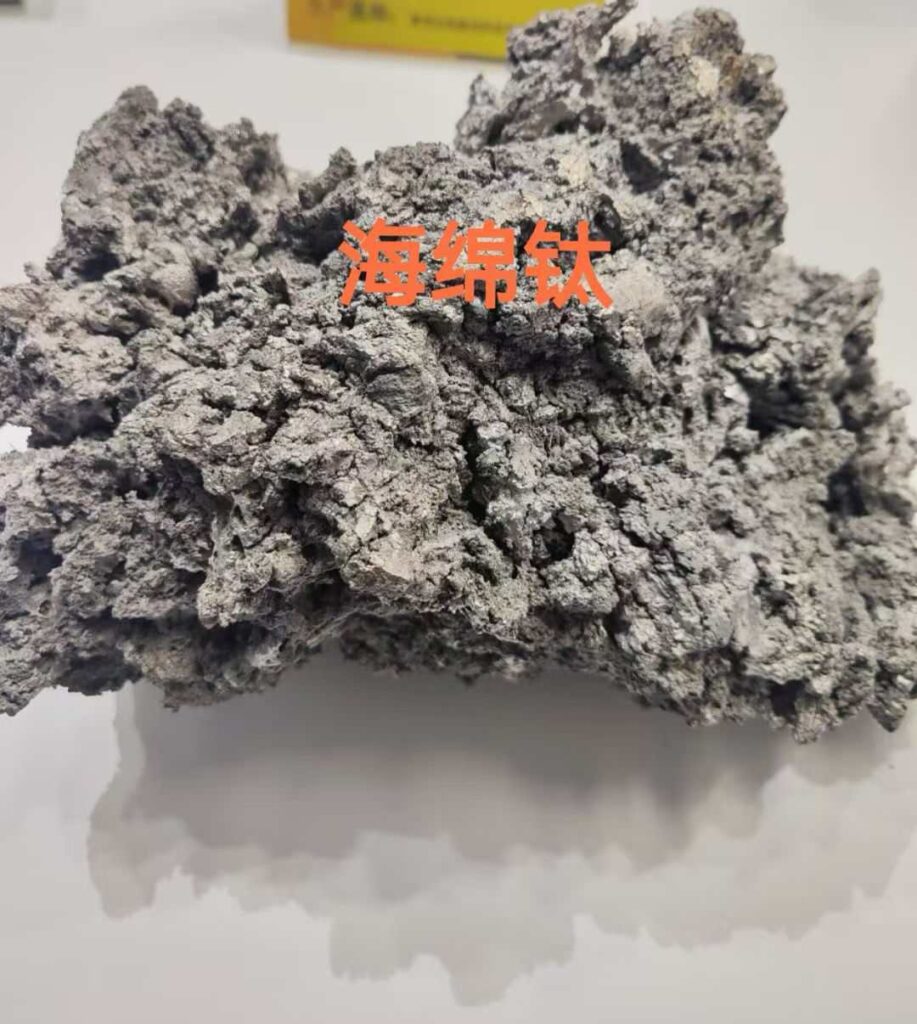
Discover different grade of titanium with clear comparisons of properties, applications, and selection tips for engineers and industrial buyers.
You might already know that titanium is the gold standard for high-performance engineering…
But are you confident you’re selecting the right specification?
The difference between Grade 2 and Grade 5 isn’t just a number—it’s the difference between a successful component and a catastrophic failure.
At Vastmaterial, we know that navigating the different grades of titanium can be complex.
That’s why I’ve compiled this technical breakdown.
From the ductility of Commercially Pure (CP) titanium to the high-strength fatigue resistance of Ti-6Al-4V, you’re going to learn exactly how to match the grade to your application.
Let’s get into the data.
The Big Four: Commercially Pure (CP) Titanium Grades
At Vastmaterial, our production of Commercially Pure (CP) Titanium focuses on unalloyed grades ranging from Grade 1 to Grade 4. These grades are distinguished primarily by their oxygen and iron content, which directly influences their mechanical properties while maintaining the superior corrosion resistance titanium is known for. We manufacture these materials in strict compliance with ASTM B348 and ASTM B265 standards to ensure reliability in critical industrial applications.
Grade 1: Softest and Most Ductile
Grade 1 is the purest form of titanium we supply. Because it has the lowest oxygen content, it offers the highest titanium ductility and excellent cold formability. This makes it the ideal choice for applications requiring severe deformation.
- Key Characteristic: Superior impact toughness and high corrosion resistance.
- Common Applications: Deep drawing, explosive bonding, cladding, and plate heat exchangers.
- Formability: Excellent for parts that require extensive shaping without cracking.
Grade 2: The Industry Workhorse
Grade 2 is the most widely used titanium grade in our inventory and the global market. It offers a perfect balance of moderate strength and reasonable ductility, making it the standard specification for most industrial plants.
- Strength: Higher yield strength than Grade 1 (approx. 275 MPa minimum).
- Corrosion Resistance: Exceptional performance in oxidizing environments, making it a staple for industrial heat exchangers and marine components.
- Weldability: Highly weldable, allowing for easy fabrication of pipes, tanks, and vessels.
Grade 3 and Grade 4: High Strength CP Options
For projects requiring higher mechanical loads without transitioning to alloys, we recommend Grade 3 and Grade 4. These grades contain higher levels of oxygen and iron, which significantly boosts their tensile strength.
- Grade 3: Less common than Grade 2 but used in pressure vessels requiring intermediate strength.
- Grade 4: The strongest of the CP grades. We frequently supply Grade 4 for aerospace components, surgical hardware, and complex industrial parts where high strength and corrosion resistance are non-negotiable.
| CP Grade | Oxygen Content | Strength Profile | Primary Characteristic |
|---|---|---|---|
| Grade 1 | Lowest | Low | Maximum Formability |
| Grade 2 | Moderate | Medium | Best All-Rounder (Workhorse) |
| Grade 3 | High | High | Pressure Vessel Quality |
| Grade 4 | Highest | Very High | Strongest CP Grade |
The Powerhouses: Titanium Alloy Grades
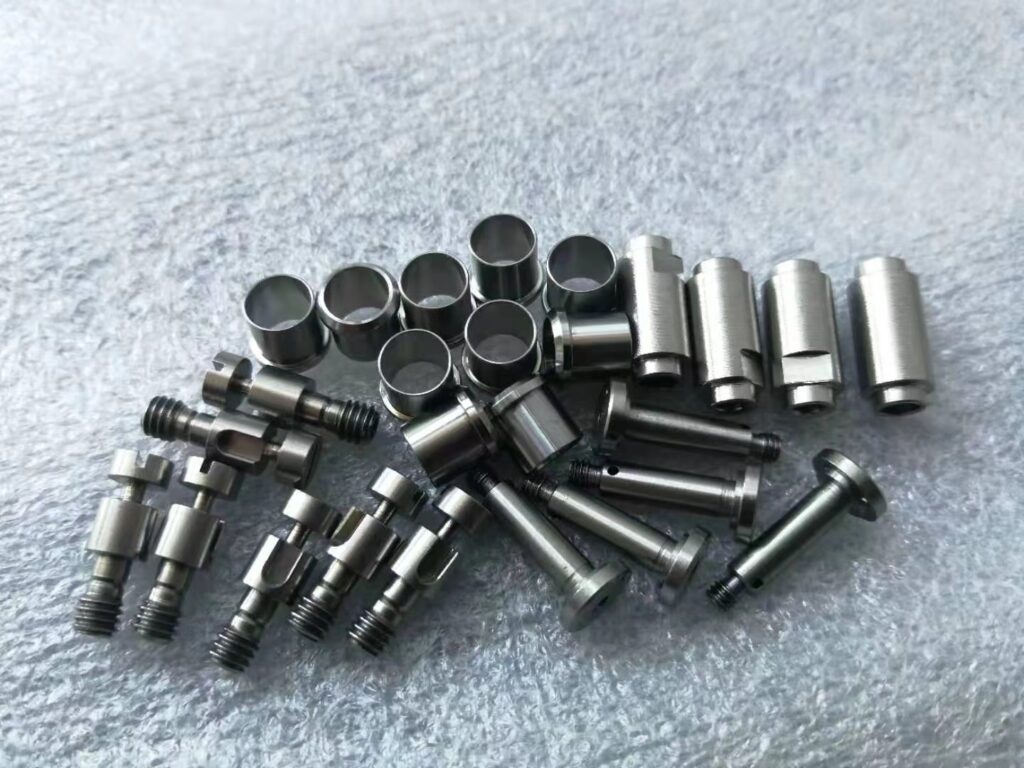
When you need performance that goes beyond what Commercially Pure (CP) titanium can offer, you step up to titanium alloys. While CP grades are excellent for corrosion resistance, alloys are engineered for high strength, fatigue resistance, and specific thermal properties. As a manufacturer based in Baoji, we see a massive demand for these materials across aerospace, medical, and industrial sectors. Understanding the different grade of titanium alloys is the key to balancing cost and performance for your specific application.
Grade 5 (Ti-6Al-4V): The Aerospace Standard
Grade 5 is the absolute “workhorse” of the titanium alloy world, accounting for a huge portion of global titanium usage. It is an alpha-beta titanium alloy that offers an incredible strength-to-weight ratio, making it the go-to material for aerospace components, turbine blades, and structural airframe parts.
Unlike CP grades, Grade 5 is heat treatable, which allows us to further enhance its mechanical properties. It offers excellent corrosion resistance in most environments, though slightly less than Grade 2. If your project requires high tensile strength without the weight of steel, Ti-6Al-4V (Grade 5) is usually the standard answer.
Grade 23 (Ti-6Al-4V ELI): The Medical Choice
For applications where the material interacts with the human body, we supply Grade 23. This is the Medical grade titanium (ELI) version of Grade 5. “ELI” stands for Extra Low Interstitials, meaning it has reduced oxygen, nitrogen, and iron content.
This reduction in interstitial elements improves ductility and fracture toughness while maintaining high strength. Because of its superior biocompatibility of titanium, Grade 23 is the primary choice for orthopedic pins, screws, cables, and surgical staples. We ensure strict adherence to ASTM F136 standards for these critical materials. To guarantee safety and compliance, our production involves rigorous testing and quality assurance processes before shipping.
Specialty Alloys: Grade 7, 9, and 12
Beyond the standard alloys, we manufacture specialty grades designed for extreme environments:
- Grade 7 (Palladium-Enhanced): This is essentially Grade 2 with 0.12% to 0.25% palladium added. This addition makes it the most corrosion-resistant of all titanium alloys, specifically designed for reducing acid environments and high-temperature chemical processing.
- Grade 9 (Ti-3Al-2.5V): Often called “half-6-4,” this grade bridges the gap between Grade 2 and Grade 5. It offers higher strength than CP grades but retains excellent cold formability. It is widely used in hydraulic tubing and high-end bicycle frames.
- Grade 12 (Ti-0.3Mo-0.8Ni): By adding molybdenum and nickel, we create an alloy with superior crevice corrosion resistance and high strength at elevated temperatures, making it ideal for shell and tube heat exchangers and marine components.
Critical Comparison: Grade 2 vs Grade 5
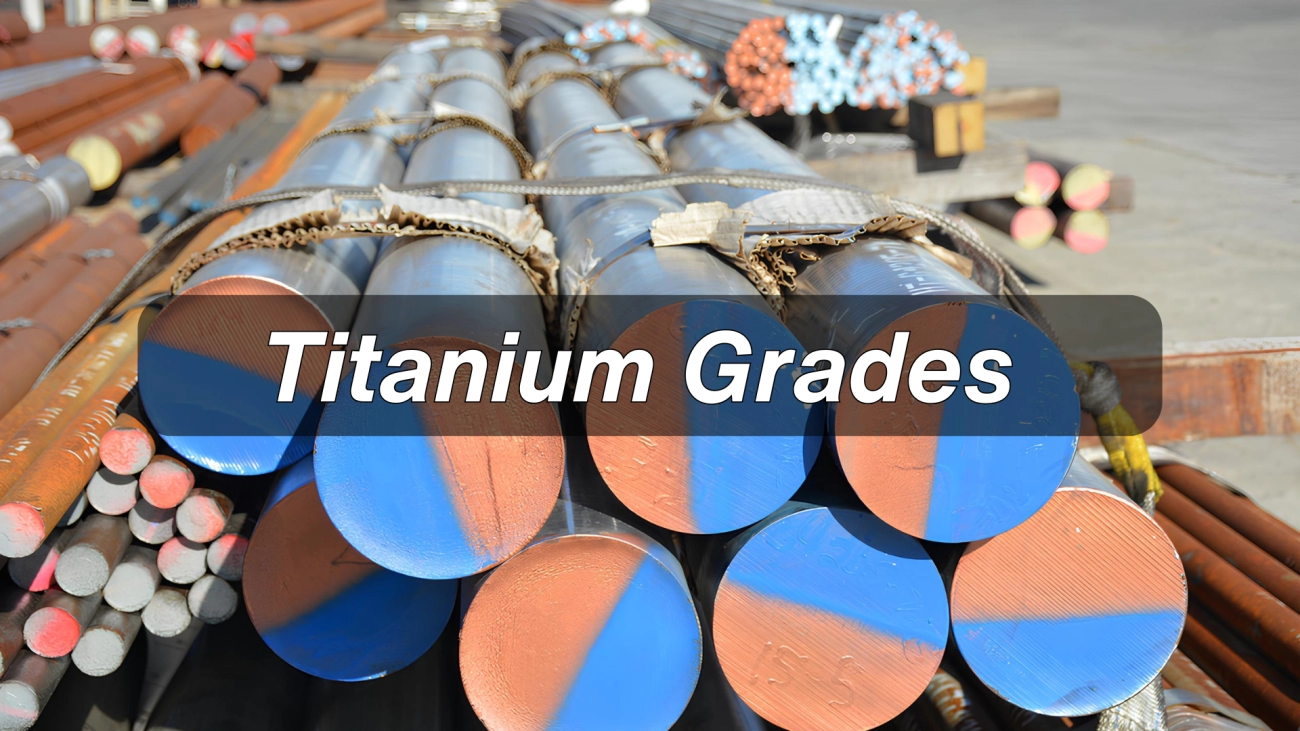
When navigating the different grade of titanium, the decision often comes down to two contenders: Grade 2 (Commercially Pure) and Grade 5 (Ti-6Al-4V). While both offer the signature corrosion resistance titanium is famous for, their mechanical behaviors are distinct. Grade 2 is the industry “workhorse,” favored for its ductility and formability, while Grade 5 is the “ace” for high-strength applications.
Tensile Strength and Yield Strength Data
The most significant differentiator in the Grade 2 titanium vs Grade 5 debate is strength. Grade 5 is an alpha-beta alloy, meaning it is heat-treatable and significantly stronger than commercially pure grades.
Here is a quick breakdown of the mechanical properties based on ASTM B348 standards:
| Property | Grade 2 (CP Titanium) | Grade 5 (Ti-6Al-4V) |
|---|---|---|
| Yield Strength | ~275 MPa (40 ksi) | ~828 MPa (120 ksi) |
| Tensile Strength | ~345 MPa (50 ksi) | ~895 MPa (130 ksi) |
| Ductility (Elongation) | High (~20%) | Moderate (~10%) |
| Hardness | Lower (Easier to form) | Higher (Wear resistant) |
Cost and Machinability Differences
Cost and ease of fabrication play a huge role in project budgeting. Because Grade 5 contains expensive alloying elements like Vanadium and Aluminum, it typically commands a higher market price than Grade 2.
- Machinability: Grade 2 behaves somewhat like stainless steel; it is softer and easier to machine, weld, and cold form. Grade 5, being harder, wears down tools faster and requires slower cutting speeds and higher coolant flow.
- Production Cost: For parts requiring extensive machining or complex shaping, Grade 2 is generally more cost-effective. However, if the part design relies on high strength-to-weight ratios to reduce material volume, Grade 5 can sometimes offset its higher raw material cost.
When to Choose Grade 2 vs Grade 5
Selecting the right material depends entirely on the environmental and mechanical stresses your application faces.
- Choose Grade 2 (CP) If:
- Corrosion Resistance is Priority: Excellent for chemical processing, marine environments, and desalination plants.
- Formability is Key: Ideal for applications requiring extensive welding, bending, or cold forming, such as heat exchangers and piping systems.
- Cost Sensitivity: When you need the chemical properties of titanium without the premium cost of high-strength alloys.
- Choose Grade 5 (Ti-6Al-4V) If:
- Strength-to-Weight Ratio is Critical: Essential for aerospace components, turbine blades, and high-performance automotive parts.
- High Mechanical Load: Best for fasteners, structural components, and springs that must withstand significant stress.
- Heat Resistance: Performs better than CP grades in environments with elevated operating temperatures (up to 400°C).
How to Select the Right Grade for Your Project
Choosing the correct different grade of titanium isn’t just about picking a metal; it’s about matching specific material properties to your application’s demands. At Haoyu Metal, we guide clients through this process daily, ensuring that the material we supply from “Titanium Valley” meets the exact ASTM or AMS standards required for the job.
Analyzing Environmental Factors
The operating environment is the first filter we apply. While all titanium offers a passive oxide layer that resists rust, the level of protection varies by grade.
- General Corrosion: For most marine and industrial chemical environments, Commercially Pure (CP) Titanium (specifically Grade 2) provides excellent resistance at a reasonable cost.
- Reducing Acids: If your equipment faces reducing acids or high temperatures, standard CP grades may corrode. In these cases, we recommend Grade 7 (palladium-enhanced) or Grade 12 (Ti-Mo-Ni), which offer superior crevice corrosion resistance.
- Biocompatibility: For the medical sector, the environment is the human body. Here, Grade 23 (Ti-6Al-4V ELI) is the mandatory choice due to its high purity and non-toxic interaction with biological tissue.
Evaluating Mechanical Load Requirements
Strength-to-weight ratio is usually the main reason engineers switch to titanium. However, there is a massive gap between the yield strength of pure grades and alloys.
- Low Stress/Cladding: If the application is non-structural, such as explosion bonding or tank lining, Grade 1 is ideal because it is soft and ductile.
- High Structural Load: For aerospace components, fasteners, or high-stress industrial parts, CP grades will deform. You need Ti-6Al-4V (Grade 5), which offers a tensile strength significantly higher than Grade 2 (approx. 895 MPa vs. 345 MPa).
Understanding the nuances of titanium properties and industrial uses is critical before finalizing your material specifications.
Manufacturing Process Considerations
How you plan to shape the metal dictates the grade you should buy. We supply bars, plates, and tubes, but your fabrication method matters.
- Cold Forming & Deep Drawing: Grade 1 and Grade 9 possess excellent cold formability. They are easy to bend and shape without cracking.
- Welding: Grade 2 and Grade 12 are known for good weldability. Grade 5 can be welded but requires careful heat treatment and shielding to prevent embrittlement.
- Machining: While titanium is generally tough to machine, Grade 5 is standard for machined parts, provided you use sharp tools and slow speeds to manage heat buildup.
Cost Efficiency and Budgeting
Over-specifying is a common mistake that kills project budgets. Sourcing directly from our factory in Baoji allows for cost savings, but selecting the right grade maximizes value.
| Factor | Recommended Grade | Cost Implication |
|---|---|---|
| General Industrial | Grade 2 | Most Cost-Effective. The “workhorse” grade with high availability. |
| High Strength | Grade 5 | Moderate. Higher processing costs but reduces material weight needed. |
| Extreme Corrosion | Grade 7 | High. Contains Palladium, making it expensive but necessary for acidic environments. |
| Tubing/Hydraulics | Grade 9 | Moderate to High. Premium for seamless tubing applications. |
If your application does not require the extreme strength of an alloy or the palladium content of Grade 7, sticking to Grade 2 is the smartest financial move. It balances decent strength, excellent corrosion resistance, and the lowest price point among standard titanium options.
Sourcing Titanium from Vastmaterial
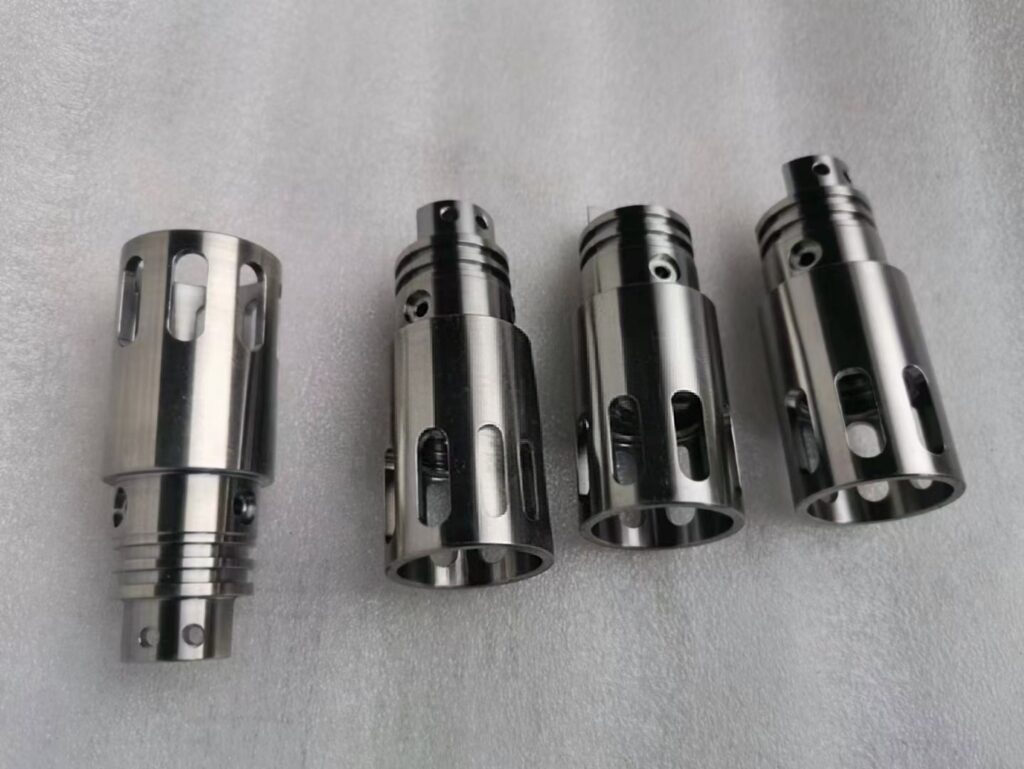
When you source from us, you are getting material directly from the factory floor in Baoji, the heart of the titanium industry. We control the entire manufacturing process to ensure that every different grade of titanium we produce—from soft CP grades to high-strength alloys—meets the demands of the US market. Our goal is to provide a seamless supply chain solution that balances cost-effectiveness with uncompromising quality.
Quality Assurance and ASTM Standards
Reliability is the baseline of our business. Our facility operates under strict ISO 9001:2015 management systems. We strictly adhere to international specifications, ensuring our products comply with ASTM B348 standards for bars, ASTM B265 for plates, and ASTM F136 for medical applications. Whether you are building heat exchangers or aerospace components, our materials are manufactured to perform consistently under stress.
Inventory Diversity: Pipes, Plates, and Bars
We maintain a massive stock of standard sizes to ensure rapid delivery for urgent projects. Our Vastmaterial titanium supply covers the full spectrum of product forms:
- Titanium Bars & Rods: Available in round, flat, and hex shapes for structural use.
- Plates & Sheets: Ranging from thin foils to thick plates for industrial cladding.
- Pipes & Tubes: Seamless and welded options ideal for chemical processing.
- Wires: High-quality wire for welding and medical applications.
If off-the-shelf sizes don’t fit your specific engineering requirements, our precision machining services allow us to customize dimensions, tolerances, and surface finishes to your exact prints.
Ultrasonic Testing and Mill Test Certificates
We believe in total transparency. We don’t just claim quality; we prove it. Every batch undergoes rigorous ultrasonic testing to detect any internal flaws or inconsistencies that could compromise structural integrity. With every shipment, we provide full Mill Test Certificates (MTC). These documents detail the chemical composition and physical properties of your order, giving you the documentation you need for compliance and peace of mind.
Frequently Asked Questions About Titanium Grades
Navigating the different grade of titanium options can be tricky. Here are the answers to the most common questions we get from our US clients regarding material selection and performance.
Can I use Grade 2 instead of Grade 5 to save money?
Usually, no. While Grade 2 is more cost-effective, it is a Commercially Pure (CP) grade known for corrosion resistance and ductility, not high tensile strength. Grade 5 (Ti-6Al-4V) is an alloy that offers significantly higher strength—roughly double that of Grade 2. If your project involves structural components or high mechanical stress, swapping to Grade 2 could lead to failure. However, if your primary need is corrosion resistance in a non-load-bearing chemical tank, Grade 2 is the smarter, cheaper choice.
Which titanium grade is safe for medical implants?
Grade 23 (Ti-6Al-4V ELI) is the top choice for medical applications. The “ELI” stands for Extra Low Interstitials, meaning it has lower oxygen, nitrogen, and iron content than standard Grade 5. This modification improves ductility and fracture toughness, making it highly biocompatible. We supply this grade frequently for orthopedic pins, screws, and dental implants where safety is non-negotiable.
What is the difference between CP and Alloy?
The distinction comes down to purity versus strength:
- Commercially Pure (CP) Titanium (Grades 1-4): These are unalloyed. They excel in corrosion resistance, weldability, and formability. Think of them as the “soft” grades used in chemical processing and marine environments.
- Titanium Alloys (Grade 5, 7, 12, 23): These are mixed with elements like aluminum and vanadium. They are engineered for high strength, heat resistance, and specific performance metrics often required by an aerospace casting manufacturer for critical components.
Is Grade 9 stronger than Grade 2?
Yes, Grade 9 (Ti-3Al-2.5V) is significantly stronger than Grade 2. It sits in a “sweet spot” between the commercially pure grades and Grade 5. Grade 9 offers higher strength than Grade 2 but retains excellent cold formability and weldability, making it a favorite for hydraulic piping and high-end bicycle frames where Grade 5 would be too brittle to shape easily.