

Aperçu du matériau SS 410
Qu'est-ce que l'acier inoxydable 410 (AISI 410 / UNS S41000) ?
Lorsque vous voyez matériau SS 410 or SS 410, vous regardez un acier inoxydable durcissable, à chrome droit martensitique inoxydable. Il est désigné comme AISI 410 / UNS S41000 et également connu mondialement sous le nom de acier inoxydable 1.4006. Cette nuance est conçue pour offrir un équilibre solide entre dureté, résistance et résistance modérée à la corrosion à un coût très compétitif.
Caractéristiques de l'acier inoxydable martensitique
L'acier inoxydable 410 est un acier inoxydable martensitique degré, ce qui signifie :
- C'est thermopourable (peut être durci et revenu).
- C'est magnétique dans la plupart des conditions.
- Il offre une résistance mécanique et une résistance à l'usure supérieures à de nombreux grades austénitiques comme le 304.
- Il a une résistance à la corrosion inférieure à celle du 304/316 mais meilleure que celle de l'acier au carbone simple.
En raison de cette structure martensitique, matériau SS 410 est idéal lorsque vous avez besoin de dureté, de rétention du tranchant et de résistance mécanique, pas seulement de résistance à la corrosion.
Principaux avantages du matériau SS 410
Si vous hésitez entre le matériau SS 410 et d'autres grades d'acier inoxydable, voici les avantages concrets que vous obtenez :
- Traitement thermique possible à une large gamme de niveaux de dureté
- Bonne résistance à l'usure et à l'abrasion pour pièces mobiles et de contact
- Résistance à la corrosion adéquate en atmosphères douces, eau douce et vapeur
- Magnétique – utile pour la détection, la manipulation ou les exigences de conception
- Souvent moins coûteux que les grades inoxydables à haute teneur en alliages, avec de meilleures performances que l'acier au carbone dans des conditions humides
Pour de nombreux acheteurs, Propriété de l'acier inoxydable 410 est le “ point idéal ” entre résistance, dureté et prix.
Industries et utilisateurs typiques de l'acier inoxydable 410
Vous verrez acier inoxydable 410 largement utilisé dans les applications industrielles, OEM et de maintenance où résistance et dureté importe :
- Vannes, pompes et raccords – tiges, sièges, garnitures, fixations
- Couverts et ustensiles de cuisine – lames, couteaux, ustensiles nécessitant un bord dur
- Huile, gaz et énergie – arbres de pompe, pièces de turbine, outils en forage
- Production d'électricité – composants côté vapeur, pales de turbine, quincaillerie
- Génie général – arbres, bagues, pièces d'usure, fixations, outillage
Si vous travaillez avec matériau 410 SS, SS 410, ou même en le comparant au matériau SS 420 et à l'acier SS 420, vous visez généralement une dureté plus élevée et une résistance à l'usure avec une performance acceptable en corrosion et un avantage clair en termes de coût.
Composition chimique du 410 SS
Composition élémentaire de l'acier inoxydable 410 (AISI 410 / UNS S41000)
Le matériau 410 SS est un acier inoxydable martensitique à chrome pur. Sa composition chimique typique est :
- Carbone (C) : 0,08–0,15%
- Chrome (Cr) : 11,5–13,5%
- Manganèse (Mn) : ≤ 1,0%
- Silicium (Si) : ≤ 1,0%
- Phosphore (P) : ≤ 0,040%
- Soufre (S) : ≤ 0,030%
- Fer (Fe) : Équilibre
Cette composition équilibrée explique pourquoi l'acier inoxydable 410 est une gamme de référence lorsque vous avez besoin d’un mélange de dureté, de résistance à l’usure et de résistance à la corrosion de base à un coût raisonnable.
Si vous comparez plusieurs grades d’acier inoxydable pour un projet, il est utile d’examiner un spectre plus large gamme de produits en acier inoxydable comme notre gamme de matériaux en acier inoxydable pour que la chimie et les différences de performance soient claires en un coup d’œil.
Plage de chrome et de carbone dans l’acier inoxydable 410
In le matériau SS 410, le chrome et le carbone sont les véritables moteurs de la performance :
- Chrome (11,5–13,5%)
- Forme un film passif pour la résistance à la corrosion
- Stabilise la structure martensitique après la trempe
- Carbone (0,08–0,15%)
- Augmente directement la dureté et la résistance lors du traitement thermique
- Un carbone plus élevé rend l’acier inoxydable 410 plus durcissable que les grades ferritiques, mais légèrement moins résistant à la corrosion que les aciers inoxydables à faible teneur en carbone
Pour les fabricants en France, cela rend 410 SS une solution solide lorsque vous avez besoin de pièces pouvant être traitées thermiquement pour devenir dur tout en pouvant gérer l'eau, la vapeur et des environnements modérés.
Effet de la composition sur la dureté et la résistance à la corrosion
En raison de sa chromium + carbone équilibre, acier inoxydable 410 se comporte ainsi :
- Dureté & Résistance
- Un carbone plus élevé = une dureté Rockwell atteignable plus grande après trempe et revenu
- La structure martensitique offre une forte résistance à l'usure pour les arbres, fixations et pièces mécaniques
- Résistance à la Corrosion
- La teneur en chrome donne une meilleure résistance à la corrosion que les aciers au carbone simples
- Mais avec son niveau de carbone, le 410 SS a une résistance à la corrosion inférieure plus de carbone que le 304 SS ou d'autres grades d'acier inoxydable austénitique, surtout dans les chlorures et produits chimiques agressifs
En résumé : plus de carbone = plus de dureté, légèrement moins de résistance à la corrosion, donc vous choisissez le 410 SS lorsque la performance mécanique est plus importante que la résistance à la corrosion de premier ordre.
Différences chimiques entre 410 SS et 420 SS
Les deux matériau SS 410 et matériau 420 SS sont des grades inoxydables martensitiques, mais le 420 augmente la teneur en carbone :
- 410 SS (AISI 410 / UNS S41000 / 1.4006)
- C : environ 0,08–0,15%
- Cr : environ 11,5–13,5%
- 420 SS (AISI 420)
- C : environ 0,15–0,40% (selon la sous-classe)
- Cr : environ 12–14TP3T
Ce que cela signifie en pratique :
- acier 420 SS peut atteindre une dureté plus élevée (idéal pour les couteaux, outils de coupe, instruments chirurgicaux)
- SS 410 offre une usinabilité plus facile, une meilleure ténacité, et généralement un coût inférieur
- La performance à la corrosion entre 410 et 420 est similaire dans de nombreux environnements doux, mais la teneur en carbone plus élevée du 420 peut le rendre légèrement plus sensible à la piqûre si mal traité thermiquement et fini correctement
Pour les utilisateurs en France décidant entre matériau SS 410 et acier 420 SS, la règle empirique est :
- Choisissez 410 SS lorsque vous souhaitez dureté équilibrée, bonne ténacité et machinabilité
- Choisissez acier inoxydable 420 lorsque vous avez besoin dureté maximale de la lame ou résistance à l'usure, et vous êtes d'accord avec un traitement thermique et un finissage plus soignés.
Propriétés mécaniques de l'acier inoxydable 410

410 SS en condition annealée
En condition annealée, l'acier inoxydable 410 (matériau SS 410 / SS 410) est plus doux et plus facile à usiner ou à former. Propriétés typiques (température ambiante, valeurs de référence) :
- Résistance à la traction : ~480–620 MPa (70–90 ksi)
- Limite d'élasticité (0,2%) : ~275–415 MPa (40–60 ksi)
- Allongement : ~20–25%
- Dureté : environ Rockwell B 88–96 (approximativement HRc 15–22 équivalent)
Cette condition fonctionne bien lorsque vous avez d'abord besoin d'une bonne machinabilité, puis prévoyez de traiter thermiquement l'acier inoxydable 410 après usinage pour la dureté finale.
Propriétés de l'acier inoxydable 410 trempé et revenu
Une fois trempé et revenu, Acier inoxydable AISI 410 se transforme en un état à haute résistance, résistant à l'usure :
- Résistance à la traction : ~860–1 380 MPa (125–200 ksi), selon la température de revenu
- Limite d'élasticité : ~655–1 100 MPa (95–160 ksi)
- Allongement : ~10–18% (diminue à mesure que la dureté augmente)
- Résistance à l'impact : modérée ; vous échangez la ténacité contre la dureté à des traitements thermiques plus élevés
Pour les concepteurs et acheteurs habitués aux aciers alliés, le 410 se comporte un peu comme un 4140 inoxydable : solide, dur, et traitable thermiquement, mais pas aussi résistant que les grades austénitiques.
Gamme de dureté et valeurs Rockwell de l'acier inoxydable 410
La dureté de l'acier inoxydable 410 est l’un de ses principaux arguments de vente :
- Dureté de l’acier inoxydable 410 annealed : ≈ HRB 88–96
- Dureté de l’acier inoxydable 410 trempé et revenu : typiquement HRC 28–45
- Avec un traitement thermique optimisé, HRC 48–52 est réalisable pour certains segments
Cette flexibilité vous permet de spécifier le matériau SS 410 du relativement doux (pour la mise en forme) au très dur (pour les pièces d'usure) simplement en ajustant le traitement thermique.
Résistance, ténacité et résistance à l'usure
Pour les utilisateurs en France dans le secteur du pétrole et du gaz, des pompes, des vannes et de l'usinage général, l'acier inoxydable 410 offre un équilibre pratique entre résistance, dureté et coût:
- Résistance : Une haute résistance en condition trempée et revenu fait du 410 SS un choix solide pour les arbres, les fixations et les composants soumis à de fortes charges.
- Ténacité : Assez résistant pour de nombreuses pièces structurelles et rotatives, mais pas aussi résistant aux chocs que le 304 ; éviter les impacts sévères ou les services cryogéniques profonds à très haute dureté.
- Résistance à l'usure :
- Une bien meilleure résistance à l'usure que le 304 ou le 316 à dureté similaire
- Idéal pour sièges, bagues, garnitures de vannes, couverts, et pièces de pompes qui subissent un contact glissant ou abrasif
Si vous évaluez acier allié vs acier inoxydable pour la résistance et l'usure, l'acier inoxydable 410 est une option solide lorsque vous avez besoin des deux performance mécanique et résistance de base à la corrosion, comme discuté dans cette vue d'ensemble du comportement de l'acier allié vs l'acier inoxydable en service.
Propriétés physiques du 410 SS
Le matériau 410 SS (AISI 410 / UNS S41000) possède un équilibre solide entre résistance, stabilité et performance thermique, c'est pourquoi de nombreux fabricants et ateliers de mécanique en France s'y fient pour des résultats fiables et reproductibles.
Densité et point de fusion du 410 SS
- Densité : environ 7,7–7,8 g/cm³ (0,278–0,282 lb/in³)
- Gamme de fusion : approximativement 1450–1510°C (2640–2750°F)
Cela donne à l'acier inoxydable 410 un poids similaire à celui de l'acier au carbone, ce qui facilite son intégration dans les conceptions et conversions existantes.
Conductivité thermique et chaleur spécifique
L'acier inoxydable 410 ne transfère pas la chaleur aussi rapidement que l'acier au carbone, mais il est meilleur que la plupart des grades austenitiques :
- Conductivité thermique : environ 24–28 W/m·K à température ambiante
- Capacité calorifique spécifique : environ 460–500 J/kg·K
Cet équilibre rend le matériau 410 SS adapté aux pièces soumises à des cycles thermiques tout en conservant des dimensions stables et une bonne résistance à l'usure.
Module d'élasticité et rigidité
- Module d'élasticité (E) : environ 200 GPa (29 x 10⁶ psi)
- Module de cisaillement (G) : approximativement 77 GPa (11 x 10⁶ psi)
En termes simples, propriété matérielle du SS 410 est très rigide et résiste à la déformation sous charge, c’est pourquoi il est couramment utilisé pour les arbres, axes, et composants structurels qui ne peuvent pas se plier.
Expansion thermique à température élevée
Le Le coefficient de pour le SS 410 est modérée :
- Environ 10–11 µm/m·°C entre 20–100°C (68–212°F)
- L’expansion augmente progressivement avec la hausse de la température
Cette expansion prévisible est importante lors de la conception de pièces à tolérances serrées ou lors de l’assemblage du SS 410 avec d’autres alliages. Pour des alliages à température plus élevée et plus spécialisés, je fournis également des pièces conçues sur mesure solutions d'alliages haute température spécialisées et des pièces personnalisées, y compris des alliages à base de nickel et de cobalt pour des services extrêmes, similaires à ce que l’on trouve dans des applications dédiées produits en alliage à haute température.
Traitement thermique du SS 410
Annelage de l’acier inoxydable 410 (matériau SS 410)
Pour le matériau SS 410, l’annelage consiste à réinitialiser la structure et à améliorer la machinabilité :
- Gamme typique d’annelage : ~1 500–1 650°F (815–900°C)
- Refroidissement : Refroidissement contrôlé du four ou refroidissement à l'air (le refroidissement lent réduit la dureté)
- Objectif : Atténuer l'acier inoxydable martensitique, soulager les contraintes et préparer pour l'usinage ou un traitement thermique supplémentaire
Un recuit approprié confère au matériau SS 410 une meilleure ténacité et une coupe plus facile tout en conservant une résistance acceptable.
Durcissement et trempe du SS 410
L'acier inoxydable 410 est un acier inoxydable thermoréglable, afin que nous puissions augmenter considérablement la dureté et la résistance :
- Austénitiser : ~1 800–1 950°F (980–1 065°C), trempe en fonction de l'épaisseur de la section
- Trempe : Trempe à l'huile ou à l'air (huile pour une dureté maximale, air pour réduire la déformation)
- Conditionnement : Après la trempe, le SS 410 est très dur mais aussi fragile et doit être revenu
Pour les composants moulés, nous combinons généralement le durcissement avec un refroidissement contrôlé similaire à celui de la processus de moulage en acier inoxydable pour équilibrer dureté et résistance aux fissures.
Températures de revenu et dureté du stainless 410
Le revenu nous permet d'ajuster la dureté finale du stainless 410 et la ténacité :
- Revenu faible (~150–315°C / 300–600°F) :
- Dureté Rockwell C plus élevée (HRC)
- Moins de ténacité, plus cassant
- Temprage moyen (~600–900°F / 315–480°C) :
- Dureté et ténacité équilibrées
- Couramment utilisé pour le matériau 410 SS dans les arbres, les fixations et les pièces d'usure
- Temprage élevé (~900–1 150°F / 480–620°C) :
- Dureté plus faible, ténacité plus élevée
- Meilleur pour les pièces soumises à des chocs
En pratique, l'acier inoxydable trempé et revenu 410 peut atteindre environ HRC 35–45, en fonction des températures exactes et des temps de maintien.
Comment le traitement thermique modifie la résistance et la ténacité
Le traitement thermique est ce qui distingue le 410 SS des grades austénitiques :
- Matériau en acier inoxydable 410 recuit :
- Résistance plus faible, ductilité plus élevée
- Plus facile à usiner et à former
- 410 SS trempé et revenu :
- Résistance à la traction et limite d'élasticité beaucoup plus élevées
- Excellente résistance à l'usure avec une ténacité contrôlable
- Surchauffe lors du revenu ou cycle incorrect :
- Peut faire baisser la dureté en dessous des spécifications
- Peut réduire la durée de vie en fatigue et la résistance à l'usure
Si vous prévoyez de faire couler en investissement des pièces en acier inoxydable 410, associer le bon traitement thermique à une qualité processus de coulée en investissement en acier inoxydable aidant à fixer une résistance et une dureté reproductibles tout au long des séries de production :
procédé de coulée en investissement en acier inoxydable, avantages, grades et coûts.
Résistance à la corrosion de l'acier inoxydable 410
Résistance à la corrosion dans les atmosphères douces et l'eau douce
Le matériau en acier inoxydable 410 offre une résistance à la corrosion fiable dans des environnements intérieurs secs, ruraux, et l'eau douce lorsque la surface est correctement finie et entretenue. Dans la plupart des environnements industriels et commerciaux—comme les arbres d'hélice, les vannes et les pièces mécaniques légères—l'acier inoxydable 410 résiste bien à la rouille tant qu'il n'est pas constamment exposé aux chlorures ou à l'eau stagnante. Une surface lisse, usinée ou polie, réduit considérablement le risque de piqûres et de taches.
Performance dans la vapeur et les environnements faiblement corrosifs
L'acier inoxydable 410 fonctionne bien dans l'eau chaude et la vapeur, c'est pourquoi il est largement utilisé dans les pièces de turbines à vapeur, les composants de vannes et le matériel de production d'énergie. Dans des environnements faiblement corrosifs—comme les faibles acides organiques, certaines solutions détergentes, et l'eau de procédé légèrement contaminée—l'acier inoxydable 410 peut offrir un bon équilibre entre résistance à la corrosion et dureté, surtout lorsqu'il est correctement traité thermiquement et maintenu propre.
Limitations dans les environnements marins et chimiques agressifs
L'acier inoxydable 410 est pas un acier inoxydable de qualité marine. En air côtier, en spray salin ou en contact direct avec l'eau de mer, il rouillera et s'oxydera plus rapidement que les grades austenitiques comme le 304 ou le 316. Il a également du mal dans les environnements riches en chlorures, acides ou fortement chimiques, où la fissuration par corrosion sous contrainte et l'attaque rapide peuvent se produire. Pour des applications offshore ou d'ingénierie marine difficiles, il est généralement préférable d'utiliser des alliages plus résistants à la corrosion et appropriés traitement de surface comme le revêtement ou le placage pour prolonger la durée de vie (voir notre de traitement de surface).
L'effet de la finition de surface et du traitement thermique sur la résistance à la corrosion
Les deux fini de surface et traitement thermique ont un impact important sur la résistance à la corrosion de l'acier inoxydable 410 :
- Finition plus lisse (meulée, polie) → moins de crevasses, meilleure résistance à la rouille
- Surfaces rugueuses, écailleuses ou teintées par la chaleur → risque accru de piqûres et de taches
- Temprage approprié après durcissement → film passif plus stable, meilleure performance en service
- Sur-temperage ou mauvais traitement thermique → résistance à la corrosion réduite et défaillance prématurée
Si vous avez besoin des deux résistance à l'usure et résistance raisonnable à la corrosion, nous recommandons généralement un cycle de durcissement et de trempe contrôlé combiné à une surface propre et finie pour obtenir le meilleur de l'acier inoxydable 410.
Soudage et fabrication de l'acier inoxydable 410
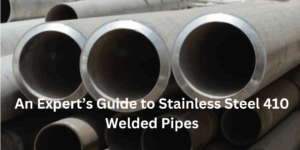
Soudabilité de l'acier inoxydable 410 (matériau SS 410)
L'acier inoxydable 410 (SS 410) est soudable, mais il n'est pas aussi indulgent que le 304. C'est un inox martensitique durcissable, donc il faut contrôler l'apport de chaleur et le refroidissement pour éviter les fissures.
- Utilisez des procédés de soudage à faible teneur en hydrogène et des métaux d'apport compatibles avec 410 ou 309/310 pour les joints dissemblables.
- Évitez un apport de chaleur élevé et de multiples passes épaisses sans contrôle.
- Pour les assemblages soudés de précision sur tôle et plaque d'acier inoxydable 410, nous l'associons souvent à un contrôle strict du processus et à un montage similaire à ce que nous utilisons dans la haute précision travail de la tôle découpée au laser.
Préchauffage et traitement thermique après soudage pour SS 410
Pour le matériau SS 410, le préchauffage et le TTAS (traitement thermique après soudage) sont essentiels si vous souhaitez des soudures fiables et une dureté contrôlée :
- Préchauffer:
- Plage typique : 200–315 °C (400–600 °F)
- Maintenez uniformément pour réduire le choc thermique et la fissuration par l'hydrogène.
- Température entre passes :
- Maintenez-vous dans une plage similaire au préchauffage. Ne laissez pas la pièce refroidir à température ambiante entre les passes.
- Traitement thermique après soudage :
- Revenu ou relaxation des contraintes subcritique après soudage pour réduire la dureté et restaurer la ténacité.
- Plage de revenu typique : 595–730 °C (1100–1350 °F) selon la dureté et la résistance requises.
Pour les barres, arbres ou brides en acier inoxydable 410 fortement sollicités, nous recommandons généralement à nos clients de combiner un soudage contrôlé avec cycles complets de trempe et revenu là où la conception et le code le permettent.
Usinabilité et coupe de l'acier inoxydable 410
Le matériau 410 SS se machine mieux que la plupart des aciers inoxydables austénitiques, en particulier en condition durcie et revenu, mais il se durcit également au travail s'il est maltraité.
Points clés pour l'usinage et la coupe :
- Utiliser outillage en carbure tranchant avec des montages rigides.
- Des vitesses de coupe modérées, une avance plus élevée et un liquide de refroidissement généreux maintiennent la chaleur et le durcissement au travail sous contrôle.
- Dans le matériau SS 410 recuit, vous obtiendrez un perçage et un tournage plus faciles mais une formation de bavures accrue.
- Pour la coupe de profil des feuilles et plaques en acier inoxydable 410, la découpe laser ou plasma est efficace ; prévoyez simplement une zone affectée par la chaleur (ZAC) qui pourrait nécessiter un meulage ou un traitement thermique.
Lignes directrices pour le travail à chaud et la mise en forme à froid du 410 SS
Étant donné que l'acier inoxydable 410 est martensitique, il ne se plie pas comme le 304. Vous devez planifier votre processus de mise en forme en fonction de sa résistance plus élevée et de sa ductilité plus faible :
Travail à chaud de l'acier inoxydable 410 :
- Chauffez à environ 950–1175°C (1750–2150°F) pour la forge ou la mise en forme lourde.
- Ne le travaillez pas en dessous d'environ 815°C (1500°F) pour éviter les fissures.
- Toujours suivre par un recristallisation et trempe si vous avez besoin de propriétés mécaniques cohérentes.
Formage à froid de l'acier inoxydable 410 :
- Limiter aux pliages simples et à la mise en forme légère, en particulier sur des plaques d'acier inoxydable 410 plus épaisses.
- Utiliser des rayons de pliage plus grands et des vitesses de mise en forme plus lentes.
- Si vous effectuez un travail à froid intensif sur le matériau en acier inoxydable 410, prévoyez une recristallisation pour restaurer la ductilité et réduire les contraintes résiduelles.
Si vous construisez des pièces à haute contrainte comme des brides sur mesure en acier 410 ou alliages similaires, nous pouvons vous accompagner avec des solutions de brides forgées et usinées similaires à nos des brides en acier allié sur mesure offrant, adaptées à vos exigences de charge et de soudure.
Applications du matériau 410 SS
Vannes, pompes et fixations
Le matériau 410 SS est un choix privilégié en France pour les vannes, composants de pompes et fixations qui subissent de l'usure, de la pression et une corrosion modérée. Nous utilisons l'acier inoxydable 410 (AISI 410 / UNS S41000) lorsque les pièces doivent :
- Bon résistance et dureté après traitement thermique
- Fiable résistance à la galling et à l'usure
- Décente résistance à la corrosion dans l'eau, l'huile, la vapeur et les produits chimiques doux
Vous verrez barres en acier inoxydable 410 et pièces forgées utilisées dans les sièges de soupape, les tiges, les arbres de pompe, les turbines, les boulons et les goujons dans les secteurs industriel, de traitement de l'eau et de fabrication générale. Pour des pièces moulées ou usinées plus complexes dans des services exigeants, de nombreux clients en France associent l'acier inoxydable 410 à des procédés spécialisés similaires à ceux utilisés dans fonte d'alliages de précision pour composants industriels présentes dans des secteurs comme l'énergie et l'industrie lourde, comme décrit dans ce guide technique sur les alliages et les procédés.
410 SS pour la coutellerie et les outils de cuisine
L'acier inoxydable 410 est largement utilisé pour la coutellerie, les outils de cuisine et les lames utilitaires où :
- la tenue du tranchant est importante, mais pas extrême
- la facilité de meulage, de polissage et de estampage compte
- De base résistance à la corrosion en contact avec les aliments est suffisante
Vous trouverez couramment le matériau SS 410 dans les couteaux de table, les ustensiles de cuisine, les ciseaux et le matériel de cuisine commercial où un équilibre de dureté, de durabilité et de coût supérieur aux grades à haute teneur en chrome, plus coûteux.
Équipements de raffinage du pétrole et de production d'énergie
Sur les marchés pétroliers, de raffinage et d'énergie en France, matériau SS 410 apparaît dans :
- Pièces de turbines et composants côté vapeur
- Arbres de pompes, anneaux d'usure et carters
- Outils de forage, mandrins et pièces de complétion dans pétrole & gaz
Lorsqu'il est correctement trempé, matériau SS 410 manches service à haute contrainte, température modérée et corrosion légère très bien. Pour des environnements plus sévères du secteur de l'énergie tels que les applications nucléaires, les clients optent généralement pour des alliages optimisés contre la corrosion et la chaleur, similaires à ceux décrits dans cette vue d'ensemble des matériaux pour l'énergie nucléaire et les systèmes énergétiques: matériaux et composants de l'industrie nucléaire.
Arbres, paliers et pièces à haute contrainte
Le 410 SS est très apprécié pour arbres, paliers et autres pièces mécaniques à haute contrainte car il peut être :
- Refroidi et trempé dans une large gamme de dureté
- Usiné selon des tolérances strictes puis traité thermiquement pour obtenir les propriétés finales
- Fini avec des surfaces usinées ou polies pour le contrôle de l'usure
Les applications typiques de l'acier inoxydable 410 incluent :
- Arbres de moteurs et de pompes
- Douilles, manchons et anneaux d'usure
- Pièces d'engrenages, goupilles et corps de fixations à haute résistance
Si vous choisissez entre matériau 410 SS, matériau 420 SS ou des grades austénitiques comme le 304, 410 est généralement le meilleur choix lorsque vous souhaitez un acier inoxydable magnétique, dur, résistant et robuste avec meilleur rapport qualité-prix pour un service mécanique, et que vous n'êtes pas dans un environnement très agressif ou entièrement marin.
410 SS vs autres grades d'acier inoxydable
410 vs acier inoxydable 420 : dureté et carbone
Lorsque vous comparez matériau SS 410 to matériau 420 SS, la grande différence réside dans le carbone et la dureté :
- 410 acier inoxydable (AISI 410 / UNS S41000)
- Carbone : environ 0,08–0,15%
- Dureté typique (trempé et revenu) : HRC 35–45
- Meilleur équilibre de résistance + ténacité + machinabilité
- acier 420 SS
- Carbone : environ 0,2–0,4% (plus élevé que 410)
- Dureté typique (traitée à cœur) : peut atteindre HRC 50+
- Dureté plus élevée et résistance à l'usure, mais moins résistant et plus sujet aux fissures en cas de mauvaise manipulation
Utiliser 410 SS lorsque vous avez besoin dureté modérée, bonne ténacité, et usinage plus facile. Passer à acier inoxydable 420 lorsque la rétention maximale du bord ou la résistance à l'abrasion importent plus que la ténacité (par exemple, la coutellerie haut de gamme, les outils chirurgicaux ou les pièces très sujettes à l'usure).
Acier inoxydable 410 vs 304 : corrosion et coût
Acier inoxydable 410 vs acier inoxydable 304 est un compromis entre résistance à la corrosion et résistance mécanique:
- Acier inoxydable 410 (martensitique)
- Meilleur résistance et dureté lorsqu'il est traité thermiquement
- Résistance à la corrosion inférieure à celle du 304, notamment dans les environnements chlorés ou acides
- Typiquement coût inférieur par lb que le 304 dans de nombreux produits de bar et de forge
- Bon choix lorsque les pièces sont chargées, tournantes ou sujettes à l'usure
- 304 acier inoxydable (austénitique)
- Excellente résistance à la corrosion générale, notamment dans les environnements alimentaires, chimiques et marins
- Non magnétique à l'état annealed
- Plus doux que le 410 trempé ; non traitable thermiquement pour une dureté élevée
- Habituellement le choix par défaut pour l'équipement alimentaire, les réservoirs et la fabrication générale
Si votre pièce est essentiellement une pièce “ structurelle ” ou “ résistante à la pression ” dans un environnement humide ou chimique, le 304 est plus sûr. Si c’est une arbre, douille, fixation ou pièce d’usure où la résistance et la dureté importent plus que la résistance à la corrosion maximale, matériau SS 410 est mieux adapté.
Quand choisir le 410 SS plutôt que les grades austénitiques
Je recommande matériau SS 410 sur des grades austenitiques comme 304 ou 316 lorsque :
- Vous avez besoin acier inoxydable thermorésistible avec une résistance supérieure résistance et dureté
- L'environnement est légère (eau douce, atmosphère industrielle légère, vapeur) plutôt que très corrosif ou marin
- Les pièces voient impact, couple, ou contact glissant (arbres, pièces de pompe, bagues, anneaux d'usure, composants de valve)
- Vous voulez un inoxydable magnétique pour des raisons de capteurs, d'alignement ou de manipulation
Dans de nombreux ateliers en France, je vois 410 utilisé pour arbre de précision et quincaillerie de moyenne charge où l'acier au carbone rouillerait trop rapidement et le 304 s'userait trop vite. Pour une quincaillerie de moindre résistance, une solution de boulons en acier au carbone à faible teneur en carbone avec service d'usinage peut également être rentable dans des environnements non corrosifs, et vaut la peine d'être comparée à l'acier inoxydable 410 : boulons en acier au carbone sur mesure et usinage.
Compromis : Résistance, Corrosion et Prix
Choisir entre 410 SS, acier inoxydable 420, et 304 acier inoxydable se résume généralement à quatre questions :
- Résistance et dureté
- 410 et 420 (martensitique) surpassent 304 une fois traités thermiquement.
- 420 > 410 pour une dureté maximale ; 410 SS est l'option la plus équilibrée.
- Résistance à la corrosion
- 304 > 410 > 420 dans la plupart des environnements généraux et chlorés.
- Si la corrosion est critique, l'austénitique (304/316) est plus sûre.
- Résistance à la rupture et fiabilité
- L'acier inoxydable 410 a une meilleure la ténacité que le 420 à dureté similaire.
- 304 est très résistant mais ne peut pas être durci comme le 410.
- Prix et coût total
- Le 410 offre souvent le meilleur rapport qualité-prix lorsque vous avez besoin à la fois en termes de dureté et de résistance à la corrosion de base.
- 304 peut coûter plus cher par livre mais peut faire économiser de l'argent en entretien et remplacement dans des environnements corrosifs.
Si vous souhaitez une règle simple :
- Sélectionnez matériau SS 410 lorsque vous avez besoin inoxydable dur, magnétique, résistant à l'usure in environnements modérés.
- Sélectionnez 304 lorsque vous avez besoin meilleure résistance à la corrosion et peut accepter une dureté plus faible.
- Sélectionnez 420 lorsque dureté et usure battre tout le reste et vous pouvez gérer la résistance à la traction inférieure.
Formes et Normes des Produits en Acier Inoxydable 410
Formes courantes du matériau en acier inoxydable 410
Pour la plupart des fabricants et ateliers de machines en France, nous stockons le matériau 410 SS dans les formes principales qui bougent réellement :
- Barres en acier inoxydable 410 – rondes, hexagones et plates pour arbres, fixations et pièces usinées
- Feuilles et plaques en acier inoxydable 410 – prêtes pour laser, plasma et jet d’eau, idéales pour pièces d’usure et panneaux structurels
- Bobines en acier inoxydable 410 – pour estampages, rondelles et pièces formées
- Forgeages en acier inoxydable 410 – brides, anneaux et formes proches de la pièce finale pour des composants soumis à de fortes contraintes
Si vous avez besoin de mélanger de l’acier inoxydable avec des options non ferreuses dans la même construction, nous fournissons également du stock d’alliages d’aluminium de précision et matériaux en alliage de titane pour des pièces légères ou à haute résistance.
Normes ASTM et UNS pour l’acier inoxydable 410
Nous maintenons notre matériau 410 SS aligné avec les principales spécifications françaises et mondiales demandées par les acheteurs :
- ASTM A240 410 – plaque, feuille et bande
- ASTM A276 410 – barre en acier inoxydable et formes
- UNS S41000 / 1.4006 – désignation de grade international pour l'acier inoxydable de type 410
Les MTR (rapports d'essais en usine) sont liés aux numéros de lot, vous pouvez donc suivre la composition chimique et les caractéristiques mécaniques de chaque lot de Acier inoxydable AISI 410 que vous importez.
Tolérances, tailles et options d'approvisionnement
Typique matériau SS 410 les tolérances suivent ASTM et les pratiques standard de l'usine :
- Barre – finition à froid pour des dimensions et une rectitude plus précises ; laminé à chaud pour des diamètres plus lourds
- Feuille / plaque – tolérances standard d'épaisseur et de planéité, avec options de découpe à la taille
- Bobine – largeurs de coupe et plages d'épaisseur personnalisées pour le stamping et le formage par rouleaux
Nous pouvons soutenir des commandes de petits ateliers, des séries de production sous contrat et des livraisons régulières, en fonction de la planification et du stock de votre matériau SS 410.
Finitions de laminoir et conditions de surface
L'état de surface a un impact important sur la performance à la corrosion et la finition :
- Laminé à chaud, décapage – économique pour les pièces structurelles et usinées
- Laminé à froid, finition 2B – surface lisse et uniforme pour la fabrication générale
- Barre rectifiée/ébarbée – barre à tolérance serrée pour l’usinage de précision
- Finitions polies – pour les composants apparents, les outils en contact avec les aliments et les exigences esthétiques élevées
Indiquez-nous dès le départ si vous recherchez une finition esthétique, des performances d’usinage ou une surface prête au soudage, et nous adapterons le propriété matérielle du SS 410 matériau et la finition à votre procédé.
Choisir le matériau inox 410 pour votre projet
Si vous hésitez à choisir l’acier inoxydable 410 (matériau inox 410 / inox 410), il est essentiel d’adapter la nuance aux conditions réelles de votre pièce — pas seulement à la fiche technique.
Comment décider si l’inox 410 convient à votre application
Le matériau inox 410 est un excellent choix lorsque vous avez besoin de :
- Résistance modérée à la corrosion (eau douce, atmosphères peu agressives, produits chimiques légers)
- Dureté et résistance à l’usure élevées après traitement thermique
- Bonne résistance mécanique à température ambiante et modérément élevée
- Une option inox économique par rapport aux nuances plus alliées ou austénitiques
C’est généralement un choix judicieux pour les vannes, pompes, arbres, fixations et pièces d’usure où la résistance et la dureté priment sur la résistance à la corrosion de haut niveau.
Questions clés à poser : Charge, Température, Environnement
Avant de valider le matériau inox 410, clarifiez :
- Charge et contrainte
- Quelle est la charge statique maximale ?
- Impact, choc ou chargement cyclique (fatigue) ?
- Résistance à la traction / limite d'élasticité requise ?
- Température
- Température de fonctionnement normale ?
- Cycle thermique ou pics à court terme ?
- Besoin de maintenir la dureté à température élevée ?
- Environnement
- Eau douce, vapeur ou produits chimiques doux ?
- Chlorures (eau salée, sel de voirie, air côtier) ?
- Exposition à des acides, produits chimiques industriels ou agents de nettoyage ?
Si vous êtes en service agressif avec des chlorures ou des produits chimiques, l'acier inoxydable 410 peut ne pas suffire ; vous pourriez avoir besoin d'une nuance à alliage supérieur ou austénitique à la place.
Quand Prioriser la Dureté vs la Résistance à la Corrosion
Avec le matériau SS 410, vous faites souvent un compromis entre dureté et résistance à la corrosion :
- Prioriser la dureté et l'usure :
- Couverts, couteaux, composants d'outillage
- Arbres de pompes, paliers, pièces internes de vannes
- Choisir un matériau SS 410 ou 420 à carbone plus élevé, trempé et revenu
- Prioriser la résistance à la corrosion :
- Équipements alimentaires en nettoyage fréquent
- Installations proches de la côte ou en milieu marin
- Envisager le 304/316 plutôt que l'acier inoxydable de type 410 lorsque la corrosion devient critique
Si vous hésitez entre l'acier inoxydable 410 et 420, le 420 offre généralement une dureté plus élevée (plus de carbone) mais une résistance à la rupture légèrement inférieure et nécessite plus de précautions en service.
Travailler avec des fournisseurs pour des solutions personnalisées en acier inoxydable 410
Vous obtiendrez les meilleurs résultats avec l'acier inoxydable 410 en impliquant votre fournisseur dès le début et en partageant des détails concrets sur l'application. Lorsque vous discutez avec nous ou avec toute fonderie d'alliages, apportez :
- Plage de dureté requise (HRC), résistance, et facteurs de sécurité
- Température de service et détails de l'environnement
- Exigences en usinage, soudage et finition
- Normes requises (ASTM A240 410, ASTM A276 410, UNS S41000, 1.4006, etc.)
Si vous avez besoin de formes proches de la pièce finie ou de géométries complexes en acier inoxydable 410 ou alliages similaires, associer la qualité au bon procédé — par exemple, une fonderie d'alliages or fonderie à cire perdue — peut réduire le temps d'usinage, raccourcir les délais de livraison et diminuer le coût global de votre pièce.
En résumé : choisissez le matériau en acier inoxydable 410 lorsque vous souhaitez une résistance traitée thermiquement, une résistance à l'usure solide, et une protection contre la corrosion “ suffisante ” à un prix compétitif, et validez ce choix avec des données concrètes de charge, température et environnement.
Données techniques et documentation sur l'acier inoxydable 410

Lorsque vous choisissez un matériau en acier inoxydable 410 pour un projet réel, la fiche technique et les documents de support comptent autant que le prix. Voici ce que je recommande toujours aux clients de vérifier avant de passer une commande.
Ce qu'il faut rechercher dans une fiche technique de l'acier inoxydable 410
Assurez-vous que la fiche technique de l'acier inoxydable 410 (AISI 410 / UNS S41000 / 1.4006) liste clairement :
| Élément à vérifier | Ce que vous souhaitez voir |
|---|---|
| Grade & Normes | 410 acier inoxydable, UNS S41000, ASTM A240 / ASTM A276 |
| État | Annéli, durci ou trempé & revenu |
| Composition chimique | C, Cr, Mn, Si, P, S, Ni, etc. avec plages min/max |
| Propriétés mécaniques | Rendement, traction, elongation, impact, dureté (HRC / HRB) |
| Notes sur le traitement thermique | Fenêtres recommandées pour l'annealing, la trempe, le revenu |
| Lignes directrices sur la corrosion et le service | Environnements recommandés et limitations |
Si vous achetez des pièces ou des composants usinés au lieu de barre ou plaque en acier inoxydable 410 brute, demandez leur procédures de contrôle qualité et de test pour savoir comment ils vérifient les spécifications.
Rapports d'essais typiques et certifications
Pour le matériau 410 SS, je recommande de demander :
- MTR / Rapport d'essai de la usine (EN 10204 3.1)
- Numéro de lot
- Analyse chimique
- Résultats des essais mécaniques
- Rapports d'essais de dureté (Rockwell) pour chaque lot/chaudron
- Inspection ultrasonique ou de surface (si arbres critiques, bagues ou pièces sous haute contrainte)
- Certificats ISO / système de qualité de l'usine ou de l'atelier
Cela est particulièrement important lorsque le 410 SS est utilisé dans valves, pompes, fixations ou composants à haute pression.
Comment interpréter les spécifications mécaniques et chimiques
Lorsque vous lisez une fiche technique de 410 SS, concentrez-vous sur :
- Spécifications chimiques
- Carbone (C) : influence la dureté et la résistance à l'usure
- Chrome (Cr) : influence la résistance à la corrosion
- Soufre (S) : facilite l'usinabilité mais peut nuire à la ténacité
- Spécifications mécaniques (adaptez-les à votre application)
- Résistance à la traction : charge minimale avant déformation permanente
- Résistance à la traction ultime : résistance avant fracture
- Dureté : plage HRC/HRB par rapport à la durée de vie à l'usure requise
- Ténacité à l'impact : surtout si vous avez un service sous choc ou à basse température
Conseil : Comparez toujours les valeurs spécifiées à vos exigences de conception et facteurs de sécurité, pas seulement les valeurs “ typiques ” d’un graphique de propriétés du matériau 410 SS générique.
Stockage et partage de documents techniques sur le 410 SS
Organisez vos données sur le 410 SS afin de pouvoir les réutiliser lors du prochain projet :
- Stocker MTR PDF, fiches techniques et certificats par :
- Classe (410 acier inoxydable, 420 acier inoxydable, etc.)
- Forme du produit (barre, feuille, plaque, bobine, forge)
- Numéro de lot et fournisseur
- Utilisez un dossier partagé ou un système PLM/ERP pour que l’ingénierie, les achats et la qualité puissent tous accéder au même fiche technique du 410 en acier inoxydable.
- Joignez directement les spécifications mécaniques et chimiques clés du 410 SS à :
- Dessins
- Ordres d’achat
- Plans d’inspection
Bien fait, vos données techniques sur le 410 SS deviennent une “ recette ” reproductible, et non une supposition unique à chaque achat de matériau ss 410 ou comparaison avec le matériau 420 SS.
FAQ et préoccupations courantes sur le 410 SS
L’acier inoxydable 410 est-il magnétique ?
Oui. matériau SS 410 C’est un acier inoxydable martensitique, donc il est entièrement magnétique à la fois en condition annealed et trempée. Si vous avez besoin d'un inoxydable magnétique pour capteurs, accouplements ou composants de frein (et envisagez également des alliages comme le cuivre-nickel pour les systèmes de freinage), le 410 SS est une option solide et économique par rapport aux grades austenitiques non magnétiques.
Le 410 SS est-il sûr pour l'alimentation et suffisamment hygiénique ?
Dans la bonne condition, oui. le matériau SS 410 est largement utilisé dans l'argenterie, les ustensiles de cuisine et les outils. Pour les pièces en contact avec les aliments, je recommande :
- Un traitement thermique approprié et un polissage pour réduire la rugosité de la surface
- Éviter une exposition prolongée à des acides forts, des saumures ou des chlorures
- Nettoyage régulier pour prévenir les taches ou la piqûre
Pour les couteaux lourds où la dureté est importante, les clients comparent parfois 410 SS avec des grades à plus haute teneur en carbone et même du titane ou des alliages de couteaux spécialisés, similaires aux alliages axés sur la performance utilisés dans nos propres services de usinage de couteaux de haute précision.
Le 410 SS peut-il être traité thermiquement après l'usinage ?
Oui, acier inoxydable 410 est conçu pour être traité thermiquement:
- Vous pouvez usiner grossièrement en état annealed
- Puis durcir et tremper pour obtenir la finition finale du stainless 410
- Effectuer un meulage de finition ou un léger usinage après la trempe si des tolérances strictes sont nécessaires
Prévoyez simplement distorsion et changement de dimensions pendant le trempe et le revenu, en particulier sur les pièces longues et fines.
Attentes de durée de vie et conseils d'entretien
Durée de vie pour SS 410 et matériau 420 SS dépend fortement de la charge, de la température et de l'environnement. Pour obtenir une longue vie fiable de matériau SS 410:
- Garder les surfaces propres et sèches autant que possible
- Éviter l'eau salée stagnante et les produits chimiques agressifs
- Utiliser une finition lisse et polie sur les surfaces exposées
- Réappliquer de l'huile ou de la graisse sur les pièces mobiles comme les arbres, les bagues et les fixations
- Inspecter périodiquement pour détecter l'usure, la décoloration ou la corrosion précoce
Avec le bon traitement thermique, la finition et l'entretien de base, Propriété de l'acier inoxydable 410 permet de fournir un équilibre solide entre résistance, dureté et résistance à la corrosion raisonnable à un coût très compétitif pour le marché français.
Avis
Il n'y a pas encore d'avis.