
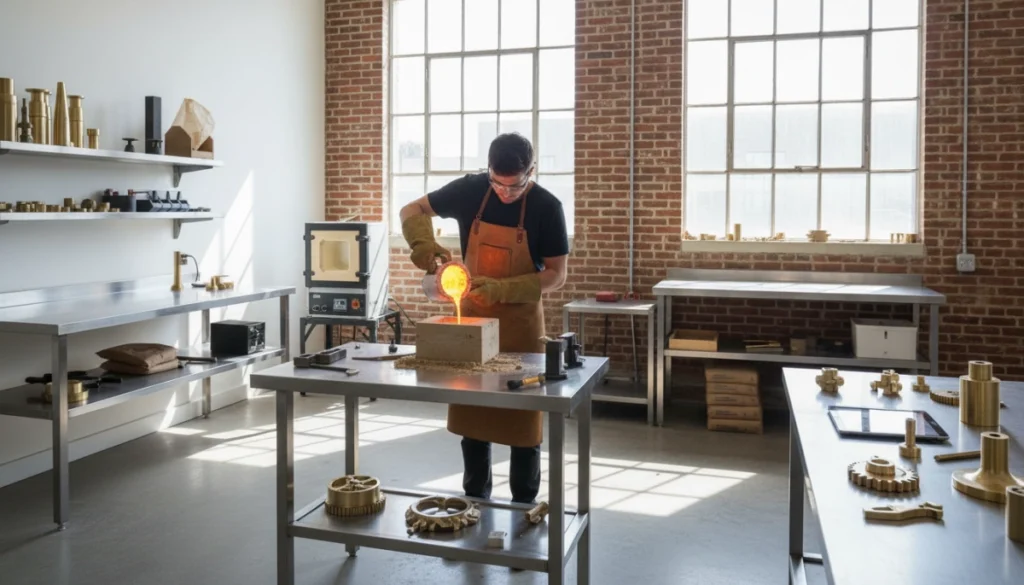
Ever struggled with brittle parts or weird color variations when figuring out how to cast brass? As a supplier and service provider specializing in metal casting, we see these issues all the time. The secret to achieving a flawless finish and a durable component always starts with understanding the metal itself.
Brass Alloys: Composition and Characteristics
Brass is not a single, uniform metal; it is a carefully calibrated copper and zinc mixture. The specific ratio you choose completely dictates the final part’s machinability, structural integrity, and aesthetic color.
Here is a quick breakdown of how these ratios affect your casting:
- Higher Copper Content: Yields a warmer, reddish tone and provides maximum corrosion resistance.
- Higher Zinc Content: Creates a bright, yellow hue, boosts overall tensile strength, and significantly improves machinability for post-casting finishing.
One of the biggest advantages we leverage in our foundry is the relatively low melting point of brass. Sitting comfortably between 1,650°F and 1,720°F (899°C to 938°C), this lower thermal threshold means less energy consumption, faster cycle times, and reduced wear and tear on your equipment compared to casting iron or steel.
The Zinc Challenge
While the lower melting point is a massive advantage, it introduces a unique metallurgical hurdle. The boiling point of zinc (around 1,665°F) is actually lower than the melting point of pure copper (1,984°F).
When we heat the alloy, the zinc is prone to vaporizing and boiling off before the copper is entirely fluid.
- The Risk: If temperatures are not strictly managed, this vaporization throws off your target copper-to-zinc ratio, weakening the final casting and leaving you with a subpar product.
- The Reaction: This process also creates rapid outgassing, which requires strict temperature control and specific handling techniques to prevent degrading the metal’s quality before it even enters the mold.
Safety Precautions for How to Cast Brass
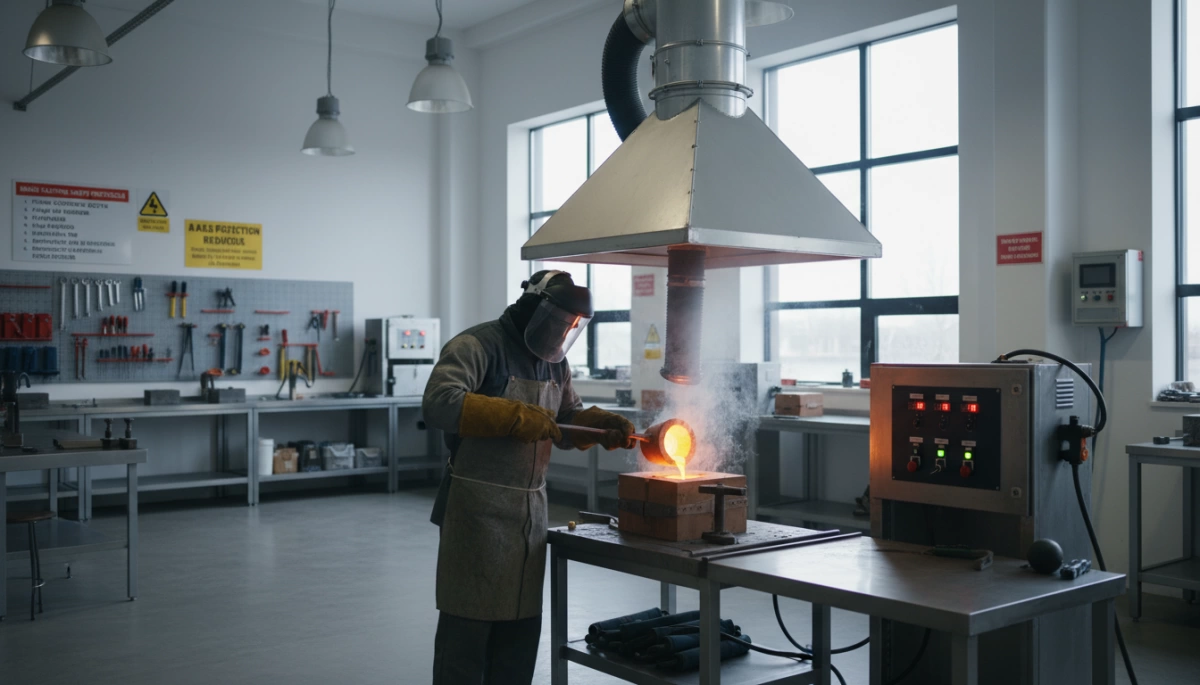
Safety is the absolute priority in our foundry. Whether you are setting up a single prototype run or evaluating sand casting vs die casting for your project, handling molten brass requires strict safety protocols to protect yourself and your team.
Preventing Metal Fume Fever
When you heat a copper and zinc mixture, you run into a major hazard: zinc boils before the copper fully melts. This reaction creates a dense, toxic white smoke. Inhaling these zinc fumes during metalworking leads to a highly unpleasant condition known as metal fume fever, which causes severe, flu-like symptoms that can knock you out for days.
To prevent this, you must strictly control your airflow and ventilation:
- Industrial Setups: We rely on heavy-duty, commercial-grade extraction hoods positioned directly over the melting furnaces to pull the smoke up and out immediately.
- Open-Air Work: If you lack industrial ventilation, strictly melt outdoors with high-velocity exhaust fans positioned to pull the toxic fumes actively away from your breathing zone.
Essential PPE for Molten Metal Pouring
Never cut corners on Personal Protective Equipment (PPE). Molten brass is unforgiving, and the radiant heat alone can cause serious burns. Equip yourself with the following gear before you even ignite the furnace:
- Metal Fume Respirators: Standard dust masks will not protect you. Wear a half-face or full-face respirator equipped with P100 particulate filters specifically rated for metal fumes.
- Foundry Gloves: Use heavy-duty, heat-resistant leather gloves that extend past the wrists to shield your forearms from the intense heat of the crucible.
- Full Face Shields: Safety glasses alone are not enough. Equip a robust, full-coverage face shield to block any unexpected splashing or sparks during the pour.
- Protective Clothing: Always wear a flame-retardant foundry apron and thick leather boots. Stick exclusively to natural fibers like 100% cotton or wool—synthetic materials will melt directly to your skin if exposed to high heat.
Primary Methods for How to Cast Brass
As a provider of professional metal foundry services, we use several reliable techniques to shape molten metal. Choosing the right approach depends heavily on your production volume, budget, and the complexity of the part.
Here are the core methods we use:
- Brass Sand Casting: This is your best bet for cost-efficiency. It is ideal for low-to-medium volume runs and manufacturing larger, heavier parts. We use a tailored mix of silica sand and binding agents to pack a sturdy, single-use mold.
- Brass Die Casting: When you need high-volume production with strict dimensional accuracy and a smooth surface finish, this is the way to go. We inject the molten metal under high pressure into highly durable, reusable steel molds.
- Lost Wax Casting Brass: Also known as investment casting, this is the top choice for intricate details and complex geometries. It uses precision wax patterns and ceramic shells to capture extremely fine features. Similar to our precision work with other copper alloys like bronze, this method delivers exceptional tolerance control.
- Vacuum Casting: If your parts are failing due to trapped gases, vacuum casting is the ultimate solution for eliminating casting porosity. By drawing the molten metal into the mold using a strong vacuum, we guarantee a dense, solid, and defect-free final component.
Step-by-Step Guide: The Brass Casting Process
We follow a strict protocol to turn raw brass alloys into high-quality components. Whether handling a small batch or industrial-scale production, here is exactly how to cast brass from start to finish.
1. Pattern and Mold Creation
Before any metal melts, we need a flawless cavity. Depending on your project requirements, we prepare the specific mold based on the chosen method—whether that involves packing sand around a physical pattern, building a ceramic shell for lost wax casting, or preparing reusable steel dies.
2. Melting and Fluxing
Next, we load the raw material into a heavy-duty crucible for melting brass. As the temperature rises, oxidation naturally occurs. We apply a Borax flux metal casting treatment to draw out impurities and protect the alloy. This process forces contaminants to the top, making dross removal straightforward and ensuring the underlying metal stays clean.
3. Temperature Control
This phase requires extreme precision. We closely monitor the melting point of brass because its two primary elements behave very differently under heat. We have to keep the temperature high enough to ensure the copper is fully liquid, but strictly regulated to prevent the zinc from boiling off and weakening the final part.
4. Molten Metal Pouring
Once the temperature is locked in, the pour begins.
Molten metal pouring must be smooth, continuous, and carefully controlled. If the metal is poured too aggressively, turbulence can trap gases and cause porosity. If poured too slowly, the brass can cool before filling the cavity, resulting in structural defects known as cold shuts.
5. Cooling, Shakeout, and Finishing
After the metal solidifies and cools completely, we break open the mold during the shakeout phase. We then saw off the excess gating and risers that guided the liquid metal into the mold cavity. ly, we clean the rough cast and move the component into precision machining to hit exact tolerances and deliver a perfectly smooth final piece.
Troubleshooting How to Cast Brass: Common Defects
Learning how to cast brass means knowing how to spot and fix structural flaws. Here is how we handle the most frequent issues in our foundry to ensure high-quality, durable parts.
Fixing Casting Porosity
- The Cause: Gas getting trapped inside the molten metal or material shrinkage as the part cools down.
- The Fix: Redesign your gating and risers to allow smoother fluid flow and better feeding during cooling. For intricate parts, switching to vacuum casting actively pulls trapped air out of the mold cavity.
Removing Inclusions
- The Cause: Dross (slag) from the melt or loose sand particles breaking off and entering the mold.
- The Fix: Careful dross removal is mandatory before pouring. We rely on a Borax flux metal casting process to gather impurities at the surface for easy skimming. Upgrading your setup with advanced casting technology for improved foundry yield and metal purity significantly reduces the chance of unwanted inclusions ruining the finish.
Stopping Zinc Loss
- The Cause: Because of the differing melting points, zinc often boils and vaporizes before the copper fully liquefies. This generates dangerous fumes and fundamentally weakens the resulting brass alloys.
- The Fix: Maintain strict, precise temperature regulation throughout the melt. If significant zinc burns off, you must manually add pure zinc back into the crucible to restore the exact copper and zinc mixture required for the alloy’s strength.
DIY vs. Professional Brass Casting Services
If you are figuring out how to cast brass for a small art project or a rough one-off prototype, a home setup might do the job. However, scaling up requires serious expertise. When safety, precision, and volume matter, partnering with professional metal foundry services is the smartest move.
When to Choose DIY
- Artistic Projects: Small, creative pieces where minor casting porosity or surface flaws add character.
- Basic Prototyping: Testing a rough physical shape before investing in costly tooling.
- Hobby Use: Learning the basics on a small scale with a low budget.
When to Partner with a Commercial Supplier
As a supplier specializing in brass casting, we manage the complexities of scaling from single prototypes to high-volume, defect-free production. DIY simply cannot match industrial consistency.
- High-Volume Scaling: Transitioning seamlessly from one-off models to thousands of uniform parts using automated brass sand casting or brass die casting.
- Material Precision: Industrial components require exact copper and zinc mixtures. Understanding what is brass composition, grades, and industrial uses is critical for guaranteeing mechanical strength and proper machinability.
- Defect-Free Results: We utilize strict temperature controls and professional dross removal to prevent weak spots, zinc loss, and inclusions.
- Guaranteed Safety: Commercial facilities eliminate the severe health risks of toxic zinc fumes and handle the entire melting process safely.
If your project demands tight tolerances, specific brass alloys, and a flawless finish, moving from a DIY setup to a professional casting supplier guarantees reliable, industrial-grade results.