
Engineer focused guide to investment cast stainless steel grades tolerances and applications with vastmaterial design and DFM support.
You likely know that investment cast stainless steel offers the perfect balance of corrosion resistance and geometric freedom.
But are you getting the most out of the process?
Many engineers continue to rely on expensive CNC machining for complex parts because they worry about casting porosity or loose tolerances.
That is a costly mistake.
When executed correctly, investment casting delivers near-net-shape precision that machining simply can’t match—at a fraction of the cost.
In this guide, we are cutting through the noise. You will learn exactly how to select the right stainless steel grades, master design tolerances, and ensure metallurgical integrity for your critical components.
Here is how vastmaterial turns complex designs into durable reality.
Why Choose Investment Casting for Stainless Steel?
When engineers and procurement managers face the challenge of balancing high durability with intricate design requirements, investment cast stainless steel often emerges as the superior manufacturing solution. At Haoyu Material, we leverage the lost wax casting process to deliver components that combine the inherent strength of stainless steel with precision geometry that other methods simply cannot match cost-effectively.
Complex Geometries and Design Freedom
One of the biggest hurdles in manufacturing is producing parts with internal passageways, undercuts, or thin walls without skyrocketing costs. Investment casting eliminates these barriers. Because we create a ceramic shell around a wax pattern, we can cast features that are impossible to machine from a solid block.
- Thin Walls: We achieve wall thicknesses as low as 0.75mm.
- Intricate Detail: Perfect for complex valve bodies, impellers, and medical instruments.
- Weight Reduction: Design optimized parts without excess material bulk.
Near-Net-Shape Manufacturing Benefits
Why pay for high-grade stainless steel only to turn half of it into scrap chips? Near-net-shape manufacturing is a core advantage of our process. We cast components extremely close to their final dimensions, drastically reducing the need for secondary machining.
| Feature | Benefit |
|---|---|
| Material Efficiency | Significantly less waste compared to CNC machining from bar stock. |
| Reduced Labor | Fewer secondary operations save time and money. |
| Scalability | Efficient production for parts ranging from a few grams up to 50kg. |
Superior Surface Finish Quality
Unlike sand casting, which often results in a rough, granular texture, investment casting produces a smooth, high-quality surface. The ceramic shell mold replicates the fine details of the wax pattern, resulting in a finish that often meets aesthetic and functional requirements right out of the mold. For industries like food processing and marine hardware, this reduces the need for expensive post-cast polishing or surface treatments.
Structural Integrity and Parting Lines
Fabricated assemblies that rely on welding introduce potential weak points and corrosion zones at the weld seams. Our precision stainless steel parts are cast as a single, monolithic unit. This ensures uniform metallurgical structure throughout the component, maximizing strength and reliability. Furthermore, our precision tooling minimizes parting lines, ensuring that your parts meet tight tolerances and maintain excellent dimensional stability under stress.
Critical Stainless Steel Grades
Selecting the right alloy is the first step in ensuring your components perform reliably in the field. At Haoyu Material, we specialize in a broad spectrum of materials, adapting our investment cast stainless steel process to meet specific mechanical and chemical requirements. Here is a breakdown of the most common grades we pour.
Austenitic Series (304/304L, 316/316L)
This is the most widely used category in investment casting due to its excellent corrosion resistance and mechanical properties.
- 304/304L: The standard “18-8” stainless steel. It offers good corrosion resistance and is ideal for general applications in food processing and architectural hardware.
- 316/316L: Contains molybdenum, which significantly increases resistance to pitting and crevice corrosion, especially in chloride environments. 316L stainless steel casting is the preferred choice for marine hardware and pharmaceutical equipment.
For a deeper dive into specific compositions and mechanical data, you can refer to our 300 series stainless steel grades properties guide.
Martensitic Series (410, 416)
When your application requires high strength, hardness, and wear resistance, we turn to the Martensitic series. Unlike the 300 series, these grades can be heat-treated to achieve specific hardness levels.
- 410: A general-purpose grade often used for valves, pump shafts, and turbine blades where high strength is needed alongside moderate corrosion resistance.
- 416: Known for its machinability, making it useful for parts that require significant secondary operations after casting.
Precipitation Hardening (17-4 PH)
For components that demand a combination of high strength, good corrosion resistance, and toughness, 17-4 PH investment casting is the industry standard. This grade is widely used in aerospace, chemical, and petrochemical industries. We can heat treat these castings to various conditions (like H900 or H1150) to fine-tune the material properties to your exact specifications.
Duplex Stainless Steels
Duplex grades bridge the gap between austenitic and ferritic stainless steels. They offer higher yield strength and superior resistance to stress corrosion cracking compared to the 300 series. These are critical for demanding applications in oil and gas exploration, chemical processing, and marine environments where standard corrosion resistant castings might fail under stress.
Design Guidelines and Tolerances
Getting the design right early is the best way to keep costs down and quality up. When we work with investment cast stainless steel, we aim for near-net-shape manufacturing, meaning the part comes out of the mold looking almost exactly like the final product. This significantly reduces the need for expensive secondary machining operations.
Standard Linear Tolerances
One of the biggest advantages of this process is the ability to hold casting linear tolerances much tighter than sand casting or forging. While specific tolerances depend on the part’s size and complexity, we consistently meet rigorous industry standards (ASTM, AMS, ISO) to ensure your components fit perfectly every time.
- Precision: We achieve tight dimensional accuracy suitable for critical applications.
- Consistency: Our automated process ensures repeatability for high-volume runs.
- Cost-Efficiency: precise tolerances mean less material waste and less machining time.
Minimum Wall Thickness Requirements
We push the boundaries of what is possible with precision stainless steel parts. Our facility is capable of casting extremely thin walls, allowing for lightweight and intricate designs that other manufacturing methods simply cannot handle.
| Feature | Capability |
|---|---|
| Minimum Wall Thickness | Down to 0.75 mm |
| Part Weight Range | From a few grams up to 50 kg |
| Geometry | Complex internal passages and undercuts |
Draft Angles and Fillets
To ensure the wax pattern releases cleanly from the mold, we recommend incorporating specific design features during the engineering phase.
- Draft Angles: A slight taper (usually 0.5 to 1 degree) on vertical walls helps remove the pattern without damage.
- Fillets and Radii: Sharp corners are stress points. Adding a radius (fillet) improves metal flow during pouring and increases the structural strength of the casting.
By following these guidelines, we maximize the benefits of the lost wax process, delivering durable and precise components tailored to your exact specs.
Comparing Manufacturing Methods
Choosing the right production method can make or break your project’s budget. We often help clients decide whether to cast, machine, or use a different forming method based on their specific design requirements and volume needs. Here is how investment cast stainless steel stacks up against the alternatives.
Investment Casting vs. CNC Machining
The primary difference here is material utilization. CNC machining is a subtractive process; you start with a solid block or bar and cut away material to get your shape. With expensive stainless grades, turning 50% of your stock into scrap chips is a massive waste of money.
Investment cast stainless steel relies on near-net-shape manufacturing. We pour metal only where it is needed, drastically reducing material waste.
- Complexity: Casting handles undercuts, internal cavities, and organic shapes that are impossible or extremely costly to machine.
- CNC Machining Reduction: By casting close to the final dimensions, we only need to machine critical tolerances, saving significant cycle time.
- Consistency: Once the mold is made, every part is identical, whereas machining relies heavily on tool wear and setup.
Investment Casting vs. Sand Casting
Sand casting is generally used for large, heavy components where surface finish is not a priority. However, for precision stainless steel parts, the lost wax casting process is superior. Sand castings often have a rough, grainy surface and wider tolerances that require extensive grinding and finishing.
Investment casting produces a smooth surface finish (typically 125 RMS or better) and holds tight linear tolerances. If your part needs to look good and fit precisely without heavy post-processing, investment casting is the clear winner over sand casting.
Cost and Volume Considerations
The decision often comes down to the numbers. Investment casting requires an upfront cost for the aluminum tooling used to inject the wax patterns. If you only need 10 parts, the tooling cost might make CNC machining cheaper. However, the break-even point is usually lower than people think.
For runs of 100, 1,000, or 10,000 pieces, casting offers a much lower per-unit price. Our alloy cast steel factory capabilities allow us to scale production efficiently, ensuring that once your tooling is established, your long-term production costs are minimized. If you anticipate recurring orders, the initial tooling investment pays for itself very quickly through material and labor savings.
Industrial Applications for Stainless Steel Casting
At Haoyu Material, we supply investment cast stainless steel components to industries where failure isn’t an option. Our lost wax casting process delivers the reliability and precision needed for critical environments, from the depths of the ocean to high-altitude aerospace applications.
Marine Hardware and Corrosion Resistance
Saltwater is incredibly harsh on metal, which is why marine applications demand superior material properties. We utilize 316L stainless steel casting to produce marine hardware that offers exceptional resistance to pitting and crevice corrosion. Whether it is deck fittings, propellers, or pump housings, our corrosion resistant castings ensure long-term durability in aggressive maritime climates without requiring constant maintenance.
Sanitary Food Processing Components
In the food and beverage industry, hygiene is the top priority. Equipment must be easy to clean and resistant to acidic cleaning agents. We manufacture precision stainless steel parts with smooth surface finishes that prevent bacterial growth. Common applications include mixing impellers, connector fittings, and flow control devices. Our expertise extends to manufacturing high-quality custom OEM valve bodies used extensively in fluid handling systems for food processing plants.
Medical Devices and Implants
The medical field requires tight tolerances and biocompatibility. Investment casting is the ideal method for producing complex surgical instruments, orthopedic implants, and diagnostic equipment components. We work with medical-grade stainless steels to ensure every part meets stringent safety and quality standards. The ability to cast near-net-shape parts minimizes secondary machining, making it a cost-effective solution for intricate medical designs.
Automotive and Aerospace Parts
Automotive and aerospace engineers rely on us for components that offer high strength-to-weight ratios. We frequently use precipitation-hardening grades like 17-4 PH investment casting for parts requiring high tensile strength and wear resistance.
- Automotive: Turbocharger components, exhaust manifolds, and sensor housings.
- Aerospace: Interior components, latch mechanisms, and fluid system connectors.
Our process ensures these safety-critical parts maintain structural integrity under high stress and extreme temperatures.
Quality Assurance at vastmaterial
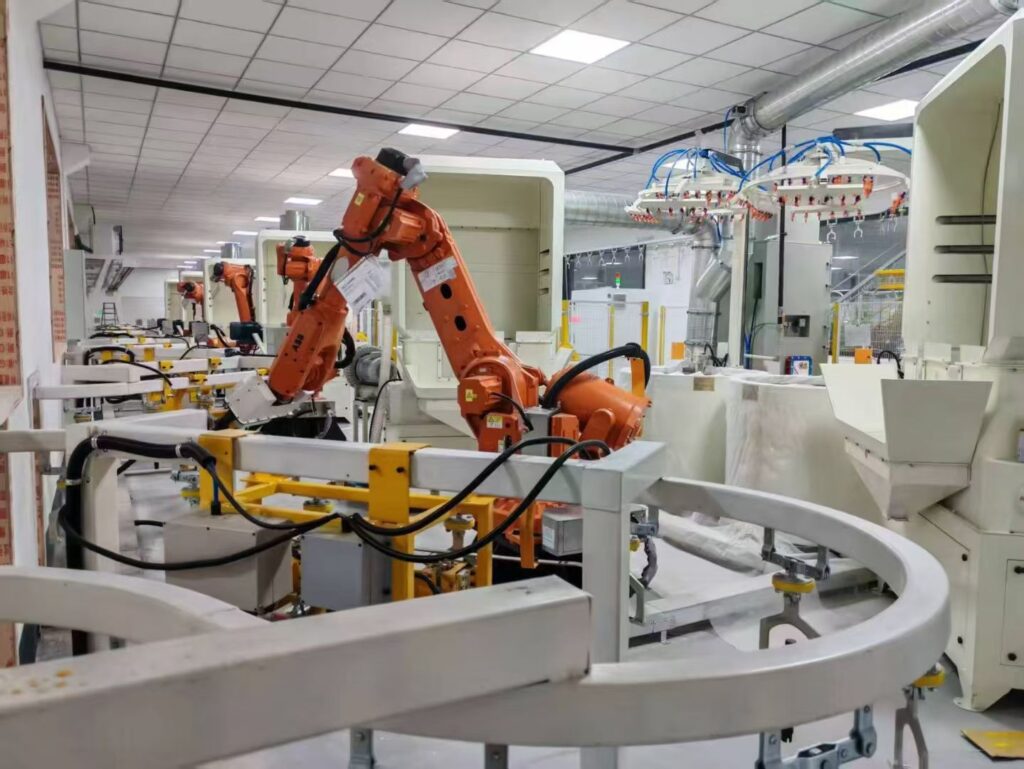
At vastmaterial, we don’t leave quality to chance. Our investment cast stainless steel process is backed by rigorous ISO 9001:2015 certified protocols. We understand that for industries like energy and marine, a single defect can be catastrophic. That is why every batch goes through strict validation to ensure reliability and performance before it ever leaves our floor.
Metallurgical Integrity and Spectrographic Analysis
We verify the chemical composition of every melt to guarantee material purity. Using advanced spectrographic analysis, we ensure that alloys like 304, 316L, and 17-4 PH meet exact ASTM casting standards. This step confirms that the elemental makeup is right on spec, ensuring the material properties—whether it is corrosion resistance or tensile strength—are exactly what you engineered. We provide material certifications with every shipment, so you know the metal pouring into the mold is the real deal.
Non-Destructive Testing (NDT) Capabilities
Visual inspection is rarely enough for critical applications. We employ a range of NDT methods to detect internal and surface defects without damaging the component.
- X-Ray/Radiography: Essential for checking internal porosity or shrinkage in complex geometries.
- Dye Penetrant Inspection (DPI): Used to spot surface discontinuities and micro-cracks that are invisible to the naked eye.
- Magnetic Particle Inspection (MPI): Ideal for detecting surface and near-surface irregularities in ferromagnetic grades.
Post-Processing and Heat Treatment
Casting is often just the beginning. To unlock the full potential of the metal, we perform precise heat treatments tailored to the specific grade. This includes solution annealing heat treatment to restore the microstructure and corrosion resistance of austenitic grades after the casting process. We also offer surface passivation to remove free iron from the surface and maximize the natural protective oxide layer of the stainless steel. Whether you need precipitation hardening for 17-4 PH or standard normalizing, our post-processing ensures your parts are durable and ready for service.
Frequently Asked Questions
What is the standard tolerance for investment casting?
Precision is the main advantage of this process. Generally, investment cast stainless steel parts hold much tighter tolerances than sand casting. While specific tolerances depend on the part’s geometry and size, we typically adhere to international standards like ISO 8062 CT4-CT6. For many small to medium components, we can achieve linear tolerances around ±0.005 inch per inch (or ±0.13mm per 25mm).
Achieving these precise dimensions starts with high-quality tooling. For a deeper dive into how mold quality impacts final part accuracy, check out our investment mould guide on tooling costs and lifespan. Consistent process control allows us to minimize variations, ensuring your parts fit correctly right out of the box.
Which stainless steel grade is best for marine environments?
For applications exposed to saltwater or harsh marine atmospheres, 316L stainless steel casting is the superior choice. Unlike standard 304 stainless, the 316 grade contains molybdenum, which significantly boosts resistance to pitting and crevice corrosion caused by chlorides.
- 304 Stainless: Good for general outdoor use, but can rust in salt environments.
- 316/316L Stainless: The industry standard for marine hardware, valve bodies, and pump components requiring maximum corrosion resistance.
- 17-4 PH: Used when high strength is required alongside moderate corrosion resistance, often for propeller shafts or high-stress marine fasteners.
How does investment casting reduce machining costs?
Investment cast stainless steel utilizes near-net-shape manufacturing, meaning the cast part looks almost identical to the final design. Instead of cutting a part out of a solid block and turning 60% of the material into scrap chips, we pour metal directly into the shape you need.
This approach offers significant savings:
- Less Material Waste: You only pay for the material in the part, not the scrap.
- Reduced Machining Time: We cast complex features like undercuts, thin walls (down to 0.75mm), and internal passageways that are difficult or expensive to machine.
- Lower Labor Costs: By eliminating roughing operations, you only need to machine critical mating surfaces.
For more insights on optimizing production for cost and quality, review our steel casting foundry guide for precision components. This CNC machining reduction makes investment casting the most economic option for complex stainless steel geometries.