
What Is an Investment Mold?
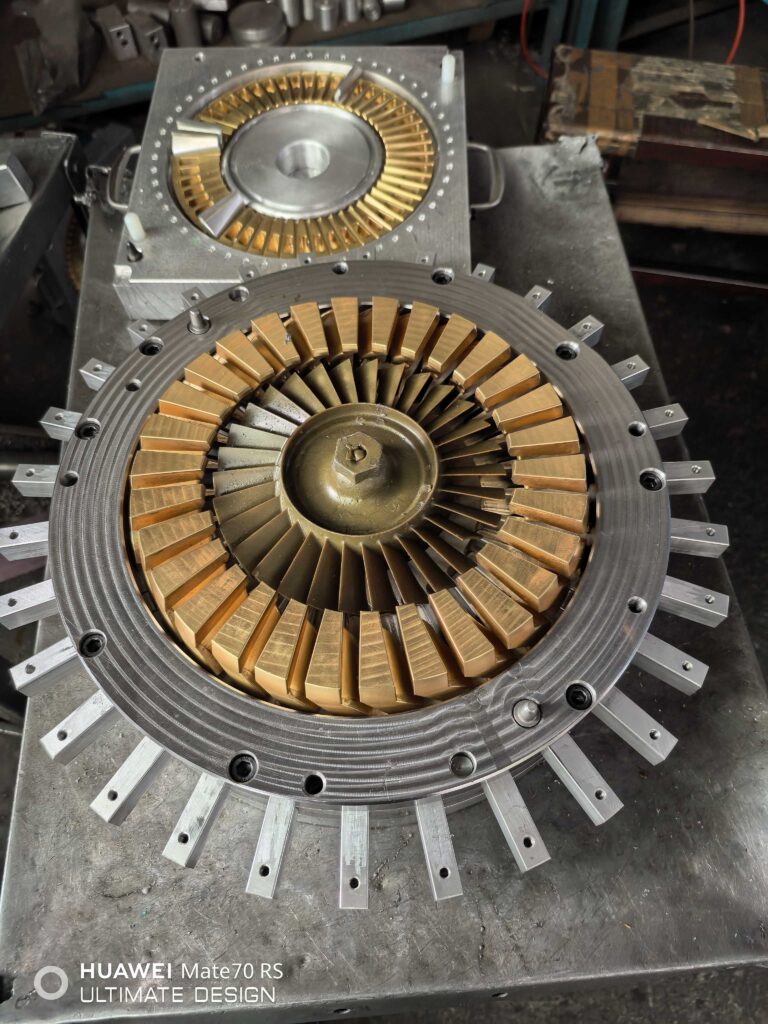
When you hear people talk about an investment mold, they’re usually talking about the expendable ceramic mold used in the investment casting or lost-wax casting process. In simple terms, we build a precise wax copy of your part, surround it with a high‑performance ceramic shell, then melt the wax out and pour metal into the empty cavity.
Definition of an Investment Mold
An investment mold is a one-time-use ceramic shell that captures the exact shape of a wax pattern. It is:
- Built around a wax pattern (or a cluster of wax patterns)
- Made from refractory ceramic materials designed to handle high temperatures
- Destroyed at the end of the process to release the finished casting
Because the mold is broken away, we call it an expendable mold, not a reusable one like a die casting or permanent mold tool.
What “Investment” Means in Lost-Wax Casting
The word “investment” comes from the idea of “investing” the wax pattern in ceramic—in other words, completely surrounding it with a carefully engineered ceramic shell investment mold. We’re not talking about financial investing; we’re talking about:
- Coating the wax with ceramic slurry
- Applying stucco sand on the outside
- Repeating layers until we have a strong, precise mold
This ceramic “investment” is what gives precision investment casting its accuracy and detail.
How Investment Molds Differ from Sand and Permanent Molds
If you’re comparing processes, the investment casting mold sits in a unique spot:
- Versus sand casting
- Sand molds are cheaper and faster but rougher.
- Investment molds deliver much finer detail, tighter tolerance, and better surface finish.
- Versus permanent molds / die casting
- Permanent molds and die casting use reusable metal molds and are great for high-volume runs with limited complexity.
- Investment molds are single-use ceramic molds, ideal for complex geometry casting, thinner walls, and alloys that are hard to die cast (like many superalloys and some stainless steels).
If you need high-complexity, high-tolerance casting in alloys that don’t cooperate with die casting, an investment mold is usually the right call.
Why Investment Molds Are Used for High-Precision Metal Parts
Engineers choose investment molds when part performance and accuracy really matter. This process is widely used for:
- Tight dimensional tolerances and near-net-shape features
- Thin-wall investment casting where conventional casting would fail
- Complex internal passages, undercuts, and intricate external detail
- High-value alloys such as nickel-based superalloys, stainless steel, titanium, and specialty steels
Because the wax pattern is made from precision tooling, and the ceramic shell closely follows that wax, we can deliver precision metal components with minimal machining and excellent repeatability.
Role of the Ceramic Shell in Detail and Surface Finish
The ceramic shell is the heart of the investment mold. Its job is to:
- Capture fine detail from the wax pattern for logos, thin ribs, small radii, and sharp features
- Deliver a smooth surface finish by using controlled investment casting refractories, fine-grain slurry, and stucco
- Withstand high temperatures when pouring stainless steel, superalloys, titanium, aluminum, and more
- Control ceramic shell permeability so gases escape without causing defects
When we engineer the shell materials, layer thickness, and firing cycle correctly, the result is a high-precision investment mold that gives you clean, accurate castings with a finish that often needs little more than light machining or polishing.