
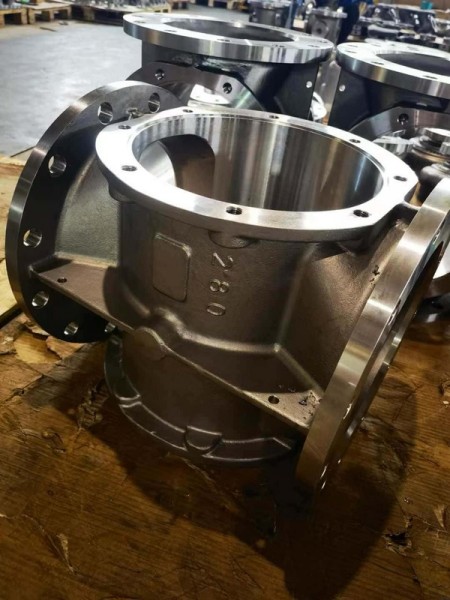
Why Choose Steel for Large Components?
When engineering large-scale steel components for heavy industry, the choice of manufacturing method and material defines the part’s longevity. We find that large steel casting often provides the optimal balance between structural integrity and design freedom, especially when compared to fabrication or forging. For applications in mining, energy, and construction, steel offers the ductility and impact resistance necessary to survive in the heaviest impact zones.
Comparing Steel Casting vs. Forging and Iron
While forging offers high strength, it is severely limited by size constraints and geometric simplicity. Iron casting is cost-effective but often lacks the tensile strength required for high-torque applications. Steel casting bridges this gap, offering the mechanical properties of steel with the geometric versatility of casting.
| Feature | Large Steel Casting | Forging | Iron Casting |
|---|---|---|---|
| Design Complexity | High (Complex internal cavities) | Low (Simple shapes only) | High |
| Impact Resistance | Excellent (High ductility) | Excellent | Moderate (Brittle) |
| Material Versatility | High (Custom Alloys like 4340, 17-4PH) | Limited | Limited |
| Scalability | High (Cost-effective for large parts) | Low (High tooling costs) | High |
Superior Strength-to-Weight Ratio Benefits
One of the primary advantages of working with a specialized alloy steel foundry is the ability to achieve a superior strength-to-weight ratio. Through geometric optimization, we can reduce the overall weight of massive parts without sacrificing structural integrity. By utilizing high-strength grades like 4140 and 4340 alloy steel, we design components that handle immense loads while remaining lighter than their iron counterparts, which is critical for mobile heavy machinery where fuel efficiency and payload matter.
Design Flexibility for Complex Geometries
Heavy steel castings allow engineers to place metal exactly where it is needed. Unlike welded fabrications, which introduce stress points at joints, casting creates a monolithic structure.
- Complex Contours: We can cast intricate internal passageways and compound curves that are impossible to machine from a solid block.
- Alloy Tailoring: We can modify chemical compositions (adding Nickel or Vanadium) to target specific wear or heat resistance properties in the final shape.
Cost-Effectiveness at Scale for Heavy Parts
For large-scale steel components, casting becomes significantly more cost-effective as part size increases. The process minimizes waste compared to machining from billet, where a significant percentage of expensive alloy is turned into chips. Our integrated approach—combining casting with in-house CNC machining—ensures that you receive a “ready-to-install” component, reducing logistical costs and lead times associated with moving massive parts between multiple vendors.
Key Processes for Large Steel Casting
Producing large steel castings requires more than just a bigger furnace; it demands a fundamental shift in molding technology to handle the immense thermal and physical stresses. At Vastmaterial, we rely heavily on advanced sand casting methods because they offer the necessary strength to contain tons of molten metal without buckling, ensuring the structural integrity required for heavy-duty applications.
No-Bake and Resin Sand Casting Methods
For heavy steel castings, standard green sand often lacks the rigidity needed to maintain tight tolerances over long spans. We utilize no-bake (resin) sand casting systems. This process uses chemical binders to harden the mold at room temperature, creating a rigid structure that resists the immense pressure of a massive steel pour. This approach delivers distinct advantages for large-scale production:
- Superior Dimensional Stability: The mold holds its shape firmly, preventing wall movement.
- Enhanced Surface Finish: Reduces the need for excessive post-cast grinding.
- Complex Geometry Support: Capable of handling intricate core designs without collapse.
Air-Set Techniques for Massive Pours
When dealing with large-scale steel components, timing and mold strength are critical. Our air-set techniques allow us to create massive molds that cure predictably and evenly. This method is essential for industrial steel castings where the mold must support heavy cores and complex internal geometries without shifting during the casting process. By controlling the curing rate, we ensure the mold is ready to withstand the thermal shock of high-temperature alloy pours.
Vastmaterial’s Adapted Techniques
We don’t just follow standard protocols; we adapt our processes for maximum efficiency and quality. By integrating principles from our steel casting foundry guide, we optimize feeding systems and riser designs to prevent shrinkage in thick sections, a common issue in large parts. We also employ hybrid approaches, using specialized facing sands to ensure critical surfaces meet high-precision standards right out of the mold. For engineers evaluating production methods, our comparison of sand casting vs die casting clarifies why these adapted sand techniques are the superior choice for manufacturing heavy, structural components.
Material Selection for Demanding Applications

When we tackle a large steel casting project, selecting the right material isn’t just a checkbox—it’s the foundation of performance. In heavy industries like mining and energy, a massive component is only as good as the metal it’s poured from. We act as an extension of your engineering team to ensure the chemical composition meets the specific stress factors of your operation.
Carbon Steel for Structural Integrity
For projects requiring solid structural integrity without unnecessary complexity, carbon steel casting remains the industry workhorse. It offers the reliable strength needed for construction frameworks and heavy infrastructure bases. We utilize high-grade recycled steel scrap to produce cleaner, more sustainable carbon steel parts that balance performance with cost-efficiency at scale.
Alloy Steel for Heat and Wear Resistance
When the environment gets tough, we step up to alloy steel. As a specialized alloy steel foundry, we focus on high-performance grades like 4140 and 4340. These are essential for high-torque applications where standard iron would fail. If your parts face extreme temperatures, our heat-resistant steel castings utilize nickel-based alloys to maintain stability under thermal shock.
Specialty Grades and Custom Tailoring
We pride ourselves on offering bespoke steel casting solutions. We don’t just pour standard mixes; we tailor the chemistry to your exact specs.
- Precipitation Hardening: We cast grades like 17-4PH and 15-5PH for parts needing high strength and corrosion resistance.
- Stainless Options: For marine or chemical environments, choosing the right stainless grade is critical. Understanding the nuances, similar to those in our 416 vs 316 stainless steel comparison guide, ensures your large components won’t corrode prematurely.
- High Hardness: We utilize grades like 440C for components requiring exceptional wear resistance.
Technical Challenges in Large Steel Casting and How to Overcome Them
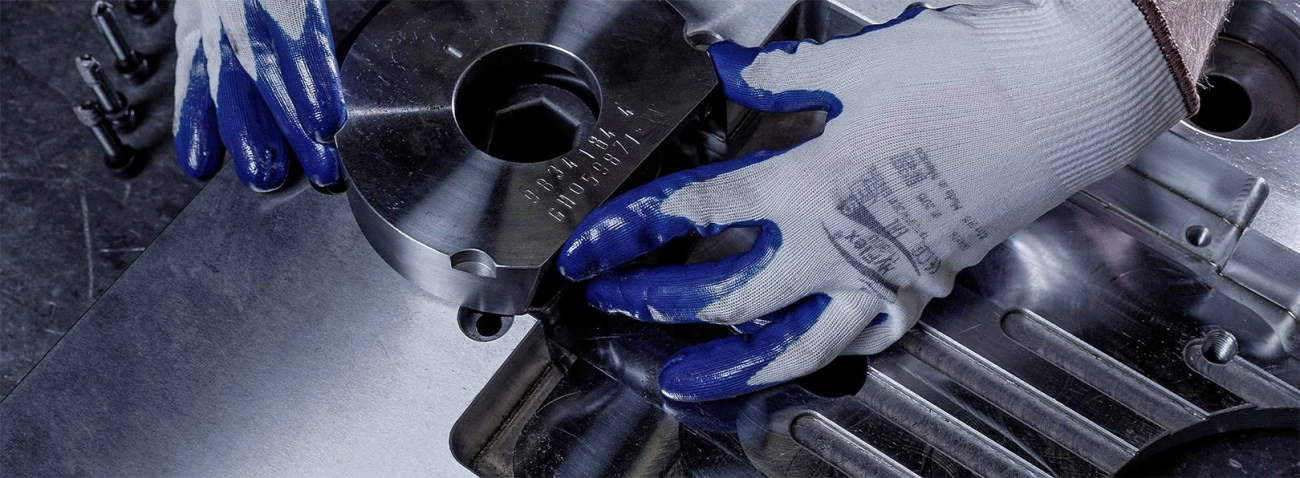
Producing large steel casting components involves more than just scaling up a mold; it requires mastering the physics of solidification on a massive scale. When dealing with heavy steel castings, the risks of internal defects like shrinkage and porosity increase significantly. At Vastmaterial, we don’t leave structural integrity to chance. We approach every project with a focus on engineering out potential failure points before the metal is even poured.
Mitigating Shrinkage, Porosity, and Inclusions
The primary challenge in large-scale steel components is ensuring the metal solidifies uniformly. If the outer shell cools too fast while the center remains liquid, shrinkage cavities form. We tackle this through advanced gating system designs that ensure a continuous feed of molten metal to critical areas. Additionally, we utilize investment casting steel alloy techniques and ceramic filters to trap impurities, significantly reducing the risk of non-metallic inclusions that could weaken the part.
Controlling Distortion via Heat Treatment
Large parts are prone to warping as they cool. To prevent distortion and stress cracks, we employ precise heat treatment cycles tailored to the specific alloy grade.
- Controlled Cooling: We regulate the cooling rate to minimize thermal shock.
- Stress Relieving: Post-cast heating cycles neutralize residual stresses, ensuring the part maintains its shape during machining.
- Alloy Consistency: Our electric induction melting ensures uniform chemical composition, preventing macrosegregation (inconsistent alloy mix) across the casting.
Solutions for Common Casting Issues
| Challenge | Our Technical Solution |
|---|---|
| Shrinkage Voids | Simulation software to predict solidification paths and optimize riser placement. |
| Gas Porosity | Strict control of mold permeability and metal degassing processes. |
| Warpage | Custom fixturing during heat treatment to maintain dimensional accuracy. |
| Surface Defects | rigorous NDT (Magnetic Particle & Radiographic) to verify surface and sub-surface integrity. |
Managing the logistics of massive pours also requires specialized infrastructure. From reinforced mold designs capable of withstanding immense hydrostatic pressure to heavy-duty handling equipment, our facility is optimized to deliver industrial steel castings that are defect-free and ready for the harshest environments.
Secondary Services: From Casting to Ready-to-Use Component
Producing a raw casting is only half the battle. To deliver a truly functional large steel casting, we integrate large steel parts machining directly into our manufacturing workflow. By combining foundry capabilities with advanced CNC centers, we ensure that even the heaviest components meet tight dimensional tolerances without the logistical headache of moving parts between multiple vendors. Our comprehensive machining casting guide details how we bridge the gap between rough pours and final specifications to ensure a perfect fit.
We optimize the mechanical properties of every component through rigorous post-processing:
- Heat Treatment: We utilize precise quenching, tempering, and ferritizing cycles to enhance hardness and durability, which is crucial for heat-resistant steel castings used in extreme environments.
- Surface Finishing: From shot blasting to specialized coatings, we prepare surfaces to withstand corrosion and wear.
- Non-Destructive Testing (NDT): We validate internal integrity using Magnetic Particle Inspection (MPI) and Radiographic Testing (RT) to detect any subsurface defects before shipment.
Every project comes with full traceability. We provide certified Material Test Reports (MTRs) and ensure compliance with ASTM and AISI standards, giving you confidence that your precision large castings are safe, compliant, and ready for immediate installation.
Industry Applications and Real-World Impact

We deliver large steel casting solutions where failure is simply not an option. Our foundry focuses on producing components that serve as the backbone for heavy industries, ensuring operational continuity in the harshest environments. From the depths of a mine to high-pressure offshore rigs, our parts are engineered to perform.
Mining and Heavy Equipment
In the mining sector, equipment faces constant abrasion and massive impact loads. We manufacture heavy steel castings designed for survival.
- Wear Parts: We cast durable excavator bucket teeth, crusher liners, and grinding mill components using high-grade alloy steels.
- Load Bearing: Our custom heavy castings provide the structural integrity needed for haul trucks and drilling rigs.
- Longevity: By utilizing wear-resistant materials like manganese steel, we extend the service life of machinery, reducing downtime in critical extraction operations.
Energy: Oil & Gas and Power Generation
Reliability is critical when dealing with volatile resources and power grids. We supply precision components that meet strict safety standards.
- Valve Bodies: We produce pressure-retaining castings for oil and gas extraction equipment capable of withstanding extreme underwater pressures and corrosive environments.
- Turbine Components: Our facility casts heat-resistant alloy parts for gas turbine components, ensuring stability and efficiency during high-temperature power generation cycles.
- Marine Applications: We provide corrosion-resistant stainless steel castings for pumps and propulsion systems used in marine vessels.
Construction and Structural Elements
Modern infrastructure demands large-scale steel components that offer superior strength-to-weight ratios.
- Structural Nodes: We cast complex connection nodes for bridges and stadiums that cannot be fabricated through welding alone.
- Heavy Machinery Frames: Our industrial steel castings serve as the chassis and support frames for cranes and earthmoving equipment.
- Metallurgy: We supply heat-resistant ladles and slag pots used in metal processing plants, designed to resist thermal shock.
Why Partner with Vastmaterial for Your Large Steel Casting Needs
When you are dealing with massive industrial components, you need a manufacturing partner who understands the stakes. We function as a direct extension of your engineering team, ensuring that every large steel casting meets the rigorous demands of heavy-duty applications. Our goal is to move beyond the role of a standard vendor and provide comprehensive engineering support from concept to delivery.
High-Capacity Infrastructure and R&D
We have built our facility to handle the heavy lifting required by the mining, energy, and construction sectors. As a high-capacity steel foundry, we utilize high-efficiency electric induction melting. This technology allows us to manage large-scale pours while maintaining precise chemical consistency across the entire batch. Our R&D team works constantly to optimize geometric designs, helping reduce weight in large parts without sacrificing structural integrity or durability.
End-to-End Control and Precision Focus
We don’t just pour metal; we deliver finished solutions. Our process integrates advanced casting techniques with in-house CNC machining centers. This allows us to take a raw casting and transform it into a “ready-to-install” component with tight dimensional tolerances. By leveraging our precision casting foundry capabilities, we eliminate the need for third-party machine shops, streamlining your supply chain and reducing lead times.
Meeting Complex High-Spec Requirements
Standard solutions often fail in extreme environments. We specialize in bespoke steel casting solutions tailored to your specific operational stresses. Whether your project requires high-torque 4340 alloy steel, precipitation-hardening grades like 17-4PH, or wear-resistant ductile iron, we adhere strictly to ASTM and AISI standards. Our commitment to quality is backed by comprehensive NDT (Non-Destructive Testing) and certified Material Test Reports (MTRs), ensuring total traceability for every part we ship.
Frequently Asked Questions About Large Steel Casting
What is the weight limit for large steel castings?
Our facility is engineered to handle substantial pours for heavy steel castings. While specific weight limits depend on the complex geometry and alloy grade required, we specialize in scaling production for heavy-duty sectors like mining and construction. We focus on geometric optimization to ensure even the most massive parts maintain structural integrity without unnecessary bulk.
How do you prevent defects in heavy castings?
Quality control is critical when dealing with large volumes of molten metal. We utilize advanced electric induction melting to ensure chemical consistency and reduce impurities. To catch internal issues like porosity or shrinkage, we employ rigorous alloy cast steel factory quality protocols, including Non-Destructive Testing (NDT) methods like Magnetic Particle Inspection (MPI) and Radiographic Testing (RT).
What alloys are best for high-stress environments?
Selecting the right material is vital for longevity. For high-torque applications, we often recommend 4340 Alloy Steel due to its superior toughness. If your project involves corrosive environments or requires precipitation hardening, 17-4PH is a strong contender. We can guide you through our alloy casting processes and uses to find the exact grade that meets your mechanical requirements.
Can you machine large castings in-house?
Yes. We function as a one-stop solution. Our facility includes integrated CNC machining centers capable of handling large steel parts machining. This allows us to take a raw cast, perform precision machining to tight tolerances, and deliver a component that is ready for immediate installation, saving you the logistics headache of using third-party machine shops.
Pingback: Agricultural Casting Manufacturer for OEM Tractor and Harvester Parts - vast-cast.com