
What Determines the Machinability of Stainless Steel?
Ever wonder why one batch of material cuts smoothly while the next destroys your tooling in minutes? When we provide alloy steel machining services, we face this exact issue daily. The reality is that not all metals behave the same way on the shop floor. Pinning down the machinability rating of different stainless steel alloys ultimately comes down to the metal’s core makeup and how it reacts under the intense stress of a cutting tool.
Chemical Composition and Inclusions
The secret to how a metal performs during CNC machining hides right in its chemistry. Even minor tweaks to the recipe change the entire process.
- Sulfur Additions: This is the magic ingredient in free-machining stainless steel. Sulfur creates deliberate inclusions that break up metal chips quickly, stopping them from wrapping around your tool.
- Nickel and Chromium: High levels of these elements—especially common in austenitic stainless steels—create a tough, stringy material. It feels “gummy” to the machine and drastically increases tool wear.
- Carbon Content: While carbon adds necessary strength and durability to the alloy, higher levels make the material significantly harder to shear.
Carbon Steel vs Stainless Steel
Why is stainless so notorious for being tough on tools? It helps to compare it to the golden standard. In the manufacturing world, the B1112 carbon steel baseline sits at a perfect 100% machinability rating. Every other metal is judged against it.
| Feature | Carbon Steel (B1112 Baseline) | Stainless Steel |
|---|---|---|
| Machinability Rating | Excellent (100% baseline) | Lower (typically 40% to 75%) |
| Tool Wear | Minimal | High (often demands specialized high-speed steel cutting tools or carbide inserts) |
| Chip Formation | Brittle, clears easily | Stringy, gummy, and prone to sticking |
| Material Behavior | Predictable | High risk of work hardening during cuts |
The core of the carbon steel vs stainless steel difference comes down to heat and friction. Stainless steel tends to trap heat right in the cutting zone. Worse, it is notorious for work hardening—meaning the metal actually gets harder the moment the tool strikes it. Because of this, we have to perfectly dial in our CNC machining speeds and feeds to prevent catastrophic tool failure while still hitting tight tolerances.
Machinability Rating Chart by Stainless Steel Family
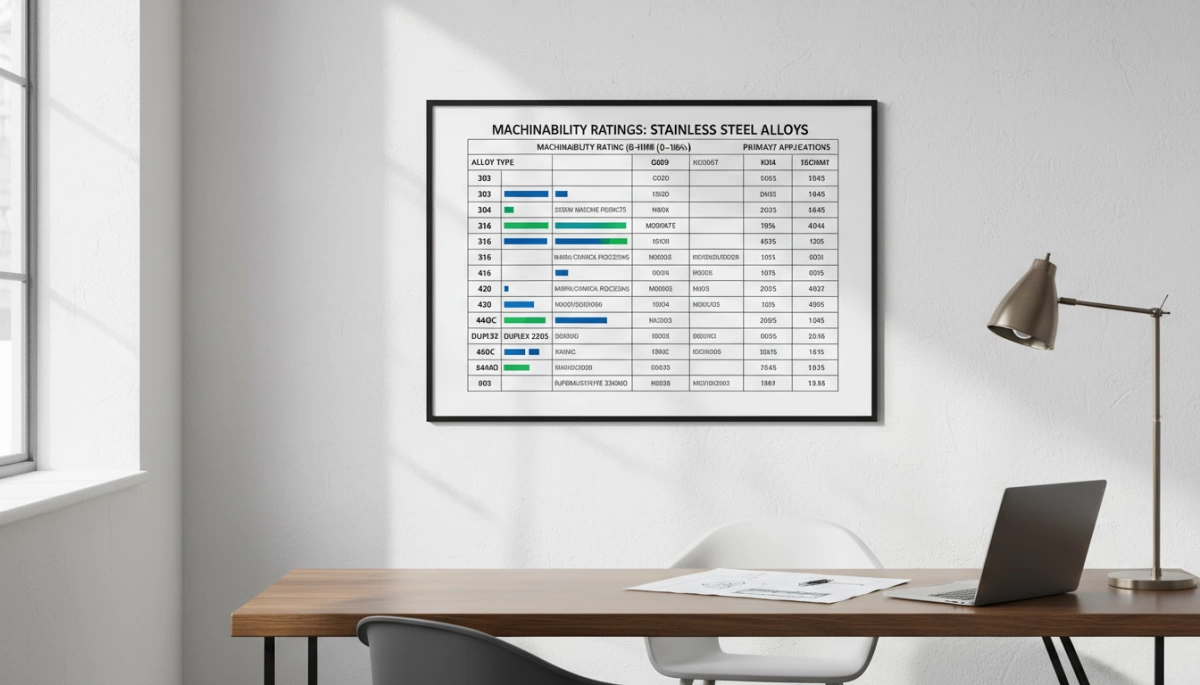
When evaluating the machinability rating of different stainless steel alloys, we typically measure them against a standard B1112 carbon steel baseline (which is rated at 100%). As a company providing precision alloy steel machining services, we know firsthand that not all stainless is created equal.
Here is a quick machinability index chart to show how the main families stack up on the shop floor:
| Stainless Steel Family | Common Grades | Average Machinability Rating |
|---|---|---|
| Free-Machining | 303, 416, 430F | 75% – 85% |
| Ferritic | 430, 434 | 55% – 60% |
| Martensitic | 410, 420, 440C | 45% – 55% |
| Austenitic | 304, 316, 321 | 35% – 45% |
| Duplex | 2205, 2507 | 25% – 35% |
Austenitic Stainless Steels (e.g., 304, 316)
Austenitic stainless steels are the most widely used, but they are notoriously tough on tooling. They have a “gummy” consistency during cuts and are highly prone to work hardening. To prevent ruined parts, we use highly rigid setups, premium high-speed steel cutting tools or carbide inserts, and strictly optimized CNC machining speeds and feeds.
Martensitic Stainless Steels (e.g., 410, 416, 440C)
This family offers a massive swing in workability. Grade 416 is a free-machining stainless steel that produces clean chips and runs smoothly. On the opposite end, when we machine high-carbon grades like stainless steel 440C, the extreme hardness requires aggressive, specialized cutting strategies to maintain manufacturing efficiency.
Ferritic Stainless Steels (e.g., 430)
Ferritic stainless steels are generally easier to handle. They do not harden as aggressively as the austenitic series and break into manageable chips. Because of this, operators can safely increase their surface feet per minute (SFM) without instantly burning out the tools.
Duplex Stainless Steels (e.g., 2205)
Duplex stainless steel turning and milling are among the toughest jobs in the shop. Grades like 2205 combine incredibly high yield strength with rapid work-hardening rates. Machining these alloys requires heavy-duty, high-torque equipment and very conservative feed rates to get the job done right.
The Trade-off: Corrosion Resistance vs Machinability
In our daily alloy steel machining services, we constantly navigate a major hurdle: making parts easy to cut without ruining their rust protection. When you review the machinability rating of different stainless steel alloys, you quickly notice a strict rule. As machinability goes up, corrosion resistance almost always goes down.
The Catch-22 of Sulfur Inclusions in Steel
To speed up production, mills often add elements like sulfur to create free-machining stainless steel (such as grade 416 or 303). It is a classic metallurgical catch-22:
- The Benefit: Sulfur makes the metal chip easily. This prevents long, stringy chips from tangling around tooling, allowing for much faster, aggressive machining.
- The Drawback: These same sulfur inclusions in steel break up the material’s protective chromium oxide layer. This gives rust and pitting a perfect place to start.
Balancing Application and Efficiency
Material selection is about smart compromises. If your part faces harsh chemicals or saltwater, you must prioritize corrosion resistance and accept a lower machinability rating (like grade 316). If it goes into a dry, indoor environment, free-machining grades are the clear winner for cost-effective manufacturing.
We guide our clients through these material trade-offs every day to maximize manufacturing efficiency. We apply this same logic of matching the right material to the right application across all our capabilities, whether we are turning tough duplex stainless or providing highly precise brass machining services for complex custom components. Getting the alloy right from the start saves both time and money on the shop floor.
Expert CNC Machining Tips for Stainless Steel
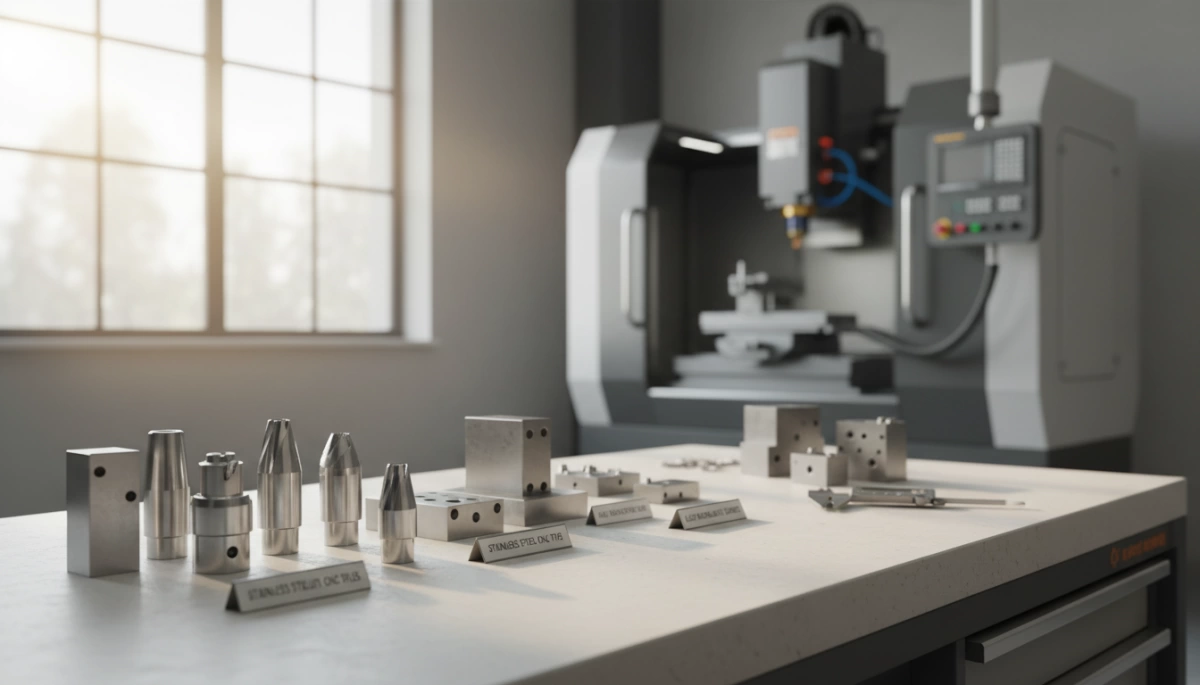
As a shop providing global alloy steel machining services, we know that getting the most out of the machinability rating of different stainless steel alloys requires dialed-in techniques. Even the most forgiving grades can cause shop-floor headaches without the right approach.
Combating Work Hardening in Stainless Steel
Stainless steel tends to harden immediately when cut. If your tool rubs instead of slicing cleanly, the material surface hardens, which will quickly destroy your tools and scrap the part.
- Keep it moving: Never let the cutting tool idle or dwell in the cut. Constant engagement is key.
- Cut below the surface: Always set your depth of cut deep enough to get under the tough, work-hardened layer left behind by the previous pass.
- Stiff setups: Ensure your machine and workholding are completely rigid. Any vibration or chatter will instantly accelerate work hardening.
CNC Machining Speeds and Feeds
Getting your Surface Feet per Minute (SFM) right is critical for efficiency and tool survival. Understanding how your material behaves under stress—similar to evaluating the structural toughness detailed in our guide on 4140 steel properties and uses—helps you set realistic parameters.
- Drop the speed, push the feed: The general rule for stainless is to run at lower spindle speeds but maintain a heavy, consistent feed rate. This pushes the heat into the chip rather than the part.
- Flood the zone: Use high-pressure coolant to blast away chips, lubricate the cut, and pull heat away from the cutting zone.
Cutting Tool Selection
Using the wrong tool geometry or material will halt production fast.
- Carbide inserts for stainless: These are non-negotiable for high-volume production. Choose sharp, positive-rake inserts with specialized coatings designed to handle the intense heat of stainless machining.
- High-speed steel cutting tools: While these can work for short runs, prototyping, or specific drilling tasks, HSS wears out much faster than carbide and generally cannot handle the heat generation of continuous stainless cutting.
Frequently Asked Questions (FAQs)
Highest Machinability Rating
Q: Which stainless steel alloy has the highest machinability rating?
A: Grade 416 sits at the very top of the machinability rating stainless steel alloys chart. As a free-machining martensitic grade, it boasts a machinability index of roughly 85% compared to the B1112 carbon steel baseline. The secret is its sulfur content, which naturally breaks up chips and allows for highly optimized CNC machining speeds and feeds. When we handle large-volume production, 416 is a standout choice for efficiency. For those looking to streamline production further, pairing free-machining grades with an alloy steel casting process for high-precision CNC parts significantly reduces cycle times.
Gummy Austenitic Stainless Steels
Q: Why is austenitic stainless steel considered “gummy” during CNC machining?
A: Austenitic stainless steels (such as grades 304 and 316) are notorious for rapid work hardening. Instead of forming clean chips—a major distinction when looking at carbon steel vs stainless steel—the metal tends to stretch, tear, and weld itself to the cutting edge.
- The Problem: This “gumminess” causes built-up edge (BUE) that can quickly ruin standard high-speed steel cutting tools.
- The Solution: We utilize sharp carbide inserts for stainless and maintain a heavy, continuous feed rate to cut completely under the work-hardened surface layer.
Sulfur Inclusions vs Corrosion Resistance
Q: How do sulfur inclusions impact the corrosion resistance of grade 416?
A: It is a strict metallurgical trade-off. The same sulfur inclusions that make 416 a breeze to machine also act as localized weak points, significantly lowering its overall corrosion resistance.
- How it happens: Sulfur disrupts the steel’s passive chromium-oxide layer, creating microscopic pits where moisture and chlorides get trapped.
- What to do: If your part requires surviving harsh, corrosive environments, you cannot rely on high-sulfur grades. Instead, you must pivot to standard ferritic stainless steels or a highly durable duplex stainless steel, accepting lower machining speeds in exchange for superior environmental protection.