Forstå kjernprosessane
Hos Haoyu Material navigerer vi kvar dag gjennom kompleksiteten i tungindustriell produksjon. Når kundar tek kontakt med oss for store komponentar som rotorskaft eller mønsterhus, handlar den første tekniske avgjerda ofte om forskjellen mellom smiing og støping. Mens begge metodar omformar råmetall til brukbare delar, oppnår dei dette gjennom fundamentalt ulike fysiske mekanismar som bestemmer sluttkomponentens styrke, integritet og bruk.
Forstå støping vs smiing er avgjerande fordi produksjonsmetoden direkte påverkar levetida og pålitelegheita til delar brukt i krevjande sektorar som gruvedrift, ståltillverkning og vindkraft. Vi produserer ikkje berre; vi utviklar løysingar basert på om ein del treng den intrikate geometrien til ein støyping eller den overlegne strukturelle integriteten til ein smiing.
Kva er støyping?
Kasting is a process that begins with liquidity. We heat material—typically carbon steel, alloy steel, or stainless steel—until it becomes smeltet metall. Denne væska vert deretter helta i ein førebudd form som inneheld eit negativt avtrykk av den ønska forma. Når metallet avkjøler og stivnar, fjernar vi forma for å avsløre komponenten.
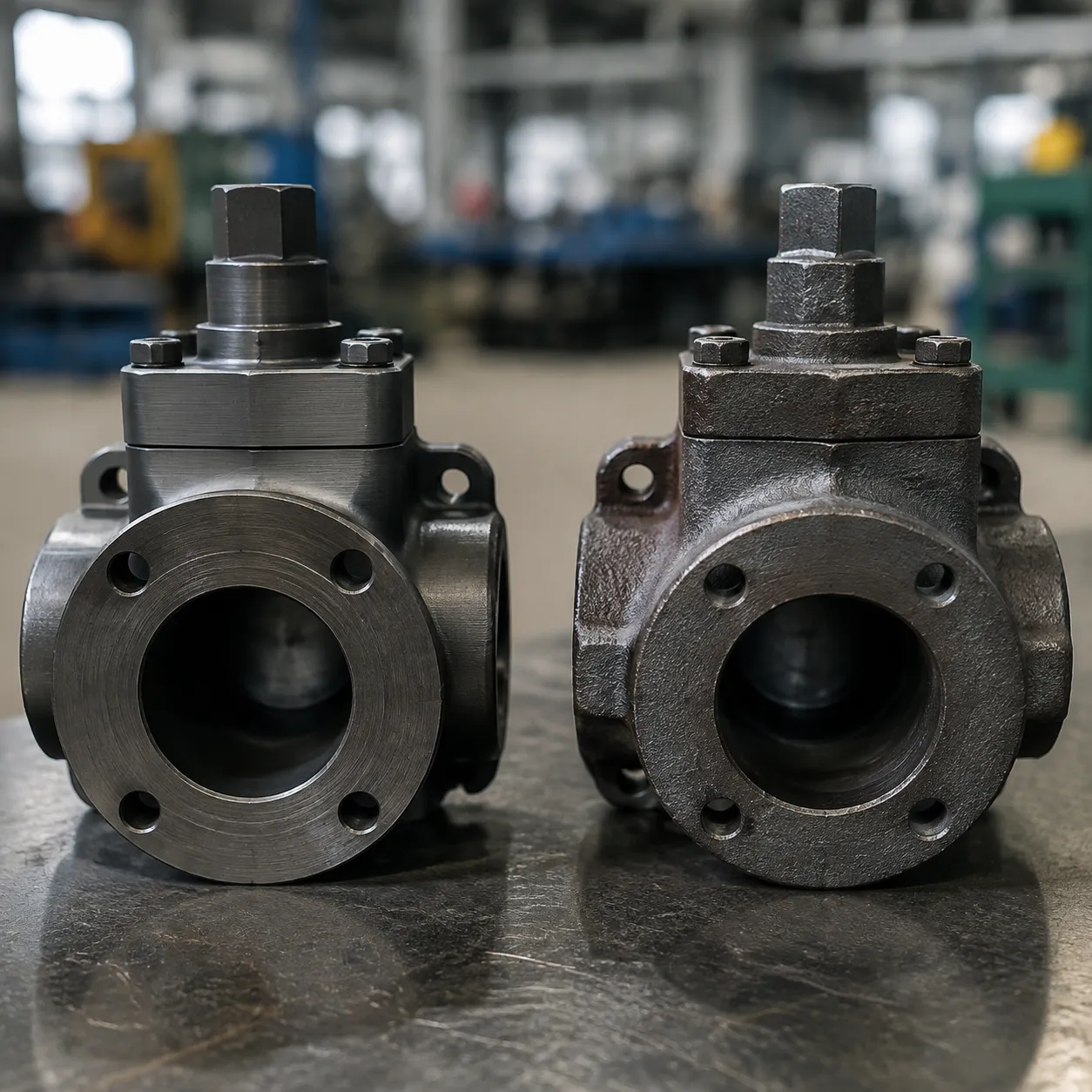
Ved vårt anlegg bruker vi tungt sandstøyping for å produsere massive, komplekse delar som ville vere umogleg eller for kostbart å maskinere frå ein heil blokk.
- Viktig kjenneteikn: Utmerka for å lage komplekse indre hulrom og intrikate design.
- Prosesstrinn: Smelting $rightarrow$ Helling $rightarrow$ Stivning $rightarrow$ Rengjering.
- Resultat: A nær-nettform komponent som minimerer initialt materialavfall.
Kva er smiing?
Smiing handlar om krympande kraft og plastisk deformasjon. I motsetnad til støping, smelter vi aldri metallet til ein væsketilstand under forma. I staden varmar vi opp eit fast stykke eller ein ingot til ein formbar temperatur og bruker massiv trykk med hydrauliske presse eller hammarar for å forme det.
Denne prosessen er ryggrada i produksjonen vår for høgstressa komponentar som akselføter, eksentriske akslar, og tannhjulblankar. Ved å fysisk tvinge metallet i form, endrar vi dei indre eigenskapane til det til det betre.
- Viktig kjenneteikn: Oppnår overlegen kornstrukturjustering, følgjer konturen av delen.
- Prosesstrinn: Oppvarming $rightarrow$ Deformering (trykk/hamring) $rightarrow$ Varmebehandling $rightarrow$ Maskinering.
- Resultat: Ein del med eksepsjonell slagfastheit og mekanisk styrke, fri for porøsitetsproblema som ofte finst i støpingar.
De 5 viktigaste forskjellane mellom smiing og støping
Ved Haoyu Material brukar vi begge produksjonsmetodar avhengig av dei spesifikke mekaniske krava til prosjektet. Mens begge prosessane startar med råmetall, skapar vegen til den endelige komponenten tydelige skilnadar i yteevne og bruk. Her er ei oversikt over forskjellen mellom smiing og støping.
Kornstruktur og integritet
Den mest kritiske skilnaden ligg i den indre strukturen. Når vi smir ein komponent, brukar vi massiv krympande kraft til fast metall. Denne prosessen forfiner kornstrukturen og skapar ein kontinuerleg flyt som følgjer forma på delen. Denne justeringa aukar strekkstyrke, slagfastheit, og fatiguegrensa.
I kontrast involverer støping å helle smeltet metall i ein form der det stivnar. Kornstrukturen her er tilfeldig. Mens moderne støpeteknikkar er robuste, manglar dei generelt den retningsbestemte styrken som finst i smidd stål.
Designkompleksitet og toleransar
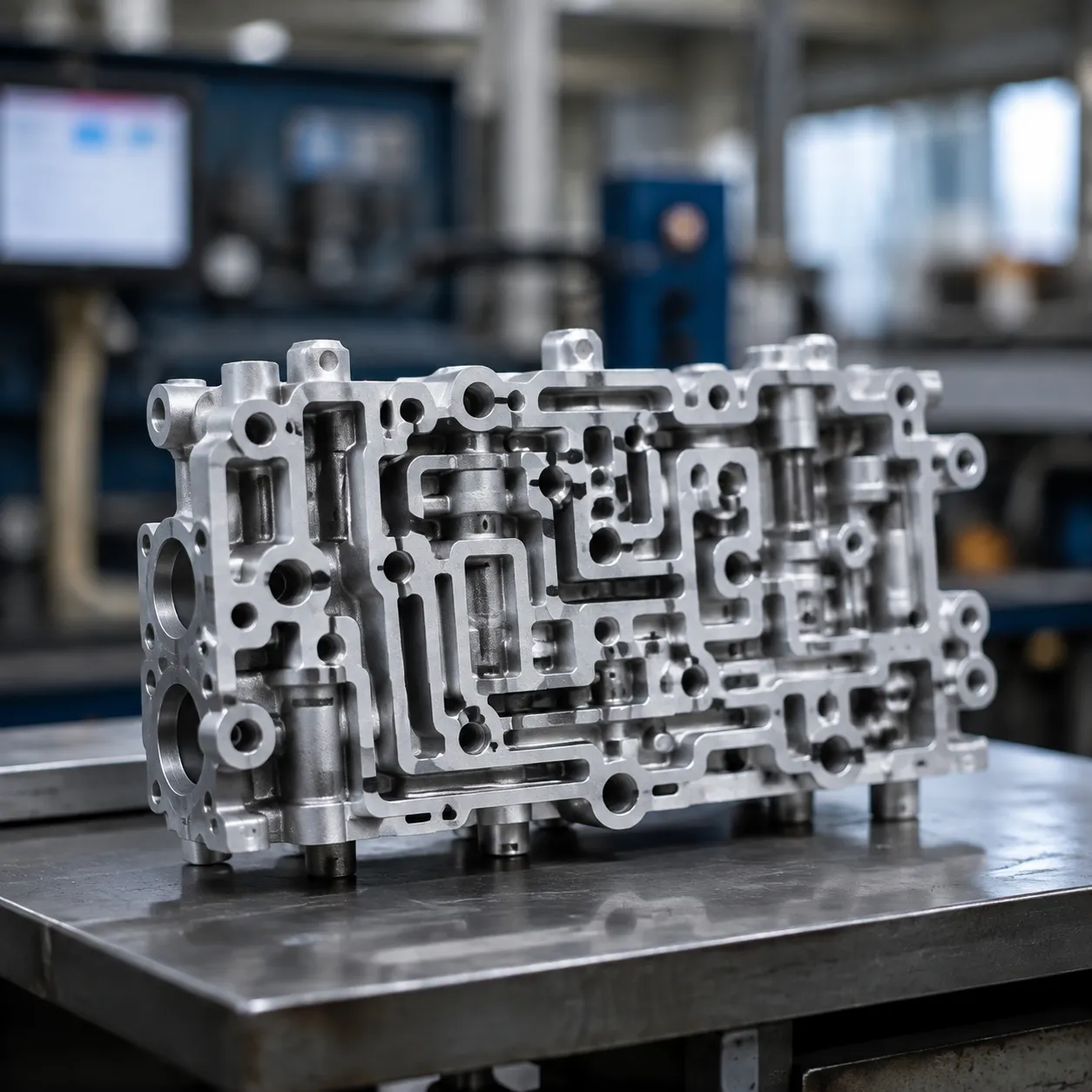
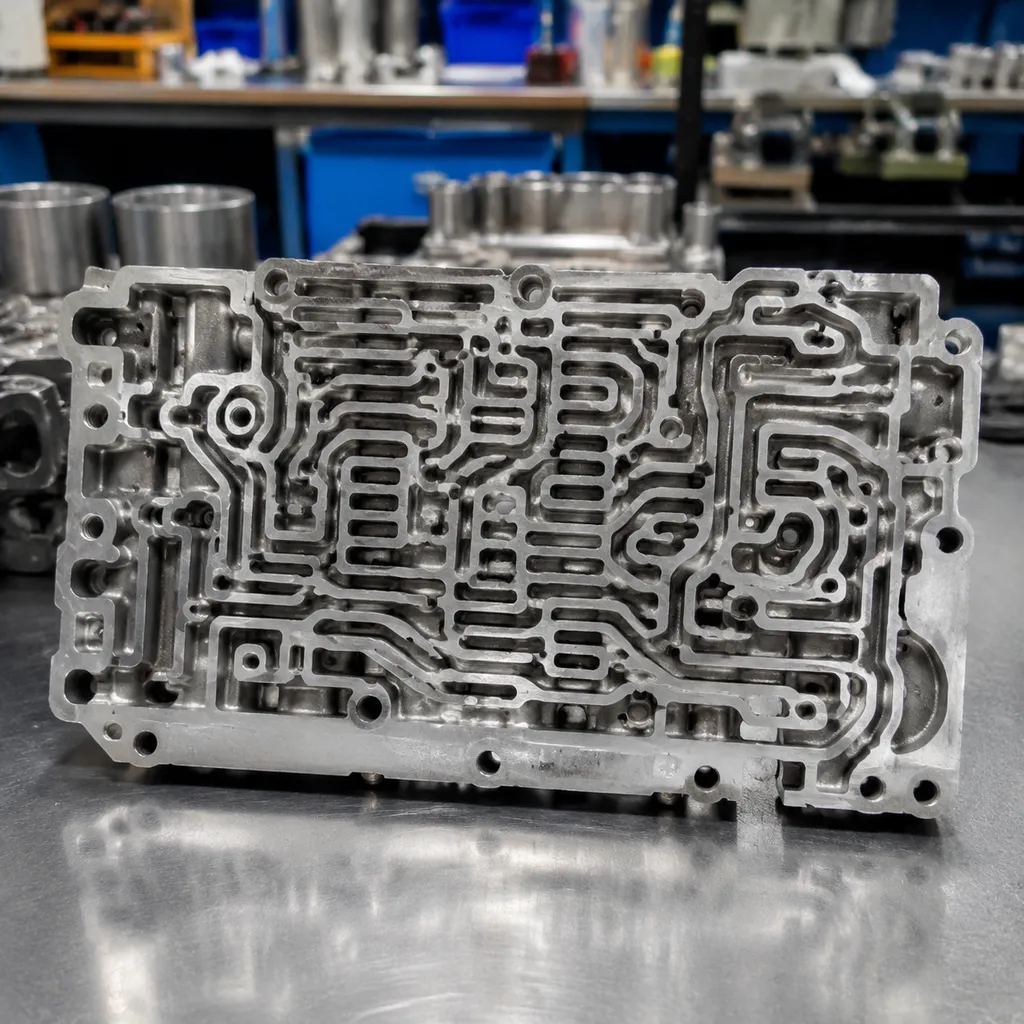
Om designet ditt har intrikate indre hulrom, tynne veggar eller komplekse ikkje-symmetriske geometriar, er støping ofte den einaste gjennomførbare løysinga. Det gjev oss moglegheit til å oppnå nær-nettform resultat, og minimere mengda av materialfjerning som krevst seinare.
Smiding er avgrensa til enklare geometriar som blokker, ringer og akslar. Sidan metallet er solid under forminga, kan vi ikkje tvinge det inn i svært komplekse hulrom. Følgjeleg krev smidde delar ofte ein større bearbeidingsmargin for å nå dei endelige spesifikasjonane.
Materialval som er tilgjengelege
Vi handterer eit breitt spekter av materialar, inkludert karbonstål, legeringsstål og rustfritt stål.
- Støping: Gjev større fleksibilitet i legeringssamansetjing. Vi kan tilsetje spesifikke element for å oppnå unike eigenskapar (som varmebestandigheit eller slitestyrke) som kan gjere metallet for sprøtt til å smidast.
- Smiding: Krev material som har nok ductilitet til å gjennomgå plastisk deformasjon utan å sprekke.
Kostnadsimplikasjonar: Verktøy vs. einingspris
Kostnadseffektiviteten av smidjing vs. støping avhengig sterkt av produksjonsvolum og storleik.
- Støping: Involverer generelt høgare initiale verktøy kostnader for former og mønster. Men for høgvolumsproduksjon eller komplekse former, fell einingsprisen betydelig.
- Smiding: Open die-smidjing (som vi bruker for store delar) har lågare verktøykostnader men høgare prosesseringskostnader per eining på grunn av energien og arbeidskraften som krevst.
Overflatefinish og potensielle feil
Smidde delar har typisk eit reinare overflatefinish og betre strukturell integritet. Den primære fordelen med smidjing er eliminering av indre hulrom.
Støpte delar, på grunn av herding av prosessen, er sårbare for metallurgisk porøsitet (liten luftlommer) eller krympesjikt. For å sikre pålitelegheit, bruker vår profesjonelle støpeverkstad strenge ikkje-øydedleggjande testingar, som ultrasonisk testing (UT), for å garantere at kvar støpt komponent oppfyller industristandardar for tung bruk.
Samanlikningstabell side om side
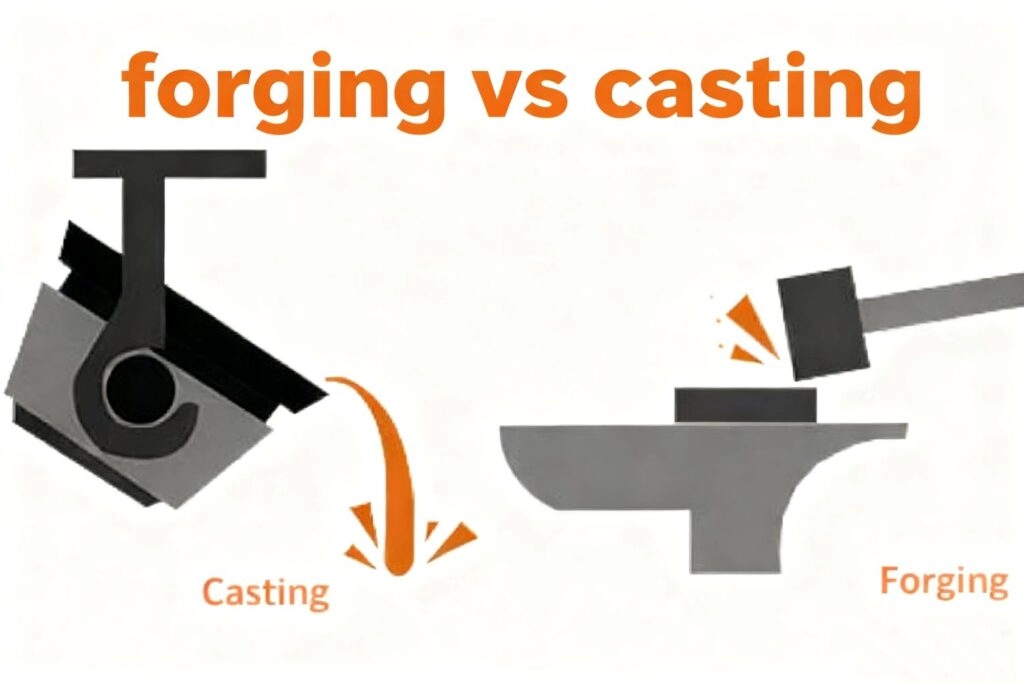
Når ein skal velje mellom smidjing vs. støping for tunge industrielle komponentar, hjelper det å sjå dei tekniske spesifikasjonane side om side med å klargjere den beste løysinga for prosjektet ditt. Hos Haoyu Material nyttar vi begge metodane avhengig av om prioriteten er maksimal strukturell integritet eller geometrisk kompleksitet.
Tabellen under skildrar dei kritiske skilnadene i kornstruktur, integritet, og produksjonsgrenser.
| Eigenskap | Smidjing (Haoyu-prosess) | Gjering (Haoyu-prosess) |
|---|---|---|
| Kornstruktur | Justert kornflyt følgjer delens form; overlegen retningsstyrke. | Jevn, granulær struktur; isotrope eigenskapar men utan kornflytjustering. |
| Intern integritet | Høg tettheit; kompressjonskraft eliminerer indre hulrom og porøsitet. | Potensial for metallurgisk porøsitet eller krympingshòl, dersom det ikkje blir kontrollert. |
| Designkompleksitet | Best for enklare, symmetriske former som akslar og ringer. | Ideell for intrikate design, indre hulrom, og komplekse geometriar som døybar jarnstøyping komponentar. |
| Mekaniske eigenskapar | Høgare strekkstyrke, slagfastheit, og fatiguegrensa. | God trykkstyrke, sjølv om generelt lågare ductilitet enn smidde delar. |
| Maskineringsfrådrag | Vanlegvis krevjer meir maskinering for å nå sluttmåla. | Kan produserast nærare nær-nettform, og reduserer materialavfall. |
| Varmebehandling | Svarar konsekvent på behandling på grunn av forfinna korn. | Avgjerande for å homogenisere strukturen og lindre indre spenningar. |
Denne samanlikninga viser kvifor smidjing er det foretrukne for delar med høgt stress, som rotorakslar, medan støp forblir essensielt for komplekse hus og basar. Å forstå desse avvegingane sikrar at du vel den prosessen som balanserer ytelse med kostnadseffektivitet.
Når skal ein velje kva prosess?
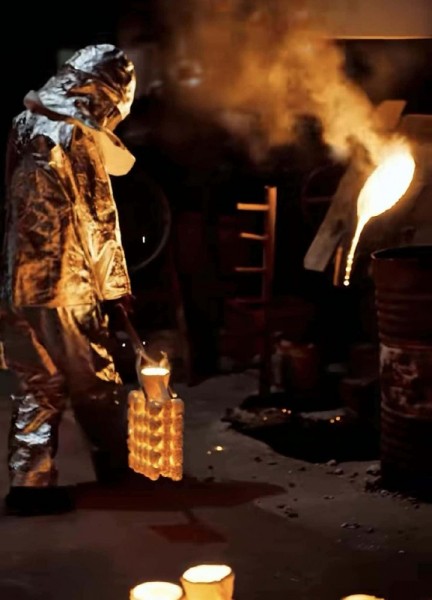
Å velje mellom smidjing vs. støping kjem til slutt an på dei spesifikke krava til applikasjonen din. Hos Haoyu Material analyserer vi den mekaniske belastninga, designgeometrien og volumkrava for å anbefale riktig veg. Mens kostnad alltid er ein faktor, er ytelsen til sluttkomponenten i tungt belastande miljø—som stålvalseverk eller gruvedrift—det viktigaste.
Scenarier for å velje støping
Støping er vanlegvis den foretrukne metoden når geometrien bestemmer produksjonsmetoden. Hvis designet ditt har intrikate detaljar, indre hulrom eller komplekse tverrsnitt som ville vere umogleg eller for dyrt å maskinere frå ein heil blokk, er støping svaret. Det gjer oss i stand til å oppnå ein nær-nettform, og redusere den bearbeidingsmargin som krevjast seinare.
Du bør velje støping når:
- Komplekse design: Delen krev internkamre, tynne veggar eller asymmetriske former.
- Massiv skala: Du treng ekstremt store komponentar, som tunge maskinhus eller møllebasar, som overstig kapasiteten til standard smiingpressar.
- Spesifikke legeringskrav: Du bruker materialar som har dårleg plastisitet og er vanskelege å smi.
- Kostnadseffektivitet: For lågare volumproduksjon av store, komplekse delar, minimerer støping verktøy kostnader samanlikna med å lage fleire smiingformer.
Når du vurderer produksjonsmetodar, er det avgjerande å forstå nyansane av sandstøping vs. trykkstøping for å balansere presisjon med produksjonsvolum.
Scenarier for å velje smiing
Smiing er standard for sikkerheitskritiske komponentar der feil ikkje er eit alternativ. Prosessen bruker krympande kraft for å forbetre kornstrukturjustering metallet, i samsvar med forma på delen. Dette resulterer i overlegen mekanisk eigenskapar, noko som gjer smidde delar ideelle for høgstresst applikasjonar.
Du bør velje smiing når:
- Høg styrkekrav: Delen må tåle ekstreme strekkstyrke laster og slagfastheit.
- Syklisk belastning: Delen involverer rotasjon eller repetitiv stress (som våre trinseakslar, rotorakslar og eccentricakslar), og krev ein høg fatiguegrensa.
- Strukturell integritet: Du treng eit tett materialstruktur fri for metallurgisk porøsitet eller hulrom.
- Jamnleik: Søknaden krev konsekvente mekaniske eigenskapar gjennom heile tverrsnittet av delen.
Rolla til materialkvalitet i produksjon
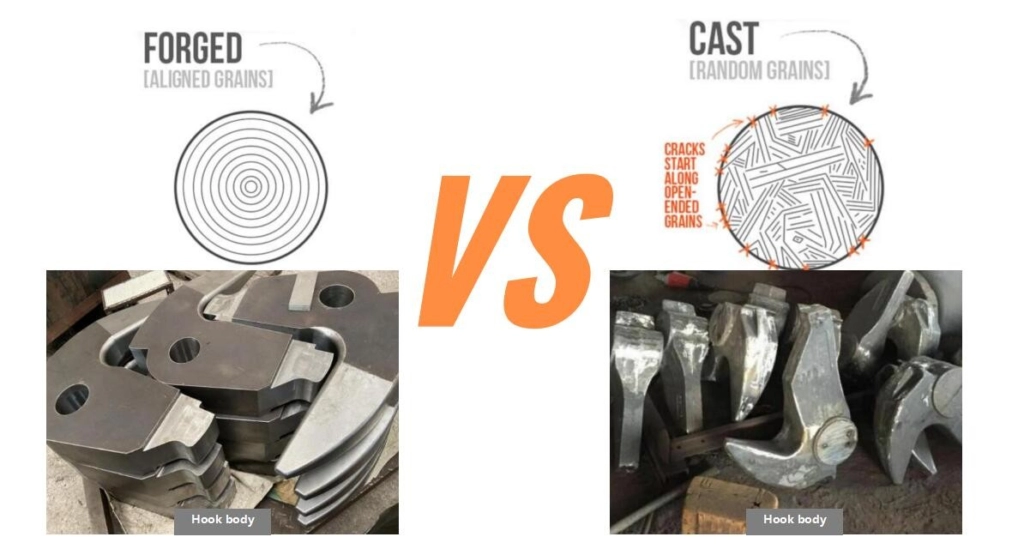
Debatten om forskjellen mellom smiing og støping skuggar ofte ein kritisk faktor: kvaliteten på råmaterialet sjølv. Ein perfekt produksjonsprosess kan ikkje rette opp feilaktig metall. Enten vi helle smeltet metall for ein støyping eller påfører massiv krympande kraft for ein smiing, bestemmer legeringssamansetjing grunnlaget for ytinga til sluttkomponenten.
Hos Haoyu Material understrekar vi at å oppnå høg strekkstyrke og holdbarheit startar før forminga byrjar. Å forstå dei spesifikke eigenskapane til grunnmetallet ditt, slik som avvegingane i vår legeringsstål vs rustfritt stål samanlikning, er essensielt for å forutsi levetid i tungt belastande applikasjonar som gruvedrift eller vindkraft.
Kritiske kvalitetsfaktorar
For å sikre at våre store akslar og ringer møter strenge industrielle standardar, fokuserer vi på tre hovudpilarar av materialkvalitet:
- Reinheit i smelta: Kontroll av den kjemiske samansetjinga under smeltefasen forhindrar uønskte forureiningar som fører til strukturell svakheit.
- Varmebehandling: Etter at metallet er forma, krevst presis varmebehandling (herding og temperering) for å frigjere det fulle mekaniske potensialet, og forbetre fatiguegrensa og hardleik.
- Ikke-destruktiv testing (NDT): Vi brukar innandørs ultralydtesting (UT) og magnetpartikktesting (MT) for å verifisere at den indre strukturen er sunn, uavhengig av om delen er smidd eller støpt.
Vanlege spørsmål om metallfabrikkering
Er smidd stål sterkare enn støpt stål?
I dei fleste tungbruksapplikasjonar, ja. Forskjellen ligg i kornstrukturjustering. Når vi bruker massiv krympande kraft during the forging process, the metal’s internal grain flows with the shape of the part. This plastisk deformasjon resulterer i overlegen strekkstyrke, høgare slagfastheit, og mykje betre fatiguegrensa samanlikna med støpte delar. Støpte delar, sjølv om dei er sterke, kan av og til lide av metallurgisk porøsitet (litt luftlommer) som dannar seg når smeltet metall fester seg, noko som kan svekke den strukturelle integriteten under ekstrem belastning.
Er støping billigare enn smiing?
Det avhenger ofte av designkompleksiteten og produksjonsvolumet. Støping er generelt meir kostnadseffektivt for intrikate delar fordi det oppnår ein nær-nettform rett ut av forma. Dette reduserer bearbeidingsmargin—you don’t have to cut away as much excess material. While the initial verktøy kostnader kostnadene for former kan vere høgare, fell kostnaden per eining for større produksjonar. Hvis du leitar etter ein påliteleg stålstøpebedrift for å handtere komplekse geometriar, tilbyr støping vanlegvis den beste balansen mellom pris og ytelse for ikkje-kritiske strukturelle delar.
Kan du smi komplekse former?
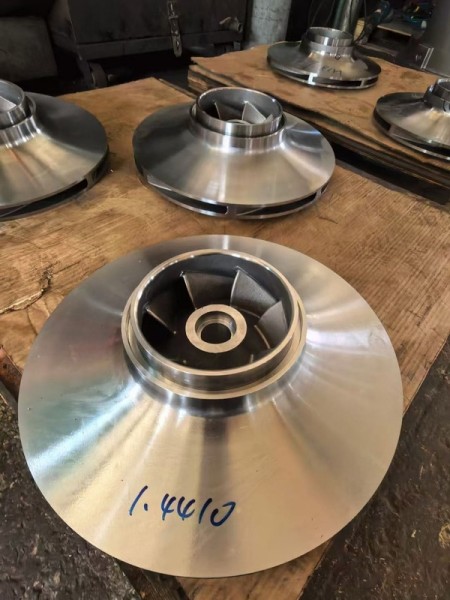
Smiing er noko avgrensa når det gjeld geometrisk kompleksitet. Det er ideelt for symmetriske komponentar som akslar, ringer og blokker. Fordi prosessen involverer banking eller pressing av fast metall, kan det ikkje enkelt lage indre hulrom, tynne veggar eller underkutt. For svært detaljerte design som krev strenge toleransar og intrikate funksjonar, anbefaler vi vår presisjonsinvestering for gjenstandar av komplekse metallmaterialar. Denne metoden gjer oss i stand til å lage spesifikke former som ville vere umogleg eller forbode dyrt å maskinere frå ein heilsmidd blokk.