Messingtettheit og spesifikk vekt: Sertifisert data, berekningar og bruk for C26000 og C36000 legeringar
Raskt svar – Messing-tettleik på eit blikk
- Standardtettleikssintervall: 8,4 til 8,73 g/cm³
- Vanlege kommersielle messingar: 8,55 til 8,70 g/cm³
| Tettleiksenhet | Intervall (Standardmessing) | Intervall (Kommersiell messing) |
|---|---|---|
| g/cm³ | 8,4 – 8,73 | 8,55 – 8,70 |
| kg/m³ | 8400 – 8730 | 8550 – 8700 |
| lb/in³ | 0,303 – 0,315 | 0,309 – 0,314 |
| lb/ft³ | 523 – 544 | 536 – 542 |
Denne raske referansen hjelper ingeniørar og produsentar med å velje riktig messinggrad ved å forstå dens tettheit i ulike vanlege einingar.
Kva er tettheten til messing? (Definisjon og viktigheiter)
Tettheit er massen av eit materiale per volum, vanlegvis uttrykt i gram per kubikkcentimeter (g/cm³) for metallar som messing. Å kjenne til tettheten til messing hjelper ingeniørar og produsentar med å utforme delar som oppfyller vekt-, styrke- og ytelsesbehov. Det påverkar også fraktkostnader, maskineringsprosessar og kvalitetskontroll.
Kvifor er tettheit viktig i ingeniørkunst og produksjon
- Vektkontroll: Avgjerande for delar i bil-, luftfarts- og marineindustrien.
- Materialval: Hjelper med å samanlikne messing med andre metallar for å velje det beste alternativet.
- Kostnadsoverslag: Tettheten påverkar materialkostnaden basert på volum.
- Maskinering og forming: Påverkar energibehov og verktøyutslitnad.
Sammenlikning av tettheit med vanlege metallar
| Materiale | Tetthet (g/cm³) | Tettleik (lb/in³) | Merksemd |
|---|---|---|---|
| Messing | 8,4 – 8,73 | 0,304 – 0,315 | Varierer etter legering |
| Rent kobber | 8.96 | 0.324 | Høgare enn dei fleste messingar |
| Bronse | 8,8 – 8,9 | 0.318 – 0.322 | Tettare enn dei fleste messing |
| Aluminium | 2.70 | 0.0975 | mykje lettare |
| Stål | 7.85 | 0.284 | Lettere enn messing |
Messing har ein tettheit mellom stål og kopar, og tilbyr ein god balanse mellom vekt og slitestyrke for mange bruksområde. Dette gjer det til eit populært val der moderat vekt og korrosjonsmotstand er viktig.
Tettheit av messing etter legeringstype (2025 mest nøyaktige data)
Tettheiten til messing varierer avhengig av den spesifikke legeringssamansetjinga. Her er ein praktisk tabell som dekkjer over 15 vanlege messinglegeringar med deira betegnelser frå UNS (Unified Numbering System), EN (Europeisk norm) og JIS (Japansk industriell standard). Desse verdiane stemmer overeins med dei nyaste referansane frå ASTM B36, ASTM B171 og EN 12166 standardane.
| Legeringsnamn | UNS/EN/JIS-betegnelse | Tetthet (g/cm³) |
|---|---|---|
| Kassettmessing | C26000 / EN CW508L | 8.53 |
| Frie maskineringsmessing | C36000 / EN CW614N | 8.56 |
| Loddet fri maskinering | C83600 / EN CW617N | 8.54 |
| Admiralitmessing | C44300 / EN CW451K | 8.42 |
| Sjøfartsmessing | C46400 / EN CW447K | 8.50 |
| Høgtrekkmessing (Manganbronse) | C86300 / EN CW307G | 8.70 |
| Gul Messing | Variert | 8,50–8,60 |
| Raud Messing | C23000 | 8.52 |
| Tinn Messing | C23000 / JIS C2201 | 8.68 |
| Aluminium Messing | C68700 / EN CW602N | 8.40 |
| Silikon Messing | C65500 | 8.48 |
| Fosforbronse | C51000 | 8.80 |
| Mangan Messing | C86500 | 8.65 |
| Navalmessing (Kopper-Zink-Tinn) | C46400 | 8.50 |
| Bæringsmessing | C93200 / EN CW453K | 8.58 |
Disse legeringane har alle litt ulike tettheter basert på innhaldet av kopar, zink, bly, tinn eller mangan. Til dømes har admiralittsmessing ein tendens til å vere litt lettare på grunn av høgare tinninnhald, medan manganbronse kan vere tettere takka vere tilsett mangan.
Hvis du jobbar med eit prosjekt som krev nøyaktige vekt- eller oppdriftsberekningar, er det avgjerande å kjenne den eksakte tettheten til messinglegeringa. Data frå ASTM- og EN-standardar er den beste kjelda for påliteleg, oppdatert informasjon du kan stole på.
Faktorar som påverkar messingtettheit
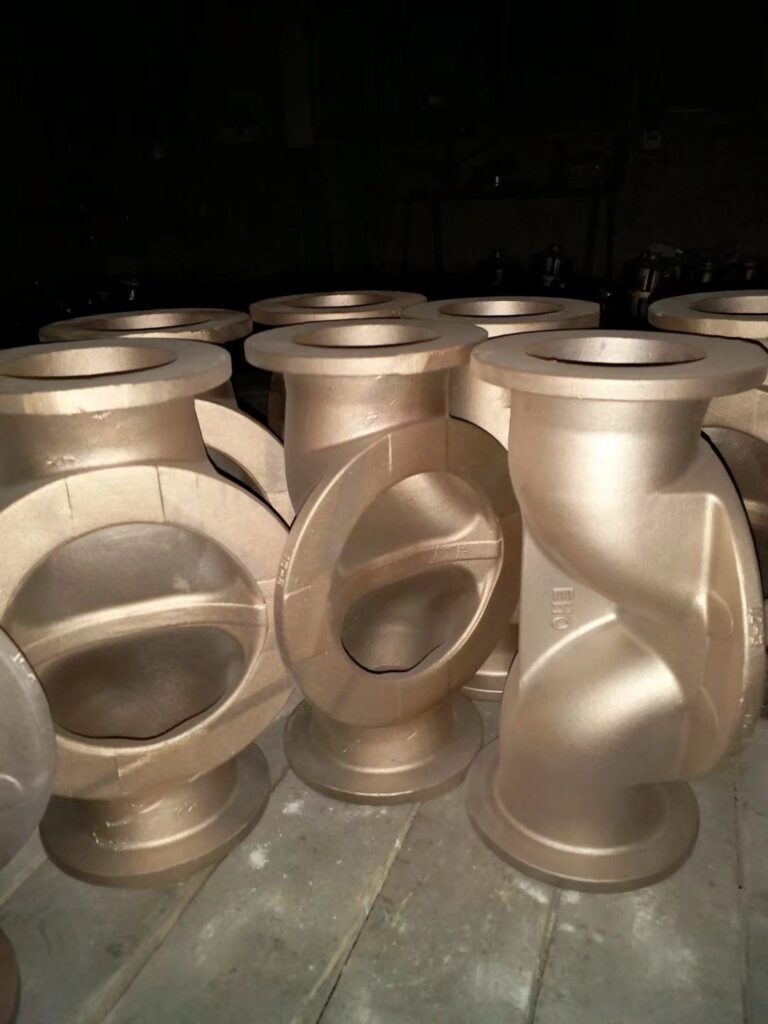
Tettheten til messing er ikkje eit fast tal—den endrar seg avhengig av fleire nøkkelfaktorar:
- Kopper/Sink-forhold: Messing er hovudsakleg laga av kopar og sink, og forholdet mellom dei påverkar tettheten i stor grad. Mer kopar betyr høgare tettheit sidan kopar er tyngre enn sink.
- Innhald av bly (blyhaltig vs ubløyta): Nokre kommersielle messingar inneheld tilsett bly for betre maskinarbarheit. Bly er tettere enn både kopar og sink, så blyholdig messing veg generelt meir enn ubløyta messing.
- Andre legeringselement: Tinn, aluminium, mangan og andre element vert ofte tilsett for å auke styrke og motstand mot korrosjon. Kvart av desse endrar tettheten litt, avhengig av vekt og kor mykje som er tilsett.
- Temperaturpåverknad: Som dei fleste metall, utvidar messing seg når det vert oppvarma, så tettheten minkar når temperaturen stig. Ein enkel tettheit vs temperatur-diagram viser dette inverse forholdet — viktig for ingeniørar som jobbar med termiske tilstandar.
Å forstå desse faktorane hjelper deg å forutse kor mykje ein messingdel vil vegje eller korleis den vil oppføre seg i ulike miljø, noko som er avgjerande for produksjon og design i marknaden i Norge.
Korleis berekne messingvekt ved bruk av tettheit
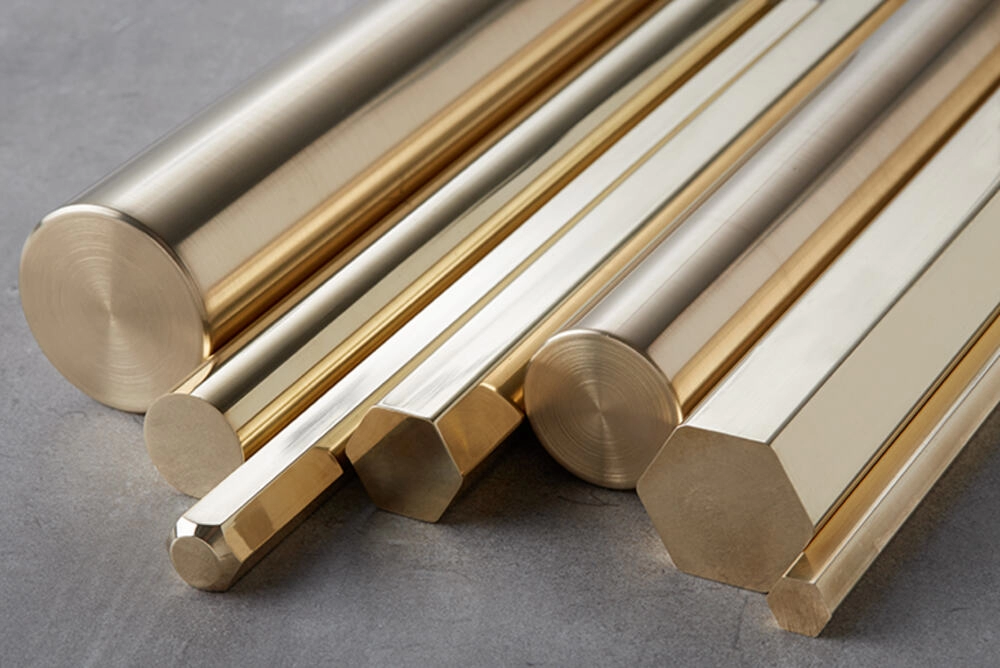
Å berekne vekta av messing er ganske enkelt når du kjenner tettheten. Den grunnleggjande formelen er:
Vekt = Volum × Tettheit
Her er ein rask steg-for-steg guide:
- Mål volumet av messingstykket ditt. Dette avhenger av forma:
- For ein rund stang: Volum = π × (radius)² × lengde
- Hexagon: Berekn areal av hexagonbasen × lengde
- Ark/plater: Volum = lengde × breidd × tjukkleik
- Røyr/pipe: Volum = π × (utradius² – innradius²) × lengde
- Bruk tettheten av den spesifikke messinglegeringa du har. Dei fleste kommersielle messingar ligg mellom 8,4 til 8,73 g/cm³ (eller 8400 til 8730 kg/m³).
- Gå volumet multiplisert med tettheten for å få vekta i gram eller kilogram. Konverter einingar om nødvendig.
For raske utregningar anbefaler eg å prøve vastmaterial sin nettbaserte messingvektkalkulator. Bare skriv inn dimensjonane og legeringstypen, så gjer den all matematikken for deg umiddelbart.
Dette er veldig praktisk enten du bestiller tilpassa messingstenger, plater eller rør og treng nøyaktig vekt for frakt eller prosjektkostnader.
Messingtetthet vs Andre vanlege metallar (Sammenlikningstabell)
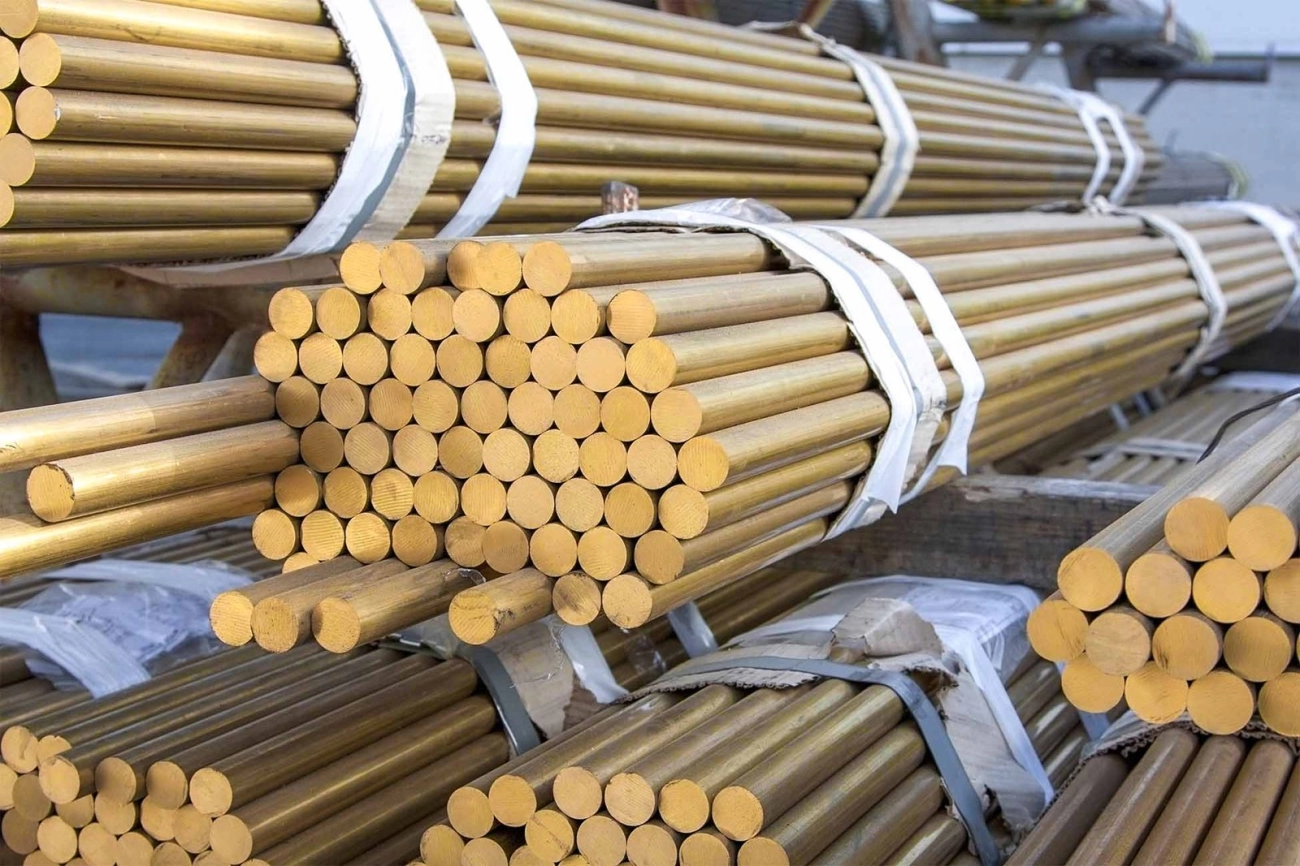
Her er ei rask oversikt over korleis messingdensitet samanliknar med andre vanlege metall som vert brukt i Noreg:
| Metall | Tetthet (g/cm³) | Tettleik (lb/in³) | Merksemd |
|---|---|---|---|
| Messing | 8,4 – 8,73 | 0,303 – 0,315 | Varierer med legering, vanleg 8,55 |
| Kopar | 8.96 | 0.324 | Tungare enn messing |
| Aluminium | 2.70 | 0.0975 | Lettvektsalternativ |
| Mildt stål | 7.85 | 0.284 | Litt lettare enn messing |
| Rustfritt stål | 7,75 – 8,0 | 0,280 – 0,290 | Nær mildt ståldensitet |
| Bronse | 8,80 – 8,90 | 0,318 – 0,321 | Tyngre, ofte brukt for holdbarheit |
| Titan | 4.50 | 0.162 | Sterk men mykje lettare |
Viktig poeng: Messing er tyngre enn stål, men lettare enn rein kobber og bronse. Det er det foretrukne for balanse—solid vekt, men enklare å maskinere og forme enn nokre av dei tyngre metallene. Å kjenne til desse tala hjelper med å velje riktig metall for prosjektet ditt, spesielt når vekt er viktig i maskineri, byggjeverksemd eller marine bruksområde.
Bruksområde der messingdensitet er kritisk
Messingdensitet spelar ei stor rolle i fleire viktige bruksområde, spesielt der vekt, styrke og holdbarheit er viktig.
- Marine utstyr: Messing er vanleg i marine omgjevnadar fordi densiteten påverkar oppdrift og korrosjonsmotstand. Ei godt tilpassa densitet sikrar at delar som båtinnretningar og undervassventilar held seg funksjonelle utan å veie ned fartøyet unødvendig.
- Musikkinstrument: I trompeter, saksofonar og trombonar påverkar messingdensiteten lydkvaliteten og instrumentbalansen. Den rette densiteten hjelper med å skape den ønskte tonen og gjer instrumenta komfortable å halde.
- Vann- og avløpsinnretningar: Messingrør og ventilar er avhengige av spesifikke densitetar for holdbarheit og lekkasjesikring. Korrekt densitet hjelper med å oppretthalde trykk og lang levetid i hushalds- og industriell vassforsyning.
- Elektriske kontaktar: Densiteten til messing brukt i kontaktar påverkar ledeevne og mekanisk styrke. Presisjon i densitet sikrar pålitelege tilkoplingar som tåler slitasje og temperaturendringar.
- Ammunisjonskapslar: Karkassar av messing er avgjerande for ytelse og tryggleik. Vekten og tettheten påverkar korleis kapselen handterer trykk og kaster ut frå våpenet.
I alle desse tilfella sikrar forståing og bruk av riktig messingtettheit at produktet oppfyller ytelses- og tryggleikskrav som krevjast av industrien og forbrukarane i Noreg.
vastmaterial Messingprodukt – Garanti for densitet og sertifisering
Hos vastmaterial tilbyr vi eit komplett utval av messingprodukt for å møte dine behov—ark, plater, stenger, rør og ledningar—alle med garantert tettheit som samsvarar med industristandardar. Kvart produkt kjem med ein Mill Test Certificate (MTC), som gir deg nøyaktig målt tettheit og kjemisk samansetjing for kvalitetskontroll.
Treng du noko spesielt? Vi tilbyr også tilpassa legeringsproduksjon for å passe til dine prosjektkrav. Enten du jobbar innan produksjon, maritim eller elektrisk bruk, sikrar vastmaterial at du får konsekvente, sertifiserte messingmaterialar du kan stole på.
Ofte stilte spørsmål om messingtettheit
Er messing tyngre enn stål?
Vanlegvis er stål tetrare enn messing. Stål har vanlegvis ein tettheit på frå 7,75 til 8,05 g/cm³, medan messing har ein tettheit på rundt 8,4 til 8,73 g/cm³, men dette avhenger av legeringa. Nokre messingtypar kan vere litt tyngre, men dei fleste stål er tetrare totalt sett.
Kva er tettheten til gul messing vs. raud messing? Messingtype
Typisk densitet (g/cm³)
Beskrivelse Gul messing
8,44 – 8,55
Høgare sinkinnhald, meir gul farge Raud messing
8,51 – 8,60
Meir kopar, raudaktig nyanse Kaldarbeid endrar messingtettheit?
Kaldarbeid endrar forma og hardheita til messing, men påverkar ikkje vesentleg tettheten. Atomstrukturen endrar seg, men massen og volumforholdet held seg ganske likt.
Kva er forskjellen på spesifikk tyngde og densitet av messing?
- Tettheit er massen per volum (g/cm³ eller lb/in³).
- Spesifikk vekt er forholdet mellom messingdensitet og vatnens densitet (ved 4°C).
For messing varierer den spesifikke tyngda vanlegvis frå 8,4 til 8,7, noko som betyr at det er omtrent 8,4 til 8,7 gonger tyngre enn vatn.
Hvis du vil ha meir nøyaktige data om din spesifikke messinglegering, er det lurt å sjekke ASTM- eller EN-standardar.
Nedlastbare ressursar
For å gjere arbeidet ditt med messing enklare, tilbyr vi praktiske nedlastbare verktøy:
- PDF: “Messing Densitetsreferansekart 2025”Ei omfattande, lettlesen tabell som dekkjer densitetsverdier for over 15 vanlege messinglegeringar. Perfekt for rask referanse på arbeidsplassen eller i verkstaden.
- Excel vektkalkulator: Skriv inn forma på messing, dimensjonar og legeringstype for å berekne vekt umiddelbart basert på nøyaktige densitetsdata. Flott for ingeniørar, produsentar og kjøparar som treng raske, presise tal.
Begge ressursane er tilpassa brukarar i Noreg og oppdaterte for 2025-standardar, noko som hjelper deg å spare tid og unngå gjetting når du jobbar med messingmaterialar.