
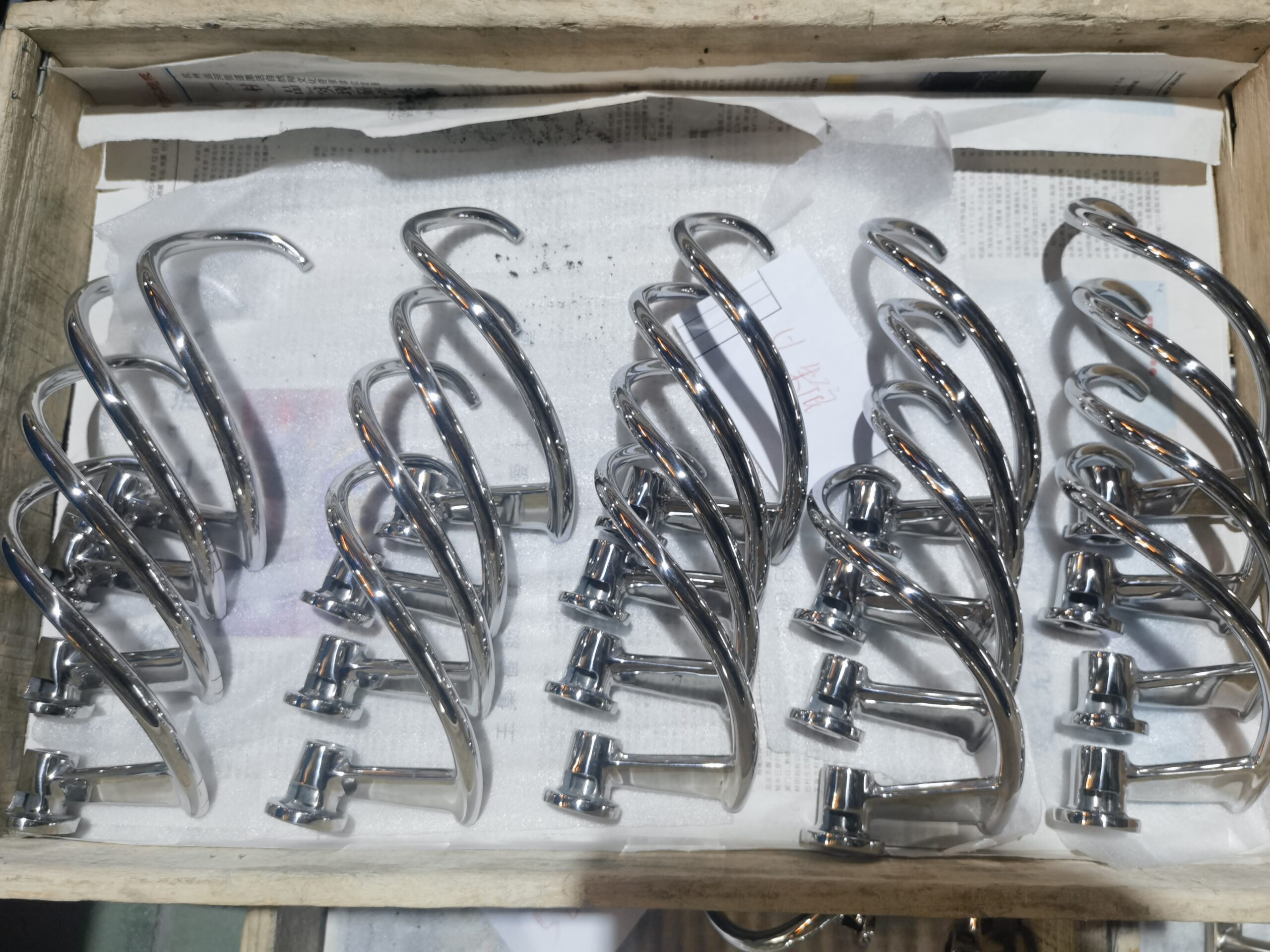
General Overview: What is 410 Stainless Steel?
At HaoYu Material, we understand that selecting the right material often comes down to balancing mechanical strength with budget constraints. 410 stainless steel (designated as UNS S41000) is the basic, general-purpose grade of martensitic stainless steel. Unlike the 300-series austenitic grades, this alloy is magnetic in all conditions and is specifically engineered to respond to heat treatment, allowing it to achieve high mechanical properties and hardness.
The defining characteristic of AISI 410 stainless steel is its chromium content, typically ranging between 11.5% and 13.5%. This ~12% chromium addition provides the material with adequate corrosion resistance in mild environments, such as dry air, fresh water, and mild alkalis. While it does not offer the superior corrosion resistance of 304 stainless steel, it is a far more cost-effective option for applications where high corrosion resistance is not the primary requirement. Because it contains no significant nickel, the 410 grade price remains competitive, making it a smart choice for industrial components requiring high strength, wear resistance, and moderate durability.
410 SS Chemical Composition Breakdown
Understanding the 410 stainless steel composition is essential for determining if this grade fits your specific industrial application. As a basic martensitic stainless steel 410, its chemistry is engineered to balance strength with moderate corrosion resistance. Unlike the 300-series, UNS S41000 contains no significant nickel, which is a primary factor in its lower cost structure compared to austenitic grades.
At HaoYu Material, we strictly adhere to ASTM and AISI standards to ensure every coil and sheet meets the precise chemical requirements listed below.
Standard Chemical Composition (Weight %)
| Element | Symbol | Composition (Limit) |
|---|---|---|
| Chromium | Cr | 11.5% – 13.5% |
| Carbon | C | 0.08% – 0.15% |
| Manganese | Mn | 1.00% Max |
| Phosphorus | P | 0.040% Max |
| Sulfur | S | 0.030% Max |
| Silicon | Si | 1.00% Max |
| Nickel | Ni | 0.75% Max (Optional) |
The Role of Chromium and Carbon
The performance of 410 stainless steel is dictated by the interaction between its two main alloying elements:
- Chromium (Cr) for Protection: With a chromium content ranging between 11.5% and 13.5%, this grade contains just enough chromium to form a passive oxide layer. This layer provides adequate resistance against atmospheric corrosion, steam, and mild chemical environments. It is the minimum threshold to be classified as “stainless.”
- Carbon (C) for Hardness: The carbon content is what sets AISI 410 stainless steel apart from ferritic grades. Carbon acts as the hardening agent. When heat-treated, the carbon allows the crystalline structure to change, enabling the steel to achieve high strength and significant hardness levels after quenching and tempering. This makes it ideal for high-stress parts like fasteners and valves where soft steels would fail.
Mechanical Properties and Technical Data
At HaoYu Material, we ensure our 410 stainless steel meets rigorous mechanical standards to support demanding industrial applications. As a basic martensitic grade, UNS S41000 is unique because its mechanical behavior changes drastically depending on its heat treatment condition. Whether you need it in a soft, workable annealed state or hardened for high-wear environments, understanding these metrics is crucial for selecting the right material.
Mechanical Properties (Annealed Condition)
When supplied in the annealed condition, 410 stainless steel is relatively soft and ductile, making it suitable for cold forming and shaping operations. Below are the typical mechanical values we adhere to according to ASTM A240 standards.
| Property | Metric (Typical) | Imperial (Typical) |
|---|---|---|
| Tensile Strength | ≥ 450 MPa | ≥ 65,000 psi |
| Yield Strength (0.2% Offset) | ≥ 205 MPa | ≥ 30,000 psi |
| Elongation (in 50mm) | ≥ 20% | ≥ 20% |
| Hardness (Brinell) | ≤ 217 HB | – |
| Hardness (Rockwell B) | ≤ 96 HRB | – |
Hardness and Heat Treatment Capabilities
The defining 410 stainless steel property is its ability to be hardened. Unlike the austenitic 400 series stainless steel grades which rely on cold working for strength, 410 can be heat-treated (quenched and tempered) to achieve significant hardness.
- Hardening Process: Heating to 1700-1850°F (925-1010°C) followed by air or oil quenching.
- Tempering: Follow-up tempering dictates the final balance between hardness and toughness.
- Maximum Hardness: In fully hardened conditions, 410 stainless steel hardness can reach roughly 35 to 45 HRC (Rockwell C), providing excellent wear resistance for components like fasteners and valve parts.
Physical Properties
Understanding the physical characteristics is vital for engineering applications involving heat transfer or magnetic requirements.
- Magnetism: 410 stainless steel is magnetic in both annealed and hardened conditions.
- Density: 7.75 g/cm³ (0.28 lb/in³).
- Thermal Conductivity: It offers better thermal conductivity than austenitic grades (like 304), making it efficient for heat transfer applications.
- Elastic Modulus: 200 GPa (29 x 10⁶ psi).
We maintain strict quality control over these properties to ensure every coil and sheet leaving our factory performs consistently in your production line.
Key Features and Performance Benefits of 410 Stainless Steel
At HaoYu Material, we understand that selecting the right grade often comes down to balancing mechanical strength with environmental resilience. 410 stainless steel stands out as a basic martensitic grade that offers a unique combination of high strength and moderate corrosion resistance, making it a staple in general industrial applications.
Superior Hardenability and Strength
The defining characteristic of UNS S41000 is its ability to be heat-treated. Unlike austenitic grades, 410 stainless steel can be significantly strengthened through austenitizing, quenching, and tempering. This process allows us to tailor the material’s mechanical properties to meet specific hardness requirements, ranging from relatively soft in the annealed state to highly durable after treatment.
- Heat Treatment Response: Excellent response to hardening processes.
- Wear Resistance: High abrasion resistance once hardened, ideal for components subjected to friction.
- Strength: Delivers superior tensile strength compared to standard low-carbon steels.
Moderate Corrosion Resistance
While not as resistant as the 300-series, 410 stainless performs reliably in mild environments. It resists atmospheric corrosion, fresh water, and mild organic acids. For optimal performance, we recommend a polished surface finish, as smooth surfaces shed contaminants more effectively than rough ones.
| Environment | Performance Level |
|---|---|
| Atmospheric | Good (Resists rusting in dry/mild air) |
| Fresh Water | Good (Suitable for pump parts and valves) |
| Chemicals | Moderate (Resists mild acids and alkalis) |
| Marine/Salt | Poor (Not recommended for chloride environments) |
Magnetic Properties and Thermal Stability
A key operational difference for many of our US clients is magnetism. 410 stainless steel is ferromagnetic in both annealed and hardened conditions, making it suitable for applications requiring magnetic attraction. Additionally, it offers good oxidation resistance up to approximately 1200°F (650°C) for continuous service. However, for applications requiring stability beyond this range, looking into specialized high-temperature alloy products is often the safer engineering choice.
Common Industrial Applications for 410 SS
Because of its unique ability to be hardened through heat treatment and its moderate corrosion resistance, 410 stainless steel is a versatile workhorse across multiple sectors. We supply this martensitic grade to manufacturers who need materials that offer high strength and wear resistance without the higher cost associated with nickel-rich austenitic alloys.
Here are the primary areas where stainless steel 410 excels:
- Petrochemical and Oil & Gas Equipment: The material’s resistance to hot gases and mild acids makes it a top choice for fractionation structures. It is frequently machined into valves, pumps, and shafts used in demanding oil and gas industry applications where durability is non-negotiable.
- Cutlery and Instruments: Since 410 stainless can hold a sharp edge after quenching and tempering, it is the standard material for cutlery, surgical instruments, and kitchen utensils. It provides the necessary hardness to cut effectively while resisting food-based corrosion.
- Fasteners and Hardware: We provide coil and bar stock used to manufacture fasteners, bolts, screws, and nuts. These components rely on the high tensile strength of UNS S41000 to maintain structural integrity in heavy machinery.
- Automotive and Power Generation: The alloy withstands oxidation at elevated temperatures, making it suitable for turbine components like steam blades and buckets, as well as automotive exhaust parts and manifolds.
Available Forms and Finishes at vastmaterial
At vastmaterial, we maintain a comprehensive inventory of 410 stainless steel to meet diverse industrial demands. We understand that speed and variety are crucial for your production lines, which is why we stock a wide range of shapes and sizes ready for immediate global shipment. Whether you require 410 stainless steel sheet for general fabrication, 410 stainless steel bar for machining, or 410 stainless steel pipe for structural applications, we have the material you need.
Our supply capabilities cover the following standard forms:
- Sheets and Plates: Available in both cold-rolled and hot-rolled conditions.
- Coils and Strips: Precision slit to your specific width requirements.
- Bars and Profiles: Round, square, and hex bars for fastener and component manufacturing.
- Pipes and Tubes: Seamless and welded options for fluid transport and instrumentation.
Surface finish is critical for both aesthetics and functional performance. We offer a variety of finishes to match your specific application requirements:
- No.1: Hot rolled, annealed, and pickled (industrial finish).
- 2B: Cold rolled, smooth, and matte (standard general-purpose finish).
- BA: Bright Annealed (reflective finish).
- No.4 & HL: Brushed and Hairline finishes for architectural or visible applications.
- Mirror (8K): High-gloss polish for decorative uses.
We go beyond just supplying raw stock. Our facility is equipped for custom processing, including precision slitting, shearing, cutting-to-size, and edge conditioning. This ensures your material arrives ready for your assembly line, minimizing your internal processing time. For clients requiring complex geometries that cannot be achieved through standard rolled products, we also leverage our expertise in the stainless steel casting process to deliver near-net-shape components.
Comparison with Similar Stainless Grades
Selecting the right alloy often requires balancing mechanical strength against corrosion resistance. As a supplier with a vast inventory of stainless steel products, we often help clients decide between 410 stainless steel and other popular grades. Here is how UNS S41000 stacks up against the competition.
410 vs 304: Corrosion Resistance vs. Hardness
The main difference lies in their microstructure. 304 stainless steel is an austenitic grade containing nickel, making it the industry standard for corrosion resistance and formability. However, it cannot be hardened by heat treatment.
In contrast, 410 stainless steel is a martensitic grade. While it has lower corrosion resistance due to the lack of nickel, it can be heat-treated to achieve high strength and hardness.
- Choose 304 for chemical tanks, food processing, and outdoor exposure.
- Choose 410 for high-strength bolts, valve components, and applications requiring wear resistance.
410 vs 420: Carbon Content and Hardness
Both 410 and 420 are martensitic stainless steels, but 420 stainless steel contains higher carbon. This increased carbon content allows 420 to achieve higher hardness levels after quenching and tempering compared to 410.
- 410 SS: Good general-purpose hardness and better ductility.
- 420 SS: Superior hardness and wear resistance, ideal for surgical instruments and high-end cutlery, but slightly more brittle.
410 vs 416: Machinability Factors
416 stainless steel is essentially the free-machining version of 410. It contains added sulfur (or sometimes selenium), which breaks up chips during machining.
- Machinability: 416 is much easier to machine than 410.
- Trade-off: The added sulfur in 416 significantly lowers its corrosion resistance and weldability compared to standard 410 stainless steel.
Quick Comparison Table
| Grade | Type | Key Characteristic | Typical Application |
|---|---|---|---|
| 410 | Martensitic | Heat-treatable, high strength, magnetic | Fasteners, Valves, Pump Shafts |
| 304 | Austenitic | Excellent corrosion resistance, non-magnetic | Kitchen Equipment, Piping, Tanks |
| 420 | Martensitic | Higher carbon, maximum hardness | Cutlery, Surgical Tools, Molds |
| 416 | Martensitic | High machinability (added Sulfur) | Screw Machine Parts, Gears |
Why Choose Vastmaterial as Your 410 Stainless Steel Supplier
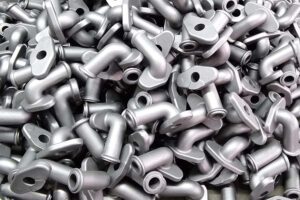
Sourcing industrial metals requires a partner you can trust for both consistency and cost. At Vastmaterial, we operate as a direct 410 stainless steel supplier and manufacturer, meaning you deal straight with the factory. This eliminates middleman markups and ensures you get the most competitive factory-direct pricing on the market. We have over a decade of experience supplying high-grade martensitic stainless steel 410 to clients across the United States and globally.
We back our manufacturing with strict adherence to international standards. Our facilities are ISO 9001 certified, and we implement rigorous testing and quality control protocols to ensure every coil, sheet, and bar meets exact ASTM and AISI specifications before it leaves our floor.
The Vastmaterial Advantage
We understand that speed and flexibility are critical for your operations. Here is what sets us apart:
- Large In-Stock Inventory: We maintain a massive stock of 410 stainless steel sheets, coils, and pipes to ensure fast lead times and rapid global delivery.
- Customization & Engineering: Our R&D team supports OEM/ODM requests. Whether you need specific surface finishes (like BA or No.4) or precise cutting-to-size, we tailor the product to your project needs.
- Free Samples: We are confident in our material. We offer free samples so you can verify the chemical composition and mechanical properties yourself before committing to a bulk order.
- Technical Support: From heat treatment advice to selecting the right grade, our engineers are ready to assist you.
Frequently Asked Questions (FAQ)
Annealed vs. Hardened 410: What’s the Difference?
The main difference lies in ductility and strength. In the annealed condition, 410 stainless steel is relatively soft and ductile, which is ideal for cold forming or shaping operations. Once we subject it to heat treatment (hardening and tempering), the material achieves high strength and hardness, making it suitable for high-wear applications like fasteners or turbine blades.
Is 410 Stainless Steel Weldable?
Yes, but it requires specific procedures. Because martensitic stainless steel 410 hardens in air, it is prone to cracking if not handled correctly. We recommend pre-heating the material to 300°F–400°F (149°C–204°C) before welding and performing a post-weld anneal immediately after. This relieves stress and restores some ductility to the weld zone.
How Does It Perform in Corrosive Environments?
410 stainless offers moderate corrosion resistance. It performs well against atmospheric corrosion, fresh water, steam, and mild acids found in food or petroleum products. However, it is not designed for severe marine environments or high-chloride settings. If your project requires higher resistance alongside strength, understanding the trade-offs in our guide on alloy steel vs stainless steel can help you choose the right grade.
Heat Treatment for Maximum Hardness
To achieve maximum hardness in UNS S41000, the steel is typically heated to an austenitizing range of 1700°F–1850°F (927°C–1010°C) and then quenched in oil or air. Following the quench, tempering at lower temperatures (around 300°F–400°F) maintains the high hardness while relieving internal stresses.
| Property | Annealed Condition | Hardened & Tempered |
|---|---|---|
| Hardness | ~85 HRB (Soft) | Up to 45 HRC (Hard) |
| Formability | High | Low |
| Primary Use | Shaping/Forming | Wear Resistance |
Reviews
There are no reviews yet.