
Product Overview: What is 416 Stainless Steel?
When your project demands high-speed machining without sacrificing essential strength, AISI 416 (UNS S41600) is the industry standard. As the first free-machining stainless steel ever developed, Type 416 remains the premier choice for martensitic stainless steel applications requiring extensive turning or milling.
At Vastmaterial, we classify 416 as our top-tier solution for complex part production. Its defining characteristic is the controlled addition of sulfur, which forms manganese sulfide inclusions throughout the microstructure. This unique chemistry provides superior chip-breaking capabilities, allowing for higher cutting speeds and reduced tool wear compared to standard austenitic grades.
Key Designation Specs:
- Grade: AISI 416
- UNS: S41600
- Classification: Free-machining Martensitic
- Machinability: ~85% (based on B1112 carbon steel standard)
While many stainless grades are notorious for galling and seizing, 416 stainless steel offers an impressive 85% machinability rating. This makes it the most machinable of all stainless grades, perfectly bridging the gap between carbon steel workability and stainless corrosion resistance.
Key Features and Benefits of Grade 416
When our customers ask for speed and efficiency in production, we point them directly to AISI 416. As the premier free machining stainless steel, it offers a machinability rating of roughly 85%—the highest of all stainless grades. This means faster speeds, heavier feeds, and extended tool life for your shop.
Unlike austenitic grades, martensitic stainless steel 416 is magnetic and responds exceptionally well to heat treatment. Here is why this grade is a staple in our inventory:
- Superior Machinability: The addition of sulfur creates manganese sulfide inclusions, acting as built-in chip breakers. This eliminates the gummy machining behavior typical of stainless steel.
- High Hardness Capability: Once 416 heat treated, it achieves high strength and hardness levels, making it ideal for robust mechanical parts.
- Non-Galling Properties: The sulfur content provides natural lubrication, preventing seizing or galling between moving parts.
- Corrosion Resistance: While not as resistant as Type 304, it holds up well in mild environments, fresh water, and atmospheric conditions when hardened and polished.
Quick Spec Breakdown
| Feature | Performance Benefit |
|---|---|
| Machinability | 85% of B1112 (Highest of all stainless) |
| Hardness | Can be hardened to RC 35-40 (Condition T) |
| Magnetism | Magnetic in all conditions |
| Structure | Martensitic (Hardenable via heat treatment) |
We recommend Type 416 stainless for automatic screw machine operations where reducing cycle time is the priority without sacrificing the structural integrity of the final part.
Chemical Composition of AISI 416
Understanding the “recipe” behind AISI 416 is key to knowing why it behaves the way it does in the machine shop. As a martensitic stainless steel, the chemical makeup is strictly controlled to balance hardness with that signature “free-machining” capability. At Vastmaterial, we adhere strictly to ASTM A582 standards to ensure every bar offers consistent performance.
The standout element here is Sulfur. Unlike standard grades, Type 416 stainless includes a minimum of 0.15% sulfur. This addition creates manganese sulfide inclusions that act as internal chip breakers. While a standard low carbon steel might be chosen for basic structural parts, the unique chemistry of 416 allows for significantly higher machining speeds without sacrificing the ability to be heat treated.
Elemental Breakdown (ASTM A582)
The following table outlines the standard composition ranges for UNS S41600:
| Element | Symbol | Composition (Weight %) | Role in Alloy |
|---|---|---|---|
| Chromium | Cr | 12.00 – 14.00 | Provides fundamental corrosion resistance and oxidation resistance. |
| Sulfur | S | 0.15 min | Critical for free-machining properties; breaks chips easily. |
| Carbon | C | 0.15 max | Allows the steel to be hardened via heat treatment. |
| Manganese | Mn | 1.25 max | Increases tensile strength and works with sulfur to form inclusions. |
| Phosphorus | P | 0.06 max | Improves machinability but is kept low to prevent brittleness. |
| Silicon | Si | 1.00 max | Acts as a deoxidizer during melting. |
| Molybdenum | Mo | 0.60 max | Optional addition (common in some variations) for added strength. |
Note: The high sulfur content does slightly reduce corrosion resistance compared to non-free-machining grades, but it is the trade-off required to achieve the highest machinability rating (85%) of any stainless steel.
Would you like me to detail the specific Mechanical Properties for Condition A vs. Condition T in the next section?
Mechanical Properties: Annealed vs. Heat-Treated
One of the biggest advantages we see with AISI 416 is its responsiveness to heat treatment. Because it is a martensitic grade, we can alter its mechanical structure significantly to suit either easy machining or high-strength performance. Understanding the difference between Condition A (Annealed) and Condition T (Heat-Treated) is critical for selecting the right 416 stainless bar stock for your project.
Condition A (Annealed)
We supply 416 stainless steel in the annealed condition when maximum machinability is the priority. In this state, the steel is at its softest, allowing for the highest machining speeds and longest tool life. However, the mechanical strength is lower.
- Best for: Intricate machining, initial shaping, and low-stress components.
- Characteristics: Lowest 416 stainless hardness, high ductility.
Condition T (Heat-Treated)
When you need durability, 416 heat treated (Condition T) is the standard. Through hardening and tempering, we boost the tensile and yield strength significantly. This makes the material tough enough to withstand high stress in applications like pump shafts and valve components.
Mechanical Property Comparison
Here is a breakdown of the typical mechanical properties for 416 stainless steel in its two most common forms:
| Property | Condition A (Annealed) | Condition T (Heat-Treated) |
|---|---|---|
| Tensile Strength | ~75,000 psi (517 MPa) | 110,000 – 135,000 psi (758 – 930 MPa) |
| Yield Strength (0.2% Offset) | ~40,000 psi (275 MPa) | 85,000 – 100,000 psi (586 – 690 MPa) |
| Elongation (% in 2″) | 30% | 15% – 20% |
| Hardness (Brinell) | ~155 – 262 HB | 248 – 302 HB |
| Hardness (Rockwell) | ~82 HRB | C24 – C32 HRC |
Note: The 416 stainless hardness in the heat-treated condition provides excellent resistance to wear, but as you can see from the elongation figures, it sacrifices some ductility compared to the annealed state.
Next Step: Are you unsure if you need Condition A or Condition T for your specific machining setup? Let me calculate the optimal hardness range for your application.
Physical Properties of 416 Steel
When you are engineering precision components, understanding the physical behavior of the material is just as critical as its machinability. Unlike the 300-series, 416 stainless steel is ferromagnetic, meaning it is magnetic in all conditions. This is a crucial factor if your application involves magnetic sensors or sorting processes.
Below is the standard data regarding the physical attributes of this martensitic stainless steel 416. These values are typical for annealed conditions and are essential for calculating part weight, thermal expansion during operation, and electrical resistance.
Technical Data Overview
We’ve compiled the key metrics to help you determine if this grade fits your specific operating environment.
| Property | Metric Value | US Customary Value |
|---|---|---|
| Density | 7.75 g/cm³ | 0.28 lb/in³ |
| Melting Point | 1480 °C | 2700 °F |
| Modulus of Elasticity | 200 GPa | 29.0 x 10⁶ psi |
| Electrical Resistivity | 570 nΩ·m | 22.4 μΩ·in |
| Thermal Conductivity (at 100°C) | 24.9 W/m·K | 173 BTU·in/hr·ft²·°F |
| Specific Heat (0-100°C) | 460 J/kg·K | 0.11 BTU/lb·°F |
Key Takeaways for Engineers:
- Thermal Conductivity: Grade 416 offers decent thermal conductivity, making it suitable for parts that need to dissipate moderate heat.
- Magnetism: Always remember that AISI 416 is magnetic, which differentiates it from the austenitic stainless steel products we supply.
- Expansion: The coefficient of thermal expansion is lower than that of carbon steel but slightly higher than other martensitic grades, which matters for tight-tolerance assemblies exposed to temperature items.
If you need specific data on high-temperature performance or cryogenic limits, our technical team can provide detailed charts upon request.
Do you need a quote for specific sizes or forms of 416 Stainless Steel? Let me generate a quick estimate for your project requirements.
Available Forms and Sizes at Vastmaterial
At Vastmaterial, I understand that sourcing the right dimensions is half the battle in manufacturing. As leading 416 stainless steel suppliers, we maintain a robust inventory designed to support high-volume American machine shops and specialty fabricators. We don’t just sell metal; we provide the 416 stainless bar stock and shapes you need to keep your spindles turning without downtime.
We offer AISI 416 in a variety of conditions (Annealed or Heat Treated) to meet specific project requirements, ensuring compliance with rigorous standards like AMS 5610 and ASTM A582.
Stock Options and Dimensions
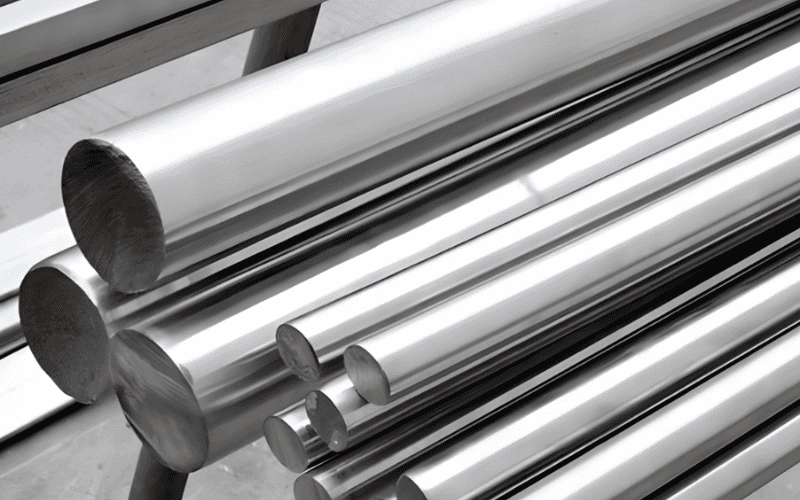
- 416 Round Bar: Our most popular form for automatic screw machines. Available in cold drawn, centerless ground, and polished finishes. Diameters typically range from 1/8″ to 12″.
- Hexagon Bars: Ideal for manufacturing fasteners and nuts without secondary milling. We stock standard imperial and metric sizes.
- Plates and Sheets: For flat components, we supply stainless steel 416 sheets ready for machining or specialized laser cutting metal sheet operations.
- Wire and Billets: available for custom forging or smaller precision parts.
Customization and Compliance
I know that “standard” doesn’t always fit the print. We offer custom cutting and grinding services to deliver 416 steel to your exact near-net shape specifications. Every shipment includes full material certification (MTRs) to verify chemical composition and mechanical properties, ensuring you meet the strict quality demands of the US market.
Looking for a specific size or condition? Would you like me to check our current inventory for a specific 416 round bar diameter or request a quote for custom-cut blocks?
Heat Treatment Guidelines for 416 Stainless Steel
One of the distinct advantages of using martensitic stainless steel 416 is its incredible responsiveness to thermal processing. Unlike austenitic grades, 416 stainless steel can be heat treated to achieve a wide range of mechanical properties, allowing us to tailor the material for high hardness or optimized toughness depending on the end application.
To get the most out of 416 heat treated components, we follow strict temperature protocols. Here is a breakdown of the standard procedures we recommend to optimize performance:
Process Recommendations
- Sub-Critical Annealing: For maximum machinability, heat the material to 1350–1450°F (730–790°C), followed by air cooling. This relieves internal stresses and prepares the steel for complex cold working.
- Full Annealing: Heat to 1550–1650°F (840–900°C), then cool slowly in the furnace to 1100°F (600°C) before air cooling. This is critical when you need the material in its softest possible state.
- Hardening: To achieve high 416 stainless steel hardness, heat to 1700–1850°F (925–1010°C), then quench in oil or air. Oil quenching is generally preferred for thicker sections to ensure uniform transformation.
- Tempering: After hardening, tempering is required to restore toughness. The temperature you choose dictates the final hardness.
Critical Warning: We strongly advise against tempering AISI 416 in the range of 750–1075°F (400–580°C). Tempering in this zone significantly reduces corrosion resistance and impact toughness due to secondary hardening embrittlement.
Once the heat treatment cycle is complete, components often develop surface scale. To restore the part’s dimension and appearance, you may need to utilize professional surface treatment services to clean, passivate, or polish the steel for its final assembly.
Temperature Guide for 416 Stainless
| Process | Temperature Range (°F) | Temperature Range (°C) | Cooling Method |
|---|---|---|---|
| Annealing | 1550 – 1650 | 840 – 900 | Furnace Cool |
| Hardening | 1700 – 1850 | 925 – 1010 | Oil or Air Quench |
| Stress Relieving | 400 – 750 | 205 – 400 | Air Cool |
Machining and Fabrication Best Practices
When we talk about 416 stainless steel, we are talking about the “king” of free machining stainless steel. If your production line relies on automatic screw machines, this is the material you want in the feeder. The high sulfur content in UNS S41600 isn’t just a chemical footnote; it creates manganese sulfide inclusions that act as built-in chip breakers. This means you don’t get those long, stringy chips that clog up tooling. Instead, you get small, brittle chips that clear easily, allowing for significantly higher machining speeds—typically around 85% of standard carbon steel.
Tips for Turning, Drilling, and Milling
To get the most out of AISI 416, you need to dial in your parameters correctly. While it is forgiving, following these guidelines ensures maximum tool life and surface finish:
- Speed and Feed: You can run Type 416 stainless at higher speeds than almost any other martensitic grade. For turning, we recommend surface speeds of 110-140 sfm (surface feet per minute) for high-speed steel tools, and up to 400 sfm for carbide.
- Tooling: Standard high-speed steel works, but carbide tooling is preferred for long production runs to maintain tight tolerances.
- Lubrication: Use cutting oils rich in sulfur or chlorine to keep the workpiece cool and assist in flushing those chips away.
Critical Fabrication Warnings
While the 416 stainless machinability is legendary, it comes with trade-offs in fabrication that you need to be aware of. We always advise our clients to look at the whole manufacturing process before committing to this grade.
- Poor Weldability: This is the big one. Do not weld 416 steel unless absolutely necessary. The same sulfur that helps with machining causes severe hot cracking during welding. If welding is required, you are better off switching to Grade 410 or using low-hydrogen electrodes with significant pre-heating and post-weld annealing.
- Limited Formability: Because martensitic stainless steel 416 is designed for hardness and cutting, it has poor cold formability. It does not handle deep drawing or severe bending well. If you try to cold work it too aggressively, it will likely crack or split.
- Passivation Required: After machining, it is crucial to passivate the parts. This removes surface iron and contaminants that could lead to premature corrosion, ensuring the part maintains its integrity in service.
Corrosion Resistance Capabilities
When we talk about AISI 416, we have to be honest about the necessary trade-offs. The same high sulfur content that gives this grade its incredible free-machining speed (making it the machinist’s choice) unfortunately lowers its corrosion resistance compared to non-free-machining grades like 410. The sulfur creates manganese sulfide inclusions, which can act as initiation sites for pitting.
That said, 416 stainless steel performs reliably in mild environments. It offers adequate resistance to:
- Natural food acids and waste products
- Basic alkaline mixtures
- Fresh water
- Dry atmosphere and steam
Limitations and Best Practices
It is crucial to note that 416 stainless is not suitable for chloride-heavy or marine environments. If your project involves direct exposure to seawater or harsh salty atmospheres, this grade will succumb to pitting. For those challenging conditions, you should look into materials specifically engineered for marine engineering applications rather than standard free-machining martensitic steels.
Pro-Tip for Maximum Durability:
To get the best possible corrosion performance out of your 416 steel parts, we recommend using them in the hardened and tempered condition. Paradoxically, the annealed condition actually offers lower resistance. Additionally, ensuring a highly polished, smooth surface finish will significantly help the material fight off oxidation.
Next Step: Would you like me to detail the specific international equivalent grades and standards for 416 stainless steel to help you cross-reference your global supply chain requirements?
Common Applications and Industries for 416 Stainless Steel
When speed and precision count, AISI 416 is the material we turn to. Because it is the premier free-machining martensitic grade, it is the standard choice for industries that require high-volume production without chewing through tooling. If you are running automatic screw machines, this is the grade that keeps your cycle times low and your output high.
We supply 416 stainless steel primarily for parts that need significant machining, decent strength, and moderate corrosion resistance. It is not for marine environments, but for moving mechanical parts, it is a workhorse.
Typical Use Cases
Here is where you will find Type 416 stainless doing the heavy lifting:
- Automatic Screw Machine Parts: This is the #1 application. The sulfur content breaks chips easily, allowing for complex, detailed cuts at high speeds.
- Fluid Handling: It is widely used for pump shafts and valve components where high hardness is needed to resist wear from friction.
- Automotive and Mechanical: We frequently supply this for gears, axles, and pinions. The ability to heat treat Condition T material adds the necessary durability for these stress-bearing parts.
- Fasteners and Hardware: It is excellent for manufacturing bolts, nuts, studs, and screws that won’t face harsh chemical exposure.
- Electrical Components: You will also see it used in motor shafts and parts for washing machines due to its specific magnetic properties.
Why Industries Choose It
The bottom line is cost-efficiency. Manufacturers in the United States choose UNS S41600 because it drastically reduces machining time compared to standard austenitic grades like 304. If you need a part that is non-galling and hardenable, 416 is the practical solution.
Next Step: Do you have a specific print or drawing? I can check our inventory for the 416 hex bar or round stock you need to start production immediately.
International Equivalent Grades and Standards
Sourcing materials globally requires speaking the “local language” of steel. While AISI 416 and UNS S41600 are the primary identifiers here in the U.S. market, your blueprints or sub-contractors might reference European or Japanese specifications.
Below is the cross-reference table to help you match 416 stainless steel with its international counterparts.
| Region | Standard | Grade / Designation |
|---|---|---|
| United States | AISI / ASTM | Type 416 / UNS S41600 |
| Europe (EN) | DIN EN 10088-3 | 1.4005 stainless steel |
| Germany | DIN | X12CrS13 |
| Japan | JIS G4303 | SUS 416 |
| United Kingdom | BS 970 | 416S21 |
| France | AFNOR | Z12CF13 |
| Sweden | SS | 2380 |
Note: While 1.4005 stainless steel and SUS 416 are the nearest equivalents to US standards, minor variations in chemical composition ranges can exist. Always verify that the specific mechanical properties meet your project’s compliance requirements before substituting grades.
Why Partner with Vastmaterial for 416 Stainless Steel?
Sourcing 416 stainless steel shouldn’t be a gamble. At Vastmaterial, we understand that when you are running high-volume screw machines, material consistency is everything. We aren’t just selling metal; we provide supply chain stability for American manufacturers. Whether you need 416 stainless bar stock or custom plates, we deliver precision and reliability.
To ensure this consistency, every heat lot undergoes strict testing and quality control procedures before it ever leaves our facility. We verify chemical composition and mechanical properties so you don’t face surprises on the production line.
The Vastmaterial Advantage
As one of the leading 416 stainless steel suppliers, we prioritize what matters most to your business:
- Quality Assurance: Full Mill Test Reports (MTRs) and compliance with AMS 5610/ASTM A582 standards come standard.
- Speed: We maintain robust inventory levels to ensure fast turnaround times for urgent orders.
- Cost-Efficiency: Our optimized supply chain allows us to offer competitive pricing without cutting corners on grade purity.
- Expert Support: We know martensitic stainless steel 416 inside and out, offering technical guidance on heat treatment and machining parameters.
| Feature | Vastmaterial Standard | Competitors |
|---|---|---|
| Material Traceability | 100% Full Heat Lot Tracking | Often Incomplete |
| Certification | MTRs with Every Shipment | On Request / Extra Fee |
| Response Time | Same-Day Quotes | 24-48 Hours |
| Custom Sizing | Cut-to-Length Available | Standard Stock Only |
Ready to secure your supply? Contact us today for a quote on your AISI 416 needs.

Reviews
There are no reviews yet.