

416 Stainless Steel Investment Casting Overview
When you need stainless parts that are easy to machine, heat treatable, and cost-effective, 416 stainless steel investment casting is one of the most practical choices on the market.
What Is 416 Stainless Steel Investment Casting?
416 stainless steel investment casting (also called 416 stainless steel lost wax casting) is a precision process where I pour AISI 416 / UNS S41600, a free-machining martensitic stainless steel, into ceramic molds made from wax patterns. This gives you:
- Tight-tolerance stainless steel castings with complex geometry
- Fine surface finish that reduces secondary machining
- Near-net shape 416 SS precision cast components for repeatable quality and lower total cost
Why Use 416 Stainless for Precision Cast Parts?
Buyers and engineers choose 416 stainless steel castings when they need:
- High machinability – sulfur-modified 416 cuts fast and clean on CNC machines
- Heat-treatable performance – can be hardened for better wear and strength
- Good dimensional accuracy from investment casting, minimizing stock allowance
- Cost savings vs fully machined bar or plate, especially on complex shapes
If you expect heavy drilling, tapping, or tight-tolerance features, free machining stainless steel casting in 416 is often the most economical route.
Who Typically Uses 416 Investment Castings?
I see 416 stainless steel investment castings commonly specified by:
- Design engineers needing a balance of strength, machinability, and moderate corrosion resistance
- Procurement and buyers looking to cut machining time and piece price
- OEMs in pumps, valves, firearms, industrial equipment, and transportation hardware
- Machine shops that want cast near-net shapes in 416 stainless to streamline CNC work
How 416 Compares to Other Stainless Casting Grades
When you’re choosing between stainless casting alloys, 416 sits in a specific performance niche:
- 416 vs 410 stainless casting
- 416: Much better machinability, slightly lower corrosion resistance
- 410: Better corrosion and toughness, harder to machine
- 416 vs 304 stainless steel investment casting
- 416: Machinability and hardness are the big advantages
- 304: Far superior corrosion resistance, especially in wet or aggressive environments
- 416 vs 17-4 PH stainless steel investment castings
- 416: Lower cost and easier machining, good for high-volume CNC
- 17-4 PH: Much higher strength and corrosion resistance, but more demanding to machine and cast
If your priority is fast machining, good wear resistance, and precision casting—and not maximum corrosion resistance—416 stainless steel investment castings are usually the smart choice.
Key Features of 416 Stainless Steel Investment Castings
416 stainless steel investment castings hit a sweet spot for US manufacturers who need precision, machinability, and cost control in one package.
Free‑machining martensitic stainless
416 is a free‑machining martensitic stainless steel casting with sulfur added for easier chip breaking and faster cutting speeds. That means shorter cycle times, less tool wear, and more stable production when you’re running volume parts.
High machinability for heavy CNC work
If you do a lot of CNC drilling, turning, or milling after casting, 416 stainless steel castings are a smart choice. You can:
- Run higher cutting speeds than with 304 or 316
- Reduce tool change frequency
- Hold tight dimensions on critical features
Pairing 416 with a tight‑control stainless investment casting process lets us deliver near‑net shapes that machine quickly and cleanly. For a deeper look at the overall process, I walk through it in our guide on the stainless investment casting process and benefits.
Heat‑treatable for hardness and wear
416 stainless steel investment castings can be hardened and tempered to boost:
- Surface hardness
- Wear resistance
- Strength in loaded or sliding applications
This makes 416 SS precision cast components ideal for pump shafts, gears, firearm components, and other parts that see friction and impact.
Moderate corrosion resistance
As a 400 series martensitic grade, 416 stainless steel castings offer moderate corrosion resistance in:
- Dry environments
- Mild atmospheres
- Lightly corrosive industrial settings
If you need aggressive chemical or marine resistance, we’d look at 304 or 316 stainless steel investment castings instead, but for many OEM and industrial applications 416 is more than enough.
Tight tolerances and fine details
Using 416 stainless steel lost wax casting, we can hold tight tolerances and cast in details like:
- Thin walls
- Small radii
- Internal features and logos
This reduces secondary machining and fixturing, especially on complex geometry that would be expensive to mill from bar or plate.
Cost savings on complex, high‑volume parts
Because 416 machines so well and investment casting gets you very close to final shape, you save in three ways:
- Less material waste vs. machining from solid
- Less CNC time and tooling cost
- Lower per‑piece cost on high‑volume 416 stainless steel investment castings
For complex parts that repeat, 416 is one of the most cost‑effective free‑machining stainless steel casting options you can run at scale.
Material specifications for 416 stainless steel investment casting
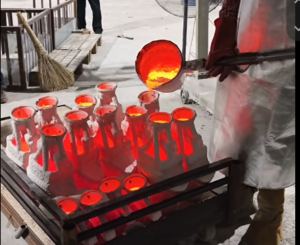
Chemical composition of 416 stainless steel
For our 416 stainless steel investment castings, we stick to tight chemistry control so machinability and hardness are predictable batch to batch. Typical composition (weight %):
- Chromium (Cr): 12.0–14.0%
- Carbon (C): 0.08–0.15%
- Sulfur (S): 0.10–0.30% (key for free-machining)
- Manganese (Mn): ≤ 1.25%
- Silicon (Si): ≤ 1.00%
- Phosphorus (P): ≤ 0.04%
- Iron (Fe): Balance
This is a sulfur-added martensitic stainless grade designed specifically for free machining stainless steel casting and UNS S41600 cast parts.
416 stainless standards and equivalents
We align our 416 stainless steel investment castings with common US and international specs so engineers and buyers have clean traceability:
- UNS: S41600
- AISI: 416 stainless steel
- Common bar/forging specs: ASTM A582 Type 416
- Typical casting callouts: “AISI 416” or “416 SS” on drawing with customer-specific casting standards
For broader stainless steel casting process details, we follow the same controls we use on our other stainless steel casting production.
Physical properties of 416 stainless castings
Typical physical properties for 416 stainless steel castings:
- Density: ~7.7 g/cm³ (0.278 lb/in³)
- Thermal expansion (20–315°C / 70–600°F): ~9.6–10.4 µm/m-°C
- Thermal conductivity (at room temp): ~24–27 W/m·K
- Modulus of elasticity: ~200 GPa (29 x 10⁶ psi)
These values help with FEA, thermal cycling analysis, and tolerance planning on precision cast parts.
Mechanical properties: annealed vs hardened 416
Mechanical performance on 416 stainless steel investment castings depends heavily on heat treatment:
Annealed / IC 416 annealed investment casting:
- Tensile strength: ~550–700 MPa (80–100 ksi)
- Yield strength (0.2%): ~380–450 MPa (55–65 ksi)
- Elongation: ~18–25%
- Typical hardness: HRB 88–96 (approx. HRC 15–22)
Hardened and tempered 416 stainless castings:
- Tensile strength: ~900–1,100 MPa (130–160 ksi), depending on temper
- Yield strength: ~700–900 MPa (100–130 ksi)
- Elongation: ~10–15%
- Typical hardness range: HRC 28–40 for most pump shafts, valve components, and high machinability stainless steel components
We adjust the heat treatment spec based on whether you’re prioritizing machinability, wear resistance, or a balance of both on your 416 stainless steel machining after casting programs.
Mechanical Properties of 416 Stainless Steel Investment Castings

416 stainless steel investment castings give you a strong mix of strength, hardness, and machinability. That’s why engineers in the U.S. lean on 416 when they need CNC-friendly stainless parts with reliable mechanical performance.
As-Cast Mechanical Performance of 416 Stainless
Typical as-cast properties for 416 stainless steel castings (non-heat-treated, reference values):
| Property | Typical Value (As-Cast) |
|---|---|
| Tensile Strength | 550–700 MPa (80–100 ksi) |
| Yield Strength (0.2%) | 345–450 MPa (50–65 ksi) |
| Elongation | 8–15% |
| Hardness | ~180–240 HB (~20–25 HRC) |
As-cast 416 stainless steel investment castings are already tough enough for many shafts, housings, and brackets where high machinability is key.
Heat-Treated Mechanical Values (Tensile, Yield, Elongation)
Once we harden and temper 416 stainless steel castings, strength and wear resistance jump up:
| Condition | Tensile (ksi) | Yield (ksi) | Elongation | Typical Use |
|---|---|---|---|---|
| Annealed | 75–90 | 45–55 | 15–20% | Max machinability, easy machining |
| Hardened + Temper | 110–150 | 85–120 | 8–14% | Wear parts, shafts, firearm parts |
Actual values depend on section size, exact heat treatment, and casting design, but this is what most U.S. buyers can expect from quality 416 stainless steel investment castings.
Hardness After Heat Treatment and Tempers
416 stainless is heat-treatable to a wide hardness range:
| Condition | Approx. Hardness |
|---|---|
| Annealed | ~170–220 HB (≈18–23 HRC) |
| Oil-Hardened, Low Temper | ~35–40 HRC |
| Oil-Hardened, Medium Temper | ~28–34 HRC |
| Oil-Hardened, High Temper | ~22–28 HRC |
We usually target hardness based on how much machining you still need. Higher hardness = tougher to machine, so we often rough machine in a softer condition and then harden.
416 vs 410 vs 420 vs 17-4 PH vs 304 (Casting Comparison)
| Alloy | Strength (Hardened) | Corrosion Resistance | Machinability | Typical Choice For… |
|---|---|---|---|---|
| 416 | Medium–High | Moderate | Excellent (free-machining) | Shafts, gears, firearms, CNC-heavy parts |
| 410 | Medium–High | Slightly better than 416 | Fair | General martensitic parts, less machining |
| 420 | High (very hard) | Similar to 410/416 | Poor–Fair | Cutters, blades, high wear |
| 17-4 PH | High strength + toughness | Good | Moderate | Aerospace, defense, structural parts |
| 304 | Low–Medium | Excellent | Moderate | Food, chemical, high corrosion areas |
416 stainless steel investment castings are the “machinability-first” option in the martensitic family. If you need more corrosion resistance, you move to 304/316; if you need higher structural performance, you look at 17-4 PH stainless solutions.
Machinability vs Strength Trade-Off in 416 Castings
With 416 stainless steel castings, you’re always balancing three things:
- Machinability:
- Best in annealed or low-hardness condition
- Sulfur addition (free-machining) makes 416 SS cut fast and clean
- Strength & Hardness:
- Go up with hardening and lower tempering temperatures
- But high hardness (>35 HRC) increases tool wear and cycle time
- Cost & Throughput:
- We often cast near-net shape, rough machine soft, heat treat, then finish critical surfaces
- This flow keeps your tooling cost, machining time, and total part price under control
If you’re trying to decide between 416 and another stainless grade for investment casting, I usually start with a simple rule:
- Need maximum machinability + decent corrosion + good hardness? 416 stainless steel investment casting is the sweet spot.
Investment casting process for 416 stainless steel
I run 416 stainless steel investment casting as a controlled, step‑by‑step process so you get tight tolerances, clean surfaces, and consistent machinability.
Wax pattern design and tooling for 416 parts
For 416 stainless steel investment castings, everything starts with the wax:
- We design wax patterns and steel tooling around shrink rates specific to 416 stainless so dimensions land on-size after heat treat.
- Gates, runners, and vents are placed to avoid hot spots and minimize porosity in martensitic stainless.
- For high-volume 416 stainless steel castings, we use multi-cavity tools to keep part cost low and repeatability high.
If you’re new to investment casting, my general guide to investment casting alloys and processes walks through how we choose tooling and process paths.
Shell building and ceramic mold preparation
Next, we build a ceramic shell that can handle 416 stainless at temperature:
- Refractory slurries and stucco are chosen to resist thermal shock from 416 stainless steel melting and pouring.
- Multiple dips create a shell strong enough for thin walls and detailed 416 SS precision cast components.
- Controlled drying and humidity prevent shell cracking and distortion, which is critical for tight tolerance stainless steel investment casting.
Dewaxing and burnout for 416 stainless alloys
Dewaxing and burnout are tuned for martensitic stainless:
- We use autoclave or flash dewax to protect shell integrity on complex 416 SS investment castings.
- Burnout cycles are set to remove all residual wax and moisture, so gas porosity is minimized in UNS S41600 cast parts.
- Temperature profiles are matched to the shell system and 416 alloy to lock in dimensional accuracy before pouring.
Melting and pouring 416 stainless for consistent quality
Melting 416 stainless is where alloy control really matters:
- We melt AISI 416 stainless steel casting heats in induction furnaces with tight control of sulfur, carbon, and chromium.
- Deoxidation, slag control, and superheat are managed to reduce inclusions and gas porosity.
- Pouring temperature and speed are optimized for 416’s fluidity, ensuring complete fill in thin sections and fine details.
Shell removal, cutoff, and initial finishing
After solidification:
- Ceramic shell is knocked off or blasted away without damaging edges or threads on 416 stainless precision cast components.
- Parts are cut off the tree, gates are ground, and contact areas are blended.
- We stabilize martensitic structure with controlled cooling to prep parts for later 416 stainless steel machining after casting.
Process controls for shrinkage, porosity, and distortion
416 stainless moves when it cools, so we keep it under tight control:
- Solidification modeling and gating design minimize shrinkage cavities and hot tears in 400 series stainless steel investment casting.
- Rigorous control of pouring temperature, shell preheat, and cooling rate reduces distortion and warp.
- Radiographic testing, chemical analysis, and dimensional checks close the loop so each batch of 416 stainless steel investment castings stays consistent run to run.
Advantages of 416 Stainless Steel Investment Casting (Lost Wax)
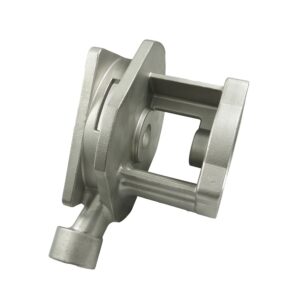
When I run 416 stainless steel investment casting (lost wax casting), the goal is simple: get complex, high-precision parts while cutting your machining and total part cost.
Complex shapes and internal details in 416 stainless
Lost wax casting lets me produce 416 stainless steel investment castings with features that are difficult or impossible to machine:
- Complex internal passages and cavities
- Undercuts, grooves, and pockets
- Integrated bosses, lugs, and mounting features
That means designers can consolidate multi-piece assemblies into a single 416 stainless steel casting, cutting welding, fixturing, and assembly time.
Thin-wall, lightweight 416 stainless components
With precision tooling and a stable process, I can cast:
- Thin wall sections in 416 stainless
- Lightweight components with optimized geometry
- Ribs, webs, and hollow areas to reduce mass
This is especially useful for aerospace 416 stainless investment castings, firearms components, and performance automotive parts where every ounce matters.
Better surface finish than sand casting
Compared to sand cast parts, 416 stainless steel lost wax casting delivers a much smoother as-cast surface:
- Finer surface finish, typically suitable for many functional surfaces as-cast
- Less stock allowance needed for machining
- Better aesthetics for visible hardware and consumer-grade components
That smoother starting point saves both time and tool wear when you’re machining 416 stainless steel castings.
Tight tolerances and repeatability
Investment casting is ideal when you need tight tolerance stainless steel investment casting in 416:
- Consistent dimensional accuracy across high-volume runs
- Tight tolerances on critical diameters, bores, and mounting features
- Good repeatability from lot to lot with controlled process parameters
For many OEMs, this means less post-machining and easier assembly fit-up.
Cutting machining time on 416 SS
Because 416 is a free-machining martensitic stainless, it already machines better than many other stainless grades. Investment casting amplifies that advantage:
- Near-net shape 416 stainless castings minimize material removal
- Integrated features reduce multiple setups and secondary operations
- Less time on mills, lathes, and Swiss machines, especially for shafts, pump parts, and valve components
If you’re planning complex 416 parts, partnering with a dedicated lost-wax casting foundry like our precision alloy casting foundry lets you lock in both casting quality and downstream machining efficiency.
Applications of 416 Stainless Steel Investment Castings
Pump, Valve, and Fluid Handling Parts
416 stainless steel investment castings are a strong fit for pump bodies, pump shafts, and valve components where machinability and wear resistance matter more than maximum corrosion resistance. I use 416 SS castings for:
- Pump shafts and sleeves
- Valve stems, discs, and trim
- Custom 416 stainless valve components for OEM fluid systems
When you need tight tolerances, good surface finish, and a lot of machining (ports, threads, sealing faces), 416 beats most other martensitic grades on cost and productivity. For more complex valve bodies or OEM projects, I often pair 416 with our broader valve castings manufacturing capabilities for custom designs: custom OEM valve body castings.
Automotive and Aerospace Hardware in 416 SS
For automotive and aerospace hardware, 416 stainless steel investment castings work well on:
- Brackets, housings, and sensor mounts
- Actuation parts, levers, and linkage components
- Hardware that needs repeatable precision and heavy post-machining
You get:
- High machinability for CNC work
- Stable dimensions from the 416 stainless steel investment casting process
- Heat-treatable hardness for wear spots and threaded interfaces
Firearms, Defense, and Tactical Components
416 is a go-to martensitic stainless steel investment casting grade for:
- Receivers and upper/lower housings
- Triggers, hammers, sears, safety levers
- Mounts, rails, and small defense hardware
Why 416 SS works here:
- Great machinability for tight, functional features
- Ability to harden for wear and impact points
- Clean surface finish straight from 416 stainless steel lost wax casting
Medical and Food Processing Components
When I need a free machining stainless steel casting for medical or food-related hardware that still must machine well, 416 is often on the table for:
- Handles, fixtures, and structural brackets
- Instrument components that need drilling, tapping, and tight bores
- Non-contact parts on food equipment where aggressive chemicals aren’t present
If you need higher corrosion resistance against chlorides, caustics, or frequent washdowns, I’ll typically guide you toward 304 or 316 stainless steel investment castings instead.
Gears, Shafts, Fasteners, and Connectors
416 stainless steel castings are excellent for:
- Small to mid-size gears and sprockets
- Precision shafts and couplings
- Threaded fasteners, inserts, and connectors
Here, heat treatable 416 stainless castings let you dial in hardness and wear resistance while keeping the machining time low, which is a big cost win in U.S. production environments.
When to Choose 416 vs 304 or 316
I usually recommend 416 stainless steel investment castings when:
- You need:
- Heavy CNC machining (threads, bores, tight features)
- Wear resistance and heat-treatable hardness
- Medium corrosion resistance in oils, dry environments, or mild moisture
- You should choose 304 or 316 instead when:
- Parts see salt, chlorides, harsh cleaners, or constant washdown
- You need strong resistance to pitting and crevice corrosion
- Hygienic surfaces and long-term corrosion performance are critical
Simple rule for U.S. buyers and engineers:
- 416: Machine-heavy, wear-focused, moderate environment
- 304/316: Corrosion-focused, washdown, or food-contact environments
If you share your operating environment and machining needs, I can call out whether 416 stainless steel castings, 304, or 316 will be the most cost-effective and reliable choice for your application.
Design guidelines for 416 stainless steel investment cast parts
When I design 416 stainless steel investment castings, I focus on making the part cast-friendly first, then machining-friendly. That’s where most of the cost savings come from.
Recommended minimum wall thickness for 416 castings
For 416 stainless steel investment castings, a safe rule of thumb:
- Standard sections: 0.08–0.12 in (2–3 mm) minimum wall
- Small, high-precision parts: can go down to 0.06 in (1.5 mm) with good gating and process control
- Large or heavy parts: keep walls at ≥0.12 in (3 mm) for better fill and fewer defects
Whenever I can, I use consistent wall thickness instead of very thin areas next to heavy bosses or pads.
Typical dimensional tolerances
With precision 416 stainless steel investment castings, I generally design to:
- Linear tolerance: about ±0.005 in/in (±0.005 in per inch of dimension)
- Minimum tolerance band: ±0.005–0.010 in on critical features
- Hole locations / datums: tighter tolerances held after light machining
Investment casting gives tight repeatability, then I clean up critical fits by CNC machining.
Max part size and weight ranges
For most 416 stainless steel investment cast parts, typical capability is:
- Weight: from a few grams up to about 50–75 lb per piece
- Size: roughly up to 24–30 in in the longest dimension for standard tools
Actual limits depend on tooling and the specific precision casting process we use. Larger or heavier parts may need different gating or multiple cavities; I usually review that up front with the customer.
Draft, radii, and transitions
Good geometry makes 416 stainless investment casting more stable and consistent:
- Draft:
- External surfaces: 0.5–1° draft when possible
- Internal features / deep pockets: 1–2° draft for better shell removal
- Radii and fillets:
- Avoid sharp corners; use 0.03–0.06 in (0.8–1.5 mm) minimum radii
- Larger radii on heavy sections help cut down stress and cracking
- Transitions:
- Smooth, blended transitions between thick and thin sections
- Avoid sudden steps or knife edges – they’re crack and shrinkage magnets
Design for uniform section thickness
416 is a martensitic stainless, so it’s more sensitive to uneven cooling:
- Keep sections as uniform as possible across the part
- If you need heavy bosses or ribs, taper them and blend gradually into the base wall
- Avoid isolated “mass islands” that cool slower and cause shrinkage, porosity, or distortion
- Use coring or pockets to reduce heavy masses where strength allows
This approach improves both cast quality and long-term dimensional stability.
Surface finish expectations
With 416 stainless steel investment castings, here’s what I typically plan for:
- As-cast surface finish: about Ra 125–250 μin (3.2–6.3 μm) depending on part size and shell
- Blasted / cleaned: around Ra 90–150 μin (2.3–3.8 μm)
- Machined surfaces: easily brought down to Ra 32–63 μin (0.8–1.6 μm)
- Polished / cosmetic areas: can reach much finer finishes with secondary polishing
Because investment casting already gives a finer surface than sand casting, I often design parts so only critical faces are machined, and the rest remain as-cast or blasted to save cost.
If you want to see how we approach tooling, tolerance, and surface control across different alloys, our overview of precision casting services lays out the process in more detail and matches what we actually deliver in production.
Manufacturing capabilities and secondary operations for 416 stainless steel investment casting
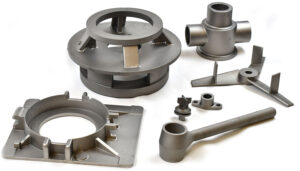
CNC machining of 416 stainless castings
We machine 416 stainless steel investment castings in-house, taking full advantage of its free‑machining properties. That means:
- Tight tolerance features after casting (threads, bores, flats, critical sealing faces)
- Faster cycle times and lower tool wear compared to 304 or 316
- Cost‑effective production of complex 416 SS precision cast components for OEMs in the U.S.
Heat treatment options for 416 stainless
We heat treat 416 stainless steel investment castings to hit your exact strength and hardness targets:
- Anneal for easier machining and good ductility
- Harden to boost wear resistance and strength
- Temper to fine‑tune hardness and toughness for pump shafts, valve parts, and firearm components
Surface treatments and passivation
To keep 416’s corrosion performance stable in real-world conditions, we offer:
- Chemical deburring and cleaning
- Passivation to remove free iron and improve corrosion resistance
- Optional protective coatings depending on your environment and spec
Where needed, we combine passivation with other surface treatment services to hit strict finish and appearance requirements.
Deburring, polishing, and blasting
We finish 416 stainless steel castings to production-ready condition:
- Mechanical and manual deburring of edges and gates
- Bead blasting for uniform matte surfaces
- Polishing of sealing faces, sliding interfaces, and cosmetic areas
Non-destructive testing and dimensional inspection
To keep 416 stainless steel cast parts consistent and reliable, we support:
- NDT: visual, dye penetrant, magnetic particle, and X-ray (when required)
- Dimensional inspection with CMM and custom gauges
- Documented reports for critical aerospace, defense, and industrial programs
Batch sizes from prototypes to high-volume
We build 416 stainless steel investment castings for:
- Prototype and pilot runs for design validation
- Mid-volume production for specialized OEMs
- Fully tooled, high-volume programs with stable pricing and repeatable quality
This end‑to‑end capability lets us deliver custom 416 stainless steel investment castings that are ready to install, not just rough cast blanks.
Quality control for 416 stainless steel investment casting
When we produce 416 stainless steel investment castings, we lock in quality from the very first melt to final inspection. For U.S. OEMs, engineers, and buyers, that means every 416 stainless part you receive is traceable, measured, tested, and repeatable.
Material certification and 3.1 traceability for 416
Every heat of 416 stainless steel we cast is backed by full material certification and 3.1 traceability (EN 10204).
We maintain:
- Heat number traceability from raw 416 stainless to finished castings
- Chemical analysis to confirm UNS S41600 / AISI 416 chemistry
- Stored data and certificates for long-term project and audit needs
You can see how we manage different alloys and specs on our casting alloy capability page.
Dimensional inspection and measurement reports
For tight-tolerance 416 stainless steel investment castings, we provide dimensional proof, not guesswork:
- First Article Inspection (FAI) and PPAP-level reporting on request
- CMM inspection for complex 3D geometries and precision features
- Dimensional reports with actual vs. nominal for key characteristics
- Controlled gages and calibrated equipment for consistent results
Mechanical testing and hardness verification
We don’t just certify the alloy—we verify performance:
- Tensile and yield tests per ASTM methods on 416 stainless test bars
- Hardness checks (HRC / HB) after heat treatment to hit your spec window
- Optional impact tests and microstructure review for critical parts
Process validation for repeatable 416 casting quality
416 stainless steel investment castings need stable processes to control shrinkage, porosity, and hardness. We validate and lock down:
- Wax, shell, and melt parameters for consistent metallurgy
- Statistical process control (SPC) on key dimensions and quality metrics
- Corrective action and continuous improvement when trends shift
More details on our testing and validation approach are on our testing and quality page.
Industry standards and customer-specific specs alignment
We align 416 stainless steel investment castings to your world, not the other way around:
- Compliance with relevant ASTM, AISI, and industry standards for 400 series stainless
- Build-to-print with customer-specific specs, control plans, and inspection levels
- Support for defense, aerospace, automotive, and industrial documentation requirements
Bottom line: if you need 416 stainless steel investment castings with real quality control, full documentation, and repeatable performance, we design our process to fit your spec—not just the catalog.
Why Choose Specialized Suppliers for 416 Stainless Steel Investment Castings
When you’re buying 416 stainless steel investment castings in the U.S. market, a specialized supplier isn’t “nice to have” — it’s the difference between parts that run right the first time and parts that fail in the field.
Expertise with Martensitic Stainless Casting
416 is a martensitic, free‑machining stainless steel. It shrinks, hardens, and responds to heat treat very differently than 300 series stainless or carbon steel. A specialist knows how to:
- Control cooling rates to avoid cracking and distortion
- Manage shrinkage to keep tight tolerances on complex shapes
- Adjust gating and riser design to reduce porosity and inclusions
That experience shows up in consistent, repeatable 416 stainless steel investment castings that actually match your print.
Balancing Machinability, Hardness, and Corrosion
The real value of 416 stainless steel castings is the balance:
- High machinability for fast CNC work and lower cycle time
- Heat-treatable hardness for wear surfaces, shafts, and sear/trigger components
- Moderate corrosion resistance for dry to mildly corrosive environments
A specialized foundry helps you hit the sweet spot — not over-hardening (and causing brittleness) and not over-annealing (and losing wear resistance). We tune chemistry, heat treat, and process so your 416 SS precision cast components meet both performance and machining goals.
Engineering Support for DFM and Alloy Selection
For most U.S. OEMs and buyers, the win is in front-end engineering. A good 416 stainless steel investment casting supplier will:
- Review your 3D models for DFM (draft, radii, wall transitions)
- Suggest where 416 works best — and where 410, 420, 17‑4 PH, or 304 may be smarter
- Help convert machined-from-bar parts into near-net 416 stainless investment castings
That collaboration cuts machining hours, reduces scrap, and shortens launch time for new programs.
Flexible Lead Times and Global Logistics
Whether you’re ramping an OEM program or running steady service orders, you need a supplier who can:
- Support short-run prototypes and PPAPs
- Scale to high-volume production with steady lead times
- Manage global logistics and safety stock to avoid line-down situations
We build our supply chain to match U.S. customer expectations: predictable delivery, clear communication, and options when demand spikes.
Cost Optimization on Complex 416 Components
416 stainless steel investment castings are all about cost per finished part, not cost per pound. A specialized supplier focuses on:
- Casting near-net shapes to slash CNC time on 416
- Optimizing runner systems to boost yield and reduce waste
- Matching surface finish to your real needs (as-cast, machined, or polished)
When you’re also sourcing non-ferrous parts like precision copper alloy components for the same assemblies, consolidating with one platform that understands both copper alloy cast parts and 416 stainless can further cut total system cost and simplify vendor management.
In short, if you want dependable 416 stainless steel investment castings with real cost and performance advantages, you work with a supplier who lives and breathes martensitic stainless — not a generalist job shop.
Related stainless steel investment casting options
If 416 stainless steel investment castings don’t fully match what you need, I also run other stainless grades so we can dial in the right balance of strength, machinability, and corrosion resistance.
Other 400 series stainless castings (410, 420)
Beyond 416 stainless steel castings, I offer:
- 410 stainless steel investment castings
- Lower sulfur, better toughness than 416
- Higher hardenability and wear resistance
- Better choice where impact and moderate corrosion matter more than machinability
- 420 stainless steel investment castings
- Can be hardened to very high hardness (cutting edges, blades, wear parts)
- Used when edge retention and abrasion resistance are more critical than ease of machining
These 400 series martensitic stainless steel investment castings work well for structural, wear, and tooling components that don’t need 304/316-level corrosion resistance.
Precipitation hardening stainless castings (17-4 PH)
When you need higher strength than 416:
- 17-4 PH stainless steel investment castings
- Much higher tensile and yield strength
- Good corrosion resistance, better than 416 and most 400 series
- Ideal for aerospace, defense, and high-load hardware where performance per pound matters
I typically recommend 17-4 PH over 416 SS precision cast components when the design is load‑critical or fatigue‑sensitive.
Austenitic stainless castings (304, 316)
For more aggressive environments, I’ll steer you to:
- 304 stainless steel investment casting
- Good all-around corrosion resistance
- Non-magnetic in most conditions
- Common for general industrial and food contact hardware
- 316 stainless steel investment casting
- Better chloride and chemical resistance than 304 and 416
- Strong choice for marine, chemical processing, and washdown applications
If corrosion is the main driver, 304/316 corrosion resistant stainless steel castings generally outperform any free machining stainless steel casting like 416.
Switching between 416 and alternative alloys
Here’s how I usually guide customers:
- Choose 416 stainless steel investment castings when:
- You need high machinability and tight tolerance CNC work
- Corrosion exposure is mild, controlled, or intermittent
- Step up to 410 or 420 when:
- You need higher hardness and wear resistance with less focus on machining speed
- Move to 17-4 PH when:
- You need high strength and good corrosion resistance together
- Use 304 or 316 when:
- Corrosion resistance is the top priority, especially in wet or chemical environments
We can also look at other specialty alloys, including high‑temperature and nickel‑based materials similar to those outlined in our Inconel alloys guide, when parts see extreme heat or harsh media.
Hybrid solutions with 416 and other alloys
You’re not locked into one alloy for an entire assembly. I often design:
- Hybrid assemblies combining:
- 416 stainless steel investment castings for machinable, tight‑tolerance features
- 304/316 or 17-4 PH components where corrosion or strength requirements are higher
- Mixed‑alloy hardware sets (shafts in 416, housings in 316, fasteners in 17‑4 PH)
If you share your service environment, loads, and machining plan, I’ll help you choose between 416 stainless steel investment castings and the right alternative grade—or a hybrid approach that keeps cost and performance in balance.

Reviews
There are no reviews yet.