
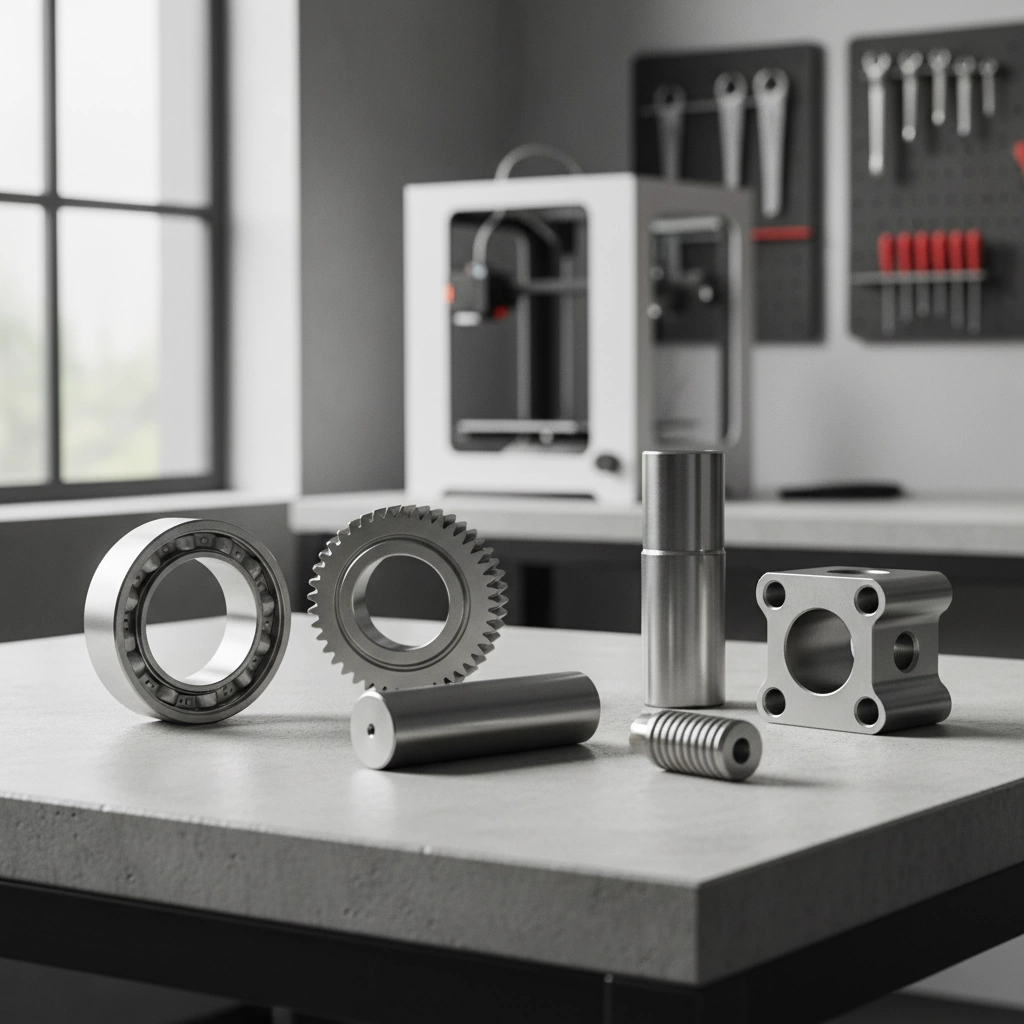
Custom 52100 Alloy Steel Machined Parts
Precision Manufacturing for High-Wear, High-Fatigue Applications
We specialize in the expert CNC machining of AISI 52100 bearing steel, delivering components designed to withstand extreme operational stress. Whether you need a single prototype machined from annealed stock or a large-scale production run of hardened, precision-ground parts, our facility is equipped to handle the unique demands of this high-carbon chromium alloy.
52100 steel is the industry standard for applications requiring exceptional hardness and resistance to rolling contact fatigue. However, its high carbon content (1%) and chromium additions make it notoriously difficult to machine without the right expertise. We utilize advanced CNC Swiss machining, turning, and milling strategies to maintain tight tolerances—often down to +/- .006 on standard diameters—ensuring your parts perform reliably in critical bearing, bushing, and aircraft assemblies. From raw bar stock to finished, heat-treated components, we provide a complete manufacturing solution for your toughest wear applications.
Why Choose Vastmaterial for 52100 (Bearing Steel) Machining?
Machining 52100 alloy steel requires specialized expertise due to its high carbon and chromium content. With a machining cost factor of 4.8 (compared to a baseline of 1 for 12L14 steel), this material is significantly tougher to process than standard metals. At Vastmaterial, we utilize advanced CNC Swiss machining and turning centers specifically calibrated to handle this hardness while maintaining speed and accuracy.
We provide a complete manufacturing solution that ensures your high-wear parts meet exact engineering standards. Our shop is equipped to manage the entire lifecycle of the component, from soft machining in the annealed state to final finishing after heat treatment. We apply the same rigorous quality standards to bearing steel as we do when processing other high-performance alloys, such as 17-4 stainless steel bar and plate.
Our Core Capabilities for 52100 Steel
| Capability | Benefit for Your Project |
|---|---|
| Precision Hard Turning | We can machine hardened 52100 (up to 60-67 HRC) directly, often eliminating the need for expensive secondary grinding operations. |
| Complex Geometries | Our CNC Swiss machines excel at producing intricate, long, and slender parts like pins, shafts, and needle rollers in a single setup. |
| Superior Surface Finish | We achieve surface finishes of Ra 0.4µm or better, critical for reducing friction in bearing and bushing applications. |
| Turnkey Processing | We manage the full workflow, including heat treating (annealing, tempering, case hardening) and final precision grinding to ensure total supply chain reliability. |
Material Profile: What is 52100 Alloy Steel?
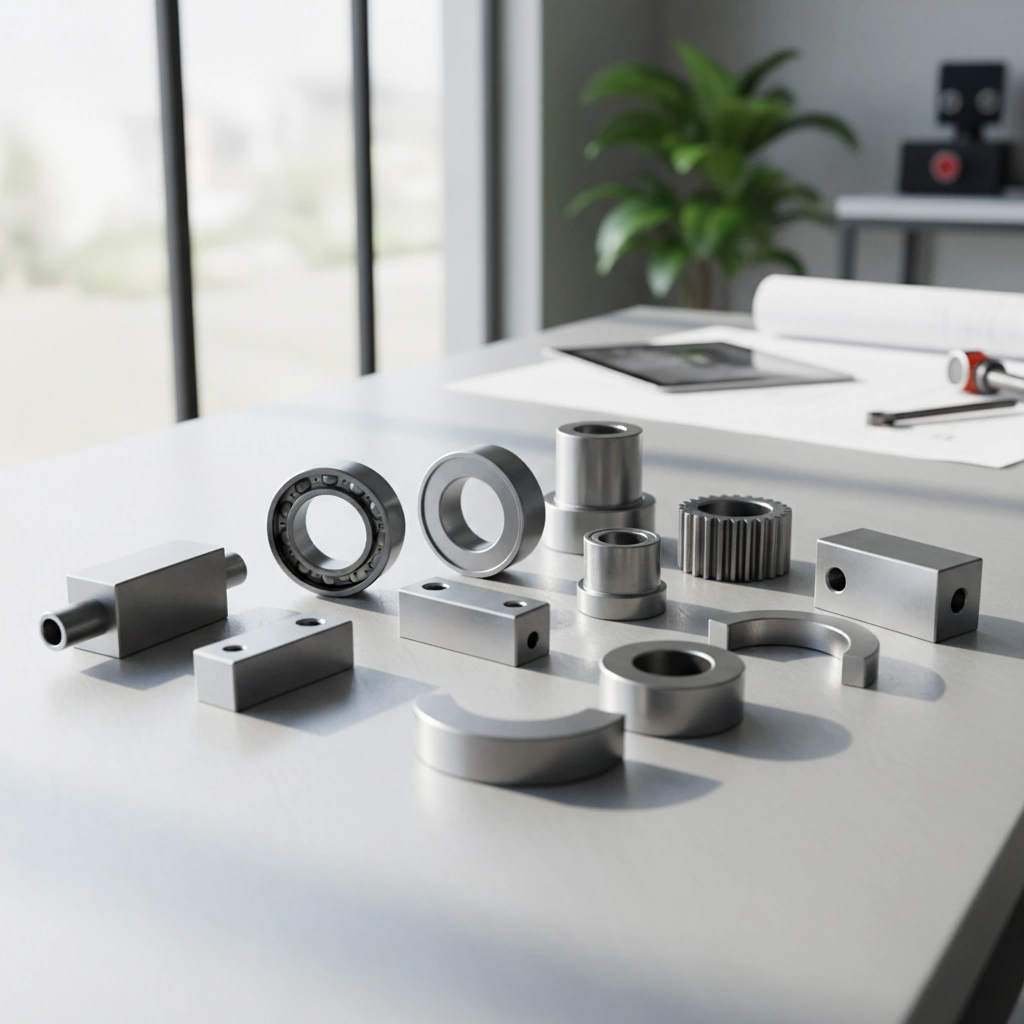
At its core, AISI 52100 bearing steel is a high-carbon chromium steel engineered for extreme environments. When we manufacture 52100 alloy steel machined parts, we leverage its unique material profile to deliver unmatched durability for high-stress, continuous-use applications.
Here is what makes this through-hardening alloy a top choice for industrial precision machining:
- Extreme Hardness: Following strict 52100 steel heat treatment protocols, this material consistently reaches a Rockwell hardness C (HRC) 60-67. This intense surface hardening guarantees parts that will not easily deform under heavy structural loads.
- Maximum Wear Resistance: The high carbon and chromium content naturally fights off abrasion and metal-to-metal galling. This translates directly to a longer lifespan for your components in the field.
- Superior Fatigue Resistance: It is built with immense fatigue life strength. It easily withstands continuous rolling contact fatigue without cracking or failing prematurely.
- Smart Machinability: We keep production efficient and accurate by performing the complex CNC work while the material is in a spheroidize annealed state. This allows us to hold exceptionally tight tolerances before the final hardening and grinding stages.
While 52100 is the undisputed gold standard for bearings and heavy tooling, our engineering expertise spans a wide range of rugged metals. We apply this same dedication to structural integrity across all of our precision custom steel parts, ensuring your specific project gets exactly the strength and reliability it demands.
Technical Specifications & Data for 52100 Steel
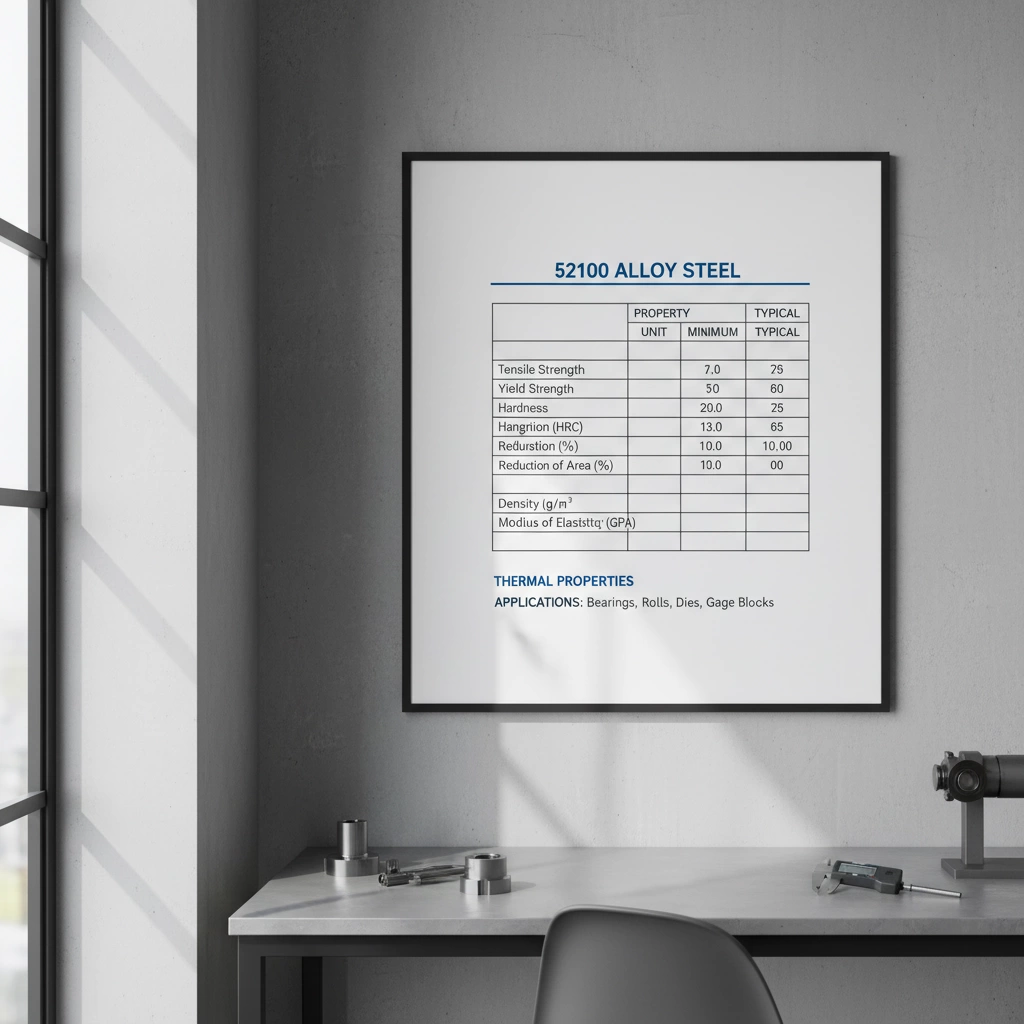
When engineering 52100 alloy steel machined parts, understanding the specific metallurgical makeup is critical for predicting performance under stress. This material is a high-carbon, chromium-containing alloy designed primarily for applications requiring excellent friction and fatigue resistance. We typically process this metal in a cold drawn and spheroidize annealed state to ensure optimal machinability before final hardening.
Chemical Composition (Nominal %)
The following composition gives AISI 52100 bearing steel its extreme hardness and high tensile strength characteristics.
| Element | Percentage |
|---|---|
| Carbon (C) | 1.00% |
| Chromium (Cr) | 1.40% |
| Nickel (Ni) | 0.25% |
| Molybdenum (Mo) | 0.08% |
Machinability & Cost Factors
Compared to standard machining steels, 52100 is significantly harder to process. It requires rigid setups and specialized tooling to maintain tight tolerances (typically +/- .006 for 1/2″ Dia). Our online CNC service for precision parts and instant quotes accounts for these specific machining factors to provide accurate estimates.
- Material Cost Factor: 1.8 (Relative to 12L14)
- Machining Cost Factor: 4.8 (Relative to 12L14)
Equivalent Standards
To support global supply chains, we manufacture components that align with various international designations for this high-carbon chromium steel:
- AISI/SAE: 52100
- DIN (Germany): 100Cr6
- JIS (Japan): SUJ2
- ASTM Specification: ASTM A295
Common Applications for 52100 Components
Because of its exceptional hardness and resistance to rolling contact fatigue, 52100 is the global standard for components that must endure repetitive stress. We supply 52100 alloy steel machined parts to industries where failure is not an option and precision is mandatory. While these parts are precision-machined, they often operate within larger assemblies that rely on robust industrial casting frameworks, creating a complete mechanical system.
Here is where our precision 52100 components deliver the most value:
- Industrial Bearings: This is the primary application for this grade. We machine races, balls, and rollers for ball bearings, needle bearings, and tapered roller bearings that require extreme dimensional stability.
- Automotive Systems: You will find our machined components in high-wear areas like CV joints, fuel injector pump components, and transmission shafts where friction resistance is critical.
- Aerospace & Defense: We manufacture aircraft components, such as landing gear parts and high-stress fasteners, that demand the high tensile strength inherent in this chromium alloy.
- Tooling & Manufacturing: The material’s ability to hold a sharp edge and resist deformation makes it ideal for punches, dies, and cutting tools.
- Hydraulics & Pumps: The alloy is frequently used for pump components and gears that operate under high pressure and constant motion.
Overcoming Manufacturing Challenges with 52100 Steel
Working with high-carbon chromium steel isn’t like cutting standard mild steel. 52100 is tough, abrasive, and unforgiving if the process isn’t dialed in perfectly. We have optimized our workflow to handle the specific behaviors of 52100 alloy steel machined parts, ensuring you get precision without the headache.
Work Hardening
- The Problem: This alloy has a tendency to work-harden rapidly if the cutting tool dwells or rubs rather than cuts.
- Our Solution: We utilize specialized carbide grades and maintain aggressive feed rates. By keeping the tool moving and cutting deeply, we prevent the surface from hardening prematurely during the roughing phase.
Heat Treat Distortion
- The Problem: To achieve that critical Rockwell hardness C (HRC) 60-67, the parts must undergo severe thermal cycles, which often leads to warping or size changes.
- Our Solution: We don’t guess; we engineer for movement. We leave precise machining allowances (extra material) on the part before heat treatment. After hardening, we use precision hard turning or centerless grinding services to bring the part back to exact tolerance, correcting any distortion.
Managing Production Costs
- The Problem: With a machining cost factor significantly higher than standard steels (roughly 4.8x compared to 12L14), cycle times can kill your budget. Unlike softer materials found in a typical casting alloy guide, 52100 demands more force and time.
- Our Solution: We mitigate high costs by utilizing CNC Swiss machining. This allows us to perform multiple operations simultaneously in a single setup, drastically reducing cycle times for high-volume production runs.
Frequently Asked Questions (FAQ)
Can you machine 52100 after it has been hardened?
Yes, absolutely. While it is more efficient to machine AISI 52100 bearing steel in its softer, spheroidize annealed state, we regularly perform precision hard turning on fully hardened components. We have the specialized tooling required to accurately cut 52100 alloy steel machined parts even after they reach a Rockwell hardness C (HRC) of 60-67.
Do you supply the material or do I need to provide it?
We handle the entire supply chain for you. We source premium high-carbon chromium steel directly for your production runs, ensuring the material meets all strict industry standards. If you are ready to start your next project or need to submit drawings, simply contact our team to get the process moving.
What is the difference between 52100 and 440C stainless?
Both materials are frequently used to manufacture wear-resistant steel parts, but they serve entirely different operating environments:
- 52100 Steel: This is a through-hardening alloy designed for extreme loads. It delivers unmatched fatigue life strength and wear resistance, making it the industry standard for rolling element bearings. However, because it is a high-carbon alloy, it requires constant lubrication to prevent rust.
- 440C Stainless: This is a high-carbon martensitic stainless steel. It trades a fraction of the raw toughness found in 52100 for excellent corrosion resistance. It is the better choice for parts exposed to moisture or corrosive chemicals where standard bearing steel would quickly degrade.

Reviews
There are no reviews yet.