
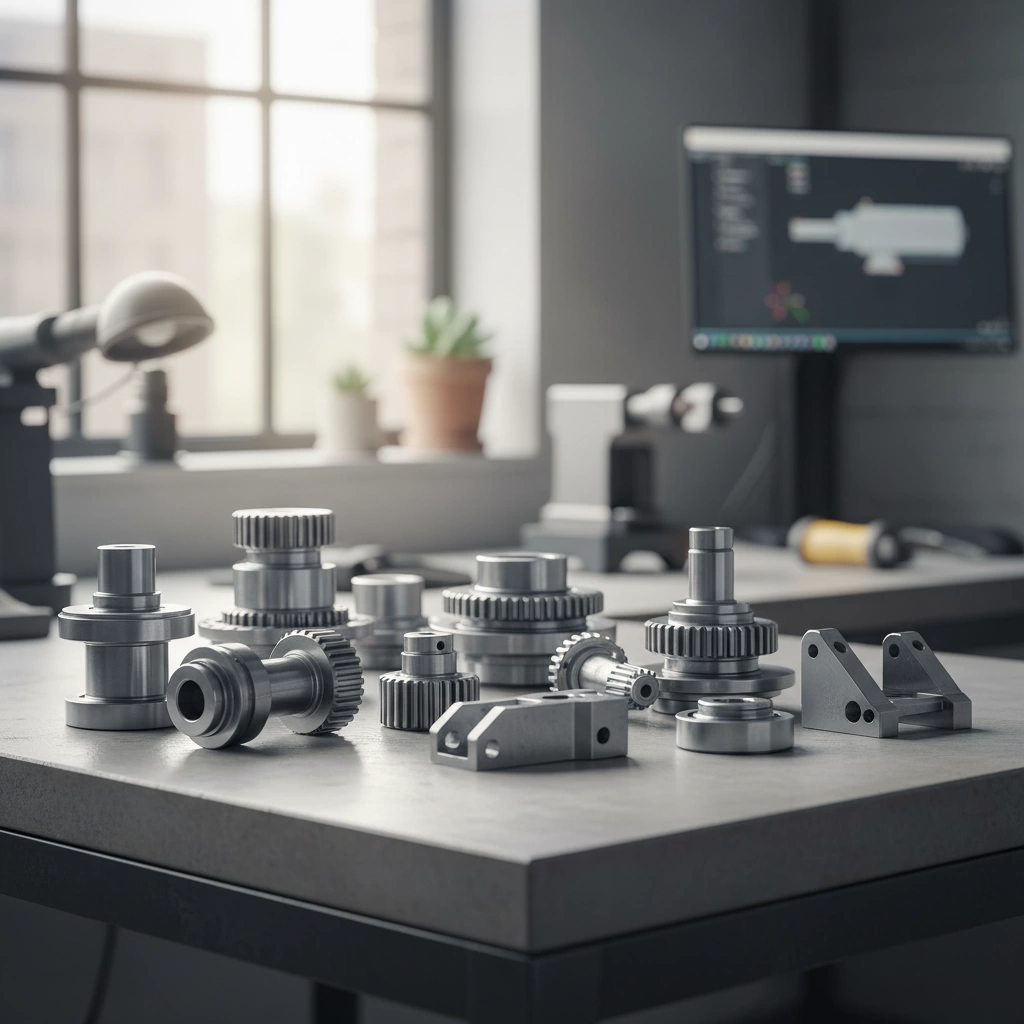
Why Choose 8620 Alloy Steel for Your Project?
Are your mechanical components failing under intense surface wear while snapping under sudden shock loads? Trying to find a material that perfectly balances cost, performance, and manufacturing ease? We understand the challenge. When you need heavy-duty reliability, our 8620 alloy steel machined parts deliver. As a highly versatile low carbon alloy steel, 8620 is the industry-standard carburizing alloy for gears, pins, and shafts that demand severe endurance without breaking the bank.
The “Hard Case, Tough Core” Advantage
The standout feature of 8620 steel is how it responds to heat treatment. Through carburizing (case hardening), we produce CNC carburizing steel parts that possess a highly wear-resistant outer shell alongside a flexible, shock-absorbing interior.
- Outer Case: Fights off extreme friction and surface abrasion.
- Inner Core: Maintains exceptional toughness and ductility, preventing the brittle fractures common in fully hardened steels.
This dual-nature makes it the ultimate choice for high-stress applications where impact resistance is just as critical as wear resistance.
Composition Breakdown
What makes 8620 perform so well? It is a low carbon nickel-chromium-molybdenum steel. Here is the chemistry that drives these high core strength steel parts:
| Element | Typical Range (%) | Primary Manufacturing Benefit |
|---|---|---|
| Carbon (C) | 0.18 – 0.23 | Ensures excellent weldability and a tough core. |
| Nickel (Ni) | 0.40 – 0.70 | Drastically boosts toughness and impact resistance. |
| Chromium (Cr) | 0.40 – 0.60 | Enhances hardenability and surface wear resistance. |
| Molybdenum (Mo) | 0.15 – 0.25 | Maintains component strength at higher operating temperatures. |
Machinability & Finish
You need precise parts delivered on time, and material workability plays a huge role in that. The machinability of 8620 is highly favorable in its annealed state, carrying an 8620 steel machinability rating of roughly 66% (compared to baseline standard AISI 1112).
When we apply our precision CNC machining services, this material cuts clean, allowing us to maintain exceptionally tight tolerances. Whether we are producing complex milled profiles or standard AISI 8620 turned components, the alloy yields a smooth, consistent surface finish that easily accepts secondary surface hardening services.
Vastmaterial’s Machining Capabilities for 8620 Steel
At Vastmaterial, we specialize in transforming raw 8620 alloy steel into high-performance components. We understand that this carburizing alloy requires specific expertise to balance its tough core with the need for precise dimensional accuracy. Our shop is equipped to handle complex geometries and high-volume production runs with consistent quality.
Precision CNC Turning & Swiss Machining
Our facility utilizes advanced CNC Swiss machining and CNC turning centers designed for efficiency and precision. 8620 steel is a popular choice for parts like shafts, pins, and bushings, which often require tight tolerances on cylindrical features. Swiss machining is particularly effective for long, slender components where deflection might be an issue with standard turning. We can produce intricate turned parts that maintain the material’s structural integrity while meeting exact engineering specifications.
CNC Milling
For components requiring non-cylindrical features, our CNC milling capabilities allow us to machine complex shapes, slots, and pockets. While 8620 is known for its toughness, our team knows how to optimize tool paths and speeds to ensure a clean finish without compromising the material properties. We regularly mill gears and structural components that serve as the backbone for heavy-duty assemblies.
Secondary Operations (Heat Treatment & Grinding)
The true value of 8620 steel lies in its response to heat treatment. We manage the entire production workflow, including the critical case-hardening process. This step creates a hard, wear-resistant outer layer while keeping the core soft and ductile—the “hard case, tough core” advantage. Additionally, since extensive surface carving isn’t ideal for this material, we utilize precision grinding and polishing techniques to achieve the final surface finish requirements, ensuring your parts are ready for assembly immediately upon delivery.
Common Applications & Industries for 8620 Alloy Steel
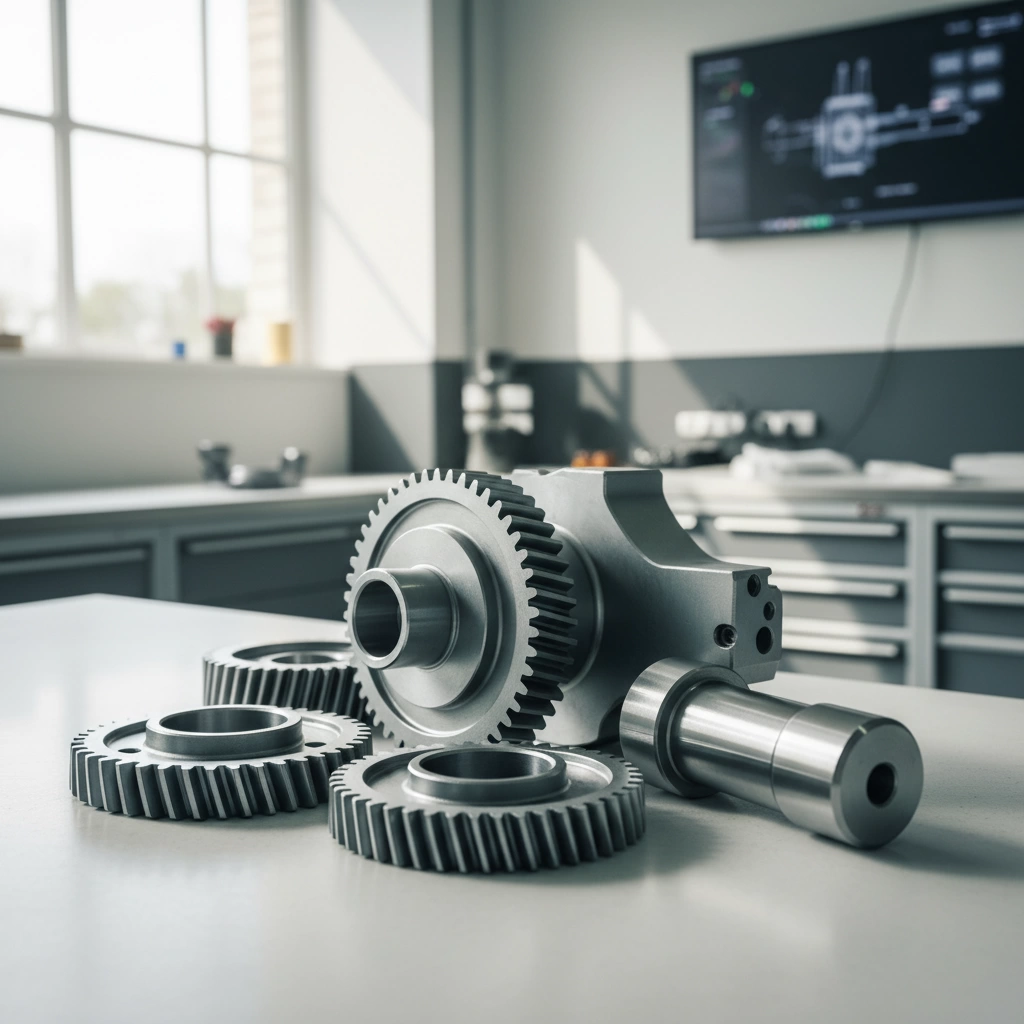
Because 8620 alloy steel balances a tough core with a hard, wear-resistant case, it is the go-to material for parts that need to endure heavy stress without snapping. We frequently machine components for industries where failure isn’t an option.
Automotive & Heavy Equipment
In the automotive and heavy equipment sectors, durability is everything. We produce gears and pinions that handle high torque loads. The carburizing properties of 8620 allow these parts to resist surface wear from constant friction while maintaining enough internal ductility to absorb shock loads from the road or worksite.
Industrial Machinery
For general industrial machinery, we machine a variety of bushings and bolts. These components often face repetitive motion and heavy vibration. The structural integrity of 8620 ensures these fasteners and bearings hold tight over long operational lifecycles, reducing downtime for maintenance.
Hydraulics
Hydraulic systems rely on precision components that can withstand high pressure. We manufacture pins and shafts used in hydraulic assemblies. The material’s excellent response to polishing is a major advantage here; we can achieve the smooth surface finishes required for tight seals and smooth movement within cylinders.
Oil & Gas
The oil and gas industry demands materials that are tough. We supply machined shafts and other critical hardware used in drilling and extraction equipment. The high external strength combined with internal toughness makes 8620 ideal for downhole tools that face abrasive environments and significant mechanical stress.
Technical Specifications of 8620 Steel
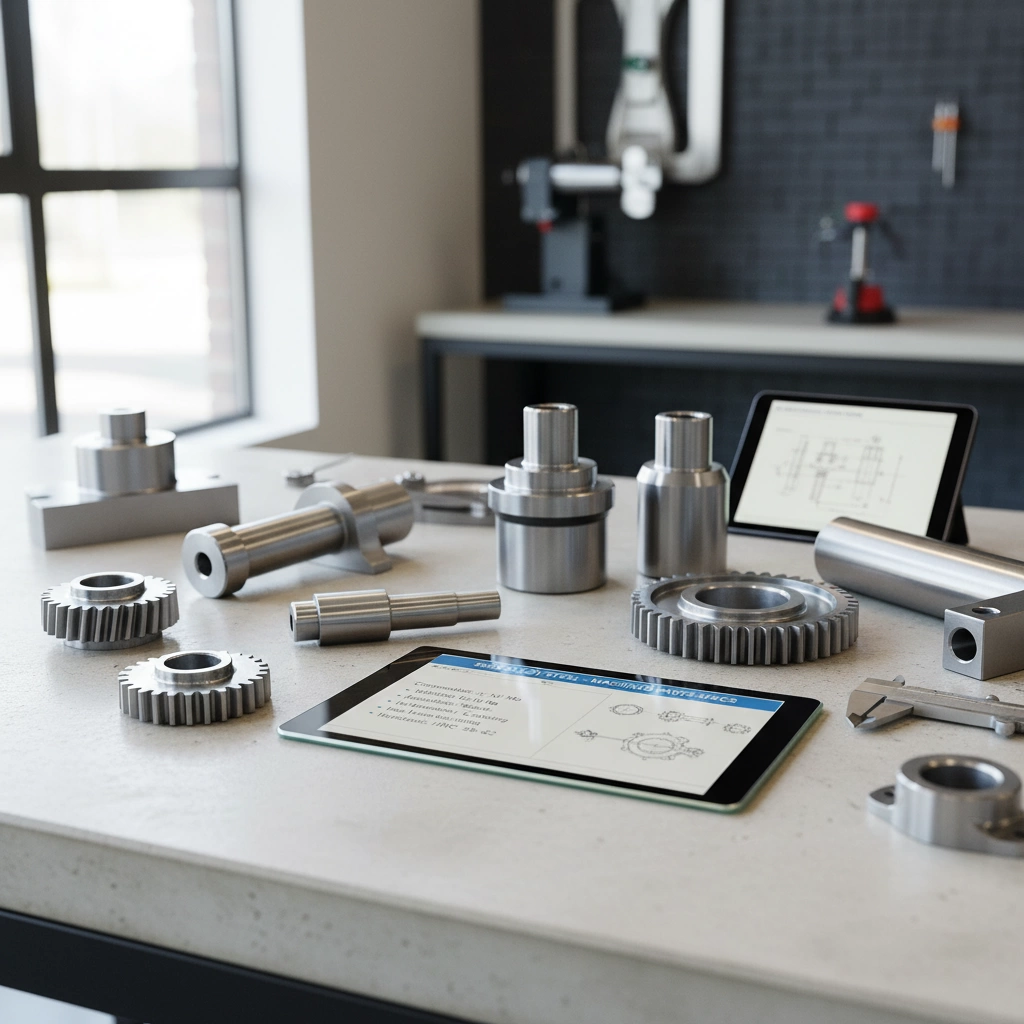
When we manufacture 8620 alloy steel machined parts, understanding the exact material specifications is crucial. This low carbon nickel-chromium-molybdenum steel provides a proven balance of toughness and ductility, making it ideal for case-hardened steel gears and heavy-duty wear parts.
Chemical Composition
The reliable performance of AISI 8620 turned components comes directly from its specific chemical makeup. Here is the standard breakdown of this carburizing alloy:
| Element | Percentage (%) |
|---|---|
| Carbon (C) | 0.18 – 0.23 |
| Manganese (Mn) | 0.70 – 0.90 |
| Nickel (Ni) | 0.40 – 0.70 |
| Chromium (Cr) | 0.40 – 0.60 |
| Silicon (Si) | 0.15 – 0.35 |
| Molybdenum (Mo) | 0.15 – 0.25 |
Mechanical Properties
After proper heat treatment, 8620 steel delivers high core strength alongside a hard, wear-resistant outer layer. Here is what you can expect from typical SAE 8620 shafts and pins:
- Tensile Strength: 530 MPa (76,900 psi)
- Yield Strength: 385 MPa (55,800 psi)
- Elongation: 22%
- Core Hardness: 149 HB
- Case Hardness: Up to 60-63 HRC (after surface hardening services)
Machinability Comparison
The 8620 steel machinability rating sits at roughly 66% compared to standard AISI 1112 baseline steel. It responds very well to our CNC machining services when in the annealed condition.
| Material | Machinability | Weldability | Typical Application |
|---|---|---|---|
| 8620 Alloy Steel | 66% | Excellent | Wear-resistant mechanical components |
| 1018 Carbon Steel | 78% | Excellent | General structural parts |
| 4140 Alloy Steel | 65% | Fair | High tensile strength shafts |
For precision CNC milling 8620, we get the best results by machining the low carbon alloy steel in its softer state. Once formed, we utilize heat treated alloy steel machining practices and precision ID/OD grinding to achieve the final, strict tolerances.
The Vastmaterial Quality Assurance Process
When we machine 8620 alloy steel parts, precision isn’t just a goal—it’s the baseline. Our quality assurance process is built to handle the specific demands of this carburizing alloy, ensuring every component meets strict engineering standards before it leaves our shop.
Material Verification
Quality starts with the raw material. Before any CNC turning or milling begins, we verify that the stock is genuine 8620 alloy steel. This confirms the correct balance of nickel (.55%), chromium (.50%), and molybdenum (.20%), ensuring the material will respond correctly to heat treatment and provide the expected toughness and wear resistance.
In-Process Inspection
Because 8620 steel is often used for intricate components like gears and shafts, we don’t wait until the end to check our work. Our machinists perform rigorous in-process inspections during production. Whether we are running a Swiss machining job or a complex milling operation, we monitor tolerances constantly to maintain consistency across high-volume runs.
Hardness Testing
One of the primary reasons engineers choose 8620 is its ability to develop a hard outer case while keeping a ductile core. If your project involves case hardening, verifying that hardness is critical. We ensure the parts meet the specific mechanical benchmarks required, such as the expected Brinell hardness levels for annealed (150) or normalized (180) conditions, depending on the stage of production.
Certification
We provide the documentation you need to validate your supply chain. For every batch of 8620 machined parts, we can supply full certification that traces the material heat lots and confirms adherence to your dimensional tolerances. This transparency is essential for industries requiring high reliability, giving you confidence that your parts are exactly what you ordered.
FAQ: 8620 Alloy Steel Machined Parts
Can Vastmaterial handle heat treatment and carburizing?
Yes, we manage the entire production cycle. Because 8620 alloy steel machined parts are specifically designed for case hardening, we coordinate both the initial CNC machining services and the necessary surface hardening services. You get fully finished, wear-resistant mechanical components delivered ready for assembly.
How does 8620 compare to 4140 steel?
The primary difference lies in the hardening profile and core toughness:
- 8620 Steel: A low carbon alloy steel and excellent carburizing alloy. It develops a highly wear-resistant outer case while maintaining exceptional toughness and ductility in the core. This makes it the go-to choice for shock-absorbing applications like case-hardened steel gears, pins, and heavy-duty bushings.
- 4140 Steel: A medium-carbon steel that through-hardens. It provides higher overall tensile strength but lacks the superior impact resistance found in the softer core of 8620.
What is the lead time for machined and hardened parts?
Our standard lead time typically ranges from 3 to 5 weeks. This timeline covers the complete manufacturing process—from precision CNC milling 8620 and turning to the final heat treatment and precision ID/OD grinding. Timelines adjust based on your order volume and part complexity, but we always focus on delivering your high core strength steel parts as efficiently as possible.
Reviews
There are no reviews yet.