

Why Choose VastMaterial for Aerospace Casting
At VastMaterial, we operate as a specialized aerospace casting manufacturer, built around the needs of US aerospace and defense programs.
Dedicated Aerospace and Defense Focus
We focus our foundry resources on flight‑critical and mission‑critical castings:
- Commercial and military engines
- Structural airframe castings and brackets
- Satellite, launch, and defense systems
- ITAR-controlled and classified components
We understand qualification gates, PPAP/AS9102, and configuration control, and we structure our programs around them.
End-to-End In‑House Casting and Finishing
We keep all critical aerospace foundry services under one roof to control cost, quality, and lead time:
- Process scope in-house: tooling, wax, molding, melting, heat treat, NDT, machining, and finishing
- Core processes: aerospace investment casting, aerospace sand casting, vacuum investment casting aerospace parts
- Program control: single point of accountability from RFQ through serial production
| Capability | In‑House at VastMaterial |
|---|---|
| Tooling & 3D printed patterns | Yes |
| Melting & pouring | Yes |
| Heat treatment | Yes |
| NDT & dimensional inspection | Yes |
| CNC machining & finishing | Yes |
Zero‑Defect Culture and Process Control
We run a zero‑defect, data‑driven quality system aligned with AS9100:
- PFMEA, control plans, and SPC on critical characteristics
- Documented process windows for each alloy and casting family
- Closed-loop corrective action and defect trend analysis
- Full material and process traceability down to heat and lot
This approach supports precision aerospace castings for flight‑critical parts with stable Cpk and low escape risk.
Compliance with ITAR, EAR, and Defense Programs
As a defense casting supplier, we maintain strict export and security controls:
- ITAR compliant casting supplier with secured data handling
- EAR awareness and screening for controlled technologies
- DFARS flow-down management and US-melt material control
- Controlled access, training, and auditing for defense programs
You get a reliable aerospace casting company that can support engine, airframe, and defense castings within US regulatory requirements.
Core Aerospace Casting Processes

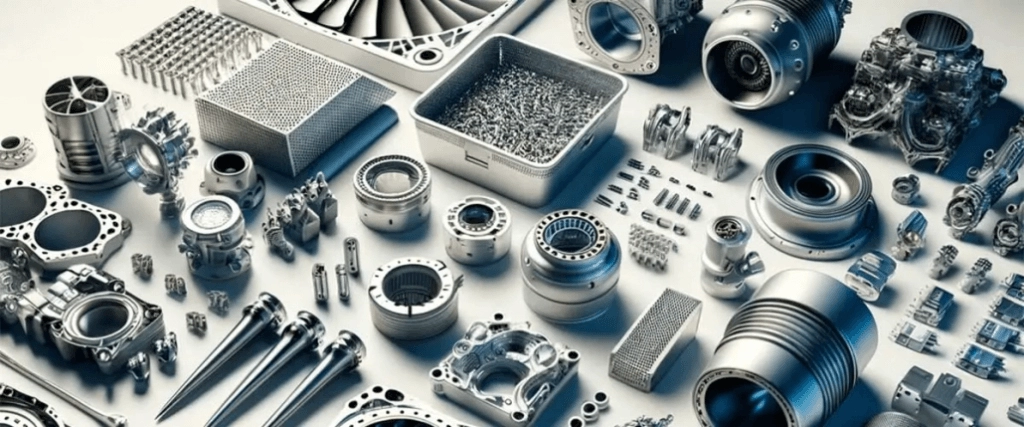
Investment casting for precision aerospace parts
I use aerospace investment casting (lost-wax) when you need tight tolerances, clean surfaces, and complex internal geometry in one shot. It’s ideal for precision aerospace castings like small brackets, housings, and engine hardware where machining every detail would kill your budget and lead time. For aluminum parts, I pair this process with high-performance aluminum casting alloys that deliver strength, fluidity, and corrosion resistance similar to what you’ll see in these aluminum casting alloy grades for high-performance parts.
Vacuum investment casting for superalloys
For turbine blades, hot-section components, and nickel alloy aerospace cast components, I run vacuum investment casting. Pulling a vacuum keeps oxygen and gas out of the melt, which is critical for Inconel 718 investment casting, 625, Hastelloy, and other superalloys used in superalloy turbine blade casting and flight-critical engine parts.
Air-melt and vacuum sand casting for large structures
When you need large structural airframe castings, gearbox housings, or big hydraulic components, I move to aerospace sand casting using either air-melt or vacuum melt depending on the alloy and cleanliness required. Sand casting lets us hit larger envelope sizes and heavier pouring weights while still holding aerospace-grade quality and mechanical properties.
Precision shell casting for thin-wall geometries
For lightweight, thin-wall airframe bracket castings and complex housings, I use precision shell (ceramic shell) casting to keep wall thickness low without sacrificing consistency. This process is a sweet spot when you want near-net shape, reduced machining, and reliable repeatability on thin sections across production runs.
Aerospace Casting Materials Expertise

When it comes to aerospace casting, materials make or break the program. I’ve built our aerospace casting capabilities around the alloys U.S. aircraft, defense, and space customers actually use on flight-critical hardware.
Aluminum Aerospace Castings (A356, C355, A357, D357)
For structural airframe castings and lightweight housings, we run the core aerospace aluminum casting grades every day:
- A356 / C355 – Go-to alloys for structural airframe castings, brackets, and complex housings where weight and strength both matter.
- A357 / D357 – Higher strength options for landing gear components, load-path fittings, and performance-critical brackets.
We control chemistry and heat treatment tightly, and pair that with the right alloy selection using the same principles laid out in our casting alloy guide on types, properties, and applications.
Titanium Aerospace Castings (Ti‑6Al‑4V, Ti‑6‑4 ELI)
For parts that see extreme loads with strict weight limits, we specialize in titanium aerospace castings:
- Ti‑6Al‑4V – Widely used on engine mounts, structural brackets, and rotor system components.
- Ti‑6‑4 ELI – Cleaner, lower interstitial version for higher toughness and critical engine and defense parts.
These alloys are ideal when you need forged-level performance with the design freedom of precision aerospace castings.
Nickel-Based Superalloy Castings (Inconel 718, 625, Hastelloy X)
For hot-section aerospace engine castings and exhaust components, we pour nickel alloy aerospace cast components under vacuum:
- Inconel 718 – Standard for turbine discs, nozzle guide vanes, and structural engine parts.
- Inconel 625 – Great for corrosion-resistant exhaust and high-temp ducting.
- Hastelloy X – Strong performer for combustor and high-heat applications.
Our vacuum investment casting aerospace process is built around these superalloys so we can hit both fatigue and creep requirements.
Cobalt Alloy Turbine Casting Materials
For certain turbine and hot-section designs, we supply cobalt alloy turbine castings where thermal shock, oxidation resistance, and long-term stability are key. These are often used in liner segments, vanes, and legacy engine platforms where cobalt still outperforms nickel at the edge of the envelope.
High-Strength Steel and Stainless Aerospace Castings
When you need toughness, fatigue resistance, and reliable machining, we run a full range of aerospace steels:
- 15‑5PH / 17‑4PH – Workhorse precipitation-hardening stainless grades for hydraulic housings, gears, and structural aerospace castings.
- 300M – Ultra-high-strength steel used on extreme-load components like landing gear and rotor system hardware.
If you’re comparing alloys or balancing weight, cost, and strength, our broader casting alloy overview is a solid starting point, and we’ll help you lock in the right material for your specific aerospace casting program.
Aerospace Casting Component Portfolio
As an aerospace casting manufacturer, I focus on flight-ready castings that drop straight into your engine, airframe, or system build.
Turbine Engine Cast Components
I supply precision aerospace castings for hot‑section and cold‑section turbine hardware, including:
- Blades, vanes, and nozzles for commercial, business, and military engines
- Nickel alloy aerospace cast components and cobalt alloy turbine castings for high-temp zones
- Vacuum cast superalloy components for tight grain control and long life
These parts are produced using high-precision investment casting processes designed for turbine airfoils.
Structural Airframe Castings
For airframe structures, I deliver:
- Structural airframe fittings and airframe bracket castings
- High-strength steel aerospace castings and aluminum aerospace castings for weight‑critical locations
- Near-net-shape castings that replace multi-piece fabrications
This helps cut part count, machining, and assembly time on U.S. production lines.
Actuation and Hydraulic Housing Castings
I cast complex actuation and hydraulic housings with:
- Integrated mounting features and passageways
- Tight dimensional control for sealing and alignment
- Options for aluminum, titanium, and stainless grades
These housings are built for flight-critical cast parts where leakage or misalignment isn’t an option.
Satellite and Launch Propulsion Castings
For space programs, I support:
- Satellite propulsion castings and thruster hardware
- Launch vehicle engine and structural castings
- Lightweight, thin-wall geometries for mass-sensitive missions
I work with U.S. primes and Tier 1s that need a reliable, ITAR-aware aerospace casting supplier.
Helicopter Rotor and Drive System Castings
I also produce helicopter rotor cast components and drivetrain parts:
- Hubs, yokes, and gearbox-related castings
- High-integrity housings and brackets for dynamic systems
- Material options tuned for fatigue and vibration environments
All components are built with the process controls and inspection depth expected from a U.S.-focused aerospace casting company.
Quality Certifications and Aerospace Approvals
When you’re buying aerospace castings in the U.S., certifications and approvals aren’t a “nice to have” — they’re the minimum bar. I run our aerospace casting programs to that standard.
AS9100D & ISO 9001 Certified Aerospace Casting
We’re an AS9100D and ISO 9001–certified aerospace casting manufacturer, audited to the same quality framework used by top airframers and engine OEMs. That means:
- Documented, controlled processes for every aerospace casting job
- Risk-based planning for flight‑critical cast parts
- Corrective action and continuous improvement baked into production
If you’re building to aerospace or defense specs, our AS9100-focused aerospace operations give you the quality system your customers expect.
NADCAP Accredited Aerospace Processes
For special processes, we rely on NADCAP—not internal “trust us” standards. We maintain NADCAP accreditation on key aerospace foundry services such as:
- Heat treatment for aluminum, titanium, and nickel-based aerospace castings
- Nondestructive testing (NDT) for investment and sand cast parts
- Welding and other special processes where required
This lets U.S. primes and Tier 1s plug us into their approved supply base with minimal extra qualification.
OEM Approvals for Major Airframers and Engine Makers
We hold OEM casting approvals from major commercial and defense airframers and engine builders. That experience matters when you’re sourcing:
- Turbine engine cast components
- Structural airframe castings and bracket castings
- Hydraulic and actuation housings
If you’re a Tier supplier, we understand PPAP, source approval, and qualification testing requirements for these programs.
Full Material Traceability & AS9102 FAI
Every aerospace casting we pour is fully traceable, from melt lot to finished part:
- Heat and pour traceability linked to each serial number
- Controlled routers and digital inspection records
- AS9102 First Article Inspection (FAI) packages with full dimensional, material, and process data
Our internal testing and quality systems are aligned with aerospace expectations; you can see how we handle inspection and validation in our dedicated testing and quality control capabilities.
Inspection and Testing for Flight-Critical Aerospace Castings
For flight‑critical aerospace castings, we build quality in and then verify it with aggressive, documented inspection. As an aerospace casting manufacturer, we qualify every lot to meet U.S. OEM and defense expectations before it ever ships.
Digital X‑ray & CT Scanning for Aerospace Castings
We use high‑resolution digital X‑ray and industrial CT scanning to see inside each casting without cutting it open.
This lets us:
- Detect internal porosity, shrink, and inclusions in turbine blades, vanes, and structural airframe castings
- Validate wall thickness on thin‑section aerospace investment castings
- Capture 3D volumetric data for root‑cause analysis and continuous improvement
NDT: Fluorescent Penetrant, Ultrasonic, Magnetic Particle
For surface and subsurface defects, our aerospace foundry services run full non‑destructive testing (NDT):
- Fluorescent penetrant testing (FPI) for fine surface cracks on titanium aerospace castings and aluminum aerospace castings
- Ultrasonic testing (UT) for internal defects in high‑strength steel aerospace castings and nickel alloy aerospace cast components
- Magnetic particle testing (MT) for ferrous structural airframe castings and landing gear‑style components
All methods are tightly controlled to aerospace and defense specs.
CMM & 3D Scanning for Dimensional Validation
We use CNC CMMs and laser 3D scanners to confirm every critical feature matches model and print:
- Full 3D layout of precision aerospace castings to CAD
- Tight tolerance checks on airframe bracket castings, housings, and engine hardware
- Dimensional reports formatted to customer and AS9102 expectations
When projects pair castings with post‑machining, we align our inspection approach with our precision CNC machining partners so the casting data actually supports final part capability.
Mechanical & Metallurgical Testing for Aerospace Parts
We qualify each heat and process route with full mechanical and metallurgical verification:
- Tensile, yield, elongation, and hardness testing by alloy and condition
- Microstructure evaluation for nickel‑based superalloy castings, cobalt alloy turbine castings, and Ti‑6Al‑4V titanium aerospace castings
- Grain size, cleanliness, and phase control to engine and airframe specifications
This level of aerospace casting quality control keeps our flight‑critical parts compliant, predictable, and ready for certification.
Prototyping and Production Scaling in Aerospace Casting
When you’re launching a new aerospace casting program, I move fast without cutting corners on quality.
Rapid prototyping with 3D printed patterns
For early design validation, I use 3D printed patterns for aerospace investment casting so you can:
- Get real metal test parts in weeks, not months
- Prove out critical features, wall thickness, and weight targets
- Validate form/fit/function before committing to hard tooling
This is ideal for complex precision aerospace castings, turbine hardware, and structural airframe castings where geometry changes are likely.
Bridge tooling and low-volume aerospace casting runs
Once the design stabilizes, I step into bridge tooling and controlled low-volume runs:
- Soft or modular tooling for dozens to a few hundred parts
- Tight process control to mirror full-rate aerospace casting conditions
- Perfect for qualification builds, AS9102 first articles, and flight-test quantities
You get repeatable quality without over-investing too early.
Scaling to full-rate aerospace production
When the program is ready to ramp, I scale up like a true aerospace casting manufacturer:
- Dedicated molds, gating, and process windows locked in with PPAP-style controls
- Capacity planning for long-term engine, airframe, or defense casting demand
- Stable pricing and delivery for full-rate production and spares
From first prototype to mature production, I run the same zero-defect mindset you expect from a U.S.-focused aerospace casting supplier.
Aerospace Casting Case Studies
Titanium impeller casting for turbofan engines
For a U.S. commercial turbofan OEM, we redesigned a machined titanium impeller as a near-net-shape titanium aerospace casting (Ti-6Al-4V).
Results we delivered:
- Cut part cost by over 25% by replacing hog-out from billet
- Hit tight balance and concentricity requirements right out of the mold
- Used vacuum investment casting to meet fatigue and FOD-resistance targets for flight‑critical service
Inconel 718 nozzle guide vane for military engines
A defense customer needed a durable Inconel 718 investment casting for a nozzle guide vane in a high-temp military engine core. Building on our superalloy experience and deep knowledge of Inconel alloy properties and grades, we:
- Ran vacuum investment casting with tight process control for low-porosity, creep-resistant microstructures
- Met stringent dimensional, grain size, and coating interface specs
- Passed full AS9102 first article and NADCAP special process audits on the first launch
Lightweight A357 structural bracket casting program
For a major airframer, we converted a multi-piece machined assembly into a single A357 aluminum aerospace casting for a structural airframe bracket.
What we achieved:
- Over 30% weight reduction with topology-optimized geometry
- Fewer fasteners and joints, improving reliability and assembly time
- Stable serial production with repeatable mechanical properties across lots, supporting long-term fleet programs in the U.S. market
Global Aerospace Casting Supply Chain & Logistics
When you source aerospace casting from us, you’re not just buying parts—you’re plugging into a global, defense-ready supply chain built for U.S. OEMs and tier suppliers.
Export Compliance & ITAR-Managed Programs
We treat export control as non-negotiable:
- ITAR and EAR compliant workflows with controlled access and documented procedures
- Secure handling of defense drawings, models, and technical data
- Clear segregation between commercial, dual-use, and defense casting programs
If you need titanium or other controlled alloys, we support programs that align with DFARS and U.S. content requirements, backed by our broader titanium alloy production capabilities.
Dual-Source & Risk Mitigation for Castings
We build in resilience so a single disruption doesn’t stop your line:
- Qualified dual-source casting strategies (multiple tooling and melt routes where practical)
- Geographic and process diversification for critical aerospace investment casting and sand casting
- Structured risk reviews covering lead time, capacity, and raw material exposure
This approach keeps flight-critical cast parts flowing even when the market tightens.
Stocking, Kanban & Inventory Support
To match U.S. production expectations, we support flexible inventory models:
- Stocking programs at our site or near your plant to buffer demand spikes
- Kanban and pull systems tied to your MRP/ERP signals
- Safety stock for long-lead alloys and complex aerospace engine castings
You get consistent supply of precision aerospace castings without overloading your own warehouse.
Technical Resources for Aerospace Casting Design
I built our aerospace casting services around fast, practical design support, not theory. If you’re an engineer in the U.S. trying to lock in a design that passes FAI and production ramps, here’s exactly what you can expect from us.
Aerospace Casting Design Guide & Best Practices
We give your team a clear, manufacturing-focused design guide so you don’t waste cycles on parts that can’t be cast repeatably.
Our design support covers:
- Gate and riser strategy for flight‑critical cast parts
- Draft, fillet, and blend rules for precision aerospace castings
- Design-for-inspection (access for X‑ray, FPI, UT)
- Design-for-machining stock and datum strategy
We also share practical finishing guidance based on our own experience with complex shapes and tight cosmetic demands, similar to the high-spec surfaces we achieve in our metal surface treatment processes.
Material Selection Tables for Aerospace Castings
We maintain simple, engineer-ready material tables so you can pick alloys fast and justify them to your program office.
Example: Core aerospace casting alloys we support
| Alloy Family | Typical Grades | Where We Use Them |
|---|---|---|
| Aluminum aerospace castings | A356, C355, A357, D357 | Airframe brackets, housings, structural parts |
| Titanium aerospace castings | Ti‑6Al‑4V, Ti‑6‑4 ELI | Impellers, engine mounts, high-load fittings |
| Nickel alloy aerospace cast components | Inconel 718, 625, Hastelloy X | Turbine blades, vanes, hot-section parts |
| Cobalt alloy turbine castings | Co‑based high-temp alloys | Turbine vanes, hot wear parts |
| High-strength steel aerospace castings | 15‑5PH, 17‑4PH, 300M | Actuation, landing gear, high-load fittings |
Need DFARS or ITAR-constrained melts? We flag that in the tables so sourcing stays compliant from day one.
Tolerances & Surface Finish for Aerospace Cast Components
We publish realistic, process-specific tolerance and surface finish bands so you don’t over- or under-spec your drawings.
Typical capability ranges (investment casting / vacuum investment casting aerospace):
| Feature Type | Typical Capability* |
|---|---|
| Linear dimensions | ±0.003–0.005 in/in (min ±0.003 in) |
| Hole location (as-cast) | ±0.005–0.010 in |
| Flatness / straightness | Process- and size-dependent |
| Surface finish (Ra) | 63–125 µin as-cast; finer with post-finishing |
Actual tolerances depend on alloy, size, and process (investment, vacuum, or aerospace sand casting). We lock these down with you during DFM and AS9102 planning.
Weight Reduction & Topology Optimization with Investment Casting
If you’re chasing weight targets on airframe bracket castings, satellite propulsion castings, or helicopter rotor components, investment casting is a strong play.
How we help cut weight without killing producibility:
- Use topology-optimized geometries that exploit lost-wax design freedom
- Convert welded/machined assemblies to single-piece aerospace investment castings
- Push minimum wall thickness while staying within process capability and inspection limits
- Use higher-performance alloys (Ti‑6Al‑4V, Inconel 718) to shrink section sizes safely
We’ll review your CAD, run a quick DFM pass, and tell you straight whether the design is castable, what needs to change, and what weight and cost savings you can realistically expect.
Aerospace Casting FAQ
Lead times for aerospace casting first articles
For new aerospace casting programs, most first article (FAI) parts run 6–12 weeks depending on part complexity, alloy, and qualification requirements.
If tooling is ready and design is stable, we can often push expedited FAIs for critical engine or airframe schedules, with clear milestones for sampling, AS9102 documentation, and approval.
Minimum wall thickness and feature limits
With aerospace investment casting, we routinely hold:
- Minimum wall thickness: ~0.040–0.060 in on most aluminum and nickel aerospace castings
- Small features: holes, bosses, and ribs down to 0.030–0.040 in (design- and alloy-dependent)
For larger air-melt or aerospace sand casting work, we typically recommend 0.120 in+ walls for stability and repeatability.
DFARS-compliant and specialty aerospace materials
We support DFARS-compliant sourcing for titanium, nickel alloys, and high-strength steels from approved mills.
If you need specialty grades or customer-specific specs (AMS, GE, Pratt, Rolls, Boeing, etc.), we lock them into your frozen process and keep full lot traceability from melt to finished aerospace cast component.
Maximum casting size and pouring weight
We handle aerospace casting programs ranging from small turbine blades to large structural castings:
- Small precision aerospace castings: under 1 lb
- Typical engine / bracket parts: 1–80 lb
- Large structural or aerospace sand castings: up to several hundred pounds, depending on alloy and geometry
Share your model and target alloy with us, and we’ll confirm maximum casting size and pouring weight we can support for your aerospace program.
Contact and RFQ for Aerospace Casting
If you’re looking for an aerospace casting supplier you can rely on, send your RFQ directly to our team and we’ll walk you through options, risks, and cost targets before you commit.
Upload Models for Fast Aerospace Casting Quotes
For the fastest and most accurate quote on aerospace investment casting, sand casting, or vacuum casting:
- Upload your 3D models (STEP, IGES, Parasolid) and 2D drawings (PDF)
- Include material specs (e.g., Ti‑6Al‑4V, Inconel 718, A356) and any aerospace standards you must meet
- Note your annual usage, target lead time, and program type (commercial, defense, space)
We’ll review manufacturability, flag risk areas, and come back with pricing, lead time, and recommended process for your flight‑critical cast parts. When you’re ready to move, you can start an RFQ directly through our contact and RFQ page.
Consult with Aerospace Casting Engineers
If you’re still refining your design or material choice, we’ll connect you with an aerospace casting engineer who deals with:
- Precision aerospace castings for engines, airframe brackets, and hydraulic housings
- Vacuum investment casting aerospace parts in nickel superalloys and titanium
- DFARS and ITAR-compliant defense casting supplier requirements
We’ll help you balance weight, cost, and reliability so your aerospace cast components are right the first time and ready for AS9102 first article inspection.
Reviews
There are no reviews yet.