
Key Features and Benefits of Alloy 347
At vastmaterial, we specialize in supplying Alloy 347 (UNS S34700), a columbium (niobium) stabilized austenitic stainless steel designed to overcome the limitations of standard 18-8 grades like 304. The addition of columbium is the critical factor here; it stabilizes the carbon, preventing chromium carbide precipitation during welding or exposure to elevated temperatures. This makes 347 stainless steel the premier choice for applications where irregular heating or heavy welding is required without subsequent annealing.
High-Temperature Stability and Corrosion Resistance
The primary advantage of Alloy 347 is its exceptional resistance to intergranular corrosion, particularly in the critical temperature range of 800°F to 1500°F (427°C to 816°C). While standard grades may fail due to sensitization, our stabilized 347 material maintains structural integrity in strong oxidizing environments.
- Superior Creep Strength: Compared to 304/304L, Alloy 347 offers significantly higher creep and stress rupture strength, making it ideal for continuous high-heat service.
- Oxidation Resistance: It performs reliably in oxidizing atmospheres, resisting scaling and corrosion even under thermal cycling.
- As-Welded Performance: Because it resists carbide precipitation, heavy sections can be used in the as-welded condition, eliminating the need for costly post-weld heat treatments.
Standard 347 vs. 347H High-Carbon Variants
We offer both standard and high-carbon versions to match specific engineering requirements. While the standard grade is excellent for general corrosion resistance, 347H stainless steel is engineered for extreme temperature environments.
| Feature | Standard Alloy 347 (UNS S34700) | Alloy 347H (UNS S34709) |
|---|---|---|
| Carbon Content | 0.08% Max | 0.04% – 0.10% |
| Primary Use | General high-temp corrosion resistance | Enhanced creep resistance at temps >1000°F |
| Application | Welded heavy sections, chemical processing | Steam pipes, superheaters, refinery tubes |
Chemical Composition of Alloy 347
At Haoyu Material, we strictly control the chemistry of our Alloy 347 to ensure it meets the rigorous demands of high-heat environments. The defining feature of this grade is the addition of Columbium (Niobium) and Tantalum. This addition creates a stabilized stainless steel that eliminates carbide precipitation, which is critical for preventing intergranular corrosion during welding or exposure to temperatures between 800°F and 1500°F.
Our material complies with major international standards, including ASTM A240, ASTM A312, and ASTM A213. As a dedicated provider of high-temperature alloy solutions, we ensure every batch undergoes strict spectral analysis to verify these elemental ranges.
Detailed Elemental Ranges (UNS S34700)
The following table outlines the standard chemical composition we adhere to for Alloy 347:
| Element | Symbol | Percentage (%) |
|---|---|---|
| Chromium | Cr | 17.0 – 19.0 |
| Nickel | Ni | 9.0 – 13.0 |
| Columbium + Tantalum | Nb + Ta | 10x Carbon (min) – 1.00 (max) |
| Carbon | C | 0.08 max |
| Manganese | Mn | 2.00 max |
| Phosphorus | P | 0.045 max |
| Sulfur | S | 0.030 max |
| Silicon | Si | 1.00 max |
| Iron | Fe | Balance |
Key Composition Notes:
- Stabilization: The Columbium content is mandated to be at least ten times the carbon content. This “ties up” the carbon, preventing it from reacting with chromium.
- 347H Variant: For applications requiring higher creep resistance, we also supply the 347H grade, where Carbon is maintained between 0.04% and 0.10%.
- Tolerance: All our seamless pipes, plates, and bars meet the dimensional and chemical tolerances specified by ASTM and ASME standards.
Mechanical Properties

When selecting Alloy 347 for your projects, understanding the mechanical baselines is critical. We supply this stabilized stainless steel in the annealed condition to ensure optimal ductility and forming characteristics. The addition of columbium (niobium) allows the material to maintain its mechanical integrity even after exposure to temperatures within the carbide precipitation range.
Typical Room Temperature Properties
The following values represent the standard requirements for UNS S34700 (347) and UNS S34709 (347H) according to ASTM standards (such as ASTM A240 for plate or A312 for pipe).
| Property | Metric (MPa) | Imperial (ksi) |
|---|---|---|
| Tensile Strength (min) | ≥ 515 | ≥ 75 |
| Yield Strength (0.2% Offset) | ≥ 205 | ≥ 30 |
| Elongation (in 50mm) | ≥ 35% | ≥ 35% |
| Hardness (Brinell) | ≤ 201 HB | N/A |
| Hardness (Rockwell B) | ≤ 92 HRB | N/A |
Performance: 347 vs. 347H High Carbon
While both grades offer similar performance at room temperature, the distinction becomes vital in high-heat applications.
- Standard Alloy 347: Optimized for intergranular corrosion resistance and general stability. It is the go-to choice for welded structures operating up to 800°F (427°C) where ductility is a priority.
- 347H Stainless Steel: This high-carbon variant (0.04%–0.10% Carbon) is engineered specifically for elevated temperatures. The higher carbon content significantly boosts creep strength and stress-rupture properties at temperatures above 1000°F (537°C). If your application involves continuous high-stress loads in superheaters or refinery piping, 347H provides the necessary structural durability that standard low-carbon grades cannot match.
Physical Properties
Understanding the physical constants of Alloy 347 is critical for engineering components that must withstand extreme thermal cycling. As a stabilized austenitic stainless steel, it offers specific physical characteristics that dictate how it behaves during welding, machining, and high-temperature service.
The material maintains a density of 7.96 g/cm³, which is standard for the austenitic class but essential for calculating component weight in large-scale piping or structural applications. Its melting range sits between 1398°C and 1446°C, allowing it to maintain integrity in environments where other metals might soften or fail.
Key Physical Data Points
- Density: 7.96 g/cm³
- Melting Range: 1398–1446°C
- Magnetic Permeability: Non-magnetic in the annealed condition (may become slightly magnetic after cold working).
Thermal Expansion and Conductivity
Like many 300 series stainless steel grades, Alloy 347 has a higher coefficient of thermal expansion compared to ferritic or martensitic steels. This expansion rate must be carefully calculated when designing expansion joints or welding dissimilar metals to prevent warping.
Thermal conductivity in Alloy 347 is relatively low compared to carbon steel, which helps retain heat in specific processing fluids but requires adjusted parameters during welding to manage heat input. The modulus of elasticity (Young’s Modulus) creates a rigid framework that resists deformation under load, while the electrical resistivity aligns with standard austenitic values, ensuring predictable performance in electrical resistance applications.
Corrosion Resistance Capabilities of Alloy 347
We engineer our Alloy 347 to handle aggressive environments where standard stainless steels often fail. The defining characteristic of this grade is its stabilization with Columbium (Niobium), which directly addresses the issue of carbide precipitation. This modification provides superior resistance to intergranular corrosion, even after the material has been exposed to temperatures in the critical sensitization range of 800°F to 1500°F (427°C to 816°C).
For industrial applications requiring long-term reliability, Alloy 347 offers distinct advantages:
- Intergranular Attack: The Columbium addition prevents chromium carbide formation at grain boundaries, maintaining corrosion resistance in as-welded conditions without the need for post-weld annealing.
- Stress Corrosion Cracking: It demonstrates excellent resistance to polythionic acid stress corrosion cracking, a critical factor for equipment used in petroleum refineries and downstream processing.
- Oxidizing Environments: This grade performs exceptionally well in strong oxidizing agents. It maintains stability in nitric acid solutions and dilute phosphoric acid, outperforming standard 304 grades in these specific chemical exposures.
Available Product Forms at vastmaterial
At vastmaterial, we maintain a comprehensive inventory of Alloy 347 to meet the diverse needs of the petrochemical, power generation, and aerospace industries. Whether you need standard dimensions or custom-cut sizes, our supply chain ensures you get the exact materials required for your high-temperature applications. While we excel in supplying specialized stainless grades, we also stock standard materials like low carbon steel to support broader project requirements.
Seamless and Welded Pipes
We supply 347 stainless pipe and tube options designed for high-pressure and high-heat environments.
- Seamless Pipes: Ideal for critical applications requiring maximum strength, available in schedules ranging from SCH 10 to SCH XXS.
- Welded Tubes: Cost-effective solutions for heat exchangers and large-diameter piping, manufactured to strict ASTM standards.
- Fittings & Flanges: Our stock includes elbows, tees, reducers, and flanges (slip-on, weld neck, blind) to ensure a complete piping system solution.
Sheets, Plates, and Bars
Our warehouse stocks UNS S34700 in various semi-finished forms ready for fabrication.
- Plates & Sheets: Available in hot rolled (No. 1 finish) for structural uses and cold rolled (2B, BA finish) for applications requiring a smoother surface. We offer a wide range of thicknesses to suit vessel manufacturing and lining.
- Round Bars: We provide 347 stainless steel bars in forged and rolled conditions, perfect for machining fasteners, valves, and shafts.
- Coils & Strips: Precision-rolled strips are available for manufacturing gaskets and flexible hoses.
Custom Sizes and Finishes
We understand that off-the-shelf sizes don’t always fit. We offer in-house processing services including:
- Cutting: Water jet, laser, and plasma cutting to specific dimensions.
- Surface Finishing: Polishing, pickling, and annealing.
- Size Range: From thin gauge sheets to heavy-wall forged blocks, we accommodate both metric and imperial specifications for the US market.
Standards and Equivalents for Alloy 347

Ensuring compliance with global manufacturing standards is essential for validating the quality and performance of Alloy 347 in critical industrial applications. At Haoyu Material, our inventory adheres to rigorous specifications to meet the diverse needs of the petrochemical, power generation, and aerospace sectors. We supply materials certified to major international standards, ensuring seamless integration into your existing projects.
Common Industry Designations
- UNS Designations: S34700 (Standard 347) and S34709 (High Carbon 347H).
- European / DIN Standard: 1.4550 (X6CrNiNb18-10).
- JIS Standard: SUS 347 / SUS 347H.
ASTM and ASME Specifications
Our product forms are manufactured and tested according to the following primary standards:
- ASTM A240 / ASME SA240: Heat-Resisting Chromium and Chromium-Nickel Stainless Steel Plate, Sheet, and Strip.
- ASTM A312 / ASME SA312: Seamless, Welded, and Heavily Cold Worked Austenitic Stainless Steel Pipes.
- ASTM A213 / ASME SA213: Seamless Ferritic and Austenitic Alloy-Steel Boiler, Superheater, and Heat-Exchanger Tubes.
- ASTM A479 / ASME SA479: Stainless Steel Bars and Shapes for Use in Boilers and Other Pressure Vessels.
Aerospace Specifications (AMS)
For high-performance aerospace applications requiring superior stability, we also reference:
- AMS 5512: Steel, Corrosion and Heat-Resistant, Sheet, Strip, and Plate.
- AMS 5646: Steel, Corrosion and Heat-Resistant, Bars, Wire, Forgings, Tubing, and Rings.
Industrial Applications for Alloy 347

Alloy 347 is engineered for environments where standard stainless steels fail due to intergranular corrosion or high-temperature creep. Its niobium stabilization makes it the preferred choice for industries requiring long-term stability in the 800°F to 1500°F range.
We supply this grade for critical components across several heavy industries:
- Petroleum Refining: This alloy is standard for fluid catalytic cracking units (FCCU), radiant tubes, and superheaters. It is specifically selected to resist polythionic acid stress corrosion cracking, a common issue during refinery downtime.
- Chemical Processing: The material’s resistance to oxidizing agents makes it ideal for high-pressure equipment manufacturing, including heat exchangers, reactor vessels, and piping systems handling organic chemicals.
- Power Generation: High-pressure steam piping and boiler tubes utilize Alloy 347 because it offers higher creep and stress rupture strength than 304/304L, ensuring safety in superheated steam environments.
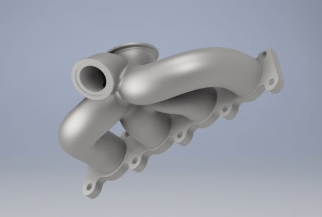
- Aerospace Components: Due to its ability to withstand severe thermal cycling, this grade is widely used for aircraft exhaust manifolds, collector rings, and thrust reversers.
- High-Temperature Furnaces: We provide material for expansion joints and furnace parts that must maintain structural integrity and resist oxidation under continuous high-heat exposure.
Alloy 347 vs. Similar Stainless Grades

Selecting the right stainless steel for your project often comes down to understanding how specific grades handle heat and corrosive environments. At Haoyu Material, we help customers navigate the differences between Alloy 347 and other common austenitic grades like 304, 321, and 316. While they share a similar base chemistry, the addition of stabilizing elements changes their performance limits drastically.
Comparison: 347 vs 304, 321, and 316
The primary distinction of Alloy 347 (UNS S34700) is the addition of Columbium (Niobium). This element stabilizes the steel against carbide precipitation, a common issue in standard grades when exposed to temperatures between 800°F and 1500°F (427°C – 816°C).
- 347 vs. 304: Standard 304 is prone to intergranular corrosion after welding or heat exposure because chromium carbides form at the grain boundaries. Alloy 347 eliminates this risk, making it the superior choice for welded equipment operating in high heat.
- 347 vs. 321: Both are stabilized grades—321 uses Titanium, while 347 uses Columbium. We typically recommend 347 vs 321 stainless for applications requiring higher creep strength and rupture stress properties. 347 is generally preferred for heavy welding sections where superior intergranular corrosion resistance is non-negotiable.
- 347 vs. 316: Grade 316 contains Molybdenum to fight pitting in chloride environments. However, it is not stabilized like 347. If your primary concern is oxidation resistance and structural stability at extreme temperatures rather than chloride attack, 347 is the correct specification.
To understand the broader categorization of these materials, you can review our comparison of alloy steel vs stainless steel to see where stabilized grades fit into the industrial landscape.
Performance and Stabilization Overview
The table below highlights the key differences in stabilization methods and temperature capabilities for these grades:
| Grade | Stabilizing Element | Key Characteristic | Typical Application |
|---|---|---|---|
| Alloy 347 | Columbium (Nb) + Tantalum | Excellent creep strength; no carbide precipitation during welding. | Radiant tubes, Aircraft exhaust, High-temp gaskets. |
| 321 | Titanium (Ti) | Good general heat resistance; slightly lower strength than 347. | Aircraft piston engine manifolds, Expansion joints. |
| 304 | None | Standard corrosion resistance; vulnerable to sensitization. | Food processing, General architectural trim. |
| 316 | None (Mo added) | Superior pitting resistance; not optimized for high-heat stability. | Marine environments, Chemical processing. |
Cost Considerations
Because Alloy 347 utilizes Columbium (Niobium), it is typically more expensive than standard 304 or 321. However, the initial material cost is offset by the extended service life in high-temperature environments where other grades would fail due to intergranular attack or stress rupture. For critical components like superheater tubes or refinery piping, the reliability of Columbium stabilized alloy justifies the investment.
We also offer insights into how manufacturing methods impact material choices; for instance, understanding the stainless investment casting process, benefits, grades, and costs can help determine if a cast version of a stabilized grade is suitable for your complex components.
Fabrication and Welding Guidelines for Alloy 347
Working with Alloy 347 requires specific attention to its work-hardening characteristics and stabilization properties. As a supplier, we ensure our material is prepped for seamless integration into your manufacturing lines, but understanding the fabrication nuances is critical for maintaining the alloy’s high-temperature performance.
Forming and Machining Best Practices
Alloy 347 is an austenitic stainless steel, meaning it is tough and ductile but tends to work-harden rapidly. Successful machining requires rigid setups and heavy, positive feeds to prevent glazing the surface.
- Tools: Use high-speed steel or carbide tooling. Keep tools sharp to minimize work hardening.
- Lubrication: Heavy lubrication is essential to reduce heat buildup.
- Speed: Lower speeds are generally required compared to standard carbon steels.
- Precision: For complex components requiring tight tolerances, we utilize advanced precision CNC machining techniques to manage the high work-hardening rate of this material effectively.
Welding Recommendations and Filler Metals
One of the primary advantages of Alloy 347 is its excellent weldability. The addition of Columbium (Niobium) prevents the formation of chromium carbides, making it resistant to intergranular corrosion in the as-welded condition.
- Method: It can be welded using common fusion and resistance methods. Oxyacetylene welding is generally not recommended due to the risk of carbon pickup.
- Filler Metal: We recommend using AWS E347 or ER347 filler metals. These match the base metal’s chemistry and ensure the weld zone remains stabilized against corrosion.
- Preheating: typically not required.
Heat Treatment Procedures
While Alloy 347 does not require post-weld annealing for corrosion resistance, heat treatment is often necessary to relieve stresses formed during severe forming or to restore maximum ductility.
- Annealing: Heat to a range of 1800°F – 2000°F (980°C – 1095°C) and follow with a water quench or rapid air cool. This ensures the carbides remain in solution.
- Stabilizing Anneal: For maximum creep strength in high-temperature service, a stabilizing heat treatment at roughly 1550°F – 1650°F may be applied.
At Haoyu Material, we can provide material that has already undergone specific heat treatments or surface finishing (like 2B or BA) to reduce your downstream processing time.
Why Choose vastmaterial for Alloy 347
At vastmaterial, we go beyond simple distribution; we act as a strategic partner for your high-temperature material needs. Sourcing Alloy 347 from us means accessing a supply chain built on reliability, speed, and strict quality adherence. We understand that projects involving 347 stainless steel often face tight deadlines and rigorous specification requirements, which is why we maintain a ready-to-ship inventory of pipes, bars, and sheets.
Our Core Service Capabilities:
- Large Inventory & Fast Delivery: We stock standard sizes of UNS S34700 to reduce lead times, ensuring your project stays on schedule.
- Custom Processing: Our facility is equipped for precise cutting, polishing, bending, and surface finishing (2B, BA, No.1) to meet specific fabrication needs.
- Quality Assurance: All materials come with Mill Test Certificates (MTC) per EN 10204 3.1. We also support third-party inspections (TPI) from agencies like SGS or BV.
- Global Logistics: We offer competitive pricing and handle all export logistics, ensuring secure delivery to your location.
Our robust alloy cast steel factory capabilities and quality control systems ensure that every product leaving our warehouse meets international standards (ASTM, ASME, DIN). Whether you require a single prototype piece or a full container load, our technical team provides the support necessary to navigate complex material specifications.
Frequently Asked Questions (FAQ)
What are the differences between 347 and 347H?
The main difference lies in the carbon content. Alloy 347 is the standard stabilized grade, while 347H stainless steel is the high-carbon version (containing 0.04–0.10% carbon). This higher carbon content gives 347H superior creep strength and stress-rupture properties at temperatures above 1000°F (537°C). If your application involves extreme heat over long periods, 347H is often the preferred choice for structural stability.
Is Alloy 347 suitable for welded applications?
Yes, it is excellent for welding. Because Alloy 347 is stabilized with Columbium (Niobium), it resists carbide precipitation that typically occurs during welding in other austenitic grades. This means you can use it in the as-welded condition without needing post-weld annealing. It maintains strong intergranular corrosion resistance even after exposure to welding heat, making it ideal for heavy industrial equipment.
What product forms are available in stock?
At Haoyu Material, we supply a comprehensive range of forms to meet diverse industrial needs. Our inventory includes seamless pipes, welded tubes, round bars, sheets, and plates. We also provide specialized forgings and pipe fittings such as flanges, elbows, and tees. You can explore our full range of stainless steel products to find the exact dimensions and finishes required for your project.
What are the standard lead times?
Lead times vary based on the order volume, specific dimensions, and any custom processing requirements like cutting or surface finishing. As a global supplier, we prioritize efficient logistics to ensure fast delivery to international clients. For the most accurate timeline, please send us an inquiry with your specifications, and our team will provide a detailed schedule.

Reviews
There are no reviews yet.