

Why Choose a Cast Aluminum Part?
Is your current assembly too heavy? Are machining costs eating into your margins? We hear these concerns constantly from engineers and procurement managers. Switching to a cast aluminum part is often the most effective way to solve weight, cost, and durability issues simultaneously. When we manufacture these components, we aren’t just pouring metal; we are engineering a solution that balances structural integrity with efficiency.
Superior Mechanical Performance
Many assume casting implies weakness, but modern precision aluminum castings tell a different story. By utilizing high-grade alloys, we deliver parts that offer exceptional:
- High Tensile Strength: Capable of withstanding significant structural loads.
- Impact Resistance: Durability under sudden force or shock.
- Fatigue Performance: Long-term reliability in cyclic stress applications.
Lightweight Design & Efficiency
The density of aluminum is roughly one-third that of steel. Incorporating lightweight aluminum parts into your design immediately reduces the overall weight of assemblies. This is critical for industries like automotive and aerospace, where every ounce counts toward fuel efficiency and payload optimization.
Environmental Resilience
Industrial environments are unforgiving. Corrosion resistant aluminum components naturally form a protective oxide layer, making them ideal for applications exposed to moisture or chemicals. Additionally, aluminum dissipates heat rapidly, offering excellent thermal management for electronic housings and engine components.
Cost-Effectiveness: Casting vs. Billet Machining
Why pay for chips on the floor? Machining complex geometries from solid billet is expensive and wasteful. Our casting process delivers near-net-shape parts, drastically reducing material waste and machining time.
Comparison: Cast Aluminum vs. Machined Billet
| Feature | Cast Aluminum Part | Billet Machining |
|---|---|---|
| Material Utilization | High (Near-net shape, minimal waste) | Low (High scrap rate from material removal) |
| Geometry Complexity | Unlimited (Internal cavities, complex curves) | Limited (Restricted by tool access) |
| Production Speed | Fast (Scalable for high volumes) | Slow (Linear, time-consuming process) |
| Cost Per Unit | Lower (Especially at volume) | Higher (Machine time + material costs) |
Would you like me to detail the specific casting processes we use, such as investment or die casting, to help you determine the best fit for your volume?
Our Casting Processes for Aluminum Parts
Selecting the right manufacturing method is just as critical as choosing the alloy itself. We don’t believe in a “one size fits all” approach; instead, we tailor our production method to your specific volume, tolerance, and geometry requirements. Here is how we produce high-quality cast aluminum parts using distinct methodologies.
Investment Casting for Intricate Detail
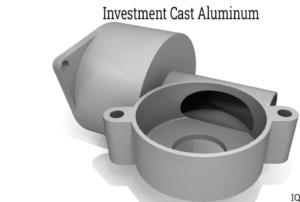
When your design features complex geometries, thin walls, or requires an exceptional surface finish right out of the mold, investment cast aluminum is the optimal choice. This process, often called lost-wax casting, allows us to achieve near-net shapes with minimal draft angles. It is perfect for aerospace and medical components where precision is non-negotiable. Our aluminum investment castings provide superior dimensional accuracy, significantly reducing the need for secondary machining.
Sand Casting for Large Components
For larger structural parts or lower volume runs, we utilize sand casting. This method is incredibly versatile and cost-effective for sand cast aluminum components ranging from simple brackets to massive equipment bases. It allows for quick tooling changes, making it an excellent option for prototyping or projects where design flexibility is key.
High-Pressure Die Casting for Volume Production
When you need thousands of parts with tight tolerances and rapid cycle times, our aluminum die casting services deliver the best results. High-pressure die casting aluminum forces molten metal into steel molds at high speeds, creating parts with excellent surface uniformity and dimensional stability. This is the industry standard for automotive housings and consumer electronics.
Process Comparison Matrix
To help you decide which cast aluminum part method fits your project, compare the capabilities below:
| Feature | Investment Casting | Sand Casting | Die Casting |
|---|---|---|---|
| Typical Volume | Low to Medium | Low to Medium | High (1,000+) |
| Tolerance | High ($pm 0.005$ in) | Moderate ($pm 0.030$ in) | Very High ($pm 0.002$ in) |
| Surface Finish | Excellent (60–120 RMS) | Rough (250–500 RMS) | Good (32–63 RMS) |
| Wall Thickness | Very Thin ($0.060$ in) | Thick ($0.125$ in+) | Thin ($0.080$ in) |
| Tooling Cost | Moderate | Low | High |
Next Step
Unsure which process suits your blueprint? Send us your CAD files today, and we will recommend the most cost-effective casting method for your specifications.
Aluminum Alloys We Use

Choosing the right material is critical for the performance and longevity of your cast aluminum part. We don’t just pour metal; we engineer solutions using top-tier aluminum casting alloys tailored to your specific mechanical requirements. Whether you need lightweight structural integrity or complex geometry, we have the right grade for the job.
Common Alloy Grades
- A356 Aluminum Alloy Parts: When you need structural integrity and pressure tightness, this is the industry standard. It offers excellent weldability and responds perfectly to heat treatment (T6). For detailed metrics, you can review the specific A356-T6 aluminum alloy specifications.
- A380 Die Cast Components: This is our go-to for complex shapes. Its superior fluidity allows us to fill intricate molds without gaps, providing a great balance of mechanical strength and corrosion resistance.
- Custom Formulations: As a custom aluminum foundry, we also cast grades like 319 and 356, or specific mixes based on your project needs. If you are comparing different grades, our comprehensive casting alloy guide breaks down the best choices for various industries.
Technical Properties Breakdown
Here is a quick comparison of the mechanical capabilities we deliver:
| Alloy Grade | Tensile Strength (ksi) | Yield Strength (ksi) | Elongation (%) | Hardness (Brinell) | Primary Characteristic |
|---|---|---|---|---|---|
| A356-T6 | 33 – 35 | 24 – 25 | 3.5 | 70 – 75 | High strength & ductility |
| A380 | 46 – 48 | 23 – 24 | 3.5 | 80 | Excellent fluidity |
| 319 | 27 – 28 | 18 – 19 | 1.5 – 2 | 70 – 85 | Good machinability |
Note: Values can vary based on the specific heat treatment and casting method used (Sand vs. Die Casting).
Would you like me to detail our Precision Dimensional Tolerances in the next section?
Technical Specifications and Capabilities
Getting the specs right is the difference between a working prototype and a production failure. We deliver precision aluminum castings that meet strict dimensional requirements, ensuring every cast aluminum part integrates seamlessly into your final assembly. Whether you need lightweight brackets or complex, pressure-tight components similar to custom OEM valve bodies, our facility handles it all with exacting standards.
Dimensional Tolerances and Size Ranges
We don’t believe in a “one size fits all” approach. Our capabilities range from small, intricate parts weighing mere ounces to large structural components. We adjust our process to meet the specific tolerance needs of your design.
| Feature | Die Casting | Investment Casting | Sand Casting |
|---|---|---|---|
| Typical Tolerance | ±0.002″ – ±0.005″ | ±0.005″ per inch | ±0.030″ – ±0.060″ |
| Min. Wall Thickness | 0.040″ (1.0 mm) | 0.060″ (1.5 mm) | 0.125″ (3.0 mm) |
| Surface Finish | Excellent (32–63 RMS) | Very Good (63–125 RMS) | Rough (250–500 RMS) |
Secondary Operations: Machining and Heat Treatment
Raw casting is often just the starting point. To deliver a finished product ready for assembly, we offer comprehensive in-house secondary operations:
- CNC Machining: We produce CNC machined cast aluminum components, ensuring bore and thread precision that raw casting cannot achieve alone.
- Heat Treatment: We supply heat treated aluminum castings (specifically T6 and T61 tempers) to maximize tensile strength and hardness.
- Validation: Every part undergoes rigorous testing, including CMM verification for dimensional accuracy.
Would you like me to detail our specific surface finishing options, like anodizing or powder coating, in the next section?
Surface Finishing Options for Cast Aluminum Parts
A raw casting is rarely the end of the line. To ensure your cast aluminum part performs reliably in the field, we apply advanced finishing techniques tailored to your specific application. Whether you need enhanced durability for outdoor equipment or a cosmetic finish for consumer electronics, our post-processing capabilities deliver the exact surface properties required.
We offer a comprehensive range of surface treatment services designed to improve the wear resistance, aesthetics, and environmental protection of your components.
Common Finishing Techniques
- Anodizing: This electrochemical process thickens the natural oxide layer, creating corrosion resistant aluminum components that are harder and more durable. It is ideal for parts requiring electrical insulation or a specific color finish without the risk of peeling.
- Powder Coating and Painting: For extreme durability and precise color matching, powder coating provides a thick, protective skin that resists chipping and scratching. It is the go-to choice for automotive and industrial housings exposed to the elements.
- Specialized Finishes: We handle technical specifications including chromate conversion (passivation) for conductivity and corrosion protection, plating for solderability, and shot blasting to achieve a uniform matte texture or prepare the surface for bonding.
Comparison of Surface Finishes
| Finish Method | Key Benefit | Ideal Application |
|---|---|---|
| Anodizing | Superior corrosion resistance & hardness | Marine hardware, electronic enclosures |
| Powder Coating | High impact resistance & aesthetic variety | Automotive exterior parts, machinery housings |
| Shot Blasting | Uniform matte texture & stress relief | Pre-finishing prep, aesthetic non-reflective parts |
| Passivation | Corrosion protection maintaining conductivity | Aerospace brackets, electrical grounding components |
By integrating these finishing steps directly into our production line, we ensure that every cast aluminum part arrives ready for assembly, reducing your supply chain complexity.
Would you like me to detail the specific ISO testing standards we use to verify the thickness and adhesion of these surface finishes?
Industries Relying on Cast Aluminum Parts
We don’t just pour metal; we engineer solutions for some of the toughest sectors in the US market. The versatility of a cast aluminum part allows us to adapt to high-stress environments, balancing weight reduction with structural integrity.
Here is where our components make a difference:
- Aerospace: In this field, every ounce counts. We supply lightweight aluminum parts like brackets, housings, and structural components that maintain high strength-to-weight ratios essential for flight.
- Automotive: From internal engine parts to complex transmission cases, our castings handle intense thermal cycles. We also manufacture precision aluminum heat sinks critical for modern vehicle thermal management.
- Industrial Machinery: Durability is key for factory floors. We produce pump housings, valves, and sturdy equipment bases that support heavy operations. Our expertise in equipment manufacturing ensures these parts withstand constant vibration and operational stress.
- Marine & Electronics: Saltwater and excess heat destroy lesser materials. We provide corrosion resistant aluminum components for waterproof enclosures and electronic thermal management. Whether for sensitive circuitry or rugged marine engineering applications, our alloys are formulated to resist oxidation and severe weather.
Quality Assurance for Precision Aluminum Castings
At Vastmaterial, quality isn’t just a checkbox; it’s the foundation of everything we pour. When you are sourcing a critical cast aluminum part for an aerospace or industrial application, you need absolute confidence that the metal integrity holds up under pressure. We maintain a rigorous quality management system that is fully ISO 9001 and AS9100 certified, ensuring we meet the high standards expected by top-tier US manufacturers.
We don’t leave anything to chance. Our comprehensive testing and quality control protocols involve real-time process monitoring to catch variables before they become issues. To guarantee internal integrity, we utilize advanced non-destructive testing (NDT) methods, including:
- X-Ray Inspection: Detecting internal porosity or shrinkage without damaging the component.
- Dye Penetrant Testing: Identifying surface cracks and discontinuities in precision aluminum castings.
- Dimensional Verification: Using CMM (Coordinate Measuring Machines) to verify tolerances are within the ±0.005-inch range.
Every batch we ship comes with full material traceability. From the initial melt in our manufacturing process to the final delivery, we track the specific alloy composition and heat codes. This commitment to defect-free delivery gives you the documentation and reliability you need to streamline your own assembly lines without worrying about rejections.
Would you like me to draft the next section on “Why Choose Vastmaterial” to highlight your vertical integration and engineering support?
Why Choose Vastmaterial for Your Cast Aluminum Part Needs
At Vastmaterial, we go beyond being a standard supplier; we act as your strategic manufacturing partner. We operate as a fully integrated custom aluminum foundry, managing your project from the initial design consultation all the way to the final finishing touches. This end-to-end vertical integration ensures you receive a high-quality cast aluminum part without the logistical headache of managing multiple vendors.
We understand that every project has different requirements. Whether you need a single prototype aluminum casting to validate a complex geometry or are ramping up for high-volume production, our flexible MOQs support your growth. Our engineering team actively works to optimize your designs, often suggesting geometry adjustments that maintain strength while reducing weight and manufacturing costs.
Our Advantage at a Glance
| Feature | Vastmaterial Capabilities | Standard Foundry |
|---|---|---|
| Project Support | Full design-for-manufacturing (DFM) & optimization | “Print-to-part” only |
| Production Volume | Flexible MOQs & rapid prototyping support | High minimums required |
| Quality Standards | Precision aluminum castings for high-performance use | General commercial tolerances |
| Integration | Casting, CNC machining, and finishing in-house | Outsourced machining/finishing |
We have a proven track record of delivering defect-free components for the most demanding environments. Our expertise ensures reliability whether we are producing automotive housings or critical components for the gas turbine industry. When you choose us, you are choosing speed, precision, and engineering excellence.
Would you like me to help you draft the “Requesting a Quote” section next to guide your customers on how to submit their drawings?
Requesting a Quote for Cast Aluminum Parts
How to Get a Fast & Accurate Estimate
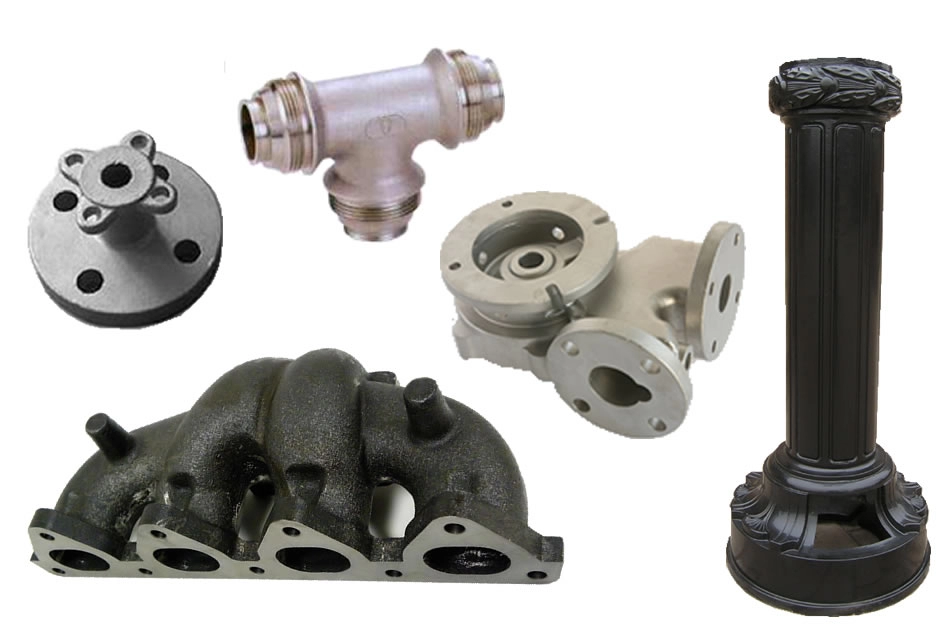
To get the ball rolling on your cast aluminum part, we need a few specific details. The more information you provide upfront, the faster we can return a precise calculation. We know speed matters, so here is exactly what our engineering team looks for to avoid back-and-forth emails:
- Drawings and Models: We prefer 3D CAD files (.STEP or .IGS) to analyze the geometry and volume. Please accompany these with 2D PDF drawings that specify critical tolerances, threads, and datum points.
- Material Specifications: Specify the exact alloy you need, such as A356 aluminum alloy parts or A380. If you aren’t sure, tell us the application, and we can recommend the best option.
- Volume Estimates: Your Estimated Annual Usage (EAU) and batch sizes dictate the manufacturing route. Knowing the volume helps us decide between sand cast aluminum components for lower quantities or high-pressure die casting aluminum for mass production.
- Finishing Requirements: clearly state if you need secondary operations like CNC machining, heat treatment, anodizing, or powder coating.
The Custom Manufacturing RFQ Process
Once you submit your data, our process is straightforward. We don’t just throw a number at you; we perform a Design for Manufacturing (DFM) review to identify potential cost savings or casting issues.
- Review: Our engineers analyze your design for draft angles, wall thickness, and porosity risks.
- Quote Generation: We calculate tooling costs (mold creation) and the per-piece price based on current aluminum market rates.
- Timeline: You will typically receive a comprehensive quote within 24 to 48 hours, outlining lead times for both samples and full production runs.
Would you like me to draft the “Frequently Asked Questions” section next to address common queries about lead times and tooling lifespans?
Frequently Asked Questions: Cast Aluminum Parts
We know that sourcing custom components comes with a lot of questions. Whether you are an engineer optimizing a drivetrain or a procurement manager looking for cost efficiencies, getting clear answers is key. Here is a breakdown of common inquiries regarding our cast aluminum part production.
Choosing the Right Casting Method
Selecting between die casting, investment casting, and sand casting usually comes down to volume, tolerance, and cost. Here is a quick comparison to help you decide:
| Method | Best For | Volume | Tolerances |
|---|---|---|---|
| Die Casting | High-speed production, thin walls | High (1,000+) | Tight |
| Investment Casting | Complex geometries, smooth finish | Low to Mid | Very Tight |
| Sand Casting | Large structural parts, prototypes | Low to Mid | Moderate |
Alloy Selection Tips
Choosing the right alloy determines the success of your project. For A356 aluminum alloy parts, we focus on structural integrity and pressure tightness, making them perfect for automotive wheels and airframe brackets. If you need complex shapes with high fluidity, A380 die cast components are the industry standard.
Unsure which formulation fits your needs? We recommend checking our specific guide to casting alloys to match material properties like tensile strength and elongation to your application.
Heat Treatment and Performance
Heat treated aluminum castings (specifically T6 or T61 tempers) are essential when mechanical strength is a priority. The heat treatment process rearranges the microstructure of the metal, significantly boosting hardness and durability without adding weight. This is standard practice for critical aerospace and industrial machinery components.
Lead Times and Production
As a dedicated custom aluminum foundry, our lead times vary based on the complexity of the tooling.
- Rapid Prototyping: Generally 1-2 weeks.
- Production Tooling: Typically 4-6 weeks depending on mold complexity.
- Volume Production: Starts immediately after first article approval.
Sustainability of Aluminum
Aluminum is one of the most sustainable materials available. It is 100% recyclable without losing its properties. By using a cast aluminum part, you are not only reducing the weight of your assembly—saving fuel during shipping and operation—but also contributing to a circular economy.
Do you have a specific technical question or a drawing ready for review? Would you like me to connect you with our engineering team for a feasibility assessment?
Reviews
There are no reviews yet.