
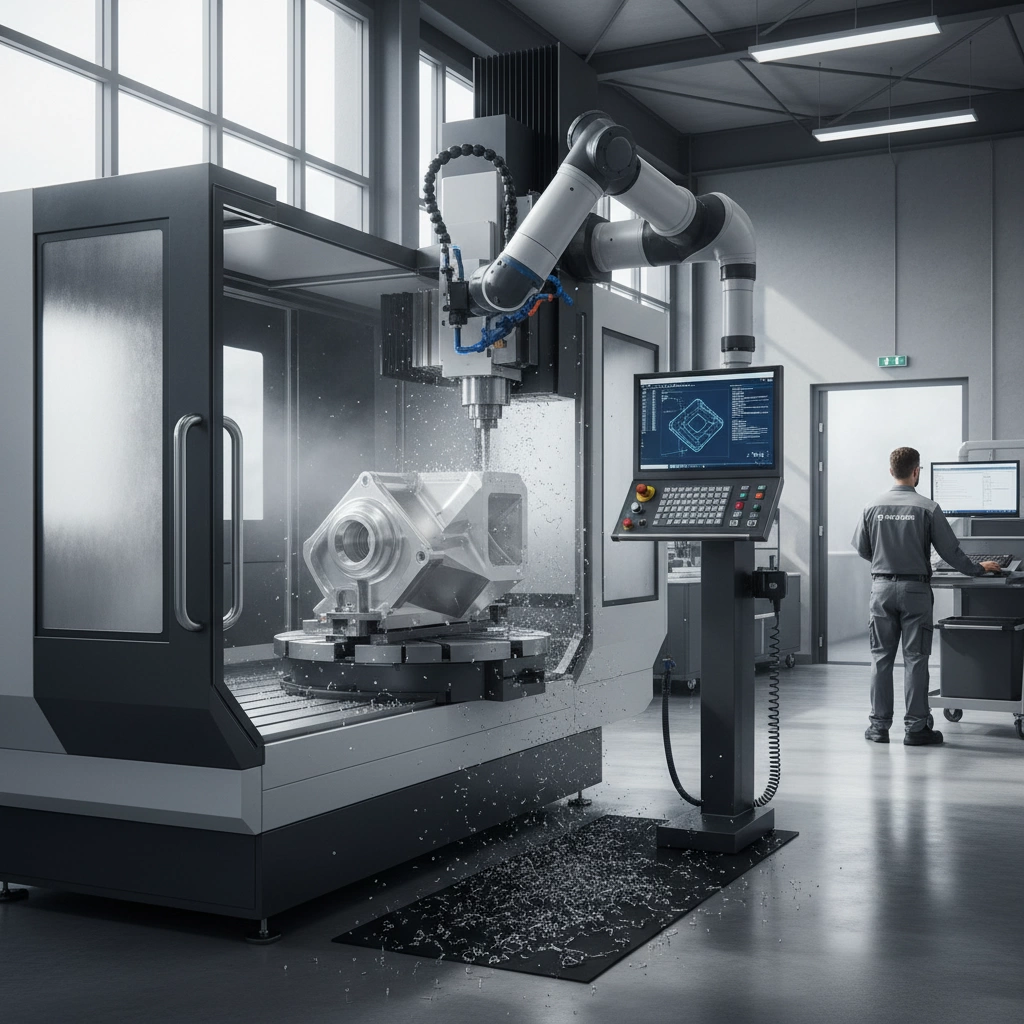
CNC Machining Aluminum Castings: From Raw Mold to Precision Part
When pouring molten aluminum molds, achieving the exact final geometry is rarely possible right out of the gate. While modern aluminum casting techniques excel at creating complex, near-net shapes rapidly, they inherently leave behind surface imperfections, draft angles, and tolerances that fall short of strict engineering requirements. To bridge the gap between a raw cast component and a fully functional, high-performance part, secondary machining of castings is absolutely essential.
As your end-to-end service provider and supplier of aluminum processing, Vastmaterial takes complete ownership of this critical transition. We utilize advanced subtractive manufacturing processes to refine rough castings, ensuring every component meets your exact specifications.
Our engineering and production teams focus strictly on delivering the highest standard of precision machining:
- Ultimate Dimensional Accuracy: We expertly mill, turn, and bore cast parts to hit the exceptionally tight tolerances required for complex assemblies and precise mating surfaces.
- Maximized Functional Performance: Critical features like tapped holes, fluid pathways, and bearing seats are cut to perfection to guarantee flawless functionality in the field.
- End-to-End Reliability: By managing the transition from raw casting to final CNC finished part under one roof, we eliminate multi-vendor friction, reduce lead times, and maintain rigorous quality control.
Core CNC Machining Capabilities for Cast Parts
No matter which aluminum casting techniques you rely on, taking a raw part to its final, functional state requires robust subtractive manufacturing. As your dedicated service provider and supplier of aluminum processing, we have the exact equipment line-up needed to hit your targets.
Here is how we bring precision machining to your cast components:
- Vertical & Horizontal CNC Milling: Built to handle complex geometries and perfectly flat surfaces. This is where a rough shape is refined into a precise CNC machined aluminum casting.
- CNC Turning & Lathe Operations: The standard for creating accurate cylindrical features, clean threading, and deep boring with extreme dimensional accuracy.
- Multi-Axis Machining (4-Axis & 5-Axis): By machining intricate cast shapes in a single run, we eliminate the need for multiple setups. This boosts both speed and precision, which is non-negotiable when manufacturing parts for demanding sectors like aerospace.
- Post-Machining Finishing: The job isn’t done when the cutting stops. We finalize your parts with thorough deburring, anodizing, powder coating, and custom surface treatments so they are completely ready for assembly.
Benefits of CNC Machining Aluminum Castings
When we handle subtractive manufacturing for aluminum, the base material plays a huge role in the success of the project. Starting with the right aluminum alloy ensures our precision machining hits the mark every time. Aluminum stands out as the absolute best choice for the secondary machining of castings due to its natural physical properties.
Here is a quick breakdown of why aluminum dominates the casting and machining space:
| Key Advantage | What It Means for Your Parts |
|---|---|
| Exceptional Machinability | Delivers faster cycle times and extends tool life during post-casting machining operations compared to steel or iron. |
| High Strength-to-Weight Ratio | The go-to choice for lightweighting. You get highly durable structural and mechanical components without the heavy bulk. |
| Thermal & Electrical Conductivity | Features excellent heat dissipation properties, making it perfect for engine parts or enclosures that get hot. |
| Corrosion Resistance | Forms a natural oxidation layer that protects the dimensional accuracy of your cast parts, even in harsh working environments. |
These core material benefits mean we can process near-net shapes faster and more reliably. By choosing aluminum, you lower overall production costs while securing high-performance, precision-machined components.
Aluminum Casting Techniques We Machine
We handle the secondary machining of castings across a wide range of methods. Every project starts differently, but our approach to CNC machining aluminum castings guarantees ultimate dimensional accuracy. If you are exploring different starting points for your components, our precision metal casting guide breaks down the basics.
Here are the core aluminum casting techniques we support:
- High-Pressure Die Casting: Best paired with high-volume production. We step in to machine the critical mounting points and tight-tolerance bores that raw molten aluminum molds can’t perfect.
- Sand Casting: Sand leaves a rougher surface. We take these near-net shapes and mill them into precision parts, which is ideal for massive components or low-volume runs. Check our machining casting guide to see how we maintain tight specs on rougher stock.
- Permanent Mold Casting: When your project demands high structural integrity and lower porosity, we apply subtractive manufacturing to finish the parts right.
- Lost Foam Casting: We bring final precision to highly complex, coreless internal geometries created by this unique process.
No matter the initial method, our precision machining turns rough cast parts into fully functional, assembly-ready components.
Optimal Aluminum Alloys for CNC Machining
Choosing the right alloy is critical when moving from molten aluminum molds to final precision machining. Different aluminum casting techniques yield varying structural properties, so matching the alloy to the process ensures the highest dimensional accuracy and long-term performance. We specialize in the subtractive manufacturing of various aluminum grades to deliver the exact specifications your project requires.
Here are the most common alloys we use for CNC machined aluminum casting:
- A356 & 356 Aluminum: These are the industry standards for sand and permanent mold castings. A356 aluminum machining is highly sought after because it offers an ideal balance of strength, ductility, and excellent machinability, making it perfect for precision aluminum components.
- 380 & 413 Aluminum: These are our go-to choices for die casting. They are highly stable and ideal for parts that require secondary post-casting CNC finishing, such as precise tapping, facing, or intricate threading.
- 319 & 333 Aluminum: If you need cost-effective options for general-purpose sand cast machining, these alloys are incredibly reliable. They provide good castability and are easy to machine into near-net shapes without breaking the budget.
Selecting the right material from the start ensures your custom aluminum cast parts perform flawlessly under real-world conditions.
The Vastmaterial Advantage: Overcoming Casting Challenges
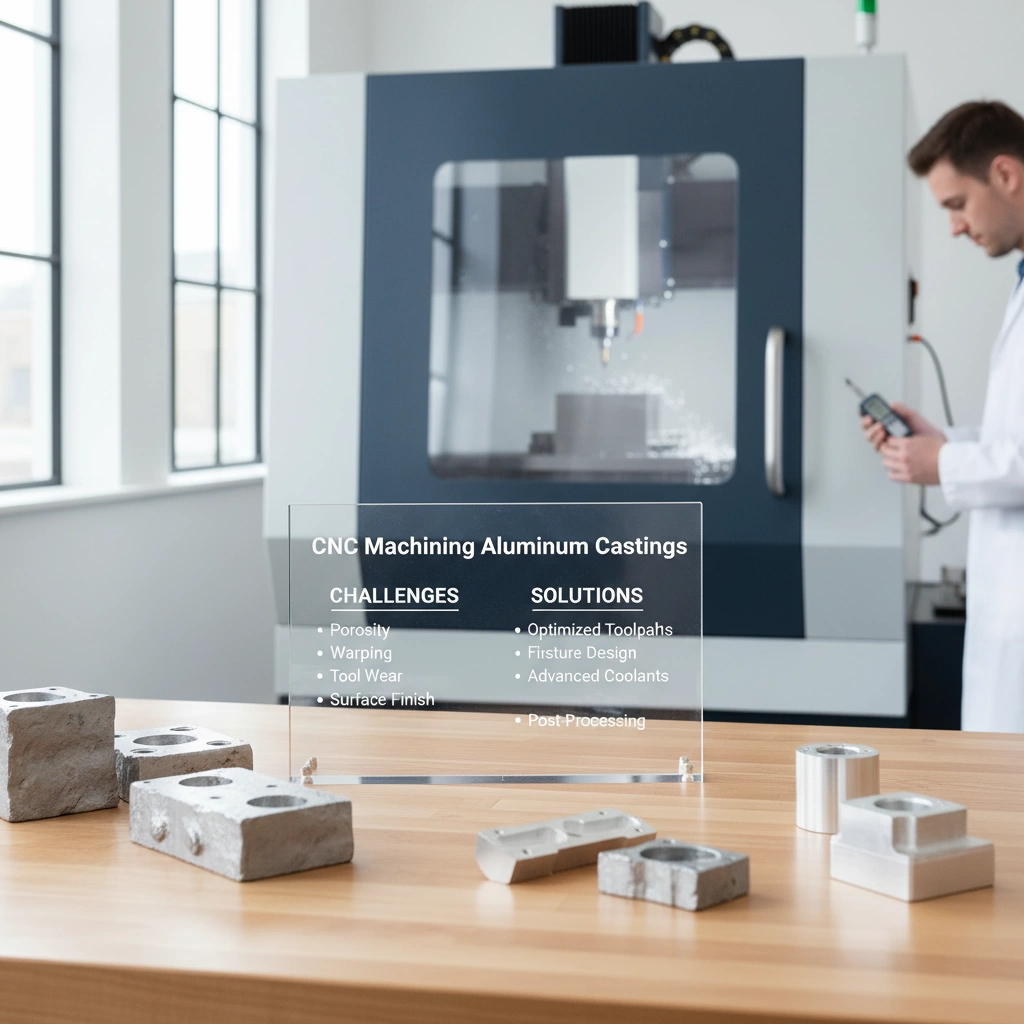
Machining near-net shape castings comes with unique hurdles. At Vastmaterial, we have the hands-on experience to turn raw parts from molten aluminum molds into flawless finished products. To ensure your components meet exact specifications, our online CNC service for precision parts uses advanced subtractive manufacturing to tackle common production issues head-on.
Here is how we solve the toughest problems in CNC machining aluminum castings:
- Porosity & Inclusions: Cast parts often hide microscopic internal voids. We use optimized toolpath strategies and specialized cutting tools to minimize surface breakout, ensuring the structural integrity of your precision aluminum machining remains fully intact.
- Thermal Distortion: Aggressive stock removal generates intense heat that can warp the metal. We tightly manage heat generation and coolant flow during the secondary machining of castings to prevent thermal distortion and lock in your required dimensional accuracy.
- Custom Fixturing: Castings rarely feature flat, easy-to-grip surfaces. We design and build proprietary workholding solutions to safely secure irregularly shaped custom aluminum cast parts. This prevents clamping deformation and guarantees a perfectly aligned cut every single time.
Industries Relying on CNC Machining Aluminum Castings
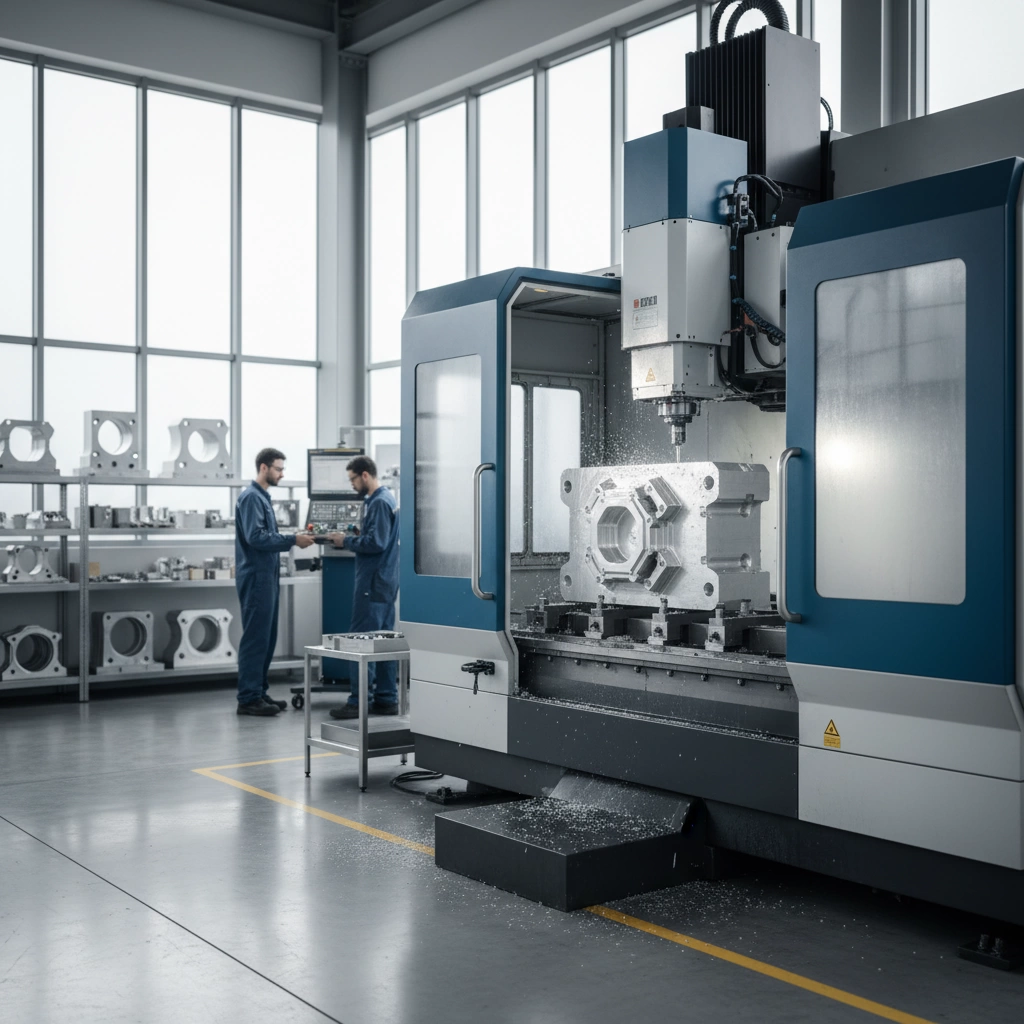
When strict dimensional accuracy in castings is non-negotiable, major global industries rely on our subtractive manufacturing capabilities. We take rough cast parts and deliver ready-to-install components across several high-demand sectors:
- Automotive: We handle the complex secondary machining of castings for critical powertrain components, including engine blocks, transmission housings, and structural brackets.
- Aerospace: Weight reduction is crucial. We deliver precision aluminum machining for lightweight structural components that require exact, repeatable tolerances.
- Industrial Machinery: Fluid dynamics demand tight seals and perfect fits. We finish pump housings, valve bodies, and heavy-duty gearboxes to precise specifications.
- Agriculture & Heavy Equipment: We provide durable, high-strength CNC machined aluminum casting solutions built to survive the harshest outdoor environments.
Every sector has unique requirements for strength, weight, and wear resistance. Understanding these demands is key to project success; our metal casting material guide outlines how different alloys perform across these specific applications to ensure you get the exact functional performance your industry dictates.
Quality Assurance for CNC Machining Aluminum Castings
When we handle the secondary precision machining of your cast parts, we rely on hard data, not guesswork. Our strict inspection process guarantees the ultimate dimensional accuracy for every component that leaves our shop floor.
We run a tight ship backed by an ISO-certified quality management system to oversee our entire cnc machining aluminum castings workflow.
Here is exactly how we lock in quality for your parts:
- CMM Dimensional Verification: We use Coordinate Measuring Machines (CMM) to meticulously inspect complex geometries and tight tolerances. We catch deviations early so you only receive perfect parts.
- Leak and Pressure Testing: Fluid-handling cast parts must be completely flawless. We rigorously test these specific components to guarantee they hold up under pressure without any leaks.
- Standardized Quality Control: Our entire subtractive manufacturing operation is built on ISO-certified protocols, ensuring total repeatability and reliability across all production batches.
We maintain complete transparency about our capabilities, tolerances, and inspection standards. For more specifics on our testing procedures and quality guarantees, you can review our frequently asked questions.
Frequently Asked Questions About CNC Machining Aluminum Castings
Why machine a casting instead of a solid billet?
Starting with a near-net shape from molten aluminum molds saves massive amounts of machine time and raw material. Instead of carving away the majority of a solid aluminum block, subtractive manufacturing is only used where it is absolutely necessary—such as hitting tight tolerances on critical mating surfaces, threads, and internal bores. This method drastically reduces waste and lowers the overall cost per part for mid-to-high volume production.
What tolerances can Vastmaterial hold on cast aluminum parts?
We prioritize strict dimensional accuracy. Using our advanced precision machining equipment, we can reliably hold tight tolerances down to ±0.005 mm. While the exact limit can depend on the part’s geometry and the specific aluminum alloy being cut, we consistently deliver aerospace-level precision on complex internal features and critical mounting points.
How does the casting method affect the cost of secondary CNC machining?
The initial casting technique dictates how much excess material needs to be cut away later on:
- High-Pressure Die Casting: Leaves parts very close to their final dimensions. This requires minimal secondary CNC machining, resulting in lower finishing costs per part.
- Sand Casting: As outlined in our sand casting process guide, this method leaves a rougher surface finish and more excess stock. It requires longer, more aggressive material removal, which increases the CNC cycle time. However, it saves heavily on upfront tooling costs for low-volume runs.
Do you handle both the sourcing of the casting and the machining?
Yes. Vastmaterial handles the entire production lifecycle. From pouring the raw material to the final post-casting CNC finishing, we act as your complete, single-source manufacturing partner. Keeping the casting and the machining under one roof guarantees stricter quality management, eliminates shipping delays between vendors, and significantly simplifies your supply chain.
Reviews
There are no reviews yet.