

Unlock the Power of Professional Foundry Aluminum Casting
When you need strong, lightweight, and cost-effective metal parts, a professional aluminum casting foundry is often the most efficient path. Instead of machining every feature from solid stock or fabricating from multiple pieces, we pour molten aluminum into precision-made molds to create near-net-shape parts that are ready for minimal machining and fast assembly.
What Is Foundry Aluminum Casting?
Foundry aluminum casting is the process of:
- Melting aluminum or aluminum alloys
- Pouring the metal into a sand, permanent mold, or die casting mold
- Allowing it to solidify into a specific, repeatable shape
- Removing, cleaning, and finishing the cast part
Because the shape is formed in the mold, you can integrate ribs, bosses, pockets, and complex geometry that would be costly or impossible to fabricate or fully machine.
Casting vs. Fabrication and Machining
Compared to weldments or fully machined aluminum parts, foundry aluminum casting offers:
- Lower material waste – less metal removed, more metal used in the final part
- Fewer components – consolidate multi-part weldments into a single casting
- Reduced labor – less welding, less assembly, less machining time
- Better consistency – the mold controls critical geometry run after run
We still use CNC machining strategically, but mainly for tight-tolerance surfaces, sealing faces, and critical holes, not for shaping the entire part.
Core Benefits: Strength-to-Weight, Cost, Design Freedom
Engineered properly, foundry aluminum castings deliver:
- Excellent strength-to-weight ratio – ideal for structural housings, brackets, covers, and frames
- Real cost savings – especially on repeat parts where tooling cost is spread over multiple orders
- Design freedom – cast-in ribs, internal cavities, and complex shapes that are tough to fabricate
- Improved performance – optimized stiffness, reduced mass, and consistent wall thickness
This makes lightweight structural aluminum castings a strong fit for automotive, robotics, energy, and industrial applications.
Common Foundry Aluminum Casting Methods
We match the casting method to your part and volume:
- Green sand aluminum casting – flexible, cost-effective, great for complex geometry and small to medium runs
- No-bake aluminum sand casting – ideal for larger, heavier, or more intricate components
- Permanent mold aluminum casting – tighter repeatability, better surface finish, medium to high volumes
- Foundry aluminum die casting – best for custom aluminum die casting at high volumes with excellent surface finish
Each process has trade-offs in tooling cost, lead time, tolerances, and surface finish, and we walk you through those options before you commit.
When Foundry Aluminum Casting Is the Right Choice
You should strongly consider a U.S. aluminum casting foundry when:
- You’re paying too much for machining from billet on repeat parts
- Weldments are distorting, leaking, or taking too long to build
- You need leak-proof aluminum housings or industrial aluminum pump housings
- Your design requires complex shapes, internal passages, or integrated features
- You want a local, custom aluminum casting supplier to reduce supply chain risk and shorten lead times
If you’re asking whether casting vs machining aluminum will lower your total cost and simplify production, we can review your CAD model and quickly tell you if foundry aluminum casting services are the right fit.
Foundry Aluminum Casting Services and Capabilities
When you work with our foundry aluminum casting team, you get a shop that’s built around real-world production needs in the U.S. market, not just lab specs.
Aluminum Sand Casting (Green Sand & No-Bake)
We run both green sand aluminum casting and no-bake aluminum sand casting so we can match the process to your part and budget:
- Green sand aluminum casting – Best for complex shapes, fast setup, and cost-effective prototypes or mid-volume runs.
- No-bake aluminum sand casting – Ideal for larger, heavier aluminum housings and pump bodies where strength and stability matter.
Permanent Mold and Aluminum Die Casting Options
For tighter repeatability and higher volumes, we offer permanent mold aluminum casting and partner closely with our aluminum die casting foundry:
- Permanent mold for medium to high volumes with better surface finish and mechanical properties.
- Custom foundry aluminum die casting for tight-tolerance OEM parts, supported by high-tonnage equipment and in-house machining similar to our high-precision aluminum die casting services.
Part Size, Weight, and Volume Ranges
We support a wide range of part sizes and weights, from small brackets and leak-proof aluminum housings to large industrial aluminum pump housings:
- Prototypes and low-volume: 1–100+ pieces
- Mid- to high-volume: Hundreds to tens of thousands of pieces per year
- We quote around your real demand, not a one-size-fits-all MOQ.
Prototype, Low-Volume, and High-Volume Production
Whether you need precision aluminum prototypes for testing or a high-volume aluminum foundry partner for long-term production, we can:
- Rapidly launch prototype runs with flexible tooling options
- Scale to low-volume niche parts and high-volume OEM programs without changing suppliers
Tolerances, Surface Finish, and Dimensional Stability
We engineer each job around the right process so your cast aluminum parts hit spec:
- Sand casting: robust, cost-effective, with standard foundry tolerances
- Permanent mold / die casting: tighter tolerances, better surface finish, improved dimensional stability
- Critical features are finished with CNC machined aluminum castings to lock in accuracy
Value-Added Machining, Heat Treating, and Finishing
You don’t need multiple vendors. We deliver ready-to-install aluminum cast components:
- In-house CNC machining for holes, sealing surfaces, and precision fits
- Heat-treated aluminum cast components (e.g., T5, T6) to boost strength and durability, supported by specialized aluminum casting alloy grades
- Finishing options: deburring, shot blast, coating, anodizing (where applicable)
Design for Manufacturability Support
We don’t just pour metal; we help you design for casting:
- DFM feedback on wall thickness, draft, and ribs
- Support converting machined weldments into lightweight structural aluminum castings
- CAD review and manufacturability tweaks before tooling, saving you time and change costs
If you’re looking for a U.S. aluminum casting foundry that can take you from concept to finished parts with one team, this is exactly what we’ve built our foundry aluminum casting services around.
Aluminum Alloys for Foundry Aluminum Casting

Choosing the right aluminum alloy is one of the biggest levers you have on performance, cost, and durability. In our aluminum casting foundry, we match alloys to your real-world use, not just to a spec sheet.
Overview of Common Aluminum Casting Alloys
Most foundry aluminum casting work in the U.S. centers around a few proven alloy families:
- A356 / 356 – Go-to alloys for high-strength structural castings
- 319 – Great balance of castability, machinability, and cost
- 713 – Strong choice for elevated-temperature applications and good dimensional stability
If you want a deeper dive into alloy options and chemistry, I recommend checking a broader overview of aluminum grades for casting and their uses.
A356 and A356-T6 Aluminum Castings
A356 is one of our primary alloys for foundry aluminum casting services because it hits the sweet spot for strength, weight, and corrosion resistance:
- As-cast A356 – Good strength and ductility, ideal for many structural and housing parts
- A356-T6 – Heat-treated for higher tensile and yield strength, often used in aerospace, performance automotive, and critical industrial parts
With A356-T6 aluminum castings, you can often replace multi-piece weldments or heavy steel parts with a single lightweight casting that still meets safety factors. You can see typical specs and performance for A356-T6 aluminum alloy properties and applications.
319, 356, and 713 Aluminum Alloys and Use Cases
We typically recommend:
- 319 aluminum castings
- Good castability and machinability
- Common for engine covers, housings, gearboxes, and pump bodies
- 356 aluminum castings
- Similar to A356 but with slightly different chemistry
- Used in structural brackets, wheels, manifolds, and leak-proof aluminum housings
- 713 aluminum alloy castings
- Better high-temperature performance
- Used in energy industry castings, powertrain components, and industrial machinery where thermal stability matters
Mechanical Properties to Expect
Typical mechanical property targets (exact values depend on process and heat treat):
- Tensile strength: ~23–45 ksi range across common casting alloys and tempers
- Yield strength: ~15–35 ksi
- Elongation: ~2–12% depending on alloy and heat treatment
For U.S. customers in automotive, aerospace, and industrial markets, we’ll size sections and pick alloys to hit your required strength and elongation, not just “standard” values.
Corrosion Resistance and Thermal Performance
- A356 / 356 – Strong overall corrosion resistance; good for outdoor equipment, marine-adjacent use, and road vehicles
- 319 – Solid corrosion resistance with excellent machinability; good for sealed housings and pump components
- 713 – Stable at higher temperatures; better option when parts see thermal cycling or sustained heat
Aluminum’s natural oxide layer gives good base corrosion resistance. With the right alloy + coating (anodizing, powder coat, or paint), you can get long service life even in harsh U.S. climates (salt, humidity, freeze-thaw).
Heat Treatment Options and Tempers
For foundry aluminum casting, we mainly use:
- As-cast (F) – Lowest cost, good when extreme strength isn’t required
- T5 – Cooled from casting and artificially aged; moderate strength improvement
- T6 – Solution heat treated and artificially aged; maximum strength and hardness for alloys like A356 and 356
- T7 / T7x – For parts needing better dimensional stability and stress relief under heat
We match heat treatment to your priorities: strength, stability, or cost.
How to Choose the Right Aluminum Alloy for Your Application
When we quote foundry aluminum casting services, we usually walk through:
- Loads & safety factors – Static vs dynamic, impact, fatigue
- Environment – Outdoor, marine, chemical exposure, temperature range
- Weight targets – Where lightweight structural aluminum castings help performance
- Machining needs – Amount of CNC machining and required surface finish
- Volume & budget – Prototype, low-volume, or high-volume production
In simple terms:
- Choose A356-T6 or 356-T6 when strength, stiffness, and reliability matter most.
- Choose 319 when you care about castability, machinability, and cost balance.
- Choose 713 when your part runs hot and needs thermal stability.
If you share your 3D model, loading conditions, and operating environment, we can recommend the best-fit alloy and heat treat for your project instead of guessing from a catalog.
Casting Methods Tailored to Your Part
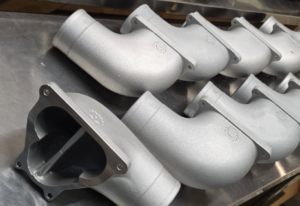
Choosing the right foundry aluminum casting process is the fastest way to hit your cost, lead time, and quality targets. At our U.S. aluminum casting foundry, we match each part to the method that fits its geometry, volume, and tolerance needs.
Green Sand Aluminum Casting for Complex Shapes
Green sand aluminum casting is the go-to for:
- Complex geometry with undercuts, pockets, and cores
- Medium to large parts where tooling cost needs to stay low
- Flexible volumes – from prototypes to ongoing production
You get:
- Lower tooling cost vs permanent mold or die casting
- Good design freedom for housings, brackets, and pump bodies
- Solid choice when you want to convert weldments to castings
No-Bake Aluminum Sand Casting for Bigger Parts
No-bake aluminum sand casting handles:
- Larger, heavier components that need rigid molds
- Thicker sections and structural parts
- Better dimensional stability on big, heavy-duty castings
This process delivers:
- Strong molds that hold shape on large parts
- Good surface finish for sand casting
- A practical option for industrial aluminum pump housings and heavy machinery parts
Permanent Mold Aluminum Casting for Repeatability
Permanent mold aluminum casting is ideal when you need:
- Repeatable production with consistent dimensions
- Better surface finish than sand casting
- Tight, stable tolerances for long-term programs
Use it for:
- Medium to high annual volumes
- Leak-proof aluminum housings and structural components
- Parts that you’ll finish with CNC machining or coating
When Aluminum Die Casting Makes Sense
Foundry aluminum die casting (or working with a dedicated aluminum die casting foundry) is the right call when you need:
- High-volume production with very fast cycle times
- Thin walls and detailed features
- Tight tolerances right out of the tool
It’s best for:
- Automotive aluminum castings, consumer products, and compact housings
- Parts where tooling investment is justified by volume
For even tighter tolerances and smaller precision parts, we’ll sometimes pair die casting with precision aluminum investment casting options similar to those used for aluminum investment castings with low tolerances.
Cost, Lead Time, and Tolerance Comparison
In simple terms:
| Process | Tooling Cost | Part Cost | Tolerances | Typical Lead Time |
|---|---|---|---|---|
| Green Sand Aluminum Casting | Low | Medium | Moderate | Short–Medium |
| No-Bake Sand Casting | Low–Medium | Medium | Moderate | Medium |
| Permanent Mold Aluminum Casting | Medium | Low–Medium | Tight | Medium |
| Aluminum Die Casting | High | Low | Very Tight | Longer for tooling |
- Low volume / flexible design → green sand or no-bake
- Mid–high volume / stable design → permanent mold or die casting
Surface Finish and Post-Processing Impact
Casting method directly affects surface finish and how much machining you’ll need:
- Green sand: Rougher surface; expect more machining and possible coating
- No-bake: Slightly better than green sand; good for painted or machined surfaces
- Permanent mold: Smoother finish; reduced machining and prep time
- Die casting: Best as-cast finish; ideal when you want minimal machining
We typically combine the right casting process with CNC machined aluminum castings and heat treating to hit your exact dimensional and performance targets with the least total cost.
Industries Using Foundry Aluminum Casting
Automotive and Transportation Aluminum Castings
We supply foundry aluminum casting for automotive and transportation parts where weight, cost, and durability all matter. Common parts include:
- Transmission and gearbox housings
- Suspension and steering components
- EV motor housings and battery system brackets
Using an aluminum sand casting foundry for these components cuts vehicle weight, improves fuel efficiency, and keeps part costs under control at medium to high volumes.
Aerospace and Defense Aluminum Components
For aerospace and defense, we focus on tight-tolerance, ISO-certified aluminum castings with consistent mechanical properties. Typical parts include:
- Lightweight structural brackets and mounts
- Avionics and electronics housings
- UAV and drone frames
Here, we combine foundry aluminum casting with CNC machining and heat treatment to hit strict defense and aerospace specs while keeping lead times realistic for U.S. programs.
Medical Device and Healthcare Cast Aluminum Parts
In medical and healthcare, aluminum casting is ideal for rigid, easy-to-clean structures:
- Imaging system frames and gantries
- Pump housings and fluid handling components
- Lab automation housings
Our approach is to design parts so they cast cleanly, machine accurately, and finish smoothly for equipment that runs 24/7 in clinical environments.
Robotics and Automation Housings and Brackets
For robotics and factory automation, custom aluminum casting delivers strong, lightweight structures that are easy to mount:
- Robot arm joints and end-effector mounts
- Gearbox housings and motor covers
- Custom brackets for conveyors and gantries
We use green sand aluminum casting and permanent mold aluminum casting to balance cost, rigidity, and repeatability for OEM automation platforms.
Power Generation and Energy Industry Castings
Energy customers rely on our foundry aluminum casting services for:
- Generator and motor housings
- Inverter and power electronics enclosures
- Cooling system components
These parts often need thermal performance and corrosion resistance, which we dial in through the right alloy selection and heat treating. For more complex industrial and energy castings, we also produce custom alloy casting foundry parts built around your drawings.
Industrial Machinery, Pumps, and Valve Castings
In industrial machinery, aluminum castings help reduce weight without sacrificing strength. We commonly produce:
- Industrial pump housings and impellers
- Compressor covers and gearbox cases
- Custom OEM valve bodies and manifolds
When projects call for leak-tight, pressure-rated components, we combine no-bake aluminum sand casting with NDT and CNC machining. For more specialized valve and flow components, we support full OEM programs similar to our custom valve castings manufacturing.
Real-World Examples of Aluminum Castings
Across these sectors, real parts we help engineer and produce include:
- Leak-proof aluminum housings for EV power electronics
- A356-T6 lightweight structural brackets for aerospace interiors
- 319 aluminum industrial pump housings with machined sealing surfaces
- Permanent mold aluminum enclosures for robotics control systems
All are built around U.S. customer requirements: shorter lead times, predictable quality, and a single U.S. aluminum casting foundry partner that can handle casting, machining, and finishing under one roof.
Engineering and Design Support for Foundry Aluminum Casting
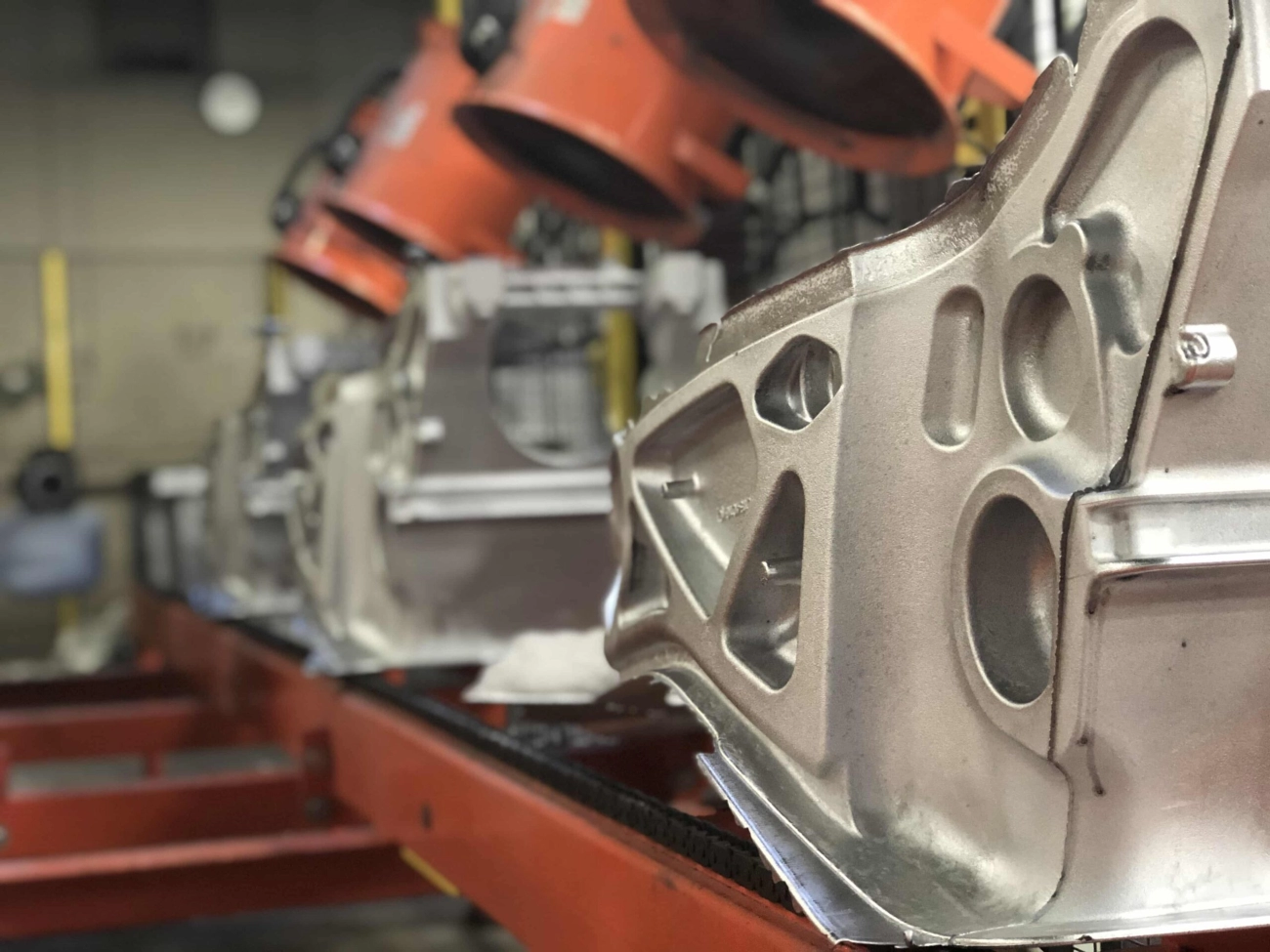
I don’t just pour metal—I help you engineer the part right from day one. With the right design support, foundry aluminum casting can cut weight, cost, and lead time while still hitting tight specs.
Design Guidelines for Aluminum Casting
Good castings start with smart geometry. When we design for foundry aluminum casting, we focus on:
- Consistent wall thickness to avoid hot spots and shrinkage
- Smooth transitions instead of sharp corners
- Proper gating and riser locations to control metal flow and solidification
If you’re coming from a purely machined or fabricated design, I’ll help you reshape the part so it’s “casting-friendly” without losing function.
Wall Thickness, Draft, and Fillets
For most aluminum casting foundry work, I recommend:
- Wall thickness:
- Sand casting: typically 0.18″–0.35″
- Permanent mold / aluminum die casting: can go thinner, 0.08″–0.18″, depending on size
- Draft angles:
- Sand casting: 1.5°–3° per side
- Permanent mold / die casting: 0.5°–1.5° per side
- Fillets and radii:
- Avoid sharp internal corners
- Use fillets of at least 1.5× wall thickness where possible
These small tweaks dramatically improve fill, reduce porosity, and lower your scrap rate.
Optimizing for Sand Casting vs Die Casting
Different processes, different rules. When we compare aluminum sand casting to foundry aluminum die casting, I usually look at:
- Sand casting:
- Best for larger parts, complex internal cores, and lower volumes
- More flexible on geometry, less upfront tooling cost
- Die casting / permanent mold:
- Best for higher volumes and thinner walls
- Tighter tolerances and better surface finish, but higher tooling investment
I’ll help you choose the method that balances volume, geometry, and cost.
Converting Weldments and Machined Parts to Castings
A big win for U.S. customers is replacing complex weldments and hog-out machined parts with a single cast aluminum component. Typical benefits:
- Fewer parts and welds
- Lower labor and inspection time
- Better repeatability and leak-tight performance
If you’re already using precision CNC machining on complex metal parts, like the kind used in industrial and marine applications, the same logic often applies to aluminum castings—one net-shape part instead of multiple machined pieces.
CAD, Simulation, and DFM for Aluminum Casting
I work directly from your 3D CAD models and drawings to:
- Review design for manufacturability (DFM) for foundry aluminum casting
- Run solidification and flow simulations to predict shrinkage, porosity, and hot spots
- Optimize gating, risers, and chills before we ever cut tooling
This front-end engineering is key to hitting your tolerance, weight, and performance targets on the first article.
Rapid Prototyping for Aluminum Cast Parts
If you need to move fast, we offer rapid paths to real metal parts:
- 3D-printed patterns for quick sand casting trials
- Soft tooling for short-run permanent mold or low-pressure casting
- Machined-from-solid prototypes that match the final alloy and heat treat for testing
That way, you can validate fit, function, and performance in actual cast aluminum before committing to full production tooling.
Quality Assurance in Foundry Aluminum Casting
When we take on a foundry aluminum casting project, quality isn’t a box we check at the end – it’s built into every step so your parts run right the first time and every time.
Dimensional Inspection & CMM Reporting
We verify critical dimensions with calibrated gauges and full CMM (coordinate measuring machine) inspection when required. For tight-tolerance aluminum sand castings or permanent mold parts, we provide:
- First Article Inspection (FAI) reports
- Full CMM dimensional layouts for production approval
- Ongoing SPC tracking on key features
If your project needs documented mechanical performance, we tie these results back to our testing and quality procedures for traceable, repeatable verification.
Non-Destructive Testing (NDT)
For safety-critical or leak-tight aluminum castings, we use non-destructive testing to catch issues you can’t see:
- X-ray / radiographic inspection for internal porosity and shrink
- Dye penetrant testing for surface cracks and defects
- Pressure and leak testing for pump housings and sealed aluminum enclosures
We follow common U.S. and customer-specific specs across automotive, aerospace, defense, and industrial applications.
Material Traceability & Certifications
Every heat of aluminum alloy is tracked from melt to finished casting. We can supply:
- Material certifications and heat numbers
- Chemical composition and mechanical test reports
- Full certification packages for ISO, automotive, or aerospace requirements
Our traceability system makes it easy to tie each batch back to its specific casting alloy and heat treatment records, which aligns with the data you’d expect from serious casting alloy control.
Controlling Porosity, Shrinkage & Defects
We engineer our foundry aluminum casting processes to reduce scrap and hidden failures by:
- Optimizing gating, risers, and cooling paths
- Using process-controlled degassing and filtration to limit gas porosity
- Dialing in sand parameters and permanent mold temperatures
- Running real-world trials and feeding simulations where needed
The result is cleaner, sounder castings that machine and assemble without surprises.
Process Controls for Repeatable Quality
Consistency matters, especially for high-volume aluminum foundry work. We rely on:
- Documented work instructions and job travelers
- Controlled melt practices (temperature, chemistry, cleanliness)
- Tooling and pattern maintenance plans
- Statistical process control on critical steps
This is how we keep your first production run and your tenth re-order running the same.
Documentation for Regulated Industries
If you’re in aerospace, defense, medical, or energy, paperwork matters as much as parts. We support:
- PPAP, FAIR, and full quality document packages
- Lot-level and part-level traceability
- Inspection records, NDT reports, and certifications stored and shareable on request
When you work with our U.S. aluminum casting foundry, you get both the foundry aluminum casting quality and the documentation you need to pass audits, meet specs, and keep your own customers confident.
Sustainability and Cost Efficiency in Foundry Aluminum Casting
When we talk foundry aluminum casting in the U.S., we’re talking about hitting performance targets and keeping costs and sustainability under control.
Recycled Aluminum in Foundry Operations
Our aluminum casting foundry relies heavily on recycled aluminum ingot and in-house return scrap. That cuts:
- Raw material cost per pound
- Overall carbon footprint
- Lead times tied to primary aluminum markets
You still get certified, traceable, ISO-ready chemistry that fits automotive and aerospace requirements.
Energy-Efficient Melting and Molding
We run high-efficiency gas or electric furnaces, tight process controls, and optimized melt batches to:
- Reduce energy use per casting
- Keep melt temperatures stable for better mechanical properties
- Lower overhead that directly impacts your price per part
Casting vs Machining: Material Waste
Compared to hogging out billet on a mill, aluminum sand casting and permanent mold aluminum casting:
- Use far less raw material per finished part
- Reduce chips and scrap that need to be recycled
- Cut machining time, especially on thick or complex parts
If you’re interested in how we handle downstream processes, our approach to CNC machining services follows the same cost- and waste-conscious mindset.
Total Cost of Ownership for Cast Aluminum Parts
With foundry aluminum casting, the real savings show up over the life of the program:
- Lower material use vs solid billet
- Reduced machining and welding labor
- Lower shipping cost thanks to lighter near-net shapes
- Less rework due to controlled porosity and leak-proof aluminum housings
The tooling cost is spread over the entire run, so medium- and high-volume parts often see a big TCO advantage.
Balancing Cost, Performance, and Lead Time
We balance alloy choice, casting method (green sand, no-bake, permanent mold, or aluminum die casting), and post-processing to hit your targets:
- Cost: choose the simplest process that meets your specs
- Performance: match alloy and heat treat to your strength and durability needs
- Lead time: pick tooling and process paths that keep programs on schedule
How U.S. Aluminum Foundries Reduce Supply Chain Risk
Working with a U.S. aluminum casting foundry keeps you out of the offshore chaos:
- Shorter, more reliable lead times
- Easier engineering communication and design changes
- Faster response on rush orders, replacements, and ECOs
- Lower freight risk and more predictable landed cost
For American OEMs, a local custom aluminum casting supplier is not just greener—it’s a safer, more cost-stable choice for long-term programs.
Lead Times, Logistics, and Project Workflow
Typical Lead Times for Tooling and First Articles
For most foundry aluminum casting projects, here’s what you can realistically expect in the U.S. market:
- Tooling / patterns: ~3–5 weeks for new sand casting tooling, ~4–8 weeks for permanent mold or aluminum die casting tools (depending on complexity).
- First article samples (FAI): Usually 1–2 weeks after tooling is approved and raw material is in-house.
- Engineering changes: Minor tooling tweaks can often be turned in 1–2 weeks once the revision is locked in.
Production Ramp-Up and Repeat Orders
Once we dial in your first parts, we set up a predictable production rhythm:
- Initial ramp-up: We typically start with a short run to validate the process, then ramp to your target volume.
- Repeat orders: Standard repeat orders for aluminum sand casting and permanent mold usually ship in 3–6 weeks, sooner for stable programs.
- Forecasting: If you share rolling forecasts, we can pre-stage materials and tooling to protect your lead times.
Packaging and Shipping for Aluminum Castings
We build packaging around how your parts will actually be used:
- Custom dunnage and blocking to protect machined surfaces and sealing faces.
- Rust and contamination protection where needed (especially for machined and heat-treated aluminum cast components).
- Labeled pallets and part ID to simplify your receiving and traceability.
If you’re also buying related metal components like alloy steel flanges or stainless parts, we can help you align packaging standards across suppliers.
Handling Rush Orders and Expedited Prototypes
When you need parts yesterday, we prioritize speed and communication:
- Rapid pattern solutions (soft tooling, 3D-printed patterns, or temporary molds) for precision aluminum prototypes.
- Expedited slots in molding, heat treat, and CNC machining when the schedule allows.
- Split shipments so you get critical parts first while the rest of the lot finishes.
Working with a U.S. Foundry vs Overseas Suppliers
For U.S. customers, a local aluminum casting foundry usually wins on:
- Shorter lead times and faster response to design changes.
- Easier communication across time zones, especially for engineering reviews and PPAP/FAI.
- Lower risk on logistics delays, tariffs, and quality surprises.
If you run regulated or high-liability applications (aerospace, energy, medical), a U.S.-based, ISO-focused aluminum casting foundry also makes audits and documentation much simpler.
What You Need Ready Before Requesting a Quote
To quote foundry aluminum casting services quickly and accurately, we look for:
- 3D CAD model + 2D print (with tolerances, critical dimensions, and surface finish callouts).
- Annual and per-order volumes (prototypes, low-volume, or high-volume aluminum foundry demand).
- Alloy and heat treatment (e.g., A356-T6, 319, 356) plus any special mechanical or leak-tightness requirements.
- Secondary operations needed: CNC machining, pressure testing, coating, assembly, etc.
- Target timing for first articles and production so we can align tooling and capacity.
Having this ready up front helps us turn around custom aluminum casting quotes fast and keeps your project on schedule.
Choosing a Foundry Aluminum Casting Supplier
Picking the right foundry aluminum casting supplier in the U.S. has a huge impact on cost, quality, and lead time. Here’s how I look at it.
What to Look for in an Aluminum Casting Foundry
When you’re comparing aluminum casting foundries, focus on:
- Core processes: green sand, no-bake sand, permanent mold, and aluminum die casting in-house (not all outsourced).
- Alloy range: A356, 356, 319, 713, and other standard aluminum casting alloys on the shelf.
- Part size & volume range: can they handle your smallest prototype and your future production volumes?
- Industry fit: experience with automotive, aerospace, energy, robotics, pumps, or leak-proof housings similar to yours.
If you also run mixed-material programs, it helps when the supplier understands machined alloys like copper-nickel brake components so they can design around your full assembly, not just a single casting.
Comparing Capabilities, Certifications, and Equipment
Ask each aluminum casting foundry to show:
- Certifications: ISO 9001 at minimum; AS9100 or IATF if you’re in aerospace or automotive.
- Equipment: molding lines, melting furnaces, core-making, CNC machining centers, CMMs, and NDT equipment.
- Process control: documented work instructions, in-process inspection, and statistical process control for high-volume aluminum castings.
Questions to Ask About Alloys, Volumes, and Tolerances
Drill into the details early:
- Alloys
- Which aluminum casting alloys do you run regularly?
- Can you pour A356-T6 and 319 to tight mechanical specs?
- How do you certify chemistry and mechanical properties?
- Volumes
- What’s your sweet spot: prototypes, low-volume, or high-volume aluminum foundry work?
- Minimum order quantities and tooling amortization?
- Tolerances
- Typical as-cast tolerances for sand casting vs permanent mold vs die casting.
- How much can be held after CNC machining?
- What’s realistic for flatness and leak-proof aluminum housings?
How In-House Machining and Finishing Impact Total Cost
A foundry aluminum die casting or sand casting supplier with in-house CNC machining, heat treating, and finishing usually saves you money and time:
- Fewer vendors, fewer markups, and lower freight.
- Better control of stack-up tolerances from casting through machining.
- Faster problem-solving because one team owns casting and machining (including precision features similar to tight-tolerance alloy machining services).
Evaluating Reliability, On-Time Delivery, and Support
In the U.S. market, delivery and support matter as much as price:
- On-time delivery rate and how they handle schedule changes.
- Communication: a single project contact who responds quickly and knows your drawings.
- Issue response: how they handle scrap, rework, and field issues—credits, corrective actions, and timeline transparency.
Ask for references from customers with similar aluminum sand casting or permanent mold programs.
Long-Term Partnership with a Single-Source Foundry
A strong, single-source U.S. aluminum casting foundry pays off over time:
- They learn your standards, design style, and inspection requirements.
- They help convert weldments and machined blocks into cost-effective castings.
- They can grow with you—from precision aluminum prototypes to full high-volume production.
If you’re building a long-term product line, a stable foundry aluminum casting partner is worth more than a slightly cheaper quote from an unknown overseas shop.
Reviews
There are no reviews yet.