

Beyond Standard Grades: The Vastmaterial Difference
We move beyond the limitations of commodity materials like ADC12 and A356. While standard castable aluminum alloy grades often force manufacturers to choose between mold filling capability and mechanical integrity, our proprietary HY Series eliminates this trade-off. We engineer materials that deliver the fluidity required for complex Al-Si casting series geometries while achieving the mechanical performance traditionally reserved for forged components.
Solving the Castability vs. Strength Dilemma
Our development focus is on “casting instead of forging” and “casting instead of steel.” By refining grain structures and controlling impurity levels, we provide structural die casting materials that allow for significant lightweighting without compromising safety.
- High-Strength & Toughness (HY-1 Series): Engineered for safety-critical parts in automotive and aerospace. These alloys achieve Tensile Strength ≥ 480-520 MPa, Yield Strength ≥ 380-420 MPa, and Elongation ≥ 5-10%, outperforming standard A356 options.
- Heat Resistant Performance (HY-5 Series): Designed for high-temperature environments. Unlike standard alloys that lose strength rapidly, HY-5 maintains integrity at operating temperatures up to 300°C – 350°C.
- Process Versatility: Our alloys are optimized for various methods, including High-pressure die casting (HPDC), low-pressure, and gravity casting, ensuring near-net-shape precision.
Performance Comparison: Proprietary vs. Standard
| Feature | Standard Grades (ADC12/A356) | Our HY Series (High Performance) |
|---|---|---|
| Primary Focus | General Purpose / Cost | High Strength & Heat Resistance |
| Tensile Strength | ~230 – 300 MPa | ≥ 480 – 520 MPa |
| Elongation | < 3% (Typical Die Cast) | ≥ 5 – 10% |
| Thermal Stability | Low (< 200°C) | High (Up to 350°C) |
| Application | Housings, Brackets | Structural Nodes, Engine Components |
Technical Specifications & Performance Data
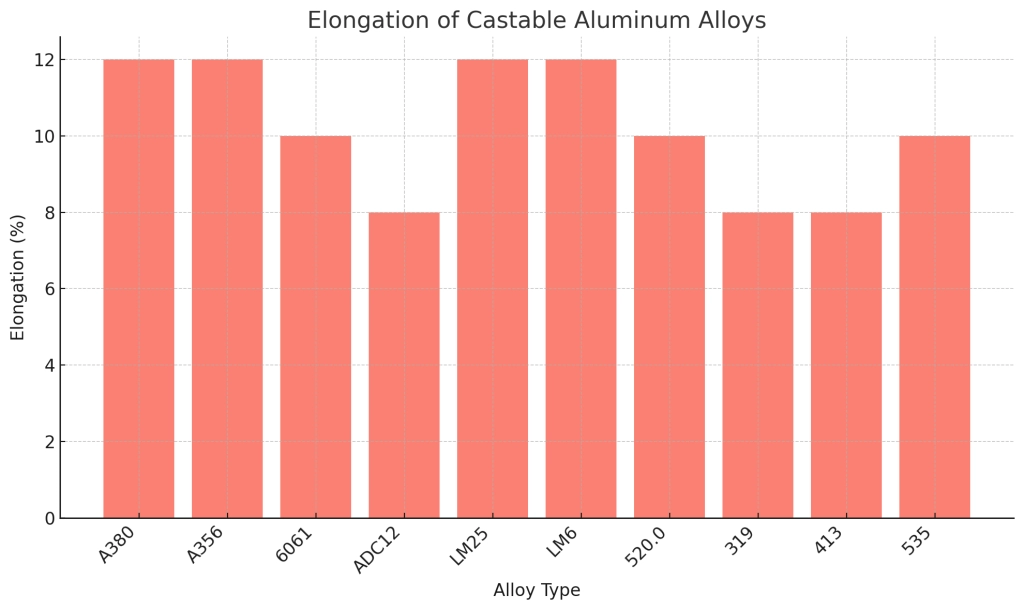
When selecting a castable aluminum alloy, the numbers on the spec sheet determine the viability of your project. Standard commodity grades often force engineers to choose between castability and mechanical strength. Our proprietary HY Series eliminates this compromise, delivering forging-level performance directly from the casting process.
Comparison: Proprietary HY Series vs. Standard Grades
We have benchmarked our high-performance alloys against common industry standards like A356 vs A380 aluminum. While standard grades are sufficient for general housings, our HY-1 and HY-5 series are engineered for safety-critical and high-stress applications.
| Grade / Alloy | Tensile Strength (MPa) | Yield Strength (MPa) | Elongation (%) | Key Characteristic |
|---|---|---|---|---|
| HY-1 Series (Ours) | 480 – 520 | 380 – 420 | 5 – 10 | High Strength & Toughness |
| HY-5 Series (Ours) | High Retention | High Retention | Moderate | Heat Resistant (up to 350°C) |
| A356-T6 | 230 – 280 | 160 – 190 | 3 – 5 | Standard Gravity Cast |
| A380 (ADC10) | ~320 | ~160 | < 3 | Standard Die Cast |
| AlSi10Mg | 300 – 350 | 200 – 250 | 2 – 5 | Additive/Casting |
Note: Data represents typical values. The yield strength of aluminum in our HY series significantly exceeds standard casting limits, allowing for lighter, thinner structural designs.
Molten Metal Fluidity and Mold Filling
High strength usually implies poor flow, but we have optimized the molten metal fluidity of our alloys to ensure they fill complex molds as effectively as Al-Si casting series materials.
- Thin-Wall Capability: Excellent fluidity allows for wall thicknesses below 2mm without cold shuts.
- Near Net Shape: High flow rates enable near net shape casting, reducing material waste and secondary processing.
- Porosity Control: Optimized solidification ranges minimize shrinkage porosity in variable cross-sections.
Microstructure and Grain Refinement
The superior mechanical properties of our castable aluminum alloy stem from advanced grain refinement technologies. Unlike the coarse grain structures found in generic ingots, our process achieves a highly refined, uniform microstructure.
- Impurity Control: We strictly limit iron and other deleterious impurities to prevent brittleness.
- Fatigue Resistance: The refined grain structure provides exceptional fatigue strength, making these alloys suitable for dynamic automotive and aerospace loads.
Machinability and Surface Finish
Post-casting operations are often where costs spiral. Our alloys are designed to be chip-friendly, reducing tool wear rates compared to high-silicon abrasive alloys. The consistent density ensures a mirror-like surface finish after polishing or coating. For projects requiring tight tolerances, our material stability supports high-precision CNC machining services without the risk of stress-induced warping common in lower-grade metals.
Spotlight Technology: Heat-Treat-Free (HTF) Alloys
Standard T6 heat treatment is often a production bottleneck, introducing risks like dimensional distortion, surface blistering, and significant energy consumption. We developed our Heat-Treat-Free (HTF) castable aluminum alloy series to eliminate these issues entirely while maintaining structural integrity. By achieving high mechanical properties in the “As-Cast” state, we help foundries bypass the quenching process that typically warps large components.
Switching to HTF alloys offers immediate advantages for high-volume manufacturing:
- T6-Level Strength: Our alloys deliver yield strength and elongation comparable to heat-treated A356 without the extra processing steps.
- Cost Reduction: Eliminating heat treatment cycles and post-process straightening lowers total manufacturing costs by 20-30%.
- Zero Thermal Deformation: Ideal for Gigacasting and large automotive structural parts (like shock towers and subframes), ensuring the casting retains its precise shape from the mold to assembly.
For engineers evaluating specific material properties, our alloy guide for high-performance alloys and precision casting provides detailed comparisons of these structural die casting materials against traditional grades.
Industry Applications for Castable Aluminum
Our castable aluminum alloy solutions are engineered to solve specific engineering challenges across high-stakes industries. We don’t just supply metal; we provide the material basis for lighter, stronger, and more efficient components.
New Energy Vehicles (NEV) & Automotive Lightweighting
The US automotive market is aggressively pursuing range efficiency, making weight reduction critical. Our HY Series alloys are central to this shift, serving as premium automotive lightweighting materials. We replace heavy steel assemblies with single-piece, high-strength aluminum castings for:
- Battery Trays: Protecting cells while minimizing mass.
- Motor Housings: Ensuring thermal dissipation and structural rigidity.
- Shock Towers: absorbing high impact loads.
By utilizing advanced high-pressure die casting (HPDC) alloys, manufacturers can produce complex, thin-walled parts that standard A356 cannot achieve. Our specific aluminum casting alloy grades are designed to maintain high elongation and yield strength even in these demanding structural applications.
5G Infrastructure & Electronics
Reliability in outdoor environments is the main requirement for telecommunications hardware. Our alloys offer a dual benefit here: high thermal conductivity for effective heat dissipation in 5G base station heat sinks, and superior weatherability. We formulate corrosion-resistant casting grades that withstand harsh environmental exposure without degrading, ensuring long-term performance for electronic enclosures and mounting hardware.
Aerospace & Defense
For sectors where failure is not an option, we push the boundaries of material science with Aluminum Matrix Composites (SiC/Al). These composites offer significantly higher stiffness and wear resistance compared to standard aluminum, making them suitable for high-load aerospace components and defense equipment. Whether you require raw material development or finished components, our aluminum die casting services ensure that these advanced materials are processed to meet strict dimensional and mechanical specifications.
Quality Assurance & Custom Alloy Development
Reliability isn’t an accident; it’s engineered. When you are sourcing a high-performance castable aluminum alloy, you need more than just a datasheet—you need proof of performance. Our facility operates under strict ISO 9001 and IATF 16949 standards, ensuring that every ingot and melt meets the rigorous demands of the automotive and aerospace sectors. We don’t just sell metal; we deliver verified structural integrity.
In-House Laboratory Capabilities
We don’t rely on third-party guesswork. Our on-site laboratory validates that our aluminum foundry alloys meet the specific mechanical targets of our HY Series (such as the 500+ MPa tensile strength of HY-1). Our testing regimen includes:
- Spectroscopy: Precise chemical analysis to verify elemental composition.
- Tensile Testing: Confirming yield strength, tensile strength, and elongation.
- X-Ray Flaw Detection: Ensuring internal integrity and freedom from porosity.
Micro-Alloying and Customization
Standard grades like A356 are fine for general use, but our specialty is pushing the limits. Through advanced micro-alloying, we tailor the balance of Silicon (Si), Magnesium (Mg), and Copper (Cu) to achieve specific Key Performance Indicators (KPIs). Whether you need higher thermal conductivity or superior ductility for safety-critical parts, we adjust the formula to suit the application.
Our comprehensive alloy cast steel factory capabilities and quality processes allow us to develop proprietary blends that bridge the gap between casting and forging. By refining the grain structure, we deliver a castable aluminum alloy that solves the traditional trade-off between fluidity and structural strength, ensuring your components perform exactly as simulated.
Supply Chain, Forms, and Logistics
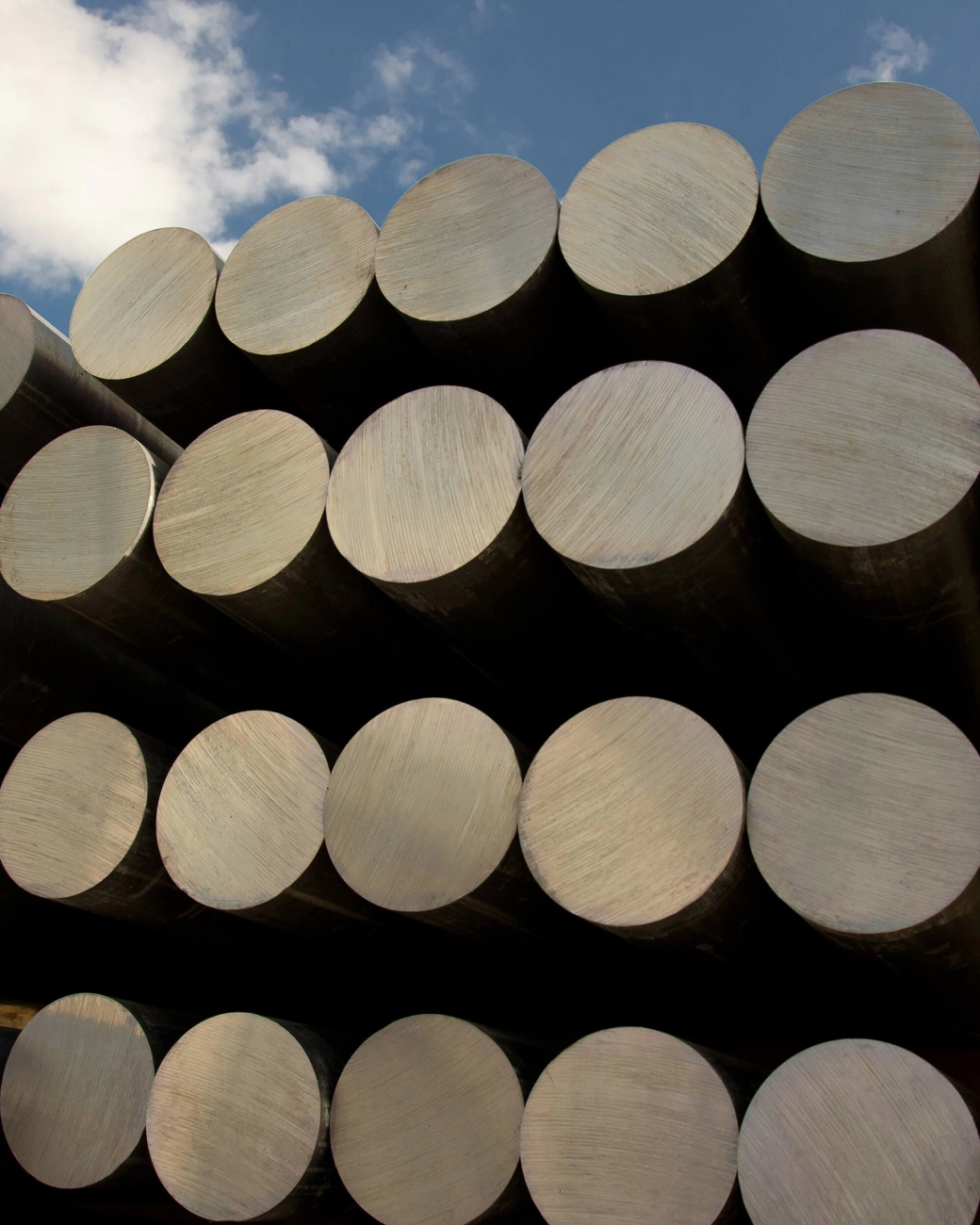
Reliable delivery is just as critical as the metallurgy itself. We understand that for automotive and aerospace manufacturers, supply chain stability is non-negotiable. We have structured our logistics to ensure that our castable aluminum alloy reaches your foundry floor ready for immediate processing, maintaining the strict chemical integrity required for high-performance parts.
Available Forms: Ingots and Bulk Capabilities
We primarily supply our HY Series (HY-1, HY-2, HY-5) in the form of high-grade aluminum ingots. These ingots are produced under tight quality controls to ensure a consistent microstructure before they ever reach your melting furnace. For our high-volume OEM partners, we offer scalable monthly tonnage capabilities designed to support continuous production lines without bottlenecks. While our logistics network is sophisticated enough to handle specialized high temperature alloy shipments, our aluminum supply chain is specifically optimized for bulk efficiency and rapid turnover.
Packaging and Global Shipping Standards
Moisture is the enemy of quality casting, often leading to hydrogen porosity defects during the remelting process. We take zero chances with environmental exposure. Our packaging standards are rigorous, utilizing moisture-proof wrapping and secure palletizing to protect the ingots during transit. Whether we are shipping domestically or managing global freight, we ensure that every batch of castable aluminum alloy arrives dry, clean, and chemically stable, minimizing prep time and scrap rates at your facility.
Frequently Asked Questions (FAQ)
Can your heat-treat-free alloy replace A356-T6?
Absolutely. Our HY Series is engineered to outperform standard grades like A356-T6, which is commonly used for structural parts and aluminum alloy rims. Our proprietary castable aluminum alloy formulations (specifically the HY-1 Series) achieve tensile strengths of 480-520 MPa and elongation over 10%. This delivers forging-level mechanical properties directly in the as-cast state, eliminating the costs and distortion risks associated with T6 heat treatment.
What is the minimum wall thickness achievable with high-fluidity alloys?
Our alloys are optimized for exceptional fluidity, which is critical for filling complex molds in high-pressure die casting (HPDC). This high fluidity allows for the production of thin-walled, near-net-shape components that standard commodity ingots often struggle to fill. This capability enables significant weight reduction in structural parts without compromising integrity.
Do you provide material certificates (mill test reports) with every shipment?
Yes, full traceability is standard procedure. Every batch of castable aluminum alloy ingots ships with a comprehensive Mill Test Report (MTR). This documentation verifies the chemical composition and mechanical properties—including yield strength, tensile strength, and elongation—confirming that the material meets your specific engineering requirements before it hits your production floor.
Can you customize the silicon content for specific machining requirements?
We don’t just sell standard ingots; we provide engineered material solutions. Our R&D team can adjust micro-alloying elements, such as Silicon (Si) and Magnesium (Mg), to balance mechanical toughness with machinability. Whether you need to optimize for tool life or specific surface finish quality, we can tailor the alloy composition to align with your manufacturing process.
Reviews
There are no reviews yet.