

Ni-Hard Castings Overview
At vastmaterial, we supply Ni-Hard castings – a family of abrasion resistant white cast iron engineered for long wear life in demanding industrial service. Our nickel hard white iron combines high hardness with a tough martensitic matrix, giving you reliable performance in low to medium impact, high abrasion environments.
Product Description – Ni-Hard Abrasion-Resistant White Cast Iron
Our ASTM A532 Class I Ni-Hard castings are designed as heavy-duty wear resistant liners and components, including:
- Ni-Hard wear parts for mining, cement, aggregate, and asphalt plants
- High hardness cast iron with consistent Brinell hardness throughout section
- Martensitic white iron microstructure for stable, predictable wear behavior
These abrasion resistant cast iron parts are ideal where sliding wear, fines, and slurry quickly destroy mild steel or standard gray iron.
vastmaterial vs Pacific Alloy Casting Ni-Hard
When buyers compare us to Pacific Alloy Casting Ni-Hard and other legacy foundries, a few points stand out:
- Focused product range in Ni-Hard and white iron wear parts, not generic jobbing work
- Flexible customization on chemistry, hardness targets, and casting design for specific equipment
- Responsive lead times for OEMs and replacement parts where downtime is costly
We position vastmaterial as a modern, engineering-driven alternative to Pacific Alloy Casting Ni-Hard, with tighter feedback loops, straightforward communication, and practical support for field applications.
Use Cases for Industrial Buyers, Engineers, and Maintenance
Industrial teams usually come to us when they need NiHard replacement parts that last longer than AR plate or standard castings. Typical applications include:
- Engineers: specifying Ni-Hard castings for chutes, hoppers, crusher parts, and slurry pump parts in abrasive service
- Maintenance teams: upgrading to Ni-Hard wear parts for concrete plant wear parts, cement mixer wear parts, and asphalt plant components to cut unplanned shutdowns
- Buyers: sourcing mining wear parts, aggregate processing equipment liners, and OEM replacement castings that drop into existing Pacific Alloy or other Ni-Hard footprints
Our goal is simple: provide reliable Ni-Hard white cast iron solutions that reduce wear rates, simplify planning, and keep critical equipment running longer between changeouts.
Ni-Hard Alloy Properties and Composition
Our Ni-Hard castings are nickel hard white iron engineered under ASTM A532 Class I to deliver consistent, high hardness in tough, abrasive service.
ASTM A532 Ni-Hard Types (Class I)
| Ni-Hard Type | Typical Use Case | Notes |
|---|---|---|
| Type 1 | General abrasion, low to medium impact | Most common “standard” Ni-Hard |
| Type 2 | Higher toughness, more impact | Slightly lower hardness |
| Type 4 | Wet abrasion, slurry, corrosive media | Higher Cr for erosion/corrosion |
These ASTM A532 Ni-Hard grades give us a clear framework for matching hardness and toughness to your real operating conditions.
Typical Ni-Hard Chemical Composition
| Element | Typical Range (wt%)* | Purpose |
|---|---|---|
| Carbon (C) | ~2.4 – 3.6 | Hard carbides, abrasion resistance |
| Nickel (Ni) | ~3.0 – 5.0 | Stabilizes martensite, depth of hardness |
| Chromium (Cr) | ~1.5 – 9.0 (Type-dependent) | Carbide formation, wear & corrosion |
| Silicon (Si) | ~0.5 – 2.0 | Castability and matrix control |
*Exact chemistry is tuned by grade and casting size. For a broader alloy overview, see our casting alloy guide covering types and properties.
Microstructure: Martensitic White Iron
Ni-Hard is a martensitic white cast iron with:
- Hard iron carbides distributed in a martensitic matrix
- Very low graphite (unlike gray iron)
- High, through-section hardness on both large and small castings
This structure is what makes Ni-Hard castings ideal for abrasive wear resistance in mining, cement, asphalt, and slurry work.
Brinell Hardness and Real-World Behavior
| Ni-Hard Type | Typical Brinell Hardness (HBW) |
|---|---|
| Type 1 | ~550 – 650 |
| Type 2 | ~500 – 600 |
| Type 4 | ~550 – 650 |
In real use, this means:
- Much longer wear life than gray, ductile, or malleable irons
- Stable hardness across the section for thick liners, pump parts, and crusher wear castings
- Best in low to medium impact with heavy sliding abrasion or slurry erosion
Ni-Hard vs. Standard Gray/Malleable Cast Iron
| Property | Ni-Hard Castings | Gray / Malleable Iron |
|---|---|---|
| Abrasion Resistance | Very high | Low to moderate |
| Typical Hardness | 500–650 HBW | ~150–250 HBW |
| Impact Resistance | Moderate (needs controlled impact) | Higher, but wears much faster |
| Best Use | Wear parts & liners | Structural / general-duty castings |
If you’re currently buying standard cast iron wear parts, switching to Ni-Hard abrasion resistant white iron usually cuts downtime and total cost per ton, especially in mining wear parts, slurry pump parts, and cement mixer wear parts.
Key Features and Performance Benefits of Ni-Hard Castings
High Abrasion Resistance (Low–Medium Impact)
Our Ni-Hard castings are built for hard, abrasive service where impact is present but not extreme.
- Ideal for low to medium impact abrasive wear
- Outlast standard gray or ductile iron in sand, rock, and slurry service
- Stable performance in steady, continuous-duty operations
Longer Wear Life, Less Downtime
Ni-Hard wear parts help you run longer between changeouts.
- Extended service life in mining, cement, and asphalt duty
- Fewer shutdowns for liner and wear part changes
- Lower labor and maintenance cost per ton processed
Consistent Hardness Through Section
We control chemistry and cooling so hardness stays uniform, even on heavy sections.
- High, consistent Brinell hardness from surface to core
- Reliable wear rate across large and small Ni-Hard castings
- Better dimensional stability for OEM replacement parts
Corrosion & Erosion in Wet and Slurry Service
Nickel hard white iron performs well in wet abrasion and slurry environments.
- Strong resistance to slurry erosion, fines, and wash-out
- Suitable for pump parts, chutes, and mixer components in wet service
- Helps protect steel structures and fasteners, such as paired low carbon steel hardware, from direct wear
Cost-Per-Ton & Lifecycle Savings vs AR Steel
Compared to AR plate and mild steel fabrications, Ni-Hard often wins on total cost.
| Material | Wear Life (Relative) | Changeout Frequency | Typical Use Case |
|---|---|---|---|
| Mild Steel | Low | High | Light duty, non-abrasive |
| AR Steel Plate | Medium | Medium | General abrasion with some impact |
| Ni-Hard Cast Iron | High | Low | Severe abrasion, low–medium impact |
- Lower cost per ton processed in abrasive service
- Less welding, patching, and emergency repair
- Strong lifecycle value for U.S. plants focused on uptime and predictable maintenance
Ni-Hard Material Specifications & Standards
When we supply Ni-Hard castings, we build everything around ASTM compliance, consistent hardness, and tight tolerances. That’s what keeps your wear parts running longer and fitting right the first time.
ASTM A532 Class I Ni-Hard Compliance
We pour our Ni-Hard white iron strictly to ASTM A532 Class I:
| ASTM A532 Class I | Typical Type | Service Focus |
|---|---|---|
| Type 1 | Ni-Hard 1 | General abrasion, low impact |
| Type 2 | Ni-Hard 2 | Abrasion with some corrosion |
| Type 4 | Ni-Hard 4 | Tougher service, higher impact risk |
Full material test reports (MTRs) and heat traceability are standard with every heat.
Available Ni-Hard Grades & Custom Chemistries
Standard Ni-Hard grades we run:
- Ni-Hard Type 1 – classic abrasion-resistant white cast iron
- Ni-Hard Type 2 – better for wet / mildly corrosive service
- Ni-Hard Type 4 – higher toughness for moderate impact
Typical chemistry ranges (can be fine-tuned per job):
| Element | Typical Range (%) |
|---|---|
| Carbon | 3.0 – 3.6 |
| Nickel | 3.5 – 5.5 |
| Chromium | 1.5 – 4.0 |
| Silicon | 0.4 – 1.5 |
For OEM replacement and tight-spec parts (like valve and pump bodies), we can mirror your existing spec or reverse-engineer from samples, similar to how we handle custom valve castings for engineered flow applications: custom OEM valve castings manufacturer.
Mechanical Properties: Hardness, Strength, Impact
Ni-Hard is all about hardness and wear:
| Property | Typical Range (Ni-Hard Class I) |
|---|---|
| Brinell hardness (HBW) | 450 – 600 HB |
| Tensile strength | ~ 250 – 450 MPa (36 – 65 ksi) |
| Charpy impact | Low – designed for low/med impact |
What this means in the field:
- Very high abrasion resistance
- Limited impact toughness – we size and grade parts accordingly
- Good choice for low to medium impact, high wear environments
Heat Treatment & Its Effect
We use controlled heat treatment to lock in a martensitic white iron structure:
- As-cast + stress relief – for standard wear parts
- Austenitize + controlled cool – for consistent hardness in thicker sections
- Tempering options – slightly lower hardness, improved toughness where needed
Heat treatment is tuned per Ni-Hard type and section thickness so large and small castings hit the same hardness band.
Dimensional Tolerances & Casting Quality
We engineer our tooling and processes around repeatability and fit:
- Dimensional tolerances:
- General cast surfaces: typically CT8–CT10 equivalent
- Machined surfaces: held to customer drawings (±0.005–0.010″ typical, tighter by request)
- Quality levels:
- Sound, dense white cast iron for wear parts
- Visual, dimensional, and hardness checks on every lot
- Optional NDT (UT, MT, PT) for critical Ni-Hard components
We can supply as-cast, rough machined, or fully machined Ni-Hard castings to match your installation and alignment needs, cutting down shop work and downtime on your side.
Common Ni-Hard Applications
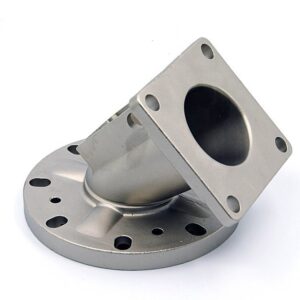
Ni-Hard castings are built for abrasive service where uptime matters. Here’s where our Ni-Hard wear parts routinely replace Pacific Alloy Casting Ni-Hard and other legacy suppliers in the U.S. market:
Mining & Aggregate Handling Components
In mining and quarry operations, Ni-Hard castings are a go‑to choice for:
- Screens, chutes, and hoppers
- Crusher wear castings and liners
- Transfer points and discharge chutes
The high hardness and abrasion resistance handle continuous rock, sand, and gravel flow with far less wear than mild steel or standard cast iron.
Cement & Concrete Plant Wear Parts
For cement and ready‑mix concrete plants, our Ni-Hard wear parts hold up under constant abrasion from sand, aggregate, and cement fines:
- Cement mixer wear parts and liners
- Pug mill wear parts and paddles
- Screw conveyors and discharge liners
Compared to regular gray iron, Ni-Hard white cast iron maintains its profile longer, cutting maintenance shutdowns.
Asphalt & Hot-Mix Plant Components
In asphalt and hot‑mix plants, Ni-Hard castings resist both abrasion and temperature:
- Mixer and pug mill liners
- Drag slat conveyor wear parts
- Chutes and transfer liners
This is where Ni-Hard often beats AR steel on cost per ton of material moved over the part’s life.
Power, Brick & Clay Processing
Power generation and brick/clay plants lean on Ni-Hard for abrasive solids and slurry:
- Coal and ash handling liners
- Brick and tile grinding and conveying components
For customers needing both wear resistance and precise cast shapes, we often pair Ni-Hard with downstream finishing using our precision CNC machining services.
Low-Impact Sliding Abrasion & Slurry Service
Ni-Hard is ideal when you see:
- Low to medium impact but very high abrasion
- Wet abrasion, slurry, and fine particle erosion
Typical use cases include slurry pump parts, cyclones, launders, and liners where Ni-Hard outperforms standard cast iron and many AR plates in long, sliding abrasion conditions.
Ni-Hard Wear Parts and Typical Products
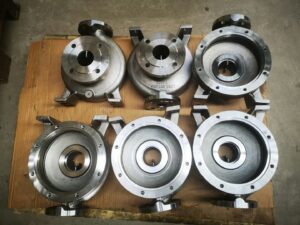
I supply Ni-Hard castings that are built for real-world abuse in mining, aggregate, cement, and asphalt plants across the U.S. Every part is poured to ASTM A532 and heat-treated for consistent, high hardness.
Mixer & Pug Mill Liners and Tips
For concrete and asphalt producers, I provide:
- Ni-Hard mixer liners and tips for high-sand, highly abrasive mixes
- Pug mill liners and paddles that hold profile longer and cut downtime
- Drop-in Ni-Hard replacement parts to match or upgrade OEM designs
These wear parts outlast mild steel and many AR plates in high-sand and stone-heavy mixes.
Slurry Pump Casings, Impellers, and Wear Rings
For abrasive slurry and wet sand service, I produce:
- Ni-Hard slurry pump casings and impellers
- Wear rings and throatbushes for abrasive slurry lines
The nickel hard white iron structure gives excellent wet abrasion resistance where rubber and standard cast iron fail.
Crusher Wear Parts, Chutes, Hoppers, and Liners
For crushing and material handling:
- Ni-Hard crusher liners and segments
- Chute, hopper, and feed liners for sand, gravel, and crushed stone
- Transfer point liners for low to medium impact sliding abrasion
These abrasion resistant white iron castings keep production running longer between liner changes.
Auger Flights, Screw Conveyors, and Wear Plates
For continuous handling of sand, aggregate, and cement:
- Ni-Hard auger flights and screw conveyor sections
- Bolt-on Ni-Hard wear plates and tiles in high-wear zones
Compared with standard steel, these wear resistant liners deliver better life in dry and wet abrasion, especially with sharp, angular media.
Custom OEM Replacement Ni-Hard Parts
I also support:
- Custom Ni-Hard castings from your drawings or worn samples
- OEM-equivalent or upgraded Ni-Hard replacement parts
- As-cast, rough-machined, or fully machined supply to suit your shop
If you also need structural or connection components alongside your Ni-Hard parts, I can pair them with custom alloy steel flanges for a complete, install-ready package.
My goal is simple: get you heavy-duty Ni-Hard wear parts that fit right, last longer, and reduce your cost per ton.
Custom Ni-Hard Casting Capabilities
When you need Ni-Hard castings that actually fit your plant and your schedule, I build around your job—not the other way around.
Wide Weight Range: Inserts to Multi-Ton Ni-Hard Castings
I pour Ni-Hard castings from small wear inserts and tiles all the way up to multi-ton heavy-duty wear components. That covers:
- Pump and mixer inserts
- Liners, plates, and small OEM replacement parts
- Large housings, mixer bodies, and heavy mining wear parts
If you also run steel or bronze parts alongside Ni-Hard, I can support those in the same alloy casting foundry to keep your vendor list short.
Pattern Design, Tooling, and Engineering Review
I don’t just pour metal—I help you get the design right:
- Pattern design and optimization for Ni-Hard shrink and feed
- Tooling support for new or converted designs (from drawings or samples)
- Engineering review to check wall thickness, wear allowance, and fit-up
You send the print or sample; I send back clear feedback and a manufacturable solution.
Short-Run, Long-Run, and Repeat Programs
I’m set up to handle:
- Short-run jobs for urgent breakdowns and trial parts
- Long-run production for standard Ni-Hard wear parts
- Repeat programs with locked-in pricing and planned lead times
This lets your maintenance and purchasing teams plan around outages instead of scrambling.
As-Cast, Rough Machined, or Fully Machined Ni-Hard
You choose how far you want me to take it:
- As-cast Ni-Hard for simple liners and plates
- Rough machined for tight-tolerance bores and faces finished in-house
- Fully machined and ready-to-install Ni-Hard parts with all critical dimensions held
I match the machining level to your shop capacity and budget.
Integrated Fabrication, Drilling, and Assembly
To cut down on your handling and outsourcing:
- Drilling, tapping, and countersinking bolt holes
- Simple fabrication and weld-on features (backing plates, lugs, brackets)
- Partial or full assembly where Ni-Hard castings need to be paired with steel frames or sub-assemblies
You get ready-to-fit industrial wear components, not just raw Ni-Hard castings.
vastmaterial vs Pacific Alloy Casting Ni-Hard
When buyers search for Pacific Alloy Casting Ni-Hard, they’re usually looking for reliable, consistent Ni-Hard castings with predictable delivery. That’s exactly the space where I position vastmaterial—but with more flexibility, faster response, and tighter control.
How vastmaterial Competes With Pacific Alloy Ni-Hard Castings
I focus on being easier to work with for US industrial plants that can’t afford long downtime:
| Point | vastmaterial Ni-Hard Castings | Typical Legacy Supplier (e.g. Pacific Alloy style) |
|---|---|---|
| Focus | Custom Ni-Hard wear parts & OEM replacements | Standard catalog + legacy tooling |
| Communication | Direct engineering support & quick quoting | Slower, batch-style communication |
| Flexibility | Short runs, rush jobs, design tweaks welcomed | Less flexible on MOQ and design changes |
Product Range, Lead Time, Customization
Range:
- Ni-Hard Type 1, Type 2, Type 4 components
- Custom Ni-Hard castings for mining, cement, asphalt, and slurry service
- OEM-style NiHard replacement parts and conversion from AR plate or weldments
Lead time & customization:
| Factor | vastmaterial |
|---|---|
| New patterns | Fast-turn pattern and tooling support |
| Lead times | Competitive, optimized for US maintenance cycles |
| Custom chem | Tailored Ni-Hard chemistries for specific media & wear |
Quality Control & Consistency vs Legacy Foundries
I build in repeatable quality on every Ni-Hard heat:
- Controlled chemistry and melting for ASTM A532 Class I Ni-Hard
- 100% hardness checks on critical wear resistant liners
- Microstructure verification for a stable martensitic white iron matrix
- Full material traceability and test reports with every lot
This helps plants that previously used Pacific Alloy Casting Ni-Hard get equal or better wear life with more predictable quality.
Total Cost of Ownership & Service Support
I don’t just chase lowest piece price—I aim to lower total cost per ton:
- Longer life vs mild steel and many AR plates = fewer changeouts
- Better fit-up and consistency = shorter shutdowns and less rework
- Engineering support to redesign wear parts and extend service intervals
For customers running mixed alloys (Ni-Hard plus nickel or cobalt systems), I can also support high-performance alloys alongside Ni-Hard, including high-temperature alloy solutions for related components where heat plus abrasion is an issue, using expertise similar to what we apply in our high-temperature alloy product lines.
In short, if you’re used to Pacific Alloy Casting Ni-Hard but need more agility, custom options, and tighter lifecycle cost control, vastmaterial Ni-Hard castings are built to slot in as a direct, upgrade-ready alternative.
Manufacturing Process and Quality Control for Ni-Hard Castings
When I produce Ni-Hard castings that compete with Pacific Alloy Casting Ni-Hard, I lock in a tight, repeatable process from melt to final inspection. That’s how I keep hardness, fit, and wear performance consistent from lot to lot.
Melting and Alloying for Ni-Hard White Iron
For Ni-Hard castings, I use controlled melting and alloying practices to hit ASTM A532 Ni-Hard chemistries every time:
- Charge planning with clean pig iron, steel scrap, and ferroalloys
- Tight control of carbon, nickel, chromium, and silicon levels
- In-heat spectrographic analysis to fine-tune Ni-Hard white cast iron chemistry before pouring
This is the base for stable martensitic white iron with high, uniform hardness.
Molding, Gating, and Risering for Wear Parts
Ni-Hard wear parts need clean surfaces and sound sections, especially in heavy-duty mining, cement, and asphalt applications:
- Robust molding to support complex shapes like pump casings and crusher liners
- Gating and risering designed to avoid shrinkage in high-wear zones
- Process windows tuned for both small Ni-Hard inserts and large, multi-ton castings
Controlled Cooling and Heat Treatment
To get the right martensitic structure and toughness balance, I use controlled cooling and heat treatment:
- Managed cooling rates to avoid cracking and distortion in thick sections
- Post-casting heat treatments to stabilize hardness and relieve internal stresses
- Grade-specific cycles for Ni-Hard Type 1, Type 2, and Type 4
This delivers the consistent Brinell hardness industrial buyers expect in abrasive service.
Hardness Testing, Microstructure, and NDT
Every Ni-Hard casting program gets a clear inspection plan, backed by modern testing and quality controls similar to the ones outlined in our metallurgical testing and quality program:
- Brinell hardness testing at multiple locations and sections
- Microstructure checks to verify martensitic matrix and carbides
- Optional NDT (UT, MT, PT) for critical Ni-Hard wear parts like slurry pump bodies and crusher components
Traceability, Certifications, and MTRs
To support OEMs and industrial plants across the U.S., I keep Ni-Hard casting quality fully traceable:
- Heat numbers and casting IDs tied to every batch
- Material Test Reports (MTRs) with chemistry and hardness data
- Certifications for ASTM A532 Class I Ni-Hard compliance when required
This level of manufacturing control lets my Ni-Hard castings drop in as direct replacements for Pacific Alloy Casting Ni-Hard parts, with predictable performance and documented quality.
Industries Served with Ni-Hard Castings
Our Ni-Hard castings are built for abrasive, dirty, and unforgiving environments across the U.S. If you’re fighting wear, odds are we already supply that industry.
Mining and Quarrying Operations
We supply Ni-Hard castings for mining wear parts in hard rock, coal, and quarry sites—liners, chutes, crusher parts, and transfer points where abrasion resistant cast iron outlasts AR plate and mild steel. Ni-Hard’s high hardness and martensitic structure keep uptime high when you’re moving tons of rock every hour.
Sand, Gravel, and Aggregate Processing
In sand and aggregate plants, constant sliding abrasion chews through standard steel. Our Ni-Hard castings protect hoppers, screw conveyors, classifier blades, and pump parts in sand, gravel, and aggregate processing where wet and dry abrasion are both in play.
Cement, Concrete, and Ready-Mix Facilities
For cement mixer wear parts, pug mill liners, and concrete plant chutes, Ni-Hard wear parts handle highly abrasive fines without deforming. We work closely with U.S. equipment manufacturers and plant operators to match Ni-Hard Type 1 or Type 2 to the exact mix and duty cycle in cement and equipment manufacturing environments.
Asphalt, Paving, and Road-Building Plants
Hot, abrasive mixes are tough on steel. Our asphalt plant components in Ni-Hard—liners, flights, and wear plates—hold hardness at temperature and stand up to constant loading and discharge in drum mix and batch plants nationwide.
Power, Bricks, Tiles, and Heavy Industrial Processing
In power generation, brick, tile, and other heavy industrial plants, Ni-Hard is proven in coal handling, ash handling, and clay processing. Wherever there’s low-impact sliding abrasion or slurry erosion, our nickel hard white iron castings deliver stable performance and predictable wear life.
Selecting the Right Ni-Hard Grade
Matching Ni-Hard Type 1, Type 2, and Type 4
For Ni-Hard castings, the grade has to match your abrasion and impact conditions:
- Ni-Hard Type 1 (ASTM A532 Class I Type A/B)
- Best for: low to medium impact, high abrasion
- Typical uses: chutes, hoppers, liners, auger flights, cement mixer wear parts
- Media: sand, gravel, fine aggregates, dry or mildly wet
- Ni-Hard Type 2 (ASTM A532 Class I Type B/C, higher Cr)
- Best for: abrasion with moderate impact and some corrosion
- Typical uses: mining wear parts, crusher wear castings, slurry pump parts
- Media: sharp rock, sand + water, mildly corrosive slurries
- Ni-Hard Type 4 (ASTM A532 Class II/III-type applications)
- Best for: severe sliding abrasion, limited impact, higher temperature
- Typical uses: grinding mill liners, hot asphalt plant components
- Media: very abrasive fines, clinker, hot mineral product
Balancing Hardness vs. Impact
With Ni-Hard abrasion resistant cast iron, you’re always trading hardness against impact toughness:
- Higher hardness (Type 1/2 at top of spec)
- Longer wear life in pure abrasion
- More brittle, not ideal for heavy impact or large tramp metal
- Slightly lower hardness (controlled heat treatment)
- Better impact tolerance
- Shorter wear life but fewer catastrophic failures and breakage
For equipment with high drop heights, large feed size, or frequent tramp, I’ll usually back off maximum hardness to protect against cracking.
Ni-Hard vs. High-Chrome White Iron vs. AR Plate
Use this simple rule of thumb:
- Choose Ni-Hard castings when:
- You have low to medium impact and steady, abrasive flow
- You need cast shapes (pump casings, impellers, complex liners)
- You want consistent hardness through section in heavy, thick parts
- Choose high-chrome white iron when:
- Abrasion is extreme, with fine, sharp media
- There’s corrosion or acidic slurry
- You need maximum wear life and can accept higher material cost
- Choose AR plate (AR400/500) when:
- Impact is high and unpredictable
- You need welded, formed plate solutions rather than castings
- You’re doing quick, local fabrication and field mods
If you also deal with high-temperature alloys in your plant (for example in kiln or furnace zones), it’s worth looking at specialized materials like chromium-cobalt-molybdenum high-temperature alloys for those hot spots, and keeping Ni-Hard focused on the colder abrasion zones.
Service Life Expectations
Ni-Hard wear life depends heavily on:
- Media: sharper and harder = faster wear
- Speed: higher RPM or belt speed = more abrasion per hour
- Load: higher pressure or head = more metal removal per pass
In typical U.S. aggregate and cement service, Ni-Hard often delivers 2–5x the life of mild steel and 1.5–3x the life of generic AR plate, assuming the grade is matched correctly to the duty.
Field Feedback and Wear Pattern Tips
When you’re comparing Ni-Hard to a supplier like Pacific Alloy Casting Ni-Hard or other foundries, the real truth is in the worn parts:
- Smooth, even thinning
- Grade is generally correct
- You can often increase hardness slightly to stretch life
- Localized grooving or channel wear
- Media is tracking in one area
- Consider redesigning the liner pattern or switching Type 1 ↔ Type 2
- Edge chipping or cracking
- Impact is higher than expected
- Drop back on hardness or move from Ni-Hard to AR plate/high-toughness alloy in that zone
- Early failures in slurry service
- Evaluate slurry pH, solids %, and velocity
- May need a higher chrome white iron or more corrosion-resistant alloy
Send us photos, thickness readings, and run hours from your worn Ni-Hard or Pacific Alloy Casting Ni-Hard parts, and I can help you lock in the right Ni-Hard Type 1, Type 2, or Type 4 for your specific equipment and plant conditions.
Technical Data and Engineering Support for Ni-Hard Castings
When you’re comparing our Ni-Hard castings to Pacific Alloy Casting Ni-Hard or any other supplier, clean technical data and fast engineering support matter more than sales talk. Here’s how we handle it.
Standard Ni-Hard Data Sheet – What You Get
Every Ni-Hard job ships with a clear, easy-to-read data sheet so your engineers and maintenance team don’t have to guess.
| Section | What We Provide (Typical) |
|---|---|
| Alloy / Grade | ASTM A532 Class I, Type 1 / Type 2 / Type 4 |
| Hardness | Brinell (HBW) range + actual test values by casting / heat lot |
| Chemistry | C, Si, Mn, Cr, Ni, Mo, others – actual heat analysis |
| Heat Treatment | Cycle (austenitize, quench, temper if used) |
| Mechanical Data | Typical tensile, impact, microstructure description |
| NDT / QC | Visual, dimensional, UT/MT (if required), traceability numbers |
How to read it:
- Check hardness vs. spec – confirms real-world wear performance.
- Compare chemistry to ASTM A532 – confirms genuine Ni-Hard, not generic white iron.
- Match heat/serial numbers – for full traceability and failure analysis if needed.
We build this data straight out of our precision casting workflow, the same systems we use to support high-accuracy parts in other alloys like our precision casting services.
Typical Property Tables – Hardness and Chemistry
We keep the property tables simple so plant engineers and buyers can make fast calls.
Typical Brinell Hardness (HBW):
| Ni-Hard Type | Typical Range (HBW) | Typical Use Case |
|---|---|---|
| Type 1 | 550–650 | General abrasion, low to medium impact |
| Type 2 | 500–600 | Tougher service, some impact + abrasion |
| Type 4 | 600–700 | High abrasion, low impact, fine particle slurries |
Typical Chemistry (Indicative Ranges):
| Element | Range (wt%) |
|---|---|
| C | 2.4 – 3.6 |
| Cr | 1.0 – 4.0 |
| Ni | 3.0 – 5.0 |
| Si | 0.5 – 2.0 |
(Exact numbers are on your job-specific MTR and data sheet, not guessed.)
Machining, Drilling, and Finishing Ni-Hard
Ni-Hard is hard by design. We don’t sugarcoat that. We give your shop clear rules so you don’t burn tools or scrap parts.
Basic guidelines:
- Plan to grind, not reshape – treat Ni-Hard as a finished wear surface, not a stock-removal material.
- If machining is required:
- Use carbide or ceramic tooling
- Low cutting speed, heavy feed, rigid setups
- Flood coolant for heat control
- Drilling / tapping:
- Prefer cast-in or pre-machined holes
- If field drilling is unavoidable, use solid carbide drills, pilot holes, and slow RPM
- Finishing:
- Final sizing by grinding where possible
- Keep heat input low to avoid cracking
We can deliver parts as-cast, rough machined, or fully machined so you decide how much work stays in-house.
Fit-Up, Installation, and Alignment for Ni-Hard Liners
Good Ni-Hard can still fail early if it’s installed wrong. We help your crew get it right the first time.
Fit-up tips:
- Check mating surfaces – flat, clean, no high spots or weld spatter.
- Use proper backing – steel backing plates where needed, no “floating” sections.
- Bolt design – use correct bolt size, grade, and pattern; avoid over-torque that can crack the iron.
- Alignment:
- Dry-fit liners before final tightening
- Maintain proper gap between segments (thermal growth, dirt clearance)
- Confirm material flow path (no sharp ledges that cause impact points)
We can supply simple alignment sketches and bolt layouts with your order so your maintenance team isn’t guessing during shutdown.
Engineering Support for Redesign and Life Extension
We don’t just ship Ni-Hard; we help you make it last longer than your last supplier’s parts.
We support you with:
- Wear pattern review – photos, worn samples, or on-site data to see how the liner is really working.
- Grade selection – moving between Ni-Hard Type 1 / Type 2 / Type 4 based on:
- Impact level
- Particle size and shape
- Wet vs. dry environment
- Design tweaks:
- Change thickness, ribs, or geometry for longer life
- Convert welded fabrications into cast Ni-Hard wear components
- Compatibility with Pacific Alloy Ni-Hard:
- Match dimensions and grade for direct drop-in replacement
- Upgrade chemistry or hardness where you’re seeing premature wear
If your team needs print review or a fast redesign for shutdown planning, we bring foundry, metallurgy, and application support into one conversation so you get a practical answer, not a data dump.
Ordering, Lead Times, and Logistics for Ni-Hard Castings
What We Need for Fast, Accurate Quotes
To quote Ni-Hard castings or Pacific Alloy Casting Ni-Hard replacements, I keep it simple but detailed:
- 2D/3D drawings (STEP, DWG, PDF) or a physical sample
- Material spec (ASTM A532 Class I, Ni-Hard Type 1/2/4, hardness range)
- Operating conditions (abrasive media, temperature, impact level)
- Annual usage + target price window (helps us optimize tooling and production)
If you also buy steel or bronze castings, our broader casting alloy capabilities make it easier to bundle projects.
Minimum Orders and Repeat Programs
For Ni-Hard wear parts and industrial wear components:
- MOQs depend on part size and pattern cost (usually small batches are OK for critical spares)
- Repeat order programs lock in pricing and reserve capacity for mining, cement, and asphalt customers
- We can set blanket POs for 6–12 months with scheduled releases to match shutdowns
Typical Lead Times for Ni-Hard Castings
Lead times depend on whether we’re building tooling or running repeat Ni-Hard castings:
- New part / new pattern: about 5–8 weeks after drawing approval
- Repeat Ni-Hard orders: typically 3–5 weeks, faster for small batches or urgent breakdowns
- Rush slots are possible if you share critical downtime dates up front
Packaging, Export, and Heavy Casting Logistics
Ni-Hard castings and heavy-duty wear resistant liners need serious handling:
- Crated, palletized, and blocked for forklifts and overhead crane handling
- Tagged and labeled by part number, heat number, and PO for easy check-in
- Export-ready packing (heat-treated pallets, moisture protection, steel banding) for US and overseas sites
- Shipping via LTL, flatbed, or container, depending on weight and volume
Spare Parts Planning and Stocking Strategies
To keep your crushers, slurry pumps, and cement mixer wear parts running, I usually recommend:
- ABC criticality list for Ni-Hard wear parts by downtime risk
- On-site stock for A-level items (pump liners, impellers, crusher liners, mixer liners)
- Vendor-managed or shared forecasts for big shutdowns in mining, aggregate, and concrete plants
- Wear tracking (hours, tons processed, wear pattern photos) so we can size the right safety stock and avoid emergency freight
My goal is to make Ni-Hard castings supply boring—in a good way. Predictable lead times, clean documentation, and logistics that match how US plants actually receive and store heavy castings.
Ni-Hard FAQs for Buyers and Engineers
Ni-Hard vs High-Chrome White Iron
| Feature | Ni-Hard (ASTM A532 Class I) | High-Chrome White Iron (Class II/III) |
|---|---|---|
| Typical hardness | ~ 500–600 HB | ~ 550–700 HB |
| Best for | Low–medium impact + abrasion | Severe abrasion, lower impact |
| Impact tolerance | Better than most high-chrome grades | Usually lower than Ni-Hard |
| Cost | Lower / mid-cost | Higher alloy, higher cost |
- Use Ni-Hard when you’ve got abrasion + some impact (mixers, crushers, slurry pumps).
- Move to high-chrome when you’re fighting extreme abrasive wear and low impact loads.
Ni-Hard vs AR Steel Plate in Real Service
| Aspect | Ni-Hard Castings | AR Steel Plate (AR400/500) |
|---|---|---|
| Hardness | Higher and more stable through section | Lower than Ni-Hard in most cases |
| Wear life | 2–5x AR plate in many sliding abrasion jobs | Good, but wears faster in heavy abrasion |
| Forming / welding | Not weldable/formable like plate | Easy to cut, form, weld |
| Best use | Complex wear parts, thick sections | Flat liners, chutes, simple shapes |
- If you’re burning through AR plates fast, Ni-Hard cast wear parts usually cut downtime and changeouts.
Expected Service Life & Common Failure Modes
Service life depends on media, speed, and impact, but in typical US mining, concrete, and asphalt plants we usually see:
- 2–4x life vs mild steel
- 1.5–3x life vs AR400 in sliding abrasion
Common failure modes:
- Abrasive wear-through (normal end-of-life)
- Edge chipping from unexpected impact or tramp metal
- Thermal cracking if exposed to rapid temperature swings
- Misfit / misalignment wear if not installed correctly
Repair, Welding & Replacement Best Practices
- Welding Ni-Hard:
- Not recommended as a structural fix.
- Only minor crack “stitching” or hardfacing with strict preheat and postheat and suitable Ni-based or buffer alloys.
- Machining:
- Limited; plan for as-cast or rough machined fit where possible.
- Replacement tips:
- Track hours/tons and log wear measurements on liner and casting thickness.
- Replace parts before you hit minimum safe section so you don’t damage housings or OEM structures.
- Keep critical wear parts in stock to avoid production stops.
For jobs that need extra surface performance, we can integrate post-cast finishing and surface treatment using our in-house surface treatment services.
Compatibility with Pacific Alloy Casting Ni-Hard
We design our Ni-Hard castings to drop into most Pacific Alloy Casting Ni-Hard applications:
- We can match existing Pacific Alloy Ni-Hard dimensions:
- Work from drawings, samples, or worn parts
- Hold tight tolerances on critical fit faces and bolt patterns
- We can match or improve chemistry and hardness to meet or exceed ASTM A532 Class I requirements.
- For mixed fleets:
- You can run our Ni-Hard parts alongside Pacific Alloy components in the same system, as long as the wear pattern and fit are validated.
- We provide material test reports and hardness data so your engineers can confirm equivalency.
If you’re replacing Pacific Alloy Ni-Hard parts, send us the part number, liner layout, and wear history, and I’ll quote direct-fit Ni-Hard replacement castings with realistic life expectations for your plant conditions.

Reviews
There are no reviews yet.