

What is 440C Stainless Steel?
440C stainless steel is a high-carbon martensitic stainless steel designed to provide high strength and maximum hardness. I supply this grade specifically for applications where wear resistance is the top priority, as it can achieve the highest hardness of any stainless steel when heat-treated. It is a reliable, air-hardening steel that maintains moderate corrosion resistance in mild environments.
Standard Classifications
To ensure global compliance, I provide AISI 440C that meets the following international equivalent standards:
- UNS S44004: The Unified Numbering System designation.
- EN/DIN 1.4125: The common European standard for high-carbon martensitic steel.
- JIS SUS440C: The industrial standard used across Japanese manufacturing.
Distinction from 440A and 440B
The 440 series is categorized by carbon content, which directly dictates performance. Steel 440C is the premium choice in this family because:
- Higher Carbon Content: Containing 0.95% to 1.20% carbon, it far exceeds the levels found in 440A and 440B.
- Peak Hardness: This increased carbon allows 440C stainless steel hardness to reach up to 58-60 HRC, whereas 440A and 440B are limited to lower ranges.
- Wear Resistance: The high carbon facilitates the formation of massive chromium carbides, providing the superior abrasion resistance required for precision tools and bearings.
440C Stainless Steel Chemical Composition
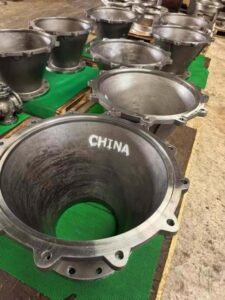
The performance of AISI 440C (UNS S44004) comes down to its precise chemistry. As a premium high carbon stainless grade, it contains the highest carbon content of the 400 series, which is why it can reach such extreme hardness levels after heat treatment.
| Element | Content (%) |
|---|---|
| Carbon (C) | 0.95 – 1.20 |
| Chromium (Cr) | 16.00 – 18.00 |
| Molybdenum (Mo) | 0.75 max |
| Manganese (Mn) | 1.00 max |
| Silicon (Si) | 1.00 max |
| Phosphorus (P) | 0.04 max |
| Sulfur (S) | 0.03 max |
Why This Mix Matters
The specific balance of elements in 1.4125 stainless steel is what sets it apart from lower-grade alternatives:
- High Carbon: The 0.95-1.20% carbon range is the heavy lifter here. It allows this martensitic stainless steel to achieve maximum Rockwell hardness, making it ideal for cutting edges and bearings.
- Chromium Content: With up to 18% Chromium, 440c stainless steel maintains a strong passive film for corrosion resistance. Understanding what is 400 series stainless steel helps illustrate how this specific chromium level prevents rusting in mild environments.
- Molybdenum: While present in smaller amounts, Molybdenum increases the steel’s deep-hardening characteristics and improves resistance to pitting.
By controlling these elements, we ensure that every batch of 440C delivers the consistent wear resistance and structural integrity required for high-stress American industrial applications.
Mechanical and Physical Properties of 440C Stainless Steel
We’ve designed our 440C stainless steel to deliver the ultimate balance of high-strength performance and extreme hardness. Unlike softer 300 series stainless steel grades that prioritize ductility, the UNS S44004 profile is optimized for heavy-duty wear environments.
Mechanical Strength and Hardness
The standout 440C stainless steel property is its ability to reach a peak hardness of 58-60 HRC after proper heat treatment. This makes it one of the hardest stainless alloys available on the market.
| Condition | Tensile Strength (psi) | Yield Strength (psi) | Hardness (Rockwell C) | Elongation (%) |
|---|---|---|---|---|
| Annealed | 110,000 | 65,000 | 20-25 HRC | 15% |
| Tempered @ 315°C | 285,000 | 275,000 | 58-60 HRC | 2% |
Key Physical Characteristics
Understanding the physical footprint of AISI 440C is vital for precision engineering. Our material maintains consistent performance across varying thermal environments.
- Magnetism: This grade is magnetic in all conditions (annealed and heat-treated).
- Density: 0.280 lb/in³ (7.80 g/cm³).
- Thermal Expansion: It features a lower coefficient of thermal expansion compared to austenitic grades, providing better dimensional stability at high temperatures.
- Modulus of Elasticity: 29 x 10⁶ psi (200 GPa).
By choosing our stainless steel 440C, you are getting a material that refuses to deform under pressure. The 440C stainless steel hardness ensures that your components maintain their edge and integrity far longer than standard industrial steels.
440C Stainless Steel Heat Treatment Guide
Getting the best performance out of 440C stainless steel requires a precise thermal cycle. Because this is a high-carbon martensitic grade, the way you heat, quench, and temper it defines the final balance between extreme hardness and necessary toughness. We follow strict protocols to ensure the material reaches its full potential.
Hardening and Quenching for Peak Performance
To achieve a 440C stainless steel hardness of 58–60 HRC, the hardening process must be exact. We recommend a two-stage pre-heat to prevent distortion before hitting the final austenitizing temperature.
- Annealing: For maximum 440C stainless steel machinability, we perform a full anneal at 1550–1650°F (843–899°C), followed by a slow furnace cool.
- Hardening: Heat the material to 1850–1950°F (1010–1066°C). High-carbon grades like this need a thorough soak to ensure the chromium carbides are properly dissolved.
- Quenching: Use a warm oil quench or air cool for thinner sections. Proper quenching is the only way to transform the structure into the hard martensite required for bearing and blade applications.
Tempering Recommendations and Precautions
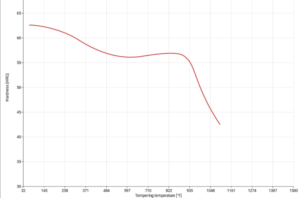
Tempering is where we fine-tune the 440C properties to meet your specific application needs. After quenching, parts should be cooled to room temperature and tempered immediately to relieve internal stresses.
| Desired Hardness (HRC) | Tempering Temperature (°F) | Tempering Temperature (°C) |
|---|---|---|
| 58–60 HRC | 300–400°F | 149–204°C |
| 54–56 HRC | 600–700°F | 316–371°C |
Critical Warning: You must avoid the tempering range of 800–1050°F (425–565°C). Tempering within this window leads to “temper brittleness,” which significantly reduces impact resistance and degrades the corrosion performance of the steel.
Once the heat treatment is complete, we often recommend a professional surface treatment to remove any scale and restore the clean, aesthetic finish expected of high-end stainless components. This ensures your 440C heat treatment results in a part that is as durable as it is functional.
Key Advantages and 440C Stainless Steel Properties
We provide 440C stainless steel specifically for environments that demand the ultimate combination of hardness and wear resistance. As a high-carbon martensitic stainless steel, this grade is the go-to choice for heavy-duty components that cannot afford to deform or wear down under pressure.
Superior Wear and Abrasion Resistance
The high carbon content in AISI 440C creates a dense network of chromium carbides that protects the surface from abrasive forces. This makes it ideal for parts subjected to constant friction. Much like the durability required for high-strength orthopedic components, our 440C is designed to maintain its structural integrity in high-stress mechanical assemblies.
Top Performance Characteristics
- Maximum Hardness: Capable of reaching up to 60 HRC, making it one of the hardest stainless steels available on the market.
- Moderate 440C Corrosion Resistance: It offers reliable protection against fresh water, food acids, and mild chemicals, especially when the material is hardened and polished.
- Optimal Machinability: When supplied in the annealed condition, the 440C stainless steel machinability is excellent, allowing for complex geometries and precision threading before final heat treatment.
- High Tensile Strength: It provides the “backbone” needed for structural components that must resist snapping or bending under extreme loads.
Common Applications for 440C Stainless Steel
We see stainless steel 440C as the go-to choice whenever extreme hardness and wear resistance are non-negotiable. This martensitic stainless steel is prized across American manufacturing for its ability to withstand heavy use without losing its edge or structural integrity.
Where You’ll Find AISI 440C in Action
- Premium Cutlery: Often referred to as a top-tier 440C knife steel, it is a favorite for high-end pocket knives and kitchen blades because it holds a razor-sharp edge. For those looking for custom aesthetics or specialized coatings, our gold titanium alloy knife machining service provides a high-performance finish for these durable blades.
- Precision Bearings: Bearing quality 440C is the industry standard for ball bearings and races. It handles high loads and prevents surface fatigue, even in environments where lubrication might be sparse.
- Medical and Dental Tools: We supply surgical grade stainless 440C for scalpels, clamps, and dental probes. Its hardness ensures these tools stay sharp through repeated sterilization cycles.
- Industrial Components: This grade is essential for heavy-duty valve seats, pump parts, and nozzles that face constant abrasion from fluid flow.
- Manufacturing Molds: Because it resists deformation under pressure, it is frequently used for mold inserts and wear-resistant tooling. If you are developing complex assemblies, our insert molding guide explains how to optimize material choice for long-lasting production cycles.
Application Table
| Industry | Common Component | Key Benefit |
|---|---|---|
| Aerospace | Ball bearings & bushings | High compressive strength |
| Medical | Surgical & dental instruments | Edge retention & hygiene |
| Consumer Goods | High-end cutlery | Superior wear resistance |
| Oil & Gas | Valve parts & nozzles | Erosion resistance |
| Tooling | Mold inserts & gauges | Dimensional stability |
440C vs. Other Stainless Steel Grades
Choosing the right material means understanding the trade-offs between hardness, toughness, and rust resistance. While 440C stainless steel is the heavy hitter for wear resistance, other grades in our stainless steel inventory might be better suited for specific environments.
Performance Comparison Table
| Grade | Type | Max Hardness (HRC) | Corrosion Resistance | Primary Benefit |
|---|---|---|---|---|
| AISI 440C | Martensitic | 58–60 | Moderate | Extreme wear resistance & edge retention |
| 440A / 440B | Martensitic | 55–58 | High | Better toughness and salt resistance |
| 410 / 420 | Martensitic | 50–54 | Moderate | High ductility and lower material cost |
| 304 / 316 | Austenitic | N/A | Excellent | Superior corrosion resistance; non-magnetic |
Key Distinctions
- 440C vs. 440A & 440B: We recommend 440C stainless steel when your priority is absolute hardness. Because 440C has the highest carbon content, it holds an edge longer than 440A or 440B, though it is slightly more brittle.
- 440C vs. 410 & 420: Grades 410 and 420 are “workhorse” martensitic steels. They are easier to machine and offer decent strength, but they cannot reach the 440C hardness levels required for high-end bearings or premium cutlery.
- 440C vs. 304 & 316: This is the most common comparison we see. Steel 440c is a hardenable, magnetic tool steel. In contrast, 304 and 316 are non-hardenable and non-magnetic. If your project requires a part to survive submerged in saltwater, go with 316; if you need that part to cut through bone or steel, 440C is the only choice.
Our martensitic stainless steel selection ensures you get the exact balance of carbon and chromium for your specific application, whether you are looking for the “surgical grade” precision of 440C or the general-purpose utility of the 400-series family.
Standard 440C Stainless Steel Forms and Specifications
I stock a comprehensive inventory of stainless steel 440c to ensure your project stays on schedule. Whether you need raw materials for high-volume manufacturing or specific dimensions for custom tool making, I provide several stock forms ready for immediate shipment or custom processing.
Available Stock Shapes
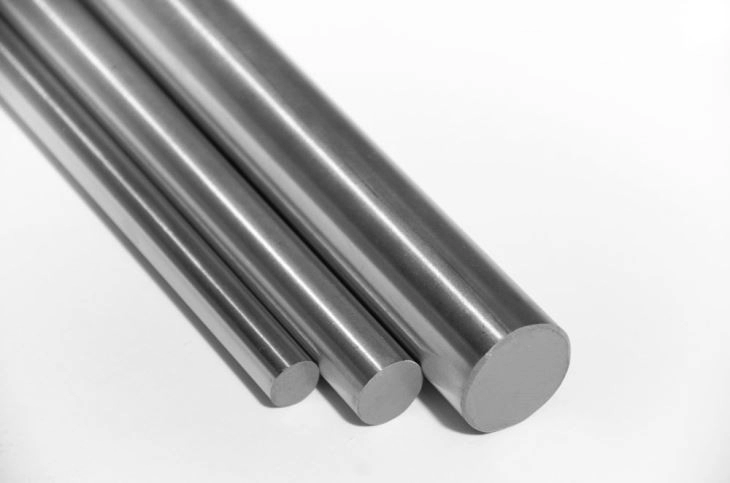
- 440C Round Bar: Available in various diameters, ideal for precision machining of bearings and valve components.
- Flat Bars & Square Bars: Precision-ground or hot-rolled options for mold inserts and surgical tools.
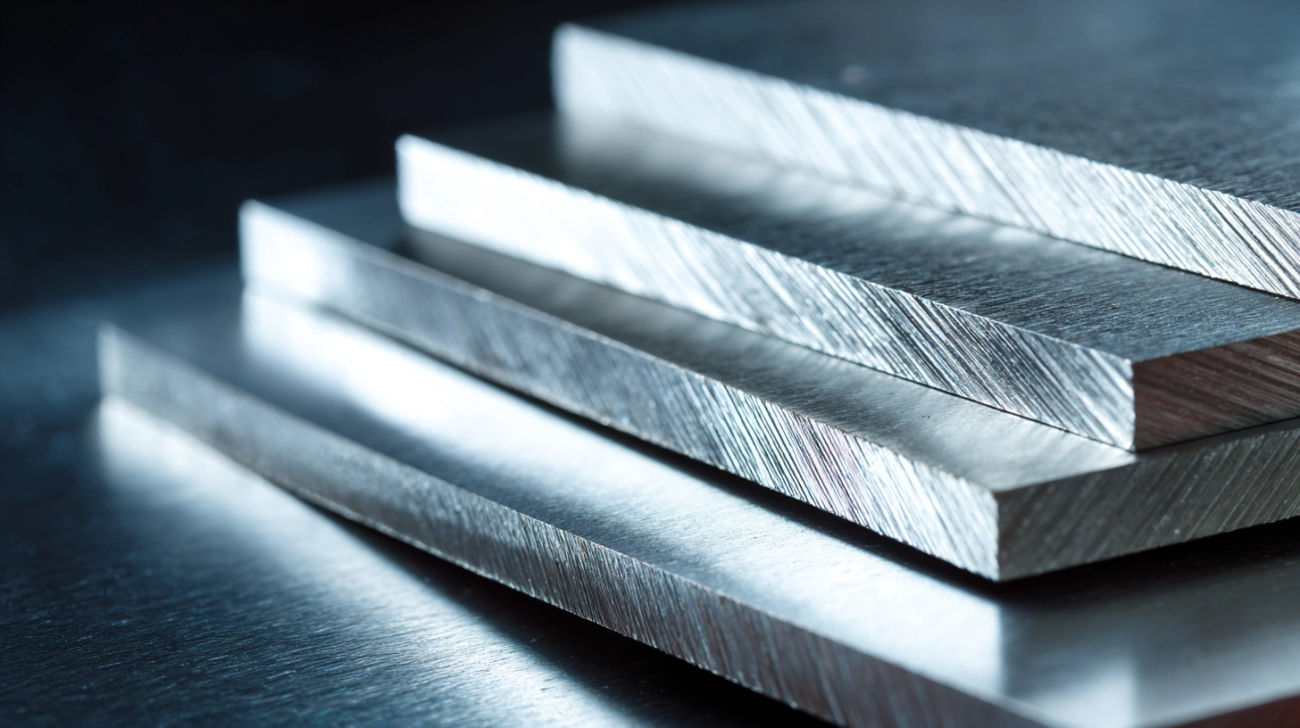
- Sheets and Plates: Available in multiple thicknesses for heavy-duty wear plates and high-end cutlery.
- Coils and Strips: Slit to your specific width requirements for specialized industrial applications.
Industry Specifications and Compliance
I ensure all AISI 440C and UNS S44004 materials meet or exceed the most rigorous industry standards. My inventory is fully certified and traceable, providing the reliability required for aerospace, medical, and defense sectors.
| Specification Type | Standard/Grade |
|---|---|
| Standard Specifications | ASTM A276, ASTM A314, ASTM A473, ASTM A580 |
| Aerospace Quality | AMS 5630, AMS 5880 |
| Military & Federal | QQ-S-763 |
| International Equivalents | EN/DIN 1.4125, JIS SUS440C |
Custom Processing Services
To save you time and reduce scrap, I offer custom cut-to-length services for every 440C stainless steel order.
- Precision Sawing: High-tolerance cutting for round and flat bars.
- Waterjet & Laser Cutting: Accurate plate profiling for complex shapes.
- Surface Finishing: Available in annealed, centerless ground, or polished conditions.
Fabrication and Machining Tips for 440C
Working with stainless steel 440c requires a specific approach because of its high carbon content and extreme hardness. Whether you are grinding it for a custom blade or machining it for a precision bearing, following these industry guidelines ensures you don’t ruin the material or your tools.
Machining Recommendations
The 440c stainless steel machinability is highest when the material is in its fully annealed state. Because it is tough and produces stringy chips, I recommend using carbide tools and keeping feed rates consistent to prevent work hardening. For complex parts, utilizing precision CNC machining with tight tolerances is the most efficient way to maintain accuracy while managing the tool wear associated with high-chromium alloys.
Welding Guidelines
I generally advise against welding AISI 440C because it tends to air-harden and crack easily due to its high carbon. If your project absolutely requires it, follow these steps:
- Preheat: Heat the material to at least 500°F (260°C) before starting.
- Filler Metal: Use 440C rods for a material match or 309/310 stainless fillers if you need more ductility.
- Post-Weld: You must perform a full anneal or stress-relief heat treatment immediately after welding to prevent brittle failure.
Forming and Grinding
This grade is not suited for extensive cold forming. If you need to shape it, it is best done while hot. When it comes to finishing, 440C stainless steel responds well to grinding, but it is prone to “grind burns” if overheated. Use plenty of coolant and keep your abrasives sharp to maintain the surface integrity of the UNS S44004 after it has been heat-treated.
Why Choose Vastmaterial for 440C Stainless Steel?
When you source 440C stainless steel from us, you are dealing directly with the source. We provide high-quality martensitic stainless steel that meets rigorous industrial standards, ensuring your project has the durability and hardness it requires. Our focus is on delivering performance-grade materials with the efficiency local businesses expect.
Our Competitive Edge
| Feature | Our Advantage |
|---|---|
| Sourcing | Factory-direct pricing with no middleman markups. |
| Inventory | Deep stocks of 440C round bar, sheets, and plates ready for immediate ship. |
| Precision | Advanced stainless steel casting process and custom cutting services. |
| Quality | Full certification and compliance with ASTM A276 and AMS 5630. |
Fast Delivery and Custom Processing
We understand that downtime costs money. That is why we maintain a massive inventory of UNS S44004 to ensure quick turnaround times across the United States. Whether you need standard sizes or custom precision-ground stock, our facility is equipped to handle your specific requirements.
- Custom Fabrication: We offer precision processing to get your material closer to the finished shape.
- Technical Support: Our team provides expert advice on 440C heat treatment and material optimization to maximize tool life.
- Reliable Logistics: Streamlined shipping to ensure your high carbon stainless arrives on schedule and within spec.
By choosing us, you gain a partner dedicated to providing the best AISI 440C at the best value. We combine technical expertise with a localized service approach to help you get the job done right.
440C Stainless Steel FAQ
We get a lot of questions about how AISI 440C performs in real-world applications. Here are the quick facts to help you decide if it’s the right fit for your specific project.
Is 440C stainless steel magnetic?
Yes. Because it is a martensitic stainless steel, 440C stainless steel is strongly magnetic in both the annealed and hardened states. This is a key identifier when comparing it to 300-series grades.
What is the maximum 440C hardness?
When subjected to proper 440C heat treatment, this grade can reach a maximum hardness of 58-60 HRC (Rockwell C). This extreme hardness is exactly why it is the premier choice for bearing quality 440C and high-end cutlery.
Is it suitable for food contact or surgical use?
Absolutely. Surgical grade stainless 440C is a standard in the medical industry for tools like scalpels and bone saws because it holds an incredibly sharp edge and resists corrosion. It is also completely safe for food contact. For those needing complex surgical components, our investment casting steel alloy services can produce high-precision parts using this grade.
How does 440C compare to D2 tool steel?
While both are high-carbon steels, there are distinct trade-offs:
- 440C: Offers significantly higher 440C corrosion resistance. It is a true stainless steel.
- D2: Offers slightly better wear resistance but will rust easily if not maintained.
- Verdict: Choose 440C for any environment where moisture or chemicals are present.
Can 440C be welded effectively?
It is possible, but it is not a “welding-friendly” steel. Due to the high carbon, it is prone to cracking. You must preheat the material to 250°C and perform a full anneal after welding to maintain integrity. If your project involves complex assemblies, consulting with a professional steel casting company can often provide a more durable one-piece solution than welding individual sections.

Reviews
There are no reviews yet.