

Optimize production with machining casting. Learn how combining precision CNC and casting cuts costs and ensures tight tolerances for complex […]
Já pode saber que fundições brutas raramente cumprem as tolerâncias de grau aeroespacial diretamente do molde.
Mas usinar peças complexas inteiramente a partir de uma peça sólida? Isso destrói o seu orçamento e desperdiça material.
Existe uma maneira mais inteligente.
Ao dominar a usinagem de fundição, consegue o melhor de ambos os mundos: a eficiência de custos das formas próximas do final e a precisão extrema do acabamento CNC.
Neste artigo, vai aprender exatamente como preencher a lacuna entre a fundição e a oficina de máquinas para entregar componentes de alto desempenho por menos.
Vamos começar.
Por que fundir e depois usinar? As vantagens técnicas e económicas
Está cansado de ver 80% do seu material bruto caro transformar-se em sucata na oficina? Essa é a realidade dispendiosa de usinar peças complexas inteiramente a partir de uma peça sólida. Na Vastmaterial, usamos a usinagem de fundição estratégias para preencher a lacuna entre a produção em grande volume e a engenharia de precisão.
Ao combinar a liberdade geométrica da fundição com a alta precisão da usinagem CNC, entregamos componentes que são tanto estruturalmente superiores quanto económicos.
Eficiência de Forma Próxima do Final
A principal vantagem de fundição quase no formato final é a enorme conservação de material. Em vez de esculpir uma forma complexa a partir de um bloco sólido, fundimos o metal até poucos milímetros da geometria final.
- Economia de Material: Normalmente, reduzimos os requisitos de remoção de material em 60–80%.
- Tempo de ciclo: Menos material a remover significa ciclos de usinagem significativamente mais curtos.
- Vida útil da ferramenta: A redução da carga de corte prolonga a vida útil das ferramentas CNC caras.
Divisão de custos: Fundição vs. Usinagem de bloco
Decidindo entre fundição e usinagem posterior fluxos de trabalho e usinagem a partir de sólido dependem do volume e da complexidade. Aqui está como os custos geralmente se dividem:
| Fator de Custo | Usinagem a partir de sólido (bloco) | Usinagem de fundição (híbrido) |
|---|---|---|
| Desperdício de material | Alto (alta taxa de desperdício) | Baixo (canais/gates recicláveis) |
| Ferramentaria inicial | Baixo (fixação padrão) | Médio/Alto (criação de molde/padrão) |
| Mão de obra por peça | Alto (tempos de produção mais longos) | Baixo (passagens rápidas de acabamento) |
| Escalabilidade | Custos lineares (caro em volume) | Economias de escala (mais barato em volume) |
Alcançar Tolerâncias de Precisão e Resistência
Enquanto a fundição cria a forma, usinagem de fundição aperfeiçoa o ajuste. A fundição sozinha não consegue manter as tolerâncias apertadas necessárias para superfícies de rolamentos ou faces de vedação. No entanto, oferece vantagens metalúrgicas que o lingote trabalhado frequentemente não possui.
- Microestrutura: Estruturas fundidas são isotrópicas, o que significa que possuem resistência uniforme em todas as direções, ao contrário do fluxo de grão direcional do lingote laminado.
- Geometrias Complexas: Podemos fundir entalhes internos e núcleos complexos que são fisicamente impossíveis de usinar pelo exterior.
- Acabamento de Precisão: Usamos Peças fundidas usinadas por CNC protocolos para atingir tolerâncias críticas (por exemplo, ±0,005mm) em características específicas, deixando superfícies não críticas na condição de fundição para economizar dinheiro.
Quando escolher fundição + usinagem versus CNC sólido
Nem todas as peças requerem um molde. Recomendamos a transição para um fluxo de trabalho de fundição usinada quando:
- Volume: Produções superiores a 50–100 unidades (compensando os custos de ferramental).
- Complexidade: A peça requer remoção excessiva de material (recortes profundos ou contornos complexos).
- Material: Está a usar ligas difíceis de usinar (como Superligas ou Aço Inoxidável) onde a usinagem de material bruto é proibitivamente cara.
- Peso: Precisa minimizar o peso da peça através de núcleos internos.
Gostaria que eu calculasse o ponto de equilíbrio para converter as suas peças usinadas atuais em fundições?
O Processo de Fundição de Usinagem Personalizada Passo a Passo
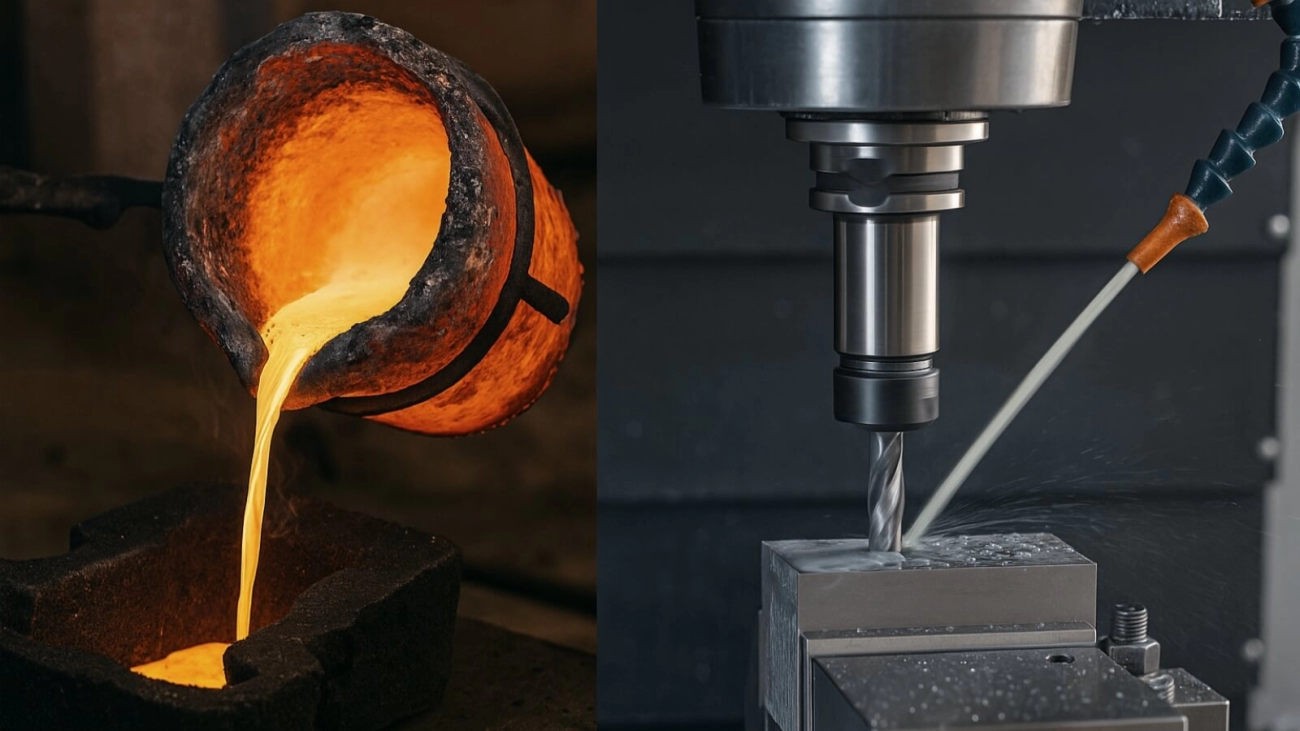
Criando uma peça de alta qualidade fundição mecanizada não é tão simples quanto verter metal e lançá-lo numa fresadora CNC. Requer um fluxo de trabalho altamente integrado, onde a fundição e a oficina de máquinas operam como uma única unidade. Abordamos cada projeto com a geometria final em mente, garantindo que a transição do casting bruto para a peça acabada seja contínua e rentável.
Aqui está como executamos o a usinagem de fundição fluxo de trabalho:
1. Seleção do Método de Fundição
Tudo começa com a escolha do processo de fundição adequado com base no seu volume e necessidades de tolerância.
- Fundição por Investimento: Ideal para geometrias complexas e processos de fundição por investimento em aço inoxidável onde precisamos de tolerâncias apertadas e remoção mínima de material.
- Fundição em areia: Ideal para componentes grandes e pesados, onde o acabamento superficial é secundário à integridade estrutural.
- Fundição por Estampagem: A escolha para produções de alto volume, especialmente quando se utiliza serviços de fundição de alumínio que requerem rapidez e consistência.
2. Preparação do Molde & DFM para usinagem
Não projetamos apenas para o despejo; projetamos para o corte. As nossas revisões de Design for Manufacturability (DFM) determinam exatamente quanto margem de usinagem (estoque extra) é necessário. Demasiado estoque desperdiça tempo de ciclo; demasiado pouco deixa áreas sem acabamento. Otimizamos o molde para garantir que características específicas, como orifícios e superfícies de acoplamento, tenham material suficiente para usinagem secundária de fundições.
3. Vertimento e Remoção Inicial
Assim que o molde está pronto, vertemos a liga fundida. Após a solidificação, a peça passa pelo shakeout e remoção do sistema de canais. Nesta fase, é um casting “bruto”. Tem a forma geral, mas carece das superfícies de precisão necessárias para montagem.
4. Estratégias de Fixação e Alinhamento
Este é frequentemente o passo mais crítico em Peças fundidas usinadas por CNC. Ao contrário de cortar de um lingote quadrado, uma fundição bruta possui superfícies irregulares. Projetamos fixações personalizadas que posicionam a peça com base em pontos de referência específicos estabelecidos durante o projeto da fundição. Isso garante um alinhamento preciso para que, quando a ferramenta CNC toque no metal, ela corte exatamente onde deve em relação à estrutura interna.
5. Desbaste até acabamento de precisão
Dividimos as a usinagem de fundição operações em três fases:
- Desbaste: Remoção rápida da “pele” da fundição e de material em excesso. Isso alivia tensões internas.
- Semi-acabamento: aproximar as características do tamanho e estabelecer a geometria verdadeira.
- Acabamento de Precisão: A passagem final que alcança as tolerâncias dimensionais necessárias e a rugosidade superficial (Ra).
6. Protocolos rigorosos de inspeção
Validamos o componente final usando metrologia avançada. Isso inclui Máquinas de Medição por Coordenadas (MMC) para verificar geometrias complexas em 3D em relação ao modelo CAD e profilometria de superfície para verificar a suavidade. Para aplicações críticas, também empregamos Ensaios Não Destrutivos (END) para garantir que nenhuma porosidade subsuperficial tenha sido exposta durante o processo de usinagem.
de etapas do processo
| Passo | Ação | Foco principal |
|---|---|---|
| Seleção | Escolha do tipo de fundição | Equilíbrio entre custo e tolerância |
| DFM | Design de molde e folgas | Otimizar para remoção mínima de material |
| Configuração | Fixação personalizada | Segurança na fixação de formas irregulares |
| Usinagem | Desbaste e acabamento | Alcançando tolerâncias finais tolerâncias de fundição |
| QC | CMM e NDT | Verificação de especificações e integridade |
Gostaria que detalhasse as diferenças específicas de tolerância entre fundições brutas e os componentes usinados finais?
Operações-chave na usinagem de fundições

Transformar uma peça bruta em um componente de precisão requer uma abordagem estratégica. Não cortamos apenas metal; projetamos o processo para manter a integridade estrutural do material fundido enquanto atingimos tolerâncias geométricas rigorosas. Seja um suporte simples ou uma carcaça complexa, usinagem secundária de fundições é onde a peça realmente se torna funcional.
Aqui está como executamos os passos críticos na a usinagem de fundição fluxo de trabalho:
- Fresagem de 5 Eixos para Geometrias Complexas: Muitas fundições apresentam formas orgânicas, rebaixos e ângulos compostos que máquinas padrão de 3 eixos não conseguem trabalhar sem múltiplas etapas de refixação. Utilizamos fresagem de 5 eixos para usinar contornos complexos em uma única configuração, garantindo precisão superior na posição entre as características.
- Torção de Precisão: Para componentes cilíndricos como carcaças de bombas ou corpos de válvula, utilizamos centros de torneamento CNC. Isso garante concentricidade e perpendicularidade perfeitas das flanges em relação ao furo principal, corrigindo quaisquer desalinhamentos menores do processo de fundição.
- Furação, Alargamento e Rosqueamento: Os orifícios fundidos são frequentemente apenas “localizadores” ou são fundidos sólidos para evitar problemas de porosidade. Usinamos esses orifícios com diâmetros precisos e rosqueamos orifícios com roscas para garantir a fiabilidade dos fixadores.
- Acabamento de Superfície para Selos: As peças fundidas brutas geralmente apresentam uma textura áspera (Ra 6,3 $mu$m ou superior). Usamos usinagem em faces críticas de acoplamento para obter acabamentos suaves (Ra 0,8–1,6 $mu$m). Embora a usinagem nos aproxime do resultado desejado, algumas aplicações exigem a integração de protocolos específicos tratamento de superfície para maximizar a resistência à corrosão e o desempenho de vedação.
Ao controlar rigorosamente estas operações, garantimos que cada peça fundida usinada por CNC que entregamos corresponda exatamente às especificações dos seus desenhos técnicos. Começar com uma base sólida Fundição de Precisão permite-nos focar nestes detalhes finais que definem a qualidade.
Comparando Operações de Usinagem
| Operação | Foco na Funcionalidade | Objetivo Típico |
|---|---|---|
| Fresagem em 5 Eixos | Contornos & Rebaixos | Redução do tempo de preparação & alta precisão geométrica |
| Torneamento CNC | Características cilíndricas | Controle de concentricidade & desvio axial |
| Furação | Diâmetros internos | Tolerâncias de furos H7/H8 |
| Fresagem de face | Superfícies de vedação | Planicidade & Ra 0.8–1.6 acabamento $mu$m |
Gostaria que eu detalhasse os critérios específicos de seleção de materiais para otimizar velocidades e avanços de usinagem na próxima seção?
Seleção de Materiais: Quais Ligas Usinadas Melhor Após a Fundição?
Escolher o material certo para um a usinagem de fundição projeto é um ato de equilíbrio. Precisamos de uma liga que flua suavemente para o molde para criar geometrias complexas, mas também mantenha uma usinabilidade suficiente para ser acabado com precisão sem destruir as nossas ferramentas CNC. Na Vastmaterial, orientamos os nossos clientes para materiais que oferecem o melhor desempenho de “fundição e usinagem”.
Aços Inoxidáveis: Gestão do Envelhecimento por Trabalho
O aço inoxidável, particularmente a série 300 (como 304 e 316), é o padrão da indústria para resistência à corrosão. No entanto, para fluxo de trabalho de fundição usinada, estes graus apresentam um desafio específico: o endurecimento por trabalho. Se a ferramenta permanecer demasiado tempo num ponto ou fizer uma passagem superficial, o material endurece instantaneamente, dificultando as passagens subsequentes.
- 304/304L: Excelente resistência à corrosão geral, mas requer fixação rígida e taxas de avanço agressivas para evitar o endurecimento.
- 316/316L: Adiciona molibdénio para resistência superior à pitting. Utilizamos revestimentos especializados em ferramentas para gerir a geração de calor aqui.
Aços de Liga para Componentes de Alta Resistência
Quando precisa de propriedades mecânicas superiores, como resistência e resistência ao desgaste, os aços de baixa liga são a escolha. Graus como 4140 e 4340 são fantásticos para aplicações de alta resistência. componentes de aço fundido. Estes materiais respondem bem ao tratamento térmico após a fundição e geralmente usinam de forma mais previsível do que o aço inoxidável.
Frequentemente recomendamos opções específicas peças de liga de aço para fundição de precisão que são formuladas para reduzir a porosidade, garantindo que, ao usinar na peça, não descubram defeitos subsuperficiais.
Alumínio (A356): O Campeão Leve
Para aplicações aeroespaciais e automóveis, fundições de alumínio usinagem CNC é a nossa operação mais comum. A A356 liga é o padrão ouro aqui. Oferece alta resistência e ductilidade (após tratamento térmico T6) e maquina como manteiga em comparação com o aço. Isso permite velocidades de spindle extremamente altas e taxas de remoção de material rápidas, reduzindo significativamente o custo por peça.
Usinagem de Superligas (Inconel, Hastelloy)
Para ambientes extremos—pense em motores a jato ou reatores químicos—recorremos às superligas. Usinagem Inconel 625 ou 718 é um jogo diferente. Estes materiais mantêm alta resistência a altas temperaturas, o que significa que resistem às forças de corte de forma agressiva.
- Vida útil da ferramenta: Esperamos um desgaste mais rápido das ferramentas e consideramos isso no custo.
- Estratégia: Utilizamos inserts cerâmicos avançados e trajetórias de corte lentas e deliberadas para manter a precisão.
Comparação de usinabilidade de materiais
Para ajudar na sua decisão, aqui está uma análise rápida de como as ligas de fundição comuns se comportam na fábrica:
| Família de Materiais | Grades Comuns | Fundibilidade | Classificação de usinabilidade | Desafio Principal |
|---|---|---|---|---|
| Alumínio | A356, 356 | Excelente | Alto | Evacuação de cavacos |
| Aço Liga | 4140, 8620 | Bom | Médio | Requisitos de acabamento superficial |
| Aço Inoxidável | 304, 316, 17-4PH | Bom | Baixo-Médio | Encruamento |
| Superligas | Inconel, Hastelloy | Razoável | Baixo | Desgaste rápido da ferramenta |
Quer esteja à procura de padrões aço inoxidável ou aço de liga componentes, selecionar o grau certo no início da fase de design garante que podemos manter tolerâncias apertadas sem estourar o orçamento.
Gostaria que eu criasse a próxima seção sobre “Tolerâncias, Acabamento Superficial e Normas de Qualidade” para detalhar como alcançamos a precisão?
Tolerâncias de Maquinagem de Fundição e Normas de Qualidade
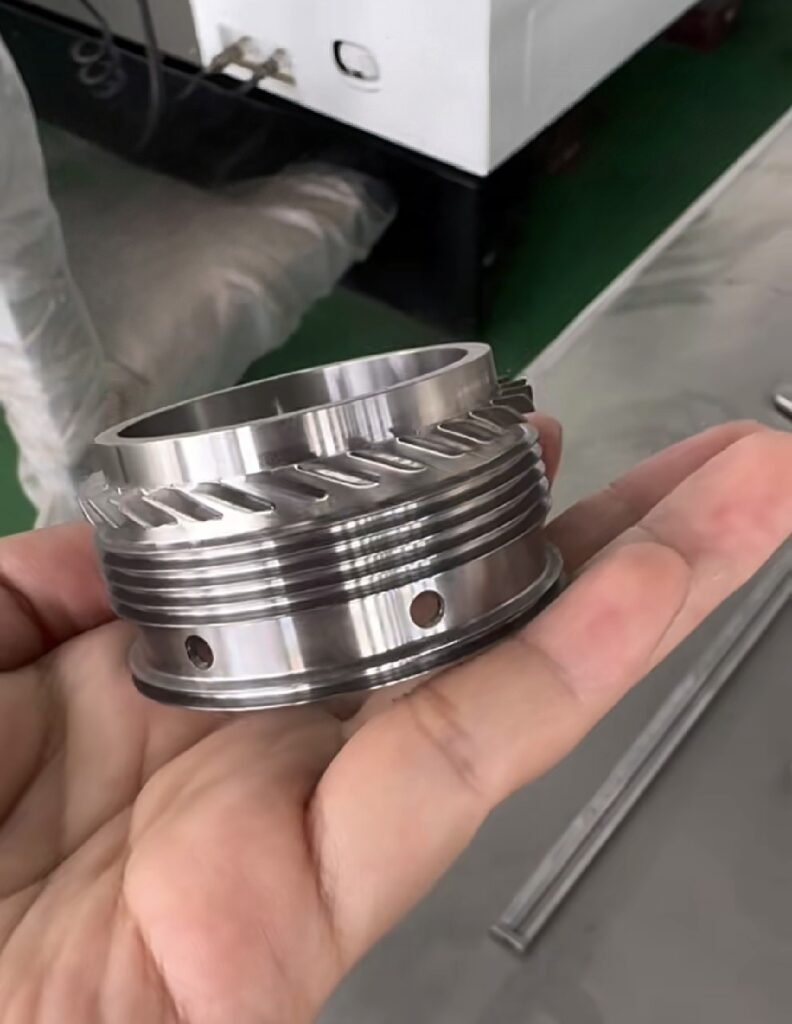
Ao colmatar a lacuna entre uma peça fundida bruta e um componente acabado, compreender o delta entre tolerâncias de fundição e as especificações finais é fundamental. Embora os métodos de fundição modernos estejam a tornar-se mais precisos, raramente cumprem os requisitos geométricos rigorosos de conjuntos de alto desempenho sem operações secundárias.
Comparando Fundido vs. Precisão CNC
Na nossa a usinagem de fundição fluxo de trabalho, vemos a superfície fundida como um ponto de partida. As fundições de precisão padrão podem ter tolerâncias de cerca de ±0,005 polegadas por polegada, mas as fundições em areia podem variar significativamente mais. Para alcançar os requisitos funcionais de uma superfície de acoplamento ou um furo de rolamento, contamos com Precisão maquinada CNC.
Aqui está uma análise rápida da mudança de tolerância que normalmente gerenciamos:
| Tipo de característica | Tolerância Típica de Fundição | Tolerância Maquinada CNC |
|---|---|---|
| Dimensões Lineares | ±0,010″ – ±0,030″ | ±0,0005″ – ±0,002″ |
| Planicidade | 0,005″ – 0,020″ | < 0,0005″ |
| Diâmetro do orifício | ±0,005″ | ±0.0002″ (Rebocado/Perfurado) |
| Acabamento de superfície (Ra) | 63 – 125 µin | 16 – 32 µin |
Gestão de folgas de usinagem
Um aspeto crítico do Design para Fabricação (DFM) é determinar a correta folgas de usinagem. Este é o material extra de “estoque” adicionado ao padrão de fundição para garantir que a ferramenta CNC tenha material suficiente para cortar, resultando numa superfície limpa, sem remover tanto que desperdice tempo de ciclo ou exponha porosidade no interior da parede.
- Estoque demasiado pequeno: A ferramenta pode “pular” sobre pontos baixos na fundição, deixando áreas não usinadas (não limpas).
- Estoque demasiado grande: Aumenta o desgaste da ferramenta e o tempo de ciclo, elevando os custos desnecessariamente.
GD&T e Rastreabilidade
Para características críticas, tolerâncias lineares simples não são suficientes. Utilizamos Dimensionalidade Geométrica & Tolerâncias (GD&T) para controlar a posição verdadeira, concentricidade e paralelismo de fundição mecanizada. Isto garante que as peças não apenas medem corretamente individualmente, mas também se montam perfeitamente todas as vezes.
Este nível de precisão é inegociável em indústrias que requerem componentes de alto desempenho. Por exemplo, alcançar o desvio e o equilíbrio de superfície necessários para serviços de usinagem de jantes de liga de alumínio requer uma adesão rigorosa aos protocolos GD&T para garantir segurança e desempenho em velocidade.
Além disso, apoiamos nossos processos com rastreabilidade AS9100 e ISO 9001 certificações. Isto significa que cada número de lote de tratamento térmico, lote de material e relatório de inspeção dimensional está documentado. Seja um dispositivo médico ou um suporte aeroespacial, você tem total visibilidade na cadeia de qualidade.
Gostaria que eu analisasse seus desenhos de fundição atuais para recomendar folgas de usinagem ótimas para redução de custos?
Aplicações do Mundo Real & Histórias de Sucesso
Quando combinamos a liberdade de design da fundição com a precisão da usinagem CNC, desbloqueamos capacidades que a fabricação padrão simplesmente não consegue igualar. Vemos a usinagem de fundição assumindo um papel de destaque em indústrias onde a falha não é uma opção e a complexidade geométrica é elevada.
Componentes Aeroespaciais
Na indústria aeroespacial, redução de peso e resistência ao calor são essenciais. Frequentemente lidamos com Peças fundidas usinadas por CNC para suportes estruturais e pás de turbina. Estas peças muitas vezes utilizam superligas detalhadas nos nossos Ligas de Inconel, onde a forma bruta é fundida para minimizar o desperdício, e as superfícies de acoplamento críticas são usinadas com tolerâncias ao nível de micron.
Inovação Automóvel
Desde blocos de motor até carcaças de transmissão e braços de suspensão, o setor automóvel depende de fluxo de trabalho de fundição usinada para produção em massa.
- Blocos de Motor: A fundição cria canais de refrigeração internos complexos que a usinagem a partir de um bloco sólido não consegue alcançar.
- Precisão: A usinagem secundária garante que os cilindros e pontos de montagem estejam perfeitamente concêntricos.
Setores de Petróleo & Gás e Médico
- Petróleo & Gás: Corpos de válvula de alta pressão e impelidores de bomba requerem a integridade estrutural de uma estrutura de grão de fundição contínua para evitar fugas sob pressão extrema.
- Ligas de cobalto-cromo-molibdénio refinadas para biocompatibilidade, resistência à fadiga e desgaste a longo prazo em substituições articulares Produzimos carcaças de instrumentos cirúrgicos e componentes de grau de implante. Materiais como os utilizados em Fundição de liga de cobalto são essenciais aqui pela sua biocompatibilidade e resistência ao desgaste, exigindo ferramentas especializadas para usinagem eficaz.
Estudo de Caso: Soldagem vs. Fundição Única
Uma das nossas histórias de sucesso mais impactantes envolveu a conversão de um conjunto soldado de 12 peças de um cliente em um projeto de usinagem de fundição por investimento. Ao mudar para uma peça monolítica fundida:
- Resistência: Eliminámos potenciais pontos de falha nas juntas de solda.
- Precisão: A distorção causada pelo calor da soldagem foi eliminada.
- Custo: O custo total de fabricação caiu em 30% devido à redução de mão-de-obra.
Gostaria que eu analisasse os seus conjuntos soldados atuais para ver se uma única peça usinada por fundição poderia economizar dinheiro?
Superando Desafios Comuns na Usinagem de Fundidos
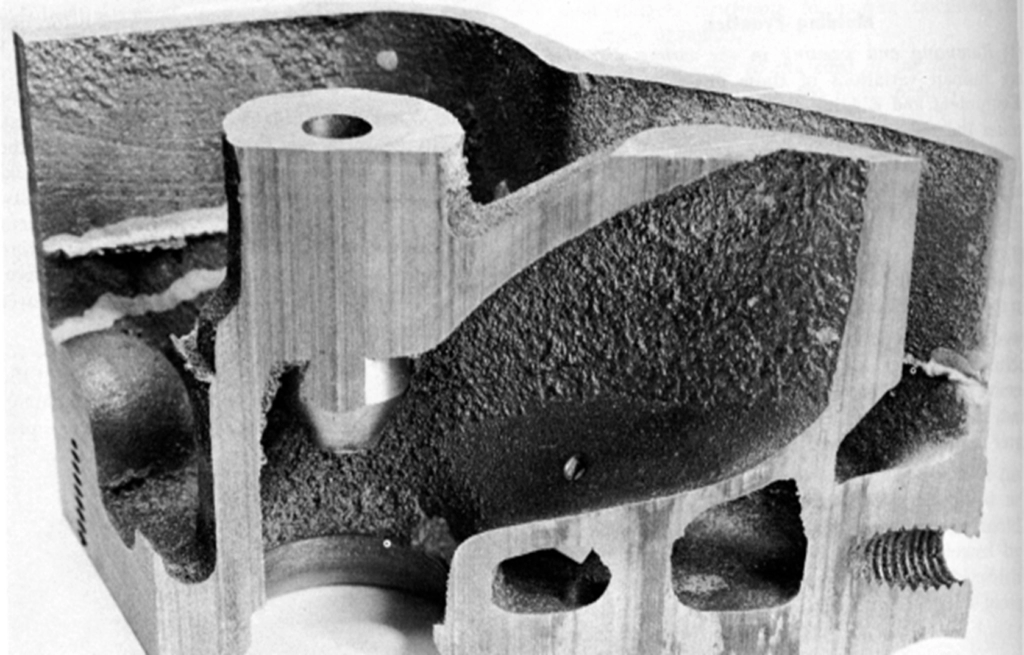
Quando enfrentamos a usinagem de fundição projetos, não estamos apenas cortando metal; estamos gerindo as inconsistências inerentes às ligas solidificadas. Ao contrário do estoque padrão de barras, uma fundição mecanizada vem com um conjunto único de variáveis que requerem controlo de processo experiente. Se estas não forem geridas corretamente, acaba-se com peças rejeitadas e ferramentas quebradas.
Lidando com Defeitos: Porosidade e Pontos Duros
O maior obstáculo em usinagem secundária de fundições é descobrir defeitos sub-superficiais. Porosidade (bolsas de ar) ou inclusões (material estranho) muitas vezes só aparecem após cortarmos através da camada exterior.
- Porosidade: Utilizamos Ensaios Não Destrutivos (END) antes da usinagem para identificar vazios, evitando desperdiçar tempo de máquina em peças defeituosas.
- Pontos Difíceis: O arrefecimento rápido pode criar secções extremamente duras no metal. Isto é particularmente comum em componentes de aço fundido, onde pontos difíceis inesperados podem partir instantaneamente cortadores de carbeto. Mitigamos isto através de tratamento térmico preciso (normalização ou recozimento) antes da usinagem para garantir uma microestrutura uniforme.
Otimização da Usinabilidade e Acabamento da Superfície
Obter um acabamento de superfície consistente após a usinagem requer equilibrar as taxas de avanço com a condição do material. Algumas ligas são “pegajosas”, enquanto outras são abrasivas. Otimizamos classificações de usinabilidade ajustando as nossas estratégias de refrigeração e revestimentos de ferramentas. Isto garante que cada lote seja idêntico, cumprindo requisitos estritos de Ra, independentemente de pequenas variações na fundição bruta.
Controlo da Distorção e Margens
Remover a camada exterior de uma fundição liberta tensões residuais internas. Se removermos material de forma demasiado agressiva, a peça irá deformar-se ou torcer-se fora da tolerância.
- Alívio de Tensões: Freqüentemente realizamos ciclos de alívio de tensões antes do acabamento final.
- Margens: Calculamos cuidadosamente folgas de usinagem—deixando material suficiente para limpar a superfície, mas não tanto que induzamos uma distorção pesada durante a remoção.
Ao antecipar estes problemas, garantimos que o processo final usinagem de fundição produza um componente que seja dimensionalmente estável e estruturalmente sólido.
Gostaria que eu delineasse a nossa lista de verificação de controlo de qualidade específica para verificar as tolerâncias de fundição usinada?
Por que escolher a Vastmaterial para as suas necessidades de fundição por usinagem
Na Vastmaterial, entendemos que gerir dois fornecedores separados—uma fundição para as peças brutas e uma oficina de usinagem para acabamento—é uma receita para atrasos e apontar dedos. Resolvemos isso ao integrar tudo sob um mesmo teto. Quando nos escolhe para os seus a usinagem de fundição projetos, obtém uma transição perfeita do metal líquido ao componente de precisão final.
Capacidades Integradas Internamente
Controlamos todo o processo. A nossa instalação alberga linhas de fundição avançadas (investimento, areia e matriz) e uma oficina de CNC de última geração. Isto inclui centros de fresagem de alta precisão serviços de torneamento CNC e centros de fresagem de 5 eixos capazes de lidar com geometrias complexas que máquinas padrão de 3 eixos não conseguem tocar. Ao manter o fluxo de trabalho de fundição usinada processo interno, garantimos responsabilidade e um controlo de qualidade mais rigoroso em cada etapa.
Design for Manufacturability (DFM) e Protótipos Rápidos centrados no Cliente
Não apenas imprimimos peças; otimizamo-las. A nossa equipa de engenharia realiza revisões detalhadas de Design for Manufacturability (DFM) antes de fundir qualquer quantidade de metal. Analisamos os seus ficheiros CAD para identificar características que possam causar porosidade ou aumentar desnecessariamente os custos de usinagem. Se precisar de validar um projeto primeiro, os nossos serviços de prototipagem rápida permitem testar encaixe e forma rapidamente.
A Vantagem Vastmaterial:
- Sem Restrições de MOQ: Quer precise de um único protótipo ou de uma produção de 10.000 unidades, tratamos disso. Apoiamo-startups e empresas estabelecidas por igual.
- Logística Global: Gerimos a logística de envio para que as peças cheguem ao seu cais a tempo, navegando pela alfândega e transporte para que não tenha que se preocupar.
- Redução Total de Custos: Ao otimizar o fluxo de trabalho “fundir depois usinar”, reduzimos desperdício e tempo de máquina, diminuindo diretamente o seu preço por peça.
Comparando Vastmaterial vs. Fornecimento Tradicional
| Característica | Vastmaterial (Loja Única) | Fornecimento Tradicional (Fornecedores Divididos) |
|---|---|---|
| Responsabilidade | Ponto único de responsabilidade | Jogo de culpas entre fundidor e usinador |
| Tempo de entrega | Racionalizado (engenharia simultânea) | Lento (envio entre fornecedores) |
| Taxa de sucata | Ciclo de feedback imediato corrige defeitos | Sucata elevada descoberta tarde na usinagem |
| Custo | Otimizado a usinagem de fundição fluxo de trabalho | Markup empilhados sobre markup |
Estamos comprometidos em fornecer alta qualidade Peças fundidas usinadas por CNC que atendem às suas especificações exatas sem a dor de cabeça de gerir uma cadeia de abastecimento fragmentada.