
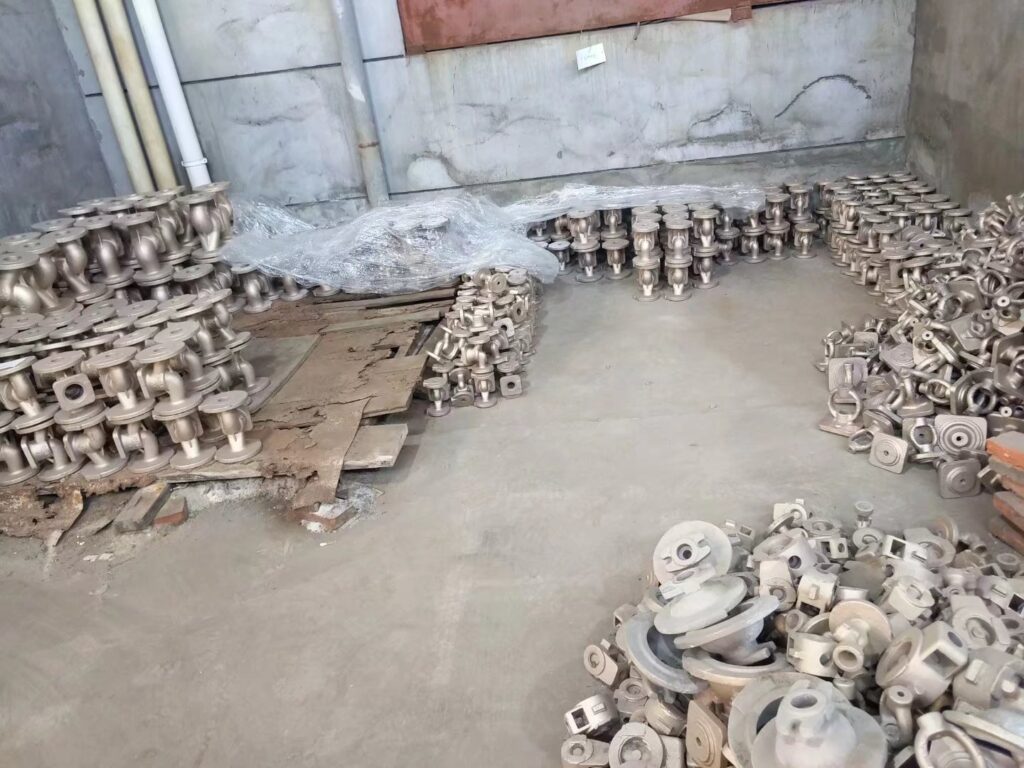
Red brass vs yellow brass comparison guide with composition, color, corrosion resistance, machinability, uses, and 2025 price insights.
Red Brass vs Yellow Brass: At-a-Glance Comparison
| Feature | Red Brass | Yellow Brass |
|---|---|---|
| Common Names | Red Brass, Marine Brass | Cartridge Brass, Yellow Brass |
| UNS Numbers | C83400, C83600, C83800 | C26000, C27200, C27400 |
| Copper Content (%) | 85% to 90% | 60% to 70% |
| Zinc Content (%) | 5% to 10% | 30% to 40% |
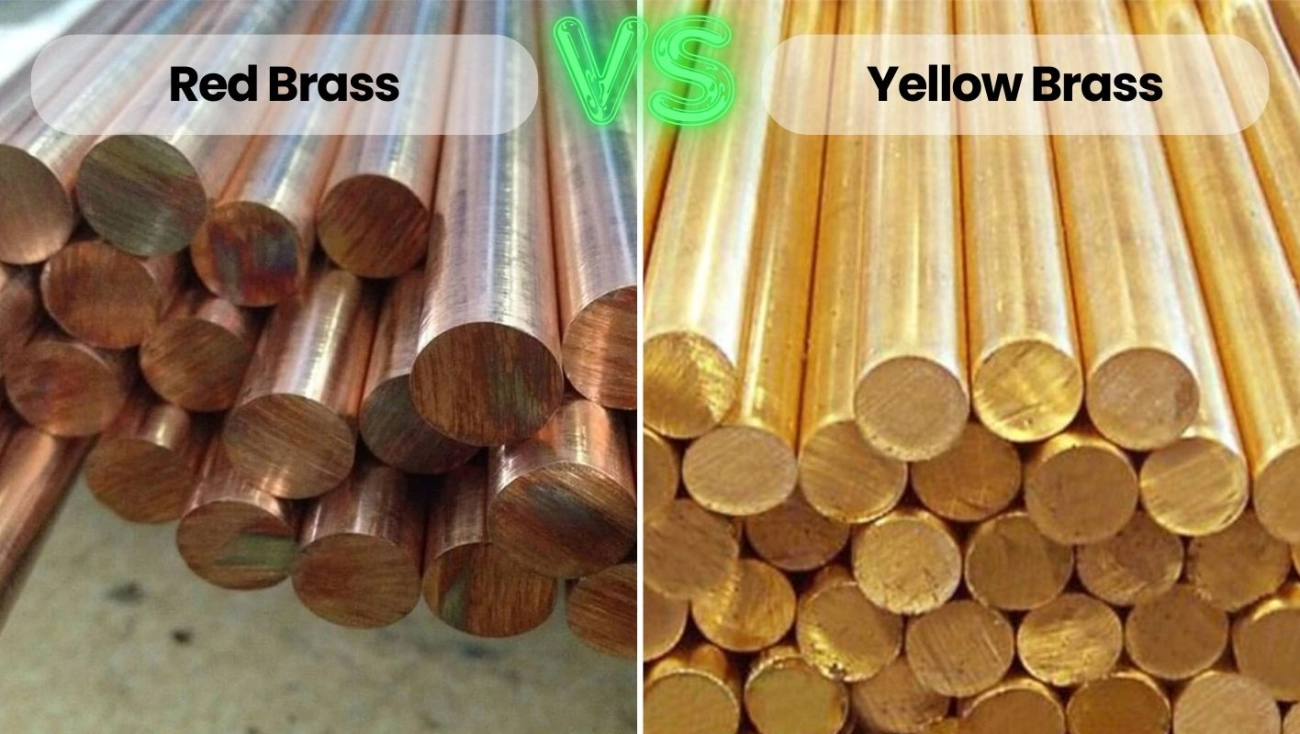
| Color Appearance | Reddish-gold, deeper red hues | Bright yellow gold |
| Corrosion Resistance | Excellent (especially marine & potable water) | Good (less resistant in salty environments) |
| Machinability Rating | Moderate to Good (due to lead & tin additions) | Very Good (easier to machine) |
| Typical Price per lb (2025) | $4.50 – $6.00 | $3.50 – $5.00 |
| Common Applications | Plumbing valves, marine fittings, pump parts, instrument bells | Ammunition casings, hardware, zippers, jewelry, decorative stamping |
This quick table highlights key differences between red and yellow brass. Red brass boasts higher copper content, resulting in a richer color and superior corrosion resistance. Yellow brass is easier to machine and widely used where cost and volume matter most. Both alloys have distinct roles across plumbing, marine, industrial, and consumer applications.
Chemical Composition Breakdown

Red brass and yellow brass differ mainly in their copper and alloying element content. Red brass alloys like C83400, C83600, and C83800 typically have about 80-85% copper, combined with small amounts of zinc, lead, tin, and sometimes iron. For example, C83600 (commonly used in plumbing) usually has around an 85/5/5/5 mix—meaning roughly 85% copper, 5% zinc, 5% lead, and 5% tin.
Yellow brass, on the other hand, belongs to the cartridge brass family like C26000, C27200, and C27400. These usually contain about 60-70% copper with the rest mainly zinc, and minimal or no lead or tin. For instance, C26000 is around 70% copper and 30% zinc.
Tin and lead play important roles in red brass alloys. Tin improves corrosion resistance, especially in marine environments, while lead boosts machinability by making the alloy easier to cut and shape.
The higher copper content in red brass gives it a richer, redder color compared to yellow brass, which looks more golden or yellow because of the higher zinc levels. This difference in chemistry also affects strength, corrosion resistance, and other key properties.
Visual Differences: How to Tell Red Brass vs Yellow Brass Fast
When you’re trying to spot red brass vs yellow brass quickly, color is the easiest clue. Red brass has a deeper reddish-gold tone, especially when freshly machined. Yellow brass looks bright, shiny, and more golden yellow. Over time, both will oxidize and dull, but red brass keeps a warmer rust-like hue, while yellow brass turns more of a muted yellow-green patina.
Here’s a quick color comparison:
| Feature | Red Brass (C83600) | Yellow Brass (C26000) |
|---|---|---|
| Freshly Machined Color | Deep reddish gold | Bright golden yellow |
| Oxidized Color | Warm reddish-brown | Dull yellow-green |
Beyond color, there are some easy tests:
- Spark Test: Red brass produces fewer sparks with a reddish tint; yellow brass sparks more bright yellow sparks.
- Magnet Test: Neither is magnetic, so a magnet test won’t help.
- Chip Test: When you create a chip by filing, red brass chips tend to be harder and curl less than yellow brass, which flakes more easily.
- Weight/Density Feel: Red brass feels slightly heavier due to higher copper content; you can sometimes tell by hefting similar-sized parts.
- Acid Drop Test (for scrap dealers): Applying a drop of nitric acid creates a distinctive color change—red brass usually darkens more distinctly than yellow brass.
These quick visual and physical checks are great for makers, scrap dealers, or anyone sorting brass alloys fast, especially if you don’t have lab tools handy.
Mechanical & Performance Properties of Red Brass vs Yellow Brass
When it comes to strength and ductility, red brass generally has a bit more toughness due to its higher copper and tin content. It handles stress well, making it ideal for plumbing valves and marine parts where durability matters. Yellow brass, on the other hand, is slightly softer but offers excellent ductility, which helps in forming and shaping for applications like ammunition casings and decorative hardware.
Corrosion resistance: Red brass shines here, especially in saltwater and potable water environments. Its tin and lead additions improve resistance to corrosion, making it the go-to for marine hardware and water fittings. Yellow brass performs well in general atmospheric conditions but isn’t as resistant to harsh salty or chlorinated water, which can cause dezincification over time.
Machinability: Yellow brass usually scores higher in machinability with less tool wear, thanks to its zinc-rich makeup. It’s easier and cheaper to machine at high volumes, favored in manufacturing fasteners and zippers. Red brass, because of its tougher alloying, wears tooling faster but offers better strength in the final product.
Acoustic properties: This is why instrument makers choose each type for specific sounds. Yellow brass is the choice for trumpets because its lighter, more flexible structure creates brighter tones. Red or “gold” brass is preferred for tubas and lower brass instruments since its denser, heavier composition produces warmer, richer sounds.
Weldability and brazing: Both alloys can be welded or brazed, but red brass typically requires more careful temperature control due to its complex composition. Yellow brass is easier to work with during joining processes, which suits fast-paced production environments.
In short, your choice between red brass and yellow brass depends on the balance you want between strength, corrosion resistance, machinability, and even sound characteristics.
Common Applications & Industries
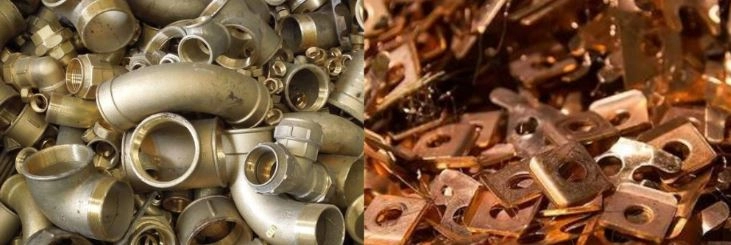
Red brass is a favorite for plumbing valves, fittings, marine hardware, and pump parts thanks to its excellent corrosion resistance and strength. You’ll often find it in low-pressure valves and musical instrument bells, especially tubas, because of its rich acoustic qualities.
Yellow brass, on the other hand, shines in ammunition casings, hardware like doorknobs and locks, zippers, and costume jewelry due to its bright color and good machinability. It’s also commonly used in radiator cores, decorative items, and products made through high-volume stamping where cost efficiency matters.
Both alloys have strong footholds but serve different needs based on their properties and where they perform best in the U.S. market.
Price Comparison in 2025: Red Brass vs Yellow Brass
Here’s a quick look at how red brass and yellow brass stack up in price this year:
| Brass Type | Scrap Price Range (per lb) | Virgin Ingot Price (per lb) | Price Difference |
|---|---|---|---|
| Red Brass | $2.50 – $3.20 | $4.00 – $4.75 | 15% – 30% higher than yellow brass |
| Yellow Brass | $2.00 – $2.80 | $3.50 – $4.00 | Baseline |
Why Does Red Brass Cost More?
- Higher copper content: More copper means more raw material cost.
- Tin & lead additives: Red brass alloys often have tin and lead, which add to price.
- Better corrosion resistance: This drives up demand, especially in plumbing and marine industries—raising prices further.
Regional Price Differences
- United States: Generally stable, with strong demand for red brass in plumbing and HVAC.
- Europe: Somewhat higher prices on red brass due to stricter quality certifications.
- Asia: Lower prices overall, but regional demand for yellow brass in manufacturing keeps it competitive.
If you’re buying or selling scrap or virgin metal in the U.S., expect to pay roughly 15-30% more for red brass than yellow brass, mostly because of its composition and specialized uses.
Which One Should You Choose? Decision Guide
Picking between red brass and yellow brass depends on your project’s needs, budget, and performance expectations. Here’s a quick guide to help you decide:
Choose Red Brass When:
- You need better corrosion resistance, especially in marine or plumbing settings.
- The project involves potable water systems or low-pressure valves.
- You want a stronger, more durable alloy with a richer, redder finish.
- Machinability is important but secondary to long-term performance.
- Appearance matters, and you prefer the warm, reddish tone.
- You’re okay with paying 15-30% more for better quality.
Choose Yellow Brass When:
- Cost is a priority, and you want a more affordable alloy.
- The application involves decorative hardware, zippers, or ammunition casings.
- You require high machinability and easy stamping for mass production.
- You’re working on parts like radiator cores or costume jewelry.
- You need a lightweight material with bright yellow-gold color.
- Corrosion exposure is moderate or minimal.
Cost vs Performance Trade-off Table
| Feature | Red Brass (C83600) | Yellow Brass (C26000) |
|---|---|---|
| Copper Content | ~85% (higher copper) | ~67-70% |
| Corrosion Resistance | Excellent (marine, potable) | Moderate |
| Machinability | Good, with some tool wear | Excellent (easier to machine) |
| Color | Reddish-bronze | Bright yellow-gold |
| Typical Price per lb | 15-30% higher | More budget-friendly |
| Common Uses | Plumbing fittings, marine parts | Ammunition casings, decorative |
| Durability | High | Moderate |
Go for red brass if you want longevity, corrosion resistance, and a rich look—great for plumbing, valves, and marine gear. Pick yellow brass if you’re focused on cost, machinability, and bright color for decorative or high-volume uses.
Make sure to weigh price against performance to get the right fit for your project!
Identification Mistakes to Avoid
When sorting metals, it’s easy to mix up bronze and red brass. Both can look reddish, but bronze usually has more tin and is harder, while red brass is softer with a higher copper content. If you’re buying or selling scrap, confusing these can cost you.
Leaded yellow brass is another tricky one. It looks similar to regular yellow brass but includes lead for better machinability. Don’t assume all yellow brass behaves the same—leaded varieties cut easier but may not be suitable for all uses, especially plumbing.
Patina and oxidation can fool your eyes too. Old brass surfaces often darken or develop greenish layers that hide the true color underneath. If you’re unsure, clean a small area to see the base metal. This helps you avoid misidentifying red brass as yellow or vice versa.
In short, always double-check with simple tests or professional tools, especially if color alone leaves you unsure.
Sourcing Tips from VastMaterial
When buying red brass (C83600) or yellow brass (C26000), it’s important to get certified material to ensure quality and traceability. Here are some tips from VastMaterial to make your purchase smooth:
- Look for Certified Alloys: Always ask for mill test reports (MTRs) that confirm the composition and mechanical properties. This paperwork is your proof the brass meets industry specs and is exactly C83600 red brass or C26000 yellow brass.
- Traceability Matters: Choose suppliers who provide batch traceability. This helps if you need to track back material origin or for compliance in critical projects like plumbing or marine applications.
- Check Minimum Order Quantities (MOQs): VastMaterial offers flexible MOQs whether you need a few pounds or a truckload. Knowing your volume upfront speeds up order processing and helps avoid delays.
- Fast Shipping Options: Many local U.S. suppliers, including VastMaterial, have warehouses and fast shipping channels across major states. This means shorter lead times whether you’re restocking a shop or running a manufacturing line.
- Contact CTA for Assistance: If you’re unsure about what brass alloy suits your needs or want custom specifications, reach out directly to VastMaterial’s customer technical advisors (CTA). They can guide you on best choices, pricing, and available stock.
Following these tips will ensure you get genuine, high-quality red or yellow brass ready for your next project, without headaches.
FAQ Section: Red Brass vs Yellow Brass
Is red brass better than yellow brass?
It depends on what you need. Red brass usually has better corrosion resistance and looks richer, making it ideal for plumbing and marine uses. Yellow brass is easier to machine and works well for high-volume manufacturing like ammunition or decorative items. So, “better” is all about the job.
Why is red brass more expensive?
Red brass has more copper and sometimes tin and lead, which adds cost. Plus, its superior corrosion resistance and appearance demand a premium—expect about 15-30% higher prices than yellow brass.
Can you mix red and yellow brass when melting?
Technically yes, but it’s not advised for critical applications. Mixing can alter chemical composition, affecting strength and corrosion resistance. Always check specs before blending scrap metals.
Which brass is food-safe or potable water certified?
Red brass alloys like C83600 are often certified safe for potable water due to low lead content. Yellow brass can contain more lead, so it’s less common for drinking water systems unless specifically treated.
What is “semi-red brass”?
Semi-red brass blends properties of both red and yellow brass. It has a medium copper content, offering a balance between corrosion resistance and machinability. Good for applications that need a bit of both.
Does yellow brass turn skin green faster?
Yes, yellow brass can cause green discoloration more often because of higher zinc content and surface oxidation. Red brass’s higher copper helps reduce that effect.
Got more questions about red brass vs yellow brass? Feel free to ask!