
Understanding the Basics of Sand Casting vs Die Casting
When starting a metal fabrication project, the first hurdle is often deciding between sand casting vs die casting. While both involve pouring molten metal into a cavity, their mechanics, tooling, and final outcomes differ significantly. We specialize in helping you navigate these metal casting processes comparisons to ensure your parts meet exact performance specifications.
What is Sand Casting?
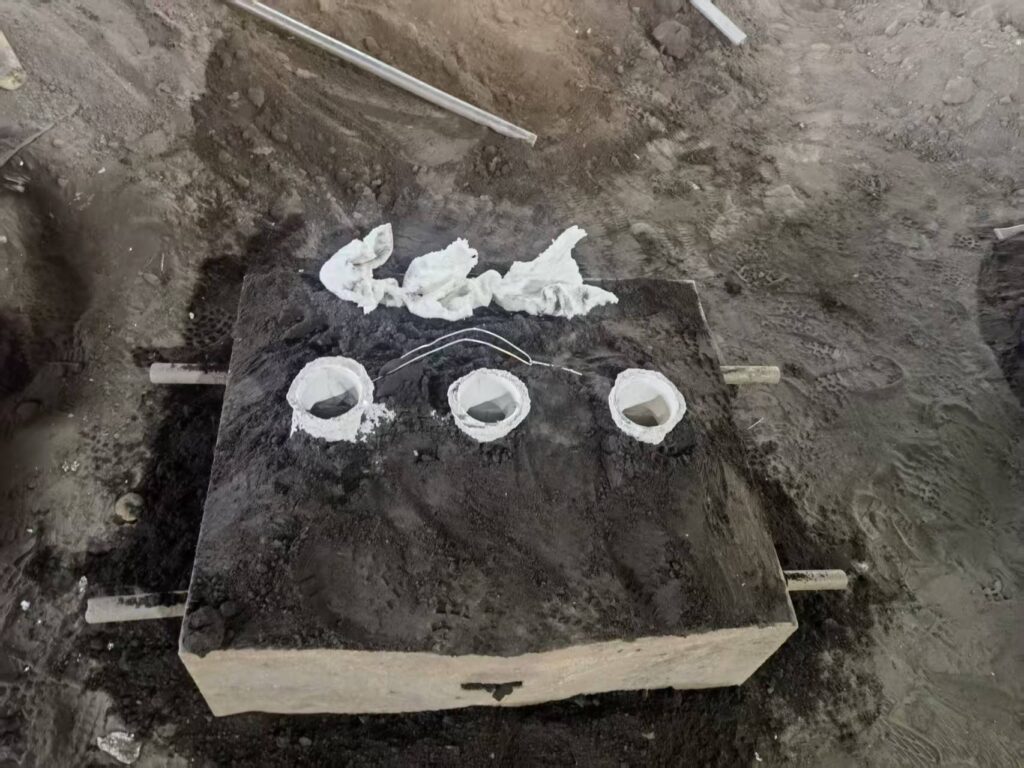
Sand casting is a versatile, traditional process that utilizes a “one-and-done” mold made of a sand-based mixture. It is the go-to choice for large, heavy components and complex geometries that require flexible design adjustments.
The step-by-step process we follow includes:
- Pattern Creation: We create a replica of the part (the pattern) to form the mold cavity.
- Mold Packing: Sand mixed with a bonding agent is packed tightly around the pattern.
- Pouring: Molten metal is fed into the mold via gravity sand casting, where the weight of the metal fills the cavity.
- Cooling and Shakeout: Once the metal solidifies, the sand mold is broken away (the shakeout process) to reveal the cast part.
Key characteristics include:
- Expendable Molds: A new sand mold is destroyed for every single pour.
- Gravity-Based: The metal fills the mold naturally without external mechanical force.
What is Die Casting?
In contrast, die casting—specifically high pressure die casting—is built for high-speed production and extreme repeatability. It utilizes permanent, reusable steel tools.
Our die casting process follows these stages:
- High-Pressure Injection: Molten metal is forced into a precision-engineered steel die at incredible speeds and pressures.
- Rapid Cooling: Because the steel die conducts heat away quickly, the metal solidifies almost instantly.
- Ejection: The reusable die opens, and the part is mechanically ejected, allowing the cycle to restart immediately for the next part.
Key characteristics include:
- Permanent Molds: High-grade steel dies can produce tens of thousands of parts before requiring maintenance.
- Pressure-Based Filling: High pressure ensures the metal reaches into the thinnest walls and finest details.
The Fundamental Difference
The core die casting vs sand casting differences come down to the mold type and the filling mechanism.
| Feature | Sand Casting | Die Casting |
|---|---|---|
| Mold Material | Sand (Expendable/Single-use) | Steel (Permanent/Reusable) |
| Filling Method | Gravity Flow | High-Pressure Injection |
| Cooling Rate | Slow (Sand is an insulator) | Rapid (Steel is a conductor) |
| Initial Tooling | Low Cost / Fast Setup | High Cost / Long Lead Time |
Understanding these basics is the foundation for making a smart sand cast vs die cast decision based on your specific volume and precision requirements.
Side-by-Side Comparison: Sand Casting vs Die Casting
Choosing the right method depends on your specific project goals. I’ve broken down the technical and financial differences in this head-to-head comparison to help you decide which process fits your production needs.
| Feature | Sand Casting | Die Casting |
|---|---|---|
| Tooling & Setup Costs | Low (Inexpensive patterns) | High (Expensive steel dies) |
| Production Volume | Low to Medium (1 – 1,000 units) | High (1,000 – 100,000+ units) |
| Part Size & Weight | Virtually unlimited; great for huge parts | Limited by machine size; usually smaller |
| Dimensional Tolerances | Looser; requires more machining | Tight tolerances; high precision |
| Surface Finish Quality | Rough, “sand-like” texture | Smooth, excellent “as-cast” finish |
| Wall Thickness | Minimum ~3-5mm | Can achieve thin wall casting (down to 1mm) |
| Cycle Time | Slow (Minutes to hours) | Very Fast (Seconds to minutes) |
| Material Compatibility | Ferrous & Non-ferrous (Iron, Steel, Al) | Mostly Non-ferrous (Al, Zinc, Mg) |
| Mechanical Properties | Good, but higher porosity in cast parts | Superior strength and grain structure |
| Environmental Factors | High sand waste; recyclable | Less waste; high energy use |
Critical Performance Differences
When looking at die casting vs sand casting, the most immediate difference is the surface quality and speed. If you need a high-performance part with minimal post-processing, our aluminum die casting services offer the best surface finish in casting and dimensional accuracy.
On the other hand, sand casting vs die casting costs favor the sand method for large-scale industrial components where casting tooling costs must be kept at a minimum for low-volume runs. We often recommend specific aluminum casting alloy grades to ensure the mechanical properties meet your industry standards, regardless of the mold type used.
Sand Casting Pros and Cons

When weighing sand casting vs die casting, I look at sand casting as the ultimate flexible workhorse. It’s my go-to recommendation for heavy-duty components and projects where keeping upfront costs low is a priority.
Why We Use Sand Casting
- Lowest Tooling Costs: Because we use sand patterns instead of expensive machined steel dies, your initial investment is a fraction of what you’d spend elsewhere.
- Extreme Size Flexibility: We aren’t limited by machine size. If you need a massive structural part weighing several tons, sand casting is likely the only way to go.
- Material Variety: This process handles a massive range of metals. It is specifically ideal for ferrous sand casting projects involving low-carbon steel or specialized iron alloys that would melt standard die casting tools.
- Rapid Prototyping: Since we can create molds quickly, it’s the best choice for low-volume runs and testing designs before committing to mass production.
The Limitations to Consider
While versatile, sand casting pros and cons show that this method requires some trade-offs in precision and speed.
- Rougher Surface Finish: The sand creates a naturally textured surface. If you need a mirror-smooth finish, expect to spend more on secondary machining or grinding.
- Lower Dimensional Precision: You won’t get the razor-thin tolerances found in pressure-based methods. We typically build in extra “meat” on the part to be machined down later.
- Porosity Risks: Because the metal is gravity-poured, there is a higher chance of small air pockets (porosity) compared to high-pressure methods.
- Slower Production Cycles: Each mold is “expendable” and must be rebuilt for every single pour, which increases labor time and slows down high-volume output.
High Pressure Die Casting Pros and Cons

When you need precision at scale, die casting is the industry standard for high-performance manufacturing. While it offers unmatched speed and consistency, it’s important to weigh the technical benefits against the initial investment required.
Die Casting Advantages
We recommend high pressure die casting for projects where “good enough” isn’t an option. The process excels in several key areas:
- Superior Surface Finish: You get an exceptional surface finish in casting that often eliminates the need for secondary polishing or grinding.
- Tight Tolerances: We achieve strict dimensional tolerances in casting that are far more precise than traditional sand-based methods.
- Thin Wall Casting: This process is the gold standard for thin wall casting, allowing for intricate, lightweight designs that remain structurally sound.
- Rapid Production: Once the tooling is finalized, the cycle time is incredibly fast, making it the most efficient choice for high-volume manufacturing runs.
[Image of high pressure die casting process]
The Disadvantages and Constraints
Despite the performance, there are specific limitations to consider before choosing die casting vs sand casting:
- High Tooling Costs: The reusable steel dies require a significant upfront investment, which usually requires high production volumes to reach a break-even point.
- Material Restrictions: The process is largely limited to non-ferrous alloys like aluminum, zinc, and magnesium. If your application demands heavy-duty ferrous materials, such as custom alloy steel flanges, sand casting is generally the required method.
- Size Constraints: Part size is restricted by the physical dimensions and clamping force of the die casting machinery.
- Lead Times: Designing and machining the permanent steel dies takes time, meaning the “start-to-part” timeline is longer than the quick setup of a sand mold.
Sand Casting vs Die Casting: Cost Analysis

Upfront Tooling vs. Per-Part Savings
When comparing sand casting vs die casting, the biggest financial hurdle is the initial setup. Sand casting uses inexpensive patterns made of wood or plastic, making it the clear winner for low-volume prototypes or massive industrial components. In contrast, die casting vs sand casting involves high-precision steel dies that represent a significant upfront investment.
Finding the Casting Break-Even Point
The shift in profitability depends almost entirely on your total order volume. While die casting has high entry costs, its automated nature and speed lower the cost per part as the quantity increases.
- Low Volume (<1,000 units): Sand casting is usually more economical due to low casting tooling costs.
- The Sweet Spot (1,000–5,000 units): This is the typical casting break-even point where both methods become price-competitive.
- High Volume (5,000+ units): The high production volume for die casting offers the lowest total cost of ownership per unit.
Factors Influencing Your Bottom Line
We look at three main drivers when calculating the total project cost:
- Material Costs: Die casting is limited to non-ferrous metals, whereas sand casting handles a wider range of alloys.
- Secondary Operations: Sand cast parts often need extensive machining to reach final specs. For example, when sourcing custom OEM valve bodies, we evaluate if the precision of die casting eliminates enough machining steps to justify the tooling price.
- Lead Times: Sand casting gets you to market faster for the first few units, while die casting dies can take weeks or months to manufacture.
| Cost Factor | Sand Casting | Die Casting |
|---|---|---|
| Tooling Cost | Low | High |
| Labor Cost | High | Low |
| Material Waste | Moderate | Very Low |
| Machining Needed | High | Minimal |
For projects requiring specialized materials, comparing these options against stainless investment casting processes ensures you aren’t overspending on a method that doesn’t fit your specific alloy or precision requirements.
Material Suitability and Industry Applications
Choosing between sand casting vs die casting usually starts with the metal you need. The “best” process is often dictated by the melting point and weight of the alloy. In my experience, if you need the strength of steel or iron, you’re looking at ferrous sand casting. If you need lightweight, high-speed production, aluminum die casting is the industry standard.
Choosing the Right Alloy
- Sand Casting: This is the heavyweight champion. It handles high-melting-point metals that would destroy a permanent steel die. We use it for gray iron, ductile iron, and various steel alloys.
- Die Casting: This process is built for non-ferrous metals. It’s the primary choice for aluminum, zinc, and magnesium due to their lower melting points and excellent fluidity under pressure.
To get the best performance out of your parts, it is vital to understand the casting alloy guide for types and properties before finalizing your design.
Industry-Specific Use Cases
| Industry | Preferred Process | Typical Components |
|---|---|---|
| Heavy Machinery | Sand Casting | Large pump housings, engine blocks, and gears |
| Automotive | Die Casting | Transmission cases, engine brackets, and valve covers |
| Aerospace | Sand Casting | Massive structural frames and turbine components |
| Consumer Electronics | Die Casting | Heat sinks, laptop frames, and connector housings |
Hybrid Approaches and Finishing
Sometimes, the casting process is just the first step. For parts that require both the bulk of a casting and the precision of a machined part, we utilize hybrid manufacturing. This involves taking a part produced through die casting vs sand casting and applying secondary CNC machining to critical surfaces. This ensures you get the cost-effectiveness of casting with the dimensional tolerances required for high-performance assemblies.
Quality and Performance in Sand Casting vs Die Casting

When evaluating the final output, the “feel” and structural reliability of a component depend entirely on the casting method. In my experience, the trade-off usually involves balancing surface aesthetics against internal structural density.
Dimensional Stability and Surface Finish
High pressure die casting is the clear winner for precision. It delivers exceptionally tight dimensional tolerances and a smooth surface finish in casting that often requires zero secondary machining. In contrast, gravity sand casting results in a rougher, granular texture. While functional, sand-cast parts typically need extra milling or grinding to meet exact specifications, which adds to the total lead time.
Internal Integrity and Porosity
Managing porosity in cast parts is critical for high-stress applications. While die casting is faster, the high-velocity injection can sometimes trap gases, leading to small internal voids. Sand casting generally allows for better gas escape and is often preferred for thick-walled, heavy-duty parts where internal density is a priority.
To guarantee these parts hold up under pressure, we implement rigorous testing and quality control measures, including X-ray and ultrasonic inspections to verify fatigue resistance and structural soundness.
Performance Breakdown
| Feature | Sand Casting | Die Casting |
|---|---|---|
| Dimensional Tolerances | Lower precision; wider margins | High precision; very tight margins |
| Surface Quality | Rough, “sand-like” texture | Smooth, ready-to-paint/plate |
| Internal Porosity | Lower risk in thick sections | Higher risk due to high-speed injection |
| Post-Processing | Usually required | Minimal to none |
The impact on end-use is significant. For decorative or high-precision electronic housings, the repeatability of die casting is unmatched. However, for the massive, high-integrity components found in the mining industry, the robust nature of a sand-cast part is often the more reliable choice.
Choosing the Right Process: Your Decision Guide
Deciding between sand casting vs die casting isn’t just about the part design; it’s about your bottom line and production timeline. To make the right call, you need to look at the total lifecycle of your project rather than just the initial price tag.
Key Questions for Your Project
- What is the annual production volume? Low volumes favor sand casting, while high volumes demand the speed of die casting.
- What are the material requirements? If you need ferrous metals, sand casting is often the only way to go.
- How much precision is required? Die casting offers tighter “as-cast” tolerances, reducing the need for secondary machining.
- What is the budget for tooling? Die casting requires a significant upfront investment in steel dies.
Quick Decision Matrix
| Feature | Sand Casting | Die Casting |
|---|---|---|
| Ideal Volume | 1 to 1,000 units | 5,000+ units |
| Tooling Cost | Minimal | Significant |
| Lead Time | Fast (Weeks) | Slow (Months for tooling) |
| Surface Quality | Granular/Rough | Smooth/Finished |
For projects requiring specific high-performance materials, our guide to processes and alloys offers a detailed breakdown of how different metals behave in these environments.
Common Mistakes to Avoid
- Over-engineering the Finish: Don’t opt for the high cost of die casting just for a smooth surface if the part is hidden inside an assembly where a sand-cast finish is acceptable.
- Ignoring the Break-even Point: Failing to calculate when the low per-part cost of die casting offsets the high casting tooling costs can lead to major budget overruns.
- Misaligning Materials: Remember that die casting is generally restricted to non-ferrous alloys. If your application demands the strength of steel, reviewing our stainless steel casting process will clarify why sand casting or investment casting is the better route.
- Underestimating Lead Times: Die casting molds take time to engineer and build. If you need parts next month, sand casting is your only viable option.
Why Partner with Vastmaterial for Sand Casting vs Die Casting
Deciding between sand casting vs die casting is a major factor in your project’s success. At Vastmaterial, we eliminate the guesswork by offering high-tier expertise in both methods. We understand that the choice between die casting vs sand casting impacts your bottom line and part performance, so we provide the technical guidance needed to make the right call.
Our Core Capabilities
Our alloy casting foundry is built to handle the rigorous standards of the American market. We don’t just pour metal; we engineer solutions that ensure your sand cast vs die cast components are reliable and cost-effective.
- Full-Cycle Support: We manage everything from initial pattern design to final surface finishing and machining.
- Precision Integration: Our team specializes in precision casting services that reduce waste and secondary operations.
- Custom Alloy Development: We work with a massive range of materials, including stainless steel, aluminum, and specialty high-strength alloys.
- Industry-Leading Quality: We utilize rigorous testing to ensure every part meets strict dimensional tolerances and performance specs.
We pride ourselves on being a reliable partner for industries that can’t afford failure. Whether you need a massive iron housing or a complex, thin-walled aluminum bracket, we have the equipment and the experience to deliver high-performance parts on time and on budget.
Pingback: How to Cast Brass Safely Methods Steps and Pro Tips - Vastmaterial