

If you’re designing parts for harsh, demanding environments, choosing the right stainless steel cast components can make or break your project.
You already know that stainless steel is prized for its corrosion resistance and durability.
But what’s the real difference between cast stainless steel and wrought stainless?
When does stainless steel investment casting actually save you money?
And which grades—304, 316, 17-4 PH, duplex—are best for your specific application?
In this guide, you’ll get a clear, no-nonsense breakdown of stainless steel casting:
how the investment casting process works, how to choose the right stainless steel grades, and where precision stainless castings deliver the most value in real-world parts like valves, pumps, impellers, and food-grade components.
If you need reliable, near-net-shape corrosion resistant casting for industries like marine, food processing, medical, or petrochemical, keep reading—this will help you make smarter material and manufacturing decisions.
What Is Cast Stainless Steel?
When people ask me about stainless steel cast parts, they usually want one thing: a material that can survive harsh conditions without failing or rusting out. That’s exactly where cast stainless steel comes in.
Definition: Iron–Chromium Alloy Designed for Casting
Cast stainless steel is an iron–chromium alloy (usually with nickel and other elements) poured as a liquid into a mold to form near-final shapes.
Typical features:
- Chromium content: usually >10.5% for corrosion resistance
- Often includes nickel, molybdenum, and niobium for added strength and durability
- Engineered specifically as stainless casting alloys, not just melted-down bar stock
In short, cast stainless steel is stainless steel formulated and optimized to be cast, not forged or rolled.
Cast Stainless vs. Wrought Stainless
Wrought stainless steel (bar, plate, sheet, forgings) and cast stainless steel share similar chemistry, but their microstructure and performance differ:
- Cast stainless steel
- Solidifies in a mold → coarser grain structure
- Can have controlled carbides and dendritic structures
- Better for complex, thick, or intricate shapes
- Slightly lower toughness than equivalent wrought grades, but very strong when properly designed
- Wrought stainless steel
- Mechanically worked (rolled, forged) → finer, more uniform grain
- Typically higher toughness and fatigue resistance
- Limited by bar/plate/forging shapes, more machining required for complex forms
For many precision stainless castings, the trade-off is worth it: you gain design freedom and near-net shape while still hitting demanding mechanical and corrosion targets.
Core Properties of Cast Stainless Steel
When I specify cast stainless steel for industrial components, I’m usually targeting three core properties:
- Strength
- High tensile strength and good yield strength across many grades
- Heat-treatable grades (like martensitic or precipitation hardening stainless cast alloys) can reach very high strength levels
- Suitable for load-bearing parts like brackets, impellers, valves, and pump bodies
- Corrosion Resistance
- Chromium-rich passive film gives excellent corrosion resistant casting behavior
- Certain cast grades match or exceed wrought 304 stainless steel or 316 stainless steel in many environments
- Ideal for marine stainless castings, food grade stainless casting, chemical processing, and hygienic stainless steel castings
- Heat Resistance
- Many stainless casting alloys hold their strength and resist oxidation at elevated temperatures
- Widely used where both heat and corrosion are present: exhaust components, furnace parts, hot pump housings
If you need custom stainless steel castings that balance mechanical performance, corrosion resistance, and heat resistance, cast stainless steel is one of the most flexible options on the market.
Stainless Steel Casting Process (Lost Wax)
Stainless steel casting (investment casting / lost wax) is my go-to when I need precise, repeatable stainless steel cast parts with clean surfaces and tight tolerances.
Overview: Stainless Steel Investment Casting
I use stainless steel investment casting when I need:
- Tight tolerances
- Smooth surface finish
- Complex shapes that are hard or too expensive to machine
If you want a quick deep dive into the full stainless steel casting process, I’ve laid it out step-by-step in our stainless steel casting process guide.
Wax Pattern & Gating Design
- Wax injection into a metal mold to create a precise wax pattern of the part
- Gating system design (sprues, runners, vents) to:
- Control metal flow
- Avoid shrink defects
- Improve yield and consistency
Goal: Get a wax pattern that matches the final stainless casting as closely as possible.
Building the Ceramic Shell
- Wax patterns are assembled into a tree
- Repeated dip + stucco in ceramic slurry and sand
- Shell dries between layers until it reaches proper thickness
Result: A strong ceramic mold that can handle molten stainless steel.
Dewaxing & Preheating the Mold
- Shell is autoclaved or flash-heated to melt and drain the wax (lost wax step)
- Empty ceramic shell is preheated to:
- Reduce thermal shock
- Improve metal flow
- Minimize porosity and cold shuts
Melting & Pouring Molten Stainless Steel
- Stainless steel (304, 316, duplex, 17-4 PH, etc.) is induction melted in controlled furnaces
- Molten metal is poured into the hot ceramic shell
- Proper chemistry and temperature control ensure:
- Stable microstructure
- Correct mechanical and corrosion performance
Cooling, Shell Removal & Cut-Off
- Casting tree cools and solidifies
- Ceramic shell is removed by knockout / blasting
- Individual stainless steel cast parts are cut off from the tree
Finishing: Grinding, Machining, Cleaning
Typical finishing on stainless casting includes:
- Gate and riser grinding
- Precision machining of critical features and threads
- Shot blasting, sanding, or polishing
- Passivation to restore chromium-rich protective layer
For more details on grades, benefits, and cost structure, you can check our breakdown of stainless steel investment casting and its advantages.
Investment Casting vs. Sand Casting vs. Die Casting
| Process | Best For | Surface / Tolerance | Typical Volumes |
|---|---|---|---|
| Stainless steel investment casting | Complex, high-precision stainless parts | Very good / tight | Low–medium |
| Sand casting stainless steel | Large, simple shapes | Rougher / loose | Low–medium |
| Die casting (non-ferrous mainly) | Very high volume, usually non-stainless alloys | Excellent / very tight | High |
When I Choose Investment Casting for Stainless Parts
I pick stainless steel investment casting when:
- Annual volume is low to medium, but quality must be high
- Parts need near-net-shape to cut machining time and cost
- The design has internal passages, thin walls, or complex geometry
- I need corrosion-resistant casting for marine, food, or industrial use
If you’re in the U.S. and want predictable quality on custom stainless steel castings, investment casting is usually the sweet spot between flexibility, performance, and total cost.
Stainless Steel Cast Grades
When you’re choosing a stainless steel cast alloy, you’re really choosing how your part will behave in the real world—corrosion, strength, heat resistance, and cost all shift with the grade.
Austenitic Stainless Steel Cast Grades (304, 316, etc.)
Austenitic cast stainless (like 304 and 316) is the go‑to for most corrosion resistant casting jobs.
- 304 stainless steel casting
- Great general‑purpose corrosion resistance
- Good for indoor industrial parts, brackets, housings, and hardware
- Cost-effective for high volumes of precision stainless castings
- 316 stainless steel cast parts
- Higher molybdenum for better chloride (salt) resistance
- Ideal for marine stainless castings, chemical equipment, and food grade stainless casting
- The default choice when washdowns, salt, or chemicals are involved
If you’re comparing stainless against other alloys, it’s useful to understand the basics of alloy steel vs stainless steel before locking in a grade.
Martensitic Stainless Casting Alloys (410, 420, etc.)
Martensitic cast stainless (410, 420) is what I reach for when I need hardness and wear resistance more than max corrosion resistance.
- 410 stainless casting – good strength, moderate corrosion resistance, machinable
- 420 stainless casting – higher hardness, great for wear parts and cutting edges
Use martensitic for:
- Pump shafts, wear rings, seats
- Tools, blades, and high‑wear industrial stainless steel components
Precipitation Hardening Stainless Casting (17-4 PH)
For high strength + good corrosion resistance, 17‑4 PH stainless casting is a workhorse.
- Can be heat treated to very high strength levels
- Stable dimensions after heat treatment
- Used in aerospace, defense, and precision stainless castings where performance matters
Best when you need:
- High load capacity
- Tight tolerances and consistent properties
- Long‑term mechanical stability
Duplex and Ferritic Stainless Steel Cast Options
When your environment is brutal—chlorides, stress, and fatigue—duplex stainless casting steps in.
- Duplex stainless casting
- Mix of austenitic + ferritic structure
- High strength and outstanding stress corrosion cracking resistance
- Great for offshore, subsea, and aggressive chemical service
- Ferritic stainless cast
- Lower nickel, helps reduce cost
- Good for moderate corrosion and heat applications
- Often used where strength demands are lower but oxidation resistance matters
How to Select a Stainless Steel Cast Grade
I usually narrow stainless casting grades by asking:
- Environment
- Fresh water, salt water, chemicals, high temperature?
- For marine and chloride: 316 or duplex
- For food and beverage: 304/316 food grade stainless casting
- For high wear: 410/420 or 17‑4 PH
- Mechanical demands
- High loads and fatigue: 17‑4 PH or duplex
- General structural: 304/316
- High hardness: martensitic grades
- Regulatory / hygiene
- Food, pharma, medical: non‑reactive and cleanable surfaces, 304 or 316 polished and passivated
Balancing Cost, Strength, and Corrosion Resistance
To keep stainless steel cast parts cost‑effective, I balance:
- Cost
- Ferritic and some martensitic grades can be cheaper (lower nickel)
- Duplex and high‑nickel alloys cost more but last longer in harsh environments
- Strength
- 17‑4 PH and duplex give the best strength‑to‑weight
- 304/316 are fine for general‑purpose structural parts
- Corrosion resistance
- 304: good general resistance
- 316: upgraded corrosion and marine performance
- Duplex: heavy‑duty chloride and stress corrosion resistance
If you’re unsure, start with where the part will live (environment and loads), then work backward to the stainless casting grade that gives you just enough performance without over‑spec’ing the alloy.
Benefits of Stainless Steel Cast Components
Why Stainless Steel Cast Parts Stand Out
Stainless steel cast components give you performance, consistency, and long-term savings that most other alloys just can’t match.
Corrosion & Wear Resistance
Cast stainless steel is built for harsh environments:
- High chromium and nickel content deliver strong corrosion resistance in water, chemicals, and outdoor exposure.
- Great for saltwater, washdown, and cleaning chemicals in food plants or marine hardware.
- Better wear and pitting resistance than many carbon steel or cast iron parts.
| Environment | Recommended Stainless Casting Type |
|---|---|
| Coastal / Marine | Marine-grade cast stainless (e.g. 316) |
| Food & Beverage | Food-grade stainless casting (304/316) |
| Chemical / Industrial | Duplex or high-alloy stainless casting |
Design Flexibility for Complex Geometries
With stainless steel casting (especially investment casting), I can build shapes you just can’t machine economically:
- Thin walls, undercuts, logos, internal passages
- Integrated features (bosses, lugs, hooks) that cut out secondary welding or assembly
- Perfect for custom stainless steel castings where form and function both matter
Near-Net-Shape Casting = Less Machining
Stainless steel investment casting gives near-net-shape parts:
- Tighter tolerances and smoother surfaces than sand casting
- Minimal machining on critical surfaces only
- Lower tool wear vs machining from solid stainless bar or plate
| Process | Surface Finish | Machining Need | Typical Use |
|---|---|---|---|
| Investment stainless casting | Fine | Low | Precision stainless castings |
| Sand casting stainless steel | Rougher | High | Large, less precise parts |
Cost Benefits for Low & Medium Volume
For U.S. buyers running small to mid-size production:
- Tooling for stainless casting is much cheaper than die casting molds.
- Per-part cost stays competitive from tens to a few thousand pieces per year.
- Ideal when you need real stainless performance but don’t want CNC-machined-part pricing.
Mechanical Performance & Durability
Cast stainless steel offers a strong balance of:
- High strength and toughness (especially 17-4 PH and duplex stainless casting)
- Good fatigue resistance for rotating parts like stainless steel impeller casting
- Stable performance at higher temperatures vs many aluminum casting alloys
If you’re weighing stainless vs other steels, this comparison of cast iron vs steel is a useful reference for durability and use cases: cast iron vs steel comparison guide.
Hygienic & Easy-to-Clean Surfaces
For food, beverage, pharma, and clean industrial lines:
- Stainless steel cast surfaces can be polished and passivated to a smooth, non-porous finish.
- Resistant to staining, rust, and bacteria trapping.
- Ideal for hygienic stainless steel castings like valves, fittings, pump housings, and process hardware.
Sustainability & Recyclability
Stainless casting is also a strong play if you care about sustainability:
- Stainless steel is 100% recyclable with no loss of performance.
- High scrap recovery rate in foundries, keeping waste low.
- Long service life means fewer replacements, less material used over time.
If you need corrosion-resistant, durable, and cleanable parts for U.S. industrial, food, marine, or medical use, stainless steel cast components check every box: performance, cost control, and long-term reliability.
Applications of Stainless Steel Cast Parts

Stainless steel cast parts show up everywhere in real-world American industry because they’re tough, clean, and cost-effective for complex shapes. When we design and produce custom stainless steel castings, we focus on performance in harsh environments, tight tolerances, and long-term reliability.
Marine and Offshore Stainless Casting
For marine and offshore equipment, cast stainless steel is a go-to for saltwater and splash zones:
- Propellers, impellers, and pump housings
- Deck hardware, mooring components, cable clamps
- Valve bodies and pipe fittings in seawater systems
Using corrosion resistant casting alloys like duplex stainless casting cuts downtime and maintenance in coastal and offshore operations.
Stainless Steel Cast Valves, Pumps, and Flow Parts
We use stainless steel casting a lot for fluid handling where pressure, temperature, and corrosion all matter:
- Valve bodies, bonnets, and seats
- Pump housings, casings, and impellers
- Flow meters, manifolds, and sanitary fittings
With precision stainless castings, we hit tight tolerances and complex internal passages that are hard and expensive to machine from bar or plate. If you’re comparing material options, this broader casting alloy guide with properties and applications is a useful reference during selection.
Food and Beverage Stainless Cast Equipment
For food-grade applications in the U.S., food grade stainless casting is all about hygiene and cleanability:
- 304 and 316 stainless steel parts for sanitary valves and pumps
- Tri-clamp fittings, spray nozzles, and connectors
- Conveyor components, brackets, and housings in washdown areas
Smooth, hygienic stainless steel castings help reduce bacteria traps and make CIP (clean-in-place) easier.
Medical and Pharmaceutical Stainless Casting
In medical and pharma, we deliver cast stainless steel components that meet strict cleanliness and traceability requirements:
- Pump parts and dosing components
- Sterilizer and autoclave hardware
- Brackets, frames, and housings for medical equipment
Grades like 316L and 17-4 PH stainless casting balance corrosion resistance with strength and stability during sterilization.
Aerospace and Defense Stainless Steel Cast Components
For aerospace and defense, stainless casting solves the mix of high strength, precision, and harsh environments:
- Structural brackets and supports
- Engine and exhaust system hardware
- Actuator housings and complex linkage parts
Near net shape stainless casting cuts down on expensive machining in high-alloy, high-performance components.
Industrial Machinery and Hardware
Across U.S. industrial machinery, industrial stainless steel components made by investment casting keep systems running longer:
- Stainless steel impeller casting, turbine wheels, and rotors
- Gearbox housings, bearing housings, and covers
- Structural brackets, clamps, levers, and custom hardware
Design freedom in stainless steel investment casting lets us combine multiple fabricated parts into a single, stronger casting.
Real-World Stainless Steel Cast Use Cases
Some typical custom stainless steel castings we supply include:
- 316 stainless marine brackets that replace welded fabrications
- 17-4 PH precision hubs and couplings for motion control systems
- Duplex stainless castings for chemical and offshore pipe systems
If you need a mix of corrosion resistance, strength, and complex geometry in low to medium volumes, stainless steel cast parts are usually the most practical and cost-effective solution.
Quality Control in Stainless Steel Casting
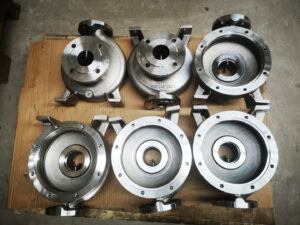
Dimensional Inspection & Tolerance Control
For every stainless steel cast part, I lock in dimensions before anything else. That means:
- 2D/3D drawing review before production
- In‑process checks on wax patterns and first-off castings
- Final inspection using calipers, micrometers, CMM, and gauges
For precision stainless castings, I normally hold tight tolerances comparable to high-end investment cast components—enough to give you near-net shape and cut your machining time.
Material Testing: Chemistry, Hardness, Mechanical Properties
To make sure each cast stainless steel grade (304, 316, 17-4 PH, etc.) is exactly what you ordered, I rely on:
- Spectrochemical analysis for alloy composition
- Hardness testing (HRC, HB, HRB) by spec
- Tensile testing for yield strength, tensile strength, and elongation
Every heat is traceable, so you know the stainless steel casting you get matches the print and the certs.
NDT for Stainless Steel Cast Parts
For critical stainless casting applications—valves, pumps, marine, aerospace—I use non-destructive testing to catch hidden defects:
- X-ray / radiographic testing for internal shrinkage and porosity
- Dye penetrant testing (PT) for surface cracks
- Ultrasonic testing (UT) where section thickness allows
- Magnetic particle testing (MT) for magnetic alloys
You get cast stainless steel parts that don’t just look good—they’re sound inside.
Heat Treatment for Microstructure & Performance
The right heat treatment can make or break stainless steel cast performance:
- Solution annealing for austenitic and duplex stainless casting
- Quench and temper for martensitic stainless cast grades (410, 420)
- Aging cycles for 17-4 PH stainless casting and other precipitation hardening alloys
I tune cycles to your needs—corrosion resistance, toughness, or hardness—depending on where the part is going to work.
Surface Finishing: Polishing, Passivation, Coatings
For stainless steel cast parts that need clean, hygienic, or cosmetic surfaces, I offer:
- Shot blasting or sand blasting for uniform matte finish
- Mechanical polishing up to mirror finish for food grade and sanitary stainless castings
- Chemical passivation to enhance corrosion resistance
- Optional coatings if your environment is extreme
This is critical for hygienic stainless steel castings used in food, beverage, and pharmaceutical systems.
Documentation & Certification
To support U.S. buyers who need traceability and compliance, I provide:
- Material test reports (MTRs / mill certs)
- Heat treatment and NDT reports
- Dimensional inspection reports (including CMM data when required)
- Certification to standards (per drawing / PO requirements)
You get stainless steel casting documentation that’s clean, complete, and ready for your QA and customer audits.
How to Choose a Stainless Steel Casting Supplier
Picking the right stainless steel casting supplier in the U.S. can make or break your project. Here’s how I’d evaluate a partner for stainless steel cast parts.
1. Check Foundry Experience & Capabilities
You want a stainless steel foundry that lives and breathes stainless casting, not one that treats it as a side job.
Key checks:
- Years in stainless steel casting (investment casting, sand casting, etc.)
- Experience with your industry:
- Valves/pumps, food, marine, medical, aerospace, industrial hardware
- Ability to handle your part type: thin walls, complex cores, tight tolerances
- In-house vs outsourced processes (wax, shells, heat treat, machining)
For a solid overview of capabilities across alloys and processes, I’d look at a technical resource like this guide to alloy casting processes and uses.
2. Alloy Range & Stainless Cast Grades
Make sure the supplier can pour the cast stainless steel grades you actually need.
Ask what they can run:
- Austenitic: 304 stainless steel casting, 316 stainless steel parts (food, chemical, marine)
- Martensitic: 410, 420 (wear and hardness)
- Precipitation hardening: 17-4 PH stainless casting (high strength, aerospace, defense)
- Duplex stainless casting: for chloride-rich, aggressive environments
- Heat-resistant stainless casting options for high-temp service
If you need a wider alloy mix (stainless + other alloys), a multi-alloy foundry like an alloy casting foundry specializing in precision stainless castings is a plus.
3. Tolerances, Surface Finish & Quality
You should know upfront what you’re getting in terms of precision stainless castings.
Confirm:
- Standard dimensional tolerances (and what’s realistic for your part size)
- Typical surface roughness (Ra) for investment casting vs sand casting stainless steel
- Available NDT: X-ray, dye penetrant, ultrasonic, pressure testing
- Certifications: ISO, material traceability, test reports (MTRs), PPAP if you’re automotive
4. Lead Time, Volumes & Pricing
Match the supplier’s setup to your business reality in the U.S. market.
Key points:
- Typical lead time for:
- New tooling + first articles
- Repeat orders
- Volume sweet spot:
- Prototypes / small runs
- Medium production
- Pricing structure:
- Tooling cost (investment casting wax tools)
- Piece price at different quantities
- Machined vs as-cast pricing
Use this to decide investment casting vs sand casting, depending on quantity and required finish.
5. Engineering Support & DFM for Stainless Casting
A good stainless supplier does more than pour metal — they help you design smarter.
Look for:
- Engineering review of your 3D models before quoting
- Feedback on:
- Wall thickness
- Drafts and radii
- Gating and parting line locations
- Areas prone to shrink or porosity
- Support with converting weldments/machined parts to near net shape stainless casting
This saves you machining time and cuts total cost per part.
6. Questions to Ask Before You Order
Use these to qualify a stainless steel casting supplier quickly:
| Question | Why It Matters |
|---|---|
| What stainless casting grades can you pour? | Confirms fit for your environment (corrosion, strength, temp). |
| What process do you suggest (investment vs sand casting)? | Ensures realistic cost/finish based on your design. |
| What tolerances and surface finish can you guarantee? | Aligns expectations for machining and fit-up. |
| What NDT and material testing do you offer? | Critical for safety-critical or pressure-containing parts. |
| What is the typical lead time for tools and production? | Helps you plan launches and inventory. |
| Can you support DFM and design changes? | Reduces risk of casting defects and cost overruns. |
Lock these details into your quote and PO so your stainless steel cast parts arrive the way you expect, every time.