

What Is Stainless Steel Sand Casting?
Stainless steel sand casting is the industrial workhorse for manufacturing large, heavy-duty components where structural integrity and cost-efficiency are paramount. At Vastmaterial, we define this process as the most viable solution for producing massive parts with complex geometries that would be cost-prohibitive using other methods. It involves pouring molten stainless steel into a disposable sand mold to create near-net shapes, balancing material versatility with scalable production.
The Basic Workflow: Pattern to Pour
Our process follows a rigorous sequence to ensure quality and repeatability:
- Pattern Creation: We machine patterns from wood, metal, or plastic to replicate the exterior geometry of the final part.
- Mold Preparation: Sand is packed around the pattern to form the mold cavity. Cores are inserted to create internal passages or voids.
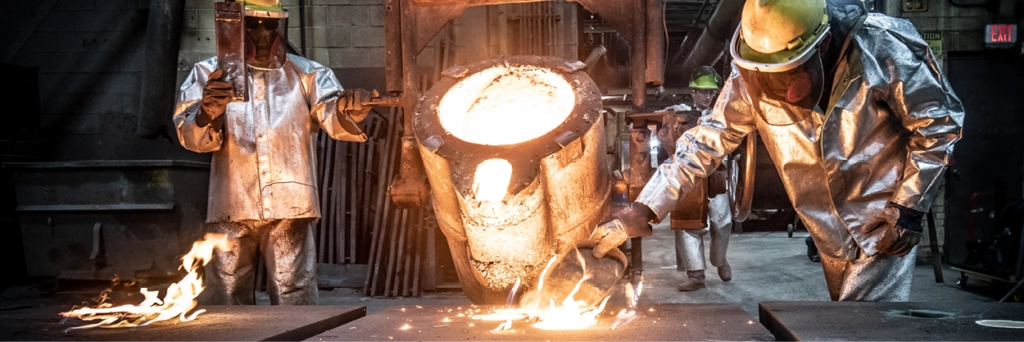
- Pouring: Molten stainless alloy is poured into the gating system, filling the cavity.
- Solidification: The metal cools and hardens before the sand is broken away (shakeout) to reveal the rough casting.
Controlled Cooling and High-Temperature Handling
Stainless steel alloys require precise thermal management during the casting process. Because these materials have high melting points and are susceptible to oxidation or shrinkage defects, we strictly control the pouring temperature and cooling rates. Proper handling ensures the metal solidifies uniformly, preventing internal stresses and maintaining the high tensile strength and corrosion resistance required for applications in the marine and oil & gas sectors.
Green Sand vs. No-Bake (Air-Set) Molding
We utilize distinct molding techniques based on the specific requirements of the stainless steel grade and part size:
- Green Sand Casting Stainless: This method uses a mixture of sand, clay, and water. It is highly economical and ideal for high-volume production runs where moderate surface finishes are acceptable.
- No-Bake (Air-Set) Sand Casting: For larger, heavier components requiring tighter tolerances and a better surface finish, we use chemical binders to cure the sand. This rigid mold structure offers superior dimensional stability, making it the preferred choice for massive industrial parts.
Key Stainless Steel Grades for Sand Casting
At Vastmaterial, we approach material selection as a critical engineering phase. We don’t just pour metal; we optimize alloy compositions to meet specific mechanical and environmental demands. While we handle a wide spectrum of materials, our expertise centers on four primary categories of stainless steel, each suited for distinct industrial challenges.
Austenitic Grades (300 Series)
This is the most common category for corrosion resistant sand castings. We frequently cast 304 (CF8) and 316 (CF8M) grades. These alloys offer excellent ductility and toughness, making them the standard for fluid handling components like valve bodies and pump housings. For environments requiring superior resistance to pitting and acids, we utilize the 300 series stainless steel grades, specifically 316L, which maintains stability even in harsh marine conditions.
Duplex and Super Duplex Alloys
When standard austenitic grades fall short on strength, we deploy Duplex stainless steel casting (such as 2205). These alloys combine the best attributes of ferritic and austenitic steels, offering roughly twice the yield strength of 304 stainless. They are our go-to solution for high-stress applications in the oil and gas sector where resistance to stress corrosion cracking is non-negotiable.
Martensitic and Precipitation-Hardening Grades
For components requiring high hardness and wear resistance, such as turbine blades or wear rings, we utilize Martensitic grades like 410 and 440C. These alloys can be heat-treated to achieve exceptional hardness levels. You can learn more about the specific properties of these magnetic alloys in our guide to 400 series stainless steel. Additionally, for parts needing a balance of high strength and corrosion resistance, we cast Precipitation-Hardening steels like 17-4PH, often applying T6 heat treatments to maximize performance.
Alloy Composition and Property Comparison
| Grade Category | Common Alloys | Key Characteristic | Typical Application |
|---|---|---|---|
| Austenitic | 304, 316, 316L | High corrosion resistance, non-magnetic | Food processing, Marine hardware |
| Martensitic | 410, 420, 440C | High hardness, wear resistance | Turbine parts, Cutlery, Valves |
| Duplex | 2205, 2507 | High strength, stress corrosion resistance | Chemical tanks, Oil & Gas piping |
| Precipitation Hardening | 17-4PH | High tensile strength, toughness | Aerospace components, Shafts |
The Sand Casting Process Step-by-Step
At Vastmaterial, we view the stainless steel sand casting process as a precise engineering cycle rather than just a foundry operation. From the initial design to the final heat-treated component, every step is monitored to handle the high melting points and shrinkage rates characteristic of stainless alloys.
Pattern Design and Mold Preparation
Everything starts with the pattern. We design tooling that accounts for the specific shrinkage rates of stainless steel (which is higher than cast iron). While we use various methods, no-bake sand casting (air-set) is our preferred choice for larger stainless components. This method uses chemical binders to cure the sand, creating a rigid mold that offers better dimensional stability and surface finish compared to traditional green sand.
- Pattern Creation: Wood, metal, or resin patterns are machined to near-net shape.
- Core Making: For parts with internal cavities (like pump housings), we insert resin-bonded sand cores into the mold.
- Mold Assembly: The cope (top) and drag (bottom) are securely clamped to withstand the pressure of molten steel.
Melting and Pouring
We utilize induction furnaces to achieve precise temperature control and chemical composition. This allows us to fine-tune the alloy matrix—adding Chromium, Nickel, or Molybdenum—to meet specific corrosion or strength requirements outlined in our casting alloy guide. Once the melt reaches the target temperature, we pour the molten stainless steel into the mold cavity. Controlled solidification is critical here; we manage cooling rates to prevent segregation and ensure a uniform grain structure.
Finishing and Quality Assurance
Once the metal solidifies, the casting goes through shakeout to remove the sand. Our facility utilizes automated sand reclamation systems to recycle molding sand, keeping our operations sustainable. The workflow then moves to finishing:
- Gate Removal: Cutting off the gating system, risers, and runners.
- Grinding: Smoothing out parting lines and rough edges.
- Heat Treatment: We apply processes like T6 heat treatment (solution annealing and aging) to optimize hardness, specifically for grades like 17-4PH.
- NDT Inspection: To ensure structural integrity, we perform Non-Destructive Testing, including Magnetic Particle Inspection (MPI) and Radiographic Inspection (RT), to detect any internal shrinkage or gas porosity.
By integrating these steps with our CNC machining capabilities, we deliver a complete stainless steel casting process that transforms raw metal into ready-to-install components.
Advantages of Stainless Steel Sand Casting
When we look at manufacturing heavy-duty industrial components, the stainless steel sand casting process stands out as the workhorse of the industry. It offers a unique balance of economic efficiency and engineering versatility, particularly when dealing with massive parts that other methods simply cannot handle.
Here is why we rely on sand casting for critical applications:
- Cost-Effectiveness for Low-to-Medium Volumes: unlike die casting, which requires expensive metal molds, sand casting uses sand molds that are significantly cheaper to produce. This makes it the ideal choice for prototyping and short-run production where keeping tooling costs down is a priority.
- Capability for Large and Heavy Parts: We specialize in producing large stainless steel castings that can weigh thousands of pounds. While investment casting is limited by the weight of the wax tree, sand casting allows us to pour massive components like turbine housings and pump bodies without size constraints.
- Design Flexibility: The use of sand cores enables us to create complex internal geometries and undercuts that would be impossible to machine from a solid block. This allows engineers to design intricate internal cooling passages or fluid channels directly into the casting.
- Material Integrity: Whether we are pouring corrosion resistant sand castings using 316L or high-strength Duplex 2205, the process retains the full mechanical properties of the alloy. Our integrated production management ensures that the chemical composition meets strict standards for toughness and thermal stability.
- Scalability with Modern Techniques: By utilizing advanced no-bake sand casting methods and automated sand reclamation systems, we can scale production efficiently while minimizing waste. This modern approach ensures consistent quality and faster turnaround times for our clients.
For projects demanding high durability and substantial size, our stainless steel casting solutions provide the reliability needed for sectors like marine engineering and oil & gas.
Limitations and When to Choose Alternatives

While stainless steel sand casting is the workhorse for massive industrial components, it is not a one-size-fits-all solution. Understanding the physical limitations of the process helps in selecting the right manufacturing method for your specific engineering hurdles. We prioritize transparency about what sand casting can and cannot do to ensure your project succeeds.
Addressing Surface Finish and Tolerances
The nature of sand molding results in a rougher surface texture compared to other methods. You can typically expect a surface finish in the range of 250–500 RMS. This texture is inherent to the granular structure of the sand used in the mold.
Regarding stainless steel casting tolerances, sand casting generally holds to CT 10–13. This is suitable for near-net shapes where minor dimensional variations are acceptable or where surface aesthetics are secondary to structural integrity. For critical mating surfaces or precise fits, we integrate post-casting operations. By applying precision CNC machining strategies, we bring these rough castings down to exact specifications.
Sand Casting vs. Investment Casting
The most common decision engineers face is choosing between sand casting and investment (lost wax) casting. Here is a direct comparison based on our foundry data:
| Feature | Sand Casting | Investment Casting |
|---|---|---|
| Surface Finish | Rough (250–500 RMS) | Smooth (60–125 RMS) |
| Part Size | Large, heavy-duty parts | Small to medium intricate parts |
| Tooling Cost | Low (Cost-effective) | High (Complex molds) |
| Wall Thickness | Thicker walls required | Thin walls possible |
| Precision | Moderate (CT 10–13) | High (CT 4–6) |
If your project demands intricate details and a superior finish right out of the mold, our precision investment casting foundry might be the better alternative.
When to Choose Sand Casting
Despite the rougher finish, sand casting remains the superior choice for specific scenarios. You should opt for this method if:
- Size Matters: You need large, heavy components like pump housings or marine hardware that exceed the weight limits of investment casting.
- Cost Efficiency: You are looking for lower tooling costs and material versatility for low-to-medium volume runs.
- Post-Processing: The part requires extensive machining anyway, making the initial surface finish irrelevant.
- Structural Integrity: You need the high tensile strength and toughness provided by alloys like Duplex 2205 or 17-4PH in massive structural forms.
Applications Across Critical Industries
We engineer our stainless steel sand casting solutions to meet the rigorous demands of sectors where durability and material integrity are non-negotiable. By leveraging specific alloy grades, we deliver components that withstand extreme pressures, corrosive environments, and high thermal loads.
- Oil & Gas: This sector relies heavily on sand casting for large-scale fluid handling components. We manufacture heavy-duty custom OEM valve bodies and pump housings capable of resisting sulfide stress cracking and high-pressure environments.
- Marine Engineering: Saltwater corrosion is a constant threat. We utilize marine-grade 316 and Duplex stainless steel to cast robust propeller components, deck hardware, and fittings that offer superior longevity in offshore applications.
- Power Generation: Efficiency in power plants often depends on thermal stability. Our foundry produces heat-resistant turbine casings and structural parts specifically designed for gas turbine components and nuclear power systems.
- Aerospace & Defense: Reliability is paramount here. We provide structural brackets and turbine supports using high-strength alloys like 17-4PH, ensuring parts maintain integrity under substantial mechanical stress.
- Food & Pharmaceutical: Hygiene standards require non-reactive surfaces. We cast sanitary equipment components using 304 and 316 stainless steel, ensuring the parts are easy to clean and resistant to frequent chemical sterilization.
Vastmaterial’s Stainless Steel Sand Casting Capabilities

At Vastmaterial, we operate as a full-service custom stainless steel foundry, bridging the gap between raw casting and finished, ready-to-install components. Our integrated approach combines advanced material engineering with precision manufacturing, ensuring that even the most complex stainless steel sand casting projects meet rigorous industrial standards. We don’t just supply parts; we solve engineering hurdles by managing the entire lifecycle from alloy formulation to final surface treatment.
Our facility is equipped to handle the heavy lifting required for massive industrial components. By utilizing automated sand reclamation systems and real-time production monitoring, we maintain consistency across large production runs while minimizing environmental impact. Whether you need corrosion-resistant marine hardware or high-strength mining equipment, our factory capabilities and quality processes ensure reliable performance in the harshest environments.
Why partner with us?
- Integrated Solutions: We combine sand casting with in-house CNC machining to achieve tight tolerances that raw casting alone cannot provide.
- Material Expertise: We specialize in precision sand casting alloys, including 300 series, 400 series, Duplex 2205, and precipitation-hardening steels like 17-4PH.
- High Capacity: Our infrastructure supports significant stainless steel pour weight capacity, making us the ideal choice for large, heavy-duty parts.
- Speed & Efficiency: Our data-driven management minimizes downtime, allowing for faster lead times without compromising on quality.
Quality Standards and Testing
At Vastmaterial, we understand that reliability in stainless steel sand casting is non-negotiable, especially for components used in high-stakes industries like aerospace and marine engineering. We don’t just pour metal; we implement a rigorous quality control system that provides full traceability from the raw ingot to the finished part.
Chemical Composition Verification
We ensure the alloy mix is exact before the pour begins. Using optical emission spectrometry, we strictly monitor the percentage of critical alloying elements such as Chromium, Nickel, Molybdenum, and Vanadium. This allows us to surpass standard physical and chemical limits, ensuring that grades like 316 stainless steel or 17-4PH meet the precise corrosion resistance and hardness specifications required for your environment.
Non-Destructive Testing (NDT)
To guarantee internal integrity without damaging the component, we employ advanced NDT methods. Our comprehensive testing and quality assurance protocols are designed to detect even the smallest anomalies:
- Radiographic Testing (RT): We use X-ray imaging to identify internal shrinkage, gas porosity, or inclusions that aren’t visible to the naked eye.
- Ultrasonic Testing (UT): High-frequency sound waves help us locate deep subsurface flaws in thick-walled castings.
- Magnetic Particle Inspection (MT): This is essential for detecting surface cracks in ferromagnetic materials, such as the 400 series stainless steel.
- Dye Penetrant Inspection (PT): We use this for non-magnetic austenitic grades to reveal surface discontinuities.
Mechanical and Dimensional Validation
Quality goes beyond just chemistry. We conduct mechanical testing to verify tensile strength, yield strength, and elongation, ensuring that heat treatments (like T6) have achieved the desired hardness. Finally, we perform detailed dimensional inspections to confirm that the casting meets specified tolerances and that the surface finish falls within the standard 250–500 RMS range, ensuring the part is ready for final CNC machining or assembly.
Frequently Asked Questions (FAQs)
What is the minimum wall thickness for stainless steel sand casting?
For most stainless steel sand casting projects, we recommend a minimum wall thickness of 0.12 to 0.20 inches (3mm to 5mm). While we can push limits depending on the geometry, going thinner increases the risk of misruns or incomplete fills due to the rapid cooling rate of stainless steel in sand molds. For extremely thin or intricate walls, investment casting is usually the safer engineering choice.
How does sand casting cost compare to investment casting?
Sand casting is generally more cost-effective, particularly for large, heavy-duty components and lower production volumes. The tooling costs for sand patterns are significantly lower than the metal dies required for other methods. However, if your part requires zero post-processing and mirror-like finishes, the initial savings might be offset by machining costs. If you are weighing precision against cost, comparing this to our stainless investment casting process can help determine the right fit for your budget.
Can you sand cast 316L stainless steel?
Absolutely. 316L stainless steel is one of our most frequently cast alloys. It is the standard for marine hardware, chemical processing equipment, and food-grade machinery due to its superior corrosion resistance. We also routinely cast 304, Duplex 2205, and 17-4PH depending on the specific mechanical requirements of your application.
What surface finish can be expected from sand casting?
You should expect a surface finish in the range of 250–500 RMS. This texture is rougher than investment casting (which typically hits 60–125 RMS). This finish is standard for industrial parts like pump housings or valve bodies where the exterior aesthetics are secondary to structural integrity. For critical mating surfaces, we utilize our in-house CNC machining capabilities to achieve precise tolerances and smooth finishes where it counts.