

What Defines a Tier 1 Casting Supplier?
Finding a partner in the metallurgical industry is about more than just comparing price sheets; it’s about securing your supply chain against failure. As a dedicated casting supplier, we know that the difference between a profitable pour and a costly shutdown often comes down to the integrity of your consumables. Here is what separates a generic vendor from a true industry partner.
Material Science Expertise
The foundation of any high-performance foundry lies in raw material selection. You cannot produce premium steel or iron without understanding the chemical interactions at play.
- Raw Material Purity: Whether dealing with alumina-carbon refractories or high-purity carbon raisers, the baseline chemistry must be flawless.
- Advanced Compositions: We understand the critical roles of materials like Zirconia and Graphite in resisting erosion.
- Impurity Control: Managing sulfur and ash content is non-negotiable for maintaining steel cleanliness.
Understanding RUL and Thermal Shock
In high-temperature environments, physical stability is paramount. A reliable refractory material manufacturer must guarantee performance under extreme stress.
- Refractoriness Under Load (RUL): Materials must maintain their shape and integrity even when subjected to massive structural loads at temperatures exceeding 1600°C.
- Thermal Shock Resistance: Rapid temperature changes during the casting cycle can cause catastrophic cracking. Our focus is on materials with low thermal expansion coefficients to withstand these shocks without spalling.
Integrated Manufacturing vs. Trading
Why does full control matter? Many suppliers are simply traders moving boxes. We operate differently.
- Direct Accountability: As an integrated manufacturer, we oversee every step from raw material processing (crushing, calcining) to final packaging.
- Cost Efficiency: Factory-direct pricing eliminates the middleman markup.
- Quality Assurance: We implement rigorous ISO-standard testing on every batch, ensuring that what you order is exactly what arrives at your dock.
Customization Capabilities
No two foundries operate with identical parameters. A “one-size-fits-all” approach rarely works for precision casting. We provide bespoke solutions tailored to your specific flow rates and metallurgical requirements.
- Grain Sizing: Custom screening for specific particle sizes (e.g., 1-5mm, 5-10mm) to match your feeding systems.
- Technical Specs: Adjusting fixed carbon or chemical composition based on your specific alloy grades.
- Volume Flexibility: Scalable solutions for both small specialized runs and large-scale industrial demands.
Flow Control Solutions: The Tundish & Ladle
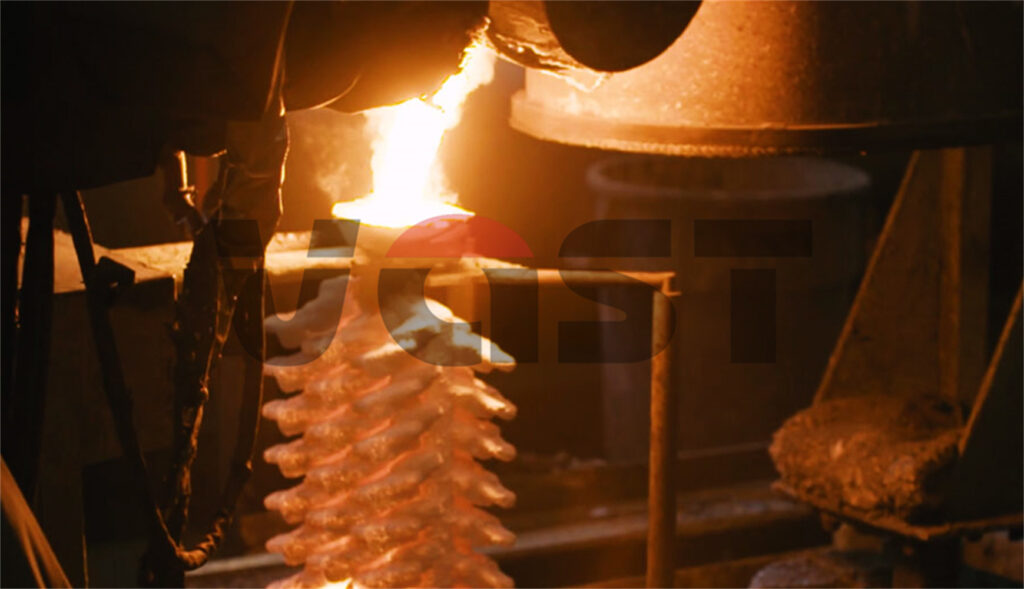
As a dedicated casting supplier, we understand that the continuous casting process hinges on precise molten metal flow control. You cannot afford interruptions or breakouts when dealing with liquid steel at 1600°C. We focus on the critical interface between the ladle and the tundish to ensure safety and operational efficiency.
Here is how we optimize flow control for superior results:
- Metering Nozzles with Zirconia Inserts: Standard nozzles wear out too fast under high heat. We utilize zirconia insert nozzles because they offer superior erosion resistance. This stabilizes the casting speed and extends the sequence length, which is vital for maintaining consistent throughput.
- Ladle Slide Gate Plates: The key here is a perfect seal. Our plates undergo precision surface grinding to ensure a leak-proof operation. High durability in these plates prevents dangerous breakouts and significantly reduces maintenance downtime.
- Well Blocks & Impact Pads: Pouring metal creates turbulence, which traps impurities. Our impact pads are designed to calm the flow instantly. Reducing turbulence is the secret to improving steel cleanliness and ensuring the integrity of final stainless steel products.
By closely managing the flow dynamics from the ladle to the mold, we help manufacturers minimize inclusions and maximize yield.
Essential Foundry Auxiliaries and Insulation
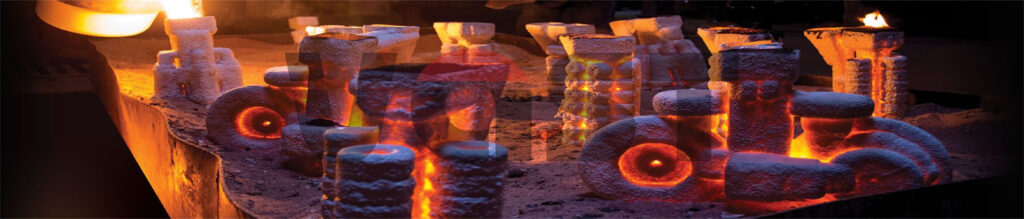
As a dedicated casting supplier, we understand that maintaining metal purity and thermal efficiency is just as critical as the melting process itself. High-quality auxiliaries are the unsung heroes that prevent defects and keep operating costs in check. We provide the essential consumables that modern foundries rely on for consistent production.
- Slag Removers & Covering Agents: Impurities are the enemy of structural integrity. Our foundry slag remover agents are formulated to quickly aggregate non-metallic inclusions, making them easy to skim off. This ensures that only clean, impurity-free molten metal enters the mold, significantly reducing scrap rates.
- Foundry Sands: The surface finish of your final part starts here. We emphasize strict grain consistency in our sands to ensure proper permeability and strength. Whether you are running a sand line or operating as a top lost wax casting supplier for precision metal components, uniform particle size is non-negotiable for preventing defects like burn-on or gas porosity.
- Ceramic Fiber Products: Energy efficiency drives profitability. Our high-temperature insulation fiber products are designed to minimize heat loss in ladles, tundishes, and furnaces. By stabilizing temperatures, we help you reduce energy consumption and extend the service life of your refractory linings.
Reliable foundry auxiliaries are not just additives; they are process stabilizers. We ensure every batch meets rigorous standards so your casting line runs without interruption.
The Science Behind Zirconia Content
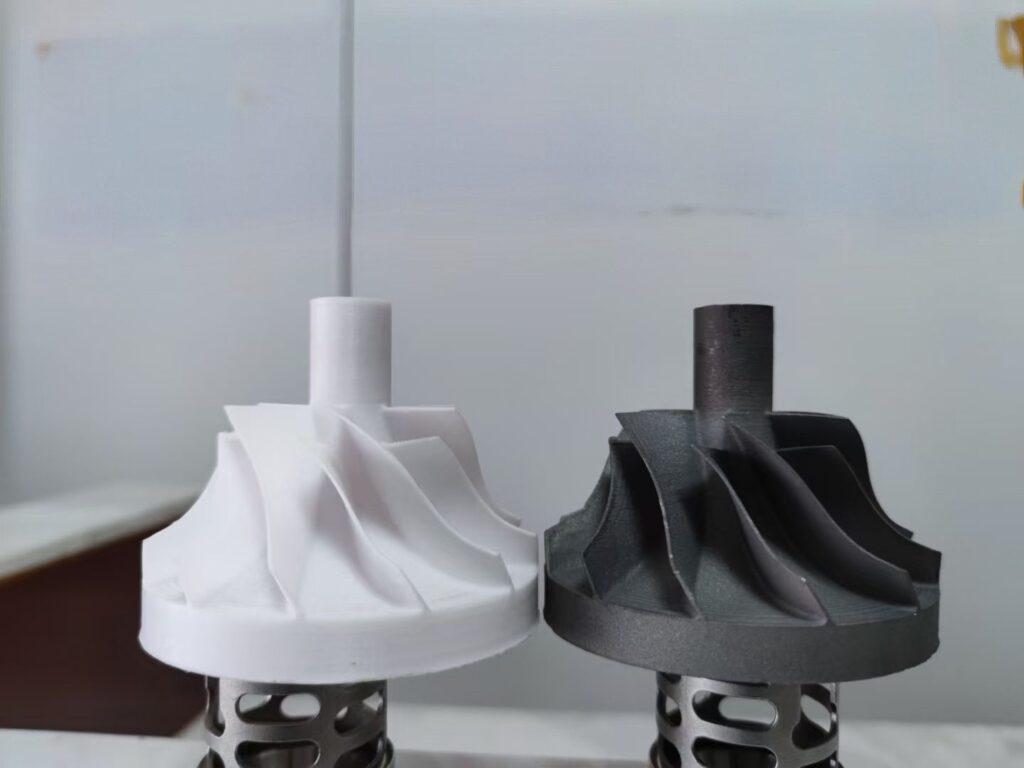
When evaluating a casting supplier, the chemistry of the refractory materials dictates your production uptime. The most critical metric we monitor for metering nozzles is the Zirconia (ZrO2) content. There is a direct, undeniable correlation here: higher purity Zirconia significantly extends the service life of the component. This durability is vital for maintaining consistent casting speeds without the need for frequent, costly changeovers.
For facilities operating a precision casting foundry for high-precision investment castings, using high-grade Zirconia insert nozzles ensures that the nozzle diameter remains stable. If the material erodes too quickly, the flow rate increases uncontrollably, compromising the quality of the steel.
Zirconia Content vs. Performance
Here is a breakdown of how Zirconia levels impact performance in molten metal flow control:
| Zirconia Content (ZrO2) | Erosion Resistance | Typical Service Life | Application |
|---|---|---|---|
| 65% – 75% | Moderate | Standard | Short casting sequences |
| 80% – 90% | High | Extended | Continuous casting (Billet/Bloom) |
| 95%+ | Ultra-High | Maximum | Special alloy steels & long sequences |
Handling Extreme Temperatures (1600°C+)
It is not just about packing in raw Zirconia; it is about the stabilization method. We utilize proprietary formulations—often Magnesia or Yttria stabilized—to ensure superior thermal shock resistance. When molten metal hits the nozzle at temperatures exceeding 1600°C, standard ceramics will crack due to rapid expansion. Our high-performance formulations are engineered to withstand this thermal stress, preventing catastrophic failures and ensuring a safe, leak-free cast.
Supply Chain Reliability and Global Logistics
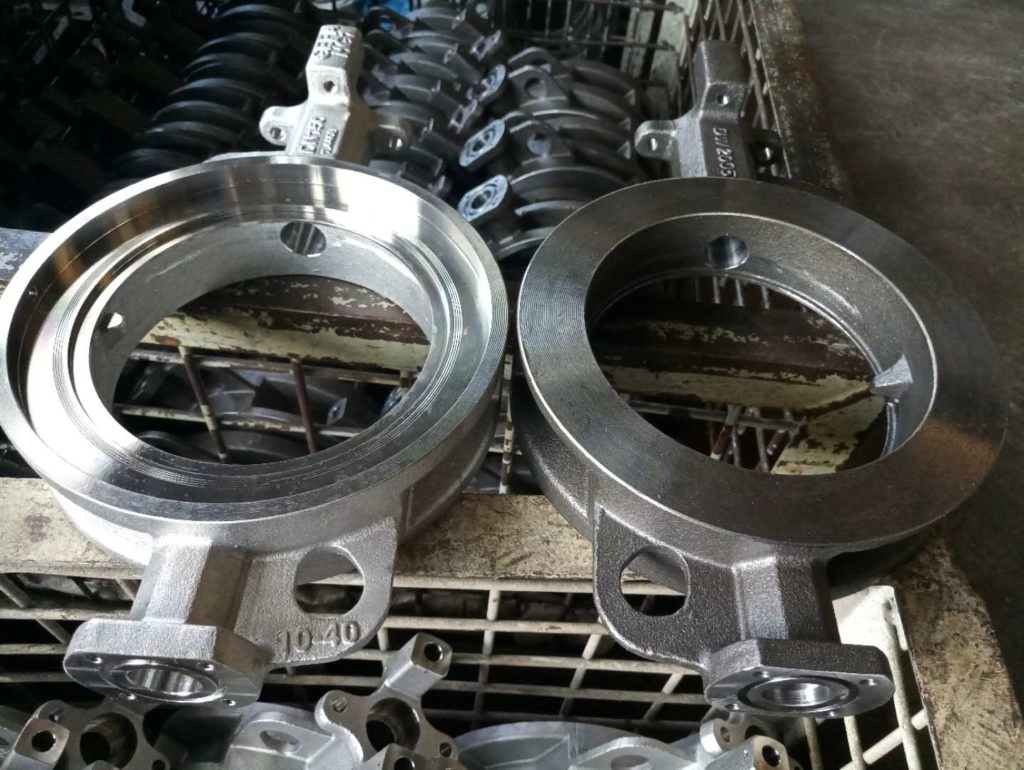
As a premier casting supplier, we understand that material quality means nothing if the product doesn’t arrive on time. Managing a steel industry supply chain requires more than just booking freight; it demands a deep understanding of international logistics for heavy industrial materials. We take full responsibility for the journey of your carbon and graphite consumables, ensuring they arrive ready for immediate use in your foundry.
Navigating Export Standards
Shipping industrial-grade materials like graphite electrodes and carbon raisers involves complex regulatory hurdles. We handle the heavy lifting regarding compliance, ensuring all documentation meets the specific import regulations of the United States and other global markets.
- Customs Compliance: Full management of HS codes and duty classifications.
- Safety Documentation: Provision of accurate MSDS and handling guides for hazardous and non-hazardous cargo.
- Packaging Integrity: Reinforced crating to prevent breakage during transoceanic transit.
Strategies for Managing Lead Times
In the casting industry, a delayed shipment can shut down an entire production line. Unlike intermediaries, our position as a direct manufacturer allows us to control production schedules and inventory levels. We implement proactive stock management strategies to buffer against market volatility, significantly reducing lead times for our partners. This direct oversight minimizes the risk of downtime in your stainless steel casting process, keeping your melt shop operational.
Quality Certifications and Testing
Reliability is backed by data. Our commitment to being a top-tier casting supplier is validated through rigorous adherence to ISO certified casting materials standards. We don’t just ship; we verify. Every batch undergoes strict laboratory analysis to confirm critical physical properties.
Key Quality Checks:
- ISO 9001 Compliance: Standardized management systems for consistent output.
- Bulk Density & Porosity: Ensuring optimal structural integrity for high-temperature applications.
- Chemical Composition: Verifying fixed carbon, sulfur, and ash content.
Our internal research and development capabilities allow us to constantly refine our testing protocols, ensuring that the materials you receive meet the exact specifications required for your metallurgical operations.
FAQs About Casting Supply Partners
How does refractory quality impact the final cast product?
The quality of your consumables directly dictates the cleanliness of your steel or iron. Using subpar refractories or low-grade carbon additives often leads to non-metallic inclusions and slag entrapment, which compromises the structural integrity of the final part. As a casting supplier, we emphasize that high-purity materials—whether it’s alumina-carbon refractories or graphite additives—ensure stable thermal conductivity and chemical neutrality. This attention to detail is critical for maintaining tight tolerances, as seen in advanced precision casting insights and material performance, where raw material consistency prevents costly defects.
What should I look for in a flow control supplier?
When vetting a partner for molten metal flow control, look beyond the price tag. You need a manufacturer that offers transparency and technical backing, not just a catalog of parts.
- Direct Manufacturing: Ensure they aren’t just a middleman; you need direct access to the factory for custom specs.
- ISO Certified Casting Materials: Verify their quality management systems (ISO 9001) to guarantee batch-to-batch consistency.
- Technical Support: They should understand your specific casting conditions, such as temperature curves and steel grades.
How do Zirconia inserts improve production efficiency?
Zirconia insert nozzles are a game-changer for the continuous casting process. Because Zirconia (ZrO2) has exceptional erosion resistance, it withstands the aggressive scouring of molten steel much longer than standard materials. This durability allows foundries to maintain a constant casting speed for extended sequences without needing to stop and change nozzles. This reduction in downtime directly boosts tonnage throughput and operational efficiency.
What are the logistics challenges in shipping refractory materials?
The steel industry supply chain faces unique hurdles, primarily weight and moisture sensitivity. Refractory bricks, tundish metering nozzles, and carbon raisers are heavy and dense, requiring specialized palletization to prevent shifting during ocean transit. Furthermore, materials like calcined petroleum coke and foundry auxiliaries must be kept strictly dry; moisture absorption can cause explosions or quality issues in the furnace. We mitigate this by using industrial-grade moisture-proof packaging and coordinating closely with freight forwarders to minimize port delays. For operations utilizing our aluminum die casting services, precise logistics ensure that production schedules are never disrupted by supply shortages.