
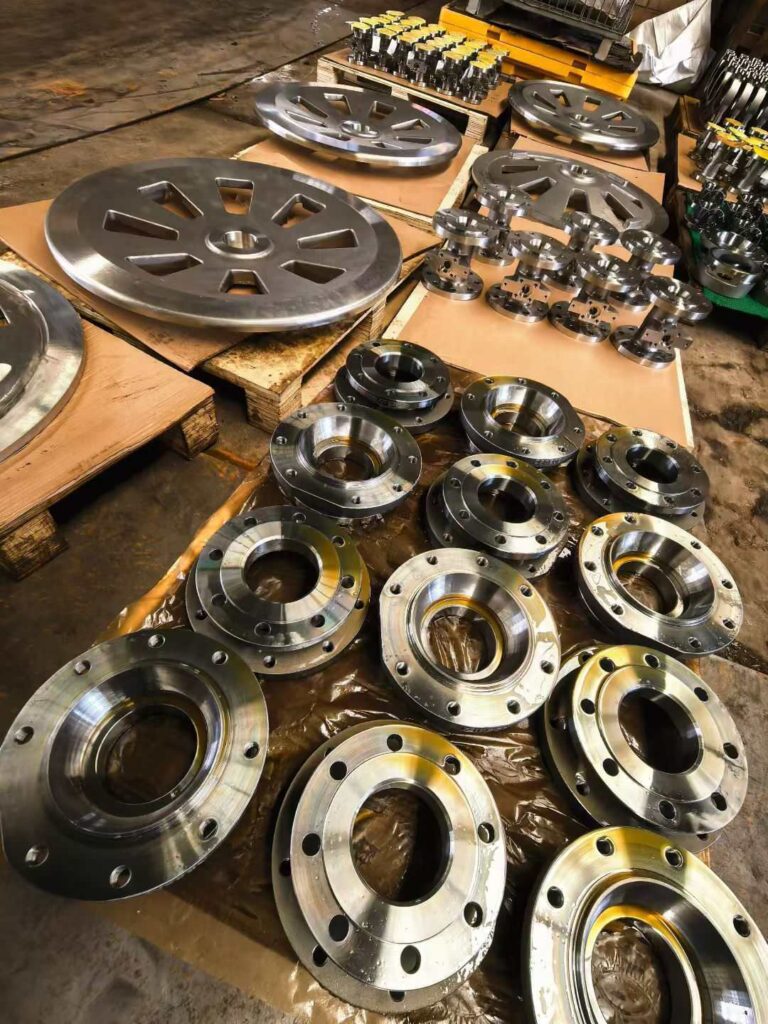
Valve castings manufacturer offering custom cast valve bodies in WCB stainless duplex alloys with API ASME certified OEM production.

Valve Castings – Product Overview
What are valve castings?
When I talk about valve castings, I mean the cast valve body, bonnet, cover, and major pressure-containing parts that form the core of an industrial valve. We pour molten metal into engineered molds to create the valve body casting with all the critical flow paths, wall thicknesses, and mounting interfaces already built in. These castings are then machined, assembled, and tested to become gate, globe, check, ball, butterfly, and plug valves for demanding services.
Types of valve castings supplied
I supply a full range of custom valve castings for:
- Gate valve castings – bodies, bonnets, wedges, yokes
- Globe valve castings – bodies, bonnets, cages
- Check valve castings – swing, dual-plate, piston bodies and covers
- Ball valve body castings – one-piece, two-piece, and three-piece bodies, closures
- Butterfly valve castings – bodies, discs, seat retainers
- Plug valve castings – bodies, covers, plugs, liners interface parts
All are engineered to fit your own designs or OEM/ODM specifications.
Pressure classes and size range
I design and produce high‑pressure valve castings for:
- ASME / API classes: Class 150 – 2500
- EN / ISO ratings: PN10 – PN420
Typical size capability:
- NPS: 1/2″ – 72″
- DN: DN15 – DN1800
Larger diameters or special geometries can be reviewed case-by-case.
OEM & ODM customization options
As an OEM valve casting manufacturer, I support:
- Customer-supplied 2D/3D models and standards (API 600, API 6D, ASME B16.34, etc.)
- Design optimization for castability, weight reduction, and machinability
- Tailor-made cast valve body geometries, special face-to-face, and end connections
- Branding features: cast logos, heat numbers, flow arrows, and tag pads
- Flexible supply: raw castings, semi-machined, or fully CNC machined valve castings
Tolerances and dimensional control
Dimensional control is usually tighter than generic foundry work. Typical capabilities:
- As-cast tolerances:
- Linear dimensions: ±2–4 mm depending on size and process (sand vs investment)
- Wall thickness: ±10% or better with proper gating and process control
- After machining:
- Critical bores/flanges: up to IT7–IT8 class tolerance levels
- Flange faces and sealing areas to relevant ASME / EN requirements
I use CMM checks, gauges, and custom templates to ensure consistent, repeatable dimensions across batches, so your machining and assembly lines run smoothly with minimal rework.
Valve Casting Materials
Choosing the right material is the core of getting a reliable valve casting. I supply a full range of valve body casting grades to match different media, temperatures, and pressure classes.
Carbon steel valve castings
For general industrial and high-pressure service, carbon steel valve castings are the workhorse:
- WCB / WCC – Standard for API 600 and API 6D valve castings, suitable for oil, gas, steam, and water at medium to high temperature.
- LCB / LCC – Low-temperature carbon steel for chilled and low-temp service down to around -46 °C, often used in LNG and refinery lines.
Carbon steel valve castings are cost-effective, easy to machine, and ideal for gate, globe, check, and ball valve body castings in Class 150–2500.
Stainless steel valve castings
When corrosion is the main risk, I go with stainless steel valve castings:
- CF8 (304) / CF3 (304L) – Good for mildly corrosive media, general chemical and water service.
- CF8M (316) / CF3M (316L) – Higher pitting and crevice corrosion resistance, widely used for seawater, chlorides, and aggressive chemicals.
These stainless steel castings are also well suited for hygienic, food, and pharmaceutical lines. For more on how stainless behaves in casting, I’ve broken it down in our dedicated guide to the stainless steel casting process.
Duplex and super duplex valve body castings
For tough chloride environments, I recommend duplex stainless valve body castings:
- 4A / CD3MN (2205) – High strength + excellent resistance to stress corrosion cracking, ideal for offshore, desalination, and brine service.
- 5A / 6A / CE3MN – Super duplex for extreme chloride and sour service, subsea valves, and highly loaded high-pressure valve castings.
These grades are the go-to for duplex stainless steel valve bodies in seawater and critical oil & gas pipelines.
Nickel alloy and high-alloy valve castings
For the harshest media, nickel alloy valve castings are the safe choice:
- Inconel, Monel, Hastelloy, Alloy 20 – Used for strong acids, sour gas, high temperature, and highly corrosive or oxidative environments.
These are typical for cryogenic valve castings, severe chemical plants, and specialty valves where failure is not an option.
Bronze and aluminum bronze valve castings
For seawater and marine valves, bronze valve body castings still win:
- C95800, C95400, C83600 – Excellent resistance to seawater, cavitation, and biofouling; widely used in marine valves, desalination, and offshore firewater systems.
Aluminum bronze valve castings combine good strength with strong corrosion resistance in saltwater.
Ductile iron and gray iron valve castings
Where cost and vibration damping matter:
- Ductile iron (ASTM A536, EN-GJS-400-15) – Higher strength and toughness than gray iron; common for waterworks, fire systems, and general industrial valves.
- Gray iron – Good machinability and damping, used for low-pressure water and HVAC systems, typically in lower pressure classes.
How we select the right valve casting material
When I quote or engineer custom valve castings, I always base material selection on:
- Media – Corrosive / non-corrosive, chlorides, H₂S, CO₂, seawater, sour gas, slurry.
- Temperature – Cryogenic, ambient, elevated, or cyclic.
- Pressure – Design pressure, pressure class (ASME / PN), and safety margins.
- Standards – API, ASME B16.34, NACE, end-user specs.
If needed, I’ll propose alternative grades to balance performance, availability, and cost.
Material traceability and heat number control
Every valve body casting I ship comes with full material traceability:
- Heat numbers are stamped or cast on each valve casting body.
- Each heat is tracked from melt to finished casting with EN 10204 3.1 or 3.2 MTCs.
- Chemical and mechanical test reports are tied to the heat number, so you can cross-check against project specs and standards.
This level of traceability is what global EPCs and OEM valve casting buyers expect, and I keep it non‑negotiable in production.
Valve Casting Processes
Sand cast valve bodies
For most cast valve body projects, I still start from sand casting. It’s flexible, cost-effective, and works well for medium to large valve bodies.
Main sand casting options for valve castings:
- Green sand – Best for high-volume ductile iron and carbon steel valve castings. Good balance of cost and quality.
- Resin sand – Better dimensional stability and surface finish for larger, high-pressure valve body casting like API 600 and API 6D designs.
- Shell mold – Thin-wall, more accurate sand cast valve bodies with cleaner surfaces and reduced machining stock.
Use sand cast valve bodies when:
- Sizes are from 1/2″ up to 72″
- Wall thickness is not extremely thin
- Cost and lead time are critical
Investment cast valve components
When you need precision valve casting, investment casting (lost-wax) is the way to go. I use it for:
- Small to medium stainless steel valve castings (CF8, CF8M, duplex)
- Complex ball valve body casting, plug internals, and trim
- Tight tolerance, thin-wall custom valve castings where machining allowance must stay minimal
Advantages:
- Very good surface finish (Ra ~3.2–6.3 μm)
- Tighter as-cast tolerance
- Better detail on complex geometries and internal passages
This approach aligns well with high-precision machining setups described in our broader manufacturing process capabilities.
Centrifugal cast valve sleeves and rings
For high-pressure, wear- or corrosion-critical parts, I move to centrifugal casting:
- Valve sleeves, seats, and rings
- Alloy liners for high-pressure valve castings and subsea valves
- Large-diameter corrosion-resistant rings in duplex, super duplex, or nickel alloys
Benefits:
- Dense, fine-grain structure
- Excellent mechanical properties and leak-tightness
- Ideal for high-pressure valve castings and severe service
How I choose the right valve casting process
I generally select the process around four things: size, geometry, tolerance, and budget.
- Sand casting
- Best for: Large cast valve body, gate valve casting, globe and check bodies
- Strengths: Low tooling cost, wide size range, robust materials
- Limits: Rougher surface, thicker minimum wall, wider tolerance
- Investment casting
- Best for: Precision investment cast valve components, small ball and butterfly bodies
- Strengths: Narrow tolerance, thin walls, good surface finish
- Limits: Higher part cost, size limits
- Centrifugal casting
- Best for: Sleeves
Standards and Certifications for Valve Castings
When you buy valve castings from us, you’re not just buying metal – you’re buying compliance, documentation, and risk control. We design and produce cast valve bodies and bonnets to meet the main international valve and pressure equipment standards your projects require.
API & ASME Valve Casting Standards
We supply valve body castings and bonnets in full accordance with the key American standards, including:
- API 600 – Gate valve body castings for refinery and high‑pressure pipeline service
- API 6D – Pipeline valve castings (ball, gate, plug, check) for transmission lines
- API 594 – Wafer, lug and double‑door check valve castings
- ASME B16.34 – Pressure–temperature ratings, wall thickness and design rules for industrial valve castings
These standards drive our design checks, casting wall thickness, NDT level, and pressure test requirements, which is critical for oil & gas and other high‑risk services. For example, our API 6D valve castings are frequently specified in global oil and gas projects.
European & International Standards
For EU and global projects, we produce valve castings to:
- EN 1984 – Steel gate, globe and check valve castings for industrial service
- ISO 15761 – Compact steel valves for flanged, threaded and welded ends
We can match ASTM, EN and DIN material grades on the same valve drawing, which helps EPCs and OEMs unify specifications across regions.
Pressure Equipment & Industry Approvals
For pressure equipment, we work under recognized frameworks such as:
- PED 2014/68/EU – Pressure Equipment Directive compliance for EU‑bound valves
- AD2000‑W0 – German rule set for material and casting quality requirements
- NORSOK M‑650 – Qualification route for duplex, super duplex and nickel alloy valve castings for offshore and subsea use
These approvals give you a clear route to CE marking and to critical sectors like offshore platforms and nuclear and power projects (see our experience in nuclear power applications).
Third‑Party Inspection & Certification
We welcome and regularly work with:
- DNV, Lloyd’s Register, ABS, BV, TÜV and other notified bodies
- Witness and surveillance for chemical and mechanical tests
- Review and approval of NDT procedures and test reports
- On‑site inspection during trial pouring, qualification casting and final inspection
This gives end‑users and EPCs independent confirmation that each valve casting batch really meets the specified standard.
Documentation & Certification Packages
With every shipment of valve castings, we can provide a complete documentation set, typically including:
- Material Test Certificates (MTC)
- EN 10204 3.1 or 3.2 certificates (with third‑party witness if required)
- Full chemical composition and mechanical test data
- NDT reports (RT/UT/MT/PT), heat treatment charts and pressure test records
- Traceable heat numbers clearly marked on each cast valve body
This level of documentation makes it easier for you to pass audits, qualify new vendors and integrate our castings into demanding international projects.
Quality Control for Valve Castings
I treat quality control on valve castings as a full system, not a final check. Every step is measured, recorded, and traceable.
Incoming Material Inspection & PMI
For every heat of carbon steel, stainless steel, duplex, or nickel alloy we use, we verify it before it enters production:
- Incoming inspection against PO, grade, and specs
- PMI (Positive Material Identification) by handheld spectrometer on critical valve body castings
- Full heat number traceability from raw ingot to finished cast valve body
You can see the same approach in our broader testing and quality control procedures.
Chemical Analysis & Mechanical Testing
We control chemistry and properties tightly to match API, ASME, and EN requirements:
- Spectrochemical analysis on each heat for C, Cr, Ni, Mo, etc.
- Mechanical tests: tensile, yield, elongation, hardness
- Batch-wise certification to customer spec and material standard
NDT for Valve Castings (RT, UT, MT, PT)
Critical valve body castings, bonnets, and high‑pressure parts go through a tailored NDT plan:
- RT (Radiographic Testing) for internal shrinkage, porosity, hot tears
- UT (Ultrasonic Testing) on thick sections, large gate valve castings, high‑pressure API 6D bodies
- MT (Magnetic Particle Testing) on carbon steel and low alloy WCB valve castings at critical areas
- PT (Dye Penetrant Testing) on stainless steel valve castings and duplex stainless steel valve bodies
- All procedures are written and supervised by Level III NDT personnel
Dimensional Inspection on Valve Body Castings
To keep interchangeability and machining stock under control, we use:
- CMM (Coordinate Measuring Machine) for complex ball valve body casting geometries
- Dedicated gauges and templates for flange faces, end-to-end, and face-to-face dimensions
- Control of draft, machining allowance, and wall thickness per drawing and ASME B16.34 envelope
Pressure Testing: Hydrostatic & Pneumatic
Before shipment (or before final machining if specified), we validate pressure integrity:
- Hydrostatic pressure testing of valve castings to specified test pressure and hold time
- Pneumatic leak testing with air or nitrogen for tightness on critical joints and sealing areas
- Test records stored and linked to heat and casting number
Cryogenic Valve Casting Testing (-196°C)
For LNG and cryogenic valve castings, we qualify materials and castings for low temperature:
- Impact testing (Charpy) at -46°C, -101°C, down to -196°C depending on spec
- Fracture appearance and energy results documented in the MTC
- Controls for weldability and toughness for cryogenic service
Fugitive Emissions & Fire-Safe Validation
We support end users needing low emissions and fire-safe performance:
- Fugitive emission testing of valve bodies per ISO 15848 (when required by OEM)
- Fire-safe testing according to API 607, validating the valve body casting and sealing design can withstand fire exposure and still provide containment
Defect Prevention & Process Control
Instead of just rejecting bad parts, we design the process to avoid defects:
- Solidification simulation and gating/riser design to prevent shrinkage and porosity
- SPC (Statistical Process Control) on key process parameters (metal temperature, sand properties, shell thickness)
- Standard work instructions at each station and continuous feedback from NDT and machining to the foundry floor
This system keeps our custom valve castings consistent, certifiable, and ready for demanding oil & gas, power, marine, and chemical service.
Machining and Surface Treatment of Valve Castings
When we supply valve castings, we focus just as much on machining and surface protection as on the casting itself. That’s what decides how well the valve seals, how long it lasts, and how smoothly it installs.
CNC Machining for Valve Castings
We run 4-axis and 5-axis CNC machining centers dedicated to valve body casting and bonnet machining. That lets us handle:
- Gate valve castings and globe valve castings
- Ball valve body castings with complex internal profiles
- Butterfly and plug valve bodies with tight shaft alignment
- Ductile iron valve castings and stainless steel valve castings in the same shop
Critical Machined Features
Key machining operations on a cast valve body include:
- Boring seat pockets, stem bores, ball cavities, and stuffing boxes
- Facing gasket surfaces, RF/RTJ flanges, and body-joint faces
- Drilling & tapping flange bolt holes, drain/vent connections, and instrumentation ports
- Threading NPT/BSPP connections and special OEM threads
These are the areas where leakage and misalignment show up first, so we keep them under tight control.
Tolerances and Surface Finish
Typical machining capability:
- Dimensional tolerances: down to ±0.02–0.05 mm on critical features (seat rings, stem bores, flange faces)
- Surface roughness:
- Sealing faces: Ra 0.8–1.6 µm
- General machined surfaces: Ra 3.2–6.3 µm
We can match ASME, API, and OEM drawing requirements for precision valve casting and CNC machined valve castings.
Coating and Lining Options
To extend service life in aggressive media, we offer:
- Epoxy coatings (internal/external) for water, wastewater, and general industrial
- PTFE / PFA linings for highly corrosive chemicals
- Electroless nickel plating (ENP) for wear and corrosion on critical bores and sealing areas
- Rubber lining (NBR, EPDM, etc.) for slurry, seawater, and erosion zones
For non-ferrous parts, we also support bronze machining, similar to our bronze precision components produced for decorative and industrial use, such as bronze rod machining services.
Corrosion Protection and Packing
Every finished valve body casting is protected for shipment:
- Anti-corrosion oil on machined surfaces
- Plastic caps or covers on flange faces and threaded ports
- VCI plastic bags, moisture barriers, and strong export-ready wooden cases
- Clear part marking and heat number identification for traceability
Supply Options to Fit Your Process
We’re flexible in how we supply industrial valve castings:
- Raw valve castings – as-cast, shot-blasted, ready for your own machining
- Semi-machined castings – critical faces and bores finished, balance left to you
- Fully machined and assembled – complete OEM valve castings with pressure testing and coating, shipped ready to install
You choose the level of value-add; we match our process to your purchasing and manufacturing strategy.
Valve Casting Applications and Industries
Our valve castings are engineered for demanding global industries where downtime is not an option. Below is how we match cast valve bodies and materials to real service conditions.
Oil & Gas Valve Castings (Onshore, Offshore, Subsea)
We supply API 6D valve castings, gate valve castings, ball valve body castings, and check valve castings for:
- Onshore pipelines and gathering systems
- Offshore platforms and FPSOs
- Subsea manifolds and choke valves
Typical challenges:
- High pressure / high temperature (HPHT)
- CO₂, H₂S, sand, and sour service
- Erosion and corrosion in wet gas and produced water
We use WCB valve castings, CF8M valve bodies, and duplex stainless steel valve bodies for long life and stable sealing in harsh fields.
Refining and Petrochemical Valve Castings
For refineries, chemical plants, and petrochemical complexes we supply:
- Globe, plug, and ball valve body castings
- High-alloy and nickel alloy valve castings for acids and chlorides
Key conditions:
- Continuous high temperature
- Aggressive media (acids, solvents, aromatics)
- Tight fugitive emission requirements
Materials like Hastelloy, Alloy 20, and Inconel are used where standard carbon steel valve castings are not enough.
Power Generation and Nuclear Valve Castings
We supply high‑pressure valve castings for:
- Coal and gas-fired power plants
- Combined-cycle plants
- Nuclear auxiliary systems (non‑safety critical as per client spec)
Challenges:
- High steam pressure and temperature
- Thermal cycling and fatigue
- Strict dimensional control and traceability
We focus on clean, defect-free sand cast valve bodies with controlled ferrite/pearlite structure and full NDT.
Water Treatment and Desalination Valve Castings
For waterworks and desalination plants:
- Ductile iron valve castings and bronze valve body castings
- Butterfly, gate, and check valve bodies up to large diameters
Conditions:
- Brackish and seawater corrosion
- Large-bore valves with robust wall thickness
- Cavitation and erosion at throttling points
We often combine seawater‑resistant aluminum bronze with specialized surface treatments to boost lifespan in chloride-rich environments.
Cryogenic and LNG Valve Castings
We produce cryogenic valve castings for:
- LNG liquefaction and receiving terminals
- Low-temperature storage and transfer
- Air separation units
Key requirements:
- Toughness down to -196°C
- Low-temperature impact tested materials
- Tight tolerances for reliable sealing at cryogenic contraction
Typical options include LCB/LCC carbon steels and austenitic stainless steel valve castings with strict heat treatment and testing.
General Industrial and Marine Valve Castings
For general industry and marine, we support:
- Pulp & paper, food, pharmaceuticals (clean and corrosion‑resistant stainless steel valve castings)
- Mining, steel mills, and OEM machinery (rugged cast valve bodies in carbon or ductile iron)
- Marine valve castings for ballast, cooling, and fire‑fighting lines
In harsh marine projects, we pair bronze and aluminum bronze valve castings with our precision CNC machining for bronze parts and marine-focused know‑how from our marine engineering solutions.
Matching Valve Castings to Service Conditions
Across all industries, we choose valve body casting designs and materials to handle:
- Pressure range: Class 150–2500 / PN10–PN420
- Media: clean fluids, slurries, seawater, sour gas, acids, LNG
- Risks: corrosion, erosion, thermal shock, low-temperature brittleness
Our role as an OEM valve casting manufacturer is to balance cost, safety, and lifetime so your custom valve castings meet the real conditions in the field, not just the drawing.
Choosing a Valve Casting Manufacturer

Picking the right valve casting manufacturer is a big deal for project reliability, total cost, and delivery risk. I’ll keep this straight to the point.
Key Factors When Selecting a Valve Casting Supplier
When you screen a cast valve body supplier, focus on:
- Capacity – Can they handle your tonnage and batch size?
- Equipment – Sand and investment lines, heat treatment, NDT, CNC machining.
- Experience – Years in industrial valve castings, API valve projects, export work.
- Materials – Range from carbon steel, stainless steel, duplex, nickel alloys, to bronze valve body castings.
- Process control – Documented procedures, stable defect rate, strong engineering team.
- Responsiveness – Fast RFQ response, technical support, and problem-solving.
Quick supplier checklist
| Item | What you want to see |
|---|---|
| Years in valve castings | 10+ years focused on valve body casting |
| Main standards | API 600, API 6D, ASME B16.34, EN / ISO |
| Main materials | WCB, LCB, CF8M, duplex, nickel alloys, bronze |
| Casting processes | Sand, investment, centrifugal (if needed) |
| Machining | In-house CNC (4–5 axis) |
| NDT | RT, UT, MT, PT with qualified Level II / III |
Benefits of a Specialized Valve Casting Foundry
A general foundry can pour metal, but a precision valve casting foundry understands:
- Flow paths, wall thickness control, and stress areas in gate valve castings, ball valve body castings, check and globe valve bodies.
- Casting design for high-pressure valve castings (Class 600–2500 / PN100+).
- Special services like cryogenic valve castings, subsea valve castings, and marine valve castings.
- Tight machining allowances to cut your downstream machining cost.
You get:
- More stable quality, fewer repairs.
- Faster development for custom valve castings and OEM / ODM work.
- Better support on standards and documentation for EPC and end-users.
If you also work with high-alloy components, it helps when your valve casting partner has experience machining difficult materials similar to high-temperature nickel alloy parts, like our own nickel alloy precision machining services. It proves they know how to handle hard, heat-resistant metals correctly.
Production Capacity and Plant Scale
Always match supplier capacity with your project load.
What to ask:
- Monthly casting tonnage (e.g. 300–1,000+ tons/month).
- Workshop size (m²) and number of molding lines.
- Maximum valve size (e.g. 72″ ball valve body casting).
- Maximum single casting weight (kg/ton).
- Separate lines for:
- Sand cast valve bodies (large gate, globe, check, butterfly).
- Investment cast valve components (smaller, precision parts).
- Centrifugal cast valve sleeves and rings (if you use them).
This tells you if they can handle a big API project without pushing you to the back of the queue.
One-Stop Valve Casting Service
For global buyers, a one-stop OEM valve casting manufacturer cuts a lot of coordination work.
Look for a supplier that can cover:
- Design & engineering support
- Casting simulation, riser/gating design.
- Pattern optimization for valve body casting.
- Pattern making
- Wood, aluminum, or 3D-printed patterns.
- Casting
- Sand, investment, and centrifugal casting under one roof.
- Heat treatment
- Normalizing, quenching & tempering, solution treatment.
- CNC machining
- 4-axis and 5-axis CNC machined valve castings.
- Surface treatment
- Blasting, epoxy coating, ENP, primer.
- Testing & inspection
- Chemistry, mechanical, NDT, pressure tests as per spec.
- Packing & logistics
- Export pallets, seaworthy packing, labels, barcodes.
This lets you buy raw castings, semi-machined, or fully machined and tested valve bodies from the same place, depending on your in-house capability.
Export Experience and Global Projects
For global customers, export capability is not optional.
Check:
- Years of export experience (US, EU, Middle East, Southeast Asia, etc.).
- Familiarity with:
- Incoterms (FOB, CIF, DAP).
- Port handling and documentation.
- References for:
- API 6D valve castings in pipelines.
- Power plant and refinery valve castings.
- Offshore / marine valve projects.
- Ability to handle third-party inspection (DNV, ABS, BV, Lloyd’s, TÜV).
Ask for a project list and photos of shipped valve castings to see real cases, not just a catalog.
Evaluating Quality System and Certifications
A serious industrial valve castings supplier will have strong quality control on paper and in practice.
Core quality items to verify:
- Quality system
- ISO 9001 as a minimum.
- Clear procedures for:
- Material control
- Casting & heat treatment
- NDT
- Non-conformity handling
- Product-related approvals
- Compliance with API 600, API 6D, ASME B16.34, EN / ISO valve standards.
- PED (for EU), possibly AD2000-W0 if you serve Germany.
- NDT competency
- Level II / Level III for RT, UT, MT, PT.
- Documentation
- Ability to issue EN 10204 3.1 / 3.2 MTCs.
- Traceable heat numbers, casting ID, and machining records.
Simple evaluation table
| Area | What to confirm |
|---|---|
| ISO & PED | Valid certificates and scope include valve castings |
| Standards | API / ASME / EN capabilities listed in procedures |
| NDT | In-house or certified third-party, Level II/III |
| Traceability | Full link: heat → casting → test → shipment |
| Audits | Openness to customer or 3rd-party audits |
If a supplier passes these checks and responds quickly with technical detail (not just sales talk), you’re likely dealing with a reliable valve casting manufacturer you can build long-term business with.
Technical Resources for Valve Castings

I keep our valve casting technical resources simple and practical so your engineering team can move fast and avoid rework.
Material Grade Cross-Reference (ASTM / EN / DIN)
Below is a quick reference for common valve casting materials:
| Application | ASTM Cast Grade | EN / ISO Equivalent | Typical Use |
|---|---|---|---|
| Carbon steel valve castings | WCB | 1.0619 / GP240GH | General service, ASME B16.34 valves |
| Low-temp carbon steel | LCB | 1.1138 / G20Mn5 | -46 °C service |
| Stainless steel valve castings | CF8 (304) | 1.4308 / GX5CrNi19-10 | Clean media, water, low Cl- |
| CF8M (316) | CF8M | 1.4408 / GX5CrNiMo17-12-2 | Seawater, chemicals, CF8M valve body |
| Duplex stainless | CD3MN (2205) | 1.4470 / GX2CrNiMoN22-5-3 | Duplex stainless steel valve body |
| Super duplex | CE3MN / 6A | 1.4507 / 1.4410 | Subsea, high Cl-, sour service |
| Bronze / Al-bronze | C95800 | CC333G | Marine and seawater valve castings |
| Ductile iron valve castings | A536 65-45-12 | EN-GJS-400-15 | Water, low-pressure industrial |
For more exotic grades (Inconel, Hastelloy, etc.), I usually align with project specs and high‑temperature alloy data similar to what’s used for high-temperature alloy components.
Wall Thickness Guidelines (ASME B16.34 Reference)
Use ASME B16.34 as the base for valve body wall thickness, then add casting margins:
- Minimum body wall: per ASME B16.34, based on:
- Pressure class (150–2500)
- Material group
- Temperature rating
- Casting allowance (typical):
- +2.5–3.0 mm for sand cast valve bodies
- +1.5–2.0 mm for investment cast valve components
- Extra margin is smart for:
- Corrosion/erosion service
- Hard-facing, cladding, or lining
- Post-cast machining stock
Typical Valve Casting Drawings
Your valve casting drawing should be clean and focused on what actually matters at the foundry:
Key items to show:
- Casting outline with parting line and draft direction
- All pressure-retaining areas clearly marked
- Nominal and minimum wall thickness
- Machining allowances and critical machined faces
- NDT zones (RT / UT / MT / PT) and acceptance level
- Material grade, standard (API 600 / API 6D / ASME B16.34), and pressure class
- MTR / EN 10204 certification requirements (3.1 / 3.2)
Design Tips for Custom Valve Castings (OEM / ODM)
When you order custom valve castings from us, these steps help avoid delays and defects:
- Avoid sharp corners
- Use generous radii and smooth transitions.
- Helps feeding, reduces hot spots and shrinkage.
- Keep wall thickness consistent
- Minimize sudden jumps in section thickness.
- Use ribs instead of massive sections for strength.
- Think about molding and machining
- Add draft (2–3°) where possible.
- Leave enough machining stock on critical faces and bores.
- Define critical features up front
- Sealing surfaces, bore alignments, face-to-face dimensions.
- Tolerances on these should match your final valve standard.
- Share your 3D model and load case
- STEP / Parasolid + design pressure, temperature, medium.
- We can review castability and recommend improvements.
If you send us: 3D model, 2D drawing, operating conditions, material, and required standards, we can quickly quote and engineer a cast valve body that meets your spec without over-building cost into the part.
Valve Casting Case Studies
Real projects with custom valve castings
Over the past few years, we’ve delivered custom valve castings for high‑pressure, corrosive, and abrasive service where standard cast valve bodies simply wouldn’t survive. Typical examples include:
- Duplex stainless steel valve body castings for offshore produced water, where standard WCB valve castings were failing from corrosion and erosion.
- CF8M valve body castings for chemical plants handling chlorides, replacing older gray iron bodies that leaked under cycling.
In both cases we redesigned wall thickness, gating, and risers to cut porosity and get consistent integrity in heavy sections.
Performance gains from engineered valve castings
When we engineer the valve castings up front, the results show on site:
- Longer service life: duplex and nickel alloy valve castings in abrasive slurries have doubled mean time between failures.
- Tighter sealing: improved core design and NDT for API 600 and API 6D valve body castings reduced seat leakage and rework.
- Lower total cost: moving from fully machined bar to investment cast valve components cut material waste and machining hours by 20–30%.
We see this especially on ball valve body castings and gate valve castings, where precise body geometry and stable metallurgical quality directly impact sealing and torque.
Before-and-after redesign results
A typical before/after story:
- Before: sand cast WCB valve casting with random shrinkage, frequent welding repairs, and field leaks at pressure test.
- After: redesigned feeding system, upgraded to controlled ductile iron valve castings for non‑critical lines, and to stainless steel valve castings for corrosive loops. Repair rate dropped by over 60%, and hydrotest failures became rare.
Another case: a seawater user shifted from standard bronze to aluminum bronze valve body castings similar to our copper alloy solutions. The redesigned bodies handled higher flow velocity, eliminated dezincification issues, and extended valve change‑out intervals on their marine lines.
Valve Castings FAQ
Minimum Order Quantity (MOQ) for Valve Castings
My general MOQs are flexible and depend on size and process:
| Product type | Typical MOQ |
|---|---|
| Small investment cast components | 100–300 pcs / batch |
| Medium sand cast valve bodies | 20–50 pcs / size / material |
| Large valve bodies (DN600+) | 1–5 pcs for project orders |
For new projects or urgent repairs, I often support smaller trial batches if tooling already exists.
Lead Time: Prototype vs Mass Production
| Stage | Typical lead time* |
|---|---|
| Prototype (new tooling) | 4–6 weeks (incl. pattern/tooling) |
| Prototype (existing tools) | 2–3 weeks |
| Mass production | 4–8 weeks after PO & drawing approval |
*Exact timing depends on material, NDT level, and machining scope.
Raw vs Fully Machined Valve Castings
I supply three main levels, depending on how much work you want to keep in-house:
| Option | What you get | When to choose it |
|---|---|---|
| Raw castings | As-cast, shot-blasted, with risers removed | You have your own machining capacity |
| Semi-machined | Key faces, flanges, and bores machined | You finish only critical fits |
| Fully machined | CNC machined, drilled, tapped, pressure-tested | You want near “ready-to-assemble” parts |
I can also match machining with existing low-carbon steel machining services for full package supply.
RFQ Information Needed for Valve Castings
For a fast and accurate quote, I need at least:
- Valve type: gate, globe, check, ball, butterfly, plug
- Casting status: raw / semi-machined / fully machined
- Material grade: e.g. WCB, CF8M, duplex, bronze, ductile iron
- Design standard: API 600, API 6D, API 594, ASME B16.34, EN, ISO, etc.
- Pressure class: Class