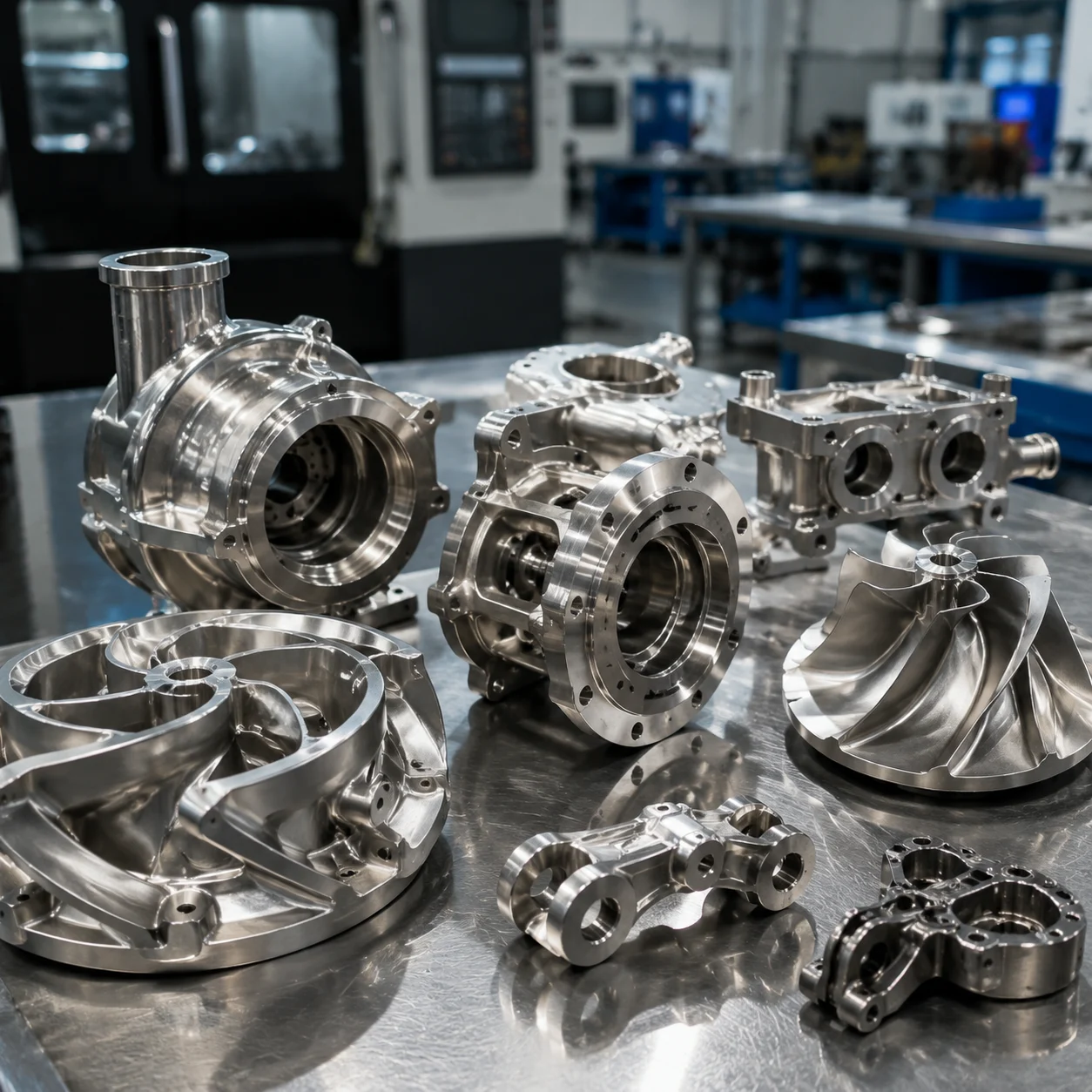
Vacuum Investment Casting
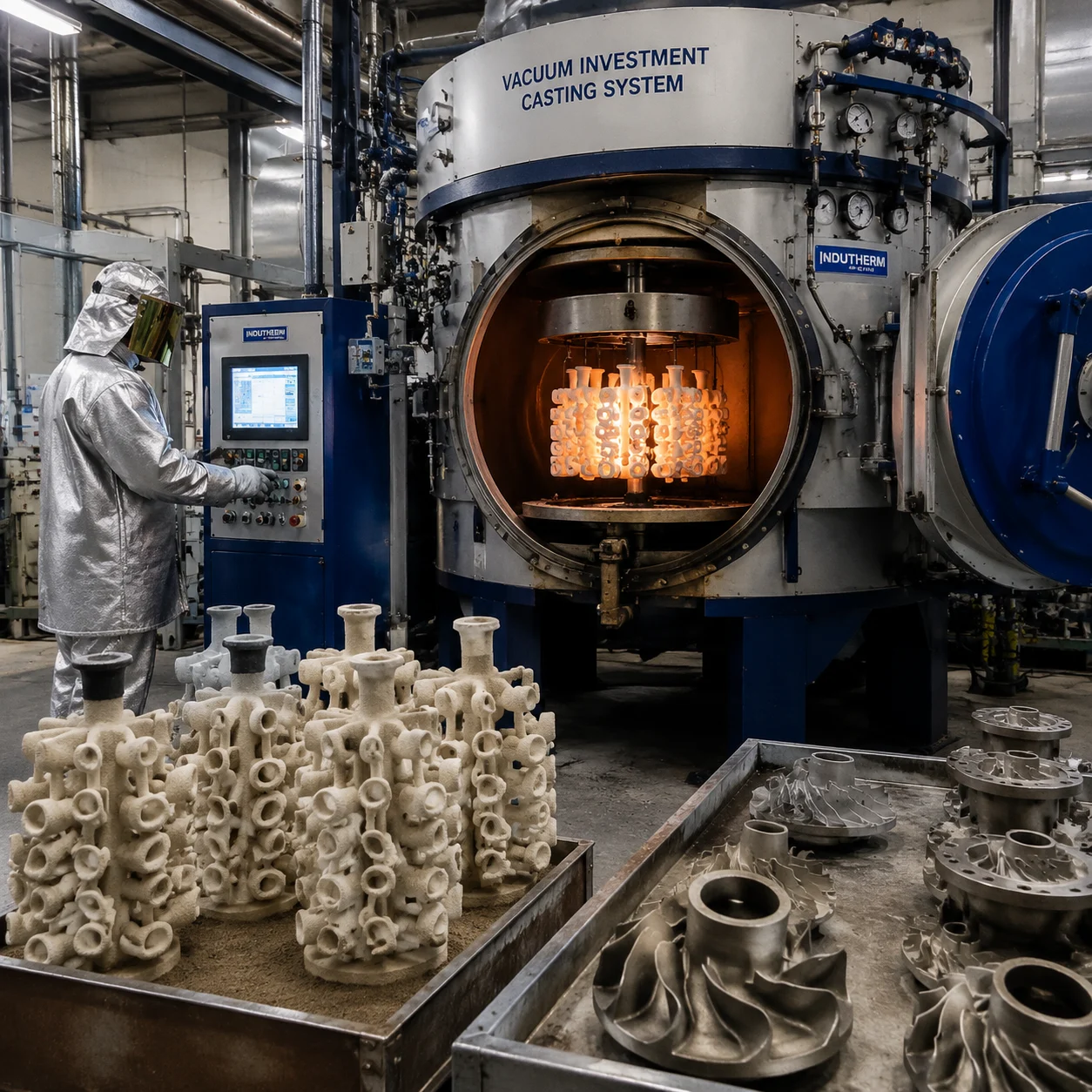
Vastmaterial provides high-precision vacuum investment casting for complex metal components. Engineered for critical industrial applications demanding superior internal integrity, structural stability, and batch consistency.
Why Choose Vacuum Investment Casting for High-End Components
Vacuum investment casting provides a decisive advantage for metal parts where structural integrity is non-negotiable. By melting and pouring in a controlled vacuum environment, Vastmaterial eliminates atmospheric interference, significantly reducing gas porosity and oxide inclusions. If you’d like to learn more about our capabilities, visit our technology page.
Eliminate Porosity
Removes entrapped air and prevents oxidation for superior metallurgical quality.
Thin-Walled Stability
Precise filling of intricate geometries and ultra-thin sections without cold shuts.
Surface Consistency
Exceptional finishes that significantly reduce expensive secondary grinding.
Advanced Alloys
Perfect for nickel-based superalloys requiring precise chemical control.
Solving Manufacturing Challenges
- Eliminating subsurface defects in pressure-sensitive parts.
- Repeatable precision for complex internal flow channels.
- Strict batch-to-batch consistency for high-volume runs.
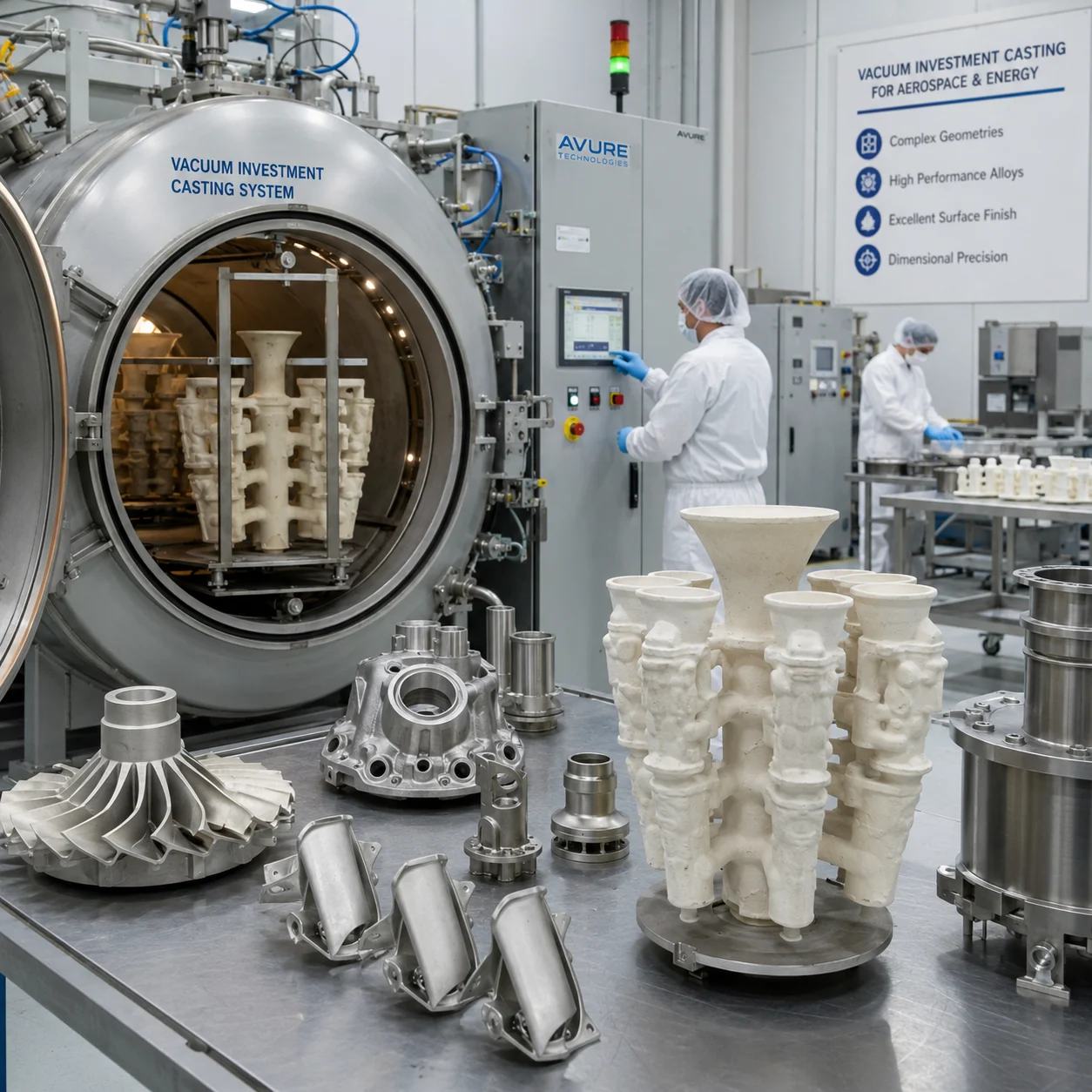
Engineered for Reliability
- High-stress aerospace & energy density
- Near-net-shape dimensional control
- Corrosion-resistant industrial performance
Vacuum Investment Casting Process and Precision Control Points
- 1
Engineering Review and DFM Confirmation
Vastmaterial begins with a rigorous Design for Manufacturing (DFM) review. We evaluate your 2D/3D blueprints to ensure tolerances, wall thicknesses, and internal geometries are optimized for the vacuum investment casting environment. If you'd like to learn more about our company capabilities, see our about page.
- 2
Alloy Selection and Metallurgical Planning
We assess chemical composition requirements for stainless steel, superalloys, or specialized steels. This stage focuses on matching the specific alloy’s fluidity and shrinkage characteristics with the high-vacuum pouring parameters.
- 3
Precision Wax Injection and Shell Construction
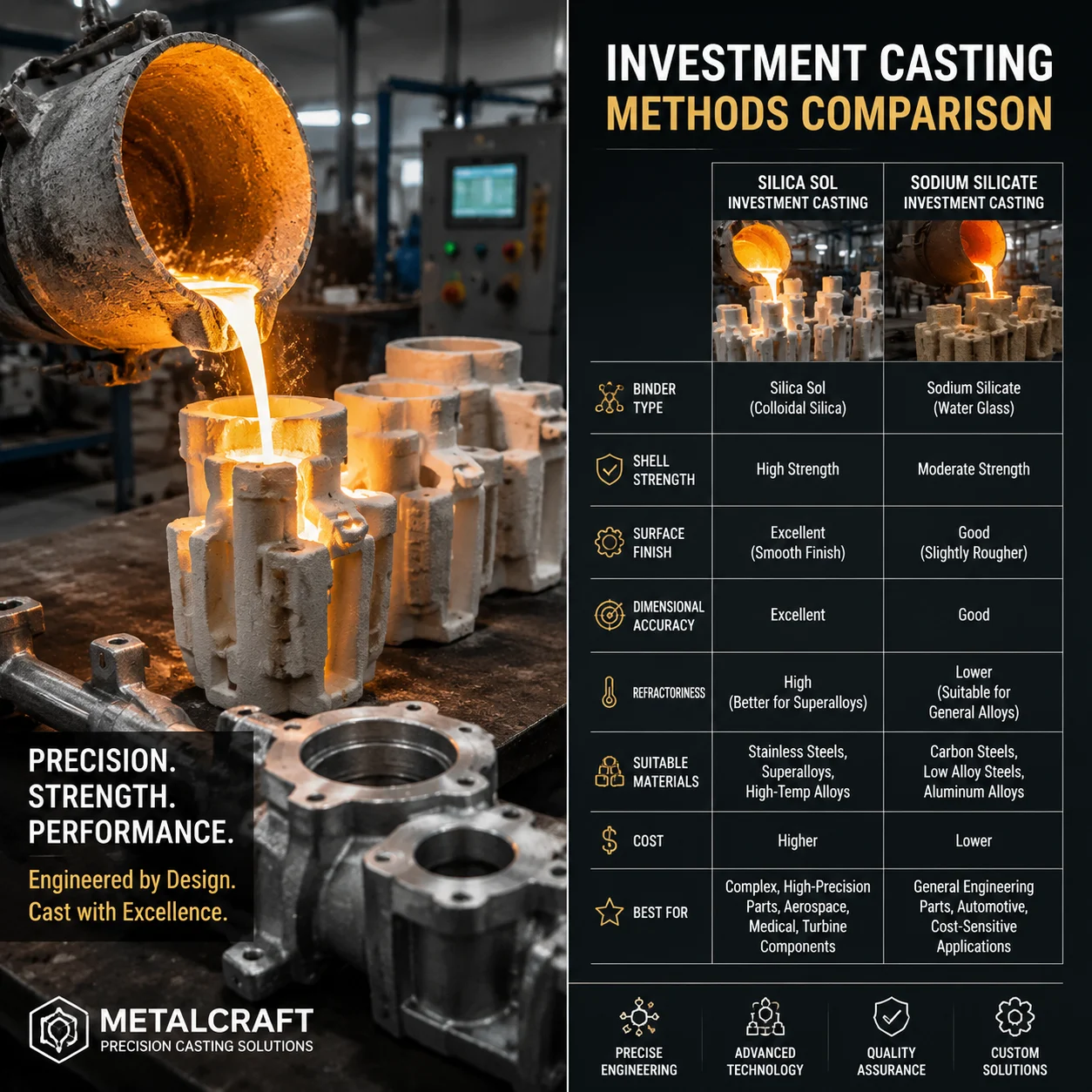
High-stability wax patterns are injected and assembled into clusters. We then apply multiple layers of high-grade colloidal silica slurry and refractory sand to build a ceramic shell capable of withstanding the thermal stress of vacuum casting.
- 4
Controlled Vacuum Pouring and Degassing
Molten metal is poured into preheated shells within a controlled vacuum chamber. This crucial step eliminates atmospheric gases, significantly reducing oxidation and ensuring the dense filling of complex thin-walled sections.
- 5
Shell Removal and Integrity Screening
After controlled cooling, the ceramic shell is mechanically removed. Castings undergo initial cleaning and grit blasting followed by a preliminary visual and dimensional check to confirm casting integrity before secondary operations.
- 6
Advanced Machining and Quality Validation
Parts receive CNC machining and surface treatments as required. The process concludes with non-destructive testing (NDT), CMM dimensional verification, and material certification to ensure every high-precision component meets your exacting standards. For project consultation or quotation support, please contact us.
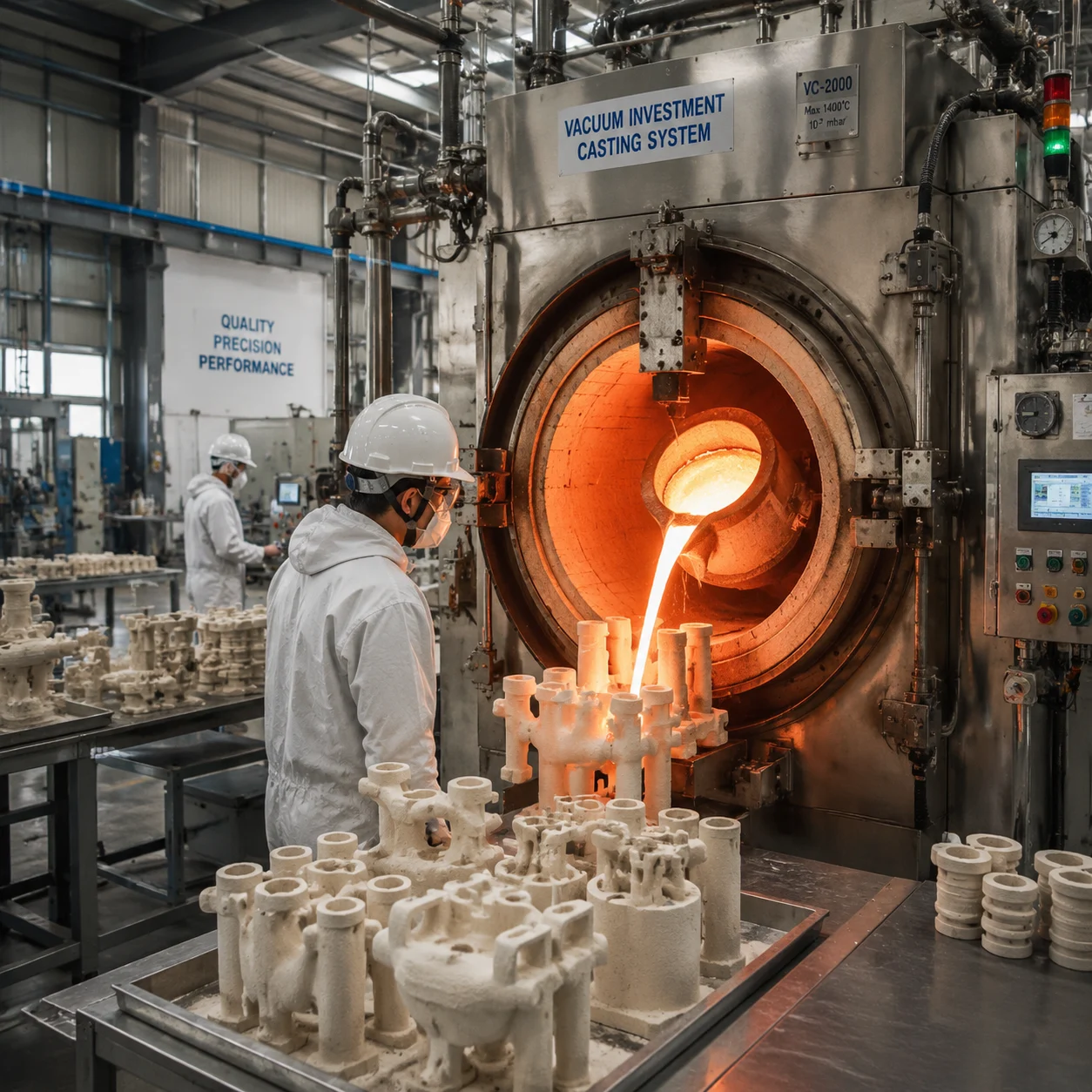
🛡️ Key Quality Control Pillars
- •
Atmospheric Purity: Maintaining ultra-low vacuum levels to prevent hydrogen embrittlement and gas porosity.
- •
Thermal Management: Tight regulation of pouring temperatures to achieve consistent grain structures.
- •
Shell Permeability: Engineering porosity to ensure 100% mold fill for intricate internal passageways.
- •
Shrinkage Control: Advanced gating design to eliminate shrinkage-related defects.
- •
Multi-Stage Inspection: X-ray, PT, and Spectrometer analysis for batch-level chemical precision.
Comprehensive Material & Alloy Selection for Vacuum Casting
At Vastmaterial, our vacuum investment casting process is engineered to handle a broad spectrum of high-performance alloys. By casting in a controlled vacuum environment, we eliminate gas-related defects and oxidation, ensuring complex components meet the most rigorous industrial standards.
Stainless Steel Series
Stainless steel vacuum casting materials remain a cornerstone for precision-engineered components that demand exceptional corrosion resistance, dimensional stability, and long-term durability. Advanced grades including 304, 316, and 410 stainless steel are widely used across marine engineering, chemical processing systems, food-grade manufacturing, and medical device production. Vacuum casting technology significantly enhances stainless steel performance by minimizing oxidation, reducing gas porosity, and ensuring a cleaner metallurgical structure. This process delivers superior mechanical integrity, hygienic finishes, and improved lifecycle performance for mission-critical applications.
| Category | Key Properties | Vacuum Suitability | Typical Applications | Post-Processing |
|---|---|---|---|---|
| 304 / 316 / 410 Stainless Steel | Excellent corrosion resistance, strength, ductility, sanitary finish. | Excellent: Dense, low-impurity microstructure. | Medical tools, valves, marine fittings, food equipment. | Electropolishing, passivation, CNC machining. |
Premium Stainless Steel
Engineered for corrosion resistance, hygienic performance, and exceptional structural consistency, stainless steel vacuum castings provide unmatched reliability in harsh environments where precision, cleanliness, and longevity are essential.
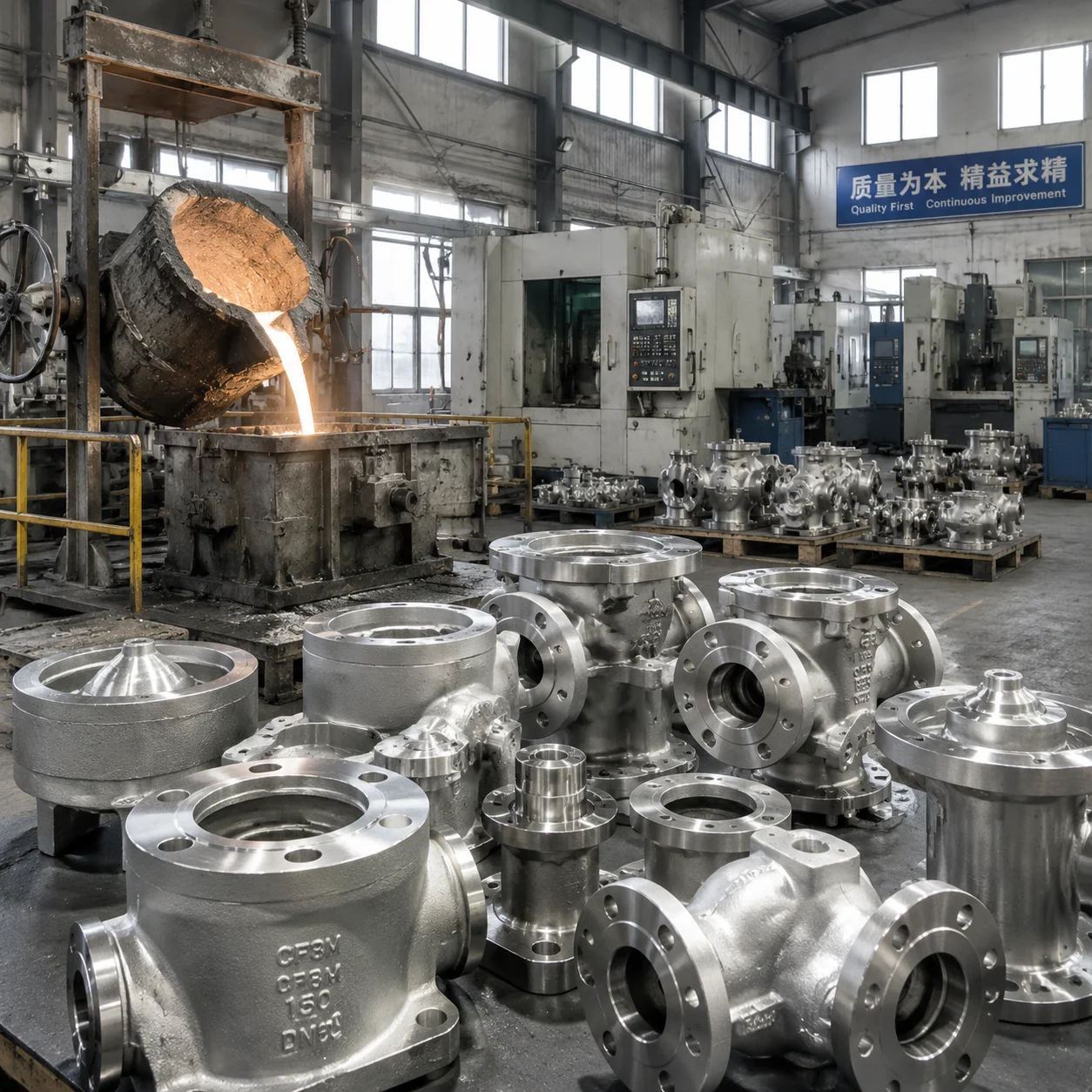
- ✔ Superior corrosion resistance
- ✔ Medical & marine grade durability
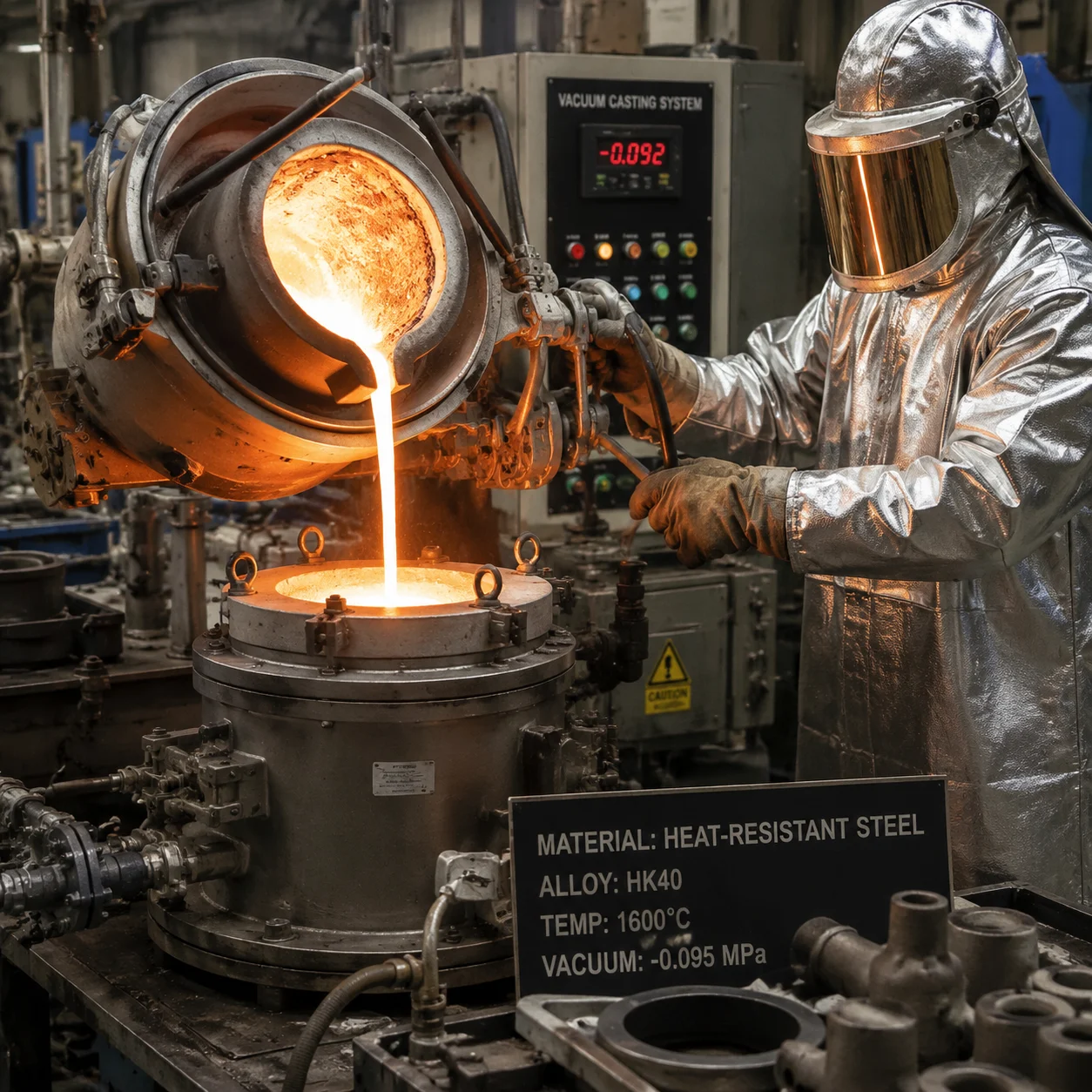
Carbon Steel
Cost-effective structural solutions with high strength-to-weight ratios.
- • Minimizes internal slag
- • Responds to hardening
Low-alloy Steel
Optimized for toughness and hardenability in aerospace applications.
- • Intricate geometries
- • Fatigue resistance
High-temp Alloys
Nickel/Cobalt-based superalloys for extreme stress environments.
- • Stable at 800°C+
- • High-purity casting
Non-ferrous Alloys
Aluminum and Copper alloys offering unique conductivity benefits.
- • Lightweight design
- • Electrical conductivity
Typical Applications & Industrial Use Cases of Vacuum Investment Casting
Vacuum investment casting is a precision manufacturing process widely used in aerospace, automotive, medical, energy, and industrial engineering sectors. It enables the production of high-performance metal components with complex geometries, tight tolerances, and superior mechanical integrity. From corrosion-resistant stainless steel parts to high-temperature alloy components, this process ensures exceptional reliability in demanding environments where performance, safety, and durability are critical.
Aerospace & Aviation Engineering
Vacuum investment casting plays a vital role in aerospace manufacturing, producing turbine blades, engine housings, structural brackets, and heat-resistant components. The process ensures superior strength-to-weight ratio, oxidation resistance, and dimensional precision required for flight-critical systems. Nickel-based superalloys and high-temperature steels are commonly used to withstand extreme thermal and mechanical stress in jet engines and propulsion systems.
Automotive & Transportation Systems
In the automotive industry, vacuum cast components are widely used in turbochargers, transmission parts, engine manifolds, and suspension systems. The process enhances fatigue resistance, wear durability, and mechanical stability under continuous load conditions. Carbon steel, stainless steel, and low-alloy steel materials are frequently selected to balance performance, cost-efficiency, and manufacturability.
Medical & Healthcare Equipment
Precision vacuum casting is essential in the production of surgical instruments, implant components, diagnostic devices, and fluid control systems. Stainless steel grades such as 304 and 316 are widely used due to their biocompatibility, corrosion resistance, and hygienic surface finish. The process ensures contamination-free production suitable for sterile medical environments.
Energy & Power Generation
Power plants and energy systems rely on vacuum cast components for turbines, boiler systems, valve assemblies, and heat exchangers. High-temperature alloys and heat-resistant steels ensure long-term stability under extreme pressure and thermal cycling. These components are designed for maximum efficiency, reduced maintenance, and extended service life.
Industrial Machinery & Heavy Equipment
Vacuum investment casting is widely used in industrial machinery, including pumps, compressors, hydraulic systems, and heavy-duty mechanical assemblies. The process ensures high structural integrity, excellent wear resistance, and long-term reliability under harsh operating conditions. Low-alloy and carbon steels are commonly used for their strength and machinability.
Marine & Offshore Engineering
Marine environments require exceptional corrosion resistance and mechanical durability. Vacuum cast stainless steel components are widely used in shipbuilding, offshore platforms, seawater systems, and propeller assemblies. These parts are designed to resist saltwater corrosion, biofouling, and high-pressure underwater conditions.
Whether you are developing aerospace-grade components or industrial machinery parts, vacuum investment casting delivers unmatched precision, material performance, and design flexibility for complex metal parts across global industries.
Contact Our Engineering TeamVacuum Investment Casting Capability & Quality Standards
Global Scale
Trusted by 100+ Long-term Global Industrial Partners
Mass Production
High-Volume Capacity: 1.3 Million Precision Parts Monthly
Aerospace Grade
Strategic Tier-1 Supplier to Xi’an Aero-Engine
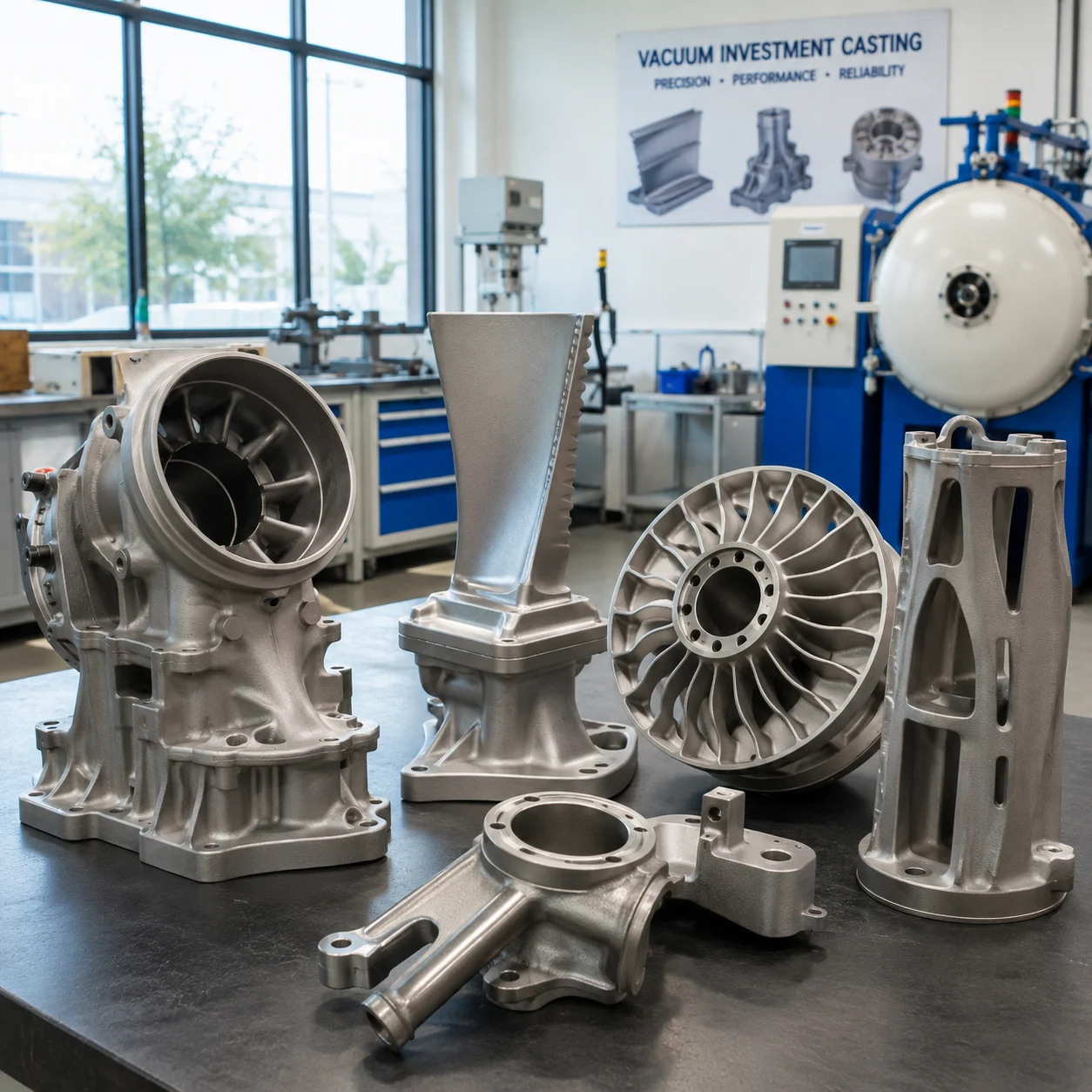
Expertise & Production
- •
Engineering Design: Optimizing complex geometries for manufacturability and cost-efficiency.
- •
Vacuum Control: Atmosphere management to eliminate oxidation and gas porosity.
- •
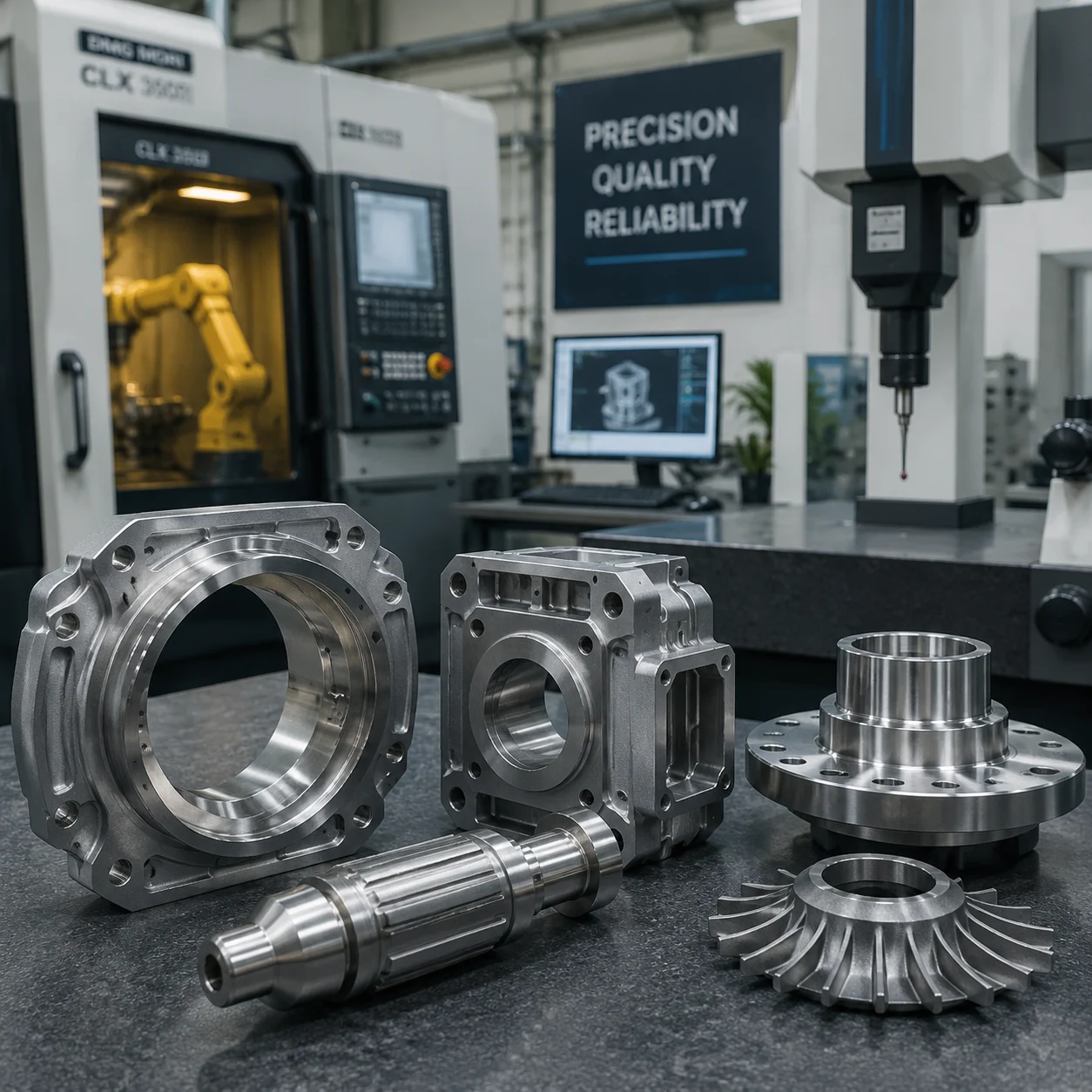
CNC Machining: In-house precision processing for micron-level tolerances.
- •
Secondary Treatment: Expert heat treatment coordination to enhance mechanical properties.
Quality & Verification
- •
Real-time Monitoring: Continuous verification of shell strength and pouring temperatures.
- •
Dimensional Audits: Comprehensive CMM inspection and 3D scanning for exact specs.
- •
Integrity Assessment: NDT (X-ray/Ultrasonic) to confirm internal structural health.
- •
Compliance: Rigorous chemical review to meet 100% international standards. For more precision-casting capability details, visit our precision-casting service.
Vacuum Investment Casting vs. Conventional Methods: Selection Guide
A technical comparison to help you choose the optimal casting process based on quality, geometry, and cost requirements.
| Comparison Criteria | Conventional Atmospheric Casting | Standard Investment Casting | Vacuum Investment Casting |
|---|---|---|---|
| Quality Stability | Variable; highly susceptible to atmospheric contaminants and humidity. | Consistent for general industrial parts with controlled molding. | Superior; vacuum environment ensures peak repeatability and structural integrity. |
| Oxidation & Porosity Risk | High risk of gas entrapment and alloy oxidation during pouring. | Reduced risk, but micro-porosity remains a challenge for dense alloys. | Minimal risk; removes dissolved gases for high-density, defect-free metal structures. |
| Complex Geometry | Limited; struggles with ultra-thin walls and internal cooling channels. | Good capability for intricate shapes and typical net-shape components. | Optimal; superior fluid flow enables precise filling of complex, thin-walled cavities. |
| Surface Finish Quality | Rougher finish (Ra 12.5μm+); typically requires heavy secondary grinding. | Fine finish (Ra 3.2-6.3μm); suitable for most commercial applications. | Premium finish (Ra 1.6-3.2μm); achieves tighter tolerances and smoother surfaces. |
| Post-Processing Pressure | High rework rates; extensive machining and defect repair are common. | Standard finishing; moderate machining required for critical interfaces. | Minimal; near-net-shape accuracy significantly reduces secondary machining costs. |
| Cost vs. Value Boundary | Lowest unit cost; best for non-critical, simple structural hardware. | Balanced cost-performance; the industrial standard for precision parts. | Higher initial cost; essential for high-stress, mission-critical components. |
Strategic Decision Summary
Vastmaterial recommends vacuum investment casting for high-complexity projects where internal purity and structural density are non-negotiable. It is the definitive solution for high-temperature alloys and parts with intricate internal cooling passages.
By utilizing a vacuum environment, we effectively eliminate the risk of inclusions and gas holes, ensuring that every component meets rigorous aerospace and energy industry standards.
While conventional investment casting is highly versatile, vacuum processing is the necessary choice when performance reliability outweighs basic cost-per-unit considerations. Learn more on our about page, or contact us to discuss your casting requirements.
Streamlined Collaboration for Custom Vacuum Investment Casting
- 1
RFQ Submission & Initial Requirements Review
Launch your project by providing detailed 2D/3D CAD files or physical samples. Our team evaluates your specific vacuum investment casting needs to ensure alignment with industrial performance standards.
- 2
DFM Analysis & Engineering Consultation
Vastmaterial engineers perform a Design for Manufacturing (DFM) review. We identify potential structural risks and suggest optimizations to improve metal flow, reduce internal porosity, and enhance casting yield.
- 3
Technical Specification & Alloy Selection
We provide expert guidance on selecting the optimal high-performance alloy and vacuum casting parameters. This stage defines the thermal treatment, surface finish requirements, and necessary secondary machining steps.
- 4
Project Quoting & Production Planning
Receive a comprehensive RFQ response including transparent pricing and lead times. Upon approval, we establish a robust production timeline that covers tooling creation and pilot run scheduling.
- 5
Prototyping, Validation & Mass Production
We execute initial sample production for your verification. Following rigorous quality inspection and your final sign-off, we transition to stable, high-volume manufacturing to meet your delivery cycles.
Required Documentation
- Detailed 2D drawings (PDF/TIFF)
- 3D CAD models (STEP/IGES/X_T)
- Material grade & mechanical specs
- Annual volume & delivery schedules
- Surface finish & NDT requirements
Vastmaterial’s engineering team supports rapid review and production planning for OEM custom precision casting projects, ensuring repeatable quality. Learn more on our about page or contact us to start your project.
Vacuum Investment Casting: FAQ
This process is ideal for complex, thin-walled metal components that require exceptional internal integrity. It is the preferred choice for turbine blades, aerospace housings, and high-pressure fluid control parts.
Vastmaterial recommends this method for any geometry with intricate internal cavities.
By melting and pouring in a vacuum, we eliminate exposure to oxygen, nitrogen, and hydrogen. This drastically reduces gas porosity, slag inclusions, and oxidation compared to standard methods, resulting in a denser grain structure.
We support stainless steel, heat-resistant steel, carbon steel, and high-temperature superalloys. It is particularly effective for reactive metals that would otherwise degrade in open-air environments.
Porosity is mitigated by removing air from the mold and melting chamber. We also utilize high-purity raw materials and specialized ceramic filters to capture residual inclusions.
Yes, Vastmaterial offers a comprehensive solution from raw casting to finished component, including precision CNC machining, heat treatment, and surface coatings.
Please provide 3D CAD files (STEP/IGES) and 2D drawings. Details regarding material grade, annual volume, and required inspections are essential for a 48-hour preliminary review.
Send Your Drawing for Vacuum Investment Casting Review
Submit your 2D/3D design files, material specifications, and production volumes. Vastmaterial’s engineering team will deliver a comprehensive manufacturability analysis and a precise project quotation within 24 hours.
Facility Location
Dongying Factory Address: No. 183, West Third Road, Dongying District, Dongying City, China