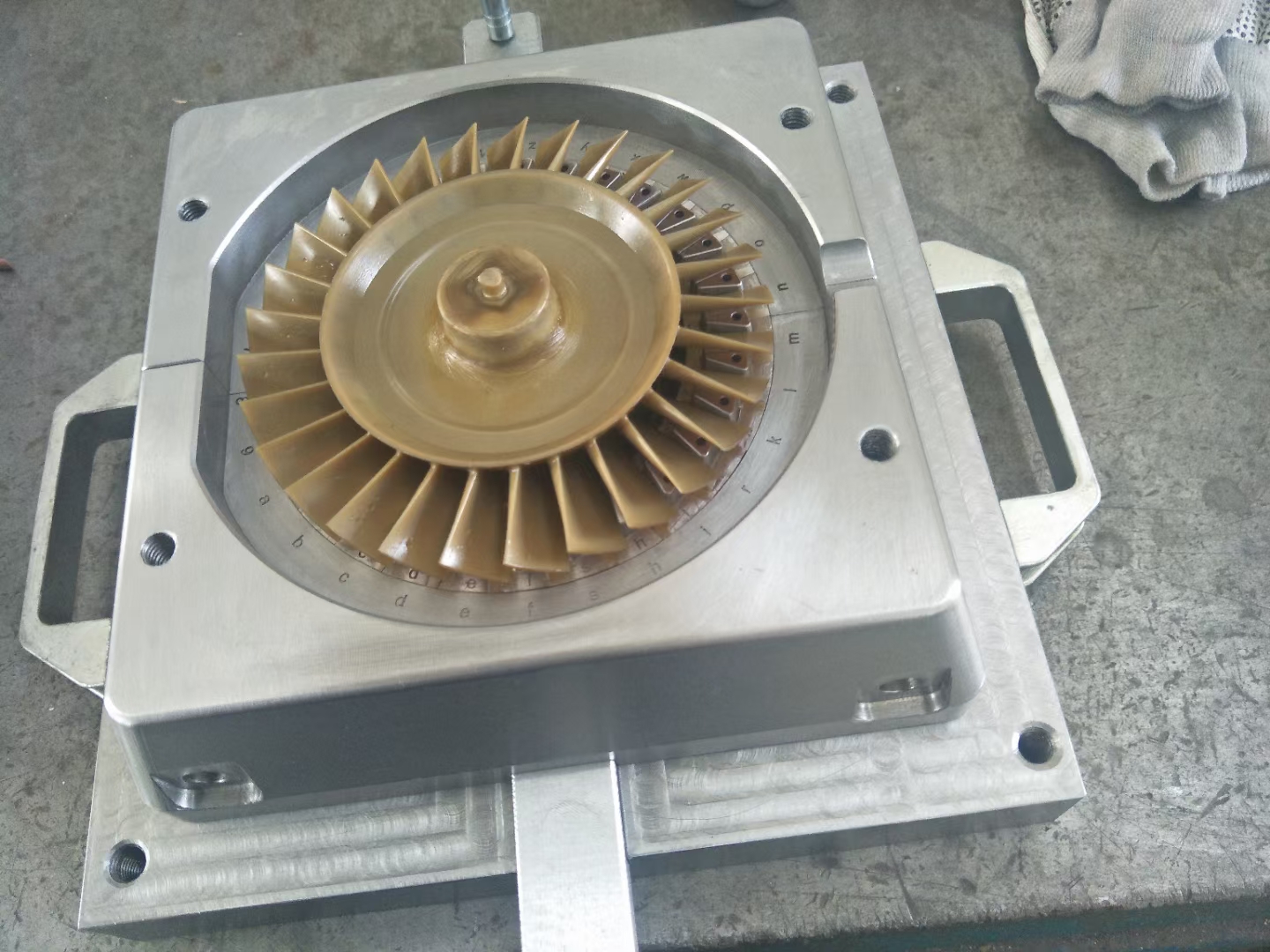
Aperçu
Grades d'acier inoxydable de qualité supérieure 1.2083 1.2316 et AISI 420 avec une résistance élevée à la corrosion, polissage miroir et services de fraisage sur mesure.
Pourquoi choisir l'acier inoxydable pour les moules ?
Sélectionner le bon matériau est crucial pour l'efficacité de la production à long terme. Chez Haoyu Material, nous constatons un changement significatif vers moule en acier inoxydable les bases et inserts pour des applications haute performance. Les aciers outils standard nécessitent souvent un plaquage coûteux ou un entretien fréquent pour lutter contre l'oxydation, mais nos grades inox offrent une solution robuste à ces problèmes courants de fabrication.
Surmonter la rouille et les limitations d'entretien
Les aciers au carbone standard sont sujets à la rouille, surtout dans les climats humides ou lors de longues périodes de stockage. Cette oxydation oblige les mouleurs à arrêter la production pour nettoyer et re-polir, ce qui tue l'efficacité.
- Réduction des temps d'arrêt : Notre acier à outils résistant à la corrosion conserve son intégrité de surface, minimisant l'entretien programmé.
- Sécurité de stockage : Les moules peuvent être stockés sans revêtements protecteurs lourds, garantissant leur disponibilité immédiate.
- Protection du canal de refroidissement : L'acier inoxydable empêche l'accumulation de rouille dans les conduites d'eau, maintenant une conductivité thermique et des cycles constants.
Solutions pour PVC corrosif et environnements humides
Lors du moulage de résines chimiquement agressives comme le PVC, le POM ou les plastiques ignifuges, des gaz acides sont libérés lors du traitement. Ces acides corrodent rapidement l'acier standard, provoquant des piqûres et des éclats. Nous fournissons des grades tels que 1.2316 et 1.2083, qui sont spécialement conçus pour résister à ces environnements chimiques difficiles sans se dégrader.
Obtenir des finitions miroir SPI A1/A2
Pour les pièces optiques et l'électronique grand public à haute brillance, la finition de surface est essentielle. Les imperfections dans la structure en acier entraînent des piqûres lors du polissage.
- Pureté élevée : Nos grades d'acier inoxydable subissent un contrôle qualité strict pour garantir de faibles niveaux d'inclusions.
- Dureté uniforme : Une microstructure cohérente permet de Finitions de polissage miroir SPI A1/A2, essentielles pour les lentilles et les composants transparents.
- Aucune finition requise : Atteignez une surface à haute brillance naturellement, éliminant le risque de décollement du chrome et de détérioration de la pièce.
Respect des normes d'hygiène pour le moulage médical
Moulage de qualité médicale et les applications d'emballage alimentaire exigent des outils stériles et sans contaminants. Un moule en acier inoxydable offre une surface propre et non réactive qui respecte les réglementations strictes en matière d'hygiène. En éliminant le besoin de traitements de surface susceptibles de contaminer le produit final, nous aidons les fabricants à garantir la sécurité et la conformité dans les industries sensibles.
Spécifications techniques & choix de grade
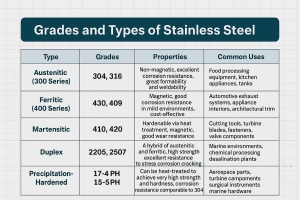
Choisir le moule en acier inoxydable le matériau est la base d'une production réussie. Nous nous concentrons sur la fourniture de grades de haute pureté qui équilibrent la machinabilité et la durabilité. Notre inventaire concerne principalement deux grades standard de l'industrie : 1.2083 (AISI 420) et 1.2316, tous optimisés pour des environnements de moulage spécifiques.
Classe 1.2083 (AISI 420) : Le spécialiste du polissage
Ce grade est notre recommandation principale pour les moules nécessitant un finition polie miroir.. En tant qu'acier inoxydable martensitique à haut chrome, 1.2083 offre une résistance exceptionnelle à l'usure après traitement thermique. C'est le choix standard pour les lentilles optiques et les pièces cosmétiques à haute brillance où la perfection de la surface est non négociable.
- Conditionnement : Fourni en condition recuite (douce).
- Traitement : Nécessite un durcissement et un revenu après usinage.
- Meilleur pour : Pièces optiques, seringues médicales et plastiques abrasifs.
Degré 1.2316 : Le combattant contre la corrosion
Pour les résines chimiquement agressives comme le PVC, nous fournissons 1.2316. Ceci est un acier inoxydable pré-durci avec une résistance à la corrosion améliorée grâce à une teneur plus élevée en chrome et molybdène. Étant donné qu'il est pré-durci, vous évitez les risques de déformation dimensionnelle liés au traitement thermique des inserts finis. Cette stabilité est cruciale lors de la transition d'un prototype de dispositif médical pour la fabrication d'outillage à grande échelle.
- Conditionnement : Pré-durci (Refroidi et Tempéré).
- Traitement : Prêt pour l'usinage et l'électroérosion immédiatement.
- Meilleur pour : Raccords en PVC, contenants alimentaires et environnements de traitement humide.
Composition chimique & Comparaison de dureté
Nous respectons des normes chimiques strictes pour garantir une cohérence dureté HRC et une usinabilité. Ci-dessous, la répartition de nos principaux aciers inoxydables pour moules.
| Spécification | Classe 1.2083 (AISI 420) | Classe 1.2316 (X38CrMo16) |
|---|---|---|
| Carbone (C) | 0.36% – 0.42% | 0.33% – 0.45% |
| Chrome (Cr) | 12.5% – 14.5% | 15.5% – 17.5% |
| Molybdène (Mo) | N/A | 0.80% – 1.30% |
| Dureté de livraison | ~230 HB (Annéli) | 280 – 325 HB (Préhardé) |
| Dureté de travail | 50 – 54 HRC (Après traitement thermique) | 30 – 34 HRC (Brut de fabrication) |
| Caractéristique principale | Haute polissabilité & résistance à l'usure | Résistance à la corrosion supérieure |
Exigences de traitement thermique
- 1.2083: Doit être trempé sous vide pour atteindre la plage de 50-54 HRC requise pour les applications à forte usure. Nous recommandons un traitement sous zéro pour une stabilité dimensionnelle maximale.
- 1.2316: Aucun traitement thermique supplémentaire n'est généralement nécessaire. Cependant, si la dureté de surface doit être augmentée pour des zones d'usure spécifiques, le nitrurage peut être appliqué, bien qu'il puisse légèrement réduire la résistance à la corrosion.
Principaux avantages de performance de l'acier inoxydable pour moules
Passer à l'acier inoxydable pour votre base de moule et vos inserts n'est pas seulement une question de prévention de la rouille ; c'est un investissement stratégique dans l'efficacité de la production. Nous voyons de première main comment l'acier outil résistant à la corrosion résout les maux de tête chroniques liés au traitement de résines chimiquement agressives comme le PVC ou à l'exploitation dans des environnements à haute humidité. En utilisant des grades comme 1.2083 ou 1.2316, vous éliminez efficacement le besoin de galvanoplastie secondaire coûteuse, assurant que la cavité du moule reste impeccable sur des millions de cycles.
Notre engagement envers l'avancée R&D et technologie assure que la structure du matériau est uniforme, ce qui est crucial pour les applications haut de gamme. Voici comment l'acier inoxydable pour moules améliore votre rentabilité :
- Polissabilité de qualité optique : Pour la fabrication de lentilles ou l'électronique grand public à haute brillance, la finition de surface est essentielle. Nos grades inoxydables sont exempts d'inclusions importantes, permettant une finition parfaite finition polie miroir. (SPI A1/A2) sans risque de piqûres lors du polissage.
- Réduction des coûts de maintenance : Les aciers standard nécessitent un nettoyage et une graissage constants pour prévenir l'oxydation pendant les périodes d'inactivité. Les moules en inox réduisent considérablement cette charge de maintenance, prolongeant la durée de vie de votre presse.
- Durée de vie prolongée du moule : La dureté élevée et la résistance à l'usure de ces matériaux maintiennent la stabilité dimensionnelle, garantissant une qualité constante des pièces même lors de productions en grande série.
Comparaison des performances : Acier inoxydable vs. Acier standard
| Caractéristique | Acier à outils standard (par exemple, P20) | Acier inoxydable pour moules (par exemple, 1.2083) |
|---|---|---|
| Résistance à la Corrosion | Faible (nécessite un placage) | Excellente (Protection native) |
| Potentiel de polissage | Bon | Supérieur (qualité optique) |
| Efficacité de refroidissement | Norme | Conductivité thermique constante |
| Adaptabilité au PVC | Médiocre (Risque de corrosion par gaz) | Élevée (résistance aux acides) |
| Besoins en maintenance | Élevée (prévention de la rouille) | Faible |
Applications industrielles pour moules en acier inoxydable

Passer à un moule en acier inoxydable support ne concerne pas seulement la prévention de la rouille ; il s'agit de respecter les réglementations strictes des secteurs de fabrication haut de gamme. Nous observons un changement massif vers les grades inox dans les industries où la pureté des pièces et la longévité des moules sont non négociables.
Dispositifs Médicaux et Outils pour Salles Blanches
Dans le secteur médical, la contamination est l'ennemi. Moulage de qualité médicale nécessite un acier qui conserve une surface impeccable même après plusieurs cycles de stérilisation et une exposition à des environnements humides en salle blanche. Nos stocks en acier inoxydable garantissent que les moules pour seringues, flacons et outils chirurgicaux restent exempts d'oxydation, évitant tout risque de contamination particulaire dans le produit final.
Emballages Alimentaires Conformes à la FDA
Pour les applications alimentaires et de boissons, les normes d'hygiène sont tout aussi rigoureuses. Les moules utilisés pour les bouchons, fermetures et contenants doivent être faciles à nettoyer et résistants à la corrosion de l'eau. L'utilisation d'acier inoxydable élimine le besoin de chromage, qui peut s'écailler et contaminer les produits alimentaires, garantissant que votre opération reste conforme à la FDA et sûre.
Lentilles Optiques et Électronique à Haute Brillance
Lorsque la finition de surface définit la qualité du produit, l'acier à outils standard ne suffit pas. Acier à moule de qualité optique (notamment les grades ESR) fournit la microstructure pure nécessaire pour des finitions polies miroir.. Ceci est crucial pour la fabrication :
- Lentilles optiques : phares, caméras et composants grossissants.
- Électronique grand public : Bordures et écrans à haute brillance nécessitant zéro piqûre ou marques de grain.
Moulage de résines chimiquement agressives
Le traitement de résines comme le PVC et le POM libère des gaz acides qui rongent l'acier standard en quelques jours. Moulage par injection de PVC exige la haute teneur en chrome présente dans nos grades inoxydables (comme 1.2083 ou 1.2316) pour neutraliser cette attaque chimique. Comprendre les avantages et les grades d'acier inoxydable est crucial lors de la manipulation de ces matériaux corrosifs pour éviter une défaillance prématurée du moule et des problèmes de bavures.
Services de traitement personnalisé chez vastmaterial
Chez vastmaterial, nous comprenons que les ateliers modernes ont besoin de plus que de simples matières premières ; vous avez besoin de matériaux prêts pour la production immédiate. Nous comblons le fossé entre l'approvisionnement brut et la fabrication finale avec nos solutions complètes. matière première à blocs prêts. Au lieu d'expédier un poids excessif et de gaspiller votre temps machine en opérations de dégrossissage, nous livrons des blocs d'acier usinés avec précision.
adaptés à vos dimensions exactes.
- Nos capacités internes nous permettent de contrôler la qualité et les dimensions à chaque étape de la chaîne d'approvisionnement : Fraisage et carrage sur 6 faces :.
- Rectification de surface de précision : Pour les applications nécessitant des tolérances strictes, nous proposons un rectifiage de surface pour assurer une planéité et une parallélisme supérieurs.
- Contrôle par ultrasons (UT) : Nous garantissons l'intégrité interne. Chaque bloc subit une inspection UT rigoureuse pour s'assurer qu'il n'y a pas de fissures cachées, de vides ou d'inclusions avant de quitter notre atelier.
Que vous recherchiez du matériau pour des outils optiques généraux fabrication d'équipements ou spécialisés, nos services à valeur ajoutée garantissent que vous recevez une base de moule en acier inoxydable sans défaut, prête à être usinée, à chaque fois.
Analyse comparative : Acier inoxydable vs. Acier outil standard
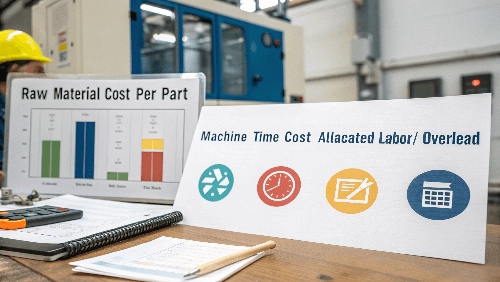
Acier inoxydable vs. P20/H13 : Coût vs. valeur sur la durée de vie
Lors du choix des matériaux pour un moule en acier inoxydable, nous rencontrons souvent des clients pesant le coût initial des matières premières par rapport à la performance à long terme. Les grades standard comme P20. sont des piliers de l'industrie pour le moulage polyvalent, offrant une facilité d'usinage à un prix inférieur. H13.
offre une excellente ténacité et résistance à la chaleur, ce qui le rend adapté aux applications à haute température. 1.2083 (AISI 420) or 1.2316. Cependant, ni P20 ni H13 ne peuvent égaler la résistance à la corrosion des grades en acier inoxydable comme.
. Bien que le coût initial de l'acier inoxydable soit plus élevé, la valeur sur toute la durée de vie est nettement supérieure pour des applications spécifiques. Les aciers à outils standard nécessitent une protection constante contre l'oxydation, surtout dans les climats humides ou lors du stockage. Une base de moule en acier inoxydable résiste naturellement à la rouille, réduisant le travail et les produits chimiques nécessaires à la préservation.
Pour les prototypes ou les séries de faible volume, l'acier standard est souvent suffisant. Cependant, pour la production à grand volume, le retour sur investissement (ROI) de l'acier inoxydable devient évident. Le coût du bloc d'acier représente généralement une petite fraction du coût total de fabrication du moule (souvent moins de 15%), mais la qualité de l'acier détermine la longévité du moule.
- Réduction de l'entretien : Les canaux en acier inoxydable ne rouillent pas, assurant une efficacité de refroidissement constante et des temps de cycle sur des millions de tirs.
- Réduction des temps d'arrêt : Éliminer le besoin de polir la rouille ou de réparer les surfaces piquées maintient les lignes de production en marche.
- Qualité des pièces : Une finition de surface cohérente réduit les taux de rebuts.
Investir dans de l'acier inoxydable de haute qualité dès le départ évite des interruptions de production coûteuses plus tard, maximisant la rentabilité sur la durée de vie du moule.
Quand passer à l'acier inoxydable pour des types de résine spécifiques
Passer à un l'acier outil résistant à la corrosion n'est pas seulement un luxe ; c'est une nécessité technique pour traiter des résines chimiquement agressives. Nous recommandons fortement de passer aux grades d'acier inoxydable lors du moulage des matériaux suivants :
- PVC (Polychlorure de vinyle) : Libère du gaz d'acide chlorhydrique lors du traitement, ce qui provoque rapidement la piqûre et la corrosion de l'acier standard.
- POM (Acétal) et Résines ignifuges : Ces matériaux libèrent des sous-produits corrosifs qui attaquent la surface du moule.
- Plastiques optiques (PC/PMMA) : Bien que pas nécessairement corrosifs, ceux-ci nécessitent un finition polie miroir.. Les grades d'acier comme ESR-revêtu 1.2083 offrent la haute pureté et l'uniformité structurelle nécessaires pour obtenir des finitions SPI A1/A2 sans le risque d'inclusions que l'on trouve dans les aciers standard.
Logistique, Stock, et Chaîne d'approvisionnement
Nous comprenons que l'attente des matériaux tue les calendriers de production. C'est pourquoi nous maintenons un inventaire massif de produits en acier inoxydable, en nous concentrant spécifiquement sur des grades à forte demande comme AISI 420 Mod / 1.2083 et pré-durci 1.2316. Avec plus de 10 000 tonnes en stock, nous pouvons déployer rapidement des blocs standard et sur mesure sans les longs délais typiques des productions en série. Cette disponibilité nous permet de passer de la confirmation de commande au traitement presque immédiatement.
L'expédition d'acier lourd à travers l'océan nécessite une protection robuste. Nous ne faisons pas de compromis sur l'emballage. Chaque bloc d'acier usiné avec précision est traité avec de l'huile antirouille de qualité industrielle, enveloppé dans un film barrière à l'humidité, et sécurisé dans des caisses en bois renforcées. Cela garantit que votre l'acier outil résistant à la corrosion arrive dans l'état exact où il a quitté notre usine, sans dommage environnemental. Notre équipe logistique gère l'ensemble du processus de fret lourd, en s'occupant de la documentation d'exportation et en coordonnant le transport sécurisé pour livrer vos moule en acier inoxydable matériaux directement à votre établissement.
Foire aux questions (FAQ)
L'acier inoxydable 1.2083 peut-il être soudé ?
Oui, L'acier inoxydable 1.2083 peut être soudé, mais cela nécessite un contrôle strict du processus. Étant donné qu'il s'agit d'une nuance martensitique à haute teneur en carbone, nous recommandons fortement de préchauffer le bloc de moule et de réaliser un traitement thermique après soudure. Cela empêche la fissuration dans la zone affectée par la chaleur (ZAC) et garantit que la zone soudée conserve une dureté cohérente avec le reste de l'outil.
Quelle est la différence entre 1,2083 et 1,2316 ?
La différence principale réside dans l'état de livraison et la performance à la corrosion. 1.2083 (AISI 420) est généralement fourni en état recuit et doit être traité thermiquement pour atteindre une dureté élevée et une finition miroir. 1.2316 est généralement fourni sous forme de acier inoxydable pré-durci, offrant une résistance à la corrosion supérieure dès la sortie, ce qui est crucial pour le moulage de plastiques acides comme le PVC. Vous pouvez en savoir plus sur la famille de matériaux plus large dans notre guide sur les propriétés de l'acier inoxydable de la série 400.
Fournissez-vous des certificats d'essai millésimés avec les expéditions ?
Absolument. Nous croyons en une transparence totale concernant la qualité du matériau. Chaque expédition de moule en acier inoxydable les blocs de Haoyu Material comprennent un Certificat d'Essai de Mill (CEM). Ce document vérifie la composition chimique, les valeurs de dureté et les résultats du contrôle par ultrasons pour garantir que l'acier est sain et prêt pour l'usinage.
Quelle est la dureté maximale atteignable pour ces grades ?
Pour 1.2083, le traitement thermique sous vide professionnel atteint généralement une plage de dureté de 50–54 HRC, fournissant la rigidité nécessaire pour les pièces optiques de haute précision. 1.2316 est généralement fourni pré-durci à environ 28–32 HRC, équilibrant la machinabilité avec la résistance à la corrosion, bien que des processus de durcissement spécifiques puissent augmenter cela en fonction des exigences de l'application.